Military Factory
Military Pay Chart
Global Firepower
Military Industrial Complex
Second World War
Home
Military Pay Scale
Military Ranks
Small Arms
Aircraft
Land Systems
Navy
Education
Military Factory Facebook Logo
flag of Imperial Germany

Albatros D.III Fighter (1917)

Authored By Staff Writer | Last Updated: 5/13/2012

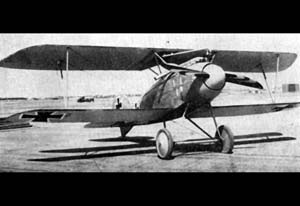
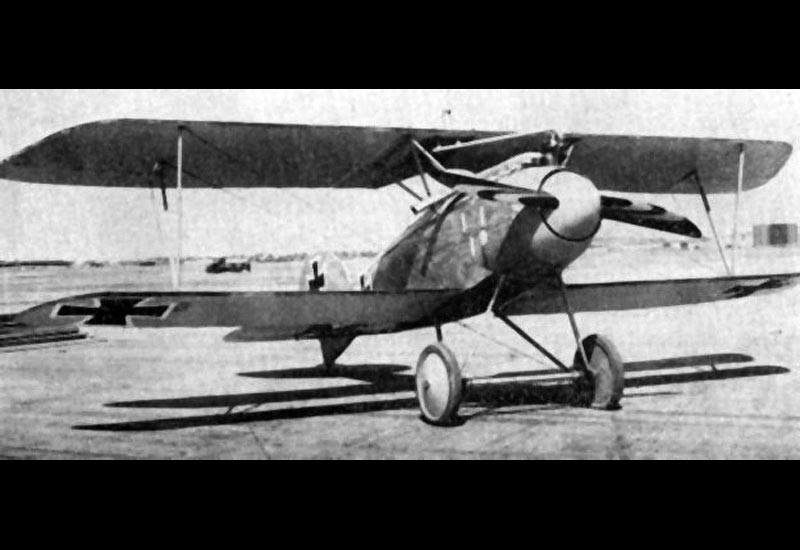
Though an overall improvement of the D.I and D.II, the sesquiplane wing arrangement of the new D.III led to a noted structural deficiency.

While the Albatros D.I proved critical in winning back air superiority for the Germans in early 1917, it was not a perfect all-around solution, pushing the development of an improved form in the D.II. The D.II exhibited a better rate-of-climb, a lowered upper wing assembly for better pilot visibility and an aerodynamically designed radiator. Having already found successes in the Albatros D.I and D.II models, designer Robert Thelen sought for more in the way of maneuverability when tackling the new Albatros D.III. This was accomplished by way of a new unstaggered wing layout featuring "V" section interplane struts as opposed to the parallel types found on previous models (and earning the British nickname of "V-strutter" in the process). A capable fighter platform, the D.III took to the skies in force by early 1917 and was produced to the tune of 1,866 examples eventually finding its way into inventories of non-German countries in the post-war world. As was the case for most aircraft designs of The Great War, the type was soon replaced and outclassed by more capable systems.

The Albatros D.III was the first of the Albatros D-series to incorporate the new "Vee" shaped struts and these served to improve wing rigidity and, in turn, make for a more maneuverable mount. Additionally, the Mercedes D.III series engines featured in the preceding D.II was revised with a high-compression modification that improved high-altitude performance and brought output up to 170 horsepower. Top speed was 109 miles per hour. The original armament of 2 x 7.92mm Spandau LMG 08/15 machine guns was retained for their proven effectiveness.

The D.III continued the design and construction successes found in the D.I and D.II before it, featuring a semi-monocoque structure with plywood skinning. This provided for a seemingly aerodynamic appearance when compared to the angular, slab-sided designs of the time. The pilot sat at the relative center portion of the fuselage in an open-air cockpit with nothing but a windscreen protecting him, his position just behind and under the top wing. The top wing was lowered enough to allow for improved visibility (a practical and well-liked feature carried over from the development of the D.II). The engine sat before the pilot under the twin 7.92mm Spandau LMG 08/15 machine guns synchronized to fire through the spinning propeller blades. The two-bladed wooden propeller featured a large cone-shaped spinner adding both an aerodynamic function and design flair. The undercarriage consisted of two fixed struts, each with single wheels while the empennage held the tail skid.

The original D.I production model was introduced in August of 1916 with the modified D.II following later that year. The D.III was already being designed in the summer of 1916 and achieved first flight that fall. It officially made its formal appearance for the Imperial German Army Air Service beginning in January of 1917 though D.III's were in operational service in some quantity by December of 1916 to which pilots rejoiced at the systems inherent capabilities. The aircraft performed well from the outset and featured a great rate-of-climb (a feature consistent with the D-series as a whole). The new wing arrangement immediately proved to offer better maneuverability over her predecessors. Power was provided for by a Mercedes brand D.IIIa series engine which was progressively uprated from 170 horsepower to 175 during the production run. After some operational service, the radiator had to be shifted from the center to the right side of the upper wing. This was done due to the fact that the pilot would incur serious burns should the radiator become punctured in combat (this production change was included in the 290th aircraft and onwards).

As a sesquiplane biplane (the lower wings shorter than the upper (a practical design feature stolen from the French-made Nieuport 11 series fighting scouts), the D.III was a slight departure from the previous Albatros offerings. This also provided some new challenges in the Albatros design as it was soon found that failures of the leading edge and lower wing ribs were becoming an all too common occurrence - often leading to structural cracks or outright failures. As such, D.IIIs were grounded for a crucial period until the problem was located and addressed. The D.III would have to wait until February of 1917 to be back in action, this time with a reinforced lower wing. New production models automatically included this fix while previous service models were pulled and reinforced as such.

The structural deficiency was initially believed to be occurring during the construction of the aircraft, due to either the builders themselves or the quality of materials being selected and utilized or logically a combination of both factors. This thinking would eventually prove false as the fault was directly attributed to the main spar being set too far to the rear of the wing's design. This effectively caused a twisting of the wing during flight, most notably encountered during a dive or an action inducing high stress loads on the wing. This did not deter future use of the D.III nor its successor - the D.V - as pilots were simply warned about the structural failings and told to proceed with caution when attempting such combat actions.

Nevertheless, the D.III proved to have some worth and remained an aircraft of choice for if only a short time. In subtle ways noticed mostly by her pilots, the D.III was an improvement over the preceding D-series designs. Her maneuverability and rate-of-climb (vital to any airman worth his weight) were noted assets as were the changes to improve pilot protection and visibility. Such capabilities and attention to details assured the aircraft its legacy. The system stayed in operational use into the final year of the war (1918) despite being overtaken in all performance categories - particularly by the British Royal Aircraft Factory S.E.5 and Sopwith Camel and the French SPAD S.13 models of the Allies. This even after production was all but stopped on the D.III to focus on more modern types.

The D.III was eventually featured in no fewer than 37 Imperial German Army Air Service squadrons. Additionally, the D.III was sent to the battlefronts of Macedonia and Palestine and further stocked the inventory of German-allied Austria-Hungary. At its peak usage in November of 1917, the D.III series saw some 446 airframes available for action over the Western Front. The D.III was inevitably followed up by the aforementioned Albatros D.V which entered service in May of 1917. The D.V featured a revised wing assembly and rudder. This led to major developments of the D.V version as well, noted as by the designation of D.Va. It should be mentioned that the wing deficiency of the D.III was a persistent design flaw carried forward into these other D-series aircraft by Albatros.

In the post-war world, the D.III was retained in operational service by the newly-formed Polish Air Force, these examples beginning service in 1919. The Poles operated their D.IIIs in anger against the Soviets in the polish-Soviet War of 1919-1920. Other post-war operators included Czechoslovakia, Lithuania and the Kingdom of Yugoslavia.
Text ©2003-2013 www.MilitaryFactory.com • All Rights Reserved • No Reproduction Permitted
MilitaryFactory.com does NOT sell equipment/weaponry. Material presented throughout this website is for historical and entertainment value and should not to be construed as usable for hardware restoration, maintenance or general operation. Please consult manufacturers for such information. Our disclaimer. Email corrections / Comments to MilitaryFactory at Gmail dot com.
Picture of Albatros D.III
View All Images (1)

Specifications for the
Albatros D.III
Fighter


Country of Origin: Imperial Germany
Manufacturer: Albatros Werke GmbH - Germany
Initial Year of Service: 1917
Production: 1,866


Focus Model: Albatros D.III
Crew: 1


Length: 24.05ft (7.33m)
Width: 29.69ft (9.05m)
Height: 9.78ft (2.98m)
Weight (Empty): 1,499lbs (680kg)
Weight (MTOW): 1,953lbs (886kg)


Powerplant: 1 x Mercedes D.IIIa water-cooled 6-cylinder in-line engine generating 175hp.


Maximum Speed: 109mph (175kmh; 94kts)
Maximum Range: 217miles (350km)
Service Ceiling: 18,045ft (5,500m; 3.4miles)
Rate-of-Climb: 886 feet per minute (270m/min)


Hardpoints: 0
Armament Suite:
STANDARD:
2 x 7.92mm Spandau LMG 08/15 fixed, forward-firing synchronized machine guns.


Variants:
D.I - Base D-series


D.II - Lowered top wing; Fundamental and minor aerodynamic changes.

D.III - V-shaped struts introduced; sesquiplane wing arrangement; repositioned radiator (290th onwards).

D.V - Streamlined eliptical fuselage; revised wings and modified rudder; larger spinner.

D.Va - Slightly modified D.V model


Operators:
Austria-Hungary; Czechoslovakia; Imperial Germany; Lithuania; Poland; Yugoslavia

ALL AIRCRAFT CATEGORIES

BY DECADE:


1900 to 1909
1910 to 1919
1920 to 1929
1930 to 1939
1940 to 1949
1950 to 1959
1960 to 1969
1970 to 1979
1980 to 1989
1990 to 1999
2000 to 2009
2010 to 2019
2020 to 2029
VIEW ALL
Compare Aircraft


BY TYPE:


Anti-Submarine Warfare (ASW)
Attack Helicopters
Bomber Aircraft
Medium Bombers
Heavy Bombers
Close-Air Support (CAS)
Commercial Aircraft
Dive Bombers
Electronic Warfare Aircraft (EWA)
Experimental / X-Planes
Fighter Aircraft
Floatplane Aircraft
Flying Boat Aircraft
Aerial Refueling Tankers
Helicopters (ALL)
Interceptor Aircraft
Multi-Role Aircraft
Navy Carrier Aircraft
Night Fighters
Reconnaissance / Scout
Search & Rescue (SAR)
Scout Helicopters
Special Purpose
Torpedo Bombers
Trainer Aircraft
Transport Aircraft
Transport Helicopters
Unmanned Aerial Vehicles (UAVs)
Unmanned Combat Air Vehicles (UCAVs)


COLLECTIONS:


4th Generation Fighter Aircraft
5th Generation Fighter Aircraft
US X-Planes
Classic US Warbirds
French Military Helicopters
Grumman "Cats"
Howard Hughes Aircraft
Indian Air Force
Israeli Air Force
Libyan Aircraft
Modern Chinese Aircraft
Modern Chinese Fighters
Modern Military Aircraft
Modern North Korean Aircraft
Modern Trainer Aircraft
Modern US Aircraft
Mikoyan Aircraft
Sukhoi Aircraft
Syrian Aircraft
Top 10 Fighter Aircraft of All Time


AIRCRAFT BY CONFLICT:


Arab-Israeli War (1948)
Cuban Missile Crisis (1959-1962)
Falklands War (1982)
Indo-Pak War (1965, 1971)
Iran-Iraq War (1980-1988)
Lebanon War (1982)
Operation Allied Force (1999)
Operation Desert Storm (1991)
Six Day War (1967)
Spanish Civil War (1936)
Soviet-Afghan War (1979-1989)
Yom Kippur War (1973)


MISCELLANEOUS:


Aircraft Cockpits
Aircraft Manufacturers List
Aircraft Production
Aircraft Timeline

WORLD WAR 2:


1939 Aircraft
1940 Aircraft
1941 Aircraft
1942 Aircraft
1943 Aircraft
1944 Aircraft
1945 Aircraft
1946 Aircraft
Australian Aircraft
Battle of Britain Aircraft
Bombers
Four-Engine Bombers
British Aircraft
British Bombers
British Transports
Dive Bombers
Canadian Aircraft
Fighters
Chinese Aircraft
French Aircraft
German Aircraft
German Fighters
German Flying Boats
German Jets
Secret Weapons of the Luftwaffe
Italian Aircraft
Imperial Japanese Aircraft
Imperial Japanese Fighters
Mitsubishi Bombers
Navy Aircraft
Pearl Harbor
Polish Aircraft
Romanian Aircraft
US Aircraft
US Bombers
US Navy Aircraft
Soviet Aircraft
Torpedo Bombers
Trainer Aircraft
Transport Aircraft
Tuskegee Airmen Aircraft
W.A.S.P. Aircraft
WW2 Aircraft Ranked by Speed
VIEW ALL


WORLD WAR 1:


1914 Aircraft
1915 Aircraft
1916 Aircraft
1917 Aircraft
1918 Aircraft
Aircraft Timeline
Austro-Hungarian Aircraft
Bomber Aircraft
British Aircraft
Fighters
Flying Boats
French Aircraft
Imperial German Aircraft
Italian Aircraft
Scout Aircraft
Russian Empire Aircraft
US Aircraft
WW1 Aircraft Ranked by Speed
VIEW ALL


KOREAN WAR:


Australian Aircraft
Korean War Aces
Korean War Jets
North Korean Aircraft
US Military Aircraft
VIEW ALL


VIETNAM WAR:


Helicopters (ALL)
Transport Helicopters
North Vietnam Air Force
US Airpower
VIEW ALL


COLD WAR:


1950s French Aircraft
British V-Bombers
Cold War Bombers
Soviet Aircraft
Soviet Bombers
Soviet Interceptors
Soviet Helicopters
Strategic Air Command
US Aircraft
US Bombers
US Interceptors
VIEW ALL

Site Disclaimer | Privacy Policy | Site Map | MF Origins


©2013 www.MilitaryFactory.com • Content ©2003-2013 MilitaryFactory.com • All Rights Reserved • Site Contact Email: militaryfactory at gmail dot com. The "Military Factory" name and MilitaryFactory.com logo are registered ® trademarks and protected by all applicable domestic and international intellectual property laws.


Top MF Stuff: 2013 Military Pay Scale | Military Ranks | WW2 Weapons | Sniper Rifles | Kts to Mph | WW1 Aircraft | Automatic Rifles | Aircraft Cockpits | Vietnam War Weapons | Main Battle Tanks | Submachine Guns | Shotguns | French Military Victories


Most photographic images appearing on this site are courtesy of the United States Department of Defense and are approved for public use. Other images acquired through the public domain. Digital art work courtesy of Dan Alex. Business Consulting by Kyle Williams. Material presented throughout this website is for historical and entertainment value and should not to be construed as usable for hardware restoration, maintenance or general operation. Please consult manufacturers for such information.


eXTReMe Tracker