Global Firepower | Military Industrial Complex | Second World War History
Home | Military Pay Scale Chart | Aircraft | Infantry Weapons | Military Vehicles | Navy Ships | Military Education | French Military Victories | Military Ranks | WW2 Weapons
Military Factory Latest from Military Factory
Thumbnail picture of the Dardo infantry fighting vehicle
Dardo IFV
Thumbnail picture of the Supermarine Scimitar fighter
Supermarine Scimitar
Thumbnail picture of the Centauro B1 8x8 tank killer
Centauro 8x8
Thumbnail picture of the Novi Avion fighter
Novi Avion
Thumbnail picture of the FR F2 bolt-action sniper rifle
FR F2
Thumbnail picture of the Lebel Model 1886 bolt-action rifle
Lebel Model 1886
2009 Military Pay Scale Chart - for Army, Navy, Air Force and Marines
  By Type
    · Age of Sail
    · Aircraft Carriers
    · Escort Carriers
    · Amphibious
    · Amphibious Assault
    · Battleships
    · 2nd Class Bttlshps
    · Cargo Ships
    · Cruisers
    · Destroyers
    · Dreadnoughts
    · Pre-Dreadnoughts
    · Frigates
    · Ironclads
    · Midget Submarines
    · Mine Sweepers
    · Patrol Craft
    · Pocket Battleships
    · Special Forces
    · View All Ships
  Submarines
    · Full List
    · Diesel-Electric
    · Ballistic Missile
    · Nuclear Attack
  World War 2
    · Full List
    · Aircraft Carriers
    · Battleships
    · Destroyers
    · Submarines
    · US Warships
  Vietnam War
    · Full List

MilitaryFactory > Navy Ships > USS Roosevelt (DDG-80) Flight IIA
 
 
More Pictures CompareX2 Conversions Dictionary Acronyms

USS Roosevelt (DDG-80) Flight IIA

The Arleigh Burke-class of ships is the only active destroyer class currently service with the United States Navy.
By JR Potts, AUS 173d AB

Bookmark and Share

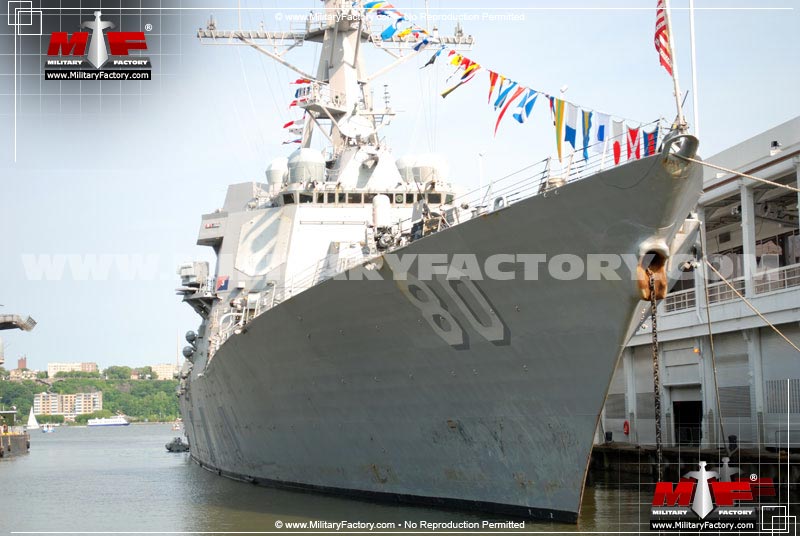
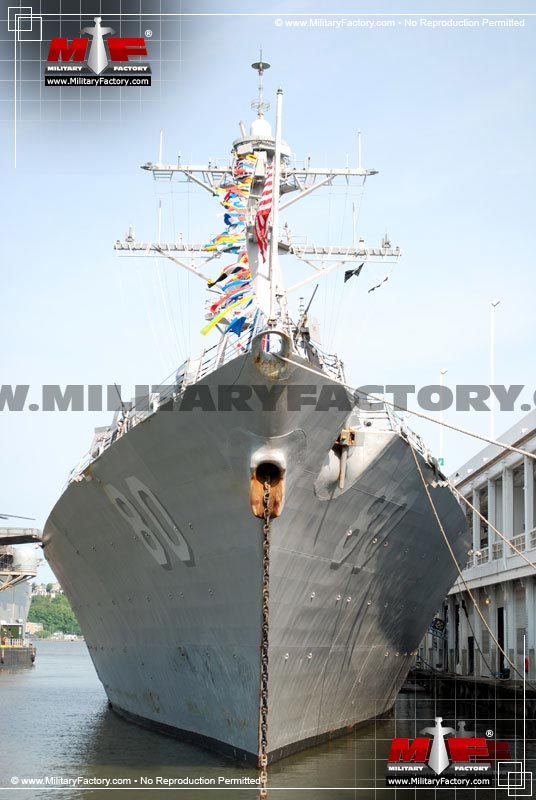
The USS Roosevelt (DDG-80) is an Arleigh Burke-class of guided-missile destroyers in service with the United States Navy and has become the U.S. Navy's only active destroyer class. The class is named after Admiral Arleigh "31-Knot" Burke, the most famous American destroyer officer of World War 2. The Roosevelt is the second Flight IIA ship commissioned and is the 30th ship of the Arleigh Burke-class. In 1996, the Secretary of the Navy John H. Dalton, named the Roosevelt for the nation's former First Couple - Franklin D. Roosevelt, the 32nd President of the United States and former First Lady, Eleanor Roosevelt. The Arleigh Burke ships are the largest and most powerful destroyer class built by the United States.

The total cost in US funds of the first ship was put at $1.1 billion, plus an additional $778 million needed for the ship's weapons systems. She was built at the Bath Iron Works company at Bath, Maine and launched on September 16, 1989 by Mrs. Arleigh Burke. The third major upgrade to the class is the Flight IIA Arleigh Burke ships. Improvements to Roosevelt over the Flight I ships included the addition of two hangars for ASW (Anti-Submarine Warfare) helicopters. These vessels are 4 feet, 5 inches longer and have an additional 1,300 tons displaced. The crew was increased by 57 sailors including the helicopter crew of 4 officers and 14 aircrew. As new ships are brought online they also include upgrades based on new technology and experience of the sister ships. Learning lessons from the Ticonderoga-class guided-missile cruisers - themselves experiencing cost and upgrade difficulties - the "Burks" design used stealth-angled surfaces to help counter anti-ship missiles and were new ships in the class were modified while still under construction, not after launching, to reduce cost.

Initially, Burks were built with aluminum superstructures on a steel hull to conserve weight. Due to the battle damage incurred from an Exocet anti-ship missile against the aluminum superstructure on the destroyer HMS Sheffield in the Falklands War and other new emerging technologies, Burks have gone back to an all-steel construction. Her CPS system makes the Arleigh Burke-class the first U.S. warships designed with an air-filtration system against "weapons of mass destruction" warfare. This positive pressure protection system removes airborne chemical, biological, radiological and nuclear (CBRN)contaminants from the air, allowing for operations on board the ship to proceed as normal without the need for the crew to use individual protection equipment (IPE).

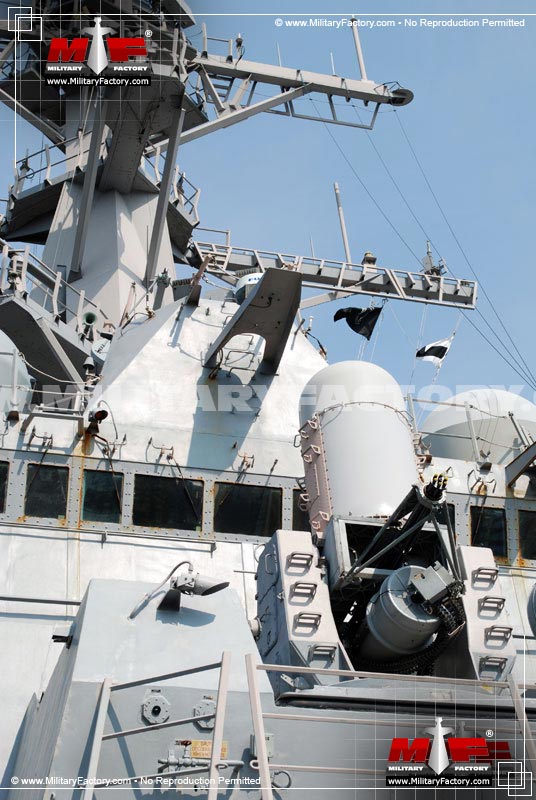
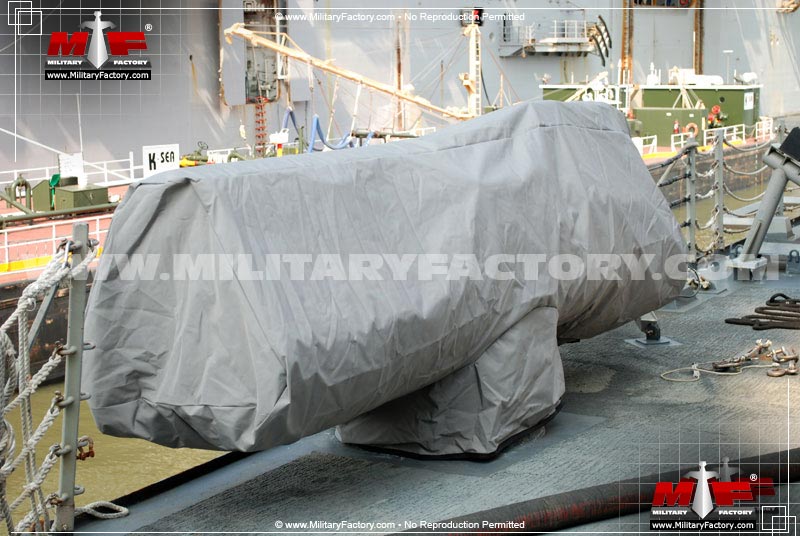
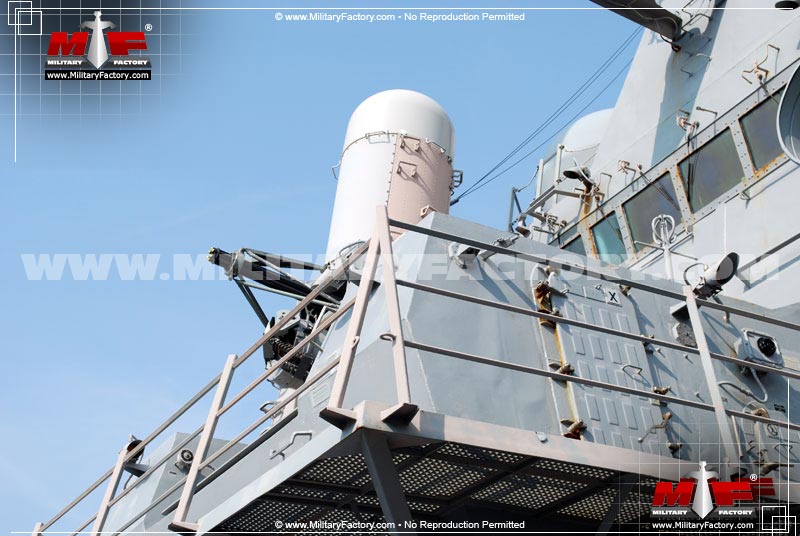
Later Flight IIA ships, starting with USS Mustin, have a modified funnel design that hides the funnels within the superstructure to reduce radar signature. TACTAS Towed array sonar was removed from flight IIA ships onwards along with the Harpoon anti-ship missile launchers. Ships DDG-68 to DDG-84 have AN/SLQ-32 antennas that resemble the V3 deployed on Aegis-class cruisers, and V2 variants externally resemble those as found on Perry-class frigates. A number of Flight IIA ships were constructed without a Phalanx CIWS because Evolved Sea Sparrow Missiles were planned to be installed - the final decision by the Navy was to retrofit all IIA ships to carry at least one Phalanx CIWS as on Roosevelt.

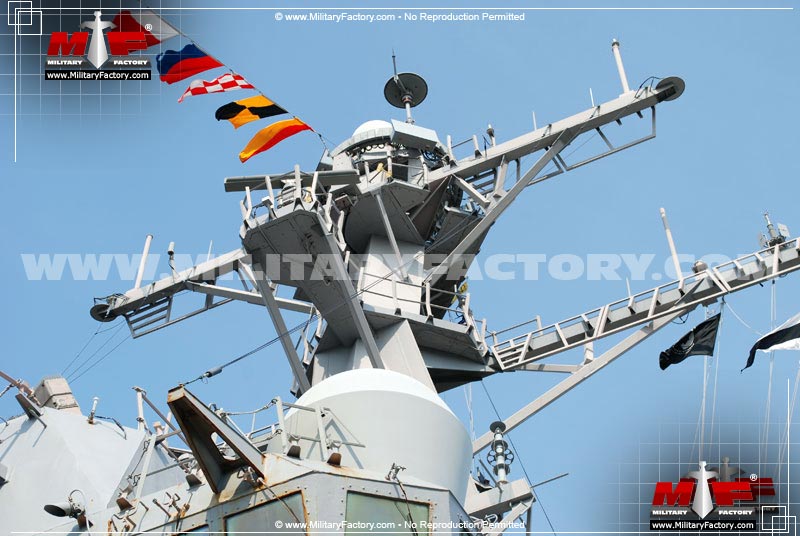
All 62 Burkes so far built are still in service as of this writing and have become the major surface ship deployed by the US Navy. The Burkes - being "multiple missions capable" - can conduct sustained combat operations at sea providing primary protection for aircraft carrier battle groups and escorting amphibious forces and their auxiliary vessels during operations. The original design was to defend against multiple Russian threats countered by the Aegis Combat System, the world’s premier weapons system. The focal point is the AN/SPY-1D phased array radar being the most powerful search radar on US warships. The radar has 360-degree range and is able to detect and track hundreds of missiles and aircraft. This sea level-to-stratosphere ability to engage targets gives the crew total situational awareness. Additional radar is the SQQ-89 tactical sonar suite is composed of a hull-mounted sonar (SQS-53C) and Tactical Towed Array Sonar (TACTAS), and is fully integrated with the ship's Light Airborne Multi-Purpose Systems (LAMPS MK 111) helicopter.

The offensive and defensive capabilities of Aegis destroyers are designed with the crew in mind to provide for maximum survivability. Large areas of topside armor is placed around vital combat systems, crew areas and machinery spaces, and the large hull radically improves her sea-keeping ability. Hull plating thickness is over 75% the hull length amidships. Propellers have five blades to reduce cavitation. The stern wedge is extended out past the transom and improves fuel efficiency at cruising speeds. The Navy has factored in accommodations for the 18 member air group, and has separate female berthing for four officers, six CPOs, and 18 enlisted sailors.

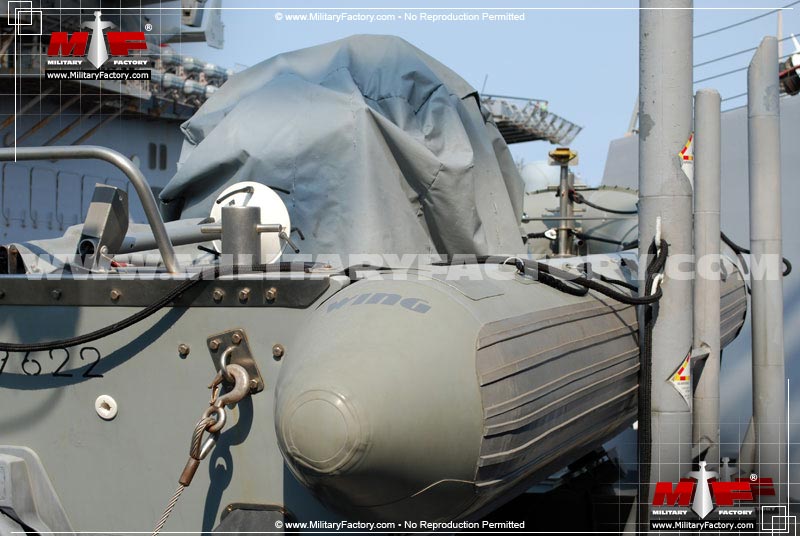
Two Zodiac Marine 24-ft rigid inflatable boats (RIB) can be used for rescue. Other changes include the addition of five blast-hardened bulkheads to lessen vulnerability, adding a solid waste management system, and the ability for fresh water production on board exceeding 24,000 gallons per day. The torpedo reload magazine also accommodates Penguin anti-ship and Hellfire anti-armor air-to-surface missiles, Stinger infrared surface-to-air missiles, LAU 68 2.75-in rockets, and 25-mm cannon and 40-mm grenade ammunition. She is able to carry 40 torpedoes for shipboard or helicopter use (weapons loads are mission-specific). Harpoon missiles were scratched due to the cost and this reduction does degrade the capacity for the vessel to defend itself against enemy anti-ship missiles. The ship's Recovery, Assist, Securing, and Traversing (RAST) system is utilized to move the helicopter into and out of the port and starboard hangars. This track-guided system enables the ships to move SH-60-series helicopters during rough seas.

In April 2006, the USS Roosevelt and the Dutch frigate HNLMS De Zeven Provinciën closed to intercept a hijacked South Korean trawler off the coast of Somalia. Roosevelt and the De Zeven Provinciën were ordered to disengage boarding the trawler when the pirates brought the crew on deck in view of the Roosevelt and pointed firearms at the crew. The hijacked trawler escaped into Somali territorial waters.

In February 2007, the Roosevelt was awarded the 2006 Battle Efficiency "E" award. Roosevelt’s annual average cost of operation is $20,000,000 US.

Sensors:
1 x AN/SPS-67 Surface Search Radar
1 x AN/SPS-73 Surface Search Radar
1 x AN/SQS-53C Hull Mounted Sonar
1 x AN/SQQ-28 Lamps III Shipboard Electronics
1 x AN/SLQ-32A (V) 3
1 x AN/SLQ-25A NIXIE Torpedo Countermeasure
1 x MK36 Mod 18 Decoy Launching System
1 x AN/SRS-1-V9 Combat Direction Finding System

Fire Control:
AN/SPY-1D Radar
MK 99 Mod 3 FCS (Illuminators)
MK 116 Mod 7 Underwater Fire Control System
ATWCS Advanced Tomahawk Weapon Control System

Exterior Communication:
LF through HF Receive,10 kHz - 30 MHz
R-1051 H/URR; twelve receivers
R-2368 H/URR; three receivers
HF Transmit; 2-30 MHz / AN/URT-23D; nine transmitters
VHF Transmit and Receive, 30-162 MHz
AN/GRR-211; two transceivers for non-secure voice
ANNRC-46A; two FM transceivers for secure voice
AN/URC-80 (V)6; one transceiver for bridge-to-bridge communications
UHF Transmit and Receive, 220-400 MHz
AN/URC-93 (V)1; two transceiver for Link 4A
AN/WSC-3 (V)7,11; fourteen transceivers
AN/WSC-3 (V)11, have-quick transceiver
SATCOM Transmit and/or Receive
AN/SSR-1A; one receiver for fleet broadcast
ANNWSC-3A (V)3; five transceivers for digital voice
Infra-Red, Transmit and Receive
AN/SAR-7A; two IR Viewers
Land Line Terminations, Transmit and/or Receive
AN/SAT-2B, one IR Transmitter
Single Channel DC Secure TTY
Telephone Special Communications Channel
AN/USQ-69 (V)7; OTCIXS
AN/USQ-69 (V)8; TADIXS
AN/SYQ-7 (V)5 and AN/USQ-69 (V)6; NAVMACS/CUDIX
AN/USQ-83 (V) and AN/USQ-125 (V); Link 11
AN/SSW-1 D; Link 4A
AN/SRQ-4; HawkLink (LAMPS MK III)
AN/ARR-75 Sonobouy antenna

History text ©2003-2009 www.MilitaryFactory.com • All Rights Reserved
No Reproduction Without Permission • Corrections / Comments to MilitaryFactory at Gmail dot com

Last Updated: 10/5/2009


  Specifications for the USS Roosevelt (DDG-80) Flight IIA
arrow downDimensions:
Length: 179.98ft (54.86m)
Beam: 20.24ft (6.17m)
Draught: 9.94ft (3.03m)

arrow downPerformance:
Surface Speed: 31kts (36mph)
Range: 4,400miles (7,081km)

arrow downStructure:
Complement: 380
Suface Displacement: 9,600tons
arrow downPower:
Engine(s): 4 x General Electric LM 2500 gas turbines delivering 105,000shp. 3 Allison 2500KW Gas Turbine Generators, 2 x shafts with CRP Propellers, 2 x 5 blade CP rudders.
arrow downAir Arm:
2 x Sikorsky SH-60B Seahawk LAMPS III helicopters
arrow downArmament Suite:
2 x Mark 32 MOD 15 triple torpedo tubes
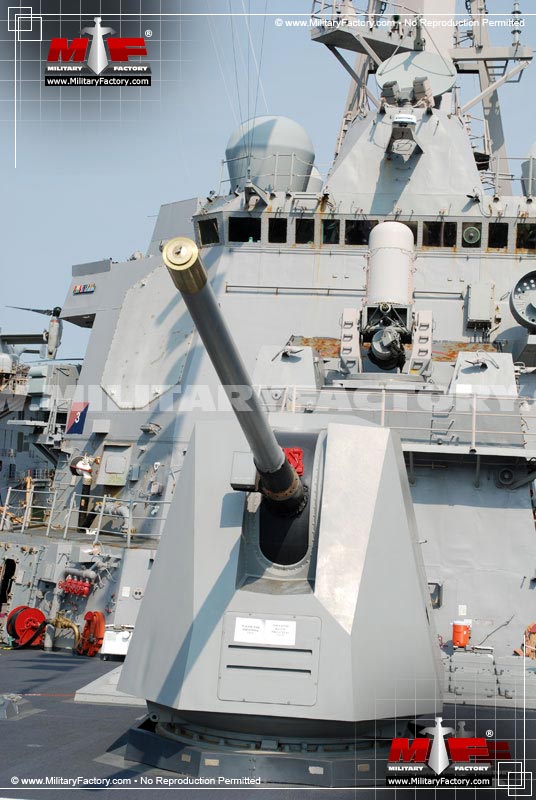
1 x 5" 45 MOD 2 Mark 54 caliber gun
2 x 25mm chain guns
2 x 20mm MK 15 Phalanx CIWS
4 x 12.7mm anti-aircraft machine guns
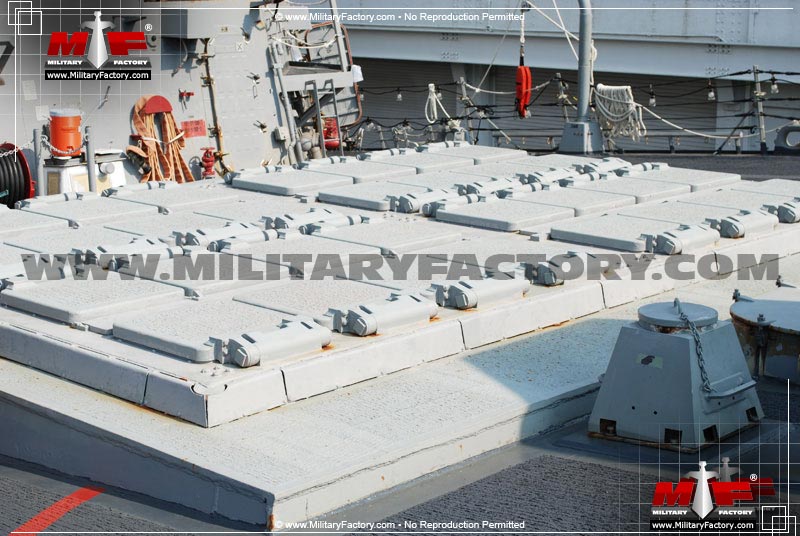
1 x 32 cell Mk 41 Vertical Launch Systems Forward (for RIM-66 SM-2, BGM-109 Tomahawk OR RUM-139 VL-ASROC missiles)
1 x 64 cell Mk 41 Vertical Launch Systems Aft (for RIM-66 SM-2, BGM-109 Tomahawk OR RUM-139 VL-Asroc missiles)

  Pictures of the USS Roosevelt (DDG-80) Flight IIA
     
Picture of USS Roosevelt (DDG-80) Flight IIA
Picture of the USS Roosevelt (DDG-80) Flight IIA
Image of the USS Roosevelt (DDG-80) Flight IIA
     
arrow upView All 10 Images

More Pictures CompareX2 Conversions Dictionary Acronyms

  Special Navy Ship Collections

Collections:
United States Navy Carriers
Modern Warships

World War 2:
Destroyers of World War 2
Navy Ships of World War 2
USN Warships of World War 2
Submarines of World War 2

Vietnam War:
Warhips of the Vietnam War

Miscellaneous:
Battle of Trafalgar
How Submarines Work
United States Navy Classification


  Recent Navy Ship Section Additions
Thumbnail picture of the USS New York LPD-21 amphibious support landing dock
USS New York (LPD-21)
Thumbnail picture of the Bell PACV/ACV hovercraft
Bell PACV/ACV
Thumbnail picture of the USS United States frigate of 1797
USS United States

  Contacting MilitaryFactory.com
We can only get better if you tell us how. You can contact MilitaryFactory.com at MilitaryFactory at gmail dot com (replace "at" with "@" and "dot with ".") with any questions, comments or corrections. We also accept related military imagery that you approve for us to use on our website. Keep in mind, however, that due to volume, we may not directly respond to your inquiry. Please add us to your list of non-blocked recipients!

Aircraft Carriers

  Navy Ship Profile:


Picture of the USS Roosevelt (DDG-80) Flight IIA.
Photo Courtesy of JR Potts, AUS 173d AB

flag of United States
2000
Designation: USS Roosevelt (DDG-80) Flight IIA
Classification Type: Guided-Missile Destroyer
Ship Class: Arleigh Burke-class

Country of Origin: United States
Number in Class: 62

Operators: United States


  Ships in Class
Flight I Ships = USS Arleigh Burke (DDG-51); USS Barry (DDG-52); USS John Paul Jones (DDG-53); USS Curtis Wilber (DDG-54); USS Stout (DDG-55); USS John S. McCain (DDG-56); USS Mitscher (DDG-57); USS Laboon (DDG-58); USS Russell (DDG-59); USS Paul Hamilton (DDG-60); USS Ramage (DDG-61); USS Fitzgerald (DDG-62); USS Stethem (DDG-63); USS Carney (DDG-64); USS Benfold (DDG-65); USS Gonzalez (DDG-66); USS Cole (DDG-67); USS The Sullivans (DDG-68); USS Milius (DDG-69); USS Hopper (DDG-70); USS Ross (DDG-71); Flight II Ships = USS Mahan (DDG-72); USS Decatur (DDG-73); USS McFaul (DDG-74); USS Donald Cook (DDG-75); USS Higgins (DDG-76); USS O’Kane (DDG-77); USS Porter (DDG-78); Flight IIA Ships = USS Oscar Austin (DDG-79); USS Roosevelt (DDG-80); USS Winston S. Churchill (DDG-81); USS Lassen (DDG-82); USS Howard (DDG-83); USS Bulkeley (DDG-84); USS McCampbell (DDG-85); USS Shoup (DDG-86); USS Mason (DDG-87); USS Preble (DDG-88); USS Mustin (DDG-89); USS Chafee (DDG-90); USS Pinkney (DDG-91); USS Momsen (DDG-92); USS Chung-Hoon (DDG-93); USS Nitze (DDG-94); USS James E. Williams (DDG-95); USS Bainbridge (DDG-96); USS Halsey (DDG-97); USS Forrest Sherman (DDG-98); USS Farragut (DDG-99); USS Kidd (DDG-100); USS Gridley (DDG-101); USS Sampson (DDG-102); USS Truxtun (DDG-103); USS Sterett (DDG-104); USS Dewey (DDG-105); USS Stockdale (DDG-106); USS Gravely (DDG-107); USS Wayne E. Meyer (DDG-108); USS Jason Dunham (DDG-109); USS William P. Lawrence (DDG-110); USS Spruance (DDG-111); USS Michael Murphy (DDG-112)

  Collections
  • Dreadnoughts - Bigger Ships, Bigger Guns
  • Pocket Battleships
  • Destroyers - Power of One
  • Tall Ships
  • Carriers of the United States Navy
  • Cruisers
  • Battleships of World War 2


Free GI Bill Guide

Top MF Stuff: Military Pay Scale Chart | Military Ranks | World War 2 Weapons | Sniper Rifles | Conversion Calculators


©2009 www.MilitaryFactory.com • Content ©2003-2009 MilitaryFactory.com • All Rights Reserved • Disclaimer Privacy Policy Site Map Origins
Most photographic images appearing on this site are courtesy of the United States Department of Defense and are approved for public use.
Other images acquired through the public domain. Digital art work courtesy of Dan Alex.
Business Consulting by Kyle Williams

Material presented throughout this website is for historical and entertainment value and should not to be construed as usable for
hardware restoration, maintenance or general operation. Please consult manufacturers for such information.

Site Contact: militaryfactory at gmail dot com (replace "at" with "@" and "dot" with ".") eXTReMe Tracker