Military Factory
Military Pay Chart
Global Firepower
Military Industrial Complex
Second World War
Home
Military Pay Scale
Military Ranks
Small Arms
Aircraft
Land Systems
Navy
Education
Military Factory Facebook Logo
flag of United States

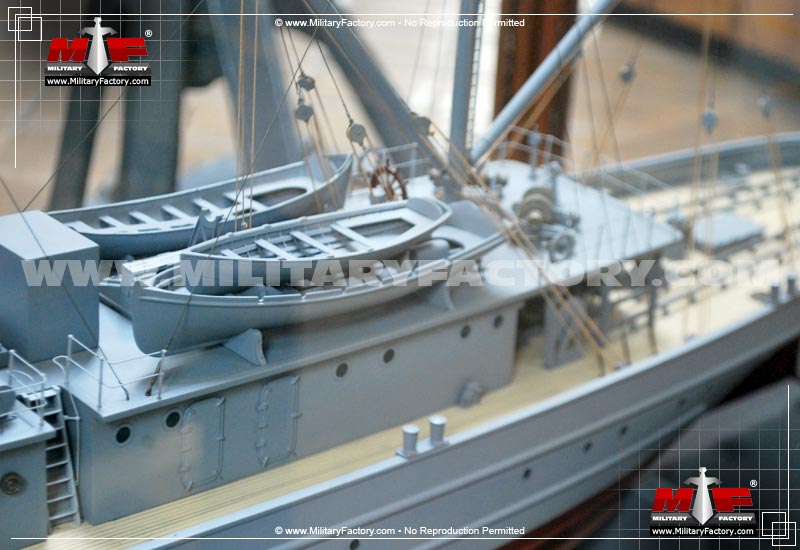
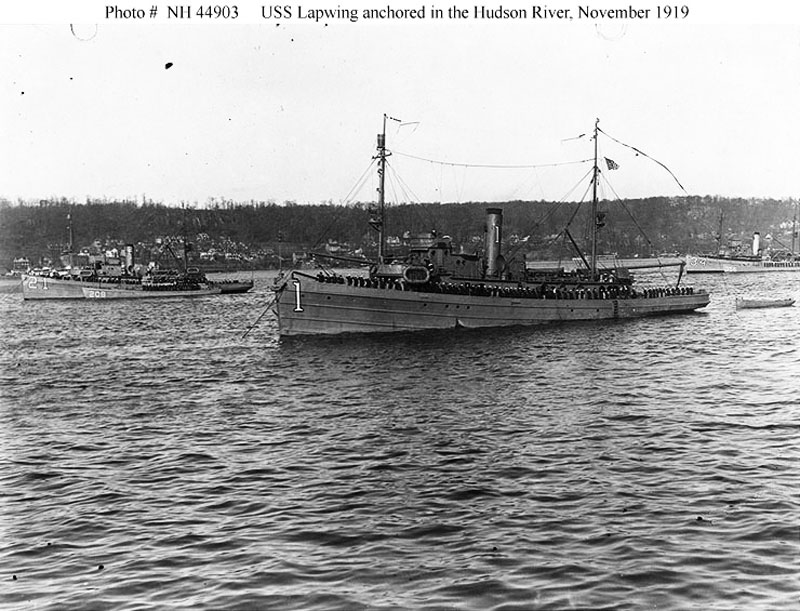
USS Lapwing (AM-1) Minesweeper (1918)

Authored By JR Potts, AUS 173d AB | Last Updated: 5/9/2013

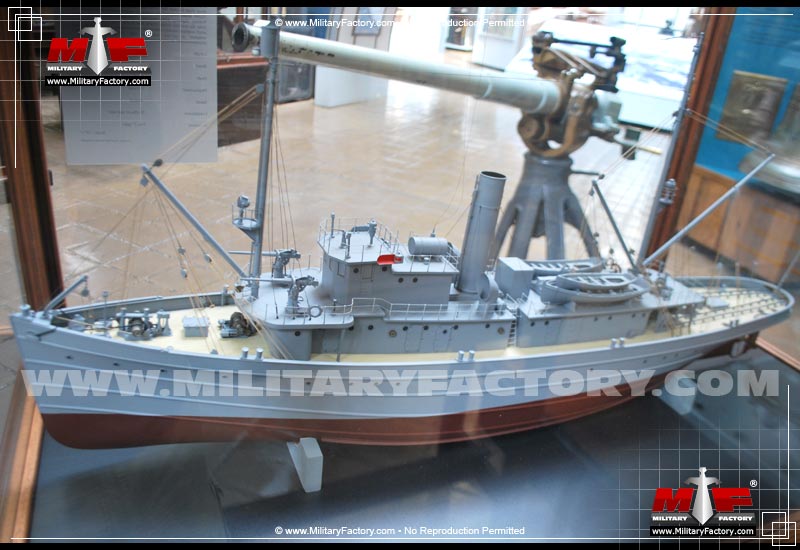
Lapwing served as a minesweeper for a short time in World War 1 and was stiil available for service in World War 2, now converted to a Seaplane Tender.

Find a School Near You
Follow Military Factory on Facebook:
Trending on Military Factory:
Recent Articles:
Leading up to 1917, the United States Navy had used sloops and tugs to locate and destroy enemy mines in harbors and on the seas. As American ships ventured ever closer to foreign shores, a special ship was needed to locate and remove such mines from the all-important sea lanes. The USS Lapwing (AM-1) was the lead ship of her class of a minesweepers becoming, the first minesweeper in United States Navy history. The class was named for birds, the lapwing a plover that was slow and in flight and seemed to display an uneven wing-flapping action. The navy built 49 of these ships to be used worldwide in much the same vein as her namesake bird ranging in abundance throughout Europe, Asia and Northern Africa. Lapwing was laid down in October of 1917 at the Todd Shipyard Company in New York and commissioned on June 12th, 1918 with Lieutenant (Junior Grade) William Fremgen in command. The Navy felt these ships could double in the training role and thusly stationed junior grade officers in command of them.

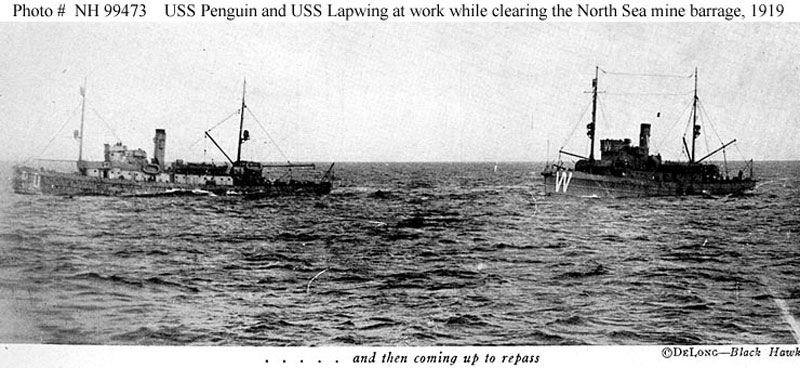
USS Lapwing, Minesweeper No.1, put to sea for normal sea trials with her new crew. The trials were not only needed to check the ships handling but to devise new minesweeping maneuvers for the Navy. Following several convoy escort cruises to Halifax, Lapwing departed New London, Connecticut on September 26th of 1918 for Europe. Assigned to the North Sea mine barrage, the USS Lapwing removed some 2,160 wartime mines from British waters between June and September of 1919.

During World War 1, the British and Germans mined such sea lanes in the North Sea and throughout the English Channel. There have always been three major uses for mine: offensive, defensive and psychological. Offensive mines were dropped in enemy waters, just outside the valuable harbors and in shipping routes with the intention of sinking unsuspecting ships. Defensive minefields could be congregated at strategic locations and use to protect a coast from enemy ships and submarines. Minefields also carried with them the inherent psychological effect and could be equally set along enemy shipping lanes. Just a few a mines along a major shipping route could delay enemy supply convoys for hours or days until the entire area was swept and cleared by mine sweepers.

Minesweepers of this time were only equipped with mechanical sweep devices used to detonate "contact" mines. The earliest mines were usually the contact type - a low cost alternative to any other anti-ship weapon of the day. Contact mines needed to be very close to a metal target before they could trigger detonation, limiting their damage to the immediate vicinity and usually affecting only the single vessel that had triggered the detonation. The first mine detonators that were used contained a vial filled with sulfuric acid surrounded by a mixture of potassium perchlorate and sugar. When the vial was crushed, the acid ignited a flame that - in turn - ignited the onboard gunpowder causing a spectacular localized detonation. Early in the 1870s, the Hertz Horn Mine was invented. These mines could remain active in the sea for several years after being laid down. The mine's upper half was studded with hollow lead spikes, each about 10 inches long and containing a glass vial filled with sulfuric acid. When the mine bumped against a ship's hull it would crush the metal spiked "horn" and crack the vial inside of it, releasing the acid. The acid would drain down through a tube to a lead acid battery to which the battery would then become energized and cause a quick electrical spark, leading to detonation and explosion. Many early mines were extremely fragile and unstable, making them quite dangerous to handle. Their glass containers were filled with nitro or mechanical devices that activated them when tilted. At any rate, it was a dangerous business and many mine laying ships were destroyed when their own cargo of live mines exploded.

A submarine could run at any depth down to the seabed and, as a result, the "antenna mine" was invented to combat them. This particular mine had a copper wire attached to a buoy that floated above the mine. The top and bottom part of the cable connecting the mine to the weight on the seabed that was also made of copper. If a submarine's steel hull touched the copper wire, the slight voltage produced from the contact between two different metals produced a charge that detonated the mine.

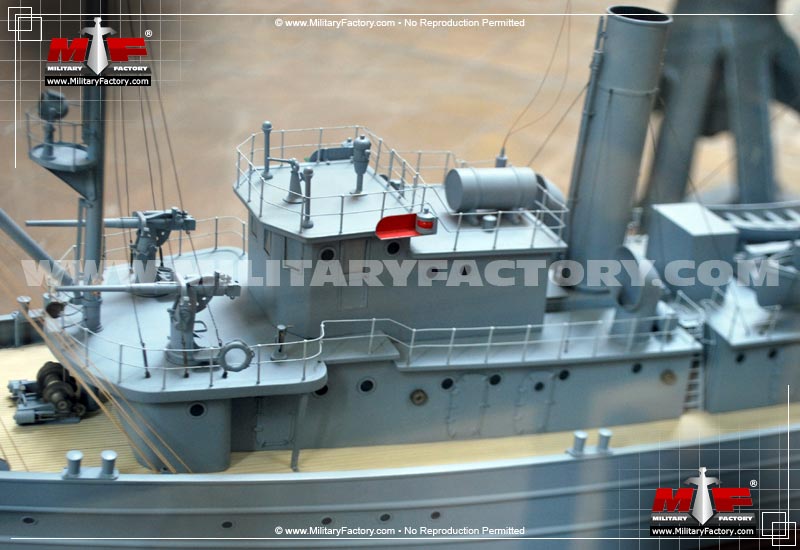
Mechanical sweeps became devices designed to cut the anchoring cables of moored mines and tow them behind the minesweeper. They utilized a towed body called oropesa floats, connected to a kite otter that was needed to maintain the sweep at the desired depth and position. A contact sweep used a wire that was dragged through the water by one or two ships to cut the mooring wire of floating mines or provided a distance sweep that mimicked a ship to purposely detonate such mines. Each run could cover between one and two hundred meters and the ships were required to move deliberately and slowly in a straight line. If a contact sweep hit a mine, the wire of the sweep rubbed against the mooring wire until it was fully cut. Sometimes the minesweeper towed explosive devices to cut the mine's wire and were used to lessen the strain on the sweeping wire. Mines that were cut free were then generally exploded with a blast from a 3-inch deck gun.

After World War 1, Lapwing returned to the United States and, after normal repairs and some re-crewing, she was dispatched to the West Coast, arriving in San Diego in October of 1920. USS Lapwing received orders to sail for Pearl Harbor in January of 1921. USS Lapwing was assigned to the Pacific Fleet stationed at Pearl Harbor and performed minesweeping operations in Hawaiian waters until she was decommissioned on April 11th, 1922 at Pearl.

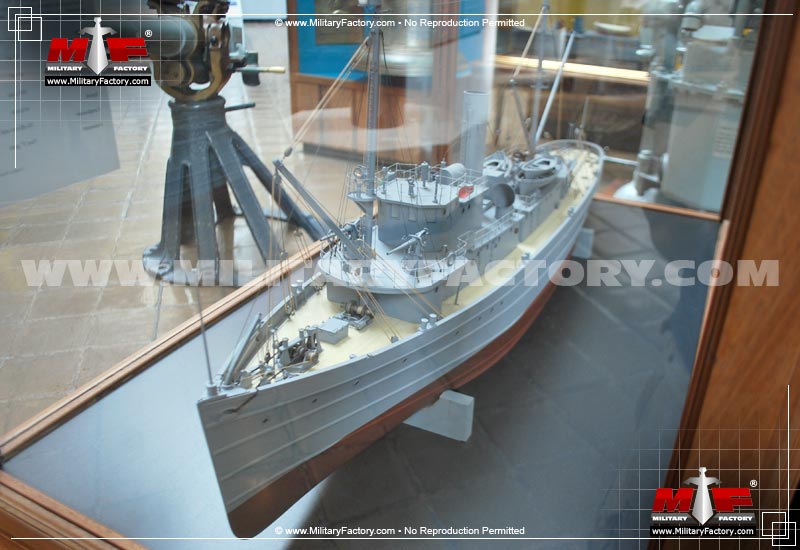
The U.S. Navy now planned for "Small Seaplane Tenders" (AVPs), vessels requiring shallow drafts and capable of supporting one flight squadron. These vessels were cheaper to build or convert from other classes and were able to operate in shallow waters. These ships also had hangars for storing and maintaining aircraft without the need for a flight deck. Cranes were added to Lapwing to lower aircraft into the sea for take-off and to recover them after landing. The seaplane could only be operated in a smooth sea and the ship had to stop for launching or recovery of aircraft, and both actions could take around 20 minutes each. The tender was often stationed ten miles or so in front of the main battle fleet along with the cruiser screen for protection when it launched its aircraft. On September 1st, 1932, USS Lapwing was officially converted to a Small Seaplane Tender.

USS Lapwing, with Lieutenant R. J. Arnold in command, now had a new mission to serve and protect her seaplane aircraft. The ship's dimensions changed to support the new mission. The added weight of the aircraft crane and supporting aircraft supplies (along with 80,000 gallons of aviation fuel) increased her draught to 13 feet, 1 inch and the crew increased by the addition of seven airmen. Her new station was Coco Solo, Canal Zone and she arrived for duty in October of 1932.
Continue to Page 2 (of 2) >>
Text ©2003-2013 www.MilitaryFactory.com • All Rights Reserved • No Reproduction Permitted
MilitaryFactory.com does NOT sell equipment/weaponry. Material presented throughout this website is for historical and entertainment value and should not to be construed as usable for hardware restoration, maintenance or general operation. Please consult manufacturers for such information. Our disclaimer. Email corrections / Comments to MilitaryFactory at Gmail dot com.
Picture of USS Lapwing (AM-1)
Pic of the USS Lapwing (AM-1)
View All Images (2)

Specifications for the
USS Lapwing (AM-1)
Minesweeper


Country of Origin: United States
Initial Year of Service: 1918
Operators: United States


Crew: 78


Length: 187.9ft (57.27m)
Beam: 35.6ft (10.85m)
Draught: 9.9ft (3.02m)
Displacement: 950tons


Machinery: 1 x Harlan & Hollingsworth vertical triple expansion steam engine generating 1,400shp; 2 x Babcock Wilcox header boilers; 1 x propeller shaft.


Surface Speed: 14kts (16mph)
Range: 0miles (0km)


Armament:
2 x 3-inch 76mm guns


Ship Class: Lapwing-class
Number-in-Class: 49
Ships-in-Class: USS Lapwing (AM-1); USS Owl (AM-2); USS Robin (AM-3); USS Swallow (AM-4); USS Tanager (AM-5); USS Cardinal (AM-6); USS Oriole (AM-7); USS Curlew (AM-8); USS Finch (AM-9); USS Heron (AM-10); USS Turkey (AM-11); USS Woodcock (AM-12); USS Qual (AM-13); USS Patridge (AM-14) USS Eider (AM-15); USS Thrush (AM-16); USS Avocet (AM-17); USS Bobolink (AM-18); USS Lark (AM-19); USS Widgeon (AM-20); USS Teal (AM-21); USS Brant (M-22); USS King Fisher (AM-23); USS Rail (AM-24); USS Pelican (AM-25); USS Falcon (AM-26); USS Osprey (AM-27); USS Seagull (AM-8) USS Tern (AM-29); USS Flamingo (AM-30); USS Penguin (AM-31); USS Swan (AM-32); USS Whippoorwill (AM-33); USS Bittern (AM-34); USS Sanderling (AM-35); USS Auk (AM-36); USS Chewink (AM-37); USS Cormorant (AM-38); USS Gannet (AM-39); USS Grebe (AM-40); USS Mallard (AM-41); USS Ortalan (AM-42) USS Peacock (AM-43); USS Pigon (AM-44); USS Red Wing (AM-45); USS Sand Piper(AM-46); USS Vireo (AM-47); USS Warbler (AM-48); USS Willet (AM-49)

ALL NAVY SHIP CATEGORIES
Site Disclaimer | Privacy Policy | Site Map | MF Origins


©2013 www.MilitaryFactory.com • Content ©2003-2013 MilitaryFactory.com • All Rights Reserved • Site Contact Email: militaryfactory at gmail dot com. The "Military Factory" name and MilitaryFactory.com logo are registered ® trademarks and protected by all applicable domestic and international intellectual property laws.


Top MF Stuff: 2013 Military Pay Scale | Military Ranks | WW2 Weapons | Sniper Rifles | Kts to Mph | WW1 Aircraft | Automatic Rifles | Aircraft Cockpits | Vietnam War Weapons | Main Battle Tanks | Submachine Guns | Shotguns | French Military Victories


Most photographic images appearing on this site are courtesy of the United States Department of Defense and are approved for public use. Other images acquired through the public domain. Digital art work courtesy of Dan Alex. Business Consulting by Kyle Williams. Material presented throughout this website is for historical and entertainment value and should not to be construed as usable for hardware restoration, maintenance or general operation. Please consult manufacturers for such information.


eXTReMe Tracker