KMS Admiral Graf Spee
The Admiral Graf Spee was scuttled off the coast of Montevideo in the 1939 Battle of the River Plate
By Staff Writer
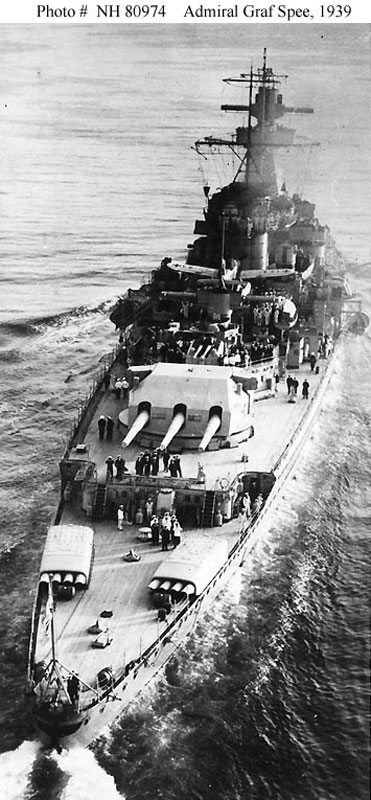
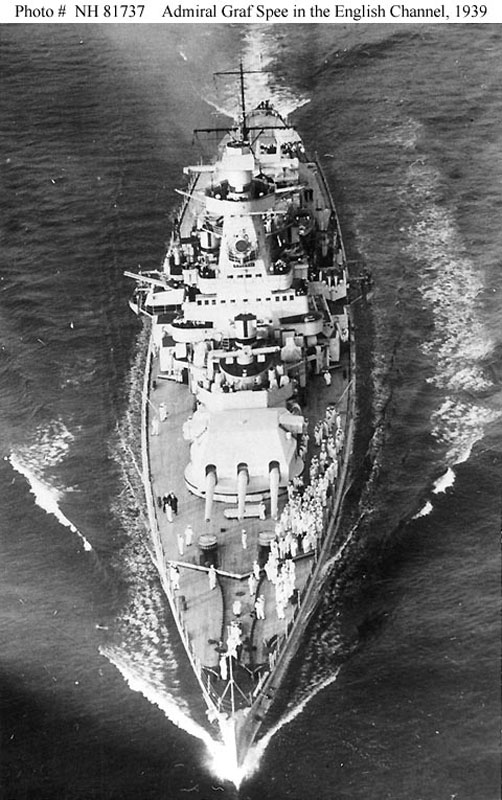
The Admiral Graf Spee was a pre-war vessel of the Deutschland-class of German ships. Designed and built during a time when Germany somewhat still heeded the limitations of the Treaty of Versailles, a treaty stating that no signing nation could produce a warship with a displacement exceeding 10,000 tons, the Admiral Graf Spee was a product of both rule-bending and outright disregard. The Deutschland-class was committed to see by the KMS Deutschland, the first ship in the class. This vessel was followed by the Admiral Scheer and, finally, the Admiral Graf Spee - a vessel named after World War 1 German Admiral Maximilian von Spee, killed in combat during the conflict.
Though all three ships would easily exceed the allowed tonnage of 10,000 tons (the Graf Spee topped 16,000 at construction's end) they were never truly of battleship caliber vessels. Selected machinery came in the shape of eight MAN-brand diesel engines producing 56,000 shaft horsepower to two shafts. This came at the benefit of speed and light weight allowing for attention to be paid to the overall protection of the vessel through armor and, consequently, the armament. Construction consisted of electric welding which further saved weight as opposed to utilizing riveting, a traditional ship-building method.
What the German designers had in fact produced was more of a "tweener" design - neither battleship nor true cruiser. In the end, the vessel sported battleship-like armament and armor though it was faster than most and took on the capabilities of a true cruiser. To this end, the design became known to the Allies as a "pocket battleship" and the name took for the type since. The Graf Spee was also further set apart from her contemporaries in that the type took on an early form of shipborne radar known as Seetakt.
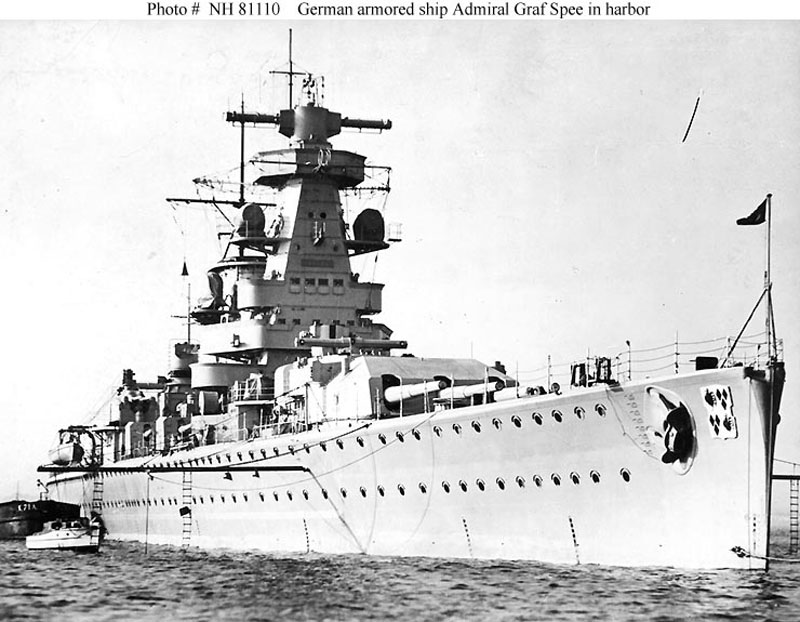
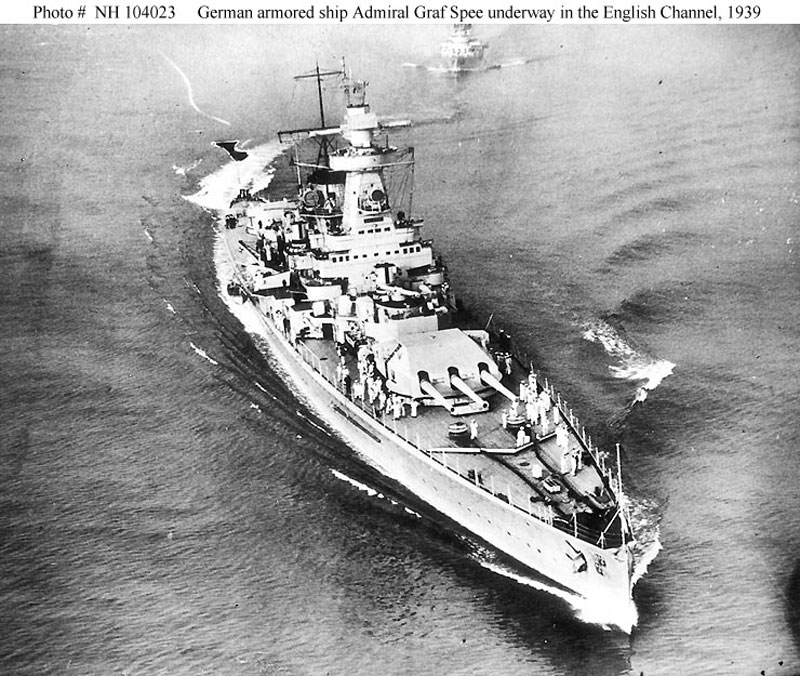
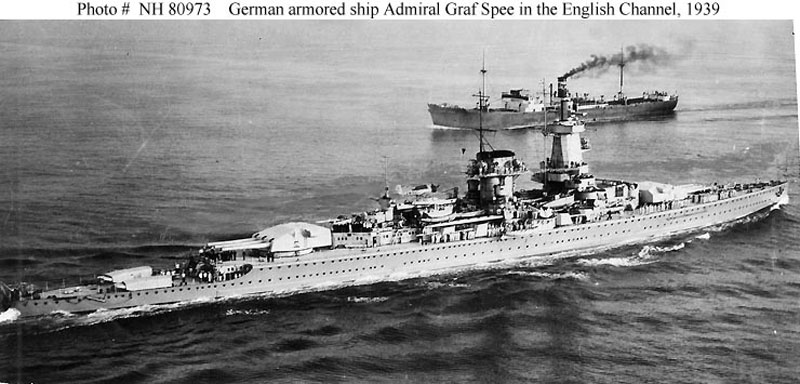
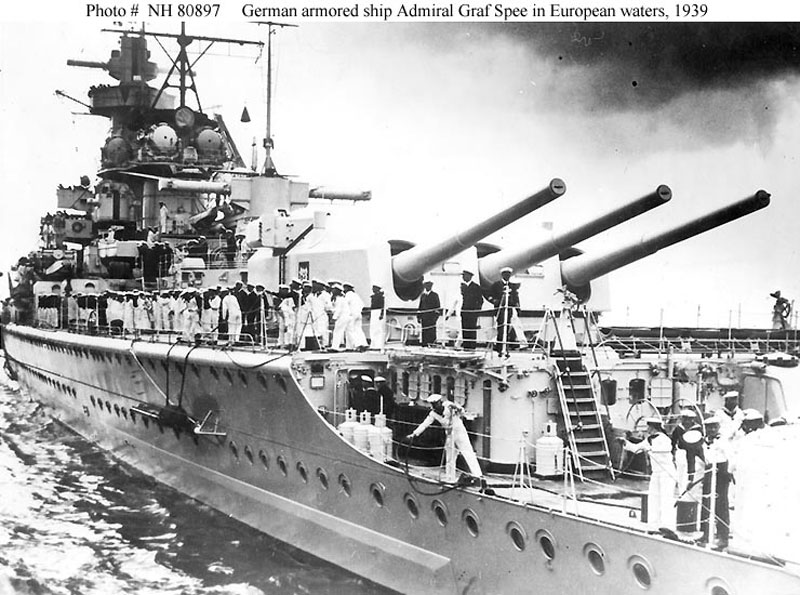
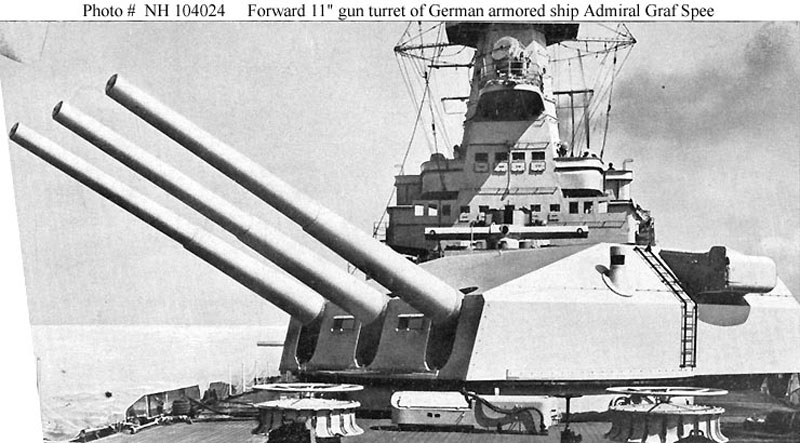
The Graf Spee was armed with 6 x 11" main guns mounted in two turrets - three guns to a turret - with one system forward and one held aft. This was augmented by the addition of 8 x 5.9" guns and further strengthened by 6 x 105mm, 8 x 37mm and 10 x 20mm cannons throughout. Additionally, the vessel was given true ship-killing capabilities in the form of 8 x 533mm torpedo tubes. Two Arado Ar 196 floatplane aircraft were also carried aboard and launched from a catapult held amidships behind the bridge superstructure. The type's profile was characterized by its single funnel midship and tall ranging mast. A crew of 1,150 officers and sailors operated the vessel, which could achieve a top speed in excess of 28 knots.
The Graf Spee is best known for her ultimate action at the Battle of River Plate in the South Atlantic, taking on British Royal Navy ships. Shells were exchanged in anger between the two sides with the Graf Spee more or less earning the respect. The HMS Exeter was turned from the battle with successive hits from the Graf Spee. Her main guns were truly a match for the lighter armored British vessels but she was not invincible as enough damage was incurred (some reports state up to 60 direct hits on her surface) to make the German cruiser find a safe port for repair.
Upon leaving port on December 17th, 1939, British ships ripped into her once more. The damaged sustained from the earlier fighting was weighing heavily on the vessel, now taking on more punishment. The decision was made to scuttle the vessel. Her crew were taken prisoner but her captain (Langsdorff) elected to kill himself in macabre honorary fashion some three days after the Graf Spee's last voyage.
The Admiral Graf Spee was laid down in 1932 and launched in 1934. She was officially commissioned in 1936. All of the Deutschland-class ships were eventually lost to action in World War 2. The original Deutschland was renamed to the Lutzow.
History text ©2003-2009 www.MilitaryFactory.com • All Rights Reserved
No Reproduction Without Permission • Corrections / Comments to MilitaryFactory at Gmail dot com
Last Updated: 6/27/2009
|