The M114 Command and Reconnaissance Carrier followed the ubiquitous M113 Armored Personnel Carrier (APC) series into operational service. The M113 of 1960 would go on to see extensive service on a global scale and be featured in the inventories of a multitude of American-friendly nations as a do-all, be-all multi-role platform. The M113 also survived in a variety of useful battlefield forms beyond her initial APC offering and went on to become a dedicated guided-missile launch platform, armored assault vehicle, dedicated command vehicle and smoke screen generator variant to name a few. In contrast to the 80,000 M113 systems built, a little over 600 M114s were ultimately delivered to the US Army.
The M114 was not as lucky as her older sister, a mount who found success in the Vietnam War and essentially ushered the way for the smaller M114. The newer M114 served a short operational life in service with the United States Army, seeing some action in the conflict though being subsequently forced into early retirement after just a few years of use. In all, her tenure would last just over a decade. Her reconnaissance value in the Vietnam War was eventually replaced by the more capable, four-man M551 Sheridan light reconnaissance tank of 1969 mounting its powerful 152mm main gun. Key limitations of the M114 became her poor mechanical reliability, especially when exposed to the rigors of the jungle environment. She was also deemed underpowered for the cross-country role and lacked much in the way of crew protection - particularly from land mines. Her hull also proved less than desirable when attempting to cross ditches and fording streams proved a chore. The M114 was removed from Vietnam War service as soon as November of 1964. It was not until 1973 that General Creighton Abrams formally brought about the retirement of the M114 from the US Army inventory - labeling the little machine as a "failure".
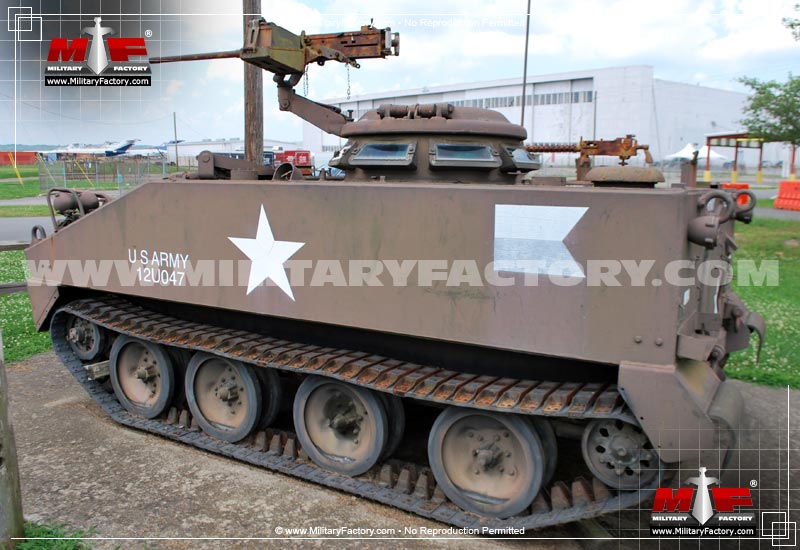
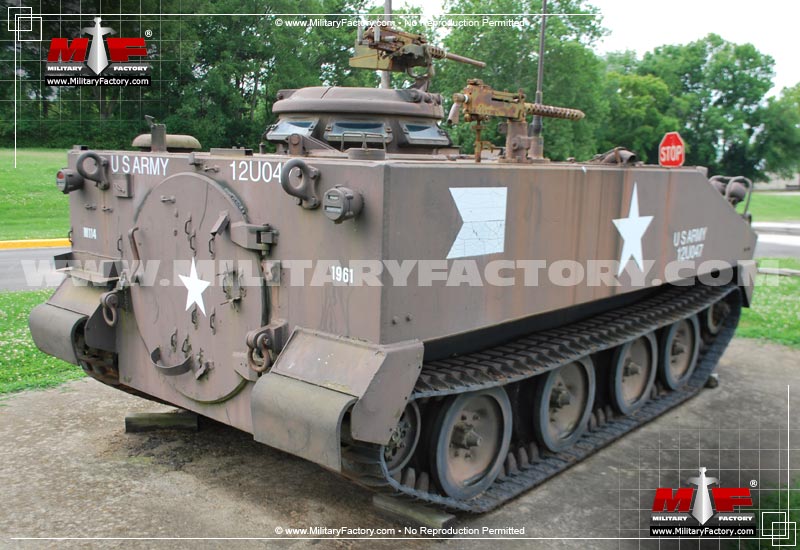
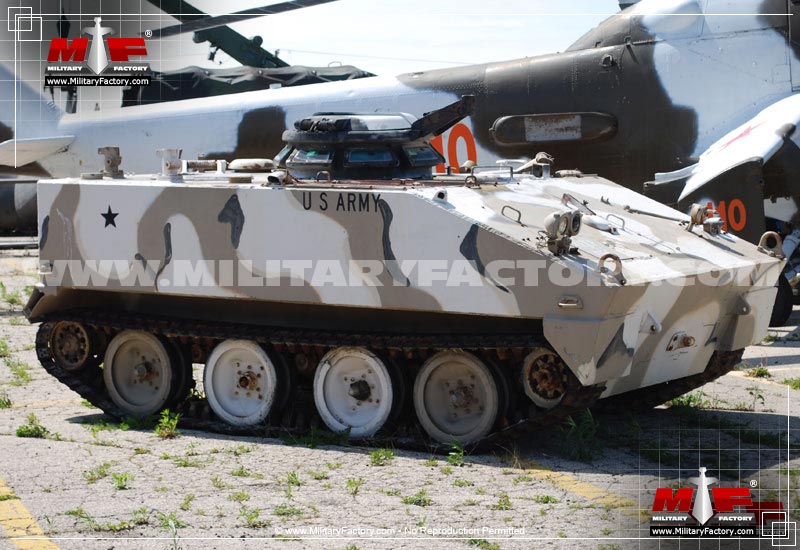
Whereas the M113 was specifically designed to transport combat-ready troops to battle zones while offering some level of protection, the diminutive M114 was specifically categorized as a "Command and Reconnaissance Carrier" built for speed and concealment from foes - ready to dictate enemy positions, movement or reactions ahead of a main operating force. As such, she remained a much lighter and smaller prospect - even capable of being air-dropped - when compared to the M113 and featured one less road wheel to a track side. Both the M113 and M114 were amphibious allowing them to traverse certain bodies of water though with some prior preparation, being propelled through the water by the power of their turning tracks. The M114's drive sprocket was held at the front of the hull (near the engine) with the track idler at the rear. No track return rollers were present.
The M114 originated with the T114 pilot (prototype) vehicles for evaluation. These were followed into service with the main (and initial) M114 serial production models. The M114A1 came online next and sported a revised commander's weapon station that allowed for the firing of the 12.7mm M2 heavy machine gun from within the vehicle through a manually-operated cupola. Additionally, the trim vane for amphibious traverse was strengthened. The M114A2 began life as the M114A1E1 and arrived in production form in 1969. She featured a revised armament suite of 1 x M139 (essentially the Hispano-Suiza HS.820) 20mm cannon fitted to a hydraulically-powered commander's cupola. This update, however, was not enough to save the M114 line from extinction within a few short years. Production of the M114 was handled by the Cadillac Division of General Motors.
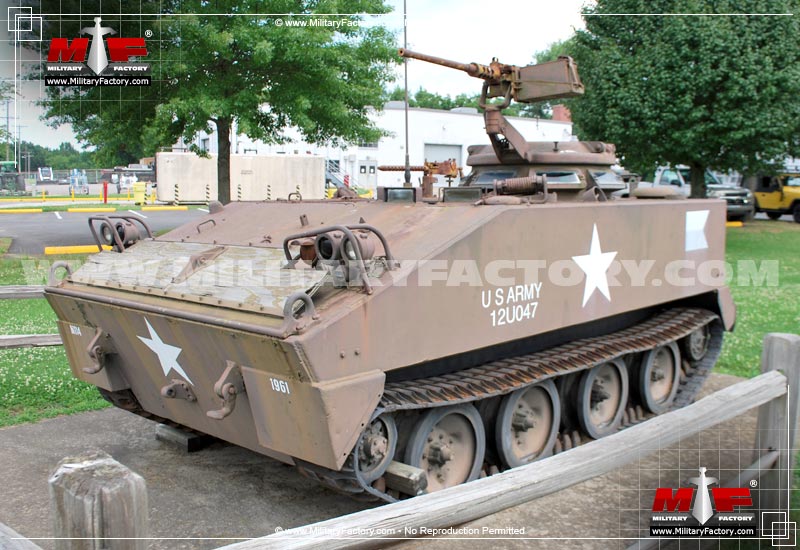
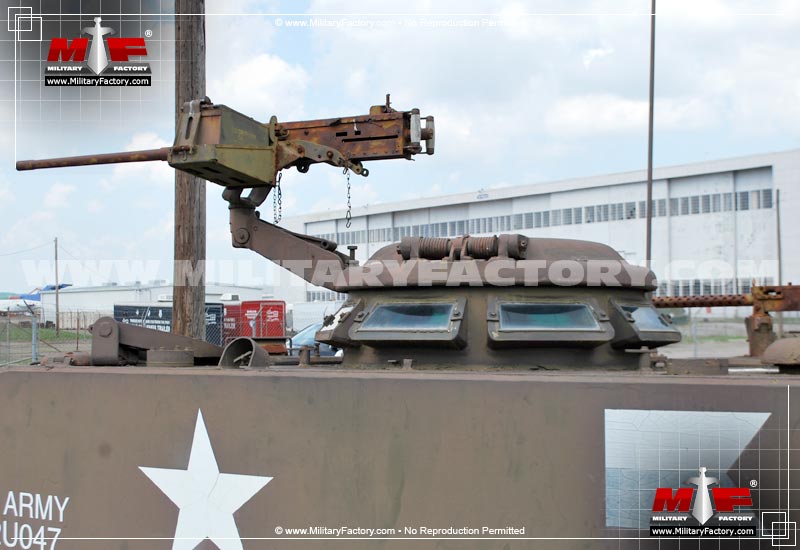
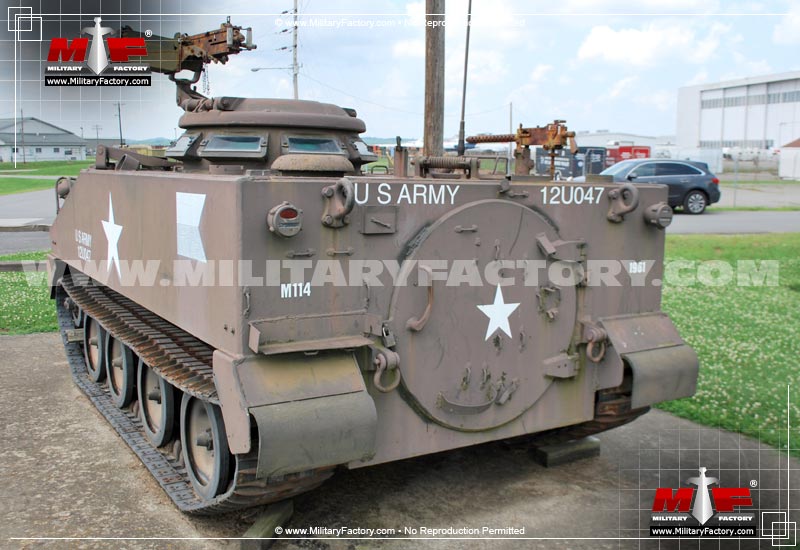
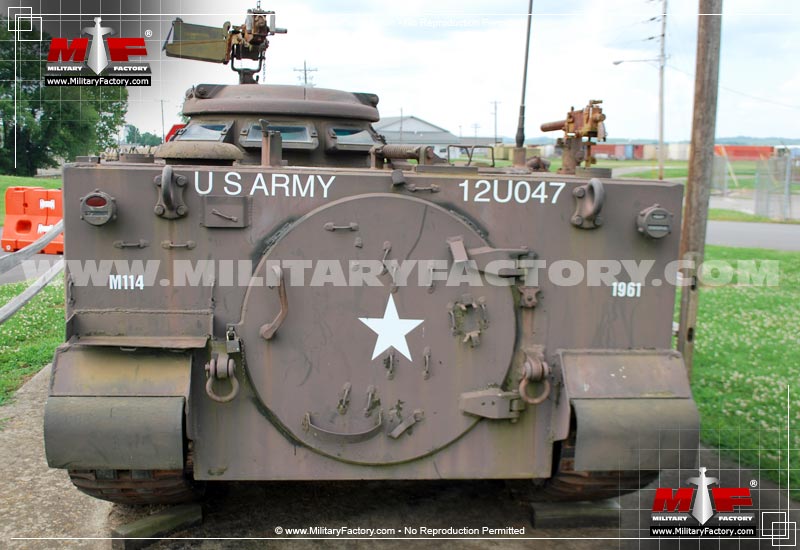
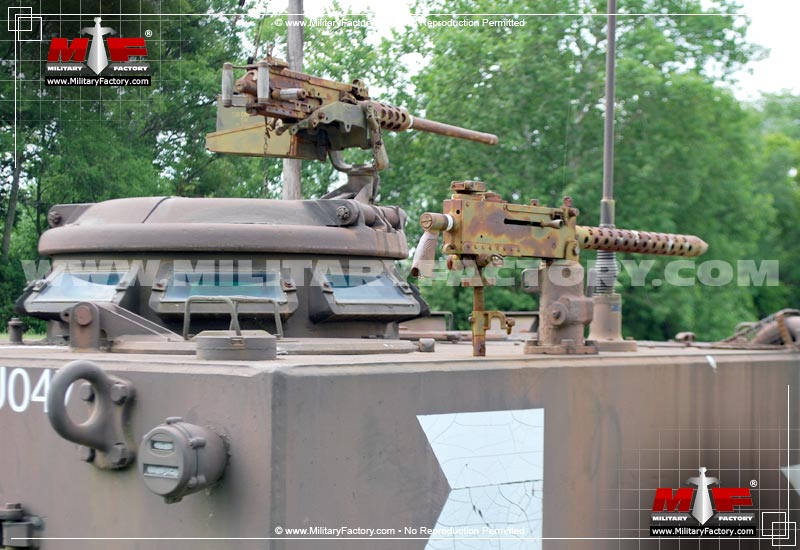
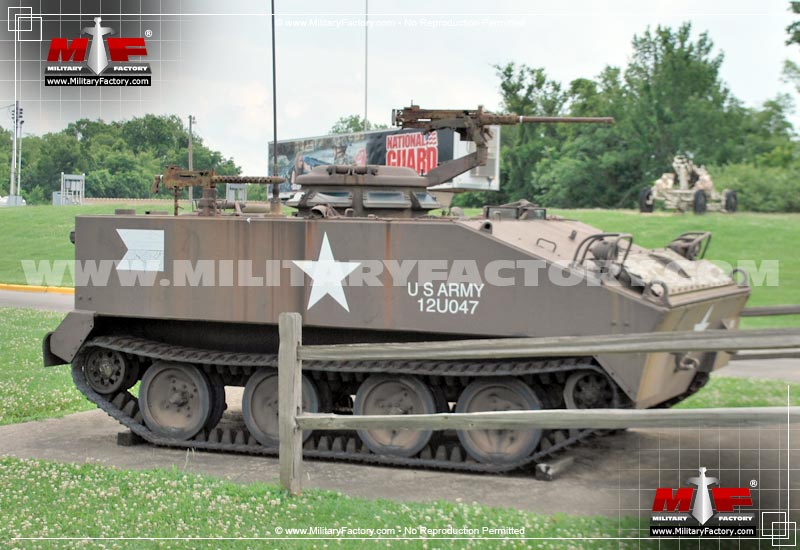
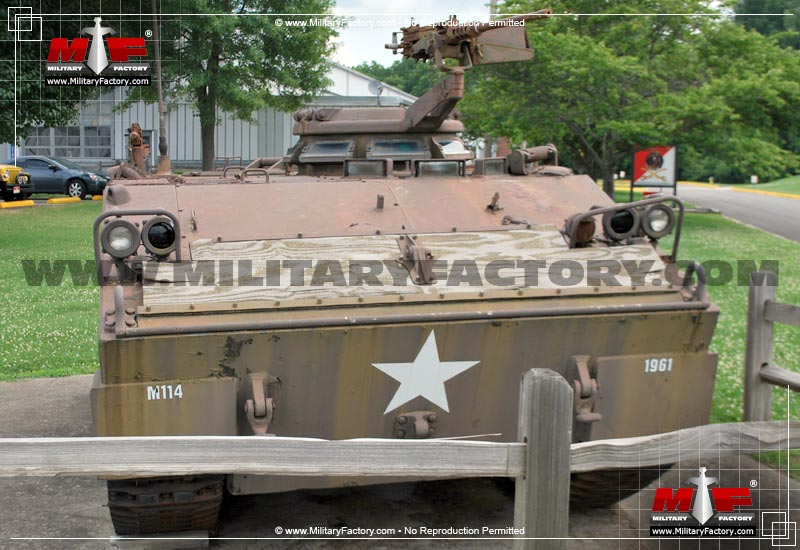
Externally, the M114 looked as nothing more than a compact version of the M113. She was definitively boxy in overall shape with a sloping glacis plate and up-ticked bow section. Sides were straight-faced slabs and the roof was flat. The commander's cupola protruded from the hull roof and vision blocks were clearly identifiable. The cupola was decidedly offset to the left side of the hull roof and held the primary armament. The driver maintained a front left position in the forward hull with access managed via a circular hatch and the engine compartment was to the right front - marked by a rectangular access panel on the glacis plate and grilled venting on the roof. At the squared off rear face of the hull was a large rectangular entry-exit hatch. A third, rear-mounted roof hatch (diagonal rear from center) allowed for the third (and final) crewmember - the designated "observer" - to fire the pedestal-mounted secondary armament. Armor protection throughout the vehicle topped off at 44.5mm at its thickest. Overall the vehicle was of welded construction with a rolled aluminum hull.
Primary armament centered around a 12.7mm Browning M2 heavy machine gun with a 7.62mm M60 general purpose machine gun as secondary. This provided the vehicle with the capability of engaging soft-skinned targets and vehicles as well as enemy infantry as needed. Both gun positions could cover all sides of the vehicle. Up to three M72A1 LAW (Light Anti-tank Weapon) launchers could be stored on the rear door for an additional offensive "punch" when needed.
The M114 featured a listed weight of 15,000lbs. She held a running length of 4/46 meters with a width equal to 2.33 meters and a height of 2.39 meters. Power was derived from a single Chevrolet 283 series 8-cylinder gasoline engine delivering 160 horsepower. This provided the vehicle with a top speed of 36 miles per hour and an operational range of 275 miles. The suspension system was of the torsion-bar variety to provide for acceptable cross-country performance.
The United States Army remained the sole operator of the M114 before she was discontinued.
Power & Performance Those special qualities that separate one land system design from another. Performance specifications presented assume optimal operating conditions for the M114 CRV Command and Reconnaissance Vehicle.
1 x Chevrolet 283-V8 Military 8-cylinder, 4-cycle, vee gasoline Engine with 305MC HydraMatic Transmission generating 160hp @ 4,200rpm. Installed Power
36 mph 58 kph Road Speed
275 miles 443 km Range
Structure The physical qualities of the M114 CRV Command and Reconnaissance Vehicle.
4 (MANNED) Crew
14.6 ft 4.46 meters O/A Length
7.6 ft 2.33 meters O/A Width
7.5 ft 2.3 meters O/A Height
15,093 lb 6,846 kg | 7.5 tons Weight
Armament & Ammunition Available supported armament, ammunition, and special-mission equipment featured in the design of the M114 CRV Command and Reconnaissance Vehicle.
M114/M114A1:
1 x 12.7mm Browning M2 heavy machine gun.
1 x 7.62mm M60 general purpose machine gun.
3 x M72A1 LAW launchers on rear door.
M114A2:
1 x 20mm M139 cannon
1 x 7.62mm M60 general purpose machine gun
3 x M72A1 LAW launchers on rear door
AMMUNITION: 1,000 x 12.7mm ammunition.
3,000 x 7.62mm ammunition.
Variants Notable series variants as part of the M114 CRV family line.
M114 - Prototype Vehicles
M114 - Initial Production APC
M114A1 - Revised commander's weapon station; internally-controlled 12.7mm machine gun; manually-powered cupola; revised trim vane.
M114A2 - Main machine gun replaced by 20mm Hispano-Suiza HS.820 cannon (US M139); hyraulically-powered commander's cupola.
M114A1E1 - Original Designation for M114A2 model.
Operators Global customers who have evaluated and/or operated the M114 CRV. Nations are displayed by flag, each linked to their respective national land systems listing.
Total Production: 615 Units Contractor(s): Cadillac Motor Car Division of General Motors Corp, USA
[ United States ]
1 / 10
Image copyright www.MilitaryFactory.com; No Reproduction Permitted.
2 / 10
Image copyright www.MilitaryFactory.com; No Reproduction Permitted.
3 / 10
Image copyright www.MilitaryFactory.com; No Reproduction Permitted.
4 / 10
Image copyright www.MilitaryFactory.com; No Reproduction Permitted.
5 / 10
Image copyright www.MilitaryFactory.com; No Reproduction Permitted.
6 / 10
Image copyright www.MilitaryFactory.com; No Reproduction Permitted.
7 / 10
Image copyright www.MilitaryFactory.com; No Reproduction Permitted.
8 / 10
Image copyright www.MilitaryFactory.com; No Reproduction Permitted.
9 / 10
Image copyright www.MilitaryFactory.com; No Reproduction Permitted.
10 / 10
Image copyright www.MilitaryFactory.com; No Reproduction Permitted.
The "Military Factory" name and MilitaryFactory.com logo are registered ® U.S. trademarks protected by all applicable domestic and international intellectual property laws. All written content, illustrations, and photography are unique to this website (unless where indicated) and not for reuse/reproduction in any form. Material presented throughout this website is for historical and entertainment value only and should not to be construed as usable for hardware restoration, maintenance, or general operation. We do not sell any of the items showcased on this site. Please direct all other inquiries to militaryfactory AT gmail.com. No A.I. was used in the generation of this content.