Military Factory
Military Pay Chart
Global Firepower
Military Industrial Complex
Second World War
Home
Military Pay Scale
Military Ranks
Small Arms
Aircraft
Land Systems
Navy
Education
Military Factory Facebook Logo
flag of United States

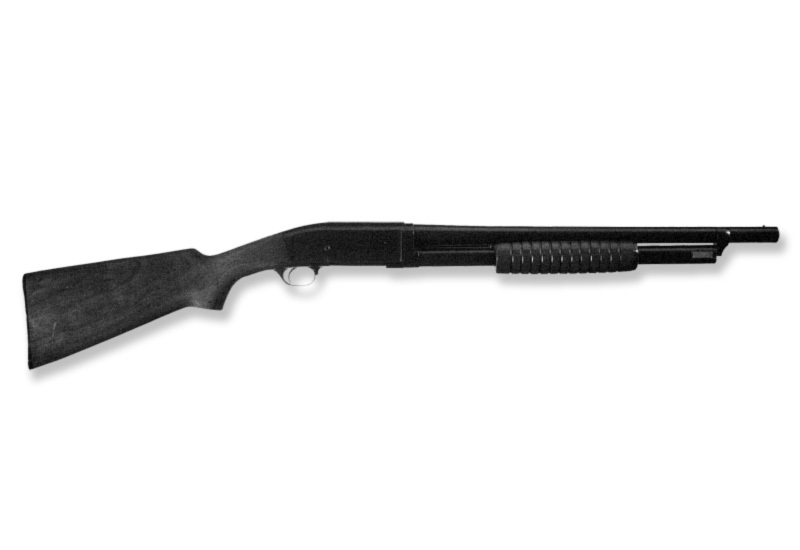
Remington Model 10 (M10) Pump-Action Slide Shotgun (1908)

Authored By Staff Writer | Last Updated: 12/20/2012

The Remington Model 10 appeared in both World War 1 and World War 2 with American military forces.

Find a School Near You
Follow Military Factory on Facebook:
Trending on Military Factory:
Recent Articles:
Unlike other global firepowers, the United States was never shy about going to war with shotguns in tow. This proved the case (even against German protests who deemed it, ironically, inhumane) in World War 1 (1914-1918) where the Remington Model 10 series pump-action shotgun was fielded to help shore up weapon stocks for US troops heading to Europe. Some even saw service in the lead-up to World War 2 (1939-1945) and thereafter.

Design of the Model 10 was attributed to gunsmith John Pedersen (1881-1951), a man regarded by John Moses Browning himself as the "Greatest Gun Designer in the World". Many of Remington's sport-shooting designs of the period could be traced back to Pedersen's involvement though his military-minded endeavors often fell short through no fault of his own. John Pedersen was the developer of the notable "Pedersen Device" - an assembly that was to be added to the M1903 Springfield service rifle allowing for firing of .30 caliber short cartridges through a semi-automatic action, essentially making the bolt-action M1903 a semi-automatic rifle in nature. Unfortunately, despite production lines beginning to output the assembly, the Pedersen Device was doomed by the cessation of hostilities in World War 1 - the Armistice being signed in November of 1918.

The Model 10 shotgun was introduced to Remington lines in 1910, originally as a sporting system. Production would ultimately span from 1908 until 1929 before the type was discontinued. All versions were 12-gauge and barrel lengths offered were the long-form 32-inch model and a shortened, compact 20-inch version. The action was manual through working of the slide mounted under the barrel and around the cylindrical magazine. The magazine was of basic tube form and incorporated up to five shells inline. A button along the right side of the receiver was held down with each pump-action to introduce a fresh shell into the chamber and eject any spent ones. . The loading port was located under the receiver ahead of the trigger and doubled as the ejection port. Take-down was relatively easy and produced two components - the barrel/magazine tube with slide and the receiver with shoulder stock and trigger group. Each model featured a fixed, ergonomic solid wood stock attached to the end of the receiver with a formed pistol grip. The slide was also wooden and usually ribbed for a firm grip. An iron sight was forged just aft of the muzzle. The proper position for Model 10 function was the firing hand around the grip, the shoulder stock tucked into the shoulder pit and the supporting hand at the pump-action slide. The weapon's rate-of-fire was, therefore, limited to the speed of the action while reloading was relatively simple.

When the United States committed to World War in 1917, the Remington concern was charged with delivering a militarized version of their Model 10 (Model 10-A) (other firearms manufactures were also brought into the mix). This produced a line of weapons recognized generically as "Trench Shotguns". More or less faithful to their sporting core, Model 10 Trench Shotguns were given shortened 23-inch barrels for compactness, a wooden heat shield fitted over the barrel to protect the forward hand, sling swivels for a shoulder strap and bayonet mountings under the muzzle to support the US military's standard M1917 bayonet. These versions were used in a frontline fashion alongside the competing Winchester Model 1897 shotguns, the Winchester proving the principle US Army shotgun of the war. To shore up requirements for guard duty, the Model 10 was also procured in a 20-inch barrel form (recognized as the "Riot Gun"). Like the Model 1897, the Remington Model 10 was also purchased in 26- and 30-inch barrel forms for training aircraft gunners in the fine art of shooting moving targets at range. Some 3,500 to 5,000 Remington Model 10s were produced for the US Army during World War 1.

Shotguns certainly held value in close-quarters combat - whether they be used in house-to-house fighting or trench-clearing sorties. While the machine gun and service rifle dominated the long-ranged aspects of the war, it would be weapons such as shotguns, pistols, grenades and knives/bayonets that would be called to flush out or neutralized remaining enemy forces in defensive positions. The repeat-fire nature and inherent firepower of a shotgun proved priceless in the confines of trench warfare and the Model 10 did not disappoint in that respect (nor did any of the other competing shotgun marks for the US military during the conflict). Its lethality is what prompted German protests against the weapon in the latter stages of the war - of course the German Empire itself guilty of utilizing poison gas against Allied troops in the field.

Over 275,500 Remington Model 10s were eventually produced. In its militarized form, the shotgun would last in official operational service into the 1930s, particularly with US Marine Corps elements who recognized a solid weapon when they saw one. The Model 10 line was dropped by Remington in 1929 and today remains something of a rare, prized collector's item. Model 10s were in limited circulation during the Korean War (1950-1953) and the Vietnam War (1955-1975).

Remington's other shotgun design used in World War 1 was the Model 11 and this was a unrelated design based on a John Browning license with a notably different external appearance when compared to the Model 10.
Text ©2003-2013 www.MilitaryFactory.com • All Rights Reserved • No Reproduction Permitted
MilitaryFactory.com does NOT sell equipment/weaponry. Material presented throughout this website is for historical and entertainment value and should not to be construed as usable for hardware restoration, maintenance or general operation. Please consult manufacturers for such information. Our disclaimer. Email corrections / Comments to MilitaryFactory at Gmail dot com.
Picture of Remington Model 10 (M10)
View All Images (1)

Specifications for the
Remington Model 10 (M10)
Pump-Action Slide Shotgun


Country of Origin: United States
Manufacturer: Remington Arms Company - USA
Initial Year of Service: 1908


Overall Length: 0mm (0.00in)
Barrel Length: 584.00mm (22.99in)
Weight (Empty): 7.94lbs (3.60kg)


Cartridge: 12-gauge
Action: Manually-Actuated Pump Slide
Feed: 5-round tubular magazine
Rate-of-Fire: 10 rounds per minute
Range: 60ft (18m; 20yds)
Sights: Iron Front


Variants:
Model 10 - Base Remington Model Designation


Model 10-A - Base Production Model

M10 - Abbreviated Designation

Model 10 "Trench Gun" - Militarized Model 10; 23-inch barrel; sling swivels for shoulder strap; lugs for bayonet mounting; wooden handguard over barrel; 3,500 produced for US Army in World War 1.

Model 10 "Riot Gun" - Military Guard Model; 20-inch barrel.

Model 10 Target Grade


Operators: United States

ALL SMALL ARMS CATEGORIES

BY YEAR:


1700 to 1799
1800 to 1899
1900 to 1909
1910 to 1919
1920 to 1929
1930 to 1939
1940 to 1949
1950 to 1959
1960 to 1969
1970 to 1979
1980 to 1989
1990 to 1999
2000 to 2009
2010 to 2019
VIEW ALL
Compare Guns


BY TYPE:


Anti-Aircraft Weapons
Anti-Material Rifles
Anti-Tank Weapons
Automatic Rifles
Bolt-Action Rifles
Carbine Guns
Flamethrowers
Flintlock Guns
Grenade Launchers
Hand Grenades
Lever-Action Rifles
Machine Guns
Mortars
Musket Guns
Pistols / Handguns
Recoilless Rifles
Revolvers
Rocket Launchers
Shotguns
Silenced Guns
Sniper Rifles
Special Weapon Systems
Submachine Guns
VIEW ALL


SPECIAL:


18th Century Warfare
3 Soldiers Statue
Battle of Mogadishu
Chainmail Armor
Firearm Types Defined
French Military Victories
Medieval Crossbow
Medieval Longbow
Vietnam War Casualties
Vietnam War Memorial

WORLD WAR 2:


British Guns
French Guns
German Guns (ALL)
German Rifles
Italian Guns
Japanese Guns
Soviet Guns
US Guns
US Infantry Regiment-Level Guns
Machine Guns
Pistols
Submachine Guns
Sniper Rifles
VIEW ALL


WORLD WAR 1:

Pistols
Rifles
Machine Guns
Mortars
US Guns
VIEW ALL


KOREAN WAR:

Machine Guns
VIEW ALL


VIETNAM WAR:

Mortars
VIEW ALL


COLLECTIONS:


Ancient Weapons
British SAS Weapons
Civil War Guns
Colt Guns
Glock Guns
GROM Polish Special Forces
Guns of Libya
Guns of North Korea
Guns of Syria
Guns of WW1 & WW2
Heckler & Koch Guns
Kalashnikov Guns
Modern Russian Guns
Navy SEAL Weapons
Spetsnaz Weapons
Weapons of Desert Storm
Wild West Guns
Winchester Guns


HOLLYWOOD/GAMES:


Guns of the Walking Dead

Site Disclaimer | Privacy Policy | Site Map | MF Origins


©2013 www.MilitaryFactory.com • Content ©2003-2013 MilitaryFactory.com • All Rights Reserved • Site Contact Email: militaryfactory at gmail dot com. The "Military Factory" name and MilitaryFactory.com logo are registered ® trademarks and protected by all applicable domestic and international intellectual property laws.


Top MF Stuff: 2013 Military Pay Scale | Military Ranks | WW2 Weapons | Sniper Rifles | Kts to Mph | WW1 Aircraft | Automatic Rifles | Aircraft Cockpits | Vietnam War Weapons | Main Battle Tanks | Submachine Guns | Shotguns | French Military Victories


Most photographic images appearing on this site are courtesy of the United States Department of Defense and are approved for public use. Other images acquired through the public domain. Digital art work courtesy of Dan Alex. Business Consulting by Kyle Williams. Material presented throughout this website is for historical and entertainment value and should not to be construed as usable for hardware restoration, maintenance or general operation. Please consult manufacturers for such information.


eXTReMe Tracker