Military Factory
Military Pay Chart
Global Firepower
Military Industrial Complex
Second World War
Home
Military Pay Scale
Military Ranks
Small Arms
Aircraft
Land Systems
Navy
Education
Military Factory Facebook Logo
flag of Soviet Union

GP-25 / GP-30 GL Single-Shot 40mm Muzzle-Loaded Grenade Launcher (1978)

Authored By Staff Writer | Last Updated: 8/17/2012

The GP-25 series of Soviet-designed single-shot grenade launchers has seen widespread use since its adoption in the late 1970s.

Find a School Near You
Follow Military Factory on Facebook:
Trending on Military Factory:
Recent Articles:
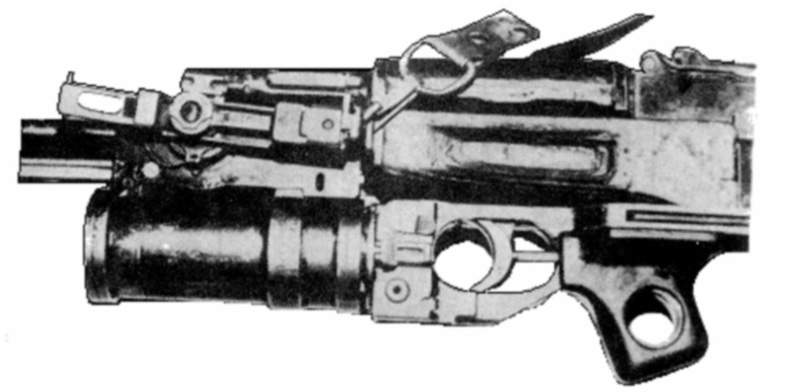
The GP series of under-slung, single-shot, muzzle-loading 40mm grenade launchers was developed for the Soviet Army rifleman beginning in 1972. Work spanned into 1978 to which limited production ensued under the KBP Instrument Design Bureau brand label. The type was made compatible with the Kalashnikov "AK" family of assault weapons and intended to broaden the tactical reach of the Soviet infantryman considerably - matching the American M203-armed infantryman per step. The weapon was designed to fire a standard FRAG (FRAGmentation) grenade, smoke, tear gas, anti-riot baton and a specialized "bouncing" grenade and, as such, the GP family of launchers could be called upon to handle a variety of anti-personnel tasks with varying levels of lethality.

The GP was developed around a "High-Low Pressure System" in which to handle the resultant recoil effects of the launching 40mm projectile without the need of a rocket-based propulsion system. The system was devised by German engineers in the latter stages of World War 2 and subsequently adopted by the Soviets in the post-war world. Similarly, the Americans developed their M79 breech-loading 40mm single-shot grenade launcher along the same lines and these saw widespread use in the Vietnam War before being replaced by the underslung 40mm M203 series mated to the M16 assault rifle.

The Soviet single-shot 40mm grenade launcher first appeared in limited form under the designation of "BG-15" to which then the definitive "GP-25" production mark was unveiled. A modernized and simplified form, the "GP-30", has since been introduced which has more-or-less replaced the original aging GP-25 series. The original GP-25 fielded an overall weight of 3.3lbs and overall length of 12.7 inches while the updated GP-30 was made lighter and shorter at 3lbs with a 10.8 inch length. Both shared the same 4.7 inch barrel length and muzzle velocity was equal at 250 feet per second, largely in line with Western offerings. In the GP system, 40mm grenades are actuated by a percussion cap type base which ignites the grenade's propellant, forcing the projectile from the muzzle end of the barrel. The internal makeup of the launcher's barrel is rifled to promote a rotating stabilizing effect on the exiting grenade which allows for greater engagement ranges and some level of accuracy at range when compared to smoothbore barrel types. Construction of the GP family of grenade launchers is noted as very robust, allowing for a prolonged service life in the worst of battlefield conditions - very much a part of Soviet weapons design philosophy.

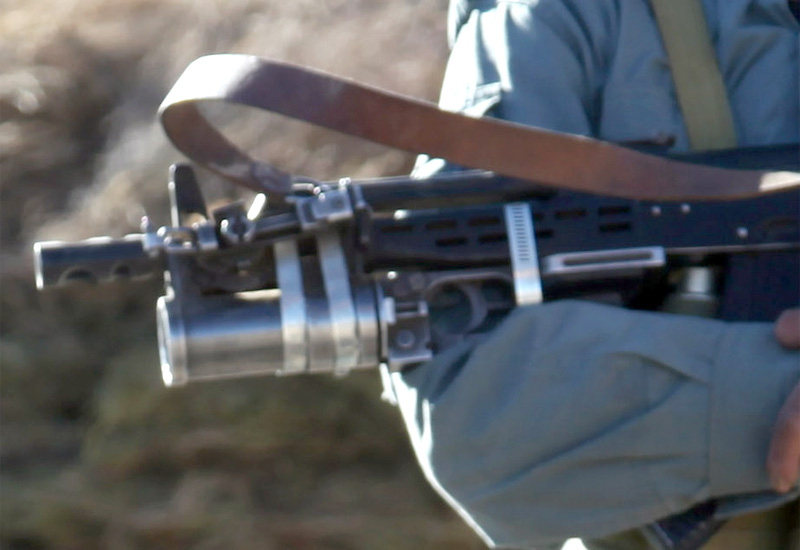
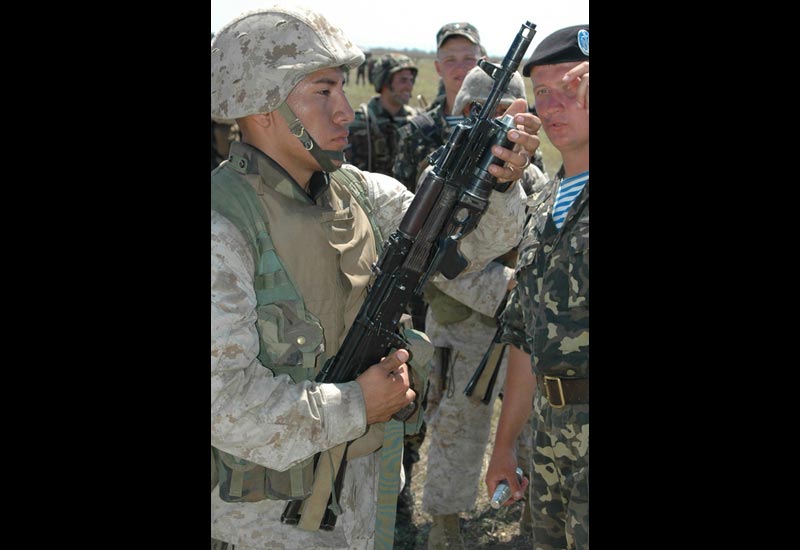
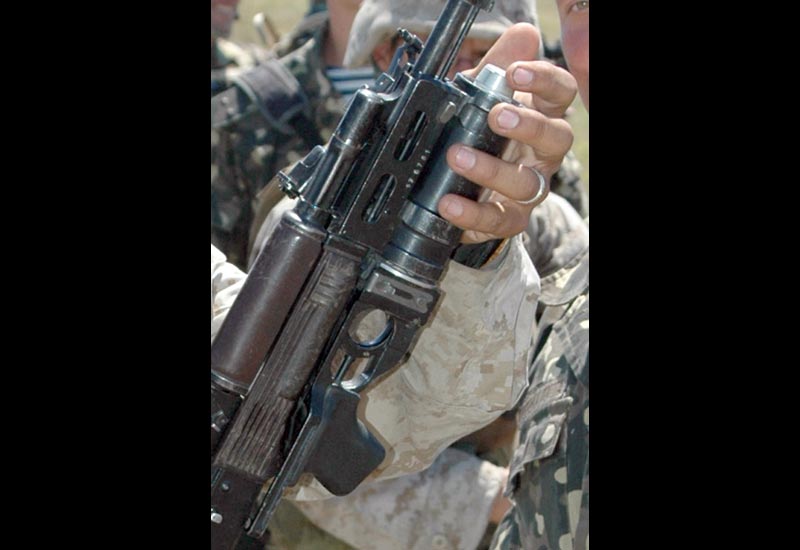
The GP-25/GP-30 followed conventional design wisdom by making use of the widely-accepted 40mm grenade projectile firing from a single-shot format. Unlike the American M79 and M203 launchers, however, the Soviet/Russian GP-25 / GP-30 was completed as a muzzle-loading weapon (as opposed to the American breech-loading approach). The basic design included a tubular barrel coupled with a short, slab-sided receiver-type assembly which integrated the trigger loop and pistol-type grip containing a thumbhole. The GP series fit under the handguard of AK-style weapon systems with the assault rifle body acting as the host system for the launcher, allowing the infantryman to fire the grenade launcher from the shoulder utilizing a traditional three-point hold.

The GP family of grenade launchers has seen widespread use around the globe, particularly in national armies whose political ties were once (or are still) aligned with the Soviet Union/Russia. Rebel fighters in the Middle East and Southern Asia have been known to favor the type when its availability was made possible. The GP launcher still maintains a presence in the modern Russian Army and has also been issued to forces of Georgia, Lithuania, North Korea, Pakistan, Ukraine and Vietnam. Georgia produces the type under license.
Text ©2003-2013 www.MilitaryFactory.com • All Rights Reserved • No Reproduction Permitted
MilitaryFactory.com does NOT sell equipment/weaponry. Material presented throughout this website is for historical and entertainment value and should not to be construed as usable for hardware restoration, maintenance or general operation. Please consult manufacturers for such information. Our disclaimer. Email corrections / Comments to MilitaryFactory at Gmail dot com.
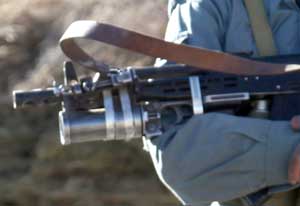
Picture of GP-25 / GP-30 GL
Pic of the GP-25 / GP-30 GL
Image of the GP-25 / GP-30 GL
View All Images (5)

Specifications for the
GP-25 / GP-30 GL
Single-Shot 40mm Muzzle-Loaded Grenade Launcher


Country of Origin: Soviet Union
Manufacturer: KBP Instrument Design Bureau - Soviet Union
Initial Year of Service: 1978


Overall Length: 323mm (12.72in)
Barrel Length: 123.00mm (4.84in)
Weight (Empty): 3.31lbs (1.50kg)


Cartridge: 40mm Caseless
Action: Muzzle-Loaded; Single-Shot
Feed: Single-Shot; Reusable
Muzzle Velocity: 250ft/sec (76m/sec)
Rate-of-Fire: 4 rounds per minute
Range: 1,312ft (400m; 437yds)
Sights: Adjustable Iron


Variants:
BG-15 - Initial Production Designation


GP-25 - Primary Production Version; definitive Cold War mark.

GP-30 - Modernized and lightened variant of the GP-25; reduced production costs; reduced maintenance, handling requirements and overall weight.


Operators: Afghanistan; China; Georgia; Lithuania; North Korea; North Vietnam; Pakistan; Russia; Soviet Union; Ukraine; Vietnam

ALL SMALL ARMS CATEGORIES

BY YEAR:


1700 to 1799
1800 to 1899
1900 to 1909
1910 to 1919
1920 to 1929
1930 to 1939
1940 to 1949
1950 to 1959
1960 to 1969
1970 to 1979
1980 to 1989
1990 to 1999
2000 to 2009
2010 to 2019
VIEW ALL
Compare Guns


BY TYPE:


Anti-Aircraft Weapons
Anti-Material Rifles
Anti-Tank Weapons
Automatic Rifles
Bolt-Action Rifles
Carbine Guns
Flamethrowers
Flintlock Guns
Grenade Launchers
Hand Grenades
Lever-Action Rifles
Machine Guns
Mortars
Musket Guns
Pistols / Handguns
Recoilless Rifles
Revolvers
Rocket Launchers
Shotguns
Silenced Guns
Sniper Rifles
Special Weapon Systems
Submachine Guns
VIEW ALL


SPECIAL:


18th Century Warfare
3 Soldiers Statue
Battle of Mogadishu
Chainmail Armor
Firearm Types Defined
French Military Victories
Medieval Crossbow
Medieval Longbow
Vietnam War Casualties
Vietnam War Memorial

WORLD WAR 2:


British Guns
French Guns
German Guns (ALL)
German Rifles
Italian Guns
Japanese Guns
Soviet Guns
US Guns
US Infantry Regiment-Level Guns
Machine Guns
Pistols
Rifles
Submachine Guns
Sniper Rifles
VIEW ALL


WORLD WAR 1:

Pistols
Rifles
Machine Guns
Mortars
US Guns
VIEW ALL


KOREAN WAR:

Machine Guns
VIEW ALL


VIETNAM WAR:

Mortars
VIEW ALL


COLLECTIONS:


Ancient Weapons
British SAS Weapons
Civil War Guns
Colt Guns
Glock Guns
GROM Polish Special Forces
Guns of Libya
Guns of North Korea
Guns of Syria
Guns of WW1 & WW2
Heckler & Koch Guns
Kalashnikov Guns
Modern Russian Guns
Navy SEAL Weapons
Spetsnaz Weapons
Weapons of Desert Storm
Wild West Guns
Winchester Guns


HOLLYWOOD/GAMES:


Guns of the Walking Dead

Site Disclaimer | Privacy Policy | Site Map | MF Origins


©2013 www.MilitaryFactory.com • Content ©2003-2013 MilitaryFactory.com • All Rights Reserved • Site Contact Email: militaryfactory at gmail dot com. The "Military Factory" name and MilitaryFactory.com logo are registered ® trademarks and protected by all applicable domestic and international intellectual property laws.


Top MF Stuff: 2013 Military Pay Scale | Military Ranks | WW2 Weapons | Sniper Rifles | Kts to Mph | WW1 Aircraft | Automatic Rifles | Aircraft Cockpits | Vietnam War Weapons | Main Battle Tanks | Submachine Guns | Shotguns | French Military Victories


Most photographic images appearing on this site are courtesy of the United States Department of Defense and are approved for public use. Other images acquired through the public domain. Digital art work courtesy of Dan Alex. Business Consulting by Kyle Williams. Material presented throughout this website is for historical and entertainment value and should not to be construed as usable for hardware restoration, maintenance or general operation. Please consult manufacturers for such information.


eXTReMe Tracker