Military Factory
Military Pay Chart
Global Firepower
Military Industrial Complex
Second World War
Home
Military Pay Scale
Military Ranks
Small Arms
Aircraft
Land Systems
Navy
Education
Military Factory Facebook Logo
flag of Belgium

Infantry Model 1889 (Belgian Mauser) Bolt-Action Service Rifle (1889)

Authored By Staff Writer | Last Updated: 7/25/2012

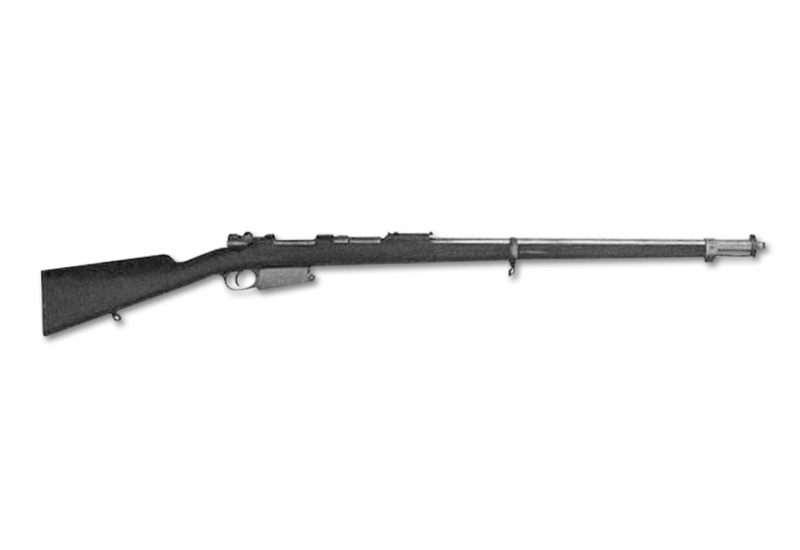
The Model 1889 was nothing more than the proven German Mauser modified to suit Belgian Army needs.

Find a School Near You
Follow Military Factory on Facebook:
Trending on Military Factory:
Recent Articles:
The Belgian Model 1889 "Mauser" became the first bolt-action service rifle of the Belgian Army. It was based on the proven Mauser design originally brought about by brothers Paul and Wilhelm Mauser of Germany. The design went on to become one of the most famous family of bolt-action service rifles of its time (perhaps even of all time) and formed the basis of many forthcoming bolt-action-based long guns to follow. Many foreign national long guns simply borrowed (or illegally copied) the proven "Mauser" action and were often times designated with the Mauser name as an additional identifier despite their true country of origin. The first German Mauser became the Model 1871 "Infanterie Gewehr" while the more popular Mauser Model 1898 (or "Gewehr 98") became the primary service rifle of the German Army in World War 1. The Model 1898 formed the basis of the World War 2-era Karabiner 98K (or "Kar 98K") carbine series - the last major Mauser rifle adopted by the German Army.

When the modernizing Belgian Army required a new service rifle all their own, they turned to the existing and proven German design, bypassing any lengthy, and ultimately costly, indigenous initiative in the process. The German design served as the basic framework for the Belgian offering which was slightly modified to suit Belgian Army requirements. It was this very rifle that the storied Belgian firearms concern of Fabrique-National (otherwise abbreviated as "FN" - FN Herstal) was set up to manufacture in number. FN eventually survived two world wars and continues today as one of the top firearms designers and producers in the world.

One of the principle defining features of the Belgian version of the Mauser rifle was its thin sheet steel jacket fitted over the barrel - a very unique element not common to any other Mauser mark of note. The jacket was instituted as a feature intended to maintain the effectiveness of the barrel and the wooden body over time, otherwise lengthening its service life and long-term accuracy when exposed to excessive firing and battlefield abuse. Despite this approach, the jacketed barrel proved susceptible to moisture build-up and, therefore, introduced the problem of rust forming on the barrel itself - unbeknownst to the owner. Additionally, the jacket was not perforated in such a way as to relieve the barrel of any heat build-up and proved prone to denting. As such, barrel quality was affected over time regardless of the protective measure. One last item of note concerning this design initiative was the extra steel that was required to complete these rifles - an expensive resource particularly when the rifle was expected to reach tens of thousands of Belgian troops. By many accounts, the barrel jacket was not appreciated by its operators who depended on a perfect rifle in wartime.

Despite this drawback, the Belgian version of the Mauser held several "firsts" in Mauser rifle history. It was the first Mauser-based rifle to feature a charger-loading integral box magazine. In this fashion, prepared "chargers", each holding five rounds, were fitted into the integral box magazine which sat ahead of the trigger group. When loading the first round into the chamber through the standard bolt-action motion, the charger was ejected from the weapon - the cartridges effectively "stripped" from their holder. This left five well-stacked rounds ready to fire in the fixed magazine. The weapon was chambered for the 7.65x53mm Belgian Mauser cartridge and utilized a straight-pull, manually-actuated bolt-action mechanism (essentially a handle set at 90-degrees from the receiver). Individual cartridges could still be loaded in lieu of the charger method as normal but use of chargers improved reloading times considerably. Regardless, fighting men still respected the single-loading nature of such weapons. This Belgian Mauser also became the first Mauser rifle to fire a useful small-caliber cartridge of smokeless propellant (7.65mm) as previous offerings utilized an 8mm or 7.92mm caliber type. Another Mauser rifle "first" became the Belgian Mauser's use of the projecting integral box magazine and this was further a single-piece installation tied to the trigger ring which reduced the changes of a snag int he heat of battle.

The Belgian Mauser featured a single-piece solid wooden body running the length of the entire weapon, ending just aft of the muzzle. The body contained two bands and iron sights were fitted at the middle of the receiver top and at the muzzle. Overall length of the weapon was 50.5 inches with the barrel making up approximately 30.5 inches of this length. Of course a fixed bayonet added nearly another 10 inches to the design as doctrine of the period still relied heavily on the bayonet charge for the decisive victory. Unloaded weight was around 4 kilograms while muzzle velocity was rated at 2,000 feet per second under ideal conditions. The bayonet was optional though highly standard for this period of warfare and included a 9.8 inch blade-type design affixed under the muzzle.

At any rate, the Model 1889 gave a good account of itself and managed a very healthy service life. It was the standard Belgian infantry rifle of World War 1 and survived long enough to see combat in World War 2 - the Mauser origins no doubt playing some part in this longevity. During World War 1, the Belgian government was forced to flee its capital as the Germans took swathes of territory en route to Paris. With no home country (and therefore no Belgian factories to produce the rifle in the required numbers), Belgian soldiers were eventually equipped with French Lebel and Berthier rifles for much of the war. During the earlier years of the conflict (pre-1914), the Model 1889 was manufactured in a few notable forms: a carbine-type "short" version was equipping cavalry and artillery infantry (the "Gendarmerie, Foot Artillery & Fortress Troops Carbine Model 1889") while a "turn-down" bolt-handle version was issued to bicycle-mounted defense groups (as the "Garde Civique Rifle Model 1889"). Other short versions became the "Cavalry Carbine Model 1889" sans its bayonet mounting and reduced stock (and therefore lightened) and the "Mounted Gendarmerie Carbine Model 1899" with bayonet support, revised stock design and additional barrel band which identified the type. The Belgian Model 1889 Mauser continued service into the 1930s though the jacketed barrel was finally discarded during production. These new modernized forms emerged as "Infantry Rifle Model 1936" or "Model 1889/36" of 1936 seeing limited production and service with second line units. Their barrels were also shortened and a new front iron sight introduced.
Text ©2003-2013 www.MilitaryFactory.com • All Rights Reserved • No Reproduction Permitted
MilitaryFactory.com does NOT sell equipment/weaponry. Material presented throughout this website is for historical and entertainment value and should not to be construed as usable for hardware restoration, maintenance or general operation. Please consult manufacturers for such information. Our disclaimer. Email corrections / Comments to MilitaryFactory at Gmail dot com.

Specifications for the
Infantry Model 1889 (Belgian Mauser)
Bolt-Action Service Rifle


Country of Origin: Belgium
Manufacturer: Fabrique National / State Arsenals - Belgium
Initial Year of Service: 1889


Overall Length: 1295mm (50.98in)
Barrel Length: 780.00mm (30.71in)
Weight (Empty): 8.82lbs (4.00kg)


Cartridge: 7.65x53R Belgian Mauser
Action: Manually-actuated straight-pull bolt; repeating
Feed: 5-round integral box magazine
Muzzle Velocity: 2,000ft/sec (610m/sec)
Rate-of-Fire: 8 rounds per minute
Sights: Iron front and rear


Variants:
Infantry Rifle Model 1889 - Base Service Rifle


Civil Guard Rifle Model 1889 - Turn-down bolt handle; revised bayonet mountings (for different bayonet).

Gendarmerie, Foot Artillery & Fortress Troops Carbine Model 1889 - Shortened/lightened carbine model for mounted specialist troops; turn-down bolt handle; standard infantry bayonet.

Garde Civique Rifle Model 1889 - Turn-down bolt handle; issued to bicycle Civic Guard units.

Cavalry Carbine Model 1889 - Lightened short carbine model for mounted troops; sans bayonet mountings.

Mounted Gendarmerie Carbine Model 1899 - Based on Cavalry Carbine Model 1889 for mounted police; bayonet mountings; revised stock.

Infantry Model 1936 - Modernized Model 1889 rifles; limited production.


Operators: Belgium

ALL SMALL ARMS CATEGORIES

BY YEAR:


1700 to 1799
1800 to 1899
1900 to 1909
1910 to 1919
1920 to 1929
1930 to 1939
1940 to 1949
1950 to 1959
1960 to 1969
1970 to 1979
1980 to 1989
1990 to 1999
2000 to 2009
2010 to 2019
VIEW ALL
Compare Guns


BY TYPE:


Anti-Aircraft Weapons
Anti-Material Rifles
Anti-Tank Weapons
Automatic Rifles
Bolt-Action Rifles
Carbine Guns
Flamethrowers
Flintlock Guns
Grenade Launchers
Hand Grenades
Lever-Action Rifles
Machine Guns
Mortars
Musket Guns
Pistols / Handguns
Recoilless Rifles
Revolvers
Rocket Launchers
Shotguns
Silenced Guns
Sniper Rifles
Special Weapon Systems
Submachine Guns
VIEW ALL


SPECIAL:


18th Century Warfare
3 Soldiers Statue
Battle of Mogadishu
Chainmail Armor
Firearm Types Defined
French Military Victories
Medieval Crossbow
Medieval Longbow
Vietnam War Casualties
Vietnam War Memorial

WORLD WAR 2:


British Guns
French Guns
German Guns (ALL)
German Rifles
Italian Guns
Japanese Guns
Soviet Guns
US Guns
US Infantry Regiment-Level Guns
Machine Guns
Pistols
Rifles
Submachine Guns
Sniper Rifles
VIEW ALL


WORLD WAR 1:

Pistols
Rifles
Machine Guns
Mortars
US Guns
VIEW ALL


KOREAN WAR:

Machine Guns
VIEW ALL


VIETNAM WAR:

Mortars
VIEW ALL


COLLECTIONS:


Ancient Weapons
British SAS Weapons
Civil War Guns
Colt Guns
Glock Guns
GROM Polish Special Forces
Guns of Libya
Guns of North Korea
Guns of Syria
Guns of WW1 & WW2
Heckler & Koch Guns
Kalashnikov Guns
Modern Russian Guns
Navy SEAL Weapons
Spetsnaz Weapons
Weapons of Desert Storm
Wild West Guns
Winchester Guns


HOLLYWOOD/GAMES:


Guns of the Walking Dead

Site Disclaimer | Privacy Policy | Site Map | MF Origins


©2013 www.MilitaryFactory.com • Content ©2003-2013 MilitaryFactory.com • All Rights Reserved • Site Contact Email: militaryfactory at gmail dot com. The "Military Factory" name and MilitaryFactory.com logo are registered ® trademarks and protected by all applicable domestic and international intellectual property laws.


Top MF Stuff: 2013 Military Pay Scale | Military Ranks | WW2 Weapons | Sniper Rifles | Kts to Mph | WW1 Aircraft | Automatic Rifles | Aircraft Cockpits | Vietnam War Weapons | Main Battle Tanks | Submachine Guns | Shotguns | French Military Victories


Most photographic images appearing on this site are courtesy of the United States Department of Defense and are approved for public use. Other images acquired through the public domain. Digital art work courtesy of Dan Alex. Business Consulting by Kyle Williams. Material presented throughout this website is for historical and entertainment value and should not to be construed as usable for hardware restoration, maintenance or general operation. Please consult manufacturers for such information.


eXTReMe Tracker