Military Factory
Military Pay Chart
Global Firepower
Military Industrial Complex
Second World War
Home
Military Pay Scale
Military Ranks
Small Arms
Aircraft
Land Systems
Navy
Education
Military Factory Facebook Logo
flag of United Kingdom

Stokes Mortar (3-inch) Light Mortar (1915)

Authored By Staff Writer | Last Updated: 7/16/2012

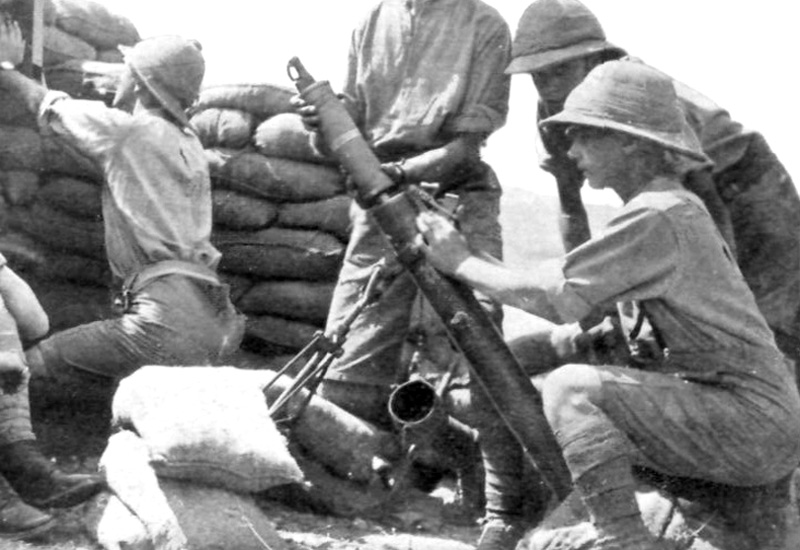
Portability is what made the Stokes Mortar such an important weapon during World War 1.

Find a School Near You
Follow Military Factory on Facebook:
Trending on Military Factory:
Recent Articles:
While mortars largely fell out of interest prior to World War 1, the stalemate of trench warfare forced national armies to revisit its battlefield value. Mortars had been in use for centuries prior and were "indirect fire" weapons capable of engaging enemy forces not only at distance but also without line of sight. As such, entrenched enemy troops were no longer safe from incoming artillery for mortars could dislodge concentrations and also held a heavy psychological effect to boot. The larger counterpart to the mortar was the field howitzer which was doubly effective in the same role though these designed were generally large, heavy, cumbersome beasts when compared to the portability inherent in light mortar designs. The British Stokes Mortar (3-inch) was one of the most famous of the early modern light mortars. It was drawn up by English engineer Sir Wilfred Stokes (hence its designation) who eventually took a post within the "Inventions Branch of the Ministry of Munitions" during World War 1.

Tensions had officially culminated with the outbreak of world war in the summer of 1914 to which Britain declared war on the German Empire after the Empire had sought to invade France through British ally Belgium. Trench warfare bogged the Western Front within months of the declaration as both sides dug in for the long war ahead (initially, all sides thought the war would be over by Christmas and the conflict was greeted with euphoria by large crowds before the fighting started). With the stalemate an ever-growing problem to warplanners and politicians alike, various methods of removing the enemy were considered - among these being poison gas, flamethrowers, portable machine guns, the aircraft, the tank (then known as "Landships") and - of course - artillery.

Design of a new modern portable light field mortar for British troops began in early 1915. Comparatively, the German Army was making good with their own light mortar at the time, this the 7.58cm leichter Minenwerfer series. To match the enemy advantage "pound-for-pound", the British Army required an indirect weapon of similar scope that could be managed with relative ease in battle and moved into position at a moment's notice (in the latter case, for the taking and securing of an enemy trench for example). The Stokes 3-inch design was presented to British authorities in June of 1915 but interest was low for the new weapon was not cleared to fire existing ammunition supplies. However, with some internal help, the Stokes design came to fruition and the mortar was eventually adopted by the British Army during the war. From then on, the type went on to see extensive combat service through the whole of the conflict - giving a good account of itself in battle. It began wide scale operational service in 1916 and revisions greeted the design throughout the war.

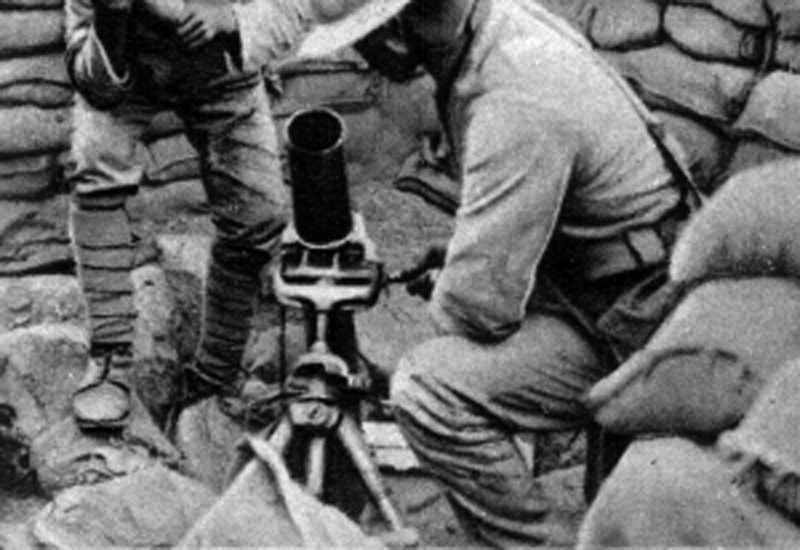
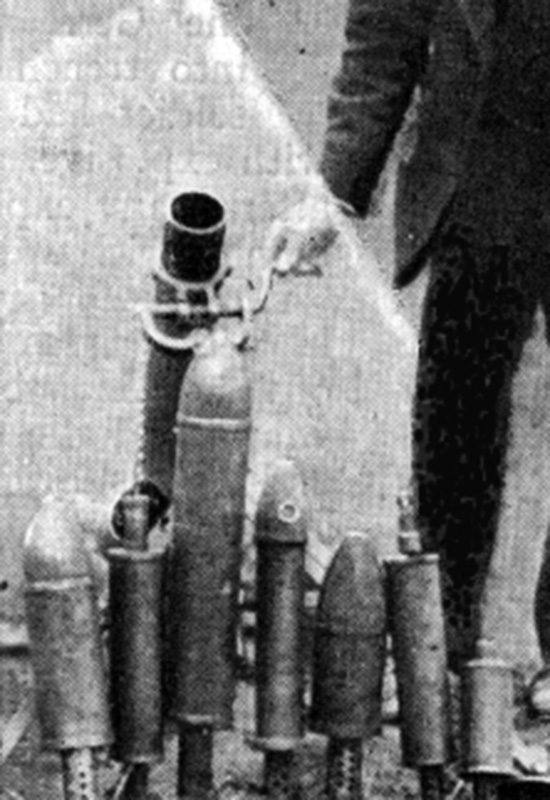
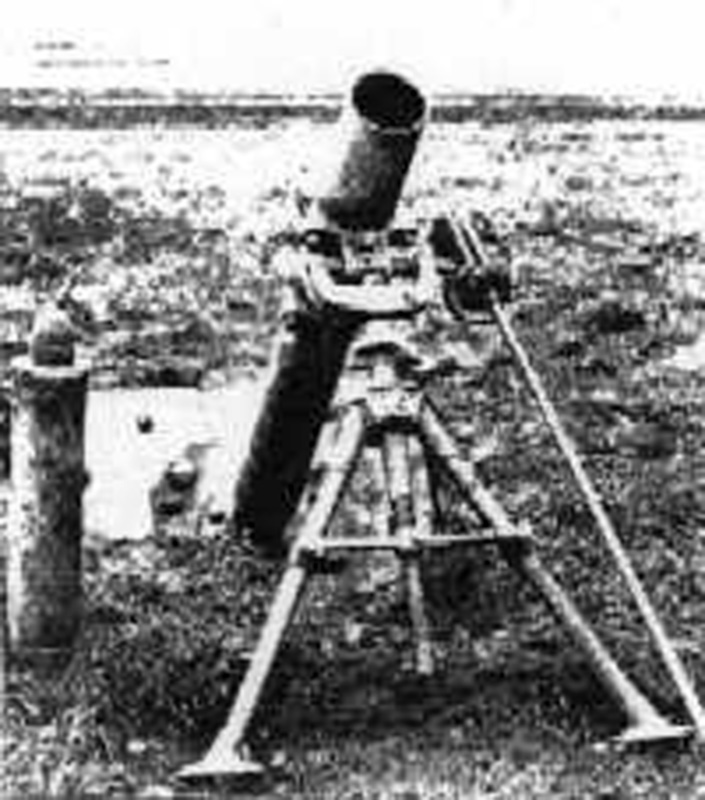
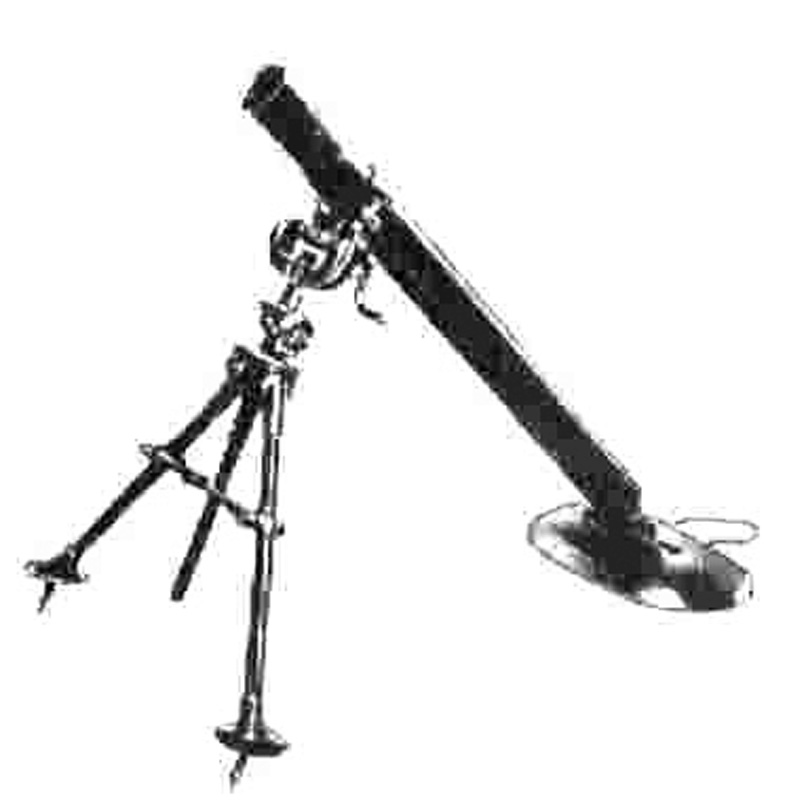
A typical Stokes Mortar crew was two personnel - one to manage the elevation controls and the other to handle the ammunition. The entire system weighed in at 108lbs (despite its weight it was still a "light" mortar classification) and fired a 10lb 76.2mm high-explosive (amatol filled) cylindrical projectile out to 800 yards though effective range was closer to 750 yards. The smoothbore launch tube held an elevation limit of 45- to 75-degrees. Overall, the Stokes mortar system was very conventional even by modern standards, the design comprising a baseplate, launch tube, elevation controls, bipod and the projectile. For transporting, the Stokes design broke down into three primary components - the barrel, baseplate and bipod (not taking ammunition supply into account). A trained crew could fire between 22 to 25 rounds per minute if required but generally held to a 6-8 round per minute limit for when in the general sustained fire role (lest the barrel overheat).

In practice, the Stokes mortar was traditional in its overall operation. Once sighted against the proper target area (mortars were "area effect" weapons, not "direct target"), the ammunition handler would drop the 3-inch shell down the awaiting open muzzle of the launch tube. The projectile then struck a firing pin at the bottom of the tube which actuated an impact sensitive primer on the shell, thusly detonating the propellant of the shell with the resulting force sending the projectile out of the muzzle of the tube at speed. In this fashion, the Stokes mortar could offer repeating, indirect fire as needed in support of friendly actions - usually preceding an infantry charge by helping to "soften" enemy targets or provide suppression. Each 3-inch projectile could be further "ranged" by the addition of propellant "rings" of which up to four such rings could be affixed to a projectile's base. The projectile itself held a basic charge that allowed for a standard range to be reached though this also varied as related to the launch tube's elevation angle (the higher the angle, the shorter the range). Each propellant ring added as much as 100 yards of range to a Stokes Mortar holding a 45-degree elevation.

After the war, a new fin-stabilized projectile was finally developed which gave greater accuracy while an improved charge gave it greater range. The Stokes 3-inch mortar was such a success that it remained in the British inventory until 1936 before being replaced by the "Ordnance ML 3-inch Mortar" series prior to World War 2. Other operators of the Stokes design included the United States, Greece, Poland and Portugal. British Commonwealth forces also made use of the type during World War 1 and beyond. The basic 3-inch Stokes design eventually influenced a 4-inch (101mm) and 6-inch (152mm) Stokes design and these fired larger, more powerful projectiles including those containing incendiary, smoke and poisons.

The Stokes 3-inch mortar was certainly one of the engineering success stories of the First World War in terms of its military value.
Text ©2003-2013 www.MilitaryFactory.com • All Rights Reserved • No Reproduction Permitted
MilitaryFactory.com does NOT sell equipment/weaponry. Material presented throughout this website is for historical and entertainment value and should not to be construed as usable for hardware restoration, maintenance or general operation. Please consult manufacturers for such information. Our disclaimer. Email corrections / Comments to MilitaryFactory at Gmail dot com.
Picture of Stokes Mortar (3-inch)
Pic of the Stokes Mortar (3-inch)
Image of the Stokes Mortar (3-inch)
View All Images (5)

Specifications for the
Stokes Mortar (3-inch)
Light Mortar


Country of Origin: United Kingdom
Manufacturer: State Factories - UK
Initial Year of Service: 1915


Overall Length: 0mm (0.00in)
Barrel Length: 0.00mm (0.00in)
Weight (Empty): 103.99lbs (47.17kg)


Cartridge: 76.2mm (3-inch)
Action: Firing Pin-Actuated Projectile; Manual Feed
Feed: Single-Shot; Reusable
Rate-of-Fire: 25 rounds per minute
Range: 2,250ft (686m; 750yds)
Sights: Not Available


Variants:
Stokes Mortar (3-inch) - Base Series Designation.


Operators: Australia; Canada; Greece; India; New Zealand; Poland; Portugal; South Africa; United Kingdom; United States

ALL SMALL ARMS CATEGORIES

BY YEAR:


1700 to 1799
1800 to 1899
1900 to 1909
1910 to 1919
1920 to 1929
1930 to 1939
1940 to 1949
1950 to 1959
1960 to 1969
1970 to 1979
1980 to 1989
1990 to 1999
2000 to 2009
2010 to 2019
VIEW ALL
Compare Guns


BY TYPE:


Anti-Aircraft Weapons
Anti-Material Rifles
Anti-Tank Weapons
Automatic Rifles
Bolt-Action Rifles
Carbine Guns
Flamethrowers
Flintlock Guns
Grenade Launchers
Hand Grenades
Lever-Action Rifles
Machine Guns
Mortars
Musket Guns
Pistols / Handguns
Recoilless Rifles
Revolvers
Rocket Launchers
Shotguns
Silenced Guns
Sniper Rifles
Special Weapon Systems
Submachine Guns
VIEW ALL


SPECIAL:


18th Century Warfare
3 Soldiers Statue
Battle of Mogadishu
Chainmail Armor
Firearm Types Defined
French Military Victories
Medieval Crossbow
Medieval Longbow
Vietnam War Casualties
Vietnam War Memorial

WORLD WAR 2:


British Guns
French Guns
German Guns (ALL)
German Rifles
Italian Guns
Japanese Guns
Soviet Guns
US Guns
US Infantry Regiment-Level Guns
Machine Guns
Pistols
Rifles
Submachine Guns
Sniper Rifles
VIEW ALL


WORLD WAR 1:

Pistols
Rifles
Machine Guns
Mortars
US Guns
VIEW ALL


KOREAN WAR:

Machine Guns
VIEW ALL


VIETNAM WAR:

Mortars
VIEW ALL


COLLECTIONS:


Ancient Weapons
British SAS Weapons
Civil War Guns
Colt Guns
Glock Guns
GROM Polish Special Forces
Guns of Libya
Guns of North Korea
Guns of Syria
Guns of WW1 & WW2
Heckler & Koch Guns
Kalashnikov Guns
Modern Russian Guns
Navy SEAL Weapons
Spetsnaz Weapons
Weapons of Desert Storm
Wild West Guns
Winchester Guns


HOLLYWOOD/GAMES:


Guns of the Walking Dead

Site Disclaimer | Privacy Policy | Site Map | MF Origins


©2013 www.MilitaryFactory.com • Content ©2003-2013 MilitaryFactory.com • All Rights Reserved • Site Contact Email: militaryfactory at gmail dot com. The "Military Factory" name and MilitaryFactory.com logo are registered ® trademarks and protected by all applicable domestic and international intellectual property laws.


Top MF Stuff: 2013 Military Pay Scale | Military Ranks | WW2 Weapons | Sniper Rifles | Kts to Mph | WW1 Aircraft | Automatic Rifles | Aircraft Cockpits | Vietnam War Weapons | Main Battle Tanks | Submachine Guns | Shotguns | French Military Victories


Most photographic images appearing on this site are courtesy of the United States Department of Defense and are approved for public use. Other images acquired through the public domain. Digital art work courtesy of Dan Alex. Business Consulting by Kyle Williams. Material presented throughout this website is for historical and entertainment value and should not to be construed as usable for hardware restoration, maintenance or general operation. Please consult manufacturers for such information.


eXTReMe Tracker