Military Factory
Military Pay Chart
Global Firepower
Military Industrial Complex
Second World War
Home
Military Pay Scale
Military Ranks
Small Arms
Aircraft
Land Systems
Navy
Education
Military Factory Facebook Logo
flag of United Kingdom

BREN LMG Light Machine Gun / General Purpose Machine Gun (1938)

Authored By Dan Alex | Last Updated: 3/30/2013

Based on an excellent Czechoslovakian design, the equally-excellent BREN Light Machine Gun was adopted into service with the British Army in the late 1930s.

Find a School Near You
Follow Military Factory on Facebook:
Trending on Military Factory:
Recent Articles:
The BREN Light Machine Gun was the standard light machine gun of the British Army and Commonwealth forces throughout World War 2 and beyond. The type's existence was actually owed to the 1920's-era Czech ZB vz/26 Light Machine Gun brought to the British Army's attention prior to adoption of other types during a long-lasting, years-long search. The simple-yey-excellent ZB vz/26 was adopted by the Czech Army in 1924 with production out of the storied Brno facility. Chambered for the 7.9mm rimless cartridge, it operated from a top-fed, straight detachable box magazine through a gas-operated action featuring a tilting breechblock. The weapon was heavily adopted elsewhere (including Nazi Germany as the MG 26(t)) and saw extensive service in the Chinese Civil War (1927-1937, 1946-1950), World War 2 (1939-1945), the Malayan Emergency (1948-1960), the Korean War (1950-1953), the Suez Crisis (1956), the Congo Crisis (1960-1965), the Rhodesian Bush War (1964-1979), The Northern Ireland "Troubles" (1966-1998) and the Falklands War (1982).

Prior to World War 2, the British Army sought to find a viable and improved replacement for their existing Lewis Light Machine Gun line which proved a limited light machine gun design at best. A visit to Czechoslovakia alerted authorities to a locally-designed, well-rounded system in the ZB vz/26. With examples delivered to Britain for further testing in 1930, several other competing designs were entertained well into 1934. The ZB vz/26 evolved into the vz/27 and this begat the vz/30, vz/32 and vz/33 marks in time. All preceding marks up to the vz/30 were modified to fire the original 7.92mm Mauser cartridge which was of little value to the British need. It was the vz/30 that adopted the .303 British cartridge as the "ZGB vz/30" prototype of 1930 and underwent trials from 1931 to 1932. The following ZGB vz/33 development of 1933 became the official basis for the finalized British design. It was soon settled to adopt the Czech system for the Army with the British-centric changes to suit requirements. Design work continued into 1935, affording the design the official designation of "BREN" which paid homage to the weapon's true origin (BR = "Brno") and its place of main manufacture (EN = "Enfield Lock" through the Royal Small Arms Factory).

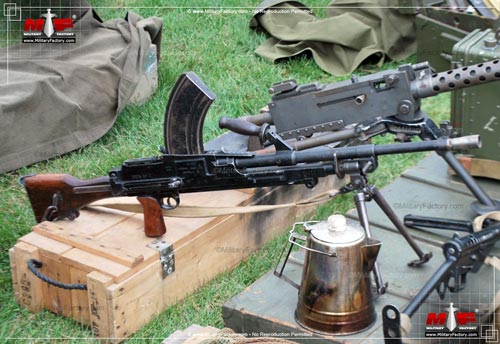
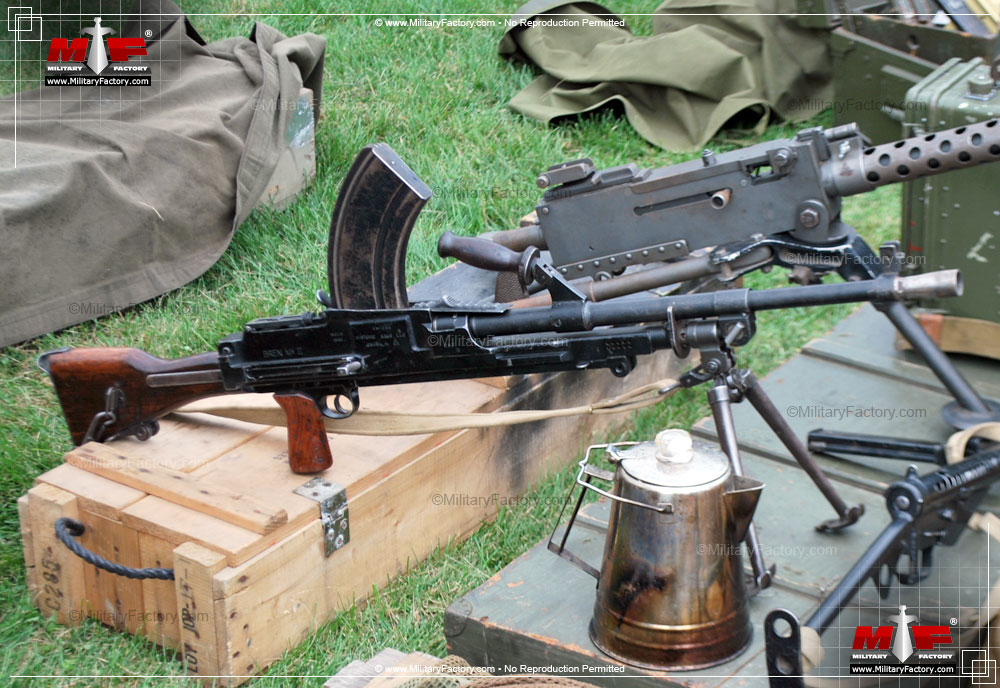
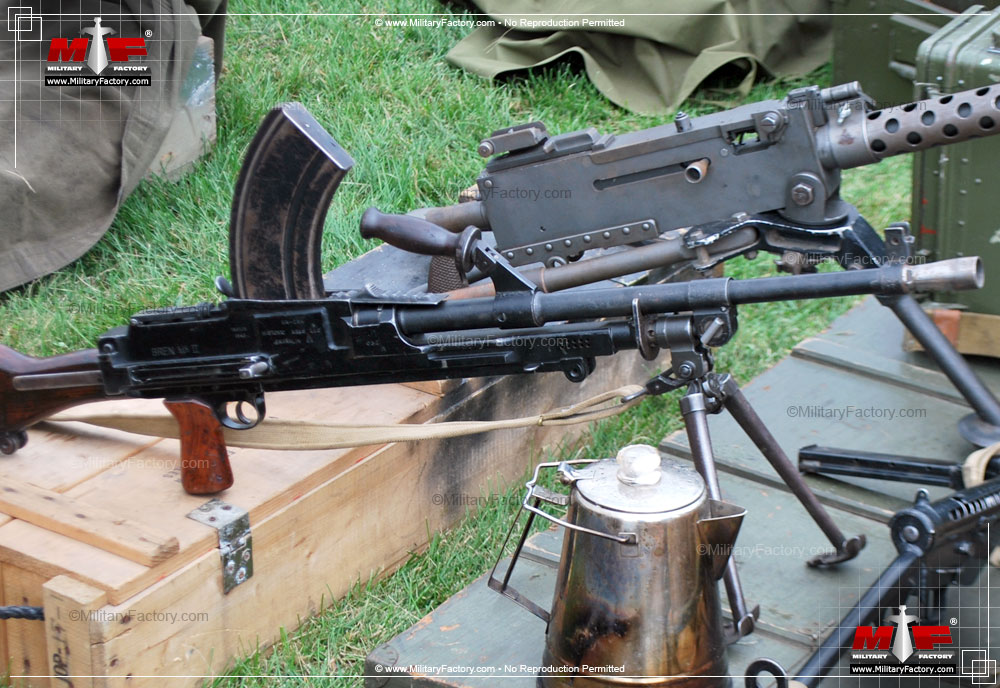
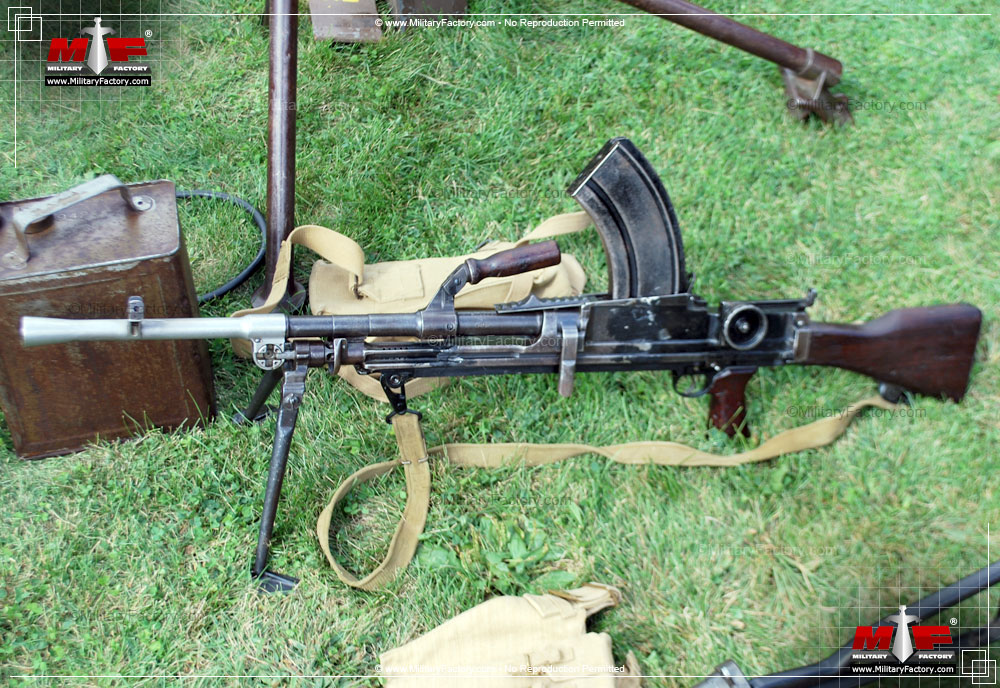
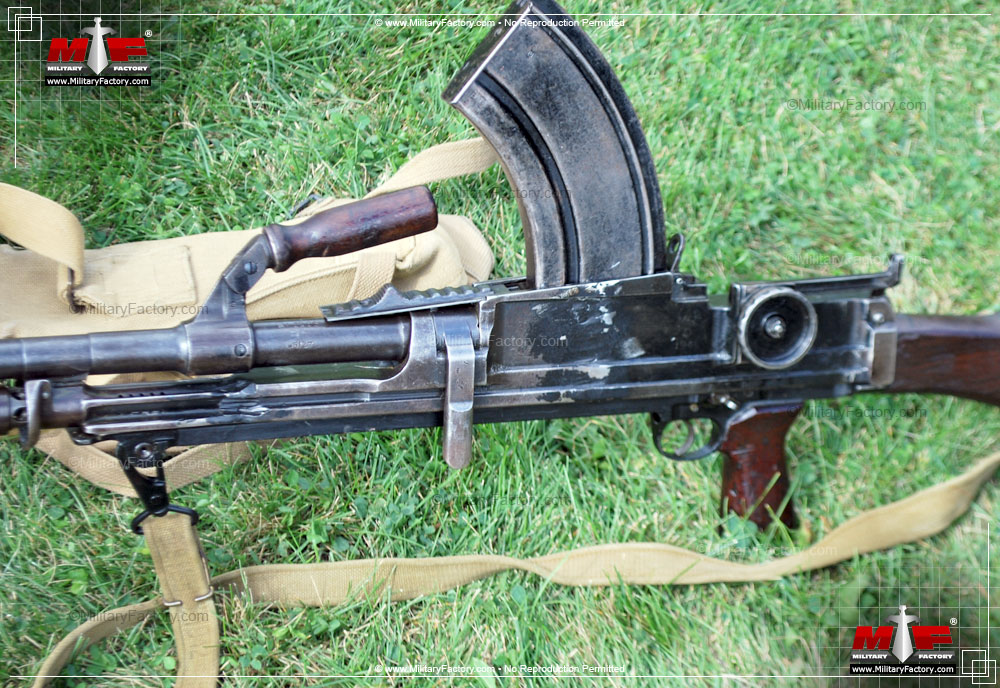
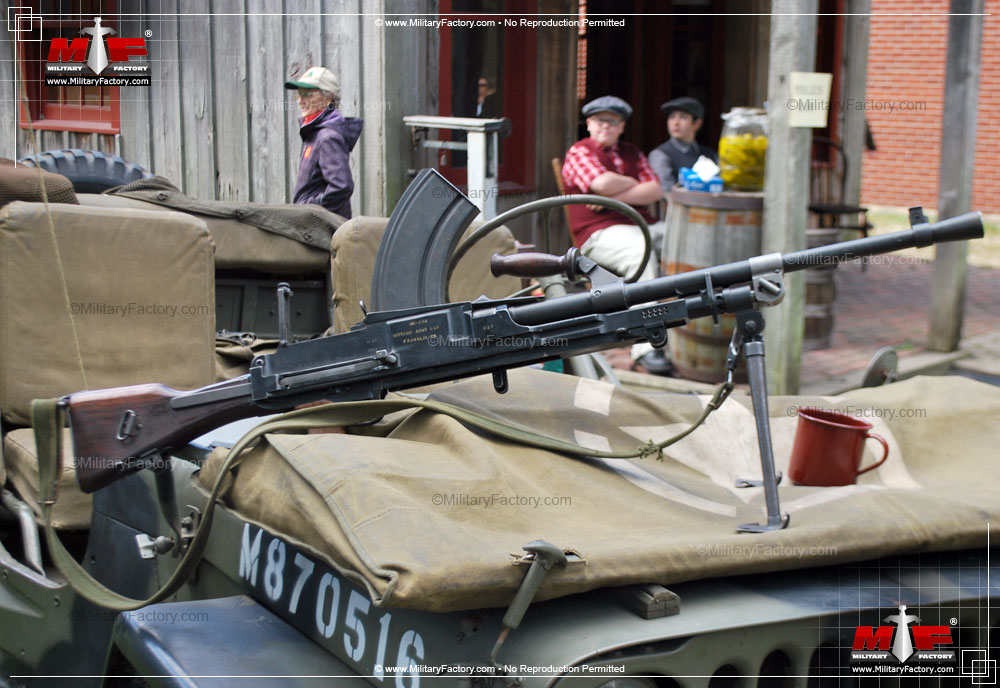
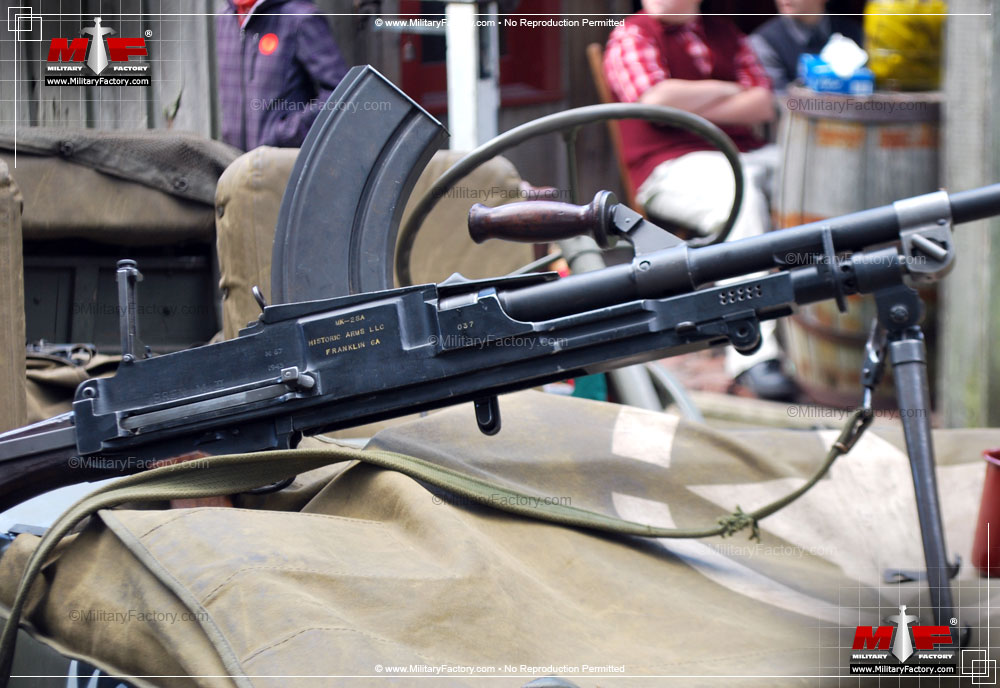
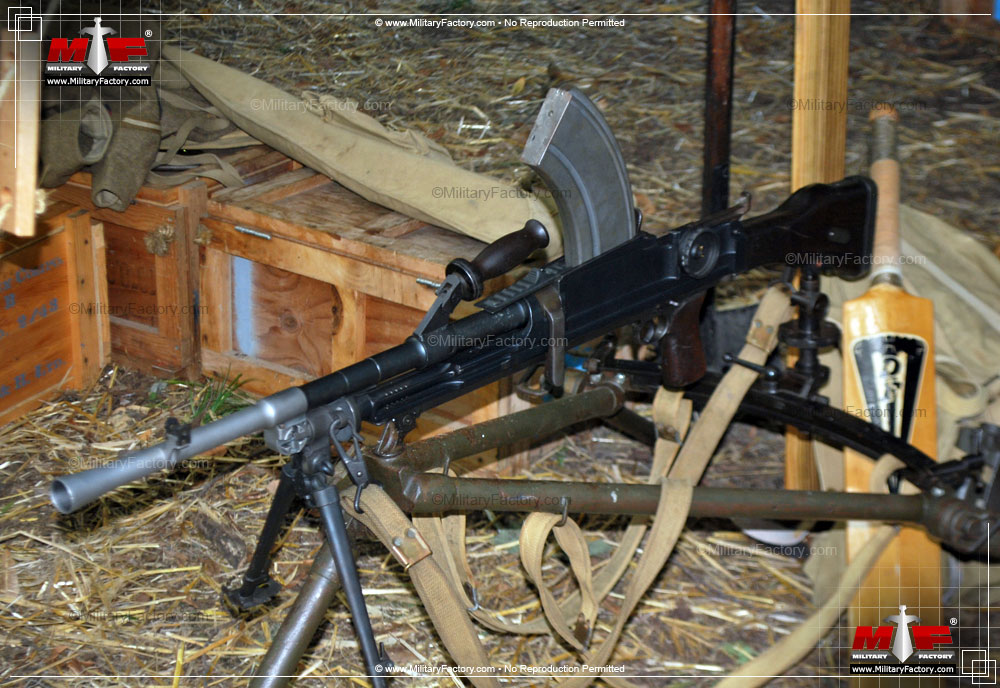
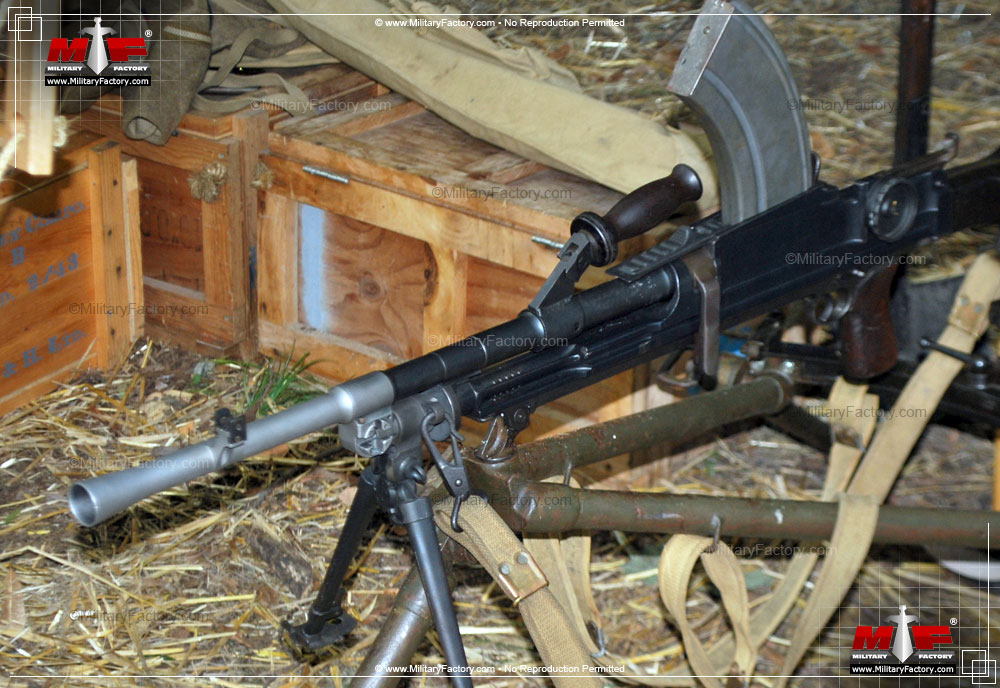
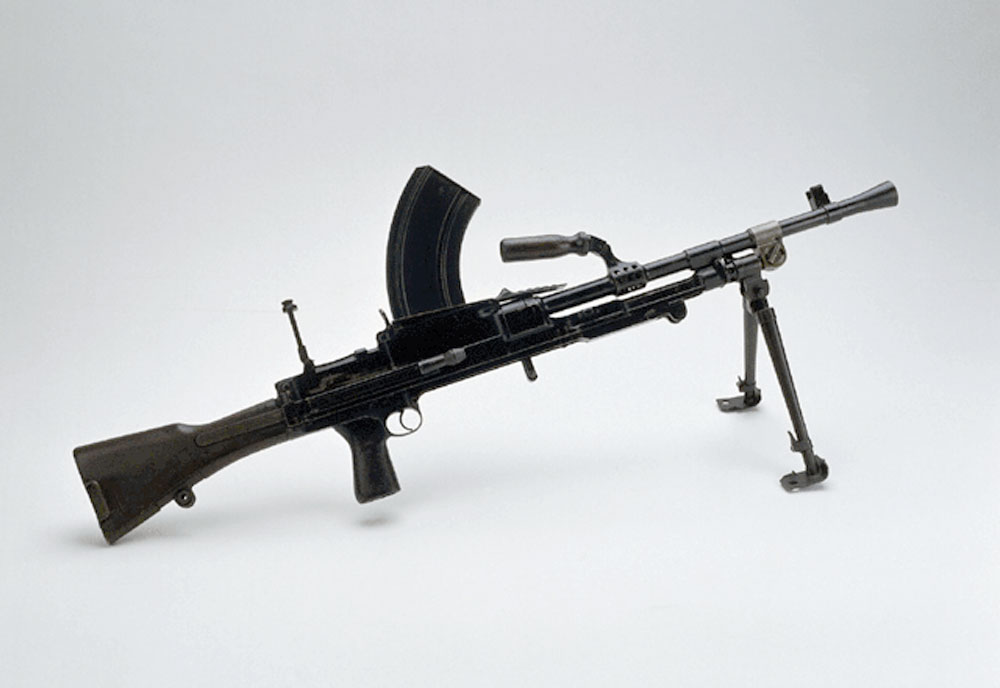
The primary (and most major) change to the Czech design was in the chambering - the Czech version utilized the German 7.92mm Mauser rimless rifle cartridge. For the sake of logistics and familiarity, the British instead opted for their .303 British rimmed rifle cartridge which was already in widespread circulation. This then forced changes to the Czech design's internals and a new curved magazine was developed to house the rimmed cartridges (giving the BREN its very defined and highly recognizable profile). The end result was largely faithful to the original Czech offering with its gas-operated, tilting bolt repeat-fire action retained. The overall design was highly linear in its general form with the rectangular receiver capped at one end by a solid shoulder buttstock and at the other end by the usual barrel and gas cylinder arrangement. The gas cylinder was fitted under the barrel in a traditional way and tapped expelled high pressure gas from exiting rounds for use in each subsequent round by converting the gas into required pressure to work the internal action. The weapon featured a standalone pistol grip with integrated trigger group slung under the rear portion of the receiver. A carrying handle was affixed to the barrel roughly at the midway point of the design. The barrel was capped by a conical flash hider and a folding bipod was fitted at the tip of the gas cylinder. The charging handle was set to the right side of the receiver and the new curved magazines were inserted through a top-mounted gate. Spent shell casings were ejected cleanly through the bottom of the receiver.

Production was assigned to the fabled Royal Small Arms Factory at Enfield Lock and set to begin in 1937. First deliveries began to reach frontline units in 1938. As British and Commonwealth involvement ramped up, so too did production of the BREN and eventually involved Canadian (Inglis and Long Branch), Australian (Lithgow) and Indian (Ishapore) factories. With the Chinese caught in its own bitter war against the Empire of Japan in Asia, BREN guns were also competed in their original 7.92mm Mauser chambering and sent overseas in support of Nationalist Chinese forces.

In practice, the BREN gun met nearly all expectations as a reliable, combat-friendly portable weapons system. Its sheer simplicity in design allowed for quick repair and maintenance in-the-field where gunners could quickly assemble and field-strip the weapon in minutes. The action also proved highly sound so as to produce a minimum number of stoppages. The type's overall weight - approximately 22.5lbs - made the BREN very portable in long marches and when relocating the gun to more advantageous positions. It featured a sound effective target range of 600 yards and a maximum area range out to 1,850 yards with a firing rate of 500 to 520 rounds per minute - the seemingly low rate-of-fire accounting for more effective cooling of the barrel between bursts, and thusly lowering the chance of a fractured barrel being encountered. An overheated barrel could also very quickly be addressed by the two-man crew in minutes. The .303 British cartridge gave good penetration value at range with its 2,400 feet per second muzzle velocity. Sighting was through iron arrangements standardized on the design from the beginning. If the BREN held any limitations, it was in its 30-round magazine which allowed for limited bursts of firing before reloading was required. However, as a light machine gun, use of magazines made for a highly portable weapon not requiring belted ammunition which could misfeed without proper attention. An operator not use to the downward ejection of casings could also be caught by surprise. Nevertheless, BREN machine gunners enjoyed their weapon and considered it a very accurate ranged system. A typical issue in British ranks was one gun per section with a crew of two assigned to each weapon - ammunition dispersed across the section.

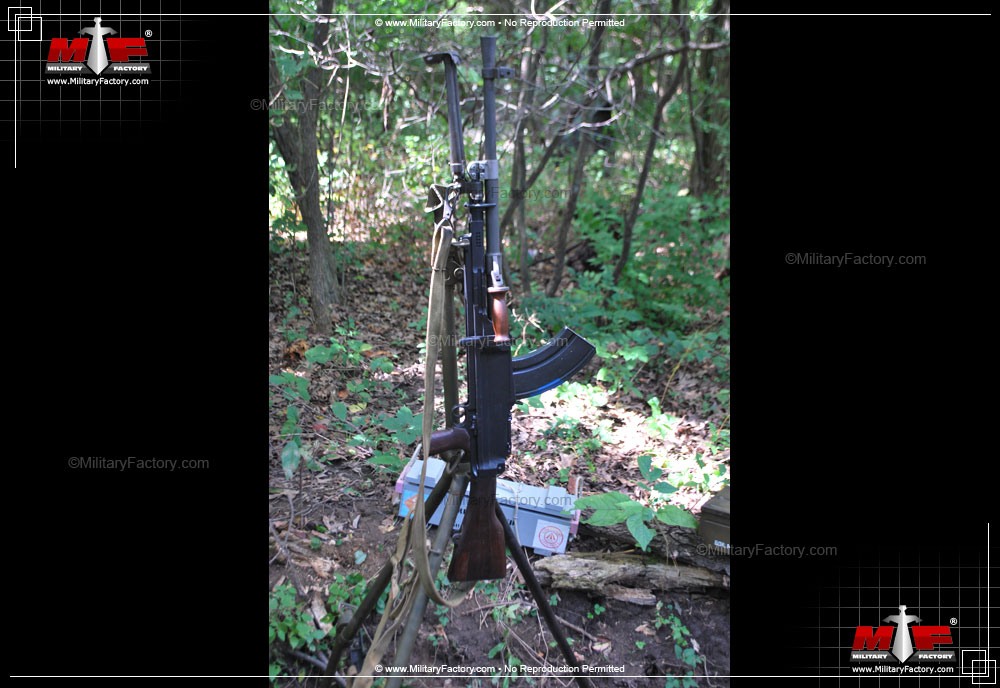
BREN use was not only limited to its defined light machine gun, squad-level role. Several mounting types soon appeared which broadened the tactical role of the weapon considerably. Specialized tall tripod mountings allowed for the weapon to be used as a low-level anti-aircraft defensive system (complete with an empty casings soft bag) to help defend airfields and the like. The BREN was also a standard fixture across many British and Commonwealth military vehicles of the war when fitted on trainable mounts, able to engage cleanly around the vehicle and over it. A heavy duty tripod (weighing some 26.5lbs) was developed with applicable sighting optics and this made the BREN an effective defensive system when used in a fixed position while protecting vital areas and camps.

The BREN LMG appeared in several notable marks throughout its storied career. Initial versions were the "Gun, Machine, Bren, .303in Mark 1" introduced in 1938. These closely followed the lines of the original prototypes and were fielded with a rather complicated drum-pattern rear sighting device. The butt sported a hinged grip handle that could be folded down for use by the support hand. A sling system was also fitted which allowed the operator to carry the weapon across the shoulder and effectively wield the machine gun with both hands when "firing from the hip". A telescoping bipod was added under the gas cylinder and the cocking handle was of a foldable design intended to reduce snagging. However, in practice, the butt grip handle proved less than efficient and was dropped from further production in time. By 1940, there existed over 30,000 BREN examples in circulation, embedding itself as the standard British Army light machine gun. A hefty number of examples were lost in the miracle that was Dunkirk between May 26th, 1940 into June 4th, 1940. The resulting captured examples were then reconstituted by the advancing Germans and placed back into service as the "Leichte MG 138(e)".

With Britain fully committed to war, the "Gun, Machine, Bren, .303in Mark 2" was introduced in June of 1941. An adjustable leaf-type rear sighting device was brought about to help simplify production and general operation - particularly in light of the equipment losses experienced at Dunkirk. The bipod was further simplified to a fixed design type as was the folding cocking handle. Surfaces were also simplified (lacking lightening grooves) for the sake of speedier production and lower procurement costs - though at the expense of a slightly heavier end-product.

As the war raged on, the BREN system adapted to changes along the varied fronts. This produced the "Gun, Machine, Bren, 303in Mark 3" in July of 1944. This mark was generally similar to the Mark 1 of 1938 but given a shortened barrel assembly and cleaner production lines to simplify manufacture. The "Gun, Machine, Bren, 303in Mark 4" was nothing more than a late-war conversion of BREN Mark 2 guns to the BREN Mark 3 standard complete with modified buttstocks.

In 1948, there proved a new Cold War-era offering of the BREN in the "Gun, Machine, Bren, 303in, Mark 2/1". This mark was broadly similar to the wartime Mark 2 though with a new slide assembly and cocking handle.

In the post-war years, and based on the NATO adoption of the 7.62mm cartridge as a standard rifle/machine-gun caliber round, there began the modernized "L4 LMG" series that began with the "L4A1". L4A1 models were based on wartime BREN Mark 3 production models with changes instituted as required of the new 7.62mm cartridge. This included new straight magazines, barrel assemblies, a slotted flash suppressor, new breechblock and extractor and various other more subtle changes to the original design. The L4A1 was then improved in the upcoming L4A2 mark.

Wartime BREN Mark 2 models were then upgraded through a similar process in the L4A3 modification. Barrels were now lined with chromium to help extend the service lives of the guns for a time longer. BREN Mark 3s were then upgraded with chromium-lined barrels to produce the L4A4 designation. The L4A5 models did not feature chrome-lined barrels but two barrels were issued to be changed as the situation called. The L4A6 mark sported a chromium-lined barrel and were upgraded L4A1 production models. The L4A7 was intended for use by the Indian Army but this endeavor fell to naught.

All told, the BREN gave a good account of itself in the most dire of circumstances and conditions. It fought through mud and blood, desert and jungle in attempting to preserve the world from the tyranny brought about by the Axis powers and Cold War foes. This machine gun truly began a symbol of national pride and endured decades of formal use through seemingly countless conflicts. It no doubt deserves its standing amongst the best automatic small arms ever developed - and one of the best machine guns of all of World War 2 proper.

Its use spanned beyond standard-issue forces of the conflict as well, being air-dropped to partisans in Italy, featured by Free French forces and appearing across various former colonies. Israelis operated the type during their War of Independence and Irish Defence Forces adopted the type to replace their FN MAGs in the 1960s. The Netherlands adopted the BREN in the post-war years for lack of anything better appearing at the time. The BREN proved popular in many African nations in the post-war years.

The BREN gun was produced by the Royal Small Arms Factory of Enfield Lock in Britain, John Inglis and Company of Canada, the Long Branch Company of Canada, Ishapore of India and the Lithgow Small Arms Factory of Australia.

The last of the BREN-related L4 light machine gun systems were retired from British service in the 1990s - some 60 years after its introduction.
Text ©2003-2013 www.MilitaryFactory.com • All Rights Reserved • No Reproduction Permitted
MilitaryFactory.com does NOT sell equipment/weaponry. Material presented throughout this website is for historical and entertainment value and should not to be construed as usable for hardware restoration, maintenance or general operation. Please consult manufacturers for such information. Our disclaimer. Email corrections / Comments to MilitaryFactory at Gmail dot com.
Picture of BREN LMG
Pic of the BREN LMG
View All Images (2)

Specifications for the
BREN LMG
Light Machine Gun / General Purpose Machine Gun


Country of Origin: United Kingdom
Manufacturer: Royal Small Arms Factory - UK / Inglis & Company; Long Branch - Canada / Ishapore - India / Lithgow - Australia
Initial Year of Service: 1938


Overall Length: 1156mm (45.51in)
Barrel Length: 635.00mm (25.00in)
Weight (Empty): 22.82lbs (10.35kg)


Cartridge: .303 British / 7.62mm NATO / 7.92x57mm Mauser
Action: Gas-Operated; Selective Fire
Feed: 20- or 30-Round Detachable Box Magazine; 100-Round Pan; 200-Round Drum
Muzzle Velocity: 2,440ft/sec (744m/sec)
Rate-of-Fire: 500 rounds per minute
Range: 1,800ft (549m; 600yds)
Sights: Drum / Adjustable Rear Leaf Sight; Optional Optics


Variants:
Gun, Machine, Bren, 303in Mark 1 - Appearing in 1938; original Bren production model; largely based on the original prototype, itself based on the original Czech ZB vz/26 system though chambered to fire the 303 British cartridge from a curved magazine; drum-pattern rear sight; hinged grip handle at butt; shoulder strap provisions; telescoping bipod; foldable cocking handle.


Gun, Machine, Bren, 303in Mark 2 - Appearing in June 1941; adjustable leaf-type rear sight; fixed folding bipod assembly; fixed cocking handle; sans lightening grooves to simplify production; slightly heavier than original forms due to construction practices.

Gun, Machine, Bren, 303in Mark 3 - Appearing in July 1944; Based on Mark 1; shortened barrel length; cleaner production lines for simplified manufacture.

Gun, Machine, Bren, 303in Mark 4 - Late war conversion of Mark 2 guns to Mark 3 standard with modified buttstocks.

Gun, Machine, Bren, 303in Mark 1/2 - Appearing in 1948; Similar to Mark 2 though with new slide assembly and cocking handle.

Leichte MG 138(e) - German Army designation of captured BREN guns

L4A1 - Bren-inspired design chambered for 7.62mm NATO cartridge; based on Bren Mark 3 production models; straight magazines; new barrel, breechblock and extractor assemblies; slotted flash suppressor.

L4A2 - Improved L4A1

L4A3 - Bren Mark 2 conversion models to 7.62mm NATO chambering; chromium-lined barrels.

L4A4 - Bren Mark 3 conversion models to 7.62mm NATO chambering; chromium-lined barrels.

L4A5 - L4A3 models without chromium-lined barrels, instead two barrels issued.

L4A6 - Upgraded L4A1 models with chromium-lined barrels

L4A7 - Proposed Bren Mark 1 conversions to 7.62mm NATO for Indian Army; never produced.


Operators: Australia; Bangladesh; Barbados; Belize; Botswana; Bulgaria; Canada; Democratic Republic of Congo; France; Gambia; Ghana; Greece; Guyana; India; Ireland; Israel; Italy; Jamaica; Kenya; Lesotho; Luxembourg; Malaysia; Mauritius; Nepal; Netherlands; Rhodesia; Seychelles; South Africa; Suriname; Swaziland; Taiwan; Tonga; Trinidad and Tobago; Uganda; United Kingdom; Yugoslavia; Zimbabwe

ALL SMALL ARMS CATEGORIES

BY YEAR:


1700 to 1799
1800 to 1899
1900 to 1909
1910 to 1919
1920 to 1929
1930 to 1939
1940 to 1949
1950 to 1959
1960 to 1969
1970 to 1979
1980 to 1989
1990 to 1999
2000 to 2009
2010 to 2019
VIEW ALL
Compare Guns


BY TYPE:


Anti-Aircraft Weapons
Anti-Material Rifles
Anti-Tank Weapons
Automatic Rifles
Bolt-Action Rifles
Carbine Guns
Flamethrowers
Flintlock Guns
Grenade Launchers
Hand Grenades
Lever-Action Rifles
Machine Guns
Mortars
Musket Guns
Pistols / Handguns
Recoilless Rifles
Revolvers
Rocket Launchers
Shotguns
Silenced Guns
Sniper Rifles
Special Weapon Systems
Submachine Guns
VIEW ALL


SPECIAL:


18th Century Warfare
3 Soldiers Statue
Battle of Mogadishu
Chainmail Armor
Firearm Types Defined
French Military Victories
Medieval Crossbow
Medieval Longbow
Vietnam War Casualties
Vietnam War Memorial

WORLD WAR 2:


British Guns
French Guns
German Guns (ALL)
German Rifles
Italian Guns
Japanese Guns
Soviet Guns
US Guns
US Infantry Regiment-Level Guns
Machine Guns
Pistols
Rifles
Submachine Guns
Sniper Rifles
VIEW ALL


WORLD WAR 1:

Pistols
Rifles
Machine Guns
Mortars
US Guns
VIEW ALL


KOREAN WAR:

Machine Guns
VIEW ALL


VIETNAM WAR:

Mortars
VIEW ALL


COLLECTIONS:


Ancient Weapons
British SAS Weapons
Civil War Guns
Colt Guns
Glock Guns
GROM Polish Special Forces
Guns of Libya
Guns of North Korea
Guns of Syria
Guns of WW1 & WW2
Heckler & Koch Guns
Kalashnikov Guns
Modern Russian Guns
Navy SEAL Weapons
Spetsnaz Weapons
Weapons of Desert Storm
Wild West Guns
Winchester Guns


HOLLYWOOD/GAMES:


Guns of the Walking Dead

Site Disclaimer | Privacy Policy | Site Map | MF Origins


©2013 www.MilitaryFactory.com • Content ©2003-2013 MilitaryFactory.com • All Rights Reserved • Site Contact Email: militaryfactory at gmail dot com. The "Military Factory" name and MilitaryFactory.com logo are registered ® trademarks and protected by all applicable domestic and international intellectual property laws.


Top MF Stuff: 2013 Military Pay Scale | Military Ranks | WW2 Weapons | Sniper Rifles | Kts to Mph | WW1 Aircraft | Automatic Rifles | Aircraft Cockpits | Vietnam War Weapons | Main Battle Tanks | Submachine Guns | Shotguns | French Military Victories


Most photographic images appearing on this site are courtesy of the United States Department of Defense and are approved for public use. Other images acquired through the public domain. Digital art work courtesy of Dan Alex. Business Consulting by Kyle Williams. Material presented throughout this website is for historical and entertainment value and should not to be construed as usable for hardware restoration, maintenance or general operation. Please consult manufacturers for such information.


eXTReMe Tracker