Military Factory
Military Pay Chart
Global Firepower
Military Industrial Complex
Second World War
Home
Military Pay Scale
Military Ranks
Small Arms
Aircraft
Land Systems
Navy
Education
Military Factory Facebook Logo
flag of United States

Browning M1919 GPMG Medium Machine Gun (1919)

Authored By Staff Writer | Last Updated: 5/29/2013

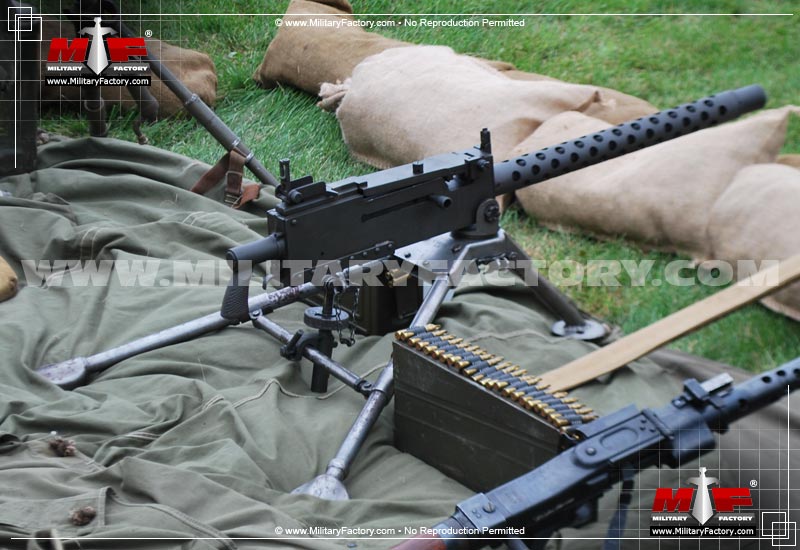
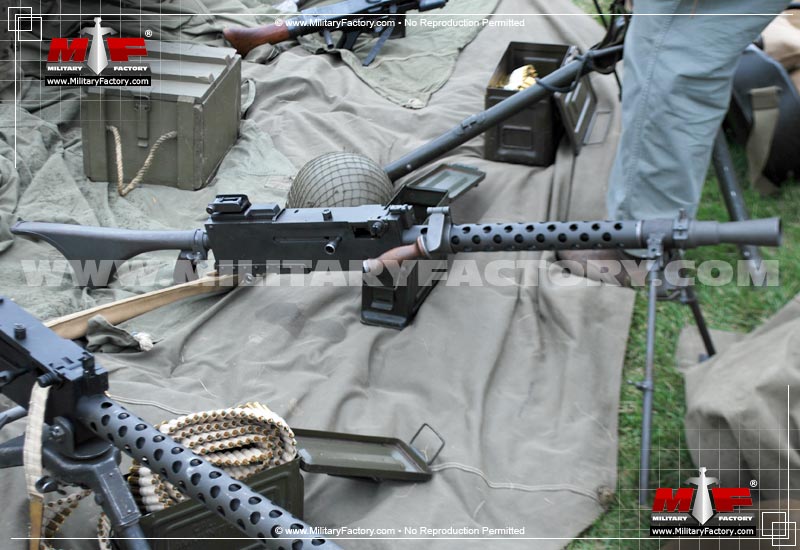
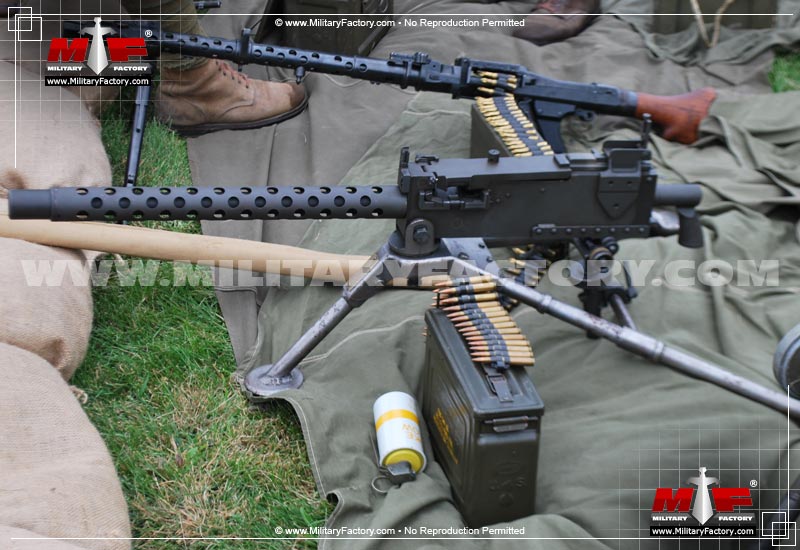
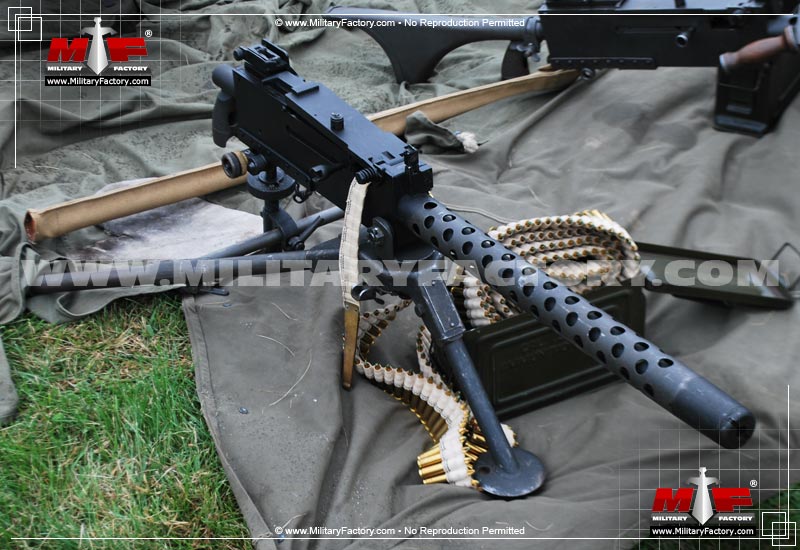
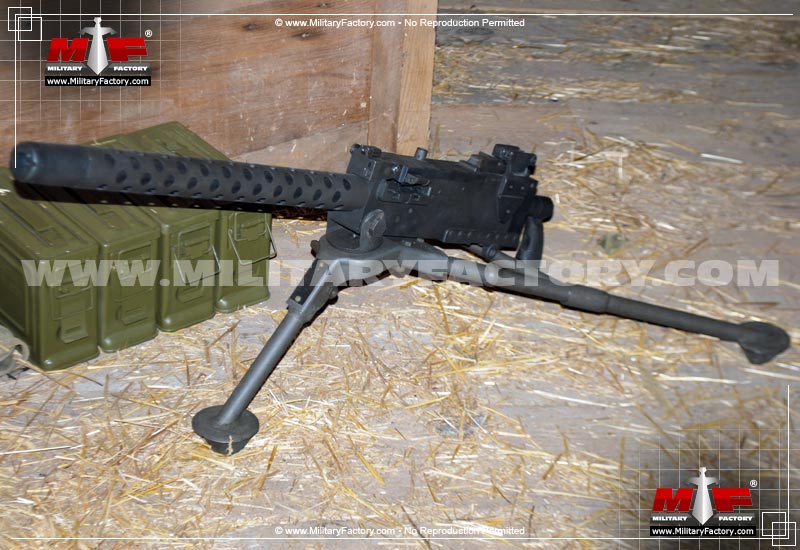
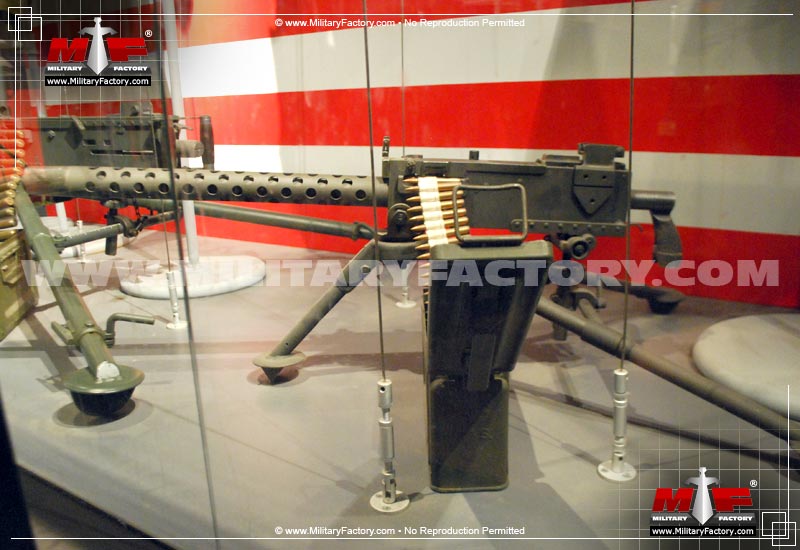
A fixture for American and Allied forces during World War 2 was the Browning M1919 0.30 caliber machine gun.

Find a School Near You
Follow Military Factory on Facebook:
Trending on Military Factory:
Recent Articles:
Like many of the infantry weapons made available to US servicemen in the Second World War, the M1919 shared the common history of having been developed - or having stemmed from a development - originally conceived of or produced in the First World War. The M1919 was no exception as it appeared in a water-cooled form as the M1917.

Water-cooling was an essential part of early machine gun technology. The rate at which the gun was to disperse of ammunition required some act of cooling to take place in order to keep the weapon's barrel from completely overheating and breaking. The M1917 was actually issued with a water container and applicable hose installation that allowed the system to pump in water while squeezing off ammunition at an impressive 500 rounds per minute.

With the desire to make a more universal machine gun based on gas-operated recoil and air cooling, the M1919 series was developed from the developmental M1918. Air cooling now allowed various elements of the system to be produced in lighter form, easing the overall weight of the system. More importantly, it produced a universal system that was equally adept at being mounted on aircraft as well as armor and light vehicles. The M1919 would serve US infantrymen and airmen alike as the most important piece of suppressive fire support of the war.

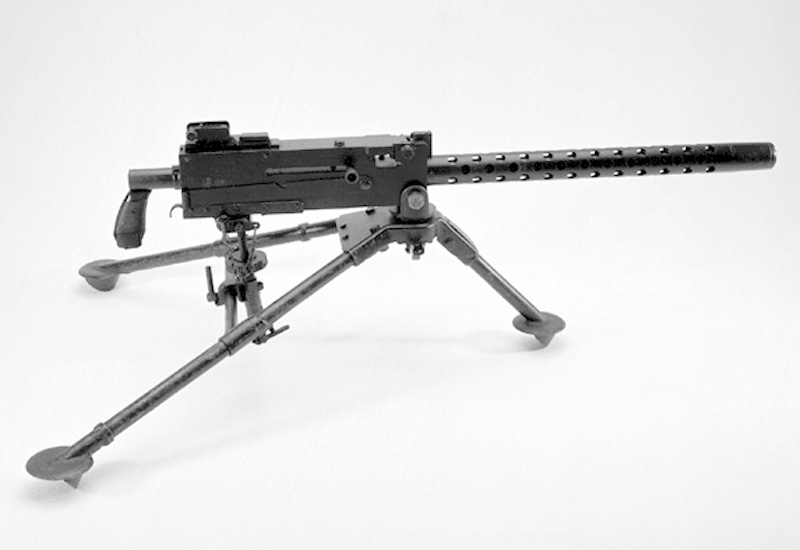
The M1919A4 was the definitive mark in the M1919 series. This particular design allowed for a fized and flexible mounting style that made it proper for usage by both aircraft and infantry squads. The fixed mount was suitable for defensive positions onboard bomber aircraft as seen on the B-17 Flying Fortress and B-24 Liberator models among others. More importantly, the flexible mount allowed infantry units to affix the M1919 system to a portable tripod. This arrangement needed just a crew of two for operation - a loader and a gunner - with the loader being in charge of porting the tripod and keeping the ammunition belt untangled as it fed into the weapon. The gunner was charged with carrying the main system and firing the gun when called upon.

The M1919 survived past the war in various forms and paved the way for more evolutions of the successful and original air-cooled design. One of the unsung heroes of the Second World War, the M1919 was a real infantryman's friend and allowed the military war planner and tactician the flexibility of having a defensive weapon easily become an offensive one with out the encumbrance of water-cooling needed.
Text ©2003-2013 www.MilitaryFactory.com • All Rights Reserved • No Reproduction Permitted
MilitaryFactory.com does NOT sell equipment/weaponry. Material presented throughout this website is for historical and entertainment value and should not to be construed as usable for hardware restoration, maintenance or general operation. Please consult manufacturers for such information. Our disclaimer. Email corrections / Comments to MilitaryFactory at Gmail dot com.
Picture of Browning M1919 GPMG
View All Images (1)

Specifications for the
Browning M1919 GPMG
Medium Machine Gun


Country of Origin: United States
Manufacturer: General Motors Company / Rock Island Arsenal / Buffalo Arms - USA; BSA - UK
Initial Year of Service: 1919


Overall Length: 1041mm (40.98in)
Barrel Length: 609.00mm (23.98in)
Weight (Empty): 30.97lbs (14.05kg)


Cartridge: .30-60 Springfield; 7.62x51mm NATO; .303 British; 7.92x57mm Mauser; 6.5x55mm Mauser; 7.62x54mmR
Action: Gas Operated; Belt-Fed; Air-Cooled
Feed: 250-Round Fabric Belt
Rate-of-Fire: 400 rounds per minute
Sights: Iron


Variants:
M1917 - Initial water-cooled version of World War One.


M1918 / M1918M1 - Interim design looking into making working the M1917 system away from water cooling and proposal of making the entire system lighter where possible.

M1919 - Base series designation of the air-cooled system intended as a tank-mounted machine gun in World War One but arriving too late; heavier barrel.

M1919A1 - Intended for Mark VIII tank mounting.

M1919A2 - Mounted cavalry usage with portable separated tripod.

M1919A3 - "General Purpose" variant; developmental version of the production M1919A4.

M1919A4 - Definitive Browning M1919 system series; fixed form offered usage onboard aircraft for defensive armament; flexible form was crew-served and carried by infantrymen with a tripod; other flexible forms included simple vehicle mounts for defensive armament.

M1919A4E1 - fitted with slide-retracting mechanism; post-war design.

M1919A5 - fitted with bolt-retracting slide; system designed for M3 Stuart Light Tank mount (Light Tank M3).

M1919A6 - Fitted with bipod, flash suppressor, carrying handle and shoulder stock; lighter barrel production; based on M1919A4 model series.


Operators:
Australia; Burundi; Canada; Chile; Columbia; Costa Rica; Denmark; Dominican Republic; El Salvador; France; Gabon; Greece; Guatemala; Haiti; Iran; Ireland; Israel; Italy; South Korea; Liberia; Luxembourg; Mauritania; Mexico; Panam; Philippines; Portugal; Rhodesia; South Africa; Spain; Taiwan; Tunisia; United Kingdom; Uruguay; Vietnam

ALL SMALL ARMS CATEGORIES

BY YEAR:


1700 to 1799
1800 to 1899
1900 to 1909
1910 to 1919
1920 to 1929
1930 to 1939
1940 to 1949
1950 to 1959
1960 to 1969
1970 to 1979
1980 to 1989
1990 to 1999
2000 to 2009
2010 to 2019
VIEW ALL
Compare Guns


BY TYPE:


Anti-Aircraft Weapons
Anti-Material Rifles
Anti-Tank Weapons
Automatic Rifles
Bolt-Action Rifles
Carbine Guns
Flamethrowers
Flintlock Guns
Grenade Launchers
Hand Grenades
Lever-Action Rifles
Machine Guns
Mortars
Musket Guns
Pistols / Handguns
Recoilless Rifles
Revolvers
Rocket Launchers
Shotguns
Silenced Guns
Sniper Rifles
Special Weapon Systems
Submachine Guns
VIEW ALL


SPECIAL:


18th Century Warfare
3 Soldiers Statue
Battle of Mogadishu
Chainmail Armor
Firearm Types Defined
French Military Victories
Medieval Crossbow
Medieval Longbow
Vietnam War Casualties
Vietnam War Memorial

WORLD WAR 2:


Australia
Britain
France
Germany (ALL)
German Rifles
Italy
Japan
Soviet Union
United States
US Infantry Regiment Guns
Machine Guns
Pistols and Handguns
Rifles
Submachine Guns
Sniper Rifles
VIEW ALL


WORLD WAR 1:

Pistols
Rifles
Machine Guns
Mortars
US Guns
VIEW ALL


KOREAN WAR:

Machine Guns
VIEW ALL


VIETNAM WAR:

Mortars
VIEW ALL


COLLECTIONS:


Ancient Weapons
British SAS Weapons
Civil War Guns (ALL)
Civil War Pistols
Colt Guns
Glock Guns
GROM Polish Special Forces
Guns of Libya
Guns of North Korea
Guns of Syria
Guns of WW1 & WW2
Heckler & Koch Guns
Kalashnikov Guns
Modern Russian Guns
Navy SEAL Weapons
Spetsnaz Weapons
Weapons of Desert Storm
Wild West Guns
Winchester Guns


HOLLYWOOD/GAMES:


Guns of the Walking Dead

Site Disclaimer | Privacy Policy | Site Map | MF Origins


©2013 www.MilitaryFactory.com • Content ©2003-2013 MilitaryFactory.com • All Rights Reserved • Site Contact Email: militaryfactory at gmail dot com. The "Military Factory" name and MilitaryFactory.com logo are registered ® trademarks and protected by all applicable domestic and international intellectual property laws.


Top MF Stuff: 2013 Military Pay Scale | Military Ranks | WW2 Weapons | Sniper Rifles | Kts to Mph | WW1 Aircraft | Automatic Rifles | Aircraft Cockpits | Vietnam War Weapons | Main Battle Tanks | Submachine Guns | Shotguns | French Military Victories


Most photographic images appearing on this site are courtesy of the United States Department of Defense and are approved for public use. Other images acquired through the public domain. Digital art work courtesy of Dan Alex. Business Consulting by Kyle Williams. Material presented throughout this website is for historical and entertainment value and should not to be construed as usable for hardware restoration, maintenance or general operation. Please consult manufacturers for such information.


eXTReMe Tracker