Military Factory
Military Pay Chart
Global Firepower
Military Industrial Complex
Second World War
Home
Military Pay Scale
Military Ranks
Small Arms
Aircraft
Land Systems
Navy
Education
Military Factory Facebook Logo
flag of United States

M1 Garand (United States Rifle, Caliber .30, M1) Gas-Operated; Self-Loading Rifle (1936)

Authored By Staff Writer | Last Updated: 11/16/2010

The M1 Garand was the principle frontline rifle of American forces worldwide for a time.

Find a School Near You
Follow Military Factory on Facebook:
Trending on Military Factory:
Recent Articles:
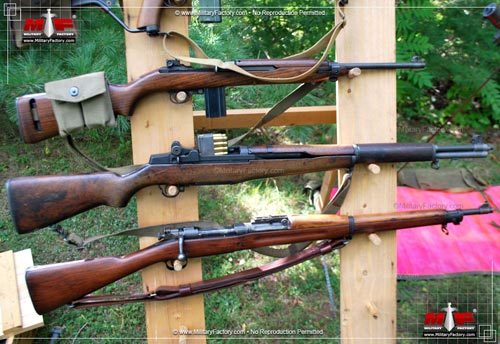
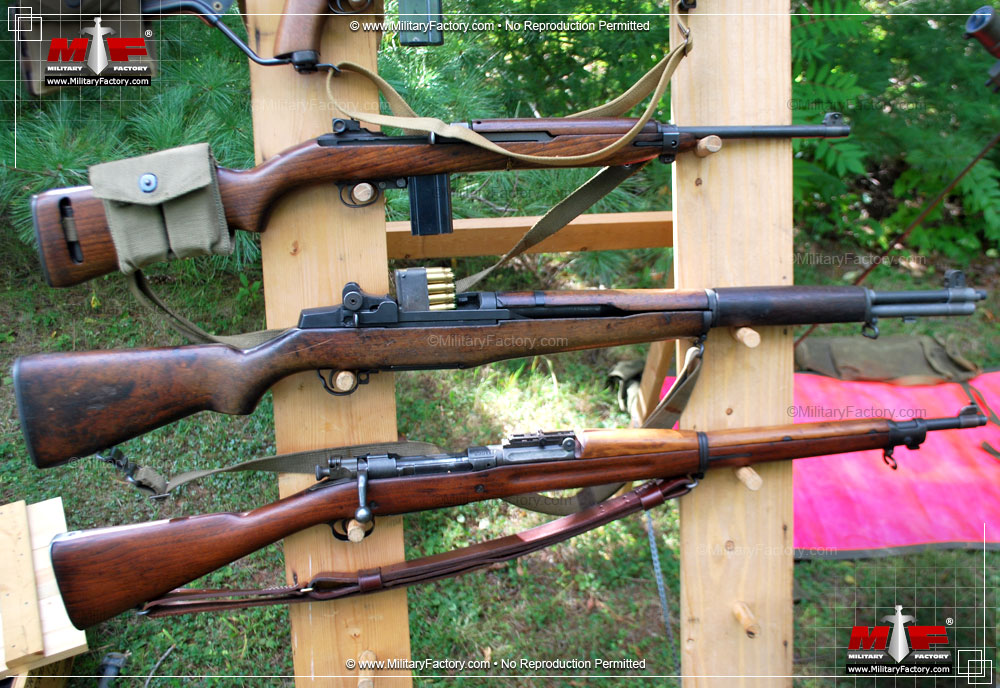
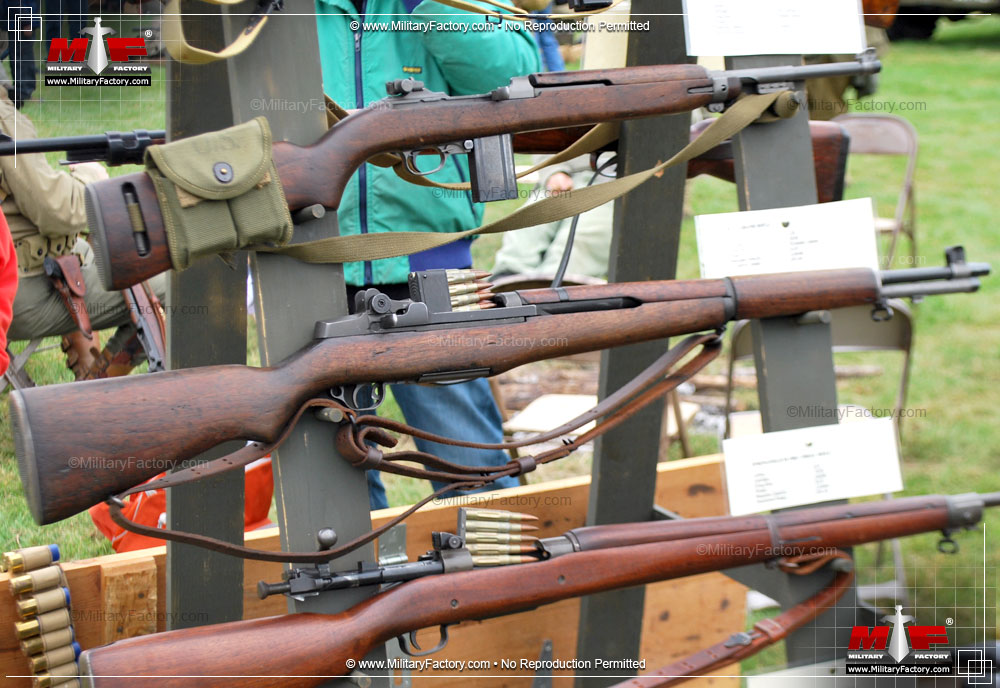
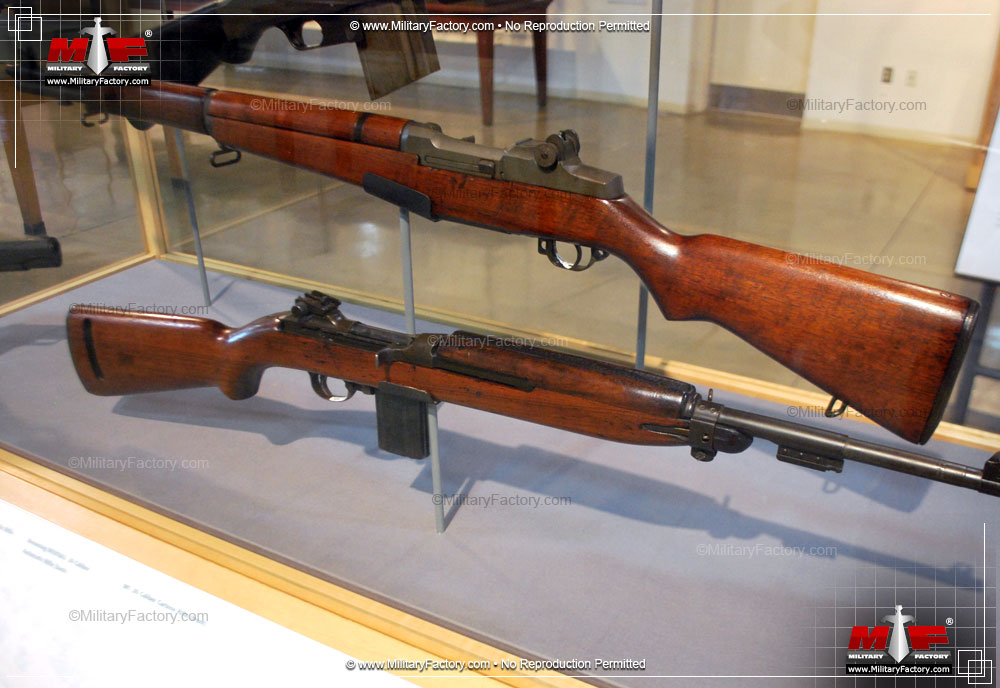
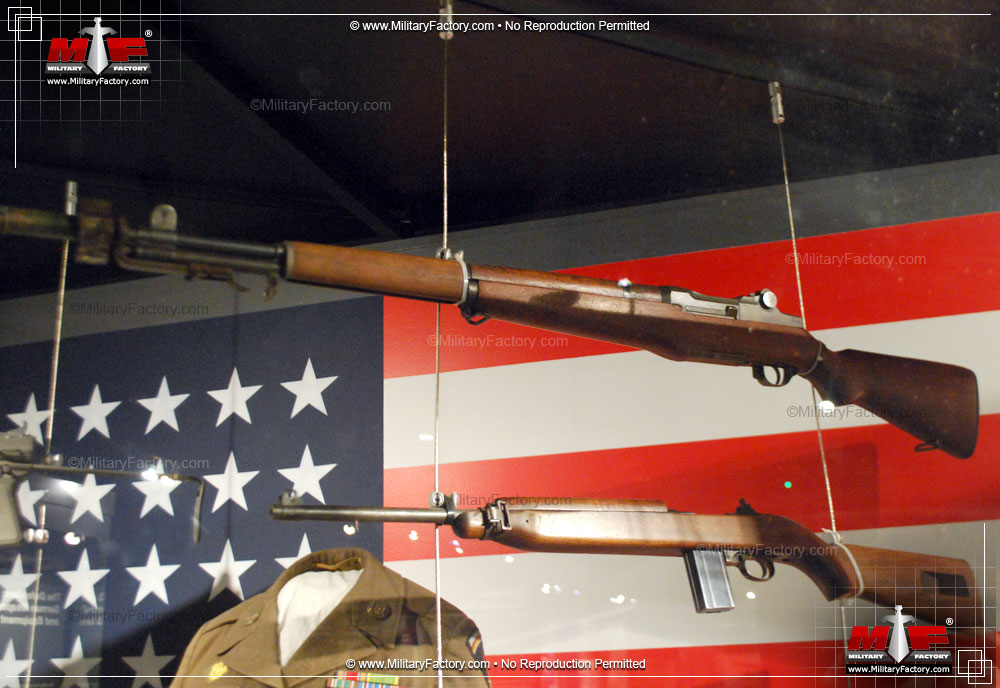
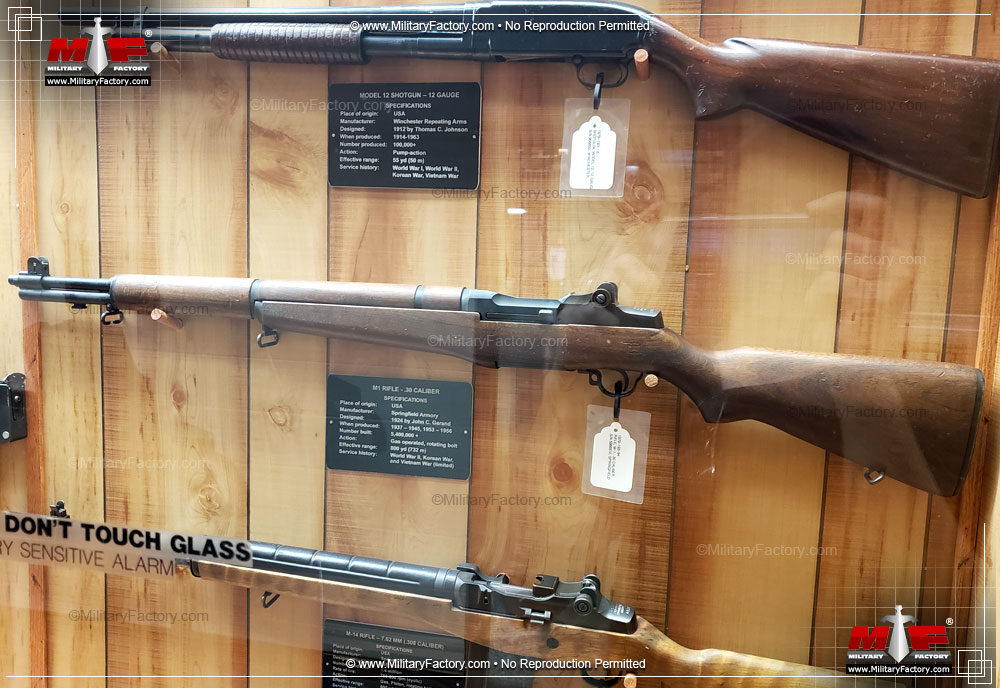
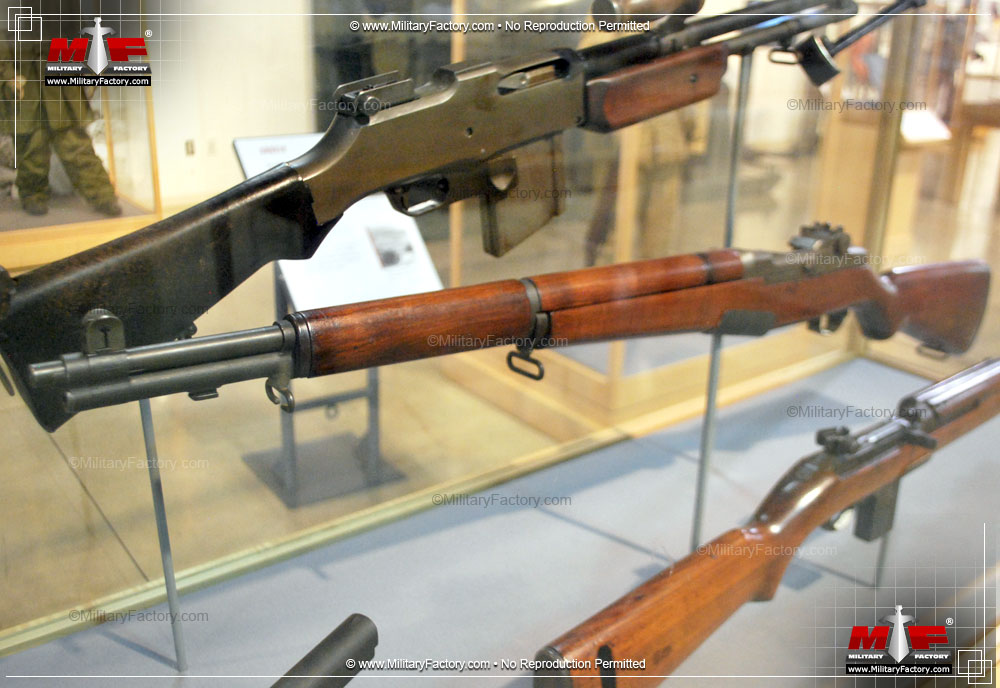
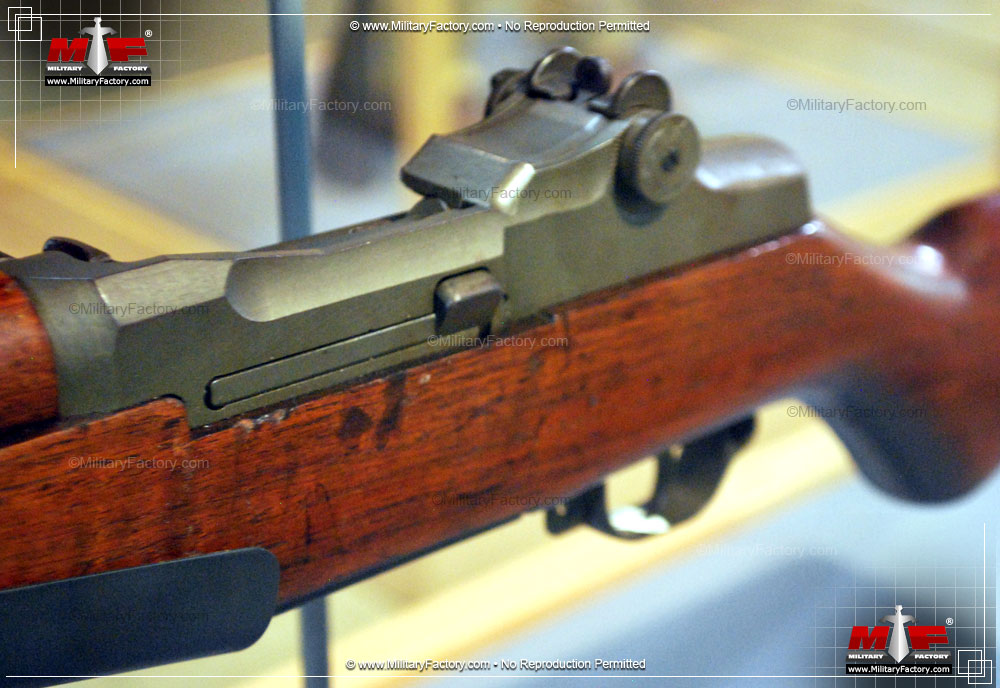
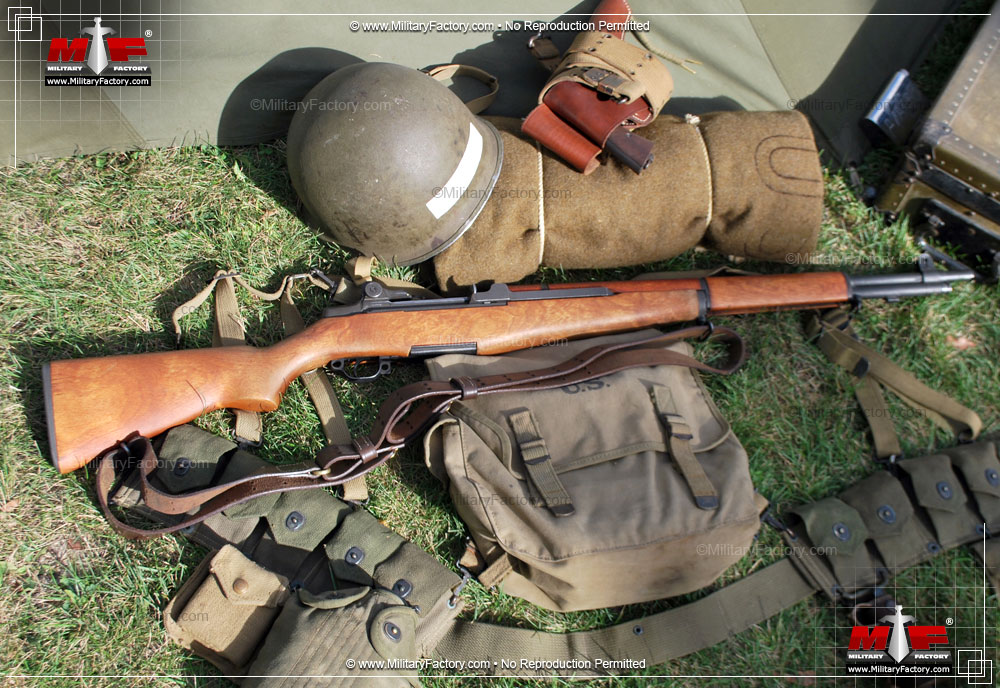
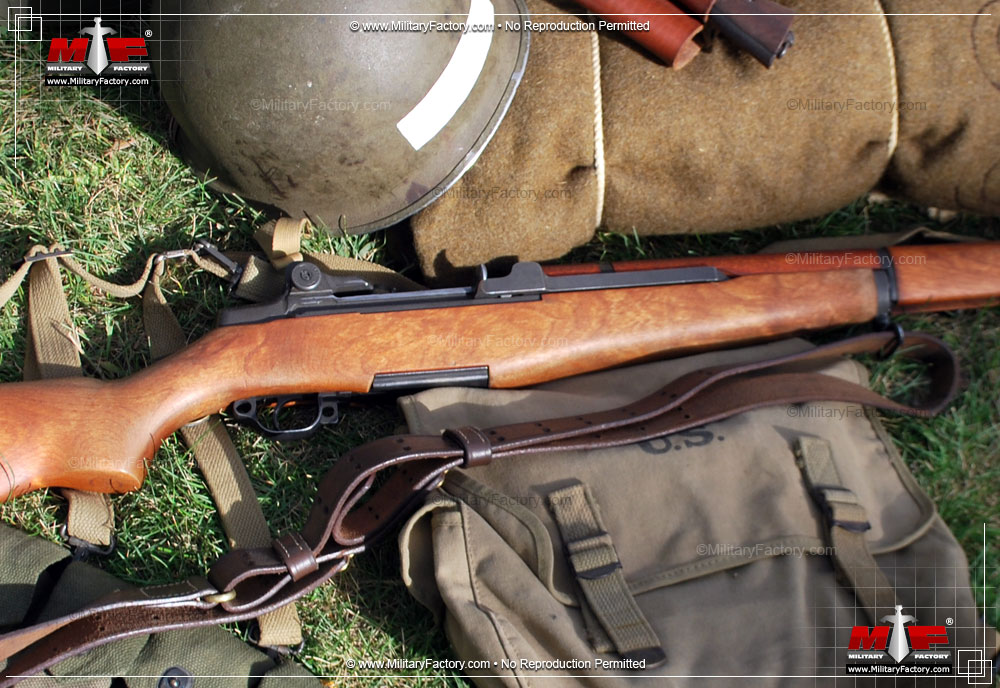
Little discussion can be had on the subject of American infantrymen in World War Two without the mention of the highly-acclaimed M1 Garand rifle. As the standard infantry rifle of the Second World War GI, the Garand saw combat throughout theaters in Europe with the United States Army and especially in the Pacific with the United States Marine Corps. The major distinction of the M1 Garand series lay in the acceptance of the weapon system as the first self-loading rifle reaching operational status in the world. This occurred at a time when other national military forces were still relying on the tried and true, albeit slow-loading, bolt-action type rifles. Accepted as early as 1932, the rifle came into service by 1936 to become the principle soldier's weapon by the first year of America's participation in the war. The system proved to be produced of the utmost construction, often heralded as a battlefield-friendly weapon, though often derided for its heavy weight and size.

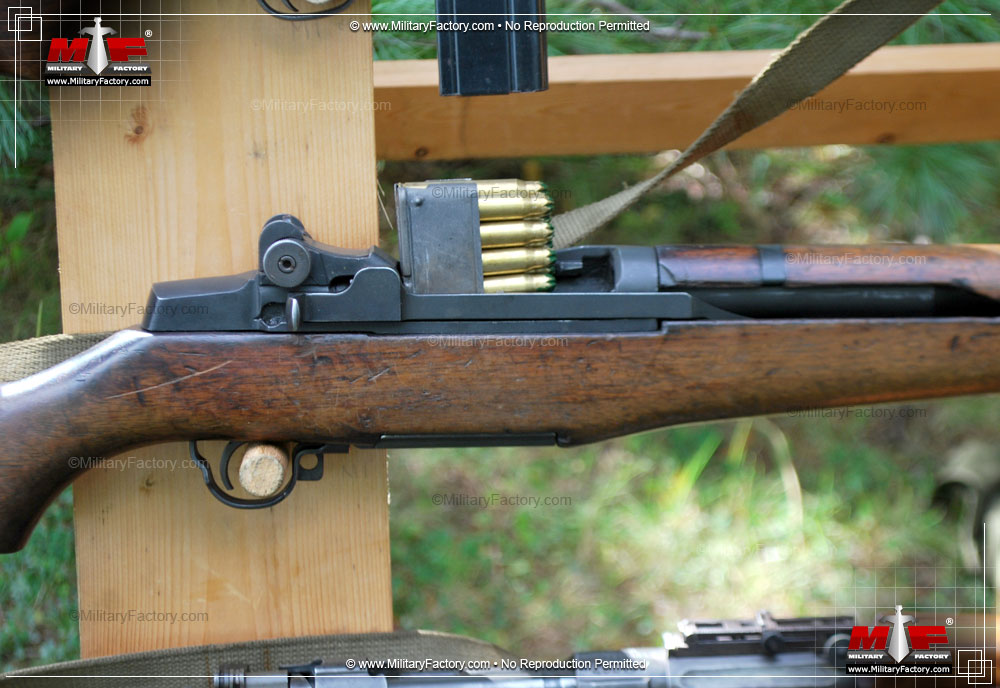
The M1 Garand was not only unique in its self-loading ways but the system managed an eight round "clip" of 30-06 Springfield ammunition. This clip was interestingly enough loaded from the top of the weapon, keeping the overall design clean and smooth. Though a novel concept in on the drawing board, this system proved to be the bane of many a soldier as the clip had to be completely emptied before the operator could reload the system - that meant no firing of single-loaded rounds and running out of ammunition at the worst possible times. To add insult to injury, the system would also end the firing of the final cartridge with a definitive "ping" sound, often providing the enemy with an assistant as to the the location of Allied forces - particularly in the fighting achieved in close quarters combat. A bayonet could be fitted under the barrel for close range assaults. Despite these detracting issues the system maintained an edge over their bolt-action German and Japanese counterparts with an almost "semiautomatic" firing operation performance.

The Garand would go on to prove its worth through all the war years and followed it up with equal success in the Korean War a few short years later. Additionally, the M1 Garand appeared, for a time, in redesigned form in the way of the M14 rifle (detailed elsewhere on this site). Though not nearly as successful as the M1 itself, the M14 was a reliable and robust weapon nonetheless. The M14 would see combat action in Vietnam (where handfuls of M1's were still in operation at the time!) and become a popular collector's rifle thereafter.

In all, some 5.5 million M1 Garands in various forms were produced. Those involved in the production run included the Springfield Armory, Winchester Repeating Arms Company, Harrington & Richardson Arms Company and the International Harvester Corporation. License production was undertaken for a time in the countries of Indonesia and Italy.
Text ©2003-2013 www.MilitaryFactory.com • All Rights Reserved • No Reproduction Permitted
MilitaryFactory.com does NOT sell equipment/weaponry. Material presented throughout this website is for historical and entertainment value and should not to be construed as usable for hardware restoration, maintenance or general operation. Please consult manufacturers for such information. Our disclaimer. Email corrections / Comments to MilitaryFactory at Gmail dot com.
Picture of M1 Garand (United States Rifle, Caliber .30, M1)
Pic of the M1 Garand (United States Rifle, Caliber .30, M1)
Image of the M1 Garand (United States Rifle, Caliber .30, M1)
View All Images (8)

Specifications for the
M1 Garand (United States Rifle, Caliber .30, M1)
Gas-Operated; Self-Loading Rifle


Country of Origin: United States
Manufacturer: Springfield Armory (various others) - USA
Initial Year of Service: 1936


Overall Length: 1103mm (43.43in)
Barrel Length: 609.00mm (23.98in)
Weight (Empty): 9.63lbs (4.37kg)


Cartridge: 30-06 Springfield
Action: Self-Loading Gas-Action Piston
Feed: 8-Round Internal Clip
Muzzle Velocity: 2,800ft/sec (853m/sec)
Range: 1,318ft (402m; 439yds)
Sights: Aperture Rear; Barleycorn-Type Front


Variants:
M1 - Main Production Model Designation


M1E1 - Limited Production Variant with subtle internal changes.

M1E2 - Experimental Variant; first M1 series rifle designed specifically with mountings for telescopic sights.

M1E3 - Experimental Variant; re-engineered firing action.

M1E4 - Experimental Variant; re-engineered firing action.

M1E5 - Short barrel M1; folding stock.

M1E6 - Experimental Sniper Variant; redesigned telescopic sight mountings.

M1E7/M1C - Sniper Variant; fitted with Telescopic Sight M73 ("Lyman Alaskan") or M73B1 ("Weaver 300"); flash suppressor; redesignated to M1E7 in June of 1944.

M1E8/M1D - Sniper Variant; fitted with Telescopic Sight M73; redesignated as M1D in June of 1944.

M1E9 - Experimental Variant looking to iron out heating issues in the M1E4 series; redesigned gas expansion system.

T26 - Ordered for Pacific forces in 1945 as a combination of the M1E5 action with the stock of a shortened M1; never produced and the order was cancelled.


Operators: Italy; Indonesia; United States

ALL SMALL ARMS CATEGORIES

BY YEAR:


1700 to 1799
1800 to 1899
1900 to 1909
1910 to 1919
1920 to 1929
1930 to 1939
1940 to 1949
1950 to 1959
1960 to 1969
1970 to 1979
1980 to 1989
1990 to 1999
2000 to 2009
2010 to 2019
VIEW ALL
Compare Guns


BY TYPE:


Anti-Aircraft Weapons
Anti-Material Rifles
Anti-Tank Weapons
Automatic Rifles
Bolt-Action Rifles
Carbine Guns
Flamethrowers
Flintlock Guns
Grenade Launchers
Hand Grenades
Lever-Action Rifles
Machine Guns
Mortars
Musket Guns
Pistols / Handguns
Recoilless Rifles
Revolvers
Rocket Launchers
Shotguns
Silenced Guns
Sniper Rifles
Special Weapon Systems
Submachine Guns
VIEW ALL


SPECIAL:


18th Century Warfare
3 Soldiers Statue
Battle of Mogadishu
Chainmail Armor
Firearm Types Defined
French Military Victories
Medieval Crossbow
Medieval Longbow
Vietnam War Casualties
Vietnam War Memorial

WORLD WAR 2:


British Guns
French Guns
German Guns (ALL)
German Rifles
Italian Guns
Japanese Guns
Soviet Guns
US Guns
US Infantry Regiment-Level Guns
Machine Guns
Pistols
Rifles
Submachine Guns
Sniper Rifles
VIEW ALL


WORLD WAR 1:

Pistols
Rifles
Machine Guns
Mortars
US Guns
VIEW ALL


KOREAN WAR:

Machine Guns
VIEW ALL


VIETNAM WAR:

Mortars
VIEW ALL


COLLECTIONS:


Ancient Weapons
British SAS Weapons
Civil War Guns
Colt Guns
Glock Guns
GROM Polish Special Forces
Guns of Libya
Guns of North Korea
Guns of Syria
Guns of WW1 & WW2
Heckler & Koch Guns
Kalashnikov Guns
Modern Russian Guns
Navy SEAL Weapons
Spetsnaz Weapons
Weapons of Desert Storm
Wild West Guns
Winchester Guns


HOLLYWOOD/GAMES:


Guns of the Walking Dead

Site Disclaimer | Privacy Policy | Site Map | MF Origins


©2013 www.MilitaryFactory.com • Content ©2003-2013 MilitaryFactory.com • All Rights Reserved • Site Contact Email: militaryfactory at gmail dot com. The "Military Factory" name and MilitaryFactory.com logo are registered ® trademarks and protected by all applicable domestic and international intellectual property laws.

Top MF Stuff: 2013 Military Pay Scale | Military Ranks | WW2 Weapons | Sniper Rifles | Kts to Mph | WW1 Aircraft | Automatic Rifles | Aircraft Cockpits | Vietnam War Weapons | Main Battle Tanks | Submachine Guns | Shotguns | French Military Victories

Most photographic images appearing on this site are courtesy of the United States Department of Defense and are approved for public use. Other images acquired through the public domain. Digital art work courtesy of Dan Alex. Business Consulting by Kyle Williams. Material presented throughout this website is for historical and entertainment value and should not to be construed as usable for hardware restoration, maintenance or general operation. Please consult manufacturers for such information.


eXTReMe Tracker