Military Factory
Military Pay Chart
Global Firepower
Military Industrial Complex
Second World War
Home
Military Pay Scale
Military Ranks
Small Arms
Aircraft
Land Systems
Navy
Education
Military Factory Facebook Logo
flag of United States

Johnson Model 1941 Semi-Automatic Rifle (1941)

Authored By Staff Writer | Last Updated: 12/5/2012

The Johnson Model 1941 lost out to the M1 Garand but still saw some 70,000 examples produced and used during World War 2 and beyond.

Find a School Near You
Follow Military Factory on Facebook:
Trending on Military Factory:
Recent Articles:
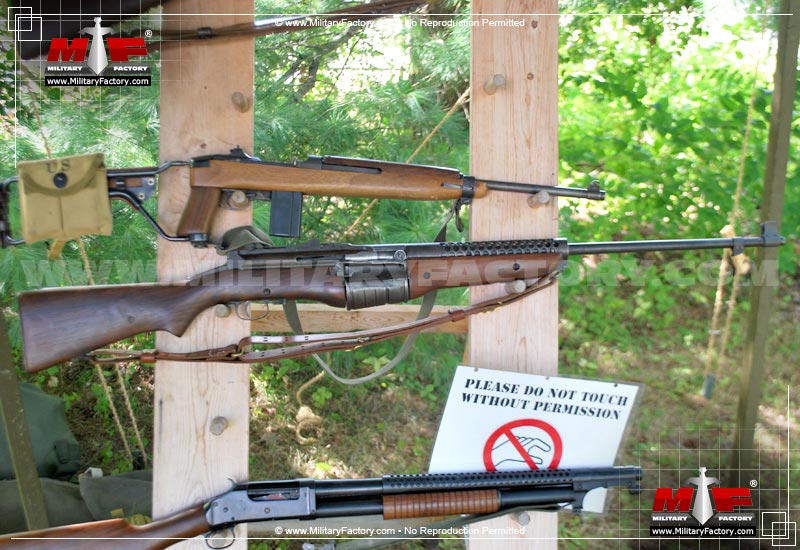
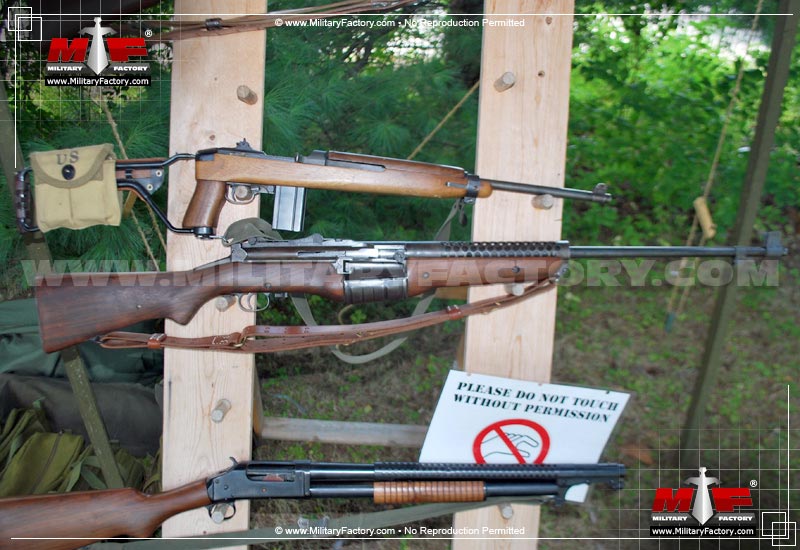
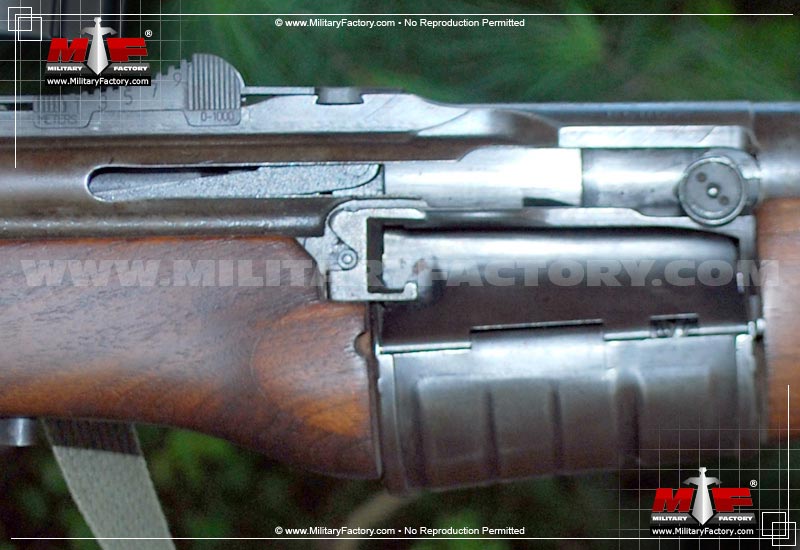
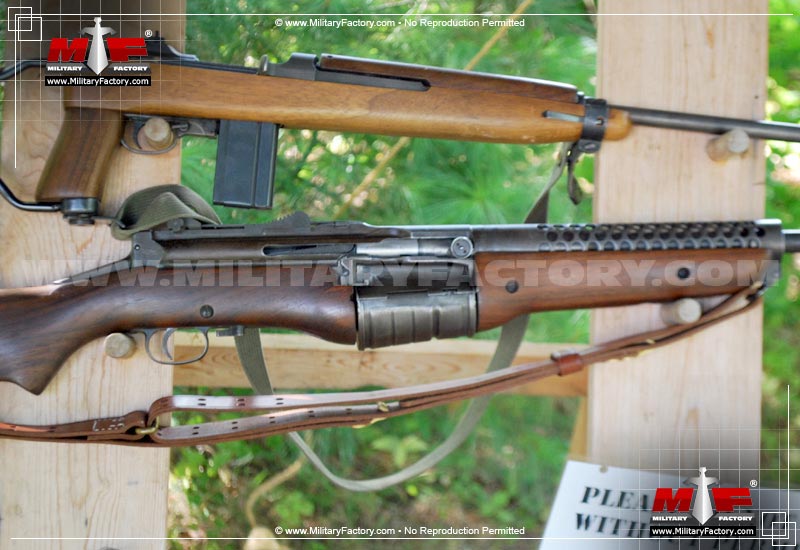
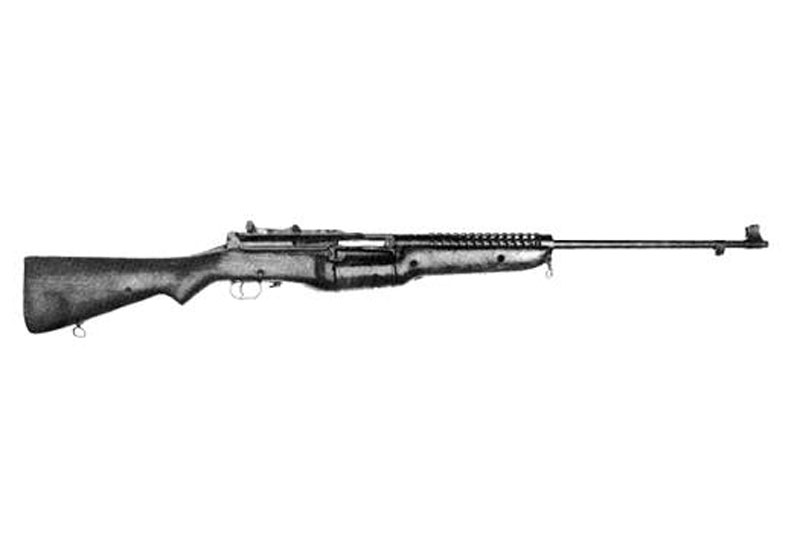
The Johnson Model 1941 faced off against the M1 Garand rifle before the start of hostilities that became World War 2. The rifle was designed by Melvin Maynard Johnson, Jr. (1909 - 1965) in 1939, a Boston, Massachusetts native, weapons engineer, lawyer and US Marine. His patents went on to serve in such weapons as the Armalite AR-10, AR-15 and the Colt M-16. However, the M1941 lost out to the M1 Garand in whole but some 20,000 were still pressed into service from 1941 to 1945 - wartime need dictated such use. The M1941 held some advantaged over the M1 in that it offered up a higher ammunition count, less recoil and the ammunition system could be added to without the need to fire off all cartridges. The United States Marine Corps became the M1941's primary user during World War 2. After 1945, many were earmarked as surplus and sold off. Its scarcity today means it has become a firearms collector's dream to acquire the rifle.

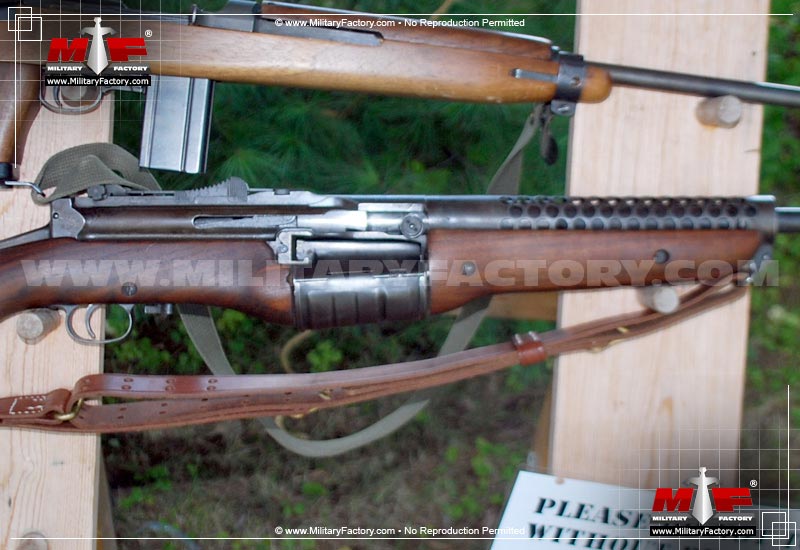
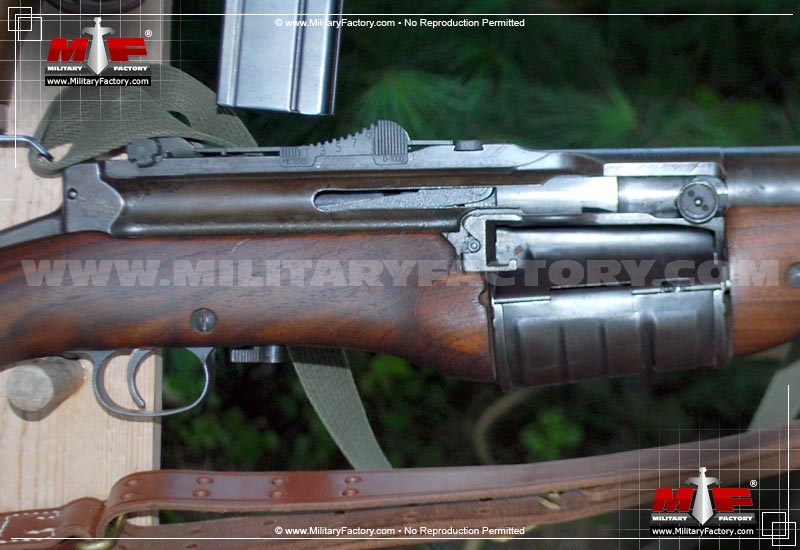
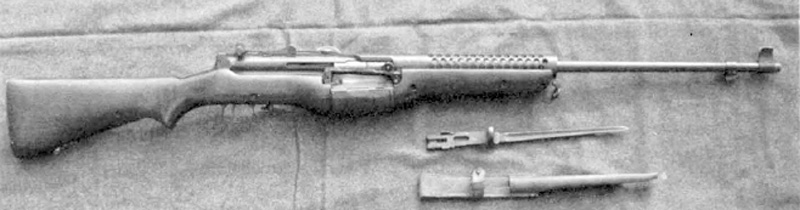
The Johnson Model 1941 maintained a most unique appearance as the rotary magazine created a contoured bulge along the underside of the body, just ahead of the trigger group. This proved the identifying characteristic for this rifle from then on. The pistol grip was integrated as a rifle-style handle into the two-piece wooden stock while the wood design also continued just ahead of magazine area to act as a foregrip. The upper portion of the receiver was metal with the forward portion being vented to help cooling of the barrel. The thin barrel itself protruded out from the body upper body and detailed only by an integrated foresight just aft of the muzzle and an underslung forward sling fitting. An iron sight was adjustable along the upper rear of the receiver. A second sling attachment was fitted under the stock behind the main grip, forward of the butt.

The Model 1941 made use of the .30-06 Springfield or the 7x57mm Mauser cartridge, firing from a short-recoil, rotating bolt action. The short recoil firing principle called upon a combined movement of the bolt and barrel. The overall distance utilized by the firing action was less than the cartridge's overall length (opposite of the long-recoil process). While the barrel's movement eventually stopped, the bolt would continue on its way to the rear, eventually activating the ammunition feed mechanism for the successive shot. Muzzle velocity was listed at 2,840 feet per second. The feed system was made up of a detachable internal rotary magazine cylinder holding the 10 ready-fire cartridges. This could be added to at any time by way of stripper clips. Overall weight of the rifle was a manageable 9.5lbs. Overall length topped 45.5 inches with the barrel making up 22 inches of this length. The Model 1941 was designed with a removable barrel which produced a shorter overall rifle - this helpful in general storage of the weapon or in aerial jumps conducted by paratroopers where a compact weapon reigned supreme .

The short-recoil action of the M1941 eventually worked against the design. The distinct barrel action made heavy use of bayoneting actions something to be desired and such action could promote malfunctions in the gun itself. The recoil action was also known to produce "vertical shot dispersion". In general, reliability soon proved an issue with complicated M1941 once in the field when compared to the M1 Garand.

The US Army evaluated the M1941 but rejected it in favor of the M1 Garand, a rifle design receiving much more in the way of attention and financing. Nevertheless, the US Marine Corps took on deliveries of M1941 rifles that were intended for the Netherlands to be used in the Dutch East Indies. These rifles were earmarked for the region but Japanese expansion now dictated that the USMC could make better use of the rifle. The M1941 proved a modern upgrade for the USMC and fired the common .30-06 Springfield round from a then-hefty ammunition count.

Some M1941s eventually reprised their battlefield roles in the post-war world, the most notable of these actions being in the failed 1961 Bay of Pigs Invasion of Cuba.
Text ©2003-2013 www.MilitaryFactory.com • All Rights Reserved • No Reproduction Permitted
MilitaryFactory.com does NOT sell equipment/weaponry. Material presented throughout this website is for historical and entertainment value and should not to be construed as usable for hardware restoration, maintenance or general operation. Please consult manufacturers for such information. Our disclaimer. Email corrections / Comments to MilitaryFactory at Gmail dot com.
Picture of Johnson Model 1941
Pic of the Johnson Model 1941
View All Images (2)

Specifications for the
Johnson Model 1941
Semi-Automatic Rifle


Country of Origin: United States
Manufacturer: Iver Johnson / FMA - USA
Initial Year of Service: 1941


Overall Length: 1165mm (45.87in)
Barrel Length: 559.00mm (22.01in)
Weight (Empty): 9.50lbs (4.31kg)


Cartridge: .30-06 Springfield; 7x57mm Mauser
Action: Semi-Automatic; Short-Recoil; Rotating Bolt
Feed: 10-round cylindrical magazine
Muzzle Velocity: 2,840ft/sec (866m/sec)
Sights: Adjustable Iron Rear; Iron Front


Variants:
Model 1941 - Base Production Designation


Operators: Canada; Chile; Cuba; Netherlands; Philippines; United States; United Kingdom

ALL SMALL ARMS CATEGORIES

BY YEAR:


1700 to 1799
1800 to 1899
1900 to 1909
1910 to 1919
1920 to 1929
1930 to 1939
1940 to 1949
1950 to 1959
1960 to 1969
1970 to 1979
1980 to 1989
1990 to 1999
2000 to 2009
2010 to 2019
VIEW ALL
Compare Guns


BY TYPE:


Anti-Aircraft Weapons
Anti-Material Rifles
Anti-Tank Weapons
Automatic Rifles
Bolt-Action Rifles
Carbine Guns
Flamethrowers
Flintlock Guns
Grenade Launchers
Hand Grenades
Lever-Action Rifles
Machine Guns
Mortars
Musket Guns
Pistols / Handguns
Recoilless Rifles
Revolvers
Rocket Launchers
Shotguns
Silenced Guns
Sniper Rifles
Special Weapon Systems
Submachine Guns
VIEW ALL


SPECIAL:


18th Century Warfare
3 Soldiers Statue
Battle of Mogadishu
Chainmail Armor
Firearm Types Defined
French Military Victories
Medieval Crossbow
Medieval Longbow
Vietnam War Casualties
Vietnam War Memorial

WORLD WAR 2:


British Guns
French Guns
German Guns (ALL)
German Rifles
Italian Guns
Japanese Guns
Soviet Guns
US Guns
US Infantry Regiment-Level Guns
Machine Guns
Pistols
Rifles
Submachine Guns
Sniper Rifles
VIEW ALL


WORLD WAR 1:

Pistols
Rifles
Machine Guns
Mortars
US Guns
VIEW ALL


KOREAN WAR:

Machine Guns
VIEW ALL


VIETNAM WAR:

Mortars
VIEW ALL


COLLECTIONS:


Ancient Weapons
British SAS Weapons
Civil War Guns
Colt Guns
Glock Guns
GROM Polish Special Forces
Guns of Libya
Guns of North Korea
Guns of Syria
Guns of WW1 & WW2
Heckler & Koch Guns
Kalashnikov Guns
Modern Russian Guns
Navy SEAL Weapons
Spetsnaz Weapons
Weapons of Desert Storm
Wild West Guns
Winchester Guns


HOLLYWOOD/GAMES:


Guns of the Walking Dead

Site Disclaimer | Privacy Policy | Site Map | MF Origins


©2013 www.MilitaryFactory.com • Content ©2003-2013 MilitaryFactory.com • All Rights Reserved • Site Contact Email: militaryfactory at gmail dot com. The "Military Factory" name and MilitaryFactory.com logo are registered ® trademarks and protected by all applicable domestic and international intellectual property laws.


Top MF Stuff: 2013 Military Pay Scale | Military Ranks | WW2 Weapons | Sniper Rifles | Kts to Mph | WW1 Aircraft | Automatic Rifles | Aircraft Cockpits | Vietnam War Weapons | Main Battle Tanks | Submachine Guns | Shotguns | French Military Victories


Most photographic images appearing on this site are courtesy of the United States Department of Defense and are approved for public use. Other images acquired through the public domain. Digital art work courtesy of Dan Alex. Business Consulting by Kyle Williams. Material presented throughout this website is for historical and entertainment value and should not to be construed as usable for hardware restoration, maintenance or general operation. Please consult manufacturers for such information.


eXTReMe Tracker