Military Factory
Military Pay Chart
Global Firepower
Military Industrial Complex
Second World War
Home
Military Pay Scale
Military Ranks
Small Arms
Aircraft
Land Systems
Navy
Education
Military Factory Facebook Logo
flag of United Kingdom

Boys Anti-Tank Rifle (Project Stanchion) Anti-Tank Rifle (1937)

Authored By JR Potts, AUS 173d AB and Dan Alex | Last Updated: 11/18/2012

The Boys Anti-Tank rifle proved to be of some value for the British Army, particularly against earlier light and medium tank designs of the World War 2.

Find a School Near You
Follow Military Factory on Facebook:
Trending on Military Factory:
Recent Articles:
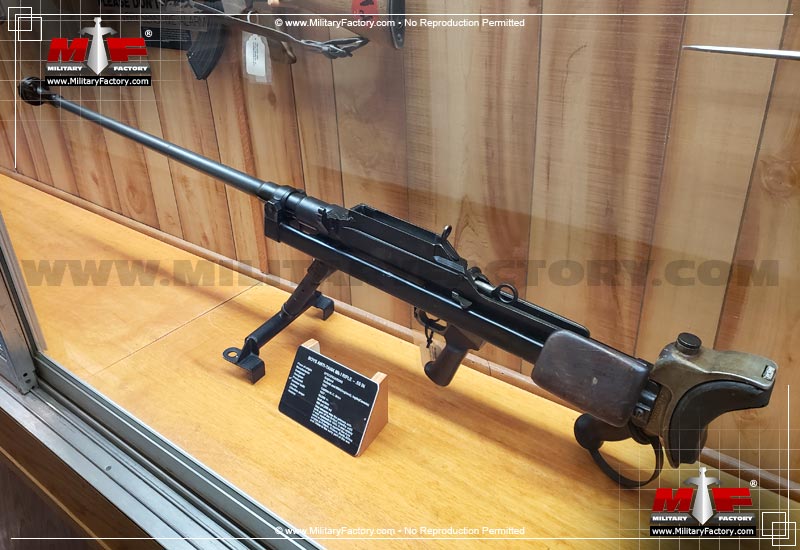
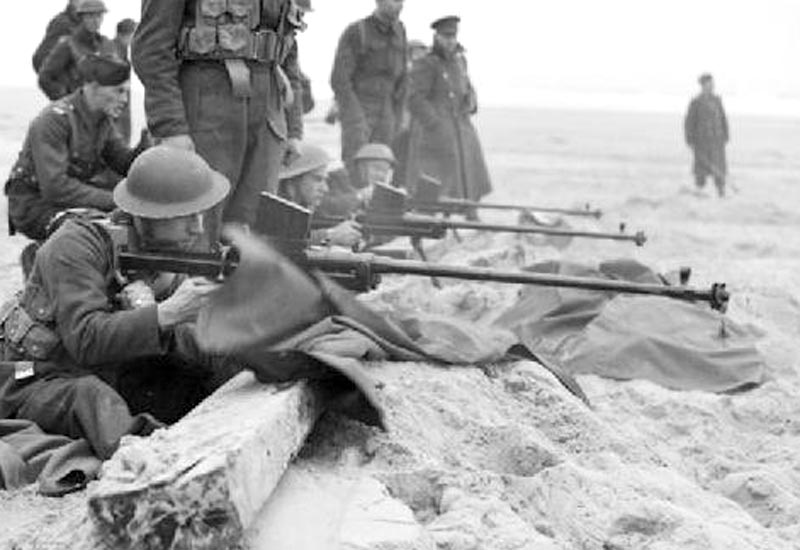
Recognizing the increased reliance on armor by the world's armies in the lead-up to World War 2, the British Army issued a requirement in 1934 for a portable, "light" anti-tank weapon based around the concept of an oversized rifle firing a massive armor-penetrating bullet. The German Army of World War 1 attempted such a feat to combat the arrival of British and French tanks but the design proved lacking on the whole. The designer of the heavy rifle was British Captain Boys, a designer at the Royal Small Arms Factory at Enfield, and centered around a 13.9mm cartridge (0.55 inches). To protect its development from prying enemy eyes, the weapon was known locally under the code-name of "Project Stanchion". Eventually, the system came to be known by the name of its designer as the "Boys Anti-Tank Rifle".

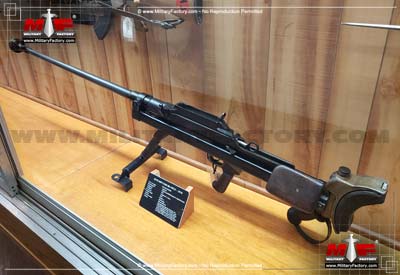
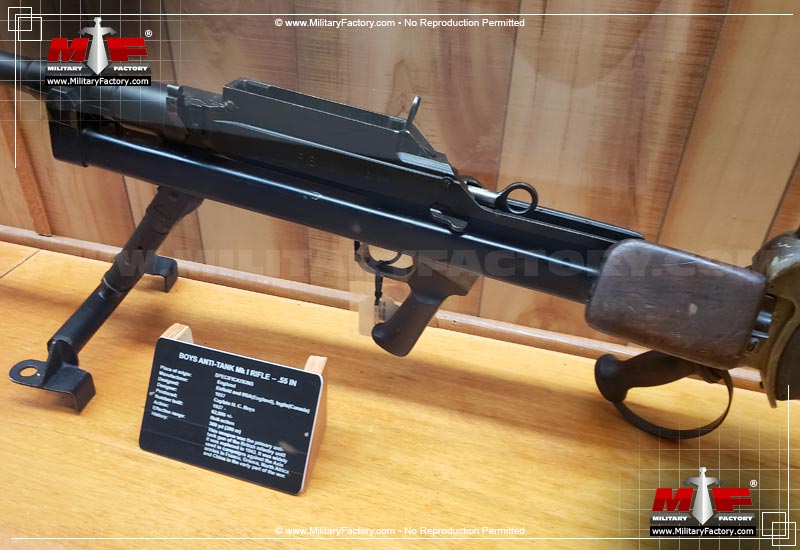
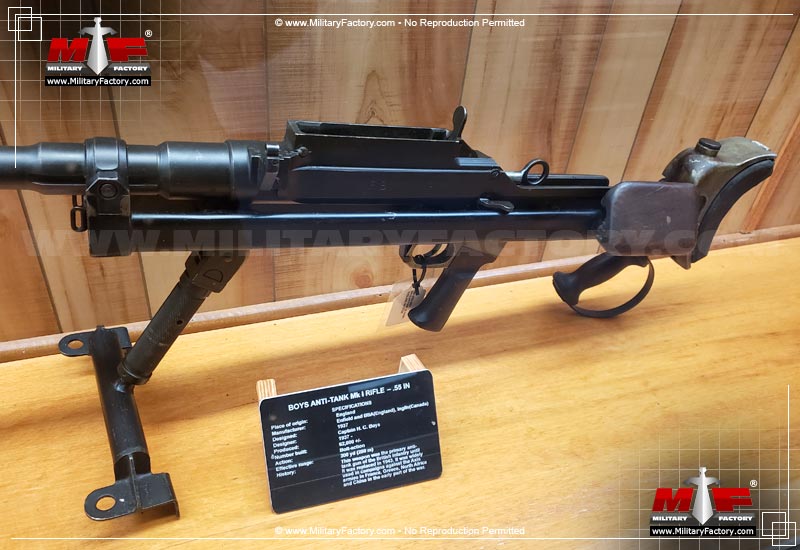
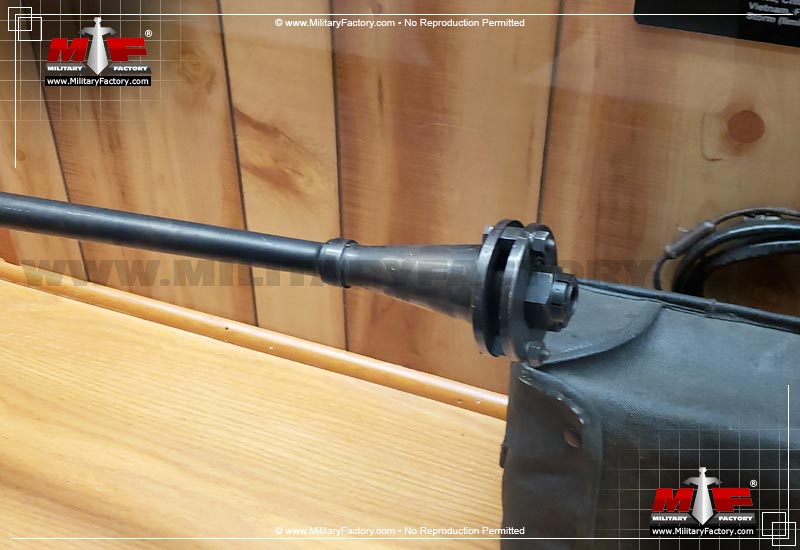
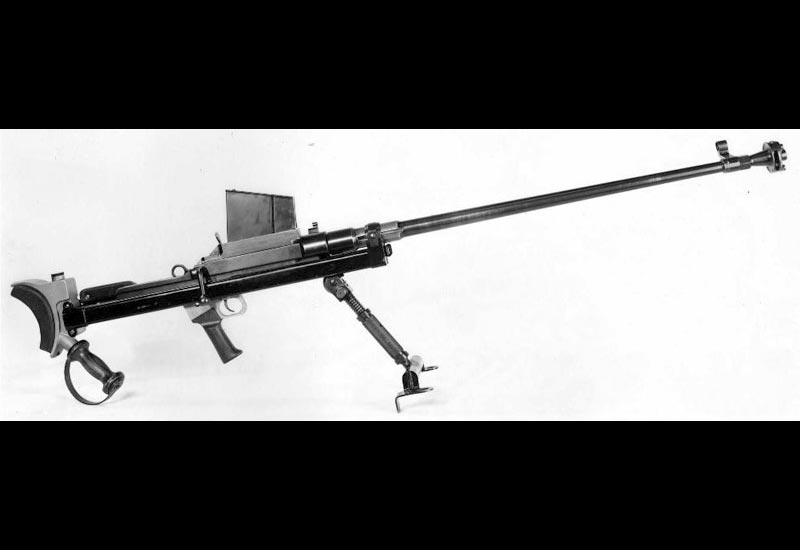
Good progress on the design was made and subsequent tests proved encouraging with the bullet able to penetrate 1" (25mm) of armor plate. The Boys Rifle was essentially a dimensionally large version of a standard service rifle, a rifle that was intended to be nearly as portable in the field. This was facilitated through use of a spring-based absorber, muzzle brake and monopod (later changed to a spiked/footed bipod). An angled handle at the rear of the butt allowed for a second hand hold when porting the weapon about. The curved detachable box magazine was fitted into the top of the receiver ahead of the action. The weapon was actuated through a manual bolt-action facility as in a traditional bolt-action service rifle. This meant that the bolt-action ejected the spend shell casing while introducing a fresh round into the chamber. The trigger sat within a guard ahead of an angled pistol grip. Initial models sported a double sight arrangement for ranging from 300 yards and 500 yards while subsequent models sported fixed sights.

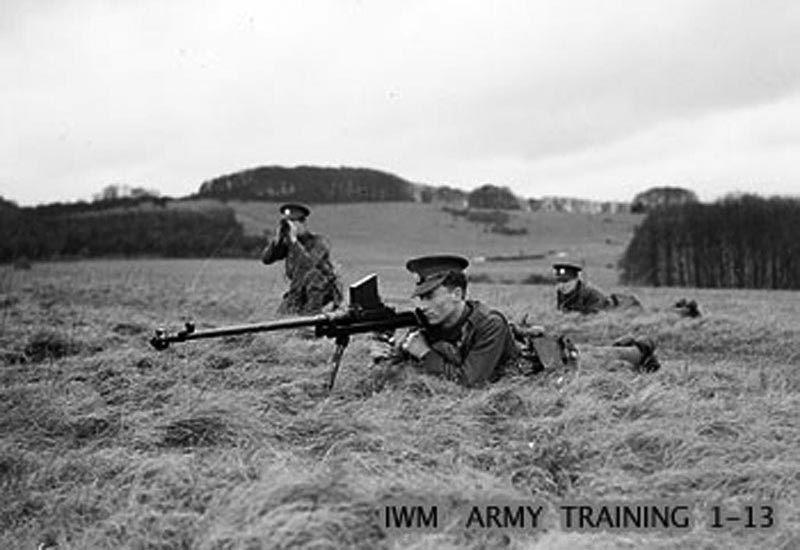
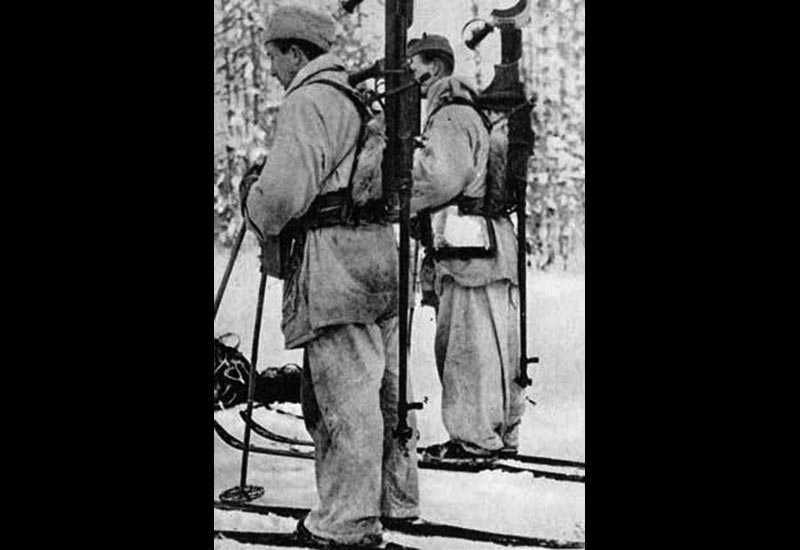
The weapon was introduced with British infantry elements in 1937. However, enemy tank designs had improved by the time of all-out war in Africa and Europe and it became increasingly clear that the Boys Rifle was an outgoing breed. The weapon managed to be effective during the early stages of the war as enemy armor was still of the light and medium class variety. Against these targets, the Boys Rifle proved its effectiveness. The weapon was especially popular with Finnish Army troops in Finland in 1940 during the "Winter War" against the Soviet Union - the rifle capable of knocking out the Soviet T-26 light tanks being encountered.

A shortened version was developed and issued in 1942 specifically for airborne forces and saw action in Tunisia, where it was proven more or less ineffective due to the reduced velocity inherent in the shortened barrel (also lacking a muzzle brake facility). The weapon was then relegated for use against bunkers, machine gun nests and lightly armored vehicles with success. In the Pacific Theater, the Boys Rifle continued use as it was still effective against the fleet of light and medium combat tanks being fielded by the Imperial Japanese Army. As such, it saw service through the end of the war in August of 1945. Across Europe, the Boys Rifle was eventually superseded by another dedicated anti-tank measure - the famous PIAT anti-tank rocket launcher. PIATs began appearing in useful numbers from 1943 onwards.

Most British and Commonwealth troops disliked the Boys Rifle design due mainly to the massive recoil inherent in firing such a large cartridge. Additionally, the muzzle blast was exceedingly heavy and the noise of the firing action easily gave the position of the firer away. The violent recoil forces led to many bruised necks and shoulders as the rifle was firmly seated against the shoulder when fired. The weapon was also constructed with numerous small screws fit into a relatively soft steel that made maintenance difficult in the field. Nevertheless, the weapon continued use throughout British and Commonwealth ranks with a few examples falling into the hands of German and Japanese troops only too eager to use the weapon against their previous owners. The use of the specialized cartridge of course limited enemy operations with captured Boys Rifles.
Text ©2003-2013 www.MilitaryFactory.com • All Rights Reserved • No Reproduction Permitted
MilitaryFactory.com does NOT sell equipment/weaponry. Material presented throughout this website is for historical and entertainment value and should not to be construed as usable for hardware restoration, maintenance or general operation. Please consult manufacturers for such information. Our disclaimer. Email corrections / Comments to MilitaryFactory at Gmail dot com.
Picture of Boys Anti-Tank Rifle (Project Stanchion)
Pic of the Boys Anti-Tank Rifle (Project Stanchion)
Image of the Boys Anti-Tank Rifle (Project Stanchion)
View All Images (3)

Specifications for the
Boys Anti-Tank Rifle (Project Stanchion)
Anti-Tank Rifle


Country of Origin: United Kingdom
Manufacturer: Royal Small Arms Factory Enfield - UK
Initial Year of Service: 1937


Overall Length: 1613mm (63.50in)
Barrel Length: 0.00mm (0.00in)
Weight (Empty): 35.27lbs (16.00kg)


Cartridge: 13.9mm (0.55 in)
Action: Manually-Operated Bolt-Action
Feed: 5-round detachable box magazine
Rate-of-Fire: 10 rounds per minute
Sights: Iron Front and Rear


Variants:
Mk.I - Circular muzzle break; T-shaped bipod; service load 60g AP projectile at 747m/s.


Mk.II - Square muzzle break; V-shaped bipod; service load 47.6g AP projectile at 884 m/s.

Airborne Service Variant - 30" (762mm) barrel with no muzzle break.


Operators: Australia; Ireland; Canada; New Zealand; China; Finland; Nazi Germany (captured); Imperial Japan (captured); United Kingdom; United States

ALL SMALL ARMS CATEGORIES

BY YEAR:


1700 to 1799
1800 to 1899
1900 to 1909
1910 to 1919
1920 to 1929
1930 to 1939
1940 to 1949
1950 to 1959
1960 to 1969
1970 to 1979
1980 to 1989
1990 to 1999
2000 to 2009
2010 to 2019
VIEW ALL
Compare Guns


BY TYPE:


Anti-Aircraft Weapons
Anti-Material Rifles
Anti-Tank Weapons
Automatic Rifles
Bolt-Action Rifles
Carbine Guns
Flamethrowers
Flintlock Guns
Grenade Launchers
Hand Grenades
Lever-Action Rifles
Machine Guns
Mortars
Musket Guns
Pistols / Handguns
Recoilless Rifles
Revolvers
Rocket Launchers
Shotguns
Silenced Guns
Sniper Rifles
Special Weapon Systems
Submachine Guns
VIEW ALL


SPECIAL:


18th Century Warfare
3 Soldiers Statue
Battle of Mogadishu
Chainmail Armor
Firearm Types Defined
French Military Victories
Medieval Crossbow
Medieval Longbow
Vietnam War Casualties
Vietnam War Memorial

WORLD WAR 2:


British Guns
French Guns
German Guns (ALL)
German Rifles
Italian Guns
Japanese Guns
Soviet Guns
US Guns
US Infantry Regiment-Level Guns
Machine Guns
Pistols
Rifles
Submachine Guns
Sniper Rifles
VIEW ALL


WORLD WAR 1:

Pistols
Rifles
Machine Guns
Mortars
US Guns
VIEW ALL


KOREAN WAR:

Machine Guns
VIEW ALL


VIETNAM WAR:

Mortars
VIEW ALL


COLLECTIONS:


Ancient Weapons
British SAS Weapons
Civil War Guns
Colt Guns
Glock Guns
GROM Polish Special Forces
Guns of Libya
Guns of North Korea
Guns of Syria
Guns of WW1 & WW2
Heckler & Koch Guns
Kalashnikov Guns
Modern Russian Guns
Navy SEAL Weapons
Spetsnaz Weapons
Weapons of Desert Storm
Wild West Guns
Winchester Guns


HOLLYWOOD/GAMES:


Guns of the Walking Dead

Site Disclaimer | Privacy Policy | Site Map | MF Origins


©2013 www.MilitaryFactory.com • Content ©2003-2013 MilitaryFactory.com • All Rights Reserved • Site Contact Email: militaryfactory at gmail dot com. The "Military Factory" name and MilitaryFactory.com logo are registered ® trademarks and protected by all applicable domestic and international intellectual property laws.


Top MF Stuff: 2013 Military Pay Scale | Military Ranks | WW2 Weapons | Sniper Rifles | Kts to Mph | WW1 Aircraft | Automatic Rifles | Aircraft Cockpits | Vietnam War Weapons | Main Battle Tanks | Submachine Guns | Shotguns | French Military Victories


Most photographic images appearing on this site are courtesy of the United States Department of Defense and are approved for public use. Other images acquired through the public domain. Digital art work courtesy of Dan Alex. Business Consulting by Kyle Williams. Material presented throughout this website is for historical and entertainment value and should not to be construed as usable for hardware restoration, maintenance or general operation. Please consult manufacturers for such information.


eXTReMe Tracker