Military Factory
Military Pay Chart
Global Firepower
Military Industrial Complex
Second World War
Home
Military Pay Scale
Military Ranks
Small Arms
Aircraft
Land Systems
Navy
Education
Military Factory Facebook Logo
flag of Imperial Germany

Maxim MG08 (Maschinengewehr 08) Machine Gun (1908)

Authored By Dan Alex | Last Updated: 5/4/2011

The arrival of the German Maxim 08 to the battlefield made warfare a bloodier affair.

Find a School Near You
Follow Military Factory on Facebook:
Trending on Military Factory:
Recent Articles:
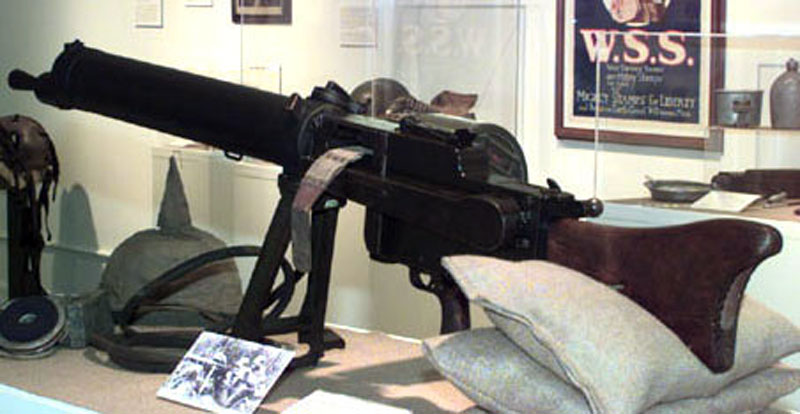
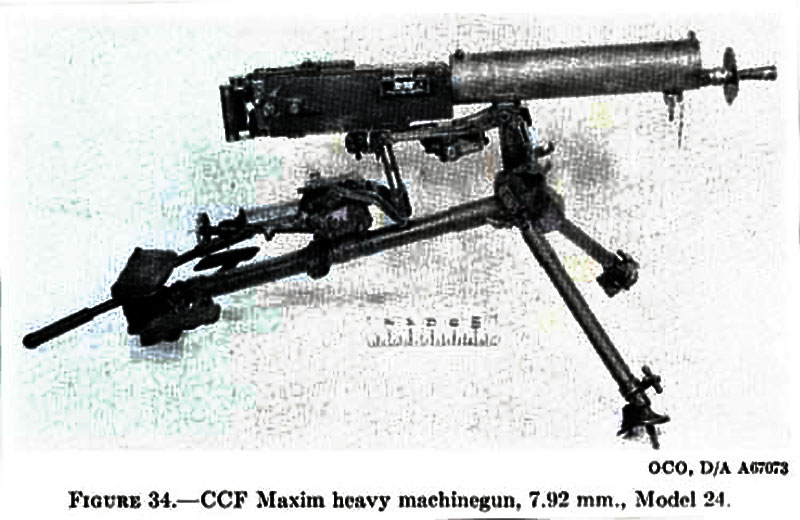
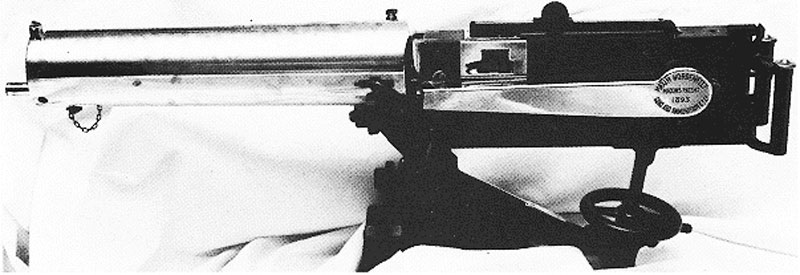
The Maxim MG08 (or "Maschinengewehr 08") was a copy of the original machine gun as developed by Sir Hiram S. Maxim in 1884. Hiram was born in Sangerville, Maine in 1840 and emigrated to England. There, he focused in on the wide open field of mechanical inventions and became ultimately best known for his deadly Maxim machine guns - effectively the world's first portable fully-automatic machine gun system. The German Army made a direct copy of the weapon and utilized it as the standard machine gun throughout World War 1. The machine gun generated a terrible presence as the appearance of just a single such unit could very well turn the tide of a given battle in favor of the users. Astonishingly, the lack of MG34 machine guns leading up to World War 2 ensured that the Maxim 08 was still in use with German troops for a time. The Maxim 08 lasted in operational service from 1908 (hence the designation) through 1945, the final year of World War 2.

Hiram Maxim demonstrated his machine gun in 1887 to which Germany tested out the concept thoroughly for years thereafter, culminating in a limited quantity Germany Army purchase in 1895 and an ensuing German Navy purchase by 1896. More field testing followed and the weapon system was officially introduced into the German Army in 1901 as the refined "Maschinengewehr 08". War would eventually come to Europe and the Maxim MG08 arrived just in time for it.

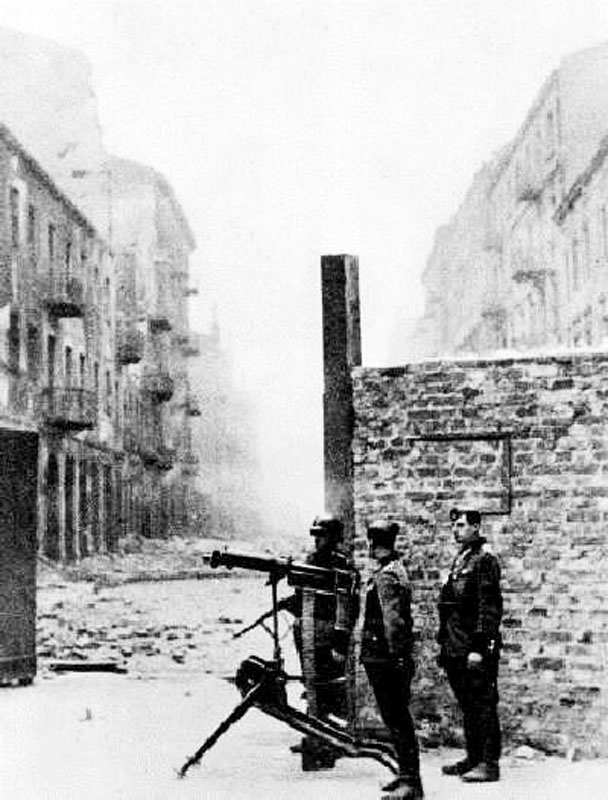
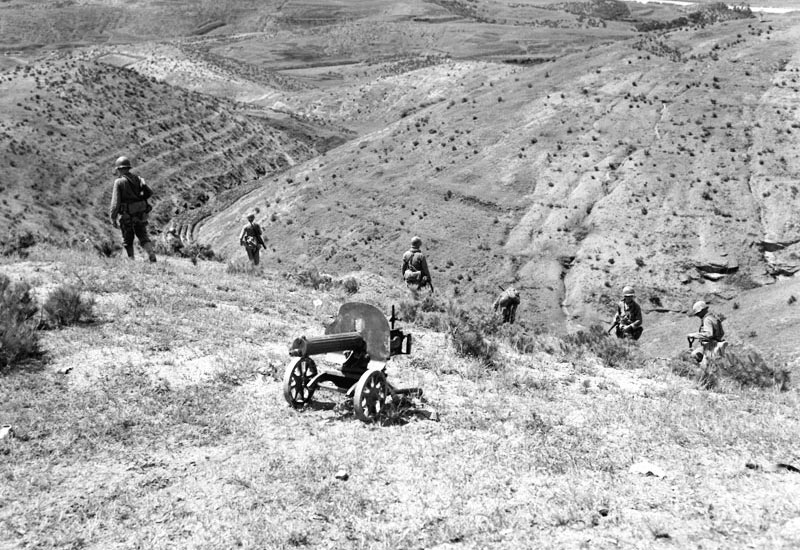
World War 1 was the proving ground for many-a-new war implement and the Maxim 08 was no exception. While biplanes wrote a new type of history in the sky and new-fangled tanks were fielded to combat the stagnate nature of trench warfare, the machine gun was utilized to create maximum amounts of carnage and at the same time could deliver such a psychological effect on enemy troops that its appearance in the conflict could never be understated. In an age prior, where cavalry was king of the battlefield, a horse-led charge could easily rout formations of foot soldiers. World War 1 changed the face of warfare by making such charges near suicide. The machine gun forced legions of soldiers to dig in and construct long networks of trenches in preparation for whatever offensive lay ahead. The area between the two trenches became known as "No Man's Land".

With war in full swing by 1915, the MG08 had a "muzzle booster" fitted to improve her cyclic rate-of-fire. The muzzle booster offered an improvement of up to 45% to the action as the weapon could now reconstitute some of the existing propellant gasses and force it onto the recoil barrel for a little added boost. These Maxims took on the technical designation of "Rilckstorsverstarker S".

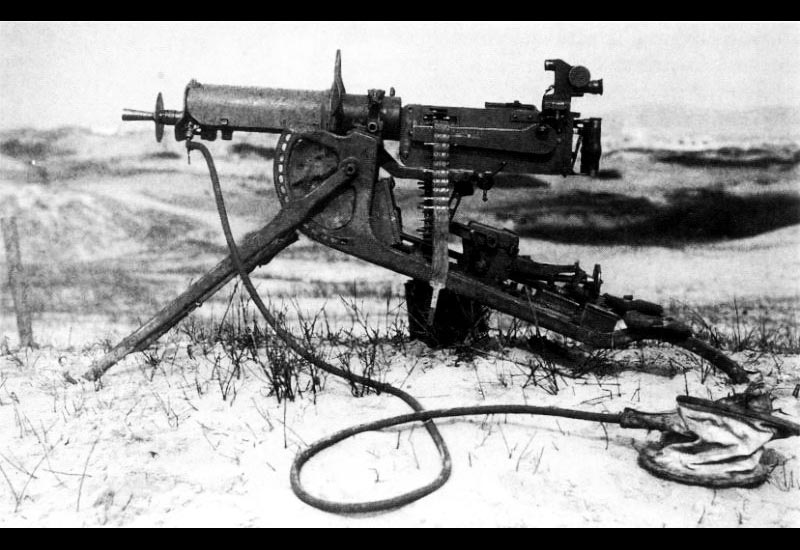
At its core, the Maschinengewehr 08 offered up impressive performance statistics of 400 to 450 rounds-per-minute, firing off 7.92x57mm Mauser caliber via a revolutionary short-recoil system that featured an integrated toggle lock. Essentially, all the operator had to do was pull the trigger and each subsequent round was fired off by using the recoil action created by the preceding round's exit from the barrel. The ammunition was fed via a cloth-type fabric belt issued as a 250-round strip. The firing action would cancel when the operator depressed the trigger or the ammunition source ran out. The belt was fed from the right side of the body and exited as an empty belt along the left side. The operator maneuvered the barrel to aim via two handles at the body end. The weapon could be rotated and elevated for maximum effect and accuracy was really apparent in the use of short controlled bursts. Maximum range was approximated between 2,000 and 4,000 yards. The operator manned the weapon from behind in a seated position while his assistants could lay prone nearby.

Early MG08s were issued with a cumbersome and heavy "sledge" type mounting designated in the German literature as "Schlitten 08". Together with the near-sixty pound gun, the MG08 unit weighed in at nearly 140lbs. The weapon was also issued with two extra barrels, a water-cooling canister and applicable tubing. As such, a crew of four were required to port the weapon system about. This encompassed the gunner (carrying the gun), a soldier to carry the mount, another comrade to shuttle the ammunition to and fro and the final soldier to lug the water canister and tubing. If a cart was available, all the better. Despite it weight and number of parts, it was still deemed a portable system by 1915 standards.

As heat became an automatic weapon's worst enemy, the Maxim MG08 utilized a water "jacket" fitted around the barrel. The jacket was filled with water (roughly 1 gallon) via a hose attached to the water canister. The water surrounding the hot barrel would boil off most heat generated from the barrel and help maintain some long term integrity to the system during sustained firing. In comparison, other machine guns worked off of a simpler air-cooled philosophy, utilizing the cool air around a barrel to keep the barrel from overheating. However, this method cooled a lot less efficiently and required changing of the barrel before the heat would crack it.

Production of the MG08 was handled principally through Deutsche Waffen-und Munitionsfabriken AG of Berlin in the years leading up to the war. Deutsche Gewehr- und Munitionsfabriken Spandau became another key production contributor. Spandau machine guns took on the name of "Spandau 08" and were oft-featured as the primary armament of many German fighters and bombers of the war. Production of both versions reached a fever pitch once the war was in full swing. Erfurt Government Arsenals also added to the production tally.

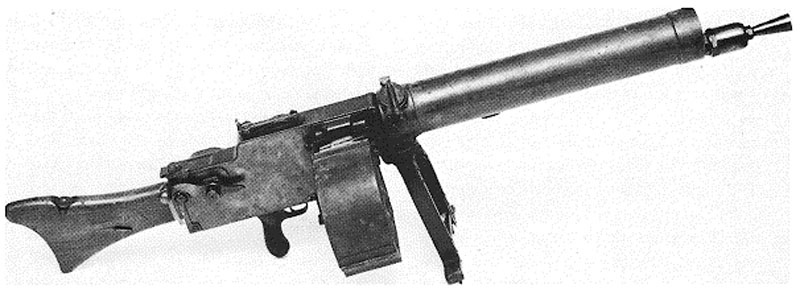
While the MG08 proved effective enough in the early years of the war, attempts were made at lightening the system. The MG08/15 (developed in year 1915, hence the designation) represented a more portable version complete with a pistol grip, shoulder stock and light bipod. A relatively lighter tripod design appeared in 1916 to replace the cumbersome Schlitten 08s and fell under the designation of Dreifus 16 ("Dreifuss 16"). The MG08/15 was unleashed against Allied troops in April of 1917, utilized as the ultimate shock weapon against unsuspecting rifle-toting Frenchmen. From there, its reach spread to more and more fronts of the war as they became available, proving the bulkier and heavier original MG08 less popular by the end of the war.

The LMG 08/15 (luftgekuhltes Maschinen Gewehr 08/15) was another key MG08 development by Spandau and appeared in 1916. These systems were specifically developed for use in aircraft and were often fitted in pairs firing through a synchronized propeller via an equally revolutionary interrupter gear. This allowed the pilot to fire through his spinning propeller blades without fear of blowing them off in the process. Though the interrupter gear proved an ingenious development conquered first by the Germans, Allied nations soon developed their own working form. LMG 08/15s differed slightly from their ground-based counterparts in that they did not contain the pistol grips, shoulder stocks or bipods of their brethren and featured a slotted water jacket for additional cooling brought about at those high altitudes encountered by aircraft.

One final development of the MG08 line became the MG08/18. This system was developed as an air-cooled alternative to the bulky water-cooled arrangements of the MG08 and MG08/15. Though tested under combat actions in the last year of the war, the MG08/18 failed to make much of an impact. Its air-cooled barrel needed changing to prevent overheating but the process proved too clumsy to change quickly in the field. As a result, operators were cursed to a lower rate-of-fire to avoid prolonged action and keep the barrel cool. To help alleviate this limitation, the German Army was forced to field the MG08/18 as groups of three systems, charging each gunner team to fire at intervals.

Maxim operators ultimately included Imperial Germany, the Austria-Hungarian Empire, Belgium, Bulgaria, Finland and Norway, leading up to countless deaths of enemy soldiers at the hands of this killing machine as well as making many aces of the mounts she was fitted to.

The MG08 line in whole was superseded by the excellent MG34 of World War 2 fame. Despite the MG34 being cleared for use by the middle of the 1930s, the new system was in short supply for the German Army and forced the continued use of the MG08 for still a decade more.

The Maxim company was purchased outright in 1896 by the British firm Vickers. The famous Vickers Machine Gun was based on the Maxim machine gun and benefitted the original design by reducing the former's weight and adding a muzzle booster. The Vickers version appeared in 1912 and was produced into 1968. Some are still in service with Pakistani, Indian and Nepali forces as reserve implements.
Text ©2003-2013 www.MilitaryFactory.com • All Rights Reserved • No Reproduction Permitted
MilitaryFactory.com does NOT sell equipment/weaponry. Material presented throughout this website is for historical and entertainment value and should not to be construed as usable for hardware restoration, maintenance or general operation. Please consult manufacturers for such information. Our disclaimer. Email corrections / Comments to MilitaryFactory at Gmail dot com.
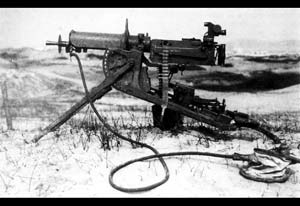
Picture of Maxim MG08 (Maschinengewehr 08)
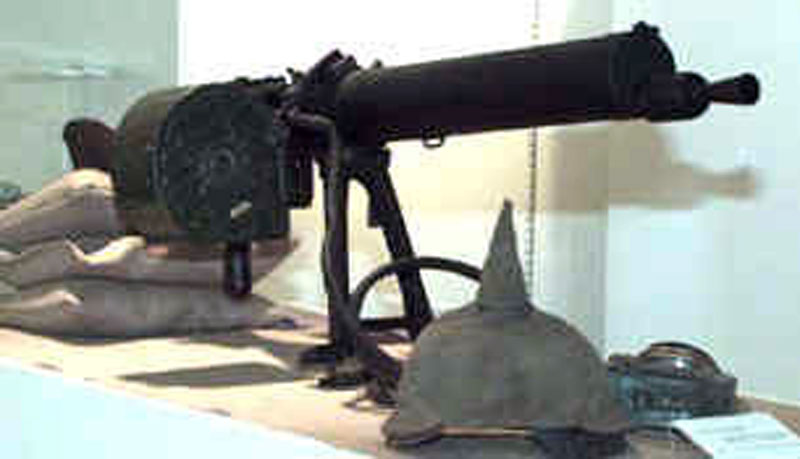
Pic of the Maxim MG08 (Maschinengewehr 08)
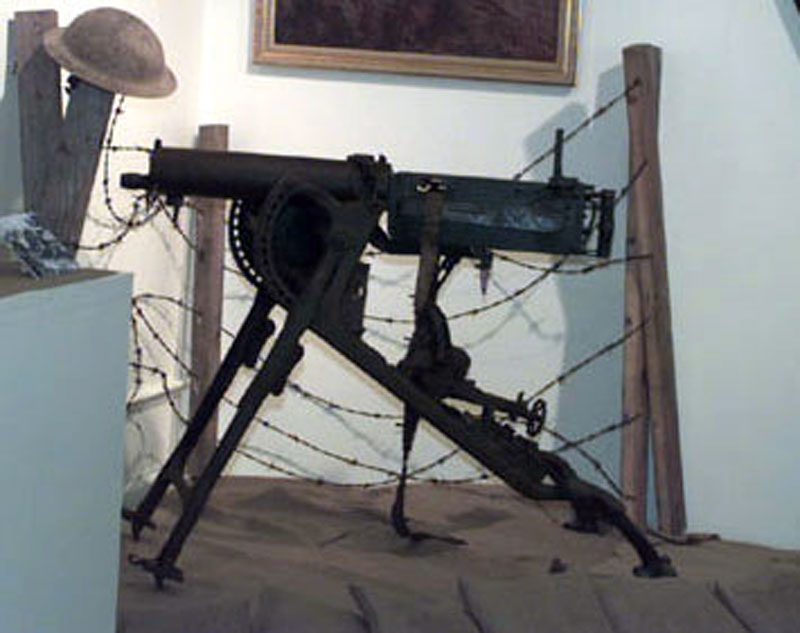
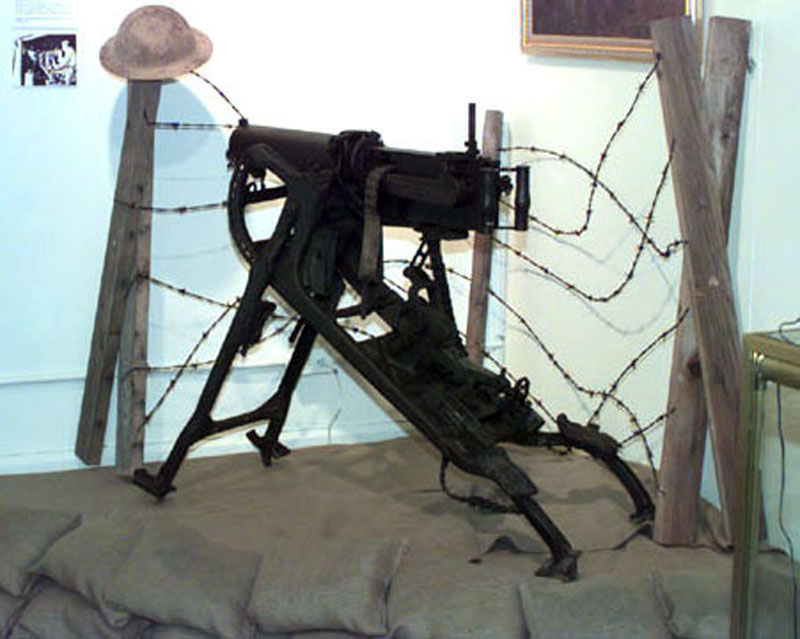
Image of the Maxim MG08 (Maschinengewehr 08)
View All Images (11)

Specifications for the
Maxim MG08 (Maschinengewehr 08)
Machine Gun


Country of Origin: Imperial Germany
Manufacturer: Deutsche Waffen und Munitionsfabriken; Spandau; Erfurt Arsenal - Germany
Initial Year of Service: 1908


Overall Length: 1175mm (46.26in)
Barrel Length: 0.00mm (0.00in)
Weight (Empty): 58.42lbs (26.50kg)


Cartridge: 7.92x57mm Mauser; 13mm (TuF)
Action: Water-Cooled, Automatic; Recoil-Operated
Feed: 250-round cloth-style belt
Muzzle Velocity: 2,953ft/sec (900m/sec)
Rate-of-Fire: 450 rounds per minute
Range: 6,600ft (2,012m; 2,200yds)
Sights: Flip-up Forward Sight; Optional Optics


Variants:
Maschinengewehr MG08 - Base German Army and Navy model; water-cooled; automatic recoil-operated action.


Maschinengewehr MG08 mit Rilckstorsverstarker S - Modified base MG08's fitted with muzzle booster for increase cyclic rate-of-fire.

Maschinengewehr MG08/15 - "Lighter" model fitted with pistol grip, shoulder stock and light bipod assembly.

Maschinengewehr LMG08/15 - Air-cooled derivative of the MG08/15 for use on aircraft; skeleton jacket for additional air-cooling; sans pistol grip, bipod and shoulder stock; developed by Spandau.

Maschinengewehr MG08/18 - Revised air-cooled model of the MG08/15; water jacket removed in favor of light casing; changeable barrel.


Operators: Austria-Hungary; Belgium; Bulgaria; China; Finland; Imperial Germany; Nazi Germany; Norway; North Korea; North Vietnam; Ottoman Empire; Poland; Soviet Union; Taiwan; Turkey; Vietnam

ALL SMALL ARMS CATEGORIES

BY YEAR:


1700 to 1799
1800 to 1899
1900 to 1909
1910 to 1919
1920 to 1929
1930 to 1939
1940 to 1949
1950 to 1959
1960 to 1969
1970 to 1979
1980 to 1989
1990 to 1999
2000 to 2009
2010 to 2019
VIEW ALL
Compare Guns


BY TYPE:


Anti-Aircraft Weapons
Anti-Material Rifles
Anti-Tank Weapons
Automatic Rifles
Bolt-Action Rifles
Carbine Guns
Flamethrowers
Flintlock Guns
Grenade Launchers
Hand Grenades
Lever-Action Rifles
Machine Guns
Mortars
Musket Guns
Pistols / Handguns
Recoilless Rifles
Revolvers
Rocket Launchers
Shotguns
Silenced Guns
Sniper Rifles
Special Weapon Systems
Submachine Guns
VIEW ALL


SPECIAL:


18th Century Warfare
3 Soldiers Statue
Battle of Mogadishu
Chainmail Armor
Firearm Types Defined
French Military Victories
Medieval Crossbow
Medieval Longbow
Vietnam War Casualties
Vietnam War Memorial

WORLD WAR 2:


British Guns
French Guns
German Guns (ALL)
German Rifles
Italian Guns
Japanese Guns
Soviet Guns
US Guns
US Infantry Regiment-Level Guns
Machine Guns
Pistols
Submachine Guns
Sniper Rifles
VIEW ALL


WORLD WAR 1:

Pistols
Rifles
Machine Guns
Mortars
US Guns
VIEW ALL


KOREAN WAR:

Machine Guns
VIEW ALL


VIETNAM WAR:

Mortars
VIEW ALL


COLLECTIONS:


Ancient Weapons
British SAS Weapons
Civil War Guns
Colt Guns
Glock Guns
GROM Polish Special Forces
Guns of Libya
Guns of North Korea
Guns of Syria
Guns of WW1 & WW2
Heckler & Koch Guns
Kalashnikov Guns
Modern Russian Guns
Navy SEAL Weapons
Spetsnaz Weapons
Weapons of Desert Storm
Wild West Guns
Winchester Guns


HOLLYWOOD/GAMES:


Guns of the Walking Dead

Site Disclaimer | Privacy Policy | Site Map | MF Origins


©2013 www.MilitaryFactory.com • Content ©2003-2013 MilitaryFactory.com • All Rights Reserved • Site Contact Email: militaryfactory at gmail dot com. The "Military Factory" name and MilitaryFactory.com logo are registered ® trademarks and protected by all applicable domestic and international intellectual property laws.


Top MF Stuff: 2013 Military Pay Scale | Military Ranks | WW2 Weapons | Sniper Rifles | Kts to Mph | WW1 Aircraft | Automatic Rifles | Aircraft Cockpits | Vietnam War Weapons | Main Battle Tanks | Submachine Guns | Shotguns | French Military Victories


Most photographic images appearing on this site are courtesy of the United States Department of Defense and are approved for public use. Other images acquired through the public domain. Digital art work courtesy of Dan Alex. Business Consulting by Kyle Williams. Material presented throughout this website is for historical and entertainment value and should not to be construed as usable for hardware restoration, maintenance or general operation. Please consult manufacturers for such information.


eXTReMe Tracker