Military Factory
Military Pay Chart
Global Firepower
Military Industrial Complex
Second World War
Home
Military Pay Scale
Military Ranks
Small Arms
Aircraft
Land Systems
Navy
Education
Military Factory Facebook Logo
flag of United States

Hughes / Raytheon BGM-71 TOW / TOW-2 Heavy Anti-Tank Weapon System (1970)

Authored By Staff Writer | Last Updated: 7/26/2011

The BGM-71 TOW series of anti-tank missile systems is a widely-used anti-tank system around the world.

Find a School Near You
Follow Military Factory on Facebook:
Trending on Military Factory:
Recent Articles:
The BGM-71 TOW anti-tank missile weapon system was developed in the latter half of the 1960s to become the primary anti-armor weapon system of the United States and its allies during the Cold War. Despite its Cold War origins, the TOW missile system is still deployed in large numbers today and has been evolved into more lethal forms with each passing decade. Despite its line-of-sight requirement and inherently bulky nature, the TOW enjoys a healthy reach on the modern battlefields of today, being successfully utilized in several ongoing conflicts to date. The TOW missile was the weapon of choice when it was used to kill Saddam Hussein sons Uday and Qusay in 2003 following the American invasion of Iraq.

Development of the TOW system stemmed from 1963 to 1968 under the leadership of the Hughes Aircraft Company and initially known under its developmental designation "XBGM-71". The "TOW" name stemmed from the abbreviation covering the description "Tube-launched, Optically-tracked, Wire command data link, guided missile" which specifically described its function. Similarly, the "BGM" designation awkwardly abbreviated its "Multiple Environment / Surface Attack / Missile" design (US Army nomenclature). After a period of testing and evaluation, the TOW was officially accepted into serial production in 1968 and formally entered service in 1970. Since then, the weapon type has gone on to become one of the most widely-accepted anti-tank missile systems ever developed with several dozen operators across the globe to her name. While Hughes designed, developed and produced the original TOW missiles, defense powerhouse Raytheon has gradually taken over their production in today's market.

Upon inception, the TOW missile was quick to replace outmoded anti-tank missile and recoilless rifle weapons then in service with the United States Army. Early US Army anti-tank missile weapons were notably European in nature and the TOW represented the first such indigenous design. Her first operational use occurred during the American involvement in the Vietnam War where the TOW was fitted to the XM26 helicopter mount (for the Bell UH-1 Huey series) for operational evaluation in the conflict. The weapon was successfully fired against NVC tanks on May 2nd, 1972 and, all told, the debut of the TOW in the war proved its effectiveness in combat and laid the foundation for increased production and usage for decades to come. In recent years, the TOW has developed into a more finely-tuned weapon system capable of engaging all manner of targets beyond simply armored combat vehicles and now includes fortification destruction.

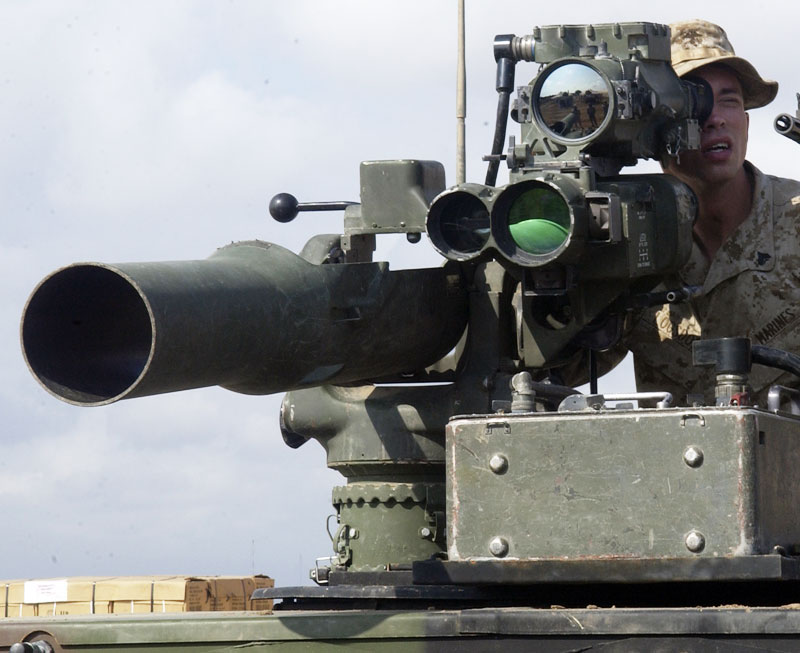
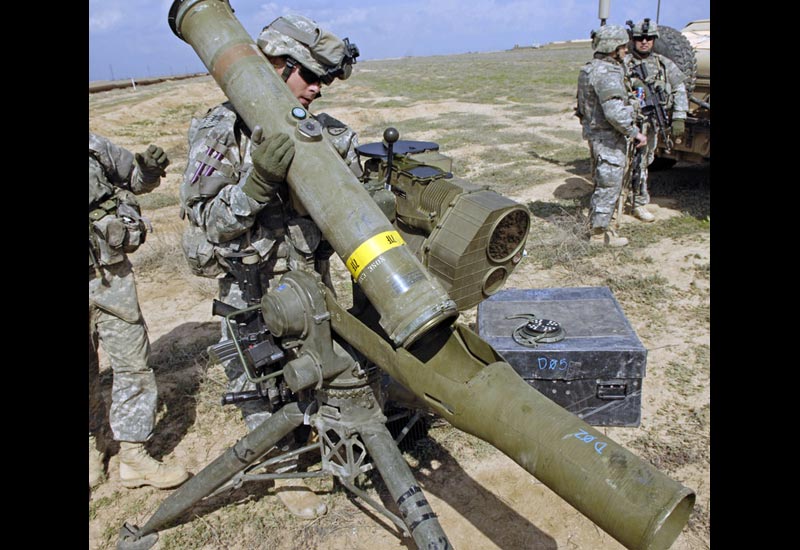
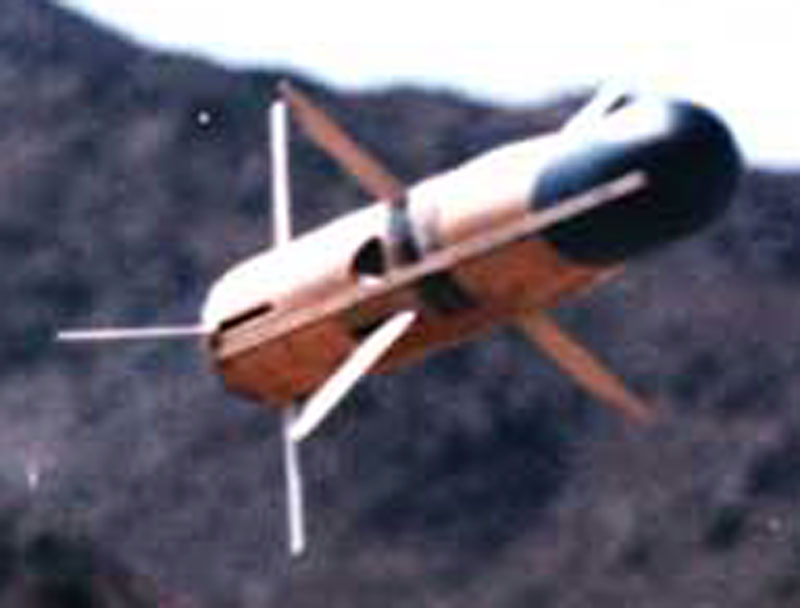
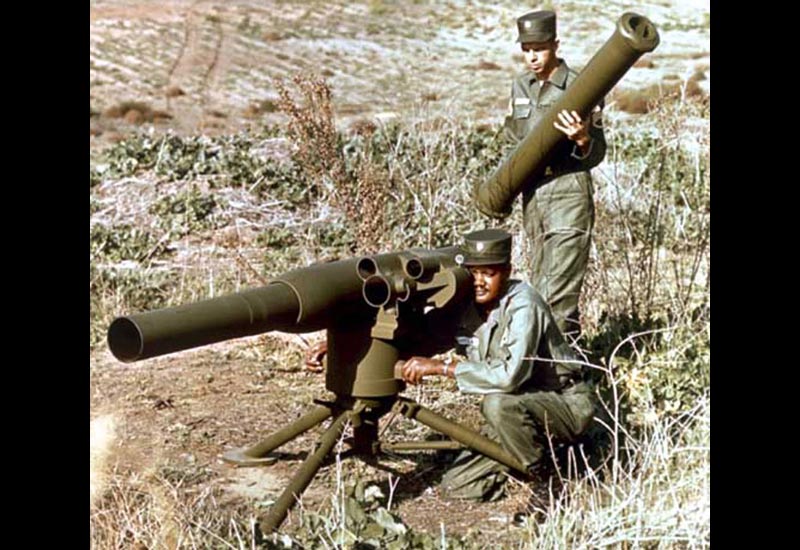
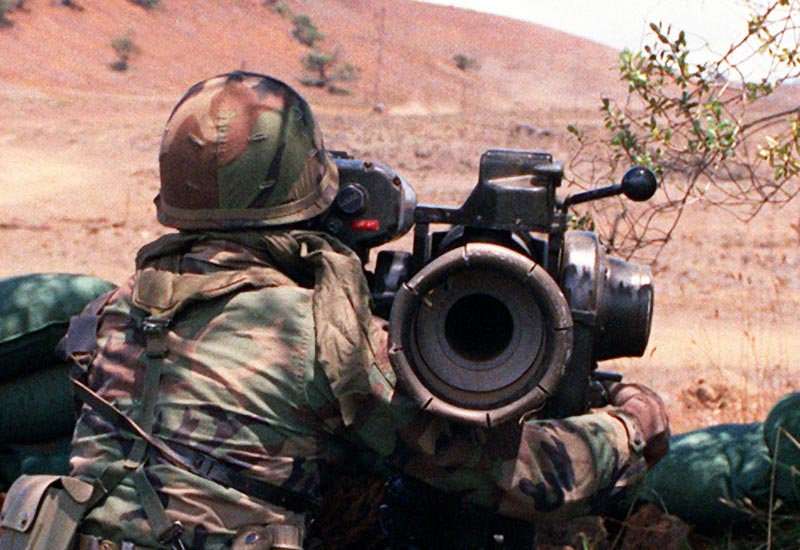
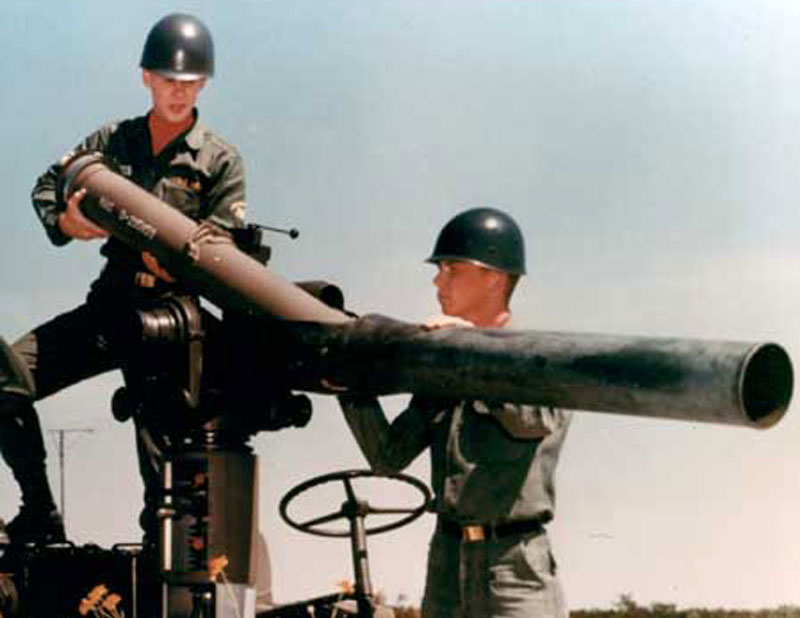
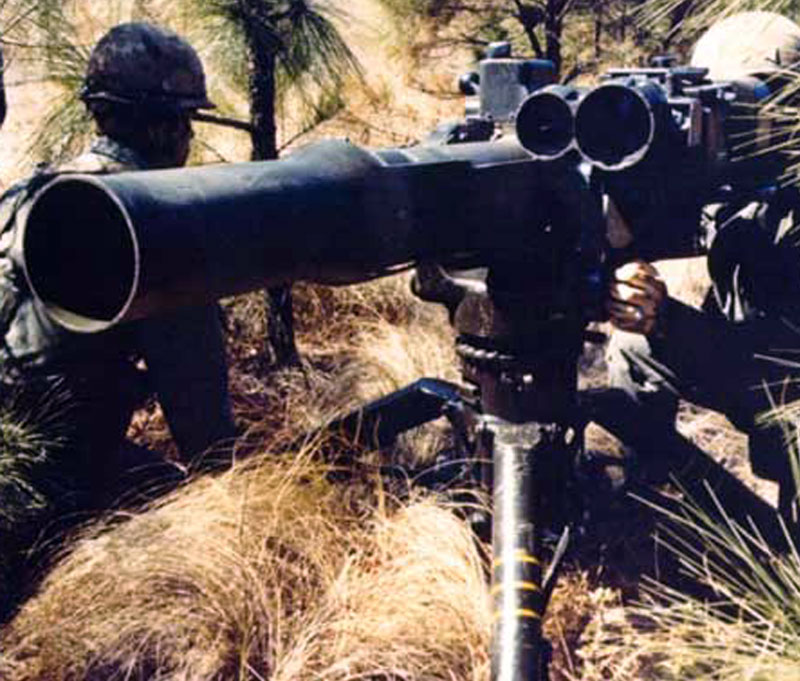
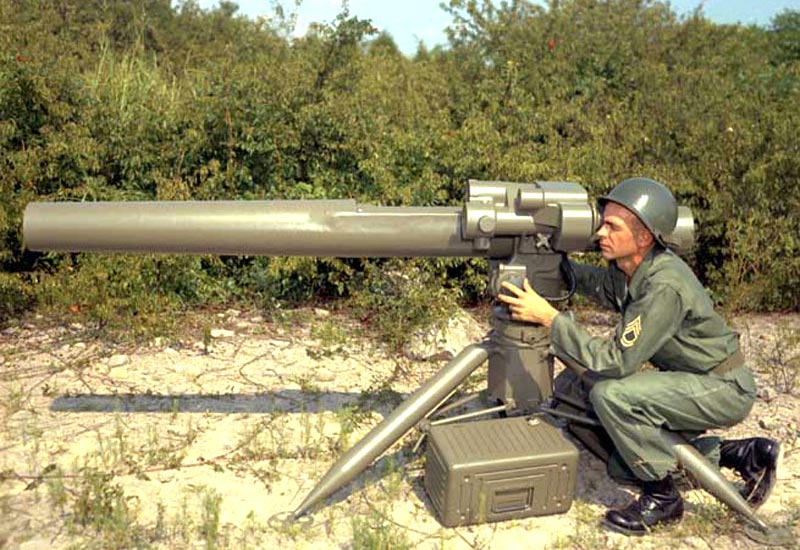
At its core, the TOW missile system consists of the launch tube, fire control/optics, support assembly (or launch mount) and missile system. The missile itself is of a conventional aerodynamic shape characterized by a well-contoured body with a short nose cone. Four spring-loaded fins are mounted at amidships and aft to help stabilize the missile during flight, extended out immediately after launch. The warhead is contained in the forward portion of the missile as is the guidance center while the motor and fuel store is to the rear. The TOW is rated for armor penetration from 430mm in thickness to approximately 630mm in thickness depending on the production model (newer forms proving more lethal).

As the TOW is an optically tracked, line-of-sight (LoS) weapon and visual engagement of a target is an important quality to consider when the missile is launched. The operator must have the target in sight during the entire flight time of the missile proper for the attached guidance cable feeds corrective information to the flight path after launch. Therefore, the operator must keep the target within his view during the entire flight of the missile after launch (as opposed to a homing or self-guided missile weapon system such as the Hellfire - termed a "Fire and Forget" weapon). If the missile reaches the full length of the guidance cable, the cable is severed and the missile continues on its current flight path. A wireless version has only recently appeared that utilizes a one-way radio data link.

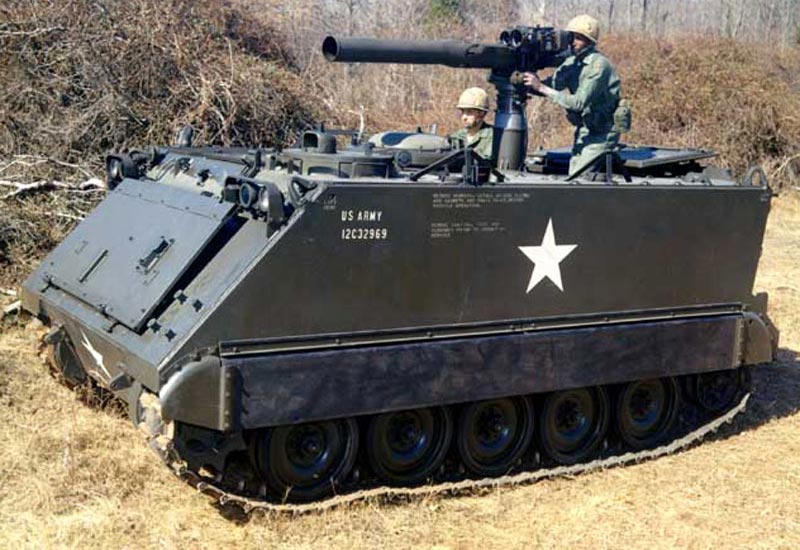
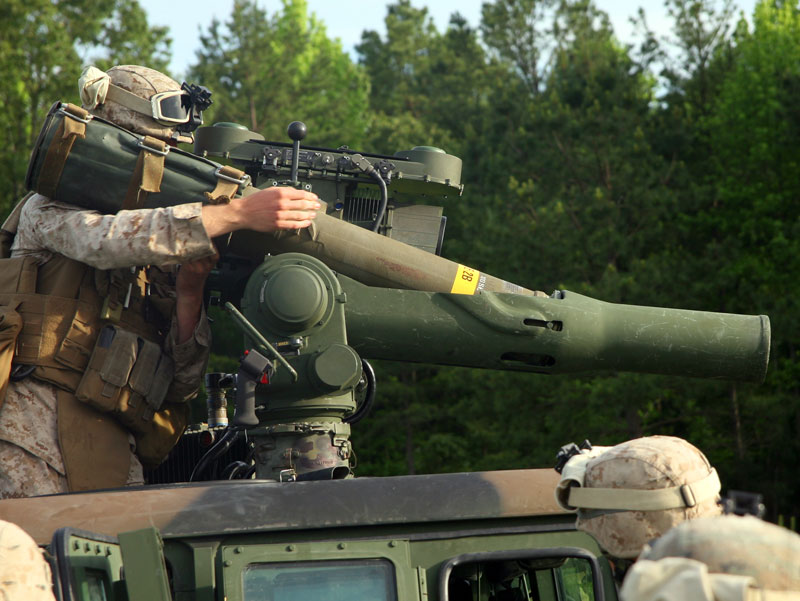
The TOW missile system is not a small nor light weapon and requires the use of a tripod or vehicle-mounted launcher unit for operation. The M151 launch mount was initially developed for the early-form TOW missiles while the M220 series appeared in conjunction with the TOW-2 developments. As such, the TOW has been fitted to a variety of military vehicles including JEEPs, Armored Personnel Carriers (APCs), Infantry Fighting Vehicles (IFVs) and high-mobility vehicles such as the ubiquitous HUMVEE. Beyond the ground-based operational scope, the TOW has also been accepted into airborne launch systems for use by attack helicopters including the Bell AH-1 Cobra series (M65 mount system). While the TOW is considered a "man portable" weapon system, it is cumbersome to field in such a manner and is most always relegated to vehicle-mounted use.

There have been a plethora of ever-improved TOW forms to date beginning with the initial XBGM-71A developmental model. This was copied over in the initial BGM-71A production design. The BGM-71B was based on the A-model series but featured increased operating ranges. The BGM-71C (Improved TOW, ITOW) followed the B-series model and brought about a new shaped-charge warhead with an extending probe fitted to the nose cone to help improve armor penetration values. The BGM-71D (TOW-2) was next in line and based on the BGM-71C production model. The motor function was improved, as was guidance, and the warhead was enlarged for greater armor penetration effect. The BGM-71E (TOW-2A) was based on the preceding BGM-71D model but revised with a tandem warhead fitting to content with Explosive Reactive Armor (ERA) panels beginning to be used in larger numbers on armored vehicles worldwide. The BGM-71F (TOW-2B) was also based on the BGM-71D production model and reworked to attack armored vehicles along their more vulnerable top facings utilizing explosively-formed penetrators. The BGM-71G was a proposed TOW variant based on the BGM-71F model to feature a new Armor Piercing (AP) warhead though never selected for serial production. The BGM-71H was developed from the BGM-71E model for use against fortified structures - ala a "Bunker Buster" munition. An extended range version of the TOW 2B was developed into the TOW-2B "Aero" which has been further evolved into a wireless form known as the TOW-2B "Aero RF".

Beyond the United States, operators of the TOW and TOW-2 derivative have included Argentina, Canada, Colombia, Denmark, Egypt, Finland, Germany, Greece, Iran, Israel, Italy, Japan, Jordan, Lebanon, Norway, Pakistan, Portugal, Saudi Arabia, South Korea, Spain, Sweden, Switzerland, Taiwan, Thailand, Turkey, the United Kingdom, Vietnam and Yemen (among others). In Iran, a one-time US-ally, the TOW was reverse engineered as the "Toophan" and is currently in production though may be of suspect quality and capability than the true American production form - nearly always the case with reverse-engineered products. Conversely, Egypt produces the TOW locally under a legal license for the Egyptian Army. TOW systems in service with the United Kingdom are reserved solely for helicopter use. The Pakistani Army took delivery of some 3,300 TOW-2A missile unit examples sometime in 2006 to further strengthen its anti-armor capabilities.
Text ©2003-2013 www.MilitaryFactory.com • All Rights Reserved • No Reproduction Permitted
MilitaryFactory.com does NOT sell equipment/weaponry. Material presented throughout this website is for historical and entertainment value and should not to be construed as usable for hardware restoration, maintenance or general operation. Please consult manufacturers for such information. Our disclaimer. Email corrections / Comments to MilitaryFactory at Gmail dot com.
Picture of Hughes / Raytheon BGM-71 TOW / TOW-2
Pic of the Hughes / Raytheon BGM-71 TOW / TOW-2
Image of the Hughes / Raytheon BGM-71 TOW / TOW-2
View All Images (14)

Specifications for the
Hughes / Raytheon BGM-71 TOW / TOW-2
Heavy Anti-Tank Weapon System


Country of Origin: United States
Manufacturer: Hughes Aircraft / Raytheon - USA
Initial Year of Service: 1970


Overall Length: 2210mm (87.01in)
Barrel Length: 0.00mm (0.00in)
Weight (Empty): 205.03lbs (93.00kg)


Cartridge: 127 mm / 152 mm
Action: Tube-launched; optically-tracked; wire-guided
Feed: Single Shot; Reusable
Rate-of-Fire: 2 rounds per minute
Range: 12,303ft (3,750m; 4,101yds)
Sights: Integrated Optics


Variants:
XBGM-71A - Developmental Designation


BGM-71A - Initial Production Model.

BGM-71B - Based on the A-model with improved effective range.

BGM-71C - Based on the B-model; revised shaped-charge warhead.

BGM-71D - TOW-2; based on the C-model; bigger warhead capacity; revised motor system and improved sensor guidance.

BGM-71E - TOW-2A; based on the D-model; tandem warhead structure; defeats reactive armor.

BGM-71F - TOW-2B; based on the D-model; formed penetrator warhead; top-down attack angle.

BGM-71G - Based on the F-model; differing munition warhead type; never produced.

BGM-71H - Specialized TOW for use against hardened structures.


Operators: Argentina; Bahrain; Botswana; Cameroon; Canada; Chile; Chad; Colombia; Denmark; Egypt; Ethiopia; Finland; Germany; Greece; Hungary; Iran; Israel; Italy; Japan; Jordan; Kenya; Kuwait; Lithuania; Lebanon; Luxembourg; Morocco; Norway; Oman; Pakistan; Portugal; Saudi Arabia; Somalia; South Korea; Spain; Sweden; Swaziland; Switzerland; Taiwan; Thailand; Tunisia; Turkey; United Arab Emirates; United Kingdom; United States; Vietnam; Yemen

ALL SMALL ARMS CATEGORIES

BY YEAR:


1700 to 1799
1800 to 1899
1900 to 1909
1910 to 1919
1920 to 1929
1930 to 1939
1940 to 1949
1950 to 1959
1960 to 1969
1970 to 1979
1980 to 1989
1990 to 1999
2000 to 2009
2010 to 2019
VIEW ALL
Compare Guns


BY TYPE:


Anti-Aircraft Weapons
Anti-Material Rifles
Anti-Tank Weapons
Automatic Rifles
Bolt-Action Rifles
Carbine Guns
Flamethrowers
Flintlock Guns
Grenade Launchers
Hand Grenades
Lever-Action Rifles
Machine Guns
Mortars
Musket Guns
Pistols / Handguns
Recoilless Rifles
Revolvers
Rocket Launchers
Shotguns
Silenced Guns
Sniper Rifles
Special Weapon Systems
Submachine Guns
VIEW ALL


SPECIAL:


18th Century Warfare
3 Soldiers Statue
Battle of Mogadishu
Chainmail Armor
Firearm Types Defined
French Military Victories
Medieval Crossbow
Medieval Longbow
Vietnam War Casualties
Vietnam War Memorial

WORLD WAR 2:


British Guns
French Guns
German Guns (ALL)
German Rifles
Italian Guns
Japanese Guns
Soviet Guns
US Guns
US Infantry Regiment-Level Guns
Machine Guns
Pistols
Rifles
Submachine Guns
Sniper Rifles
VIEW ALL


WORLD WAR 1:

Pistols
Rifles
Machine Guns
Mortars
US Guns
VIEW ALL


KOREAN WAR:

Machine Guns
VIEW ALL


VIETNAM WAR:

Mortars
VIEW ALL


COLLECTIONS:


Ancient Weapons
British SAS Weapons
Civil War Guns
Colt Guns
Glock Guns
GROM Polish Special Forces
Guns of Libya
Guns of North Korea
Guns of Syria
Guns of WW1 & WW2
Heckler & Koch Guns
Kalashnikov Guns
Modern Russian Guns
Navy SEAL Weapons
Spetsnaz Weapons
Weapons of Desert Storm
Wild West Guns
Winchester Guns


HOLLYWOOD/GAMES:


Guns of the Walking Dead

Site Disclaimer | Privacy Policy | Site Map | MF Origins


©2013 www.MilitaryFactory.com • Content ©2003-2013 MilitaryFactory.com • All Rights Reserved • Site Contact Email: militaryfactory at gmail dot com. The "Military Factory" name and MilitaryFactory.com logo are registered ® trademarks and protected by all applicable domestic and international intellectual property laws.


Top MF Stuff: 2013 Military Pay Scale | Military Ranks | WW2 Weapons | Sniper Rifles | Kts to Mph | WW1 Aircraft | Automatic Rifles | Aircraft Cockpits | Vietnam War Weapons | Main Battle Tanks | Submachine Guns | Shotguns | French Military Victories


Most photographic images appearing on this site are courtesy of the United States Department of Defense and are approved for public use. Other images acquired through the public domain. Digital art work courtesy of Dan Alex. Business Consulting by Kyle Williams. Material presented throughout this website is for historical and entertainment value and should not to be construed as usable for hardware restoration, maintenance or general operation. Please consult manufacturers for such information.


eXTReMe Tracker