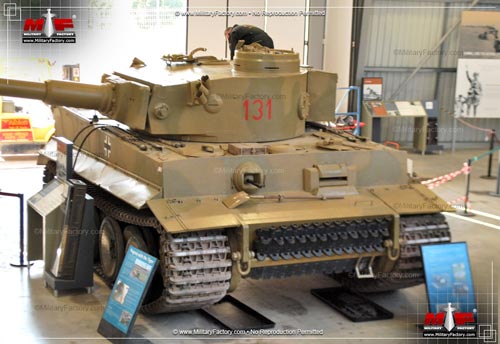
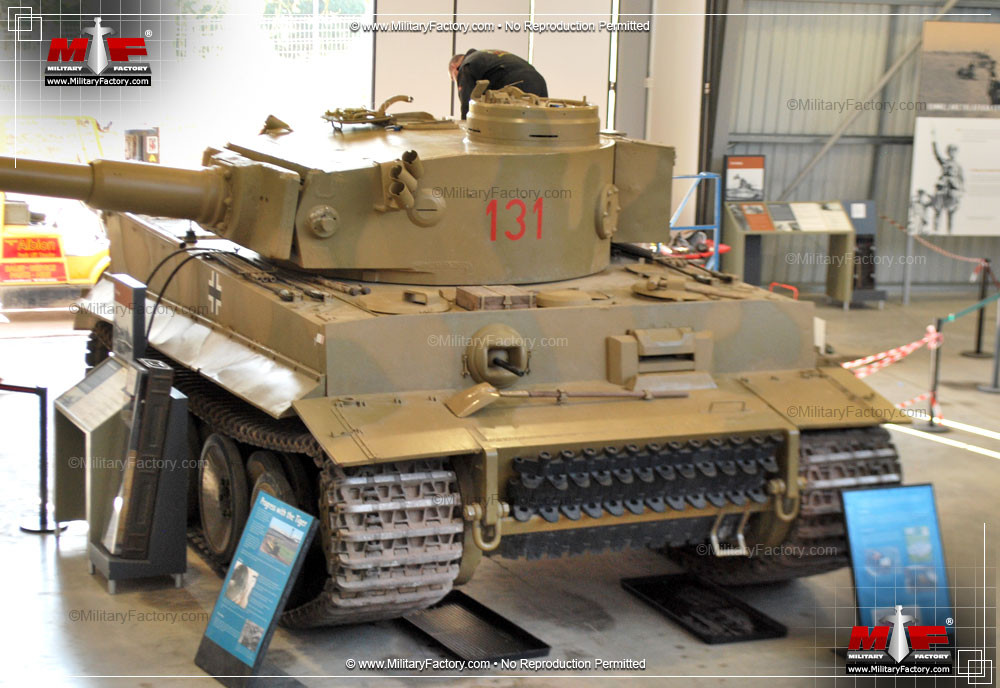
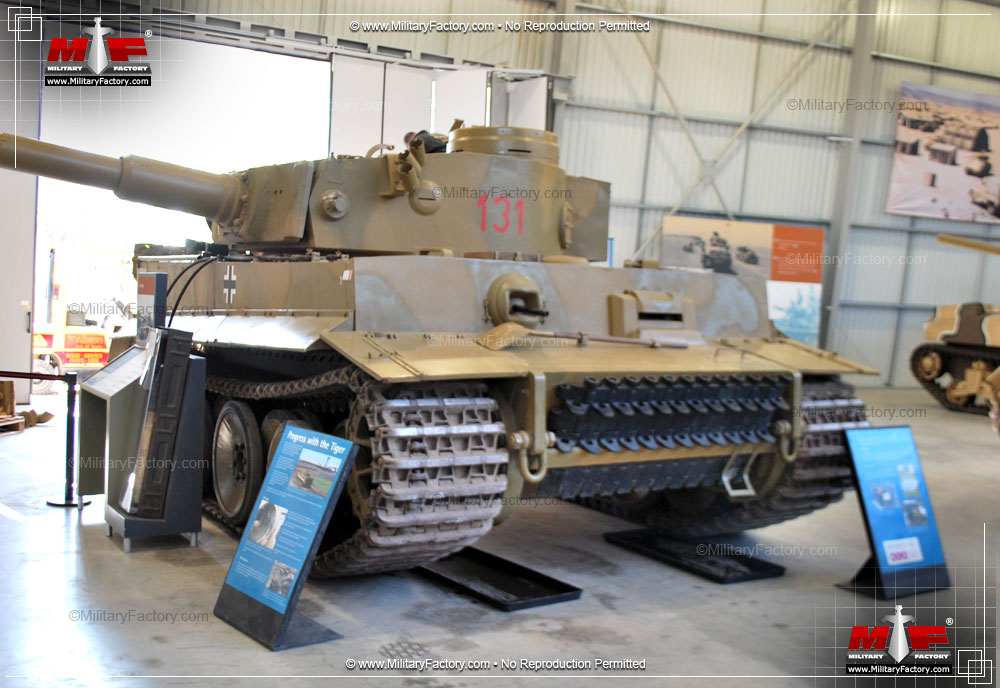
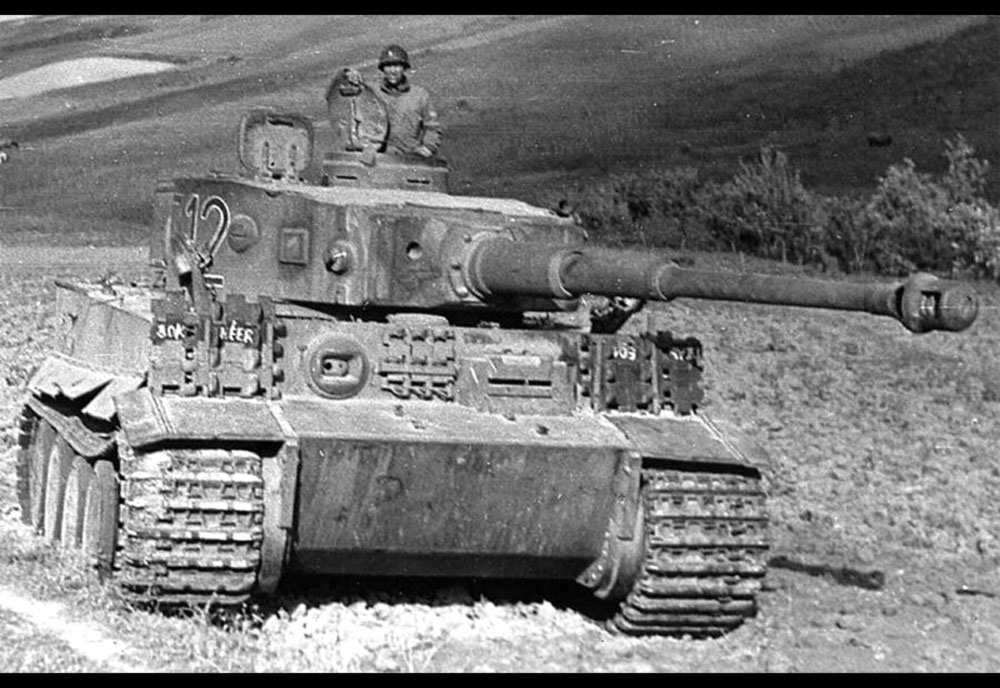
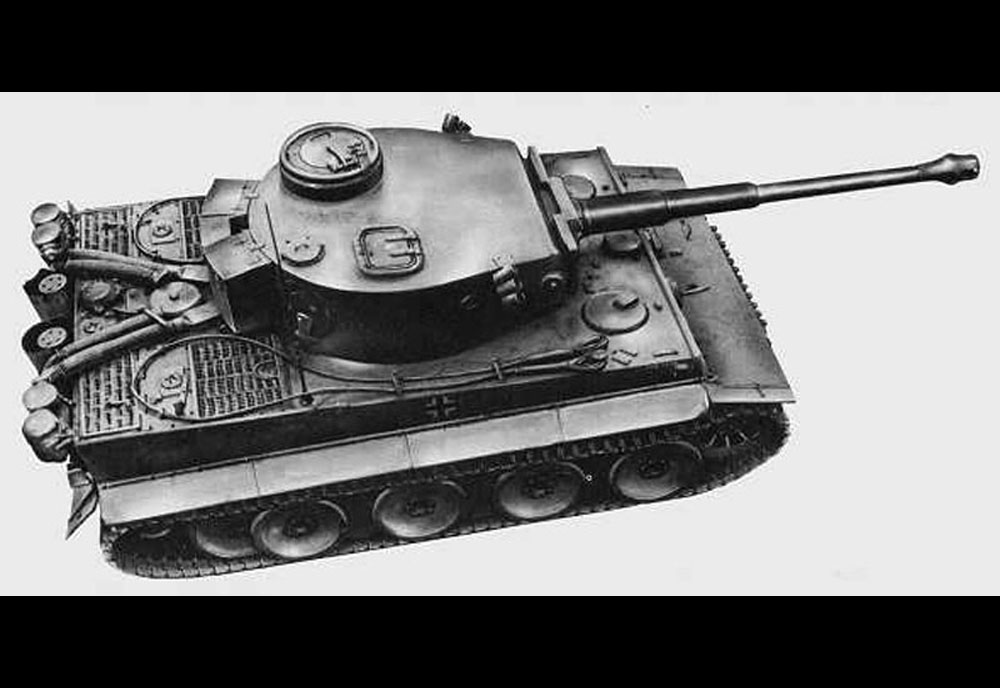
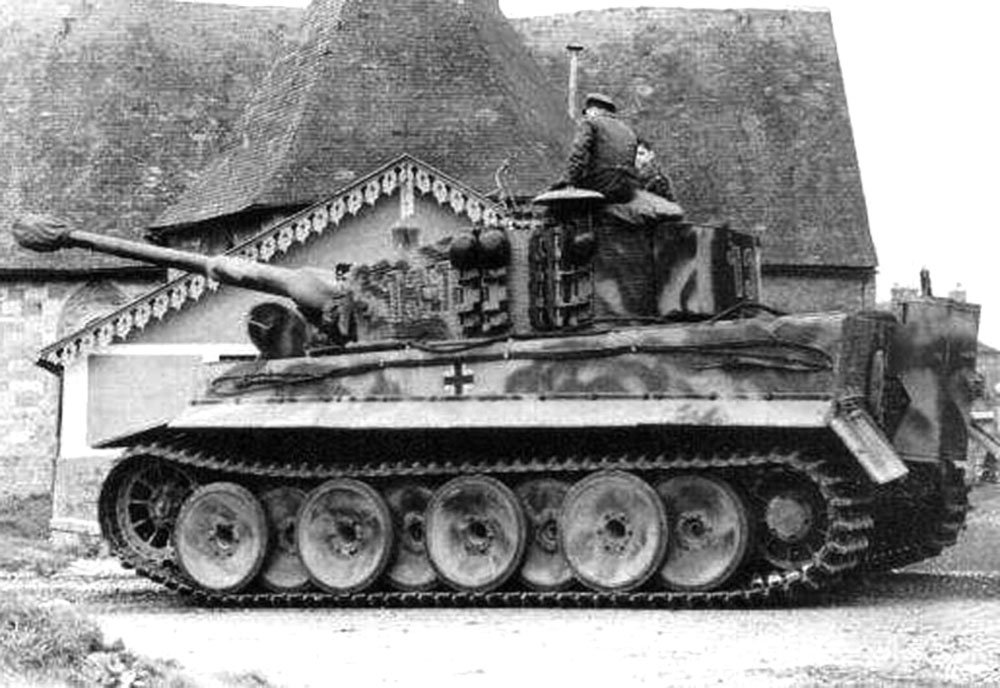
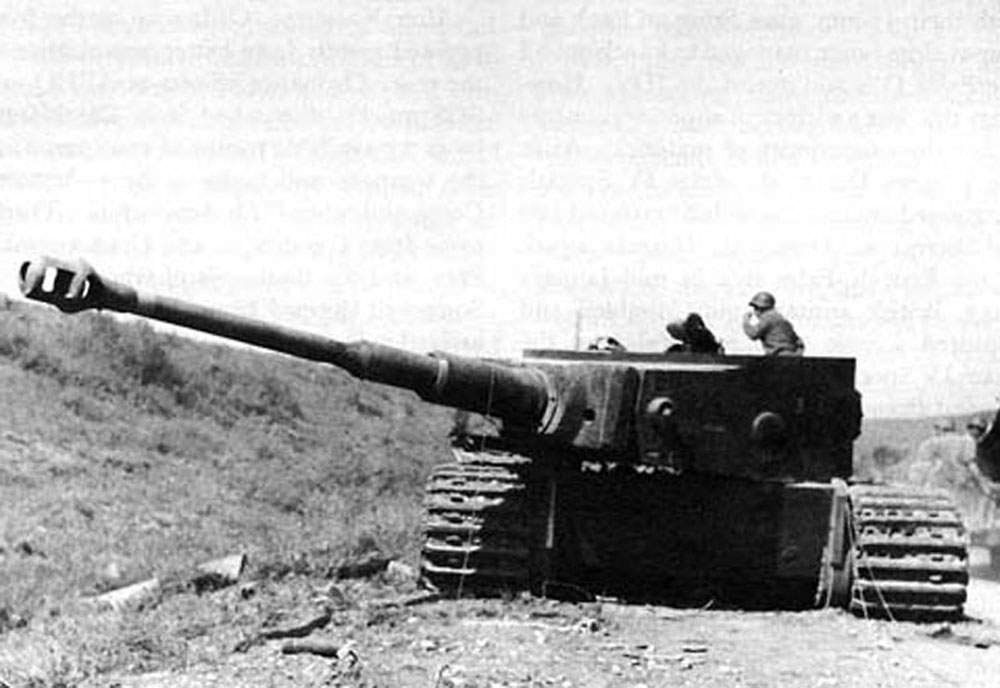
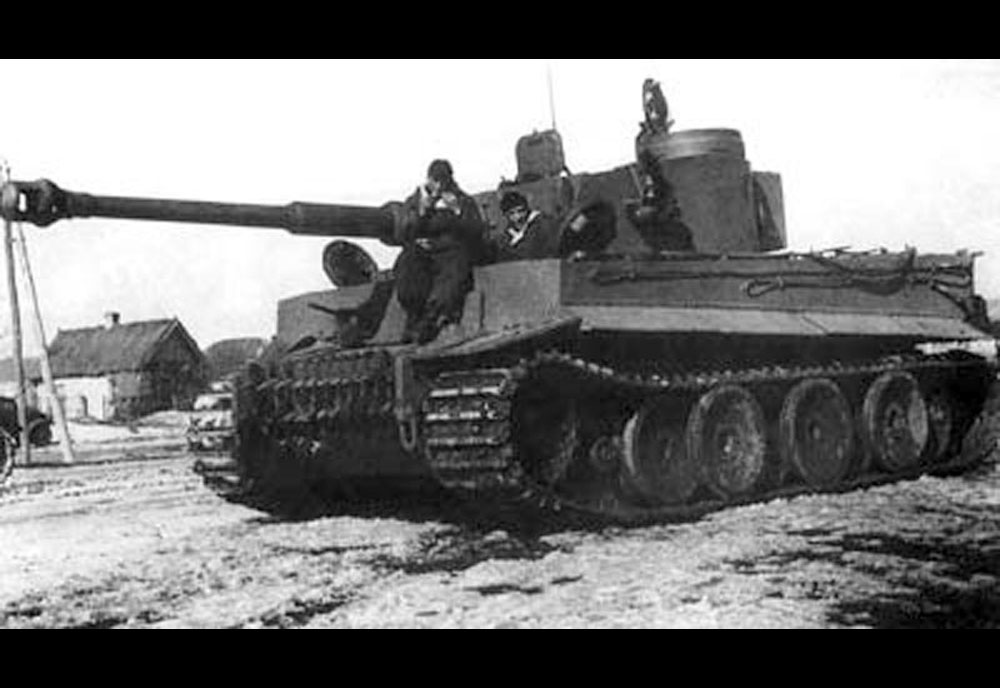
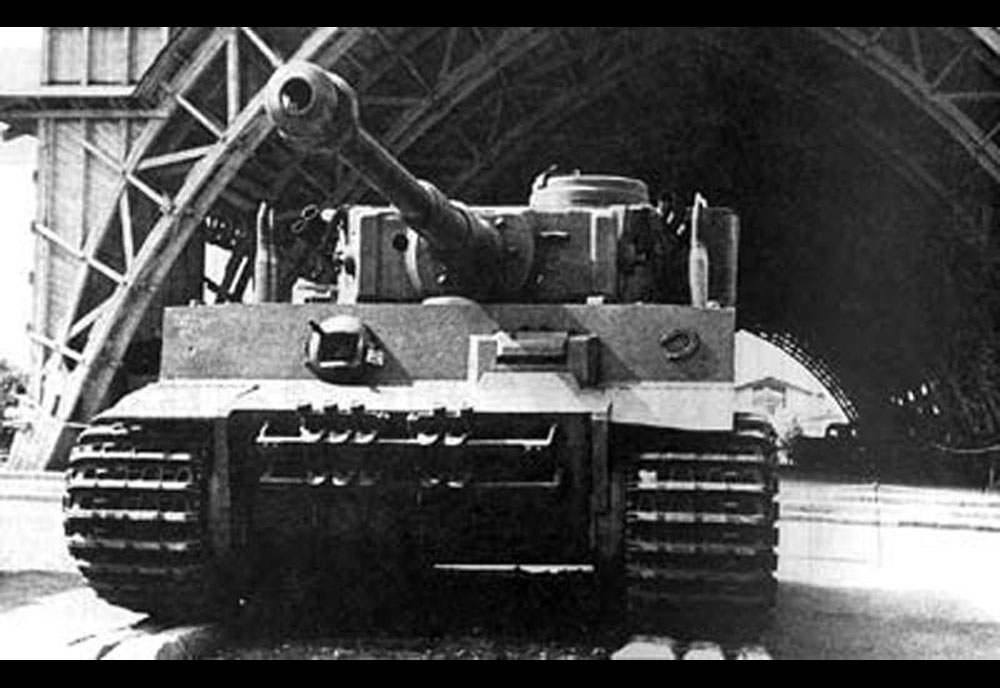
The Tiger heavy tank served the German Army during the latter years of World War 2. She proved a most powerful design and an excellent fighting machine but suffered from excess weight and large size as well as German war time resource shortages. When operational, few Allied tanks could match her save for the Joseph Stalin heavy tanks fielded by the Soviets. The Tiger became the first German tank to mount the powerful 88mm anti-aircraft gun and artillery piece as its main armament and showcased thick armor and decent mobility for its size. Some mechanical issues arose over her operational life and she was not wholly invulnerable for Allied doctrine soon developed to combat her greatest attributes and many were felled to Allied guns in turn. At her core, the Tiger led a short legacy in the war and was limited by too many factors for its true battlefield potential to be realized.
The T-34 Changes Everything
Up to this point in the war, medium tanks of the German Army such as the Panzer III and Panzer IV series had played their role quite well up. However, the Germans, not blinded to the ever-changing requirements of the modern battlefield, had been envisioning a replacement for their Panzer IV series as early as 1937 but work proved slow for requirements changed on a seemingly monthly basis. This work was spurred along by previous encounters with British Matildas and French Char B tanks. When Hitler committed to invading the Soviet Union through "Operation Barbarossa" in June of 1941, he effectively sealed the fate of his Third Reich in the long run - the Germans were shocked to encounter the new T-34 medium and KV-1 heavy series tanks of the Soviet Army. These were well-armed and heavily armored fighting tanks and outmatched anything the Germans could field. The T-34 was of particular note for it utilized heavily sloped armor plating, large road wheels set upon wide tracks and mounting a proven 76.2mm main gun. It was only after several captured examples were studied by German engineers that the Soviet's forward-thinking nature was appreciated.
Immediately, the Germans set to work on a T-34 "counter-tank". Designs were provided for by stalwarts Daimler-Benz, MAN and Henschel to be joined later (in 1939) by Porsche. The Henschel and MAN designs moved ahead while the MAN design itself eventually became the excellent "Panther" series. This tank featured wider tracks, overlapping road wheels, sloped armor protection and a powerful 75mm main gun - all lessons learned from studying the T-34. The Henschel and Porsche designs remained and these eventually evolved to become the "Tiger" heavy tank.
From the VK3001 to the VK4501
Originally, both Henschel and Porsche were selected to deliver a new tank system falling into the 30-35 ton weight range. Each firm delivered a prototype designated as VK3001(H) and VK3001(P) respectively ("H" for Henschel and "P" for Porsche). Neither vehicle was formally selected but further development continued and a new project appeared in May of 1941 under the designation of "VK4501". The VK4501 requirement called for a 45-ton heavy tank armed with the potent 88mm Flak gun. The 88mm (8.8cm) weapon was a proven commodity as a dual-purpose gun, originally beginning life as an anti-aircraft system and then evolving to become an effective tank-killer. Krupp was assigned the task of delivering the main gun and turret assembly.
Porsche Versus Henschel
The new tank was slated for review on April 20th, 1942 as a present to the Fuhrer on his birthday. The Henschel prototype became the VK4501(H) while the Porsche submittal became the VK4501(P). Dr. Ferdinand Porsche maintained a close relationship with Hitler and his firm benefitted from this, thus instilling a false sense of confidence that the Porsche design would be selected ahead of the Henschel. Ferdinand geared up his workshop to produce 100 of the Porsche tank designs before a production order was formally assigned. The prototypes were completed and held under review by Hitler as planned with the Porsche design viewed as a heavy favorite. Unfortunately for Porsche, the use of a temperamental gas-electric drivetrain doomed his vehicle as failures during testing were prominent. In October of 1942, a special commission known as the "Tiger Commission" was set up by German authorities to deliver a final verdict and the Henschel design was selected for serial production. The tank was afforded the designation of PzKpfW VI Ausf. H (SdKfz 182) in August of 1942. However, on February 27th, 1944, the designation was permanently changed by Hitler to read PzKpfW Tiger Ausf. E (SdKfz 181).
The Failed Porsche Design
The few completed Porsche VK4501(P) models (also known as "Porsche Tigers") were reused to become other battlefield implements that included the "Berg-Panzer VI" recovery vehicle and the "Panzerbefelswagen" command tank. Some had their problematic engines replaced with Maybach types for improved reliability and logistics. Other Porsche chassis became the basis for the development of the "Panzerjager Tiger P" tank-killer. Only one "Porsche Tiger" is thought to have ever seen direct combat action.
Tiger Production
Development of the PzKpfW VI continued after the production decision was made and changes to the original design produced a heavier contender - now 55 tons over the projected 45-ton weight limit found in the original specification. The added weight forced engineers to compensate by adding an additional outboard road wheel to each track side (which increased their width) and made her incapable of being transported by railcar. As such, two sets of tracks were issued - one wide set for combat that promoted better weight displacement and the other narrower set for basic transport/marching. The latter change could be enacted by Tiger crews in one half hour (each track side) by removing all of the outboard wheels and then installing the narrower track run - it was only then that the Tiger could clear transport by rail. German authorities eventually accepted the weight gains as it saw a balance achieved with the Tiger's excellent armor protection and powerful main gun. Full-scale series Production was slated to begin in August of 1942 to which the first four Tigers became available and a rate of twelve per month was envisioned.
Tiger Production
Tiger production ran from August of 1942 into August of 1944 to which 1,350 examples were ultimately delivered. The complicated design nature of the Tiger ensured that she would never be produced in any great number - at least enough to affect the tide of the war in Berlin's favor. Between the thousand+ Tiger examples, there inevitably appeared slight variations in design as each factory made required or improvised changes to suit German needs or shortages of some components.
The Tiger Maybach Engine
The initial 250 Tigers were fitted with the Maybach HL 210 P30 engine fielding a 650-horsepower output. After the 250th example, Tiger's switched to the Maybach HL 230 P45 series which beefed up output to 700 horsepower. These Maybach engines were reengineered from existing (and proven) aircraft powerplants and proved suitable for mounting on medium and heavy tanks of the German Army. The HL 230 P45 was the same engine as used on the Panther. Operational range was in the vicinity of 85 miles on-road whereas this value dropped excessively off-road to just 40 miles if the commander was lucky. German reports state a Tiger could be run for just 2.5 hours before needing refueling. As such, many Tiger tanks were lost in combat simply because their crews ran out of fuel. These were therefore abandoned and blown up to prevent capture by the enemy.
Due to the limitations of the Maybach engine, self-driving was a near impossibility so transportation to fronts was by rail car when possible though this event required much preparation to make possible. Routes involving use of Tiger tanks were, therefore, preplanned to the last detail to make note of impassable bridges or tight European roadways. Tigers were also rated at a 24 mile-per-hour top speed making them decidedly slow in keeping up with a mobile, flexible front.
Tiger Production Changes
Following the 391th Tiger, a new turret sporting a redesigned commander's cupola was introduced, this cupola not unlike that as found on the Panther series. A gun barrel clamp was added and an escape hatch was cut out of the rear of the turret. In June of 1943, a mount for an anti-aircraft MG34 machine gun was fitted to a slightly revised cupola to help improve defense and, in August, only one headlight was featured on the upper hull. After the 800th Tiger was built, production went on to include steel-rimmed road wheels, doing away with the rubber-tired ones of the original. The last 54 or so Tigers featured much rebuilding thanks to the deteriorating war situation for Germany - damaged hulls were regularly salvaged and reused when possible and new turrets (at least 22 new ones) were constructed to fill the ranks of the fallen.
Tiger Tank Variants
The early Tiger production series became the PzKpfW VI Ausf. H which sported a tropical system above the engine to facilitate activities in hotter desert climates such as those encountered in North Africa. Additionally, this Tiger form was given some deep water fording capability. The PzKpfW IV Ausf. E became the Tiger norm after February of 1944 and did away with the Ausf. H additions. In true German fashion, the hull of the Tiger tank was used to further other German Army requirements. This included its own Armored Recovery Vehicle (ARV) as the Tiger tank itself weighed more than any available recovery tractors then in service - a specialized Tiger was designed to pull other Tigers. A command tank existed as the "Befehlspanzer Tiger" with additional communications equipment. The "Sturmtiger" utilized the Tiger chassis while mounting a 380mm naval rocket-launching main gun to utterly destroy standing structures.
Tiger Tank Walk-Around
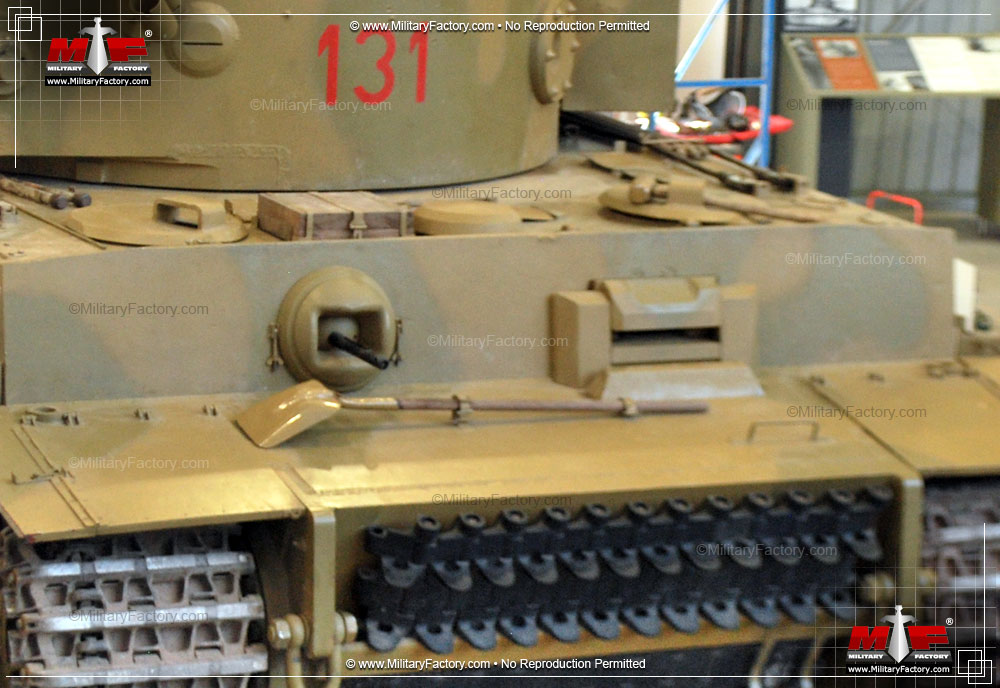
Design of the Tiger proved highly conventional for the time. Interestingly, its appearance was dominated by straight-angled armor plating across all major facings, this in contrast to the sloped armor of the Panther series. The hull sported a slab-sided superstructure with a short, sloped glacis plate. The glacis plate was forged to become 61mm thick and sloped by 80 degrees for ballistics protection. The plate ran up to the base of the forward superstructure plate (this plate sloped at just 10 degrees) and ran down to form a sloped hull underside. The forward hull underside was 102mm thick and sloped 24 degrees. The superstructure front panel facing was 102mm thick while the hull underside and roof front and rear quadrants were left thin at just 26mm. Side hull armor was 80mm thick with no sloping.
The superstructure sides hung over the wide track systems. The tracks were designed deliberately wider than previous German tank incarnations for improved traction and weight displacement. Such a design measure allowed a heavy vehicle to cross over softer terrains with some relative ease by spreading out the weight. This is not to say that the Tiger was impervious to getting stuck in mud and snow but this design element certainly helped her avoid it on occasion. Tigers were fitted with an overlapping road wheel arrangement similar to that as found on the Panther. The elevated drive sprocket was held at the front of the hull with the track idler at the rear, near the engine. In terms of mobility, the Tiger actually fared quite well given its heavy tank classification. The torsion bar suspension system - a German tank staple - also attributed to the Tiger's above average mobility.
Major Hull Compartments
The engine compartment roof at the rear was slotted for cooling needs and vertical exhaust systems were installed along the rear hull facing which itself was slightly angled inwards towards its bottom edge. The engine was covered over in a slightly-sloped (8-degrees) plate measuring in at 82mm in thickness. Crew accommodations amounted to five personnel that included the driver, radio operator, tank commander, gunner and loader. The driver maintained a position in the front left of the hull while the radio operator was to his right. The transmission system cover divided this forward compartment to space the two crewmembers apart. Each member was afforded his own access hatch along the forward top of the hull roof. The driver viewed the outside world through a vision block directly forward while the radio operator manned a 7.92mm MG34 bow-mounted machine gun with integrated sighting equipment.
The Krupp Turret
The turret featured a squared-off front face mounting a heavy armored gun mantlet. The sides of the turret were curved, first tapering out to its widest point and them curving back towards the vehicle's centerline. The rear facing of the turret was very rounded with no slope (unlike the Panther's heavily-angled design). The main gun - the 88mm (8cm) KwK 36 - was fitted to the front turret facing at center and protruded some distance over the forward hull (barrel overhang). The barrel tapered from the gun base to the barrel muzzle in three distinctly visible sections and was capped by a double-baffled muzzle break to help contend with recoil. The tank commander, gunner and loader all made their home in the traversing powered turret. The gunner was set in a left-front placement with the commander immediately behind him in a raised position. The loader was set to the right and the turret was effectively divided into two equal halves by the large gun breech system. The commander maintained a circular access hatch above his head for entry-exit while the loader was afforded his own rectangular access hatch. Early Tigers fielded a drum-type cupola with vision slots while later production forms were fitted with the cast-steel cupola similar to that of the Panther and complete with vision periscopes. The gunner utilized the commander's hatch for entry-exit and also manned a 7.92mm MG34 coaxial machine gun fitting. About 5,850 rounds of 7.92mm ammunition were carried aboard to feed the two (sometimes three) MG34 general purpose machine guns. Three smoke grenade dischargers were set along each forward turret side for a total of six smoke grenades. These could prove useful in laying down screens for an effective advance or retreat. Armor protection for the single-piece turret was 100mm along the front face with 200mm being reached near the gun base (this was the point at which the turret sides connected by weld. Elsewhere, the turret was manufactured to be 82mm in thickness though the roof measured in at just 26mm. The turret was powered by hydraulic means that were tied directly to the tank's engine. Just as in the Panther tank, the gunner of the Tiger utilized a manually-operated traverse method to fine-tune his aim before firing. The firing action required the tank to come to a complete stop for no gun stabilization systems were featured on German tanks during the war. This manual traverse function also doubled as an emergency backup should hydraulic power fail the crew. Two pistol ports appeared at the rear of the turret though, from February 1943 onwards, only one was retained. An escape hatch was later added to the rear right side of the turret that could also serve as a protected communications port when the commander needed to address infantry units.
Tiger Tank Ammunition
Ammunition for the main gun was similar in respects to that as available on the original anti-aircraft 88mm Flak gun. The major difference between the two guns was the electrically-primed nature of each projectile (as opposed to percussion-primed). Tiger tank ammunition also operated from a different semi-automatic breechblock. Up to 92 projectiles of 88mm ammunition could be carried aboard a typical Tiger though it was not uncommon for crews to be issued with over 100 rounds. Projectile "flavors" included the 23lb Panzergranate 39 AP (Armor Piercing) round for use against enemy tanks and the 32lb Sprenggranate HE (High-Explosive) round for use against infantry and fortifications. Each projectile was issued as a single piece component containing the charge and warhead. The main gun could engage targets nearing 2,200 yards and still achieve excellent penetration values, often engaging enemy tanks before they themselves could get within range to fire. The 16lb Panzergranate 40 series shell was another AP projectile available but these were differentiated by their use of a tungsten core for improved penetration. The 29lb Garante 39 HL was another HE option available to Tiger crews and featured a shaped-charge warhead.
The Tiger Tank in Action
Just as in the Panther series, Hitler's personal interest (and subsequent meddling) ensured that the Tiger series would be born into a world before it was fully ironed out in trials. Hitler's insistence was always on getting the most powerful weapon systems to the frontline in the shortest amount of time possible. This guaranteed short evaluation times that were generally held to help weed out mechanical deficiencies in a given design. The Tiger series, as such, was not immune to Hitler's desire to field them into play before they were properly dressed for battle. Additionally, German infrastructure was severely curtailed by the Allied ground and air campaigns so logistical support throughout the war was gradually grounded down making access to spares and fuel near-impossible in some cases. What stores were not destroyed by a bombing campaign were eventually overrun by advancing ground forces.
Once in practice, a key mechanical deficiency shown through in the final drive component. Where fuel became a factor, German infantry learned to count on their Tigers for support but only up to a point - they would inevitably be called away due to a lack of fuel. German crews were specifically instructed to engage only when within the operational range of their vehicles and special care was further exercised to minimize the running of engines and gears so as to not force them into repair prematurely. These orders showcased the understanding by German authorities of their excellent Tigers as irreplaceable battlefield pieces while also understanding the limitations of their fine machine.
As with Panther crews, Tiger crews were instructed from the beginning to utilized the thick frontal armor of their mounts when in combat. Stories from early outings revealed that the Tiger was relatively impervious to much that was available to Red Army personnel including anti-tank guns, anti-tank grenades and anti-material rifles. In one German after-action report, a Tiger was said to have been hit over 200 times by 14.5mm caliber ammunition and recorded at least 14 direct hits from a 52mm anti-tank gun with a further 11 hits from the potent Soviet 76.2mm gun. Remarkably, this particular Tiger tank survived the six hour-long battle to fight another day.
On Hitler's direct order, Tiger tanks were first fielded in combat on August 29th, 1942 against the Soviets along the Eastern Front and saw their first action on September 16th near Leningrad. Four Tigers were thrown into the fray and all four survived to fight another day. However, this debut proved something of a disappointment for all suffered from mechanical issues. In actions on September 21st, the Tiger legacy took another hit as these same four tanks were either lost to Soviet anti-tank weapons or became grounded in soft terrain. As in the Panther, the tough Soviet winter weighed heavily on the overlapping wheel systems of the Tiger which tended to collect mud and snow, only to freeze overnight and then require the use of tools or blowtorches to set free.
The Soviet Army was keen on finding out more of the new German heavy tank and attempts were always made to capture intact systems. Similarly, the capture of the T-34 by the Germans led directly to the design of the Panther series. As such, the Soviets returned the favor on January 16th, 1943 when a sample Tiger was collected. Soviet engineers subsequently looked over the German tank and were quick to note its heavy armor protection to which all current anti-tank guns were more or less rendered ineffective now. This forced the hand of the Soviets into begin design and development of mobile tank-killing systems that specifically dealt with these new German armor threats. For the Red Army, this gave rise to various "SU" self-propelled guns mounting evermore powerful armament to contend with the Tiger threat. Additionally, the late-war "IS" series - or "Joseph Stalin" heavy tanks - became a primary threat to Tiger crews by the end of the war and was produced in the thousands as a highly-effective counter.
Tiger tank production numbers were never fully realized and, by the end of the war, Tiger crews were almost always outnumbered on the battlefield. However, the Tiger and its 88mm gun - coupled with superior training and excellent German optics - allowed it to strike at oncoming enemy tank formations before the enemy was within range with their own guns. Tiger tank crews became acutely aware of this advantage and utilized it when possible. German forces on retreat made good use of hidden Tigers as assault systems lying in ambush. Unsuspecting Soviet lead tanks fell to these well-hidden, tactical maneuvers and proved the Tiger the most lethal of opponents. These Tigers could then relocate to a more rearward position and repeat the action without allowing the Soviet T-34s a chance to respond.
British crews first encountered the Tiger in Tunisia to which then they could be found everywhere the German Army was fighting. American tank crews soon developed a respect for their new adversary when compared to the Panzer IVs they were use to facing. Direct armor-piercing gunfire from their M4 Shermans did little to penetrate the thick frontal regions of the Tiger at a distance of under 800 yards. Crews reported firing as many as 30 rounds of different types while seeing their shells comically ricochet off the hulls and turrets of Tigers. Ultimately, multiple Shermans were required to take down a single Tiger and this usually from any angle other than the front. A few Shermans could act as unfortunate bait while the flanks were secured by more Shermans. As the American tank was available in tens of thousands, the loss of a few Shermans to a single Tiger was logistically acceptable.
If the Tiger held any weakness it was in those planned ambushes from anti-tank elements. Like the Panthers before them, Tigers fielded inherently weaker side and rear armor facings and anti-tank crews were always keen on taking whatever advantage they held to heart. A British gunnery crew utilizing a 57mm (6-pounder) anti-tank gun opened fire on a collection of Tigers with AP rounds from 680 yards out. Once inside of 600 yards, the first shell finally penetrated one of the enemy tanks which was further followed by three more than ultimately put one of these Tigers out of commission.
Like the British and Americans, the Soviets soon learned to deal with Tigers by whatever means available. This included coordinated hits even when using HE rounds from 45mm, 57mm or 76mm guns to dislodge or break key operating components on the track assembly. Though still technically "in the fight", a disabled Tiger tank became nothing more than a stationary gun emplacement which could then be overrun by infantry or engaged by anti-tank guns in time. Anti-tank mines and anti-tank grenades were also used to good effect though the latter required infantry to come up rather close to the Tiger sides/rear. Not only housing the engine, these rear areas housed flammable fuel and explosive ammunition stores - both capable of igniting - and were thinly protected when compared to the rest of the Tiger layout.
The Tiger line was eventually evolved with the appearance of the newer and heavier "Tiger II" series fielding even more armor and improved firepower thanks to a longer-barreled 88mm main gun. These went on to be known as the "King Tiger" or "Royal Tiger" to the Allies and were produced in only a few hundred examples. The end of the war effectively killed other attempts by the Germans to field any successful "super-heavy" tank against the Allies.
To the Americans and British, the Tiger was known simply as the "Mark VI" and technically recognized as the "PzKpfW VI".
Power & Performance Those special qualities that separate one land system design from another. Performance specifications presented assume optimal operating conditions for the SdKfz 181 Panzerkampfwagen VI Tiger I (PzKpfW 6) Heavy Tank.
1 x Maybach HL 230 P30 12-cylinder gasoline-fueled engine developing 650 horsepower OR 1 x Maybach Maybach HL 230 P45 12-cylinder gasoline-fueled engine developing 700 horsepower driving a conventional track-and-wheel arrangement. Installed Power
24 mph 39 kph Road Speed
62 miles 100 km Range
Structure The physical qualities of the SdKfz 181 Panzerkampfwagen VI Tiger I (PzKpfW 6) Heavy Tank.
5 (MANNED) Crew
20.6 ft 6.29 meters O/A Length
12.2 ft 3.73 meters O/A Width
9.5 ft 2.89 meters O/A Height
123,018 lb 55,800 kg | 61.5 tons Weight
Armament & Ammunition Available supported armament, ammunition, and special-mission equipment featured in the design of the SdKfz 181 Panzer VI / Tiger I Heavy Tank.
1 x 88mm KwK 36 main gun in turret.
1 x 7.92mm MG34 anti-infantry coiaxial machine gun.
1 x 7.92mm MG34 anti-infantry machine gun in bow ball mounting.
OPTIONAL:
1 x 7.92mm MG34 anti-aircraft machine gun in commander's cupola.
AMMUNITION: 92 x 88mm projectiles.
5,850 x 7.92mm ammunition.
Variants Notable series variants as part of the SdKfz 181 Panzer VI / Tiger I family line.
PzKpfw VI "Tiger" - Base Production Designation
PzKpfw VI Ausf. H (SdKfz 182) - North African Theater version with tropical filter system above engine compartment; limited amphibious capability.
PxKpfw VI Ausf. E (SdKfz 181) - Standardized Tiger after February 1944; revised turret with new Panther-like cupola; provision for cupola-mounted MG34 anti-aircraft machine gun; access hatch in rear turret.
Operators Global customers who have evaluated and/or operated the SdKfz 181 Panzer VI / Tiger I. Nations are displayed by flag, each linked to their respective national land systems listing.
Total Production: 1,350 Units Contractor(s): Henschel / Krupp - Nazi Germany
[ Hungary; Nazi Germany ]
1 / 9
Image copyright www.MilitaryFactory.com; No Reproduction Permitted.
2 / 9
Image copyright www.MilitaryFactory.com; No Reproduction Permitted.
3 / 9
Image copyright www.MilitaryFactory.com; No Reproduction Permitted.
The "Military Factory" name and MilitaryFactory.com logo are registered ® U.S. trademarks protected by all applicable domestic and international intellectual property laws. All written content, illustrations, and photography are unique to this website (unless where indicated) and not for reuse/reproduction in any form. Material presented throughout this website is for historical and entertainment value only and should not to be construed as usable for hardware restoration, maintenance, or general operation. We do not sell any of the items showcased on this site. Please direct all other inquiries to militaryfactory AT gmail.com. No A.I. was used in the generation of this content.