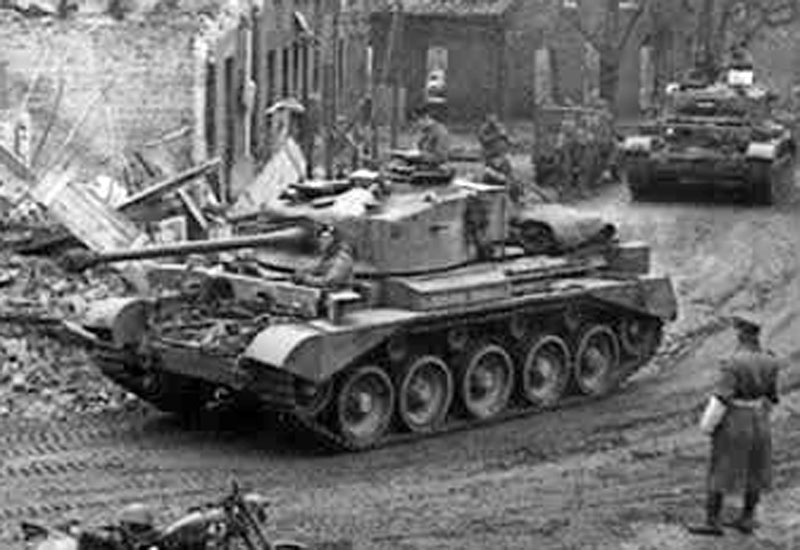
The Comet Cruiser tank was Britain's most powerful combat tank system of World War 2. It arrived in the latter phases of the conflict and extensive crew training delayed her overall tactical impact in the war but she proved a reliable mount and her crews likened her for the available protection and inherent speed. Eventually, the series would be replaced by more modern tank systems in the British Army inventory. The Comet became the last of the British infantry-minded "Cruiser" tanks before all thought shifted to "Main Battle Tanks" during the upcoming Cold War.
The Comet Cruiser design emerged from a 1941 British Army requirement seeking a new tank system with enough armor to survive the dangers of the modern battlefield and enough firepower to effectively engage any German tank then known. British actions across North Africa showcased a shortfall of capable British Army tanks to the point that much reliance was placed on the Lend-Lease American M3 Lee/Grant and M4 Sherman medium tanks. British tank design philosophy, at least up to this point in mechanized history, still relied heavily on speed over armor protection and firepower. The evolution of the Cromwell medium tank served to help thin the gap between British and German tank designs, at least for the interim.
One such early attempt to emerge from the British Army initiative became the "Challenger" prototype (no relation to the Cold War-era main battle tank) which mounted a 17-pounder (77mm) main gun onto a modified chassis of the aforementioned Cromwell medium tank. While the Cromwell hull was acceptable for the experiment, the fitting of the larger gun mount directly influenced a lighter armor protection scheme which, ultimately , proved unacceptable to British authorities. The Challenger design was therefore formally dropped from serious contention and more prototypes were entertained.
Another design soon emerged utilizing an alternative, high-velocity 77mm main gun atop the Cromwell chassis. This 77mm gun was a further development of a smaller caliber Vickers-Armstrong inspired weapon firing a 15lb projectile. The new 77mm gun could now fire a 17lb projectile and was rated against 109mm of armor thickness with penetration out to 1,500 feet. The gun sported a lower muzzle velocity and was internally smaller than the one utilized in the Challenger design but overall armor protection was improved (through welded construction) and a new engine was installed. The selection of gun also opened up its use to the already-existing British ammunition supply and could finally bridge the gap with the late-generation German tanks being fielded - particularly the Panther.
This completed design went on to become prototype "A34" and, before long, the tank was assigned the nickname of "Comet". In essence, the Comet was nothing more than a Cromwell with a reinforced suspension system, a new widened turret ring and additional armor protection. The completed A34 prototype was revealed in February of 1944 though it was not until September that production Comets were being delivered to frontline units as British forces were primed to enter Germany proper. Production of Comets ran from late 1944 into early 1945 to which some 1,186 examples were completed. Its new design approach required retraining of British tanker crews - postponing quantitative use of the type for a time.
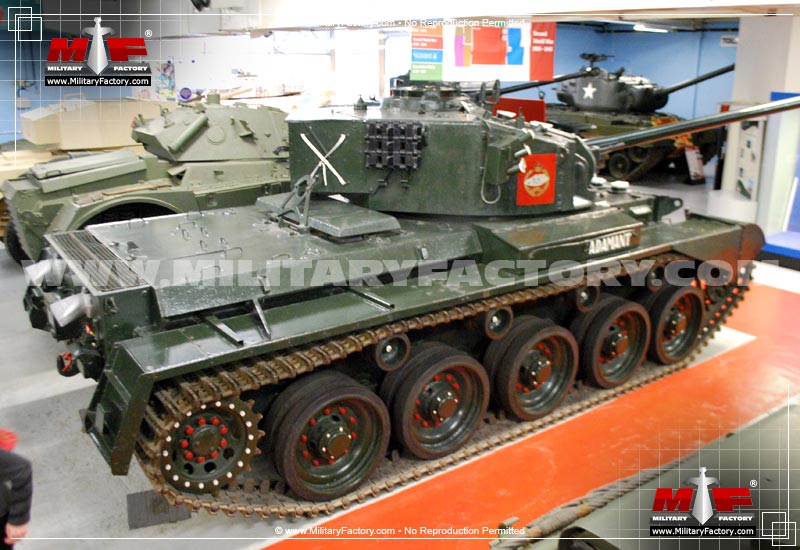
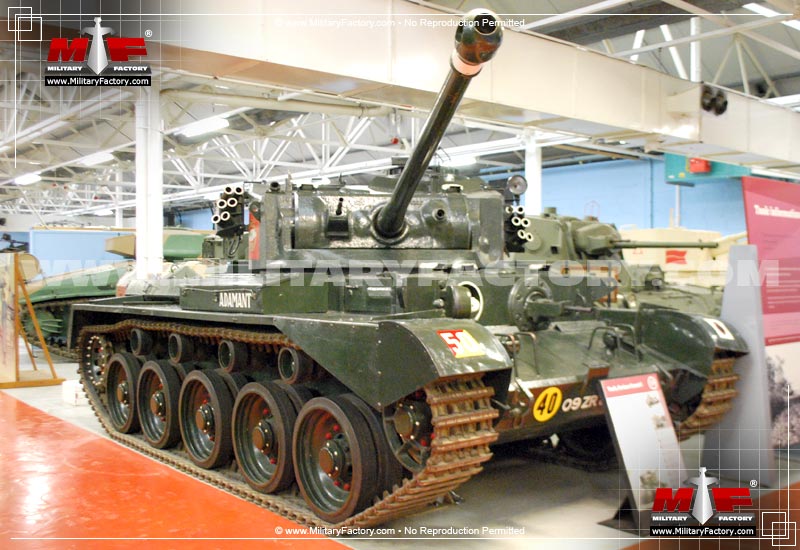
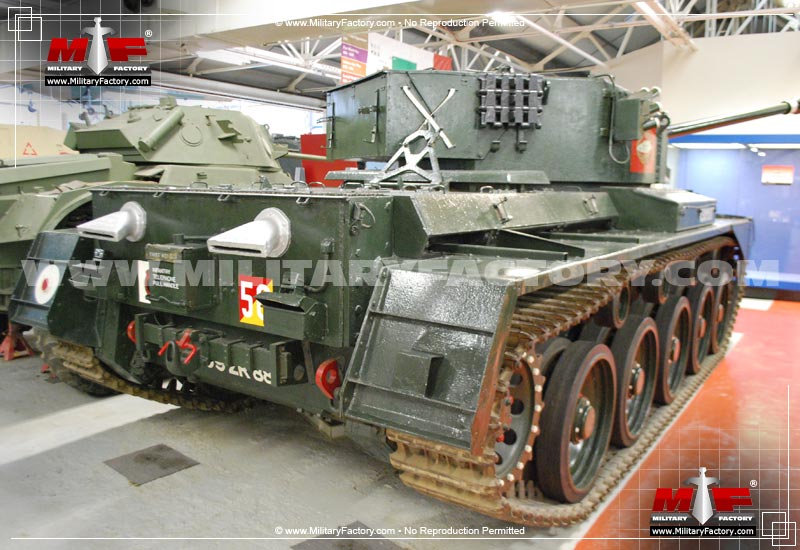
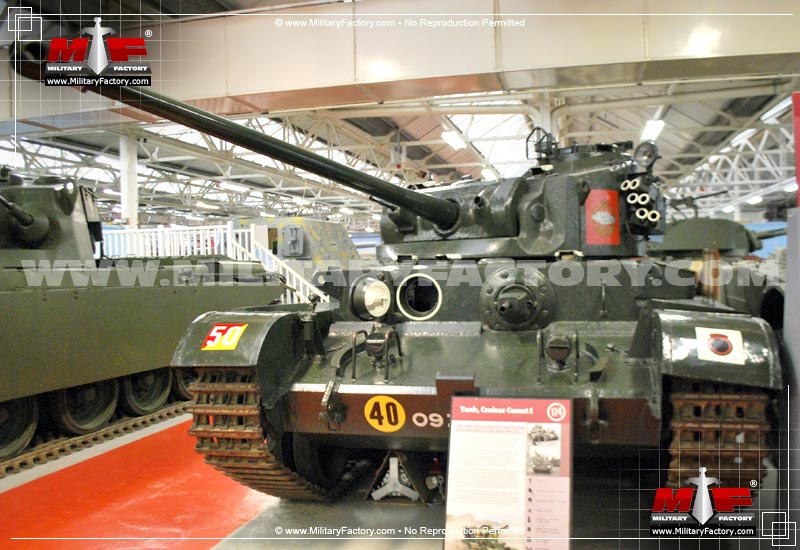
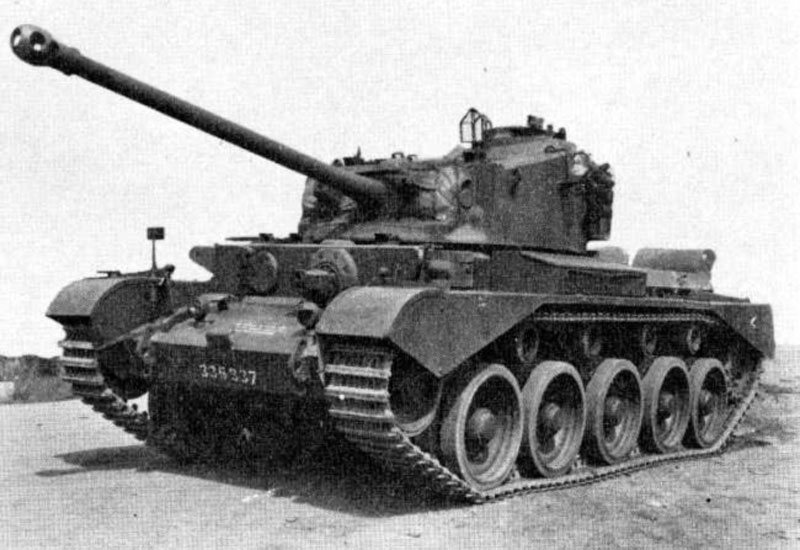
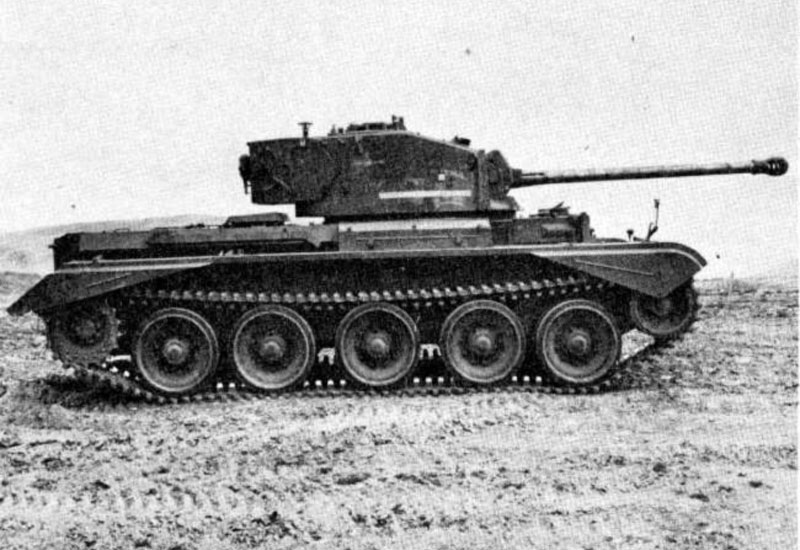
Externally, the Comet shared the same hull appearance of the Cromwell before it. The turret featured slightly angled facings for some ballistics protection but was overall a straight forward design. The gun sported a single-baffled muzzle brake for recoil. The hull was squat, allowing for a lower profile cross section and five rubber-tired road wheels dominated a track side. The drive sprocket was located to the rear of the design and the track idler was at the front. The engine was fitted to a compartment in the rear for maximum protection. Crew accommodations were for five personnel to include the driver, commander, gunner, loader and radioman.
The Come was fitted with 1 x Rolls-Royce Meteor Mark VIII V12 engine developing 600 horsepower. This supplied the tank with a top road speed of 32 miles per hour and an operational range of approximately 125 miles. The vehicle's running length measured in at 21 feet, 6 inches with a width of 10 feet, 1 inch and a height of 8 feet, 8 inches. Weight was 32.7 tons.
Primary armament was a 77mm Mark II L/49 series main gun (17-pounder) backed by a secondary arrangement of 2 x 7.92mm BESA tank machine guns for use against infantry. One machine gun was fitted as a coaxial turret mounting alongside the main gun while the other served as a bow-mounted machine gun operated by the radioman.
The British XXX Corps were able to utilized the Comet in the sprint to Arnhem during General Montgomery's famed "Operation Market Garden" campaign of September 1944. While the Allies managed to capture two key bridges in the offensive grab, the third was out of reach for the moment. Comets were then used in the crossing of the Rhine River at Wesel in the March 1945 push into Germany and the 11th Armored Division relied on the type into their move against the Baltic region.
Beyond combat actions in World War 2, the Comet served with British Army units in the upcoming Korean War which, by this time, they had been supplanted technologically by the superior Centurion Main Battle Tank. Comets were in service with the British Army until the 1960s and saw their last days as crew trainer vehicles for new generations of British tankers.
Power & Performance Those special qualities that separate one land system design from another. Performance specifications presented assume optimal operating conditions for the Cruiser Tank Comet (A34) Cruiser Tank Tracked Combat Vehicle.
1 x Rolls Royce Meteor Mark III V-12 engine developing 600 horsepower. Installed Power
32 mph 52 kph Road Speed
123 miles 198 km Range
Structure The physical qualities of the Cruiser Tank Comet (A34) Cruiser Tank Tracked Combat Vehicle.
5 (MANNED) Crew
25.1 ft 7.66 meters O/A Length
8.8 ft 2.68 meters O/A Height
68,343 lb 31,000 kg | 34.2 tons Weight
Armament & Ammunition Available supported armament, ammunition, and special-mission equipment featured in the design of the Cruiser Tank Comet (A34) Cruiser Tank Tracked Combat Vehicle.
1 x 77mm mark II L/49 Main Gun
1 x 7.92mm BESA General Purpose Machine Gun in coaxial mounting.
1 x 7.92mm BESA General Purpose Machine Gun in bow position.
AMMUNITION: 61 x 77mm projectiles
5,175 x 7.92mm ammunition
Variants Notable series variants as part of the Cruiser Tank Comet (A34) family line.
Comet Mk I - Base Series Designation
Operators Global customers who have evaluated and/or operated the Cruiser Tank Comet (A34). Nations are displayed by flag, each linked to their respective national land systems listing.
Total Production: 1,186 Units Contractor(s): Leyland Motors Ltd - UK
[ Finland; Ireland; Myanmar; South Africa; United Kingdom ]
1 / 8
Image copyright www.MilitaryFactory.com; No Reproduction Permitted.
2 / 8
Image copyright www.MilitaryFactory.com; No Reproduction Permitted.
3 / 8
Image copyright www.MilitaryFactory.com; No Reproduction Permitted.
4 / 8
Image copyright www.MilitaryFactory.com; No Reproduction Permitted.
5 / 8
Front left side view of the Comet Cruiser Tank A34
6 / 8
Right side profile view of the Comet Cruiser Tank A34
7 / 8
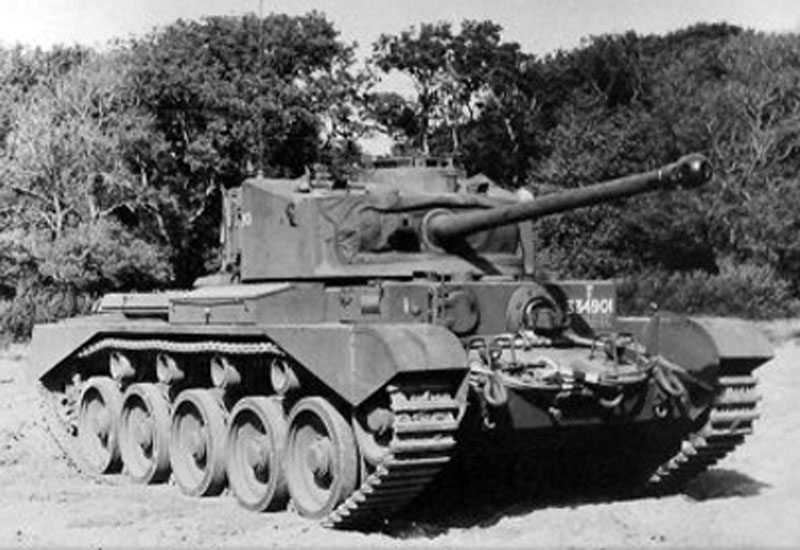
Front right side view of the Comet Cruiser Tank A34
8 / 8
A Comet Cruiser Tank moved through battlefield debris
The "Military Factory" name and MilitaryFactory.com logo are registered ® U.S. trademarks protected by all applicable domestic and international intellectual property laws. All written content, illustrations, and photography are unique to this website (unless where indicated) and not for reuse/reproduction in any form. Material presented throughout this website is for historical and entertainment value only and should not to be construed as usable for hardware restoration, maintenance, or general operation. We do not sell any of the items showcased on this site. Please direct all other inquiries to militaryfactory AT gmail.com. No A.I. was used in the generation of this content.