The Skoda Works concern of Czechoslovakia was the largest producer of weaponry for the Austro-Hungarian Empire during World War 1 and proved no slouch in the design and production of artillery systems and heavy-minded weaponry. The company persevered after World War 1 in the civilian heavy machinery section and, throughout the volatile 1930s, came back to the production of field guns and other-like weapons which would eventually be employed by various sides of the upcoming world war.
In 1937, Skoda engineers had begun work on a new tank of medium classification to borrow extensively from the company's previous success - the LT vz. 35 Light Tank. The new tank would be an 18-ton design fitted with a turreted 47mm main gun and defensed by multiple machine guns with a multi-person crew. The engine was held in a rear compartment and the overall design initiative was rather conventional in nature. The prototypes were under construction by the time of the Germany annexation of Czechoslovakia, bringing an end to Skoda leadership of the project. Under German control, the prototypes were completed as the "T-21" and held for evaluation, eventually producing a new design form - the "T-22". As Hungary had joined the ranks of the Axis powers in 1940, it was granted evaluation of the T-22 in two completed examples. Hungarian military forces contributed armor and manpower to the Axis invasion of Yugoslavia, leading to its conquer in April of 1941. They later participated in the German invasion of the Soviet Union through Operation Barbarossa in June of 1941.
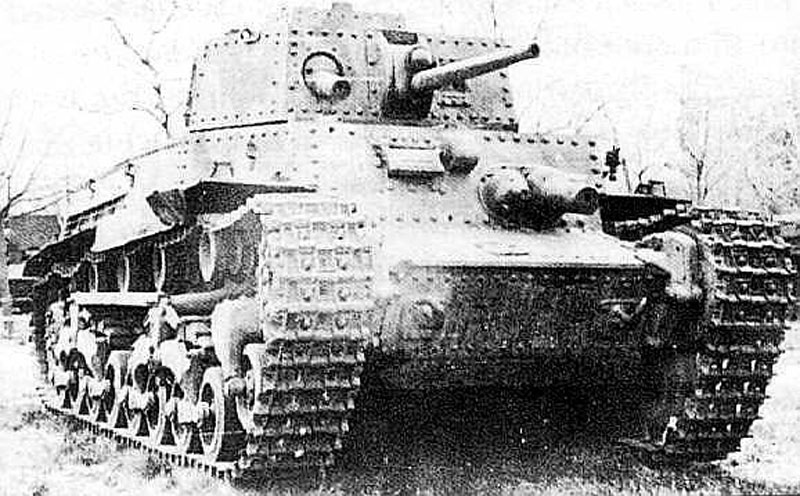
TheT-22 proved a suitable tank for Hungarian military needs and her engineers set about in modifying the original design to Hungarian Army specifications. This included the implementation of a 40mm Skoda A17 series main gun over the original's 47mm armament (the 40mm Skoda system was the standard Hungarian Army light anti-tank gun system of the time so the decision made sense from a logistical perspective). Frontal armor was then increased from the original's 30mm to 50mm in thickness for improved crew protection. The additions inevitably drove up the expected operating weight of the vehicle to the 20-ton mark, dampening performance somewhat. The tank would be crewed by five personnel and powered by a Manfred Weiss-Z gasoline-fueled engine of 260 horsepower. The engine was exhausted at the rear by a pair of cylindrical muffler fittings along the top track platform. The driver would man a position at the front right of the hull with a bow-machine gunner/radio operator to his left. The tank commander, gun layer and ammunition handler would be positioned in the 360-degree traversing turret. Turret construction was riveted in nature though combat experience would eventually show this practice to be a weaker approach than welded or cast construction (the rivets potentially becoming "bullets" within the tank upon taking a direct hit from the enemy). The hull was straddled on either side by a long running track system featuring no fewer than nine road wheels to a track side - eight set as paired bogies and the front-most as stand-alone wheels installations. The drive sprocket was at the front with the track idler at the rear. Optional side skirt armor would protect the upper portions of the track and hull. Point defense was through two 7.92mm machine guns - one fitted coaxially in the turret and the other in a flexible bow-mounted position.
Overall, the Turan sported a running length of 5.55 meters with a width of 2.44 meters and a height of 2.39 meters. The hull was set upon a leaf-spring bogie suspension system for adequate cross-country performance. The Manfred Weiss powerplant supplied the mount with a top speed of 47 kilometers per hour and an operational range equal to 165 kilometers. The engine was mated to a transmission system featuring six forward and six reverse speeds. All told, the Turan was a solid armored fighting vehicle for the Hungarian Army and would prove somewhat useful, to an extent, in subsequent actions - particularly early in the war against "lesser" foes. Production of the Turan began in 1941 and continued on into 1944 to which some 285 examples were ultimately delivered. Production was split between MVG, Manfred Weisz, Canz and MAVAG of which MAVAG also handled gun barrels and Manfred-Weisz, MVG and MAVAG the engines.
When operationally deployed, Turan tanks were assigned to three Hungarian Army divisions (the 1st and 2nd Hungarian Armored and the 1st Cavalry). Their inclusion in armored operations provided the Hungarian Army with a mechanized arm that could protect infantry movements, assault fortified enemy positions and move the Hungarian battle force at speed. The engine deck of the tank proved helpful in ferrying infantrymen to and from combat fronts. Turan-involved operations spanned from 1943 into 1944 although direct combat use was not recorded until April of the latter, this taking place in Galicia at the Polish-Ukrainian border. War records show that the Turan did not fare particularly well on the ever-evolving battlefield where thicker armor and bigger guns were proving the norm. Combat also showcased the type's many inherent deficiencies compared to contemporary tanks coming on line - of note being the relatively thin armor protection and the small-caliber main gun.
When forced to face off against the latest in Soviet armor progression - particularly the fabled, war-winning T-34 Medium Tank - the Turan series was wholly outclassed in its original form, forcing Hungarian authorities to request a revised version fitted a more powerful, short-barreled 75mm main 41M gun. This new gun (based on the Bohler 75mm 18M field gun), in turn, forced the development of a larger turret to fit all of the corresponding parts of the weapon system as well as leaving room for ammunition storage, critical systems and turret crew. Even in this revised guise appearing in May of 1943, the new "41M Turan II" simply could not contend with the thick armor of the Soviet T-34 or its related KV heavy tank counterparts. Conversely, Soviet tanks had little trouble in dealing with the Turan tanks, even at distance. Due to the lack of available options within Hungary and Germany's inability to produce Panzers on a large scale for all of her allies, the Turan tank soldiered on without much help. Production ran until 1944 at which point control of Hungary fell to the Soviet occupation. There were also plans for a "43M Turan III" appearing in 1944, this fitting the German 75mm L/43 (PaK 40) main gun with side skirt armor - though this endeavor fell to naught and existed in prototype form only. However, existing Turan I and Turan II tanks adopted the intended side skirt armor from the abandoned Turan III initiative.
Beyond the Turan I and Turan II production forms, Manfred Weiss took the Turan tank chassis and modified it to serve as the "Zrinyi II" - a 105mm armed, four-crew, self-propelled, tracked, armored assault gun of 22 tons. The system maintained the complete running gear of the Turan tank but did away with the traversing turret. In its place was a fixed superstructure mounting the 105mm MAVAG 40/43M L/20.5 howitzer with applicable recoil and breech system. Armor protection was 75mm at its thickest. The vehicle was intended to support joint combat tank actions as well as infantry movements. As many as sixty-six of the type are thought to have been produced though their involvement and success in the war appears to have been limited. The "Zrinyi I" design preceded the Zrinyi II and fitted the 75mm 43M howitzer for tank destroyer duties - however, as with the Turan III proposal, the Zrinyi I only existed in prototype form.
Power & Performance Those special qualities that separate one land system design from another. Performance specifications presented assume optimal operating conditions for the 40M Turan I Medium Tank Tracked Combat Vehicle.
1 x Manfred Weisz-Z gasoline engine developing 260 horsepower. Installed Power
29 mph 47 kph Road Speed
103 miles 165 km Range
Structure The physical qualities of the 40M Turan I Medium Tank Tracked Combat Vehicle.
5 (MANNED) Crew
18.2 ft 5.55 meters O/A Length
8.0 ft 2.44 meters O/A Width
7.8 ft 2.39 meters O/A Height
40,124 lb 18,200 kg | 20.1 tons Weight
Armament & Ammunition Available supported armament, ammunition, and special-mission equipment featured in the design of the 40M Turan I / 41M Turan II Medium Tank Tracked Combat Vehicle.
1 x 40mm Skoda A17 main gun
1 x 7.92mm coaxial machine gun
1 x 7.92mm bow-mounted machine gun
AMMUNITION: Not Available.
Variants Notable series variants as part of the 40M Turan I / 41M Turan II family line.
T-21 - Original Skoda Works Prototype
T-22 - Prototype based on the preceding T-21 prototype completed by the Germans.
40M Turan I - Base Series Designation; 40mm Skoda main gun; 285 examples produced.
41M Turan II - Fitted with short-barreled 75mm main gun; 139 examples produced.
43M Turan III - Proposed Variant fitting German 75mm L/43 PaK 40 main gun with side skirt armor; prototypes only.
Zrinyi I - Proposed Tank Destroyer utilizing Turan chassis; fitting 75mm main gun.
Zrinyi II - Assault Gun Development of the Turan chassis; fitting 105mm main gun barrel in fixed hull superstructure.
Operators Global customers who have evaluated and/or operated the 40M Turan I / 41M Turan II. Nations are displayed by flag, each linked to their respective national land systems listing.
Total Production: 424 Units Contractor(s): MVG / Manfred Weisz / Canz / MAVAG - Hungary
[ Hungary ]
1 / 1
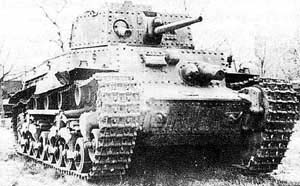
Front right side view of a Turan I Medium Tank
Going Further... The 40M Turan I / 41M Turan II Medium Tank Tracked Combat Vehicle appears in the following collections:
The "Military Factory" name and MilitaryFactory.com logo are registered ® U.S. trademarks protected by all applicable domestic and international intellectual property laws. All written content, illustrations, and photography are unique to this website (unless where indicated) and not for reuse/reproduction in any form. Material presented throughout this website is for historical and entertainment value only and should not to be construed as usable for hardware restoration, maintenance, or general operation. We do not sell any of the items showcased on this site. Please direct all other inquiries to militaryfactory AT gmail.com. No A.I. was used in the generation of this content.