Global Firepower | Military Industrial Complex | Second World War History
Home | Military Pay Scale Chart | Aircraft | Infantry Weapons | Military Vehicles | Navy Ships | Military Education | French Military Victories | Military Ranks | WW2 Weapons
Military Factory Latest from Military Factory
Thumbnail picture of the Dardo infantry fighting vehicle
Dardo IFV
Thumbnail picture of the Supermarine Scimitar fighter
Supermarine Scimitar
Thumbnail picture of the Centauro B1 8x8 tank killer
Centauro 8x8
Thumbnail picture of the Novi Avion fighter
Novi Avion
Thumbnail picture of the FR F2 bolt-action sniper rifle
FR F2
Thumbnail picture of the Lebel Model 1886 bolt-action rifle
Lebel Model 1886
2009 Military Pay Scale Chart - for Army, Navy, Air Force and Marines
  BY DECADE
    · 1910 to 1919
    · 1920 to 1929
    · 1930 to 1939
    · 1940 to 1949
    · 1950 to 1959
    · 1960 to 1969
    · 1970 to 1979
    · 1980 to 1989
    · 1990 to 1999
    · 2000 and Beyond
    · View All
  BY TYPE
    · 4-Wheeled
    · 6-Wheeled
    · 8-Wheeled
    · Anti-Aircraft
    · Anti-Tank
    · APCs
    · Halftracks
    · Heavy Tanks
    · IFVs
    · Light Tanks
    · Main Battle Tanks
    · Medium Tanks
    · Recon Vehicles
    · Special Purpose
    · SPGs
    · Towed Artillery
    · Utility Vehicles
  WORLD WAR 2
    · Full List
    · Tanks
    · IFVs
    · Tank Destroyers
    · Australia
    · Britain
    · Canada
    · France
    · Germany
    · Italy
    · Japan
    · Soviet Union
    · USA
  WORLD WAR 1
    · Full List
    · France
    · Imperial Germany
    · United Kingdom
    · United States
    · Tanks
  KOREAN WAR
    · Full List
  VIETNAM WAR
    · Full List

MilitaryFactory > Armored Vehicles > Mark IX
 
 
More Pictures QuickGraphs Chassis Types CompareX2 Acronyms

Mark IX

The Mark IX tank is called the worlds first operational purpose-built armored personnel carrier.
By Staff Writer

Bookmark and Share

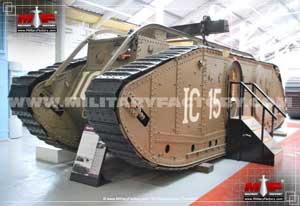
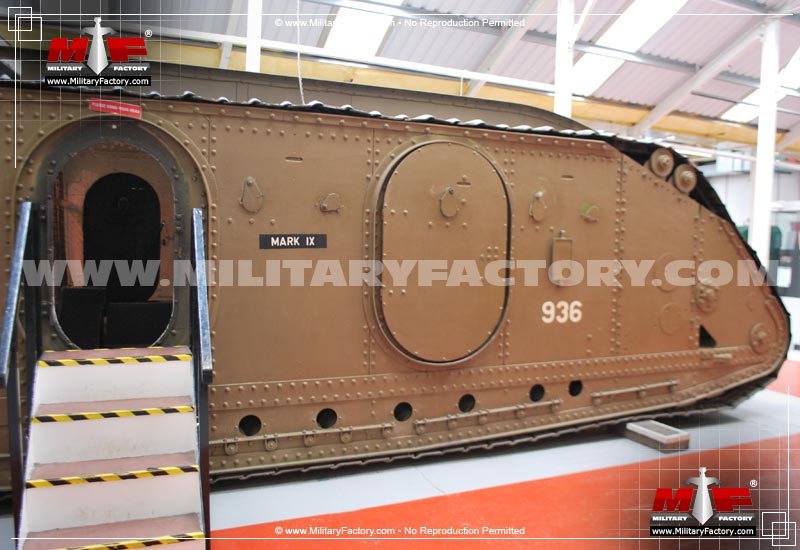
The Mark IX tank was classified as an armored personnel carrier - effectively the world's first of its kind anywhere in operation service. The system was designed to a purpose-specific requirement needing an armored vehicle capable of transporting combat-ready troops or supplies to the front under protection. A wrinkle in the specifications, however, complicated early design as the Mark IX would also have to be made "tank-ready" meaning the design should serve as an APC but allow for conversion to a tank where the existing APC hull could be fitted with side sponsons sporting offensive-minded armament. This additional requirement stemmed from the fear that another armor project - the Mk VIII, a purpose-built armored fighting vehicle (AFV) - might not live up to expectations. As such, the back-up plan of using a multi-purpose hull was deemed necessary in the Mark IX design.

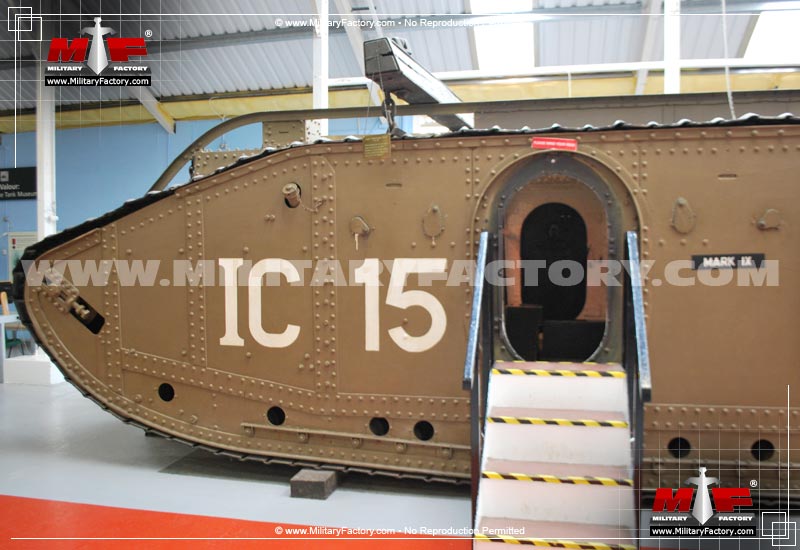
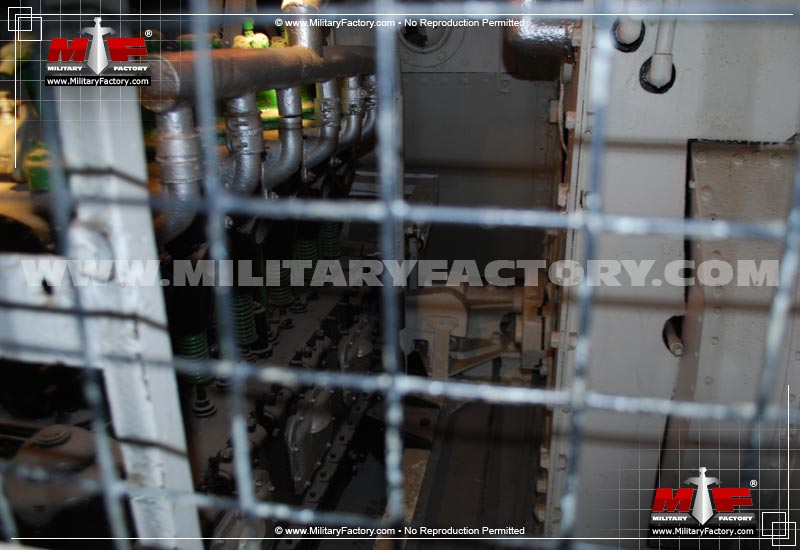
Based on the previous (and existing) Mark V tank design, the Mark IX was rushed onto the drawing boards. The engine of the Mark V was flipped with the gearbox, sending the engine forward and the gearbox to the rear. Crew accommodations consisted of four standard operating personnel with a utilitarian cabin space for up to 30 soldiers. The crew was made up of a commander, driver, mechanic and the machine gunner. The cabin space offered up no comforts whatsoever, not so much as seating for personnel or a compartment separating their area from the noise, grease and smoke from the operating engine - and facilitated the dual-use ability of the vehicle to carry people or supplies aboard without the need for conversion. Self-defense was basic with two 7.7mm Hotchkiss type anti-infantry machines guns with one held in a forward position and the other at rear, operated through nothing more than hatches. The passengers could jump into the fray as well for each side contained eight rounded hatches for which the business end of a rifle could be passed through and fired on the enemy. Power was derived from a single Ricardo 6-cylinder gasoline engine of 150bhp. Combined with the armor, this gave the vehicle a top speed of nearly 3.5 miles per hour in optimal road and weather conditions.

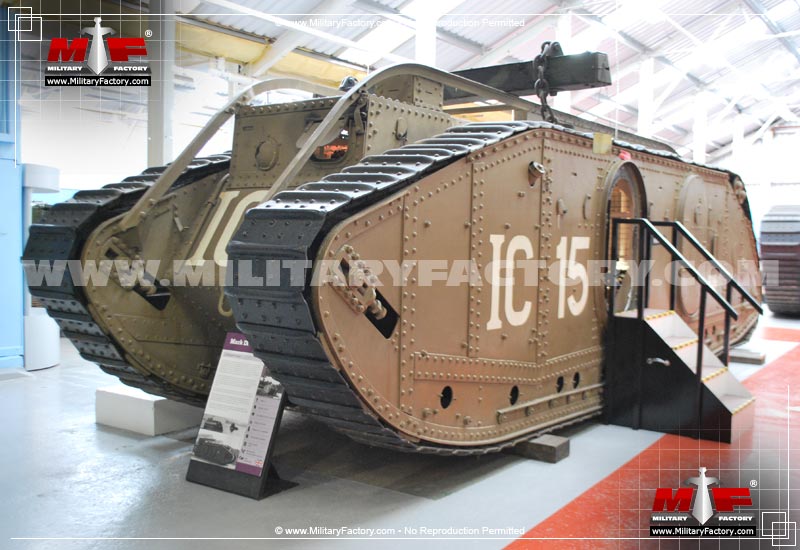
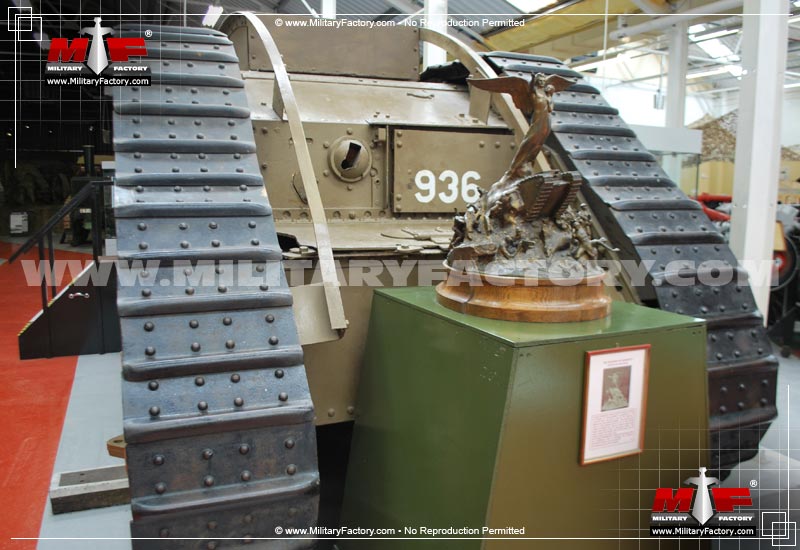
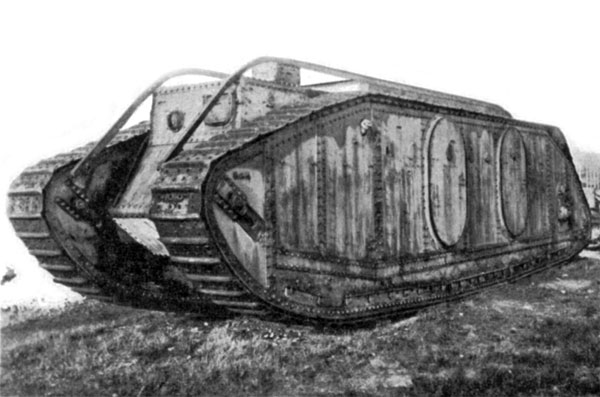
Externally, the Mark IX tank fit the role. It was featureless with the exception of the four noticeable rounded crew cabin doors (two to a side). The hull and attached superstructure was nestled in-between the track assemblies with the tracks taking on the trapezoid shape consistent with tank designs of the Great War. The large rearward area of the upper hull could be used to carry equipment and supplies in addition to what was held in the interior hold and total supply hauling capabilities topped 10 tons. Armor thickness reached 10 millimeters and, surprisingly, no type of suspension was provided.

Construction was under way in September of 1917 though only some 30 or so systems were actually produced before the end of the war in November of 1918. They were still considered of sound design and used for a time thereafter, though eventually done in by the general progression of armored vehicle designs and more purpose-built systems developed after the war. Regardless, the Mark IX proved to be a proper conversion of an existing design with haste necessitated by the calls of war. Its troop-carrying and supply-moving capabilities surely made up for any design-related drawbacks and rudimentary crew/passenger comforts.

The Mark IX was affectionately known as "The Pig" due to its distinct front-end shape. Construction was handled by Armstrong, Whitworth & Company of Newcastle-upon-Tyne.

History text ©2003-2009 www.MilitaryFactory.com • All Rights Reserved • No Reproduction Without Permission • Corrections / Comments to MilitaryFactory at Gmail dot com

Last Updated: 11/5/2009


  Specifications for the Mark IX
arrow downDimensions:
Length: 32.09ft (9.78m)
Width:13.48ft (4.11m)
Height: 8.66ft (2.64m)

arrow downStructure:
Accommodation: 4 + 30
Weight:29.7US Short Tons (26,950kg; 59,415lbs)

arrow downPerformance:
Speed: 3mph (5.63km/h)
Range: 20miles (32km)

arrow downSystems:
NBC Protection: None
Nightvision: None

arrow downPower:
Engine(s): 1 x Ricardo 6-cylinder gasoline engine delivering 150bhp.

arrow downArmament Suite:

1 OR 2 x 7.7mm Hotchkiss machine gun(s)

AMMUNITION:
Not Available


More Pictures QuickGraphs Chassis Types CompareX2 Acronyms

  Special Armored Vehicles Collections

By Nation:
Afghanistan Tanks
American Tanks
British Tanks
Iran Tanks
Iraq Tanks
Israeli Tanks
Russian Tanks

Miscellaneous:
Cold War Tanks
Modern Tanks


  Recent Armored Vehicle Additions
Thumbnail picture of the Dardo infantry fighting vehicle
Dardo IFV
Thumbnail picture of the Centauro B1 8x8 tank killer
Centauro 8x8
Thumbnail picture of the Vickers 6-Ton Mark E light tank
Vickers 6-Ton

  Contacting MilitaryFactory.com
We can only get better if you tell us how. You can contact MilitaryFactory.com at MilitaryFactory at gmail dot com (replace "at" with "@" and "dot with ".") with any questions, comments or corrections. We also accept related military imagery that you approve for us to use on our website. Keep in mind, however, that due to volume, we may not directly respond to your inquiry. Please add us to your list of non-blocked recipients!

Main Battle Tanks

  Armored Vehicle Quick Profile


Image Courtesy of the Public Domain via Kevin L..


flag of United Kingdom
1918
Designation: Mark IX
Classification Type: Armored Personnel Carrier
Contractor: Armstrong, Whitworth & Company - UK

Country of Origin: United Kingdom
Number Built: 34

Operators: United Kingdom


  Variants
Mark IX - Base Tank Designation; 34 examples produced.

Mark IX Ambulance - Armored Battlefield Ambulance Conversion; single example.

Mark IX Amphibious - Amphibious Tank; single example.

  Collections
  • Tanks of World War 2
  • Armor of the Persian Gulf War
  • Towed Artillery Reigns
  • Armor of the Vietnam War
  • Tanks of World War 1
  • Armor of the Korean War
  • World War 2 Tank Destroyers


Free GI Bill Guide

Top MF Stuff: Military Pay Scale Chart | Military Ranks | World War 2 Weapons | Sniper Rifles | Conversion Calculators


©2009 www.MilitaryFactory.com • Content ©2003-2009 MilitaryFactory.com • All Rights Reserved • Disclaimer Privacy Policy Site Map Origins
Most photographic images appearing on this site are courtesy of the United States Department of Defense and are approved for public use.
Other images acquired through the public domain. Digital art work courtesy of Dan Alex.
Business Consulting by Kyle Williams

Material presented throughout this website is for historical and entertainment value and should not to be construed as usable for
hardware restoration, maintenance or general operation. Please consult manufacturers for such information.

Site Contact: militaryfactory at gmail dot com (replace "at" with "@" and "dot" with ".") eXTReMe Tracker