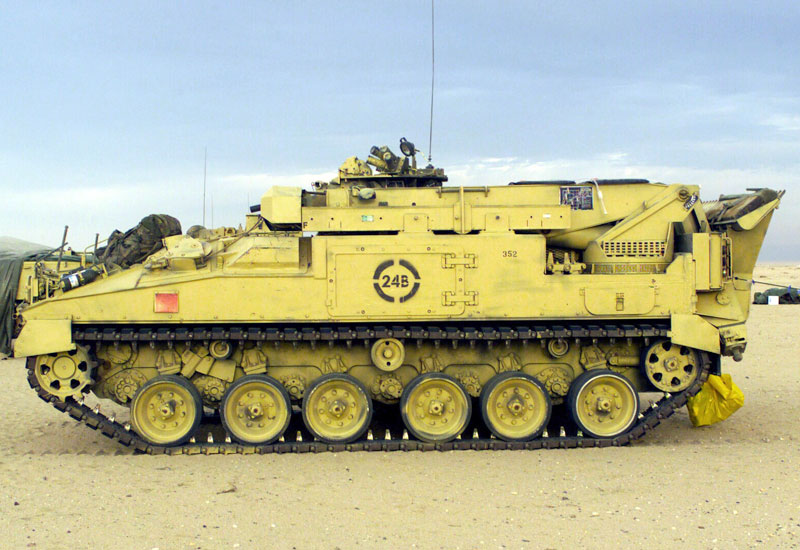
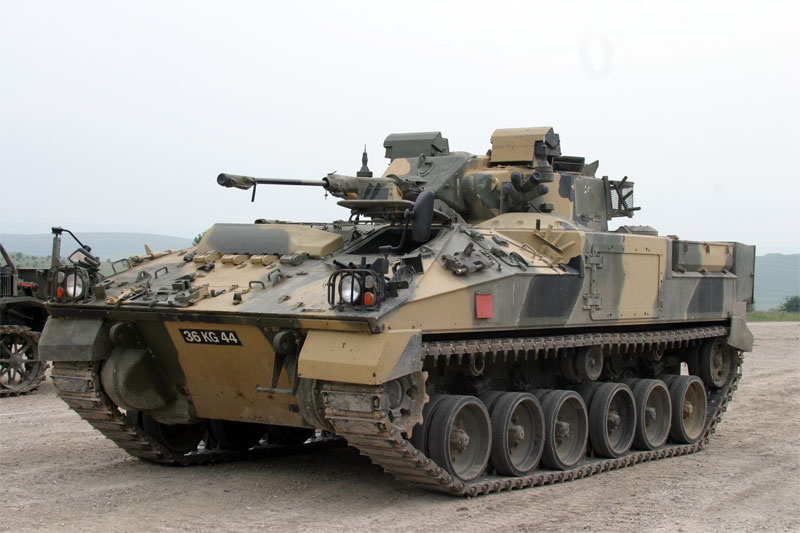
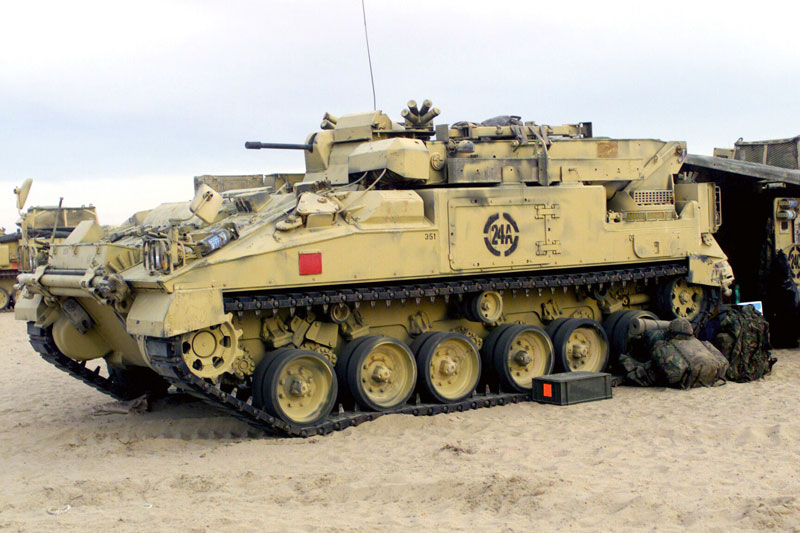
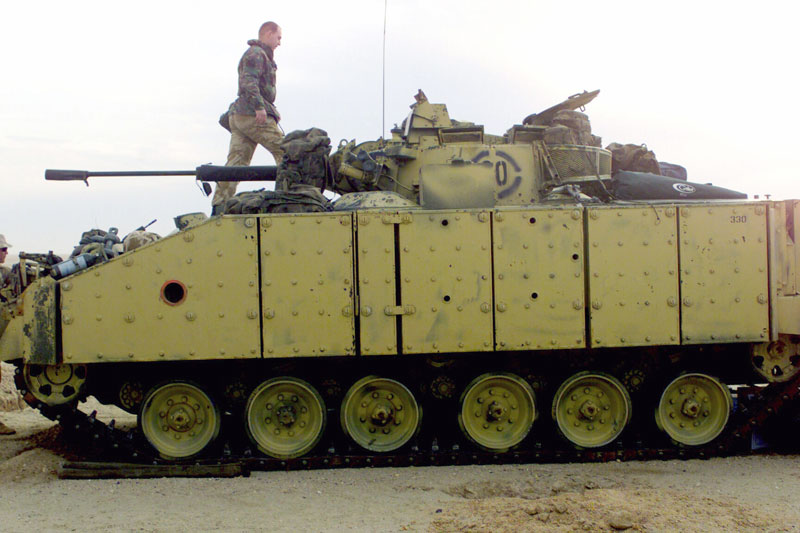
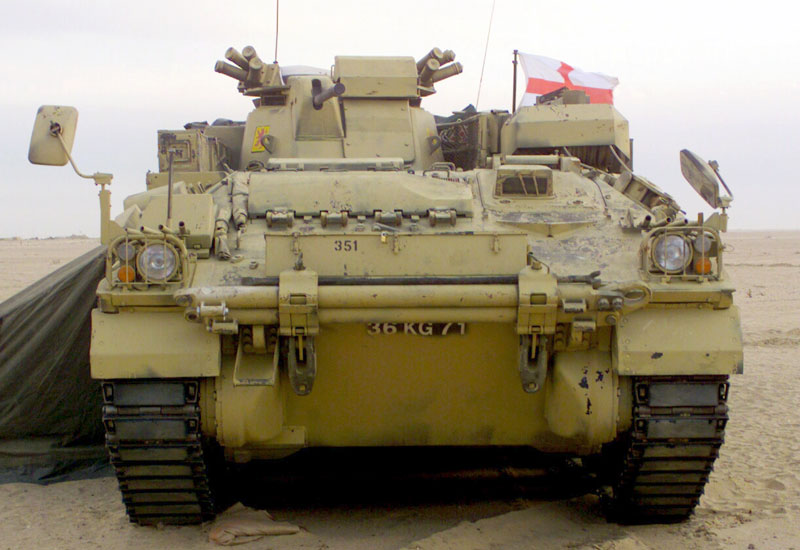
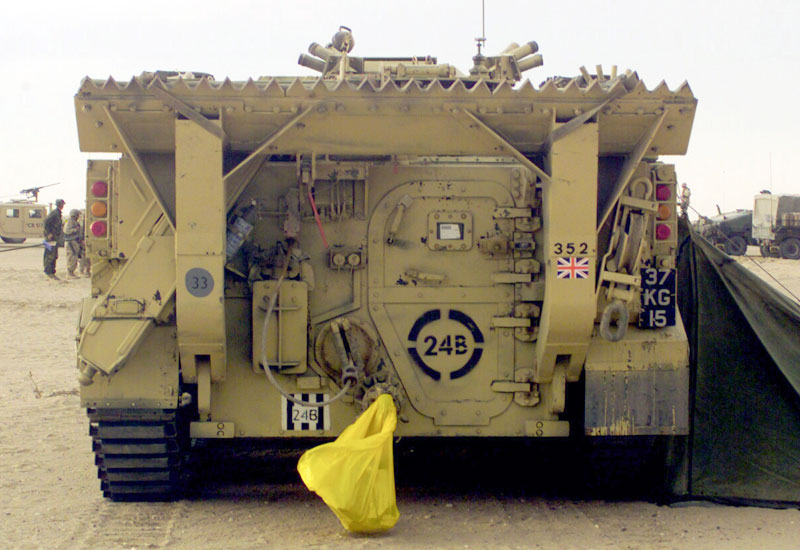
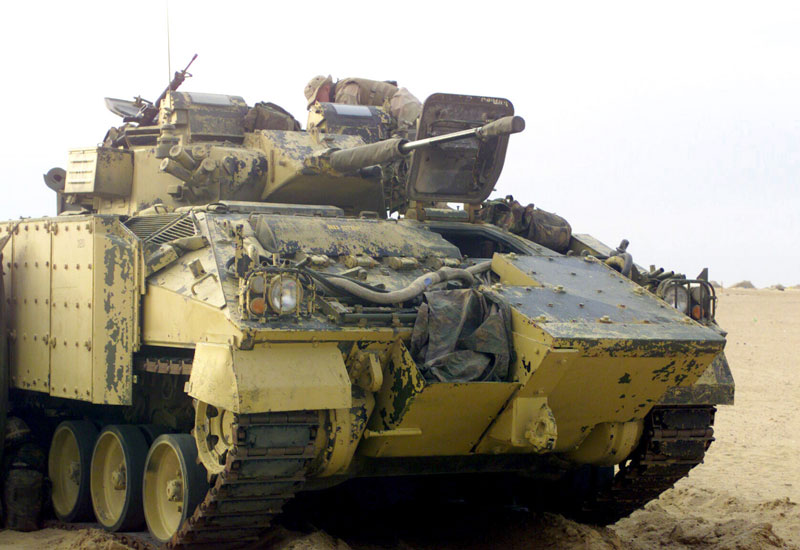
The Warrior is an infantry fighting vehicle currently in service with the armies of the United Kingdom and Kuwait. While the system can fall under a variety of classifications (Mechanized Combat Vehicle, Infantry Combat Vehicle) her role remains the same - to deliver or extract friendly infantry while providing armor protection and direct fire support. The Warrior is an adaptable and reliable platform that has since proven successful in military actions during the 1991 Gulf War, throughout the Bosnia and Kosovo conflict and, most recently, in the 2003 invasion of Iraq. Needless to say, the Warrior has distinguished itself in many-an-action across mountainous, urban and desert terrains and has earned her stay in the ranks of the British Army.
Up to this point in history, armies made due with the new-found flexibility of tracked armored personnel carriers. These proved to be highly efficient machines that could traverse terrains on par with their tank brethren, allowing commanders to bring infantry forces up to front lines as needed. Tracked vehicles allowed for transport across terrains that were often inhospitable for wheeled vehicles and, prior to the age of the armored tracked carrier, armies relied heavily on military 6x6 wheeled trucks to flood troops into combat regions. While generally effective for their time, these wheeled systems were not well protected and proved ultimately limiting in cross country affairs.
The advent of the armored personnel carrier broadened the reach of any modern land army and now allowed troops to be brought to the front by some level of protection. However, within time, these light armored and armed vehicles began to also exhibit their inherent limitations as they became of little value once their infantry cargo had been dropped off. Dedicated armored personnel carriers lacked both the armor protection and firepower needed to participate in continuing to bring the fight directly to an enemy. Perhaps the best known of the Cold War-era APCs became the ubiquitous American M113, a boxy, tracked system design that went on to serve in the inventories of dozens of armies around the world. Similarly, the British developed their equally effective FV432 series APCs and now found themselves looking to the future.
At the end of the 1960s, the Fighting Vehicles and Engineering Establishment of Chertsey undertook a series of studies to determine the future of British Army needs - essentially looking to replace the aging FV432 series. On the wish list was a tracked vehicle protected over in Chobham armor, powered by a 750 diesel engine and fitting a 30mm autocannon in a fully traversing turret system. A fighting compartment for up to seven combat-ready troops would be integrated into the design and allow the new system the capability to release infantry into combat while also being able to engage foes with its own armament. Armor protection would be such that damage from indirect artillery spray could be weakened and the operating team and passengers would be wholly protected from small arms fire. The vehicle would have to be able to keep pace with the fast Challenger main battle tank series during all required British armor actions. The requirement evolved into General Staff Requirement 3533 and the ensuing competition saw GKN Sankey win with their proposal for the "Mechanized Combat Vehicle 80", otherwise designated as the "MCV-80".
MCV-80 pilot vehicles were made available in November of 1984 and trials proved the design sound. GKN then received funding for production to occur in batch deliveries to the British Army number some 1,000 total vehicles. However, defense budget limitations ultimately curtailed this total to less than and only 789 examples were completed in the end. The MCV-80 program then evolved to become the "FV510" and the name of "Warrior" was assigned in 1985. Production soon ramped up at the GKN facility out of Telford in 1986. GKN concentrated on the hull components and Vickers was responsible for the turret. Perkins supplied engines while various other subcontractors handled "lesser" components in the Warrior design. The first production vehicle was delivered in December of 1986 with the British Army formally declaring the system operational in 1988. Deliveries of the Warrior to the British military would continue up until 1995.
Kuwait became the only other notable operator of the Warrior when they placed an order for 254 examples in 1993. These were slightly different from the British versions in that they were modified for operations in desert environments as well as for Kuwaiti Army requirements. As such, these were known as "Desert Warriors" and deliveries of the type began in 1994. Desert Warriors were fitted with an American-based turret (same as on the LAV-25 wheeled APC) mounting a stabilized 25mm M242 Bushmaster chain gun as well as dual Hughes TOW anti-tank missile launchers mounted to either turret side. Close-in defense was handled by a coaxially mounted 7.62mm machine gun. Further qualities that differentiated the Desert Warrior from its original British form included an integrated air conditioning system, cabin firing ports (the British version lacks these) and a revised armor arrangement. The last Desert Warrior was delivered to the Kuwaiti Army in 1997 making her a relatively new and modern addition.
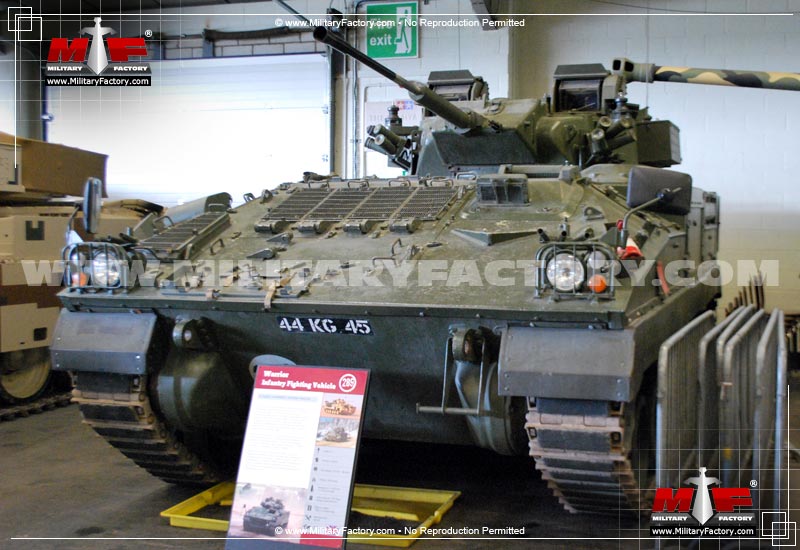
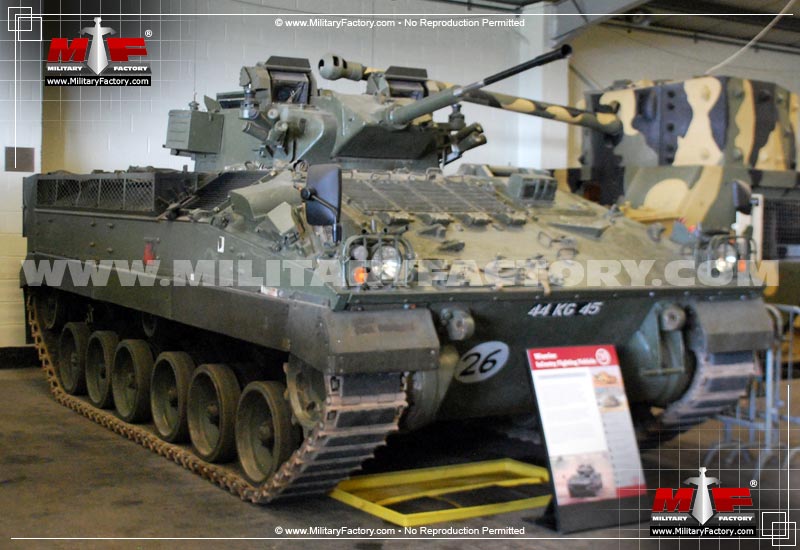
Design of the Warrior is highly conventional. The driver maintains a traditional front-left placement in the hull with the commander and gunner taking up the traversing turret. These three individuals constitute the core Warrior operating crew. The passenger compartment is located to the rear of the hull, forcing the engine to be mounted further up in the design - to the right of the driver's position in fact. Infantry enter/exit the fighting compartment through a large rectangular electrically-powered door at the vehicle rear - hinged to the right hand side - though not a ramp as in the American M2 Bradley. The Warrior hull is characterized by a highly-sloped glacis plate with the driver's position identified by his hatch complete with vision blocks. An exhaust vent to the upper right front hull indicates the engine's position in the design. The turret is set in the middle of the hull roof and the aft hull is squared off, this area making up the troop compartment. While the hull is constructed of aluminum, the turret is steel. An NBC (Nuclear, Biological, Chemical) system protects the crew from various lethal airborne battlefield elements while passive nightvision equipment was originally given to the driver, commander and gunner. Some 350 Warriors have since been upgraded with a Thales Optronics STAG thermal imaging system after 2007 to coincide with the Battle Group Thermal Imaging (BGTI) program. The Warrior can remain "buttoned down" for up to 48 uninterrupted hours, this action helped by the inclusion of an onboard toilet.
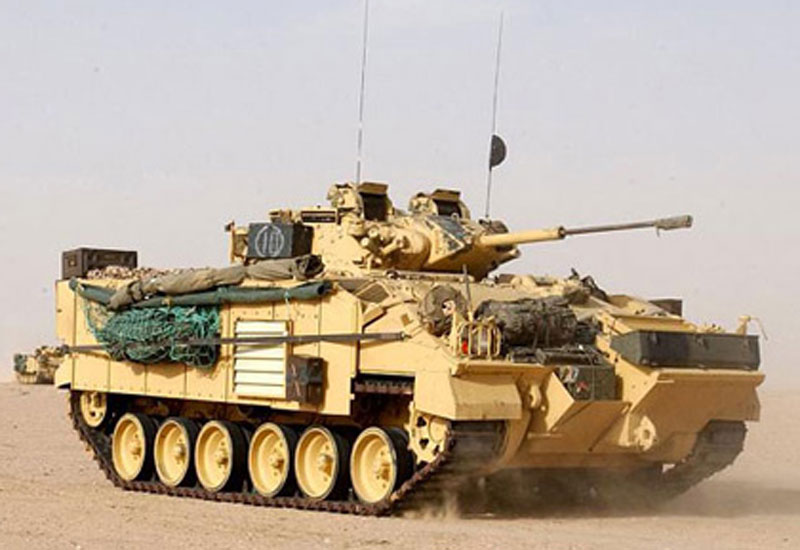
The Warrior's track systems are operated by a drive sprocket fitted to the front with a track idler at the rear. Three track return rollers are present above the road wheels though these are most often times covered over in short side armor "skirts". Six rubber-tired road wheels to each track side complete the side profile of the base Warrior and allow for good cross country handling. Applique armor is a standard fixture to many Warrior types operating today and has proven relatively effective in retarding the effects of small-caliber enemy shells and rocket propelled grenades (RPGs) through British Army involvement in both Iraq (Gulf War and current) and Bosnia. In general, the base armor of the Warrior is designed to withstand ensuring damage from a 155mm projectile at over 32 feet. Direct enemy fire from large caliber, anti-armor 14.5mm ammunition can also be thwarted to an extent as can ground-based mines. As the British version of the Warrior lacks firing ports, this allows Applique armor to be featured without much loss.
Warrior armament is centered around the 30mm L21A1 RARDEN cannon to which 250 projectiles are afforded to the crew. The turret is powered and allows for up to 360-degree traversal with some elevation giving the Warrior strong adaptive return fire capabilities. Penetration range of the cannon is out to 1,600 yards though it should be noted that the RARDEN cannon is not stabilized in anyway, making firing while on the move something of an impossibility. Regardless, the 30mm caliber is capable of engaging soft-skinned and light armored vehicles, leaving enemy tanks to the British Challengers. The primary armament is backed by a coaxial 7.62mm chain gun. Both the 30mm and 7.62mm gun systems can engage low-flying targets, particularly enemy helicopters, if need be. The Warrior crew can access eight smoke grenades for planned offensive and defensive maneuvering. Additionally, the crew can utilized man-portable anti-tank weapons such as LAWs (Light Anti-Tank Weapon) of which eight can be carried in the passenger compartment.
Power is supplied by a single Perkins Rolls-Royce CV-8 TCA "Condor" diesel engine delivering 550 horsepower. This provides the vehicle with a top speed of approximately 45 miles per hour on paved surfaces and a range out to 660 kilometers. While not inherently amphibious, the Warrior fields a fording capability of up to 1.3 meters of water. The automatic transmission system is designed with four-speed settings.
FV510 is used to designate the base Warrior "Infantry Section Vehicle" and is the standard Warrior form operating in the British Army today. The FV511 is a dedicated Infantry Command Vehicle. The FV512 is a Mechanized Combat Repair Vehicle while the FV513 is a similar Mechanized Recovery and Repair Vehicle. The FV514 is a dedicated Mechanized Artillery Observation Vehicle fitting a "dummy" 30mm RARDEN cannon and specialized radar, tracking and engagement facilities. The FV515 is a Battery Command Vehicle utilized by the Royal Artillery. Some Warrior versions are also fitted with provision for anti-tank missiles.
The "Warrior 2000" was a proposed modernized Warrior design intended for sale to the Swiss Army. This model was given a more powerful engine, digital fire control system and improved armor but was not selected for serial production.
GKN was eventually purchased by BAe Systems Land Systems. The British Army is expecting the Warrior line to fulfill its needs up until 2025 with the help of modernization programs. Upgrades are set to include all-new turrets and a stabilized cannon among other improvements.
Power & Performance Those special qualities that separate one land system design from another. Performance specifications presented assume optimal operating conditions for the FV510 Warrior Infantry Fighting Vehicle (IFV).
1 x Perkins Rolls-Royce CV8 TCA V-8 cylinder diesel engine developing 550 horsepower at 2,300rpm. Installed Power
47 mph 75 kph Road Speed
410 miles 660 km Range
Structure The physical qualities of the FV510 Warrior Infantry Fighting Vehicle (IFV).
3 (MANNED) Crew
20.8 ft 6.34 meters O/A Length
9.9 ft 3.03 meters O/A Width
9.2 ft 2.79 meters O/A Height
61,729 lb 28,000 kg | 30.9 tons Weight
Armament & Ammunition Available supported armament, ammunition, and special-mission equipment featured in the design of the FV510 Warrior Infantry Fighting Vehicle (IFV).
UNITED KINGDOM:
1 x 30mm L21A1 RARDEN cannon.
1 x 7.62mm L94A1 coaxial chain gun.
8 x Smoke grenade dischargers.
KUWAIT:
1 x 25mm M242 Bushmaster chain gun
1 x 7.62mm coaxial machine gun
8 x Smoke grenade dischargers
AMMUNITION: 250 x 30mm ammunition.
2,000 x 7.62mm ammunition.
8 x Smoke grenades.
Variants Notable series variants as part of the FV510 Warrior family line.
FV510 - Infantry Section Vehicle; standard British Army Warrior.
FV511 - Infantry Command Vehicle
FV512 - Mechanized Combat Repair Vehicle; fitted with crane; towing capabilities.
FV513 - Mechanized Recovery Vehicle (Repair) - fitted with winch and crane; towing capabilities.
FV514 - Mechanized Artillery Observation Vehicle - fitted with radar and specialized equipment; 1 x 7.62mm machine gun for self-defense; "dummy" 30mm RARDEN cannon mount.
FV515 - Battery Command Vehicle
"Desert Warrior" - Kuwaiti Export Version; firing ports; air conditioning; American M242 25mm Bushmaster cannon (stabilized); 2 x Hughes TOW anti-tank guided missile launchers; 254 examples delivered.
"Warrior 2000" - Proposed Swiss Army modernized Warrior; improved engine; digital fire control system; improved armor protection; 30mm cannon; not selected for production.
Operators Global customers who have evaluated and/or operated the FV510 Warrior. Nations are displayed by flag, each linked to their respective national land systems listing.
Total Production: 1,043 Units Contractor(s): GKN Sankey / BAe Systems Land Systems - UK
[ Kuwait; United Kingdom ]
1 / 10
Image copyright www.MilitaryFactory.com; No Reproduction Permitted.
2 / 10
Image copyright www.MilitaryFactory.com; No Reproduction Permitted.
3 / 10
Front right view of a British Army Warrior IFVwith 30mm cannon
4 / 10
Left side view of a Warrior repair vehicle
5 / 10
Front left side view of the Warrior IFV with 30mm cannon
6 / 10
Left side view of a Warrior IFV with a 7.62mm machine gun armament
7 / 10
Left side view of the Warrior IFV; note side applique armor and scale to man
8 / 10
Front view of the Warrior; note drivers hatch on right side of hull
9 / 10
Rear view of the Warrior; note access door
10 / 10
Front right side view of the Warrior IFV; note applique armor on track sides and 30mm gun armament
The "Military Factory" name and MilitaryFactory.com logo are registered ® U.S. trademarks protected by all applicable domestic and international intellectual property laws. All written content, illustrations, and photography are unique to this website (unless where indicated) and not for reuse/reproduction in any form. Material presented throughout this website is for historical and entertainment value only and should not to be construed as usable for hardware restoration, maintenance, or general operation. We do not sell any of the items showcased on this site. Please direct all other inquiries to militaryfactory AT gmail.com. No A.I. was used in the generation of this content.