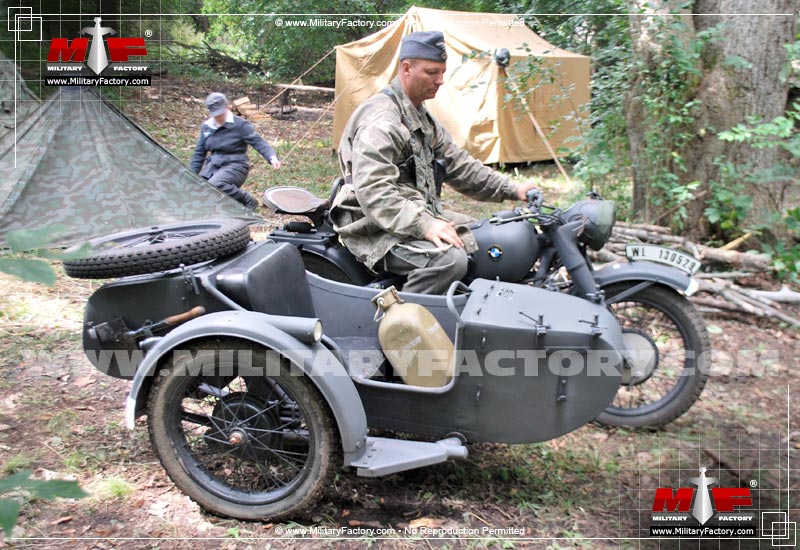
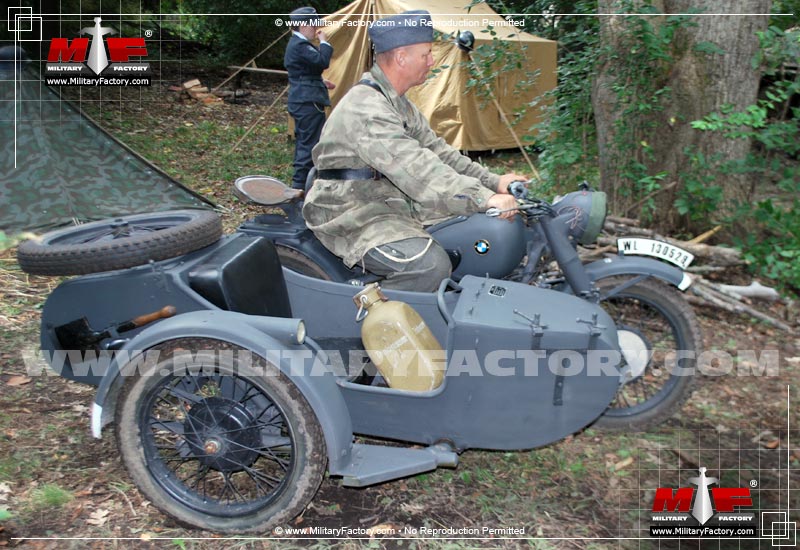
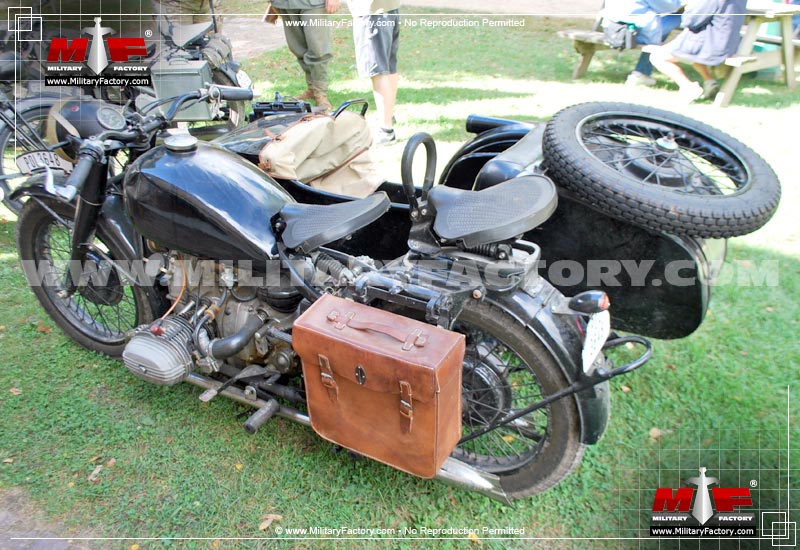
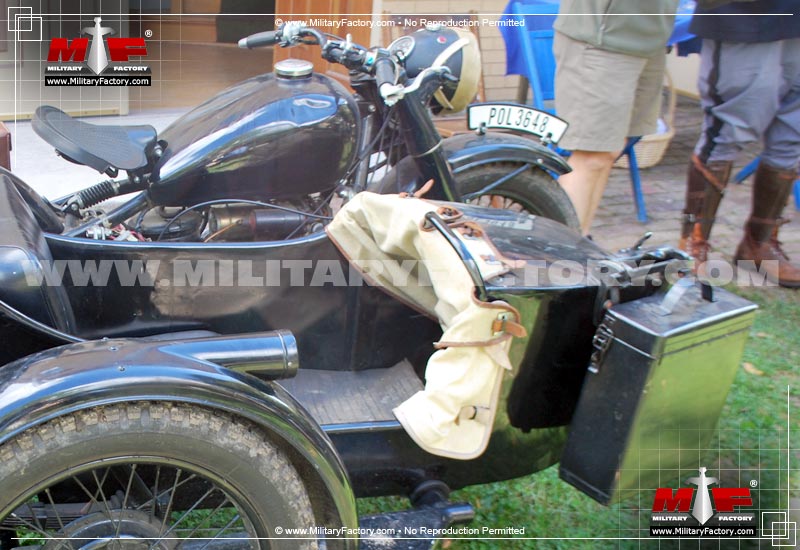
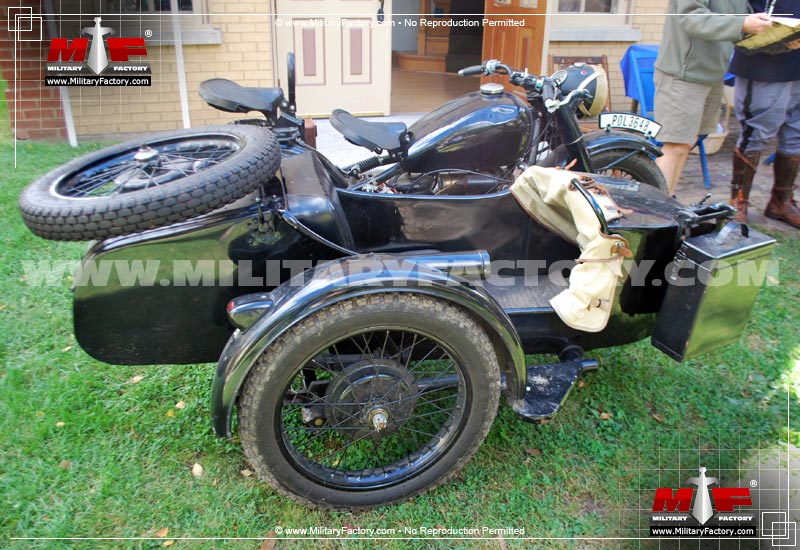
The motorcycle with sidecar was popularized in the inherent mobility of German Army, especially in the early stages of World War 2. These type of military motorcycles came in three classes fitting light, medium and heavy categorizations and were divided into these groupings by their respective cc output - 350cc or less, 500cc or less, and 500c or more - respectively. BMW was one of the major producers of such military motorcycle types and delivered the R75 in 1940. The R75 went on to earn the recognition and respect of all participants and students of World War 2, becoming one of the most popular military motorcycle designs anywhere in the world.
The R75 series was designed and developed by German firm BMW, now a popular luxury brand automotive manufacturer. The R75 was born as a battlefield motorcycle from the beginning and, thusly, special attention was taken to ensure a reliable and sturdy product. Previous German experience with mechanized riflemen on motorcycles was used extensively in the design of the new machine. The R75 debuted with the German Army in 1941.
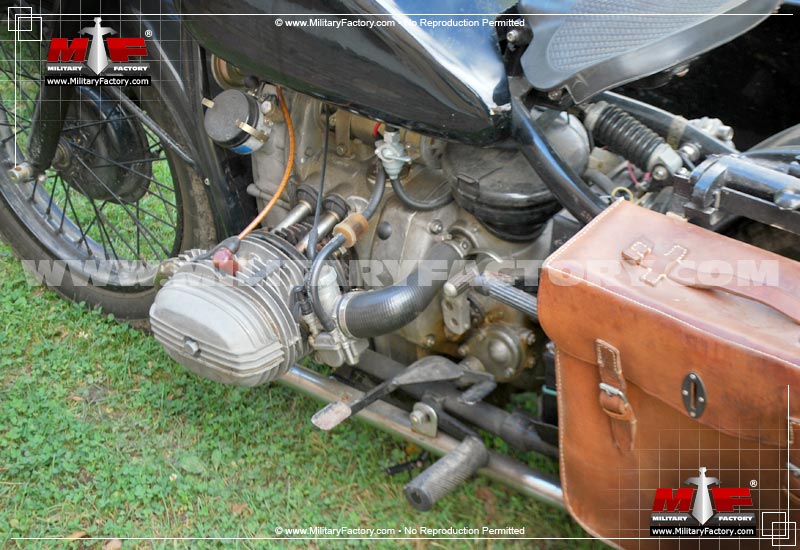
The BMW R 75 was powered by a BMW two-cylinder, four-stroke single horizontally-opposed air-cooled engine of 26 horsepower delivering some 746cc. Fuel capacity was 24 liters and maximum speed was up to 57 miles per hour with the sidecar in place. As soon as it entered service, BMW looked to improve the design and did away with the transmission-mounted air filter, relocating this instead to the gas tank in early 1941 - keeping the filter further up and away from road dust. Experience in the dust and deserts of North Africa soon saw a change from metal fork covers to rubber ones as well.
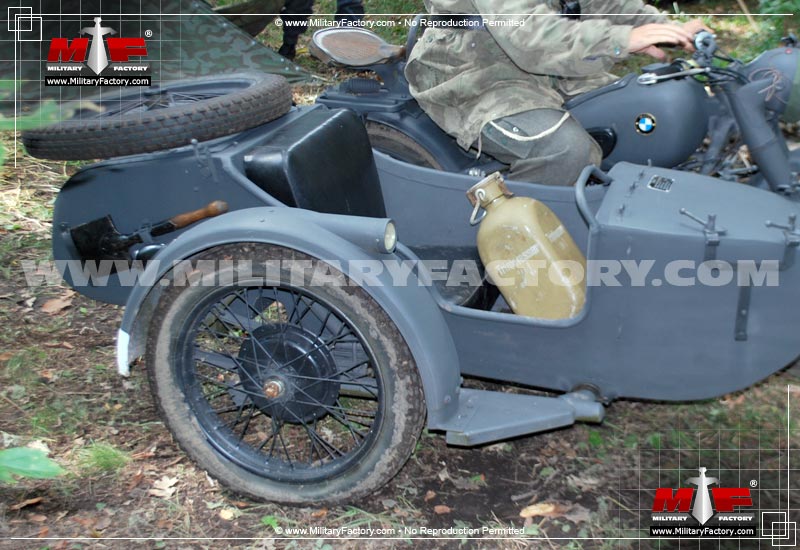
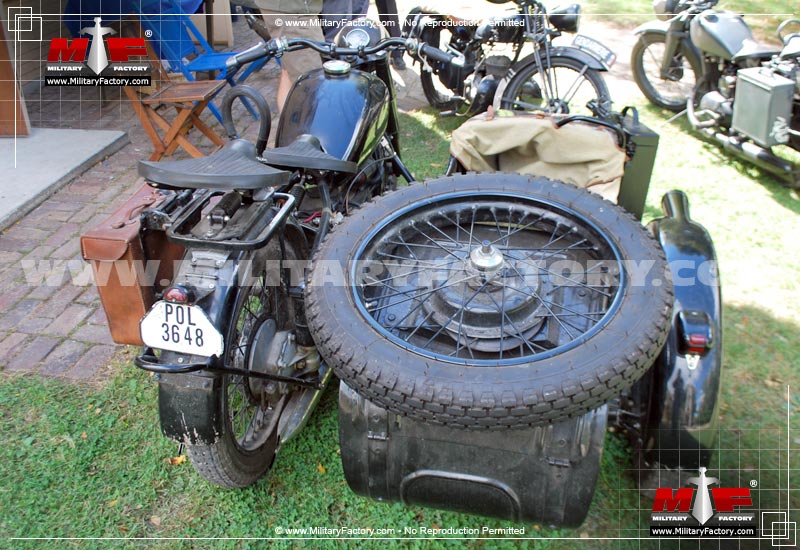
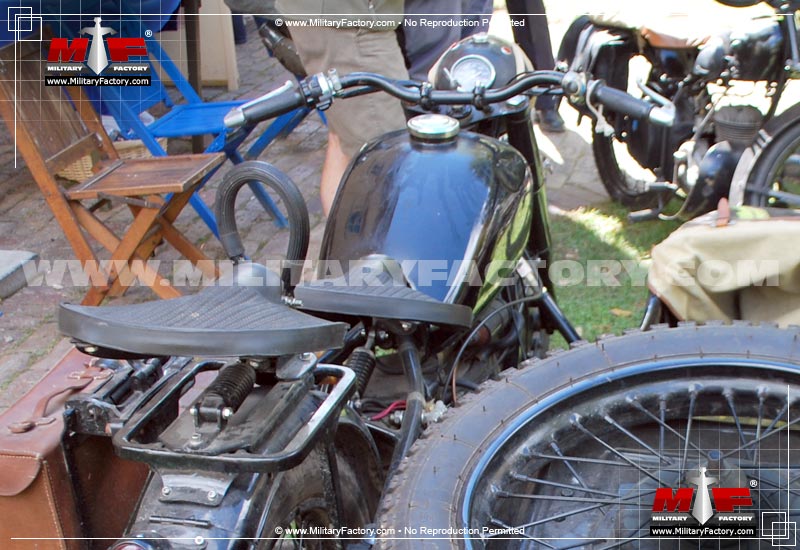
The R75 series was designed for up to three people maximum - a driver and at least one passenger - and fitted with a permanently-mounted sidecar attachment. The sidecar was often times seen with a machine gun mount to accept the MG34 general purpose machine gun in the self-defense role. The passenger rode in relative comfort for the sidecar was fully powered and offered heating for hands and feet alike - proving highly useful in the freezing climates of the Eastern Front. A spare tire was almost always carried at the rear of the side car, as were any other equipment and supplies. Stowage bags could be affixed to the sidecar side facings as needed. A headlight served the driver during night hours.
Initial operations of the R75 saw it fulfill the menial battlefield role of "tow mule" for paratrooper units of the German Army. The R75 was envisioned from the beginning to tow portable wheeled artillery systems or large supplies for paratroopers that were generally lightly armed themselves, thusly relying on air-drops or other light vehicles for assistance in mobilization. Once it was discovered that the relative lightweight of the R75 negated any kind of towing capacity they may have, these motorcycles were primarily used for fast, two-man scouting and reconnaissance duties within specially-formed German Army motorcycle groups.
The BMW R75 proved a reliable battlefield system - a strong design for the gritty nature of war - and could traverse both on road and off road with equal fervor. The systems were, however, expensive to produce compared to other reconnaissance vehicles though some 16,510 R75 series motorcycles were ultimately delivered by BMW by the end of the war.
Power & Performance Those special qualities that separate one land system design from another. Performance specifications presented assume optimal operating conditions for the BMW R75 Heavy Military Motorcycle with Sidecar.
1 x BMW 2-cylinder, 4-stroke, air-cooled, 746cc horizontally-opposed engine developing 26 horsepower at 4,400rpm. Installed Power
58 mph 93 kph Road Speed
215 miles 346 km Range
Structure The physical qualities of the BMW R75 Heavy Military Motorcycle with Sidecar.
1 to 3 (MANNED) Crew
7.9 ft 2.4 meters O/A Length
5.6 ft 1.72 meters O/A Width
3.3 ft 1 meters O/A Height
926 lb 420 kg | 0.0 tons Weight
Armament & Ammunition Available supported armament, ammunition, and special-mission equipment featured in the design of the BMW R75 Heavy Military Motorcycle with Sidecar.
OPTIONAL:
1 x MG34 machine gun though any personal infantry weapons can be assumed.
AMMUNITION: Not Available.
Variants Notable series variants as part of the BMW R75 family line.
R75 - Base Series Designation
Operators Global customers who have evaluated and/or operated the BMW R75. Nations are displayed by flag, each linked to their respective national land systems listing.
Total Production: 16,510 Units Contractor(s): BMW - Nazi Germany
[ Nazi Germany ]
1 / 10
Image copyright www.MilitaryFactory.com; No Reproduction Permitted.
2 / 10
Image copyright www.MilitaryFactory.com; No Reproduction Permitted.
3 / 10
Image copyright www.MilitaryFactory.com; No Reproduction Permitted.
4 / 10
Image copyright www.MilitaryFactory.com; No Reproduction Permitted.
5 / 10
Image copyright www.MilitaryFactory.com; No Reproduction Permitted.
6 / 10
Image copyright www.MilitaryFactory.com; No Reproduction Permitted.
7 / 10
Image copyright www.MilitaryFactory.com; No Reproduction Permitted.
8 / 10
Image copyright www.MilitaryFactory.com; No Reproduction Permitted.
9 / 10
Image copyright www.MilitaryFactory.com; No Reproduction Permitted.
10 / 10
Image copyright www.MilitaryFactory.com; No Reproduction Permitted.
The "Military Factory" name and MilitaryFactory.com logo are registered ® U.S. trademarks protected by all applicable domestic and international intellectual property laws. All written content, illustrations, and photography are unique to this website (unless where indicated) and not for reuse/reproduction in any form. Material presented throughout this website is for historical and entertainment value only and should not to be construed as usable for hardware restoration, maintenance, or general operation. We do not sell any of the items showcased on this site. Please direct all other inquiries to militaryfactory AT gmail.com. No A.I. was used in the generation of this content.