Global Firepower | Military Industrial Complex | Second World War History
Home | Military Pay Scale Chart | Aircraft | Infantry Weapons | Military Vehicles | Navy Ships | Military Education | French Military Victories | Military Ranks | WW2 Weapons
Military Factory Latest from Military Factory
Thumbnail picture of the Dardo infantry fighting vehicle
Dardo IFV
Thumbnail picture of the Supermarine Scimitar fighter
Supermarine Scimitar
Thumbnail picture of the Centauro B1 8x8 tank killer
Centauro 8x8
Thumbnail picture of the Novi Avion fighter
Novi Avion
Thumbnail picture of the FR F2 bolt-action sniper rifle
FR F2
Thumbnail picture of the Lebel Model 1886 bolt-action rifle
Lebel Model 1886
2009 Military Pay Scale Chart - for Army, Navy, Air Force and Marines
  BY DECADE
    · 1910 to 1919
    · 1920 to 1929
    · 1930 to 1939
    · 1940 to 1949
    · 1950 to 1959
    · 1960 to 1969
    · 1970 to 1979
    · 1980 to 1989
    · 1990 to 1999
    · 2000 and Beyond
    · View All
  BY TYPE
    · 4-Wheeled
    · 6-Wheeled
    · 8-Wheeled
    · Anti-Aircraft
    · Anti-Tank
    · APCs
    · Halftracks
    · Heavy Tanks
    · IFVs
    · Light Tanks
    · Main Battle Tanks
    · Medium Tanks
    · Recon Vehicles
    · Special Purpose
    · SPGs
    · Towed Artillery
    · Utility Vehicles
  WORLD WAR 2
    · Full List
    · Tanks
    · IFVs
    · Tank Destroyers
    · Australia
    · Britain
    · Canada
    · France
    · Germany
    · Italy
    · Japan
    · Soviet Union
    · USA
  WORLD WAR 1
    · Full List
    · France
    · Imperial Germany
    · United Kingdom
    · United States
    · Tanks
  KOREAN WAR
    · Full List
  VIETNAM WAR
    · Full List

MilitaryFactory > Armored Vehicles > Buffalo H Mine Resistant Ambush Protected Vehicle (MRAP)
 
 
QuickGraphs Chassis Types CompareX2 Acronyms

Buffalo H Mine Resistant Ambush Protected Vehicle (MRAP)

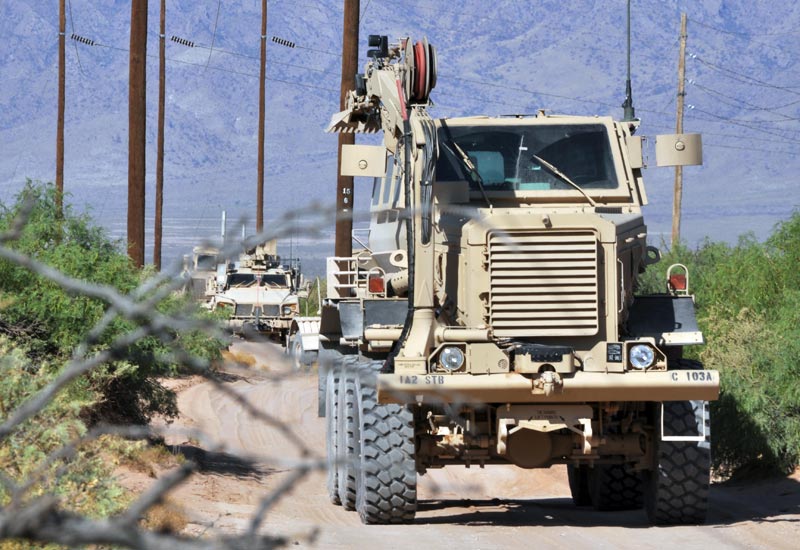
The Buffalo H is one of the Category 3 class MRAP vehicles available.
By Staff Writer

Bookmark and Share

The Buffalo H MRAP is a relatively new class of armored vehicle (in the American inventory at least) brought about by the necessity encountered in the current Iraq War. Heavy utilization of enemy IED systems were shown to be highly effective against the lightly armed and armored HUMVEE units used across the country. Insurgent warfare targeted these lightly armored convoys that moved through the dense streets and open country roads, necessitating the need to "up armor" HUMVEE units to some extent. Though minimally successful, the HUMVEE as a whole is now being replaced by the MRAP units in this role.

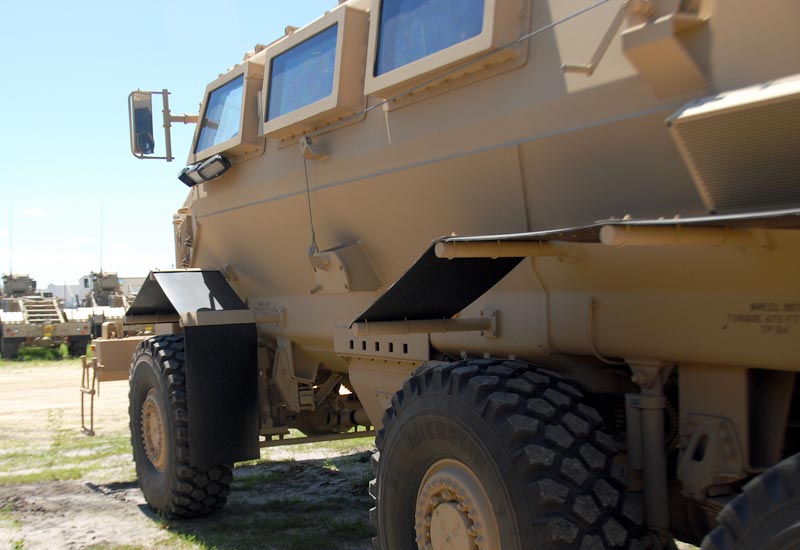
MRAP systems are designed with a V-shaped hull that theoretically and in practice have shown to deflect the deadliest part of an explosion. At most, damage to the underside working components of a vehicle have been documented though no fatalities have been recorded from IED explosions targeting MRAPs. One particular story has one MRAP vehicle surviving no fewer than four targeted attacks, resulting in no fatal injuries, with the system still in service. This type of durability has edged the MRAP into full-scale frontline service particularly with the United States Marines in Iraq.

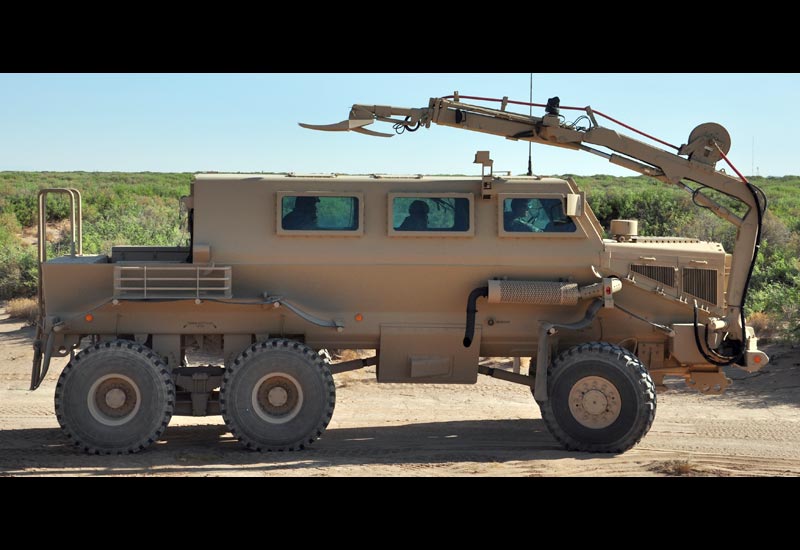
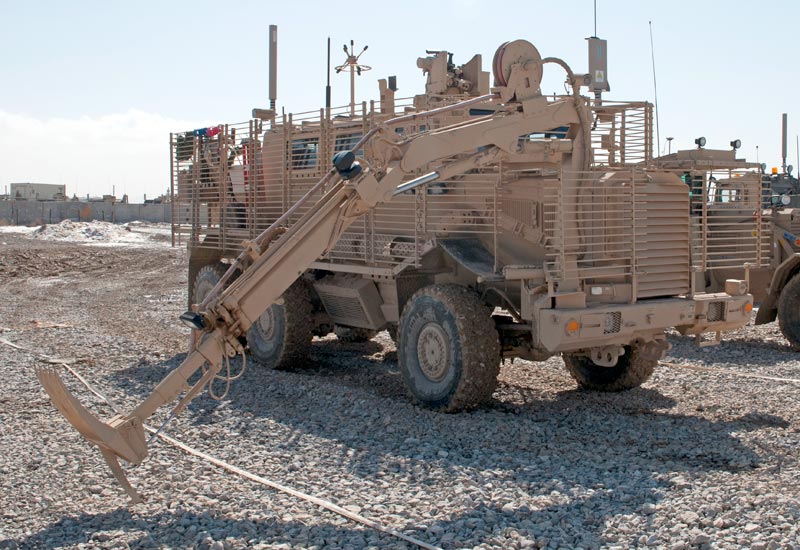
The six-wheeled Buffalo vehicle is also designed to "efficiently" rollover when hit with a blast. This type of design implementation assists in keeping the system's passengers alive, even from a complete 360 degree rollover situation. Additionally, all passengers are allotted a harness similar to those found in race cars for increased passenger stability in the event of a mine or IED strike from below or from the side of the vehicle.

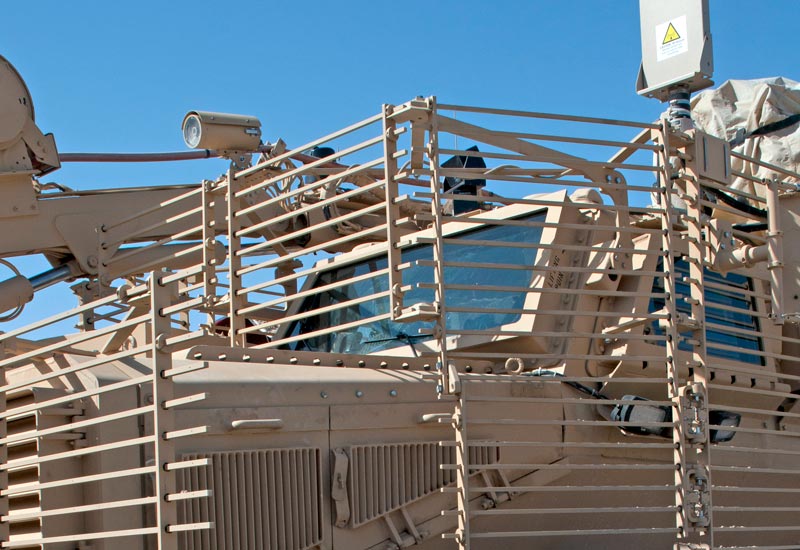
The high profile of the Buffalo MRAP system provides an advantage, particularly in the windowed gun ports. No longer are troops directed out of the safety of their armored vehicle to counter oncoming enemy fire. Instead, infantrymen can now safely shoot from inside the MRAP while viewing the action from the safety of the thick glass window ports. Comparatively, HUMVEE soldiers are exposed either from their .50 caliber perch atop the vehicle or trying to engage a hidden enemy from behind their bulky fabric or light armor doors with minimal overall visibility of the action.

The concept of the V-shaped mono-hull chassis is nearly forty years old and was first developed in South Africa to counter land mines throughout the Bush Wars there. The idea then, as it still relates today, was to protect the main operating area of the hull - including passengers - at the risk of losing an axel or a wheel or two. The result would be a crew that is kept relatively safe and alive while minimizing structural damage to the vehicle. Needless to say, the vehicle would be out on repair for days to weeks, but compare that to the entire loss of the vehicle and one begins to see the value of an MRAP-type system. The MRAP is fully adaptable as well, and can have it's armament removed in the role of armored transport or medical evacuation unit.

Production totals of the MRAP system as a whole with the United States Marine Corps - as of this writing - is set to achieve 5,000 examples since introduction in the Fall of 2004. Production is further being handled by separate firms to help speed the unit to the frontlines. It remains to be seen what the overall effect of the MRAPs system in Iraq will be though it is a system well valued and seemingly priceless when considering the number of deaths encountered by coalition troops from enemy IEDs.

MRAP systems take on many forms and include the Cougar H 4x4 vehicle, the Caiman, the BAe Systems RG-31 and RG-33 systems in the Category 1 class. Category 2 class MRAPs include the Cougar HE 6x6, the BAe Systems RG-33L 6x6 vehicle, the GDLS RG-31E, the Golan armored vehicle, the MaxxPro XL and the Caiman. These vehicles are all either in service all ready or scheduled for production. Category III MRAPs at this time consist of the single Buffalo H system courtesy of Force Protection.

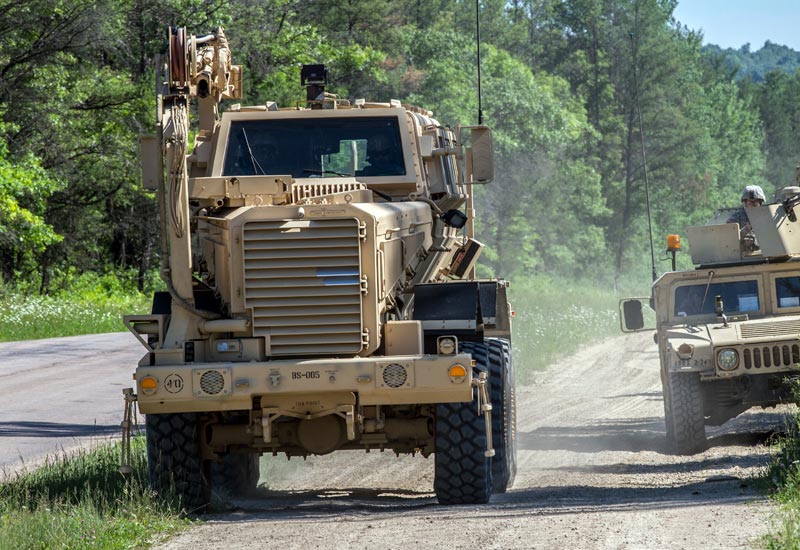
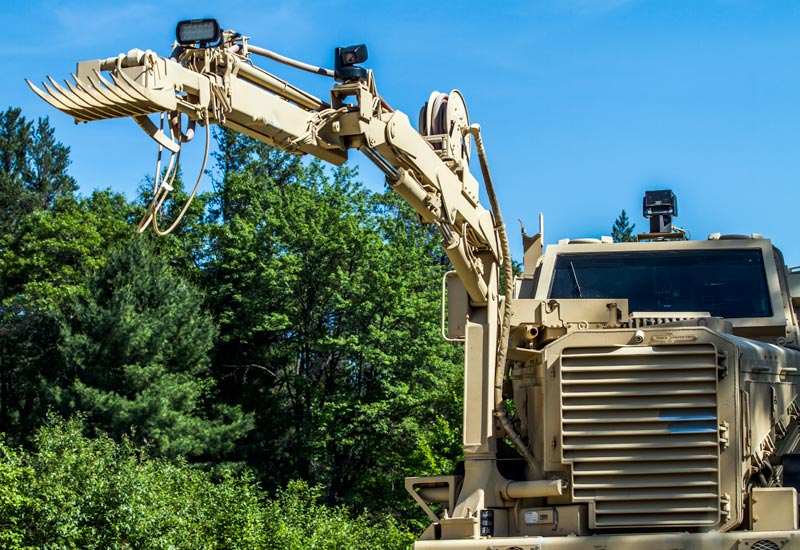
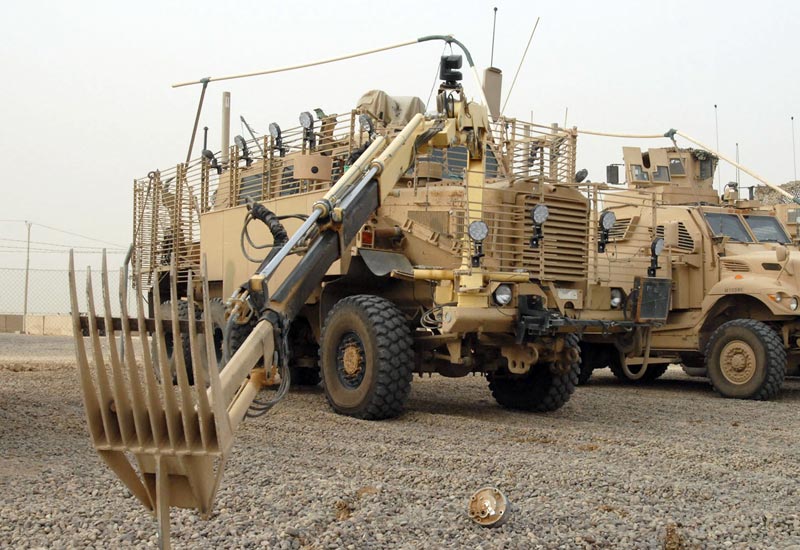
Statistics shown below reflect those of the Force Protection Industries "Buffalo" MRAP system. Buffaloes feature a remote manipulator arm for EOD service. It is based on the South African Casspir MRAP vehicle. Protection afforded the crew of the Buffalo include RPG-7 rocket propelled grenade attacks, 7.62mm NATO ammunition hits and mine / IED explosions.

History text ©2003-2009 www.MilitaryFactory.com • All Rights Reserved • No Reproduction Without Permission • Corrections / Comments to MilitaryFactory at Gmail dot com


  Specifications for the
arrow downDimensions:
Length: 26.90ft (8.20m)
Width:8.50ft (2.59m)
Height: 12.99ft (3.96m)

arrow downStructure:
Accommodation: 2 + 4
Weight:22.7US Short Tons (20,556kg; 45,318lbs)

arrow downPerformance:
Speed: 65mph (105km/h)
Range: 300miles (483km)

arrow downSystems:
NBC Protection: Not Available
Nightvision: Not Available

arrow downPower:
Engine(s): 1 x Mack ASET AI-400 engine generating 450hp.

arrow downArmament Suite:

Mission-Specific.

AMMUNITION:
Mission-Specific.


QuickGraphs Chassis Types CompareX2 Acronyms

  Special Armored Vehicles Collections

By Nation:
Afghanistan Tanks
American Tanks
British Tanks
Iran Tanks
Iraq Tanks
Israeli Tanks
Russian Tanks

Miscellaneous:
Cold War Tanks
Modern Tanks


  Recent Armored Vehicle Additions
Thumbnail picture of the Dardo infantry fighting vehicle
Dardo IFV
Thumbnail picture of the Centauro B1 8x8 tank killer
Centauro 8x8
Thumbnail picture of the Vickers 6-Ton Mark E light tank
Vickers 6-Ton

  Contacting MilitaryFactory.com
We can only get better if you tell us how. You can contact MilitaryFactory.com at MilitaryFactory at gmail dot com (replace "at" with "@" and "dot with ".") with any questions, comments or corrections. We also accept related military imagery that you approve for us to use on our website. Keep in mind, however, that due to volume, we may not directly respond to your inquiry. Please add us to your list of non-blocked recipients!

Main Battle Tanks

  Armored Vehicle Quick Profile


Image Courtesy of the United States Department of Defense.


flag of United States
2004
Designation: Buffalo H Mine Resistant Ambush Protected Vehicle (MRAP)
Classification Type: Multi-Purpose Armored Vehicle
Contractor: Force Protection Industries (among others) - USA

Country of Origin: United States
Number Built: Not Available

Operators: the United Kingdom and the United States of America.


  Variants
MRAP Category I Mine Resistant Utility Vehicle (MRAP-MRUV) - A lighter MRAP vehicle built to smaller specifications specializing in urban warfare environments.

MRAP Category II Joint Explosive Ordnance Disposal Rapid Response Vehicle (MRAP-JERRV) - A multi-faceted platform capable of a variety of lead-in and support missions including battlefield ambulance, armored transport and explosive ordnance disposal.

MRAP Category III

  Collections
  • Tanks of World War 2
  • Armor of the Persian Gulf War
  • Towed Artillery Reigns
  • Armor of the Vietnam War
  • Tanks of World War 1
  • Armor of the Korean War
  • World War 2 Tank Destroyers


Free GI Bill Guide

Top MF Stuff: Military Pay Scale Chart | Military Ranks | World War 2 Weapons | Sniper Rifles | Conversion Calculators


©2009 www.MilitaryFactory.com • Content ©2003-2009 MilitaryFactory.com • All Rights Reserved • Disclaimer Privacy Policy Site Map Origins
Most photographic images appearing on this site are courtesy of the United States Department of Defense and are approved for public use.
Other images acquired through the public domain. Digital art work courtesy of Dan Alex.
Business Consulting by Kyle Williams

Material presented throughout this website is for historical and entertainment value and should not to be construed as usable for
hardware restoration, maintenance or general operation. Please consult manufacturers for such information.

Site Contact: militaryfactory at gmail dot com (replace "at" with "@" and "dot" with ".") eXTReMe Tracker