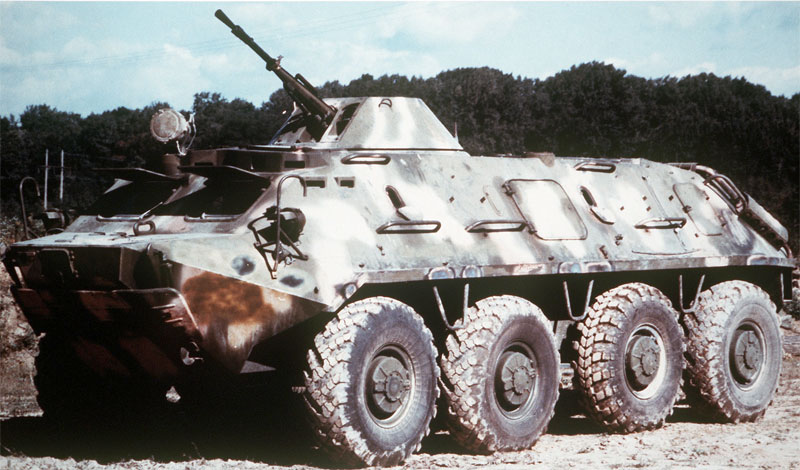
The armored 8x8 wheeled BTR-60 of 1960 was developed as a direct replacement for the 6x6 wheeled BTR-152 series Armored Personnel Carrier (APC) of 1950. The BTR-60 was a major improvement of the previous offering along many fronts, quite revolutionary in fact, and provided the Soviet military with a very capable and highly potent off-road/amphibious performer. The BTR-60 was the first in a long line of modern "BTR-designated" vehicles that included the follow-up BTR-70, BTR-80 and BTR-90 families whose influence went beyond that of the Soviet inventory. The BTR-60 was introduced in December of 1959 and entered serial production in 1960 (hence its designation), with local manufacture running until 1976 to which some 25,000 units were produced. The type was also built under license in Romania (as the TAB-71) which added another 1,872 vehicles into circulation.
Design of the BTR-60, begun in 1955, was largely spurred by the tactical limitations inherent in the BTR-152 and BTR-40 series appearing after World War 2. This initiative was furthered by a major reorganization of Soviet Army formations. The BTR-60 was then developed alongside the more sophisticated and tracked armored "BMP-1" series which saw both produced and utilized in large numbers worldwide. Design of the BTR-60 was attributed to V.A. Dedkov while the "BTR" designation was formed from the word "BroneTRansporter" appropriately translating to "Armored Transport".
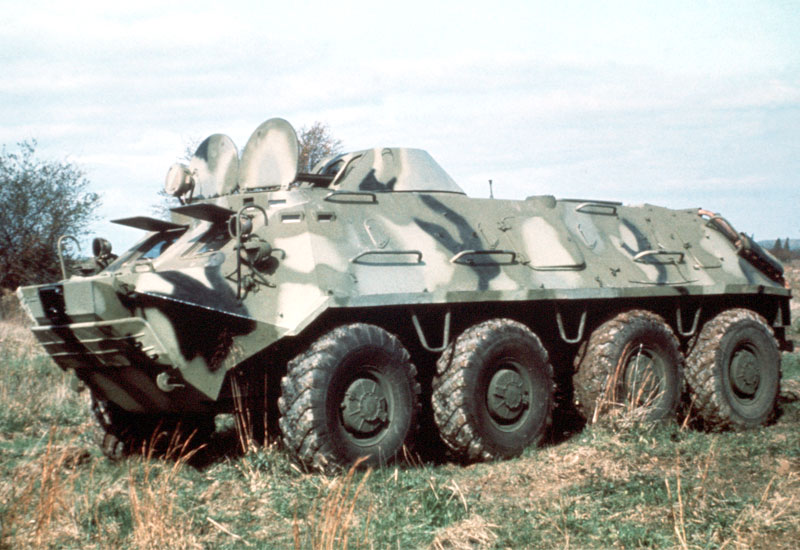
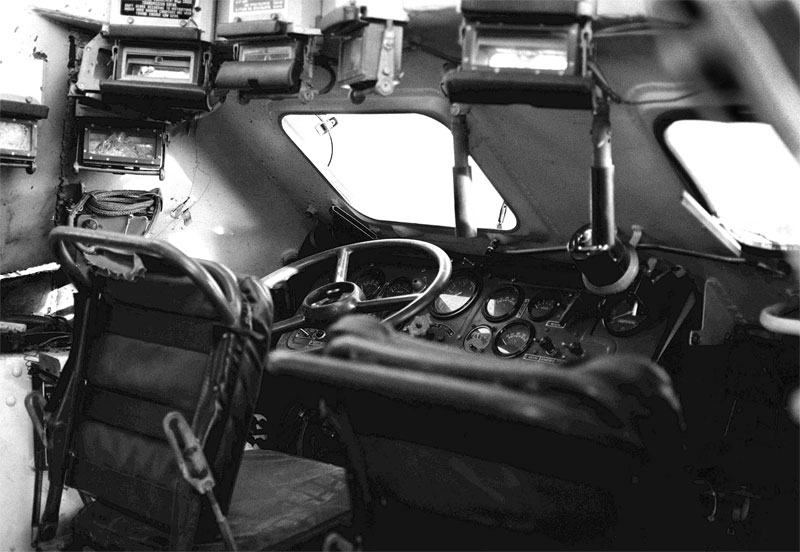
The BTR-60 was highly conventional by modern standards though a grand departure from the norm concerning APCs of the time. The hull was fitted atop an independently suspended chassis which managed eight large road wheels, four to a side (two axles being steerable). The hull was well-shaped of welded steel with a sloped glacis plate, side facings and a squared-off hull roof. Armament was concentrated ahead of center and aft of the driving cabin in a turret emplacement (found primarily in the finalized/evolved production models). Overall weight was approximately 11.4 tons (Short) while the standard operating crew was three personnel (the driver, vehicle commander and dedicated gunner) with optional space for passengers in the central compartment. The fighting compartment allowed for combat-ready infantry to be carried in relative safety, protection against both small arms fire and artillery spray in play and entry/exit through several hinged hatches at the sides and roof of the vehicle. The driver and commander were each afforded a hatch all their own at the front left and right of the vehicle hull. Armor protection ranged from 5mm (hull floor) to 10mm (turret front). Primary armament was a 14.5mm KPVT heavy machine gun with 500 rounds allotted. This was backed by a 7.62mm PKT coaxial machine gun given 3,000 rounds of ammunition.
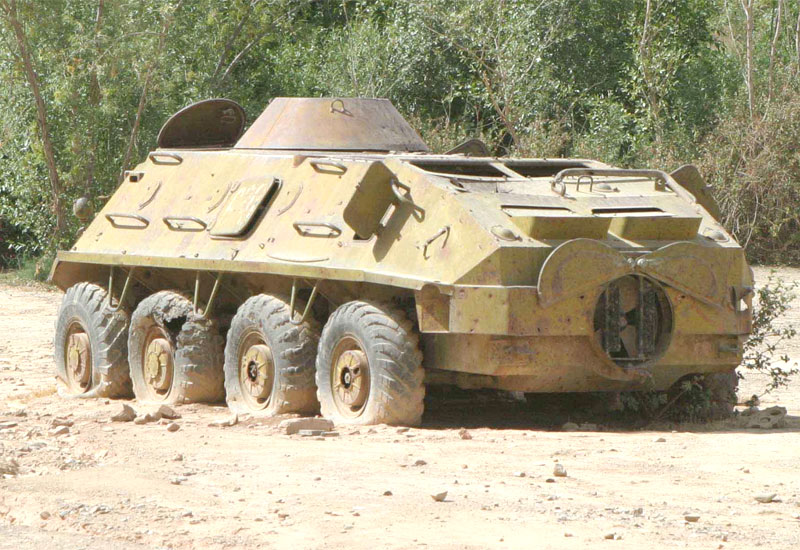
Power for the BTR-60 was served through 2 x GAZ-40P series 6-cylinder gasoline-fueled engines developing 90 horsepower each (180 combined) running at 3,400rpm. The engines were paired at the rear of the hull, prohibiting use of a large powered entry/exit door common to more modern APCs. This afforded the vehicle an operational range of up to 310 miles with a maximum road speed of 50 miles per hour. The BTR-60 was designed with full amphibious qualities in mind (as were many other Soviet vehicles intended to fight in Europe) and could reach 6 miles per hour in water while propelled by a rear mounted jet shrouded by two hinged door plates.
After passing state trials in 1959, the vehicle was formally adopted for service by the Red Army based on the Ob'yekt 1015B prototype which became the initial BTR-60P mark in service. These vehicles showcased seating for 16 personnel and fielded a primary armament of 1 x 7.62mm PKT, SGMB or PKB machine gun with optional 2 x 7.62mm machine gun positions along the sides of the hull. As designed, the P-model featured an open-air hull which gave no protection to the crew and this quickly forced a modified, fully-enclosed form to appear in 1963 as the slightly heavier BTR-60PA. All other qualities remained similar however. Later model BTR-60PA vehicles added provision for the 12.7mm DShK 1938/46 heavy machine gun with 500 rounds of ammunition. This then led to the more refined BTR-60PA-1 production model of slightly increased weight. These were then all followed by the improved BTR-60PAI which incorporated a machine gun-armed turret mounting the 14.5 KPVT heavy machine gun in 1965 (500 rounds of ammunition) while backed by 1 x 7.62mm PKT machine gun in a coaxial mounting. The PAI model reduced the internal seating configuration to 14 passengers (from 16). The final BTR-60 form proved to be the BTR-60PB which was another slightly improved version given refined gunnery sights (with seating for 14).
The BTR-60 was first used in anger by Soviet Army forces in the 1968 Czechoslovakian invasion which formally brought about a permanent Soviet military presence in the country until the dissolution of the Soviet Empire in 1991. The vehicle was used as an armed armored personnel carrier, Infantry Fighting Vehicle (IFV) and scout vehicle for a bulk of its service life before being replaced by the BTR-70 arriving in 1972. These were further bolstered by the arrival of the similar BTR-80 series of 1986 though thousands of BTR-60 series vehicles remained in circulation well into the 1990s. Wide-scale production of the type ensured its operational use in the Soviet-Afghan War spanning 1979 into 1989 though its service there (in a dry, hot and mountainous region) proved mixed for a vehicle designed with the European battlefield in mind. Rocket-Propelled Grenades (RPG) proved one of the biggest threats to BTR-60 vehicles in the conflict particularly where light armor was all that protected occupants. Insurgents grew evermore skillful and patient in ambushes that would ultimately send the Soviet Army away in an unbelievable defeat.
Operational use spanned beyond Soviet service as the BTR-60 was delivered to dozens upon dozens of Soviet-allied states and nations. This included powers across Africa, the Middle East, Asia, Southeast Asia, North America (Mexico) and South America. Many vehicles were grandfathered into former Soviet holdings as proven through Belarus, Czechoslovakia, East Germany, Lithuania, Poland, Romania and the Ukraine.
Soviet factories unleashed a plethora of production models during the vehicle's service life including many subvariants to append major variant marks. Modernization also occurred through the newly-established Russian Federation after the 1991 Soviet collapse. Localized Bulgarian variants included the BTR-60PAU, PB and PB-MD marks (the latter a modernized form). Cuba registered four of its own marks each differing in available armaments. Finland, influenced by the Soviet Union following World War 2, managed four major marks including modernized forms. The East German Army operated various versions of its own and designated local marks under the collective "Schutenpanzerwagen" heading. The Mexican Marines operated a turretless variant under the "APC-70" designation. Romania operated the BTR-60 under the "TAB-71" designation with subvariants to boot. Polish variants were based on the BTR-60PB. The BTR-60PB was also (illegally) produced in China thanks to a reverse-engineering endeavor. Israeli Defence Forces (IDF) captured a slew of BTR-60 armored vehicles in their campaigns against neighboring Egypt and Syria, many converted to suit other battlefield roles in turn.
Former operators of the BTR-60 included Czechoslovakia, Germany (grandfathered versions phased out after reunification), Iraq, Lebanon, Yemen, Yugoslavia and Zaire (the latter now the Democratic Republic of the Congo). The reach of the BTR-60 series ensured its use in a wide range of conflicts beginning with the 1967 Six Day War, the 1971 Indo-Pak War, the 1973 Yom Kippur War, the 1980s Iran-Iraq War, the 1991 Persian Gulf War, the 1st and 2nd Chechen War(s) and more modern conflicts such as the American-led invasions of both Afghanistan and Iraq. American forces found familiarity with the vehicle decades earlier during the 1983 US Invasion of Grenada. The BTR-60 has also seen use in the recent Libyan Civil War and the (still ongoing, 2013) Syrian Civil War of 2011.
Over 40 countries use, or have used, the BTR-60 series at one time or another making the design a true Cold War success story.
Power & Performance Those special qualities that separate one land system design from another. Performance specifications presented assume optimal operating conditions for the BTR-60 8x8 Armored Personnel Carrier (APC).
2 x GAZ-49B 6-Cylinder in-line water-cooled, gasoline-fueled engine developing 90 horsepower at 3,400rpm each driving conventional all-wheeled / 8x8 wheeled arrangement. Installed Power
50 mph 80 kph Road Speed
373 miles 600 km Range
Structure The physical qualities of the BTR-60 8x8 Armored Personnel Carrier (APC).
2 (MANNED) Crew
24.7 ft 7.54 meters O/A Length
9.2 ft 2.8 meters O/A Width
7.6 ft 2.32 meters O/A Height
25,353 lb 11,500 kg | 12.7 tons Weight
Armament & Ammunition Available supported armament, ammunition, and special-mission equipment featured in the design of the BTR-60 8x8 Armored Personnel Carrier (APC).
1 x 14.5mm KPVT heavy machine gun.
1 x 7.62mm PKT machine gun in co-axial mounting.
AMMUNITION: 500 x 14.5mm Ammunition.
2,000 x 7.62mm Ammunition.
Variants Notable series variants as part of the BTR-60 family line.
BTR-60P - Early Production Vehicle featuring open roof and various machine gun arrangements.
BTR-60PA - Second Production Vehicle featuring closed roof compartment and NBC system.
BTR-60P - Utilizes the OT-64C(1) turret as found on the BRDM-2 Armored Scout Car.
BTR-60PBK - Commander's Vehicle
BTR-60 1V18 - Artillery Observation Vehicle
BTR-60 1V19 - Fire Direction Vehicle
BTR-60-R-409BM - Communications Vehicle
BTR-60AVS - Command Post Vehicle
BTR-60PAU - Artillery Communications Vehicle
BTR-60PU-12M - Air Defence Command and Control Vehicle.
BTR-60 VVS - Command Post Vehicle
BTR-60 ACVR M1979(2) - Artillery Tow Vehicle
BTR-60PU - Commander's Vehicle
BTR-60PU-12 - Command Vehicle with extra storage, telescopic communications mast and power generator.
BTR-60 ACRV - Artillery Command and Reconnaissance Vehicle
Operators Global customers who have evaluated and/or operated the BTR-60. Nations are displayed by flag, each linked to their respective national land systems listing.
Total Production: 26,872 Units Contractor(s): Gorkiy Automobile Plant (Gorkiy) - Soviet Union / Russia
The "Military Factory" name and MilitaryFactory.com logo are registered ® U.S. trademarks protected by all applicable domestic and international intellectual property laws. All written content, illustrations, and photography are unique to this website (unless where indicated) and not for reuse/reproduction in any form. Material presented throughout this website is for historical and entertainment value only and should not to be construed as usable for hardware restoration, maintenance, or general operation. We do not sell any of the items showcased on this site. Please direct all other inquiries to militaryfactory AT gmail.com. No A.I. was used in the generation of this content.