Military Factory
Military Pay Chart
Global Firepower
Military Industrial Complex
Second World War
Home
Military Pay Scale
Military Ranks
Small Arms
Aircraft
Land Systems
Navy
Education
Military Factory Facebook Logo
flag of France

Bloch MB.150 (Series) Fighter (1939)

Authored By Staff Writer | Last Updated: 1/22/2013

The French Bloch MB.150 series of fighter aircraft was limited by the German invasion - and subsequent German victory - in the summer of 1940.

Find a School Near You
Follow Military Factory on Facebook:
Trending on Military Factory:
Recent Articles:
Little MF Logo
Little MF Logo
Little MF Logo
Little MF Logo
Little MF Logo
Little MF Logo
Little MF Logo
Little MF Logo
Little MF Logo
Little MF Logo
The Bloch MB.150 was a family of modern, all-metal monoplane fighter types developed for the French Air Force prior to World War 2. The aircraft was developed to a 1934 French Air Force requirement for a new fighter/interceptor mount capable of speeds nearing 300 miles per hour and armed with machine guns and cannon. The endeavor pitted several French-based aviation firms against one another to showcase possible solutions. Among these was Societe des Avions Marcel Bloch (better known simply as "Bloch") with its single-seat, single engine monoplane MB.150. However, the government contract was given to competitor Morane-Saulnier whose streamlined MS 406 went on to see 1,176 examples produced with introduction into service occurring in 1938.

MB.150 Development

Undeterred, Bloch technicians continued supporting the MB.150 project to which a completed prototype, suffering from major issues, was unable to leave the ground on a proposed first flight in 1936. By 1937, engineers had installed a more powerful engine coupled with a new three-bladed propeller, revised wing elements and a new undercarriage which finally allowed the prototype to achieve the momentous event of a first flight during October. The French Air Force developed some interest in the Bloch project and intended to evaluate the type into 1938. The result of these tests produced a procurement order for 25 aircraft - though none would be based on the original prototype. Instead, the design focus had shifted on a pair of more capable prototypes in development - the MB.151 and the MB.152 fitted with Gnome-Rhone 14N-35 and 14N-25 engines respectively. The MB.152 entered French Air Force service as the MB.151.C1 with the MB.152 as the MB.152.C1. The aircraft proved comparable to the American Curtiss P.36 of the period.

MB.152 Power

The Bloch MB.152 proved the definitive production model with nearly 500 produced. This version was powered by a Gnome-Rhone 14N-25/-49 series air cooled radial piston engine outputting at 1,080/1,100 horsepower depending on fitting. This was coupled to a three-bladed variable fixed propeller assembly. The combination supplied the aircraft with a top speed of 316 miles per hour (280mph cruising) with a range of 370 miles and service ceiling of 32,800 feet.

MB.150 Series Armament Options

Standard armament for the MB.150 series varied somewhat as certain forms were finished with 4 x 7.5mm MAC 1934 M39 machine guns and others with 2 x 20mm Hispano-Suiza HS.404 cannons and 2 x 7.5mm MAC 1934 M39 machine guns. The latter form was undoubtedly the more potent variant.

MB.150 Walk-Around

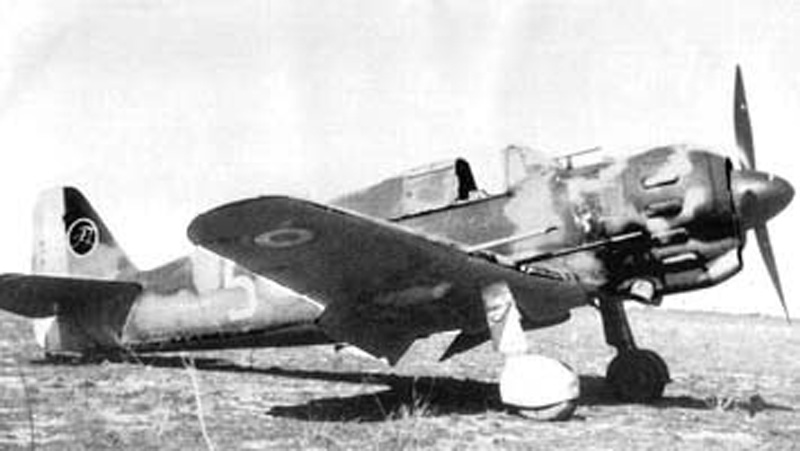
As a whole, the MB.150 family of fighters were all-modern designs consisting of all-metal skin and understructure construction with low-set monoplane wing appendages. The wings were straight in their general design with rounded tips and set well-forward of amidships. The engine was fitted to the extreme forward section of the fuselage in a traditional manner, powering a three-bladed propeller installation. Interestingly, the cockpit was also situated well-forward in the design, shortening the visual obstacle that was the engine compartment to some extent. However, views were still obstructed by the short engine housing to the front, the wings to the lower sides and the raised fuselage spine aft of the cockpit. The canopy was completely enclosed as a two-piece assembly with the rear section sliding rearwards for access. The fuselage tapered at the rear to which a single vertical tail fin was affixed along with mid-mounted horizontal tailplanes. The undercarriage was retractable and of the "tail-dragger" arrangement consisting of two main single-wheeled landing gear legs and a diminutive tail wheel leg at the rear. As in similar tail-dragger aircraft designs, ground taxiing proved a challenge in itself with the pronounced "nose-up" appearance. Key qualities that made the MB.150 a "modern design" for the time were its retractable undercarriage, enclosed cockpit, use of metal skin construction and implementation of prominent monoplane wings.

MB.150 Variants

The MB.150 was born out of the single MB.150.01 prototype which was powered by the Gnome-Rhone 14N-07 series radial piston engine. The MB.151 existed in its MB.151.01 prototype form which begat the MB.151.C1 production model and its Gnome-Rhone 14N-35 series engines. Some 144 examples of the type were completed. The MB.152 was born as the MB.152.01 prototype and was offered as the MB.152.C1 production form with its Gnome-Rhone 14N.25 engine of 1,050 horsepower. 482 examples of this type were delivered. The MB.155 proved the last definitive production form and was based on the MB.155.01 prototype which, in turn, was born from the MB.152. Power was supplied by a Gnome-Rhone 14N-49 series engine and 35 examples were produced.

Abandoned, Failed or Cancelled MB.150 Developments

The MB.153 was a one-off prototype fitted with the American Pratt & Whitney R.1830 Twin Wasp radial engine. The MB.154 was a proposed variant fitting the Wright R.1820 radial piston engine which fell to naught. The MB.156 proved another abandoned model though fitted with a Gnome-Rhone 14R series radial. The MB.157 could have proven the ultimate MB.150 form had France not fallen to Germany in 1940. The MB.157 was born from the MB.152 and fitted with the Gnome-Rhone 14R-4 radial of 1,580 horsepower.

The MB.150 Series and World War 2

World War 2 could not have come at a worse time for the French military. Much of its doctrine and command was still entrenched in a World War 1 mentality while many modern systems languished in development hampered by political maneuverings and labor strife. As such, many capable weapons were still in design phases, entering trials or undergoing slow production at limited rates at the time of the German invasion. Such a fate befell the MB.150 series as only 120 examples of MB.151 and MB.152 fighters were available and a only very few were actually air worthy, lacking key components such as propellers. Nine French Air Force fighter squadrons were eventually formed from the two production marks while the Greece Air Force managed an order of 25 MB.151 aircraft though only nine systems were ever delivered, these fighting on into April 1941.

Bloch continued strengthening the MB.150 line and this produced the MB.155 with a revised engine cowling, altered wings and a relocated cockpit moved aft to create additional internal volume for fuel. The aircraft emerged as the MB.155.C1 and entered production in 1940. However, this initiative proved too little too late for the Battle of France, and the ultimate fall of the nation in June of 1940, would severely hamper MB.155 availability for the French. The battle lasted just one month and a half and only ten MB.155s were available. An armistice signed between France and Germany gave control of military production lines to the Germans to which the lines were then used to strengthen allied Vichy French inventories. An additional 25 MB.155 aircraft were added to stocks while eight Vichy French fighter groups were assigned MB.150s. At one point, the German Luftwaffe themselves managed two MB.150 fighter groups. After the Vichy air groups were disbanded in December of 1942, MB.150s were sent to Romania to fight under the Axis banner. The Polish Air Force in exile operated MB.150 series in the war as well, rounding out the list of available operators.

In practice, the MB.150 series proved only a serviceable mount in the context of World War 2 fighting. The aircraft held enough power, stability and firepower to make a case for itself though it was not an agile beast and eventually outmoded by the excellent German Messerschmitt Bf 109 fighters. While Bloch regularly updated engine output, the design was set in a 1930s mind-set that failed to progress in time for total war. The German invasion only served to completely hamper the MB.150 series as a whole and shorten its usefulness considerably. Only the incomplete MB.157 mark was the true thoroughbred performer of the family line and this variant was taken over by the Germans (tested and completed) but never mass-produced. The prototype was eventually lost in an Allied bombing raid.

As it stood, the MB.152 marks proved the most combat-experienced of the group, accounting for nearly 190 enemy aircraft destroyed in subsequent fighting. Conversely, nearly 90 of the type were lost which showcased the series' ineffectiveness in the thick of battle. Final MB.150s were flown in anger into 1944 where liberated airframes were reconstituted for French Air Force service after Allied gains cleared regions of the Axis presence. These were poetically used against the depleted and retreating German forces for a period longer.

Fewer than 670 MB.150 series aircraft were produced in all marks and prototype/testing forms.
Text ©2003-2013 www.MilitaryFactory.com • All Rights Reserved • No Reproduction Permitted
MilitaryFactory.com does NOT sell equipment/weaponry. Material presented throughout this website is for historical and entertainment value and should not to be construed as usable for hardware restoration, maintenance or general operation. Please consult manufacturers for such information. Our disclaimer. Email corrections / Comments to MilitaryFactory at Gmail dot com.
Picture of Bloch MB.150 (Series)
View All Images (1)

Specifications for the
Bloch MB.150 (Series)
Fighter


Country of Origin: France
Manufacturer: Societe des Avions Marcel Bloch - France
Initial Year of Service: 1939
Production: 668


Focus Model: Bloch MB.152C.1
Crew: 1


Length: 29.86ft (9.1m)
Width: 34.58ft (10.54m)
Height: 9.94ft (3.03m)
Weight (Empty): 10,494lbs (4,760kg)
Weight (MTOW): 13,603lbs (6,170kg)


Powerplant: 1 x Gnome-Rhone 14N-25 14-cylinder air-cooled radial piston engine developing 1,080 horsepower OR 1 x Gnome-Rhone 14N-49 radial piston engine developing 1,100 horsepower.


Maximum Speed: 316mph (509kmh; 275kts)
Maximum Range: 373miles (600km)
Service Ceiling: 32,808ft (10,000m; 6.2miles)
Rate-of-Climb: 1,885 feet per minute (575m/min)


Hardpoints: 0
Armament Suite:
STANDARD:
2 x 20mm Hispano-Suiza HS.404 cannons
2 x 7.5mm MAC 1934 M39 machine guns

ALTERNATIVE:
4 x 7.5mm MAC 1934 M39 machine guns


Variants:
MB.150 - Base Series Designation


MB.150.01 - Initial series prototype; Gnome-Rhone 14N-07 radial piston engine; single example produced.

MB.151.01 - Second Prototype; Gnome-Rhone 14N-35 engine.

MB.151.C1 - Production designation of MB.151.01 prototype; 144 examples produced.

MB.152.01 - Third Prototype; Gnome-Rhone 14N-25 engine.

MB.152.C1 - Production designation of MB.152.01 prototype; 482 examples produced.

MB.153 - One-off prototype fitting Pratt & Whitney R.1830 Twin Wasp engine.

MB.154 - Proposed variant fitting Wright R.1820 Cyclone engine; never produced.

MB.155.01 - Prototype based on the MB.152 and MB.155.C1; fitted with Gnome-Rhone 14N.49 engine.

MB.155.C1 - Production designation of MB.155.01 prototype; 35 examples produced.

MB.156 - Proposed variant with Gnome-Rhone 14R engine; never produced.

MB.157 - Proposed variant with Gnome-Rhone 14R-4 engine of 1,580 horsepower; development taken over by Germans; prototype lost in Allied bombing raid.


Operators:
France; Vichy France; Nazi Germany; Greece; Poland; Romania

ALL AIRCRAFT CATEGORIES

BY DECADE:


1900 to 1909
1910 to 1919
1920 to 1929
1930 to 1939
1940 to 1949
1950 to 1959
1960 to 1969
1970 to 1979
1980 to 1989
1990 to 1999
2000 to 2009
2010 to 2019
2020 to 2029
VIEW ALL


BY TYPE:


Anti-Submarine Warfare (ASW)
Attack Helicopters
Bomber Aircraft
Medium Bombers
Heavy Bombers
Close-Air Support (CAS)
Commercial Aircraft
Dive Bombers
Electronic Warfare Aircraft (EWA)
Experimental / X-Planes
Fighter Aircraft
Floatplane Aircraft
Flying Boat Aircraft
Aerial Refueling Tankers
Helicopters (ALL)
Interceptor Aircraft
Multi-Role Aircraft
Navy Carrier Aircraft
Night Fighters
Reconnaissance / Scout
Search & Rescue (SAR)
Scout Helicopters
Special Purpose
Torpedo Bombers
Trainer Aircraft
Transport Aircraft
Transport Helicopters
Unmanned Aerial Vehicles (UAVs)
Unmanned Combat Air Vehicles (UCAVs)


COLLECTIONS:


4th Generation Fighter Aircraft
5th Generation Fighter Aircraft
US X-Planes
Classic US Warbirds
French Military Helicopters
Grumman "Cats"
Howard Hughes Aircraft
Indian Air Force
Israeli Air Force
Libyan Aircraft
Modern Chinese Aircraft
Modern Chinese Fighters
Modern Military Aircraft
Modern North Korean Aircraft
Modern Trainer Aircraft
Modern US Aircraft
Mikoyan Aircraft
Sukhoi Aircraft
Syrian Aircraft
Top 10 Fighter Aircraft of All Time


AIRCRAFT BY CONFLICT:


Arab-Israeli War (1948)
Cuban Missile Crisis (1959-1962)
Falklands War (1982)
Indo-Pak War (1965, 1971)
Iran-Iraq War (1980-1988)
Lebanon War (1982)
Operation Allied Force (1999)
Operation Desert Storm (1991)
Six Day War (1967)
Spanish Civil War (1936)
Soviet-Afghan War (1979-1989)
Yom Kippur War (1973)


MISCELLANEOUS:


Aircraft Cockpit Pictures
Aircraft Comparison Tool
Aircraft Manufacturers
Aircraft Production Totals
Aircraft Timeline

WORLD WAR 2:


1939 Aircraft
1940 Aircraft
1941 Aircraft
1942 Aircraft
1943 Aircraft
1944 Aircraft
1945 Aircraft
1946 Aircraft
Australian Aircraft
Battle of Britain Aircraft
Bombers
Four-Engine Bombers
British Aircraft
British Bombers
British Transports
Dive Bombers
Canadian Aircraft
Fighters
Chinese Aircraft
French Aircraft
German Aircraft
German Fighters
German Flying Boats
German Jets
Secret Weapons of the Luftwaffe
Italian Aircraft
Imperial Japanese Aircraft
Imperial Japanese Fighters
Mitsubishi Bombers
Navy Aircraft
Pearl Harbor
Polish Aircraft
Romanian Aircraft
US Aircraft
US Bombers
US Navy Aircraft
Soviet Aircraft
Torpedo Bombers
Trainer Aircraft
Transport Aircraft
Tuskegee Airmen Aircraft
W.A.S.P. Aircraft
WW2 Aircraft Ranked by Speed
VIEW ALL


WORLD WAR 1:


1914 Aircraft
1915 Aircraft
1916 Aircraft
1917 Aircraft
1918 Aircraft
Aircraft Timeline
Austro-Hungarian Aircraft
Bomber Aircraft
British Aircraft
Fighters
Flying Boats
French Aircraft
Imperial German Aircraft
Italian Aircraft
Scout Aircraft
Russian Empire Aircraft
US Aircraft
WW1 Aircraft Ranked by Speed
VIEW ALL


KOREAN WAR:


Australian Aircraft
Korean War Aces
Korean War Jets
North Korean Aircraft
US Military Aircraft
VIEW ALL


VIETNAM WAR:


Helicopters (ALL)
Transport Helicopters
North Vietnam Air Force
US Airpower
VIEW ALL


COLD WAR:


1950s French Aircraft
British V-Bombers
Cold War Bombers
Soviet Aircraft
Soviet Bombers
Soviet Interceptors
Soviet Helicopters
Strategic Air Command
US Aircraft
US Bombers
US Interceptors
VIEW ALL

Site Disclaimer | Privacy Policy | Site Map | MF Origins


©2013 www.MilitaryFactory.com • Content ©2003-2013 MilitaryFactory.com • All Rights Reserved • Site Contact Email: militaryfactory at gmail dot com. The "Military Factory" name and MilitaryFactory.com logo are registered ® trademarks and protected by all applicable domestic and international intellectual property laws.


Top MF Stuff: 2013 Military Pay Scale | Military Ranks | WW2 Weapons | Sniper Rifles | Kts to Mph | WW1 Aircraft | Automatic Rifles | Aircraft Cockpits | Vietnam War Weapons | Main Battle Tanks | Submachine Guns | Shotguns | French Military Victories


Most photographic images appearing on this site are courtesy of the United States Department of Defense and are approved for public use. Other images acquired through the public domain. Digital art work courtesy of Dan Alex. Business Consulting by Kyle Williams. Material presented throughout this website is for historical and entertainment value and should not to be construed as usable for hardware restoration, maintenance or general operation. Please consult manufacturers for such information.


eXTReMe Tracker