Global Firepower | Military Industrial Complex | Second World War History
Home | Military Pay Scale Chart | Infantry Weapons | Military Aircraft | Vehicles | Navy Ships | Military Education | Military Ranks | WW2 Weapons | French Military Victories
Military Factory Latest from Military Factory
Thumbnail picture of the Arado Ar TEW 16/43-19
Arado TEW 16/43-19
Thumbnail picture of the Winchester Model 1866 Rifle
Winchester Model 1866
Thumbnail picture of the HMAS Brisbane destroyer
HMAS Brisbane
Thumbnail picture of the Henry Model 1860 Rifle
Henry Model 1860
Thumbnail picture of the USNS Henson survey ship
USNS Henson
Thumbnail picture of the FGS Schleswig-Holstein destroyer
Schleswig-Holstein
2010 Military Pay Scale Chart - for Army, Navy, Air Force and Marines
  BY DECADE
  · 1900 to 1909
  · 1910 to 1919
  · 1920 to 1929
  · 1930 to 1939
  · 1940 to 1949
  · 1950 to 1959
  · 1960 to 1969
  · 1970 to 1979
  · 1980 to 1989
  · 1990 to 1999
  · 2000 to 2009
  · 2010 to 2019
  · View All Aircraft
  BY TYPE
  · Attack Helicopters
  · Bombers
  · Close-Support
  · Commercial
  · Dive Bombers
  · Experimental
  · Fighters
  · Floatplanes
  · Flying Boats
  · Fuel Tankers
  · Helicopters
  · Interceptors
  · Multi-Role
  · Navy Aircraft
  · Night-Fighters
  · Recon Aircraft
  · Recon Helos
  · Special Purpose
  · Torpedo Bombers
  · Trainer Aircraft
  · Transport Aircraft
  · Transport Helos
  · UAVs
  WORLD WAR 2
  · Full List
  · 1939
  · 1940
  · 1941
  · 1942
  · 1943
  · 1944
  · 1945
  · Australia
  · Battle of Britain
  · Bombers
  · Britain
  · Dive Bombers
  · Canada
  · Fighters
  · China
  · France
  · Germany
  · German Fighters
  · German Flying Boats
  · German Jets
  · Italy
  · Japan
  · Mitsubishi Bombers
  · Poland
  · USA Aircraft
  · USA Bombers
  · Soviet Union
  · Torpedo Bombers
  WORLD WAR 1
  · Full List
  · 1914
  · 1915
  · 1916
  · 1917
  · 1918
  · Aces
  · Austria-Hungary
  · Bombers
  · Britain
  · Fighters
  · France
  · Germany
  · Italy
  · Recon Aircraft
  · Russia
  · USA
  KOREAN WAR
  · Full List
  · Aces
  · Australia
  · USA
  · North Korea
  VIETNAM WAR
  · Full List
  · United States
  · North Vietnam

Military Factory > Military Aircraft > Westland / AgustaWestland Lynx
 
 
More Pictures Cockpit View 3 View Plan QuickGraphs StatsCentral

Westland / AgustaWestland Lynx

Main versions of the Westland Lynx included army and navy variants, roles that proved the type's adaptability to varying mission specifications.
By Staff Writer

Bookmark and Share

The Westland Lynx (AgustaWestland since 2000) was designed to a British Army requirement and initially consisted of four planned projects that included an army, navy, 2-seat attack and civilian passenger versions. The main idea of the planned four designs revolved around utilization of differing airframes centered around the same powerplant components making for one economical and reusable solution. In the end, only the army and navy versions were ever actually completed but both types went on to see extensive usage in military forces of various nations, taking on other roles in the process and spawning a myriad of variants as needed. The Lynx is currently in active service - a sound testament to the original 1960's era design.

Development
Lynx began as the Westland WG.13 (Westland numbered each of their designs in this consecutive format meaning that it had already completed some 12 other designs previous to WG.13), intended to replace the aging "Scout" and gangly "Wasp" platforms, both past Westland products themselves. This system was also intended to challenge the role currently held by the American Huey UH-1 Cobra helicopter in the attack role. Initially, the helicopter endeavor included Aerospatiale of France (to make up some 30% of the Lynx production), with France looking to purchase both army and navy versions of the Lynx while Britain was to take deliveries of Aerospatiale products in turn (Gazelle and Puma). The 1967 coproduction agreement led to nowhere as the French bowed out so Westland proceeded on the Lynx design on their own, achieving first flight on March 21st, 1971. A total of 6 prototypes were eventually built (along with 7 preproduction models) while production of the Lynx line was handled at Westland in Yeovil, Somerset, England.

Despite its origins as a naval attack platform, the Lynx was quick to showcase its performance capabilities and roomy cabin, offering more potential for the system than originally envisioned for armed service. The aircraft was quite capable of performing loops and could roll and handle much like a traditional fixed-wing aircraft thanks to its main rotor design - making it quite responsive. In 1972, the Lynx set a new helicopter speed record by achieving 321.74 km/h and would later best this number by hitting 400.87 km/h on August 11th, 1986, the latter thanks to new rotor blades (complete with swept tips) via the British Experimental Rotor Program (or BERP). This particular Lynx was the 102nd production AH.Mk 1 model but modified with twin auxiliary tail fins and water-methanol boosted engines. The converted AH.Mk 1 model was later reconfigured back to its army status with standard equipment eventually retired to the UK Helicopter Museum.

The Lynx has appeared in both land-based and naval variants, both stemming from the two original army and navy designs. Land-based variants included the initial British Army AH.Mk 1 - which took on a variety of tasks during service - and the AH.Mk 7, an improved version of the AH.Mk 5 for the Army Air Corps and Fleet Air Arm featuring an IR suppressor over the exhaust, the BERP main rotor arrangement and Sky Guardian radar warning receiver (RWR). 100 of the original AH.Mk 1's were ordered. The AH.Mk 9 (or "Battlefield Lynx") became the British Army version of the "Super Lynx" and featured a retractable wheel undercarriage.

Naval variants began with the HAS.Mk 2 (HAS = Helicopter, Anti-Submarine) and could be fielded as an anti-ship or anti-submarine warfare role. The HAS.Mk 2 achieved first flight in February of 1976. The HAS.3 was an improved version and featured sub-variants. The HMA.Mk 8 "Super Lynx" (HMA = Helicopter, Maritime Attack) was an upgraded attack model for maritime usage while other HMA.Mk 8 sub-variants appeared with improved technologies.

The Lynx was the focus of a major export program as well and was sold to a variety of nations in both its army and navy forms. Though the French Army cancelled their need for the Lynx, the French Navy went on to field the helicopter, complete with French systems such as the OMERA-Segid search radar. Operators of the Lynx - in all their varied forms - have included Algeria, Argentina, Brazil, Denmark, France, Germany, Malaysia, Netherlands, Nigeria, Norway, Oman, Pakistan, Portugal, South Africa, South Korea, Thailand, Qatar and - of course - the United Kingdom. "Super Lynx" represents a successful export venture with nation-specific avionics. Brazil was one of the first export nations to take deliveries of the Super Lynx.

On June 14th, 1984, a prototype of the "Lynx 3" went airborne. The Lynx 3 represented the successor in the Lynx line and was intended primarily as an attack helicopter with potential buyers in France and Germany. This project was basically nullified when the French and Germans geared up to produce their own solution in the Eurocopter Tiger. The Lynx 3 was then officially cancelled in 1987. Development of the Lynx 3 did further the basic Lynx line, allowing Westland to produce the AH.Mk 9, based on the AH.Mk 7.

The Westland 30 (or WG.30) was a derivative designed from the Lynx. This passenger transport model (commercial and military) was based on the army version of the Lynx helicopter and was intended for VIP use. The ill-conceived aircraft was doomed to failure, forcing Westland into bankruptcy (forcing the creation of AgustaWestland), with only 40 of the type constructed - all for civilian use. Operators were limited to India (Pawan Hans), the UK (British Airways, British International Helicopters and Helicopter Hire Ltd) and the United States (Omniflight and Airspur). First flight of the model was achieved on April 10th, 1979.

"Future Lynx" will ensure the Lynx's reach into the new millennium. The revised design features the tailfins as seen on the WG.30, new tail rotor unit, 2 x LHTEC CTS800-4N turboshaft engines, 4,533lb payload, improved countermeasures and IFF, a laser target designator and a new digital cockpit with large multifunction displays (MFDs) numbering four.

Of the total 415 Lynxes produced, 267 of them have been for navy use.

Design
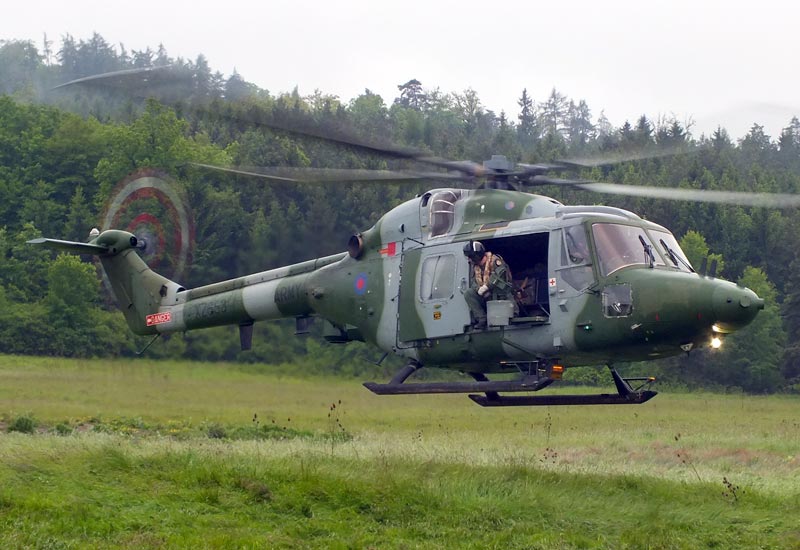
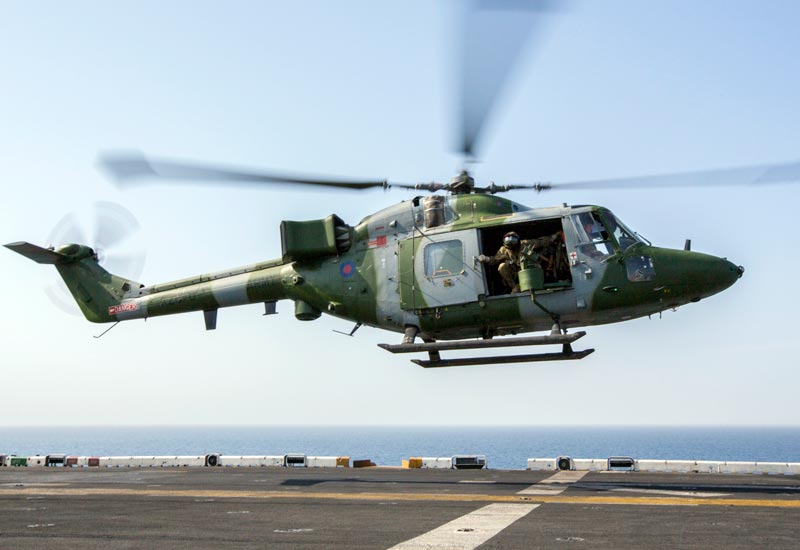
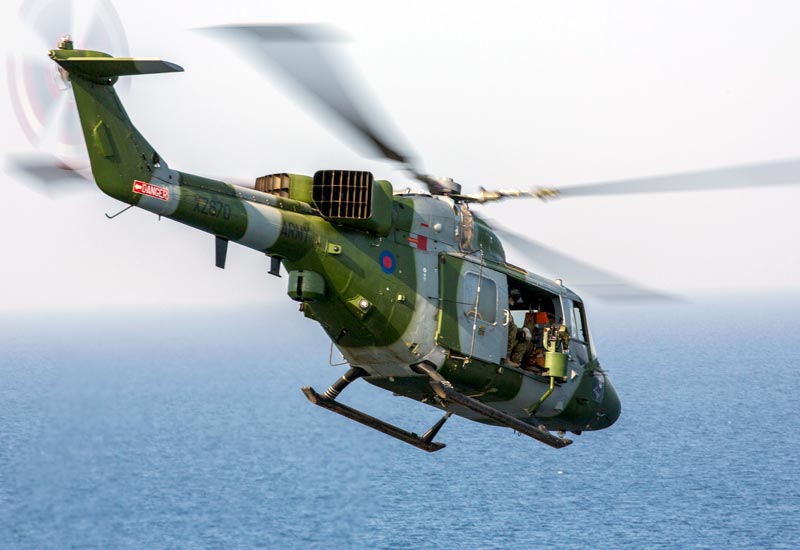
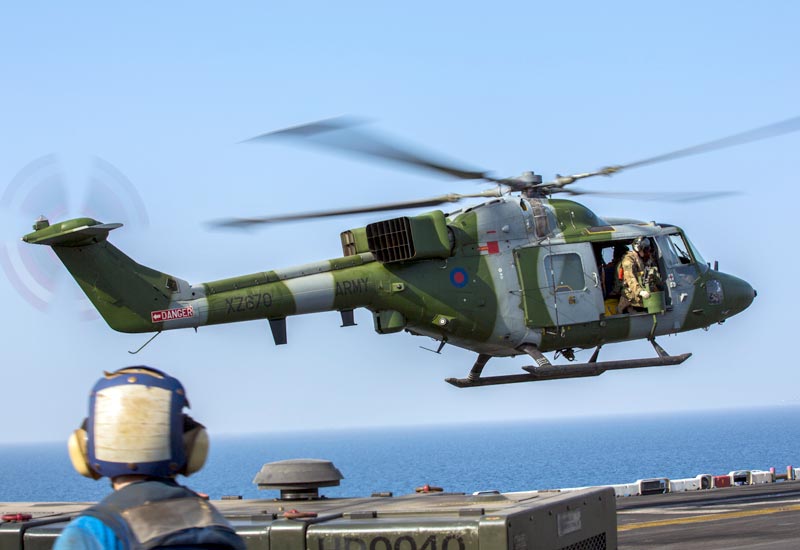
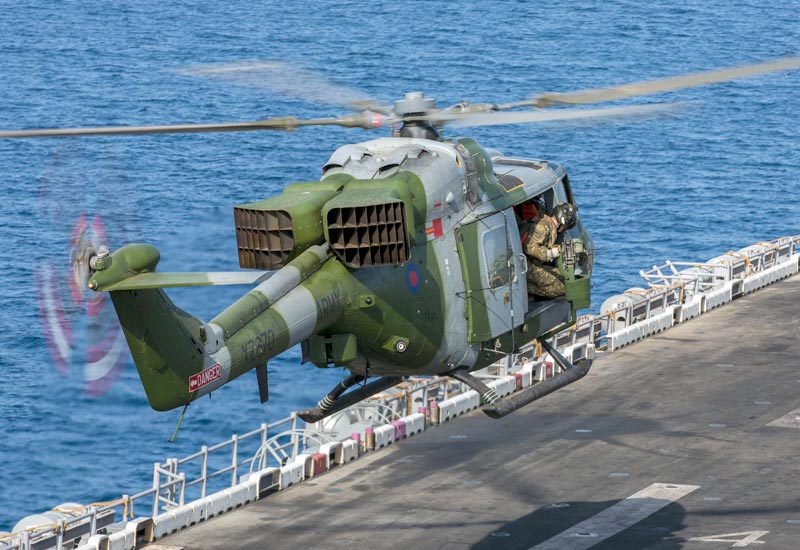
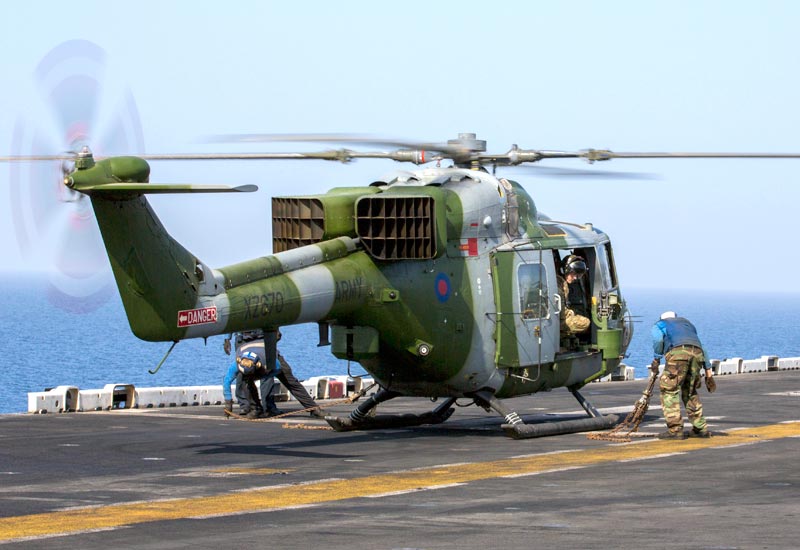
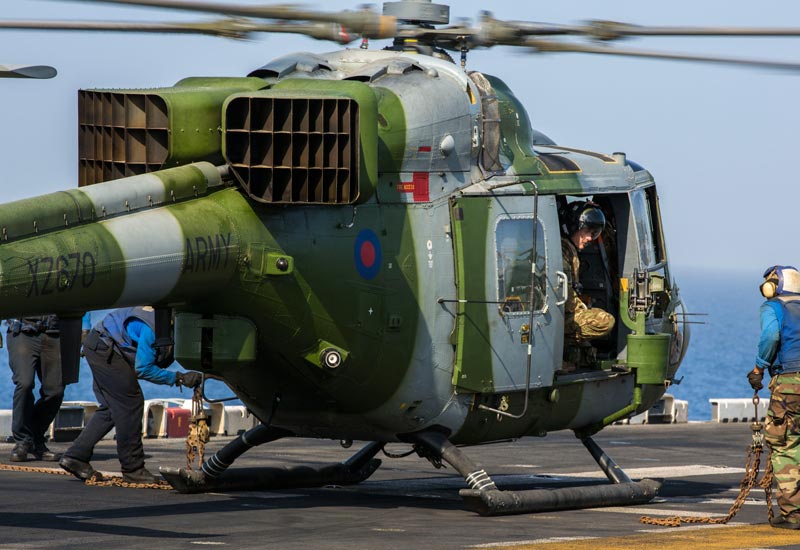
Outwardly, the Lynx featured a forward cockpit area behind the nose assembly for pilot and copilot seated in a side-by-side arrangement with a cabin directly behind. Cabin access was made possible by two windowed cabin doors along either side of the fuselage. The twin turboshaft engines were mounted behind and above the cabin and powered a four-blade, semi-rigid main rotor component along with a four-blade tail rotor on the tail port side. Both blade systems were arranged in a cruciform pattern while the composite tail rotor spins in the opposite direction to reduce operational noise. The main rotor was mounted on a forged titanium hub. The undercarriage could be of a traditional skid system or a three-wheeled retractable undercarriage.

Armament
Armament for the Lynx varied depending on the role it was to play. Anti-submarine versions had provision for 2 x torpedoes (Mk 44, Mk 46, A244S and Stingray types), 2 x Mk 11 depth charges and a dipping sonar system. Anti-surface variants could field 4 x anti-ship missiles (Sea Skua - British Navy / AS.12 wire-guided - French Navy). For basic army attack use, the aircraft could be fitted with x 20mm cannons (on fuselage sides), 2 x 70mm rocket pods or 8 x TOW anti-tank guided missiles (four launch tubes to a side) as required. For all other general purpose battlefield use, the Lynx could be defended with crew -operated pintle-mounted machine guns.

Operational Service
The lynx was available during the British Falklands War with Argentina in its HAS.2 naval form. The only losses occurred in the conflict were landed Lynxes on British ships that were struck by Argentine airborne munitions - none were lost operationally to direct enemy fire however. The Lynx also served the British Army well in monitoring activities in Northern Ireland. Lynxes were then deployed during the first Persian Gulf War of 1991, to which the helicopter system was given credit for engaging Iraqi Navy elements to good effect. The Lynx also saw combat action in the follow-up Invasion of Iraq in 2003. More recently, a Lynx helicopter was hit by an enemy projectile (missile or rocket) on May 6th, 2006, forcing the system to crash into a home, killing all onboard (5). Beyond that activity, the Lynx has proven quite capable of humanitarian and Search and Rescue (SAR) operations as well.

Conclusion
Operationally, the Lynx has succeeded in becoming one of the top helicopter designs of modern warfare (moreso the naval version over the army one). Not only did it prove itself on being an adaptable platform, its performance capabilities earned the respect of many a pilot. The Lynx legacy could very well live on in the proposed "Future Lynx" project - a program set to take all things good of the original Lynx and package it in an all new advanced design with an increased lifespan. Future Lynx is expected to become airborne in 2009 with production examples ready for delivery in 2011. The deal with AgustaWestland and the British MoD could net some 70 to 80 total initial delivery examples with a contract worth 1 billion pounds.

The Lynx anti-tank models in British Army service are being phased out of service by the more capable Boeing/Westland WAH-64 Apache AH.Mk 1 - a British Army equivalent of the American AH-64 Apache attack helicopter.

Text ©2003-2010 www.MilitaryFactory.com • All Rights Reserved • No Reproduction Without Permission • Corrections / Comments to MilitaryFactory at Gmail dot com

Last Revision: 9/14/2009 • Special Thanks to Reg A.


  Specifications for the Westland / AgustaWestland Lynx AH.9
arrow downDimensions:
Length: 43.44ft (13.24m)
Width:42.06ft (12.82m)
Height: 12.24ft (3.73m)

arrow downPerformance: About MACH
Max Speed: 158mph (255kmh; 138kts)
Max Range: 426miles (685km)
Rate-of-Climb: 2,480ft/min (756m/min)
Service Ceiling: 10,597ft (3,230m; 2.0miles)

arrow downStructure:
Accommodation: 2 + 12
Hardpoints: 2
Empty Weight: 7,705lbs (3,495kg)
MTOW: 11,299lbs (5,125kg)

arrow downPowerplant:
Engine(s): 2 x Rolls-Royce Gen 42-1 turboshaft engines driving a four-blade main rotor and a tail rotor.
arrow downArmament Suite:
Variant-specific armament may include the following:

Attack Helicopter:
8 x TOW anti-tank guided missiles (set of two quadruple launchers)
2 x 70mm rocket pods
2 x 20mm cannon pods on fuselage sides

Anti-Submarine Warfare:
4 x Sea Skua anti-ship missiles (British Navy)
4 x AS.12 wire-guided anti-ship missiles (French Navy)

Anti-Surface Warfare:
2 x torpedoes (Mk 44, Mk 46, A244S or Stingray)
2 x Mk 11 depth charges

General Purpose Battlefield Role:
2 x 7.62mm general purpose machine guns (pintle mount side doors)

  Pictures of the Westland / AgustaWestland Lynx
     
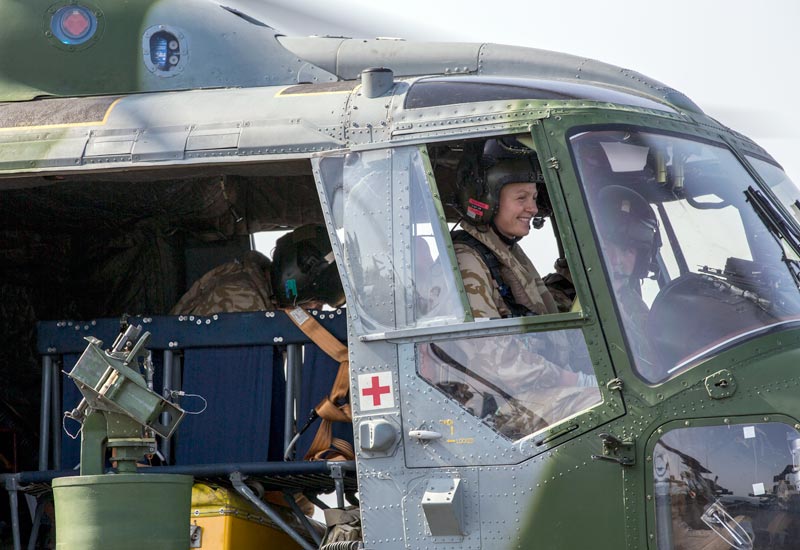
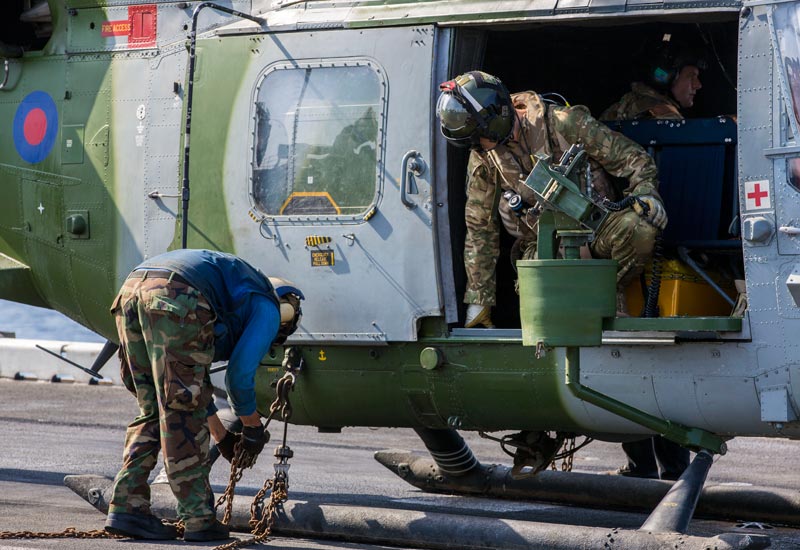
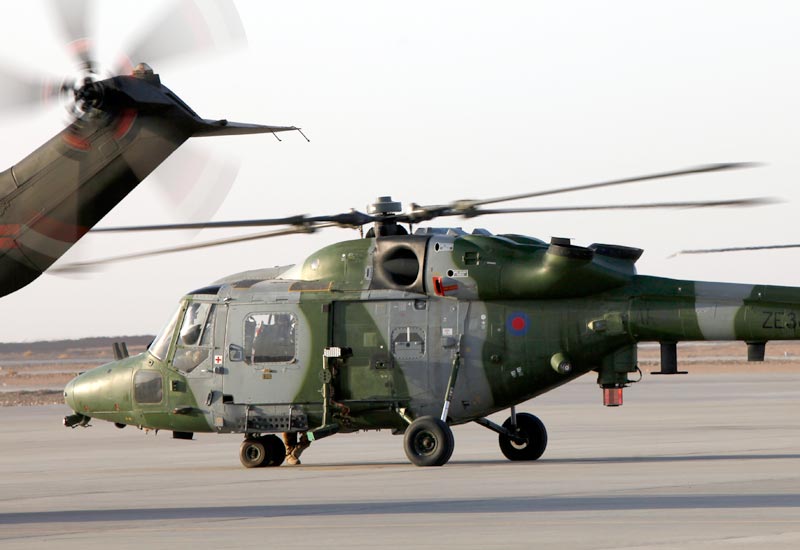
Picture of Westland / AgustaWestland Lynx
Picture of the Westland / AgustaWestland Lynx
Image of the Westland / AgustaWestland Lynx
     
arrow upView All 5 Images

CompareX2 CompareX4 Conversions Dictionary Acronyms

Compare and Contrast Military Aircraft Specifications

  Special Aircraft Collections
Aircraft by Conflict:
Falklands War
Indo-Pak War
Operation Allied Force
Operation Desert Storm
Six Day War
Yom Kippur War

Special Collections:
American X-Planes
Classic US Warbirds
Grumman "Cats"
Indian Air Force
Israeli Air Force
Mikoyan-Gurevich
British V-Bombers


Korean Air War:
Korean War Aircraft
Aces
Australia
United States
North Korea

Vietnam Air War:
Vietnam War Aircraft

Cold War
Cold War Aircraft
United States
Soviet Union
Soviet Bombers of the Cold War

Modern Aircraft
Modern Military Aircraft
United States

Miscellaneous
MiG-15 Versus Sabre
Top 10 Fighters of All Time
WW2 Aircraft Ranked by Speed
Aircraft Cockpits


  Recent Military Aircraft Additions
Thumbnail picture of the Arado Ar TEW 16/43-19
Arado TEW 16/43-19
Thumbnail picture of the Antonov An-2 Colt
Antonov An-2 Colt
Thumbnail picture of the Kyushu K11W Shiragiku bomber trainer
Kyushu Shiragiku

  Contacting MilitaryFactory.com
We can only get better if you tell us how. You can contact MilitaryFactory.com at MilitaryFactory at gmail dot com (replace "at" with "@" and "dot with ".") with any questions, comments or corrections. We also accept related military imagery that you approve for us to use on our website. Keep in mind, however, that due to volume, we may not directly respond to your inquiry. Please add us to your list of non-blocked recipients!

  Aircraft Quick Profile


Picture of the Westland / AgustaWestland Lynx
Image courtesy of the United States Department of Defense.

View More Images

flag of United Kingdom
1978

Designation: Westland / AgustaWestland Lynx
Classification Type: Multi-role Helicopter / Anti-Submarine / Anti-Ship
Contractor: Westland / AgustaWestland - UK

Country of Origin: United Kingdom
Production Total: 415

Operators: Algeria; Argentina; Brazil; Denmark; France; Germany; Malaysia; Netherlands; Nigeria; Norway; Oman; Pakistan; Portugal; South Africa; South Korea; Thailand; United Kingdom; Qatar


  Variants
WG.13 - Initial Westland Prototype Designation

AH.Mk 1 - Initial Production Version

AH.Mk 1GT - Conversion model for Royal Army based on AH.Mk 1 model.

HAS.Mk 2 - Naval model for Britain

HAS.Mk 2(FN) - French naval model designation

HAS.Mk 3(S) - Improved version of the HAS.Mk 2; Updated communications equipment.

HAS.Mk 3(GM(S)) - Persian Gulf Conversion Model for Royal Navy.

HAS.Mk 3(ICE(S)) - Cold Weather Conversion Model

HAS.Mk 4(FN) - French upgraded model

AH.Mk 5 - British Army trial prototype

AH.Mk 6 - Royal Marines proposed model

AH.Mk 7 - Attack Model for Royal Marines and Royal Army branches.

HMA.Mk 8 "Super Lynx" - An upgraded attack model based on the maritime version.

HMA.Mk 8DSP

HMA.Mk 8DAS

AH.Mk 9 "Battlefield Lynx" - Royal Army version of the AH.7 model.

Mk.21 - Brazilian Export Model (SAH-11) based on HAS.Mk 2 variant.

Mk.21A - Brazilian Navy Export Model based on the HMA.Mk 8 Super Lynx variant.

Mk.22 - Egyptian Navy Export Model

Mk.23 - Argentine Navy Export Model

Mk.24 - Iraqi Army Export Model (never produced).

Mk.25 - Royal Netherlands Navy Export Model (UH-14A).

Mk.26 - Iraqi Army Export Version (never produced).

Mk.27 - Royal Netherlands Navy Export Version (SH-14B).

Mk.28 - Qatar Police Export Model of the HAS.Mk 1 version.

Mk.64 - South African Air Force Export Model of the Super Lynx variant.

Mk.80 - Royal Danish Navy Export Model of the HAS.Mk 2 variant.

Mk.81 - Royal Netherlands Navy Export Model (SH-14C).

Mk.82 - Egyptian Army Export Model (never produced).

Mk.83 - Saudi Arabian Army Export Model (never produced).

Mk.84 - Qatar Army Export Model (never produced).

Mk.85 - UAE Army Export Model (Never produced).

Mk.86 - Royal Norwegian Air Force Export Model based on the HAS.Mk 2.

Mk.87 - Argentine Navy Export Model (never delivered).

Mk.88 - German Navy Export Model

Mk.88A - Upgraded Mk.88 German Navy Export Model

Mk.90 - Royal Danish Navy Export Model

Mk.90B Super Lynx - Upgraded Royal Danish Navy Model of the Mk.80 and Mk.90 versions.

Mk.95 - Portuguese Navy Export Model based on the HAS.Mk 8 variant.

Mk.99 - South Korean Navy Export Model based on the HAS.Mk 8 variant.

Super Lynx 300 - Export version of the base Super Lynx.

Battlefield Lynx - Proposed Export Model Designation.

Battlefield 800 - Proposed Export Model designation; Discontinued support for project.

Lynx ACH - Experimental Test Model

SH-14A - Royal Netherlands Navy Model based on the HAS.2 variant.

SH-14B - Royal Netherlands Navy Model

SH-14C - Royal Netherlands Navy Model

SH-14D - Royal Netherlands Navy upgraded model.

SAH-11 - Brazilian Navy Export Model Designation.

Westland 30 - Passenger seating for up to 22 personnel; enlarged fuselage; 40 examples produced.

"Future Lynx" - Model under development (2009) with arrivial estimated in 2014; WD.30 style tailfins; LHTEC CTS800-4N turboshaft engines; increased payload; digital cockpit with 4 x large MFDs; laser target designator; nose-mounted optical sensor turret; new tail rotor.

  Collections
  • Sons of Empire - WW2 Aircraft of Japan
  • Aircraft of the Battle of Britain
  • X-Planes Throughout History
  • French Aircraft of World War 1
  • The German Luftwaffe in World War 2
  • Nightfighters - In a Class All Themselves
  • The Top Ten Fighters of All Time
  • Carrier "Born" Aircraft - Navy Mounts
  • If Boats Could Fly - Flying Boat Aircraft
  • World War 1 Aircraft Ranked by Speed
  • World War 2 Aircraft Ranked by Speed


Top MF Stuff: 2010 Military Pay Scale Chart | Military Ranks | World War 2 Weapons | Sniper Rifles | Conversion Calculators


Site Disclaimer | Privacy Policy | Site Map | MF Origins

©2010 www.MilitaryFactory.com • Content ©2003-2010 MilitaryFactory.com • All Rights Reserved • Site Contact Email: militaryfactory at gmail dot com (replace "at" with "@" and "dot" with ".")

eXTReMe Tracker

Most photographic images appearing on this site are courtesy of the United States Department of Defense and are approved for public use. Other images acquired through the public domain. Digital art work courtesy of Dan Alex. Business Consulting by Kyle Williams

Material presented throughout this website is for historical and entertainment value and should not to be construed as usable for hardware restoration, maintenance or general operation. Please consult manufacturers for such information.