Military Factory
Military Pay Chart
Global Firepower
Military Industrial Complex
Second World War
Home
Military Pay Scale
Military Ranks
Small Arms
Aircraft
Land Systems
Navy
Education
Military Factory Facebook Logo
flag of United States

DARPA Falcon HTV-2 Experimental Hypersonic Test Vehicle (2010)

Authored By Staff Writer | Last Updated: 9/13/2012

The Falcon HTV-2 system is experimenting with Mach 20 speeds, sub-orbital work and unmanned flight - though both developmental vehicles have been lost to date.

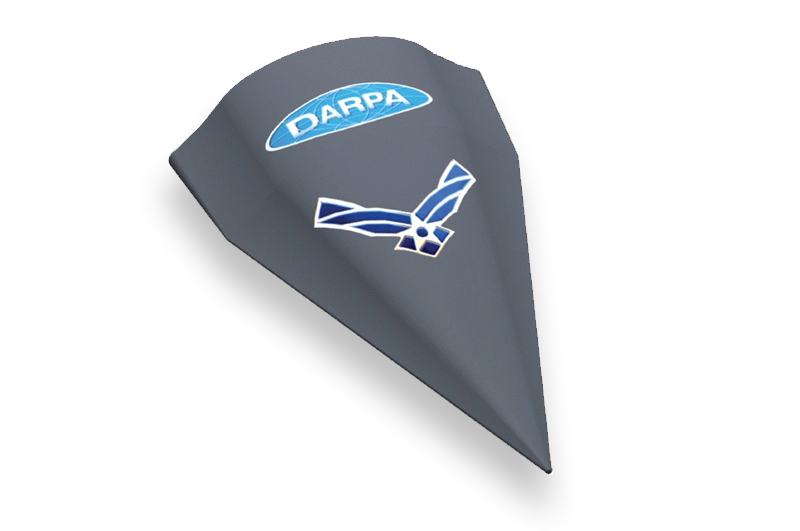
Billed as the "World's Fastest Airplane", the Falcon HTV-2 ("Hypersonic Technology Vehicle") is a long-duration, hypersonic test system currently in development through DARPA (Defense Advanced Research Projects Agency) for the United States Air Force. The program is still in the development and testing phase as of this writing with the overall goal being production of an aircraft able to reach any part of the planet within 60 minutes (DARPA states NY to LA in 12 minutes!). This undoubtedly makes for a very tempting military weapon, the idea being that research will yield a vehicle capable of dropping ordnance against ground targets at will, able to easily evade radar, out-fly interception missiles and reach targets before an enemy can even react.

The Falcon HTV-2 program (known as "Prompt Global Strike") was born in 2003 to help research a delivery vehicle for the United States military with the simple goal of reaching any part of the world in under an hour. Following the design phase, the HTV-2 was produced through computer simulations and wind tunnel testing to evaluated the validity of such a system. Both proved the concept sound though wind tunnel tests were limited to Mach 15 environments and this for only short periods of time. Nonetheless, with funding, DARPA proceeded to construct the real thing. The HTV-2 would be a rocket-launched system, unmanned at its core and controlled from the ground in the same way modern UAVs (Unmanned Aerial Vehicles) are - never putting the pilot in harm's way. The HTV-2 is a research vehicle intended to collect in-flight data for after-mission processing.

The concept of the Falcon HTV-2 is a rather basic one involving delivery of an unmanned aircraft into sub-earth orbit. The vehicle is released from its rocket "booster" system, achieves "self-control" and orientation and proceeds to dive back to earth, in the process reaching speeds of up to 13,000 miles per hour (Mach 20, twenty times the speed of sound). This allows the arrow-head design of the Falcon to literally "slice" through the upper atmosphere at unheard of speeds, essentially making it a hypersonic glider of sorts despite its Mach 20 speed. The aircraft then falls into the ocean in a controlled crash upon completion of its mission. Due to its sub-orbital flight, the body of the Falcon is able to shield itself from the extreme heat - as high as 3,500F degrees - during its high-speed flight at such high-altitudes. Additionally, its aerodynamic principles must be extremely stable and controllable at such speeds for the vehicle to be of any use.

The "piggyback" idea involving a primary "booster" aircraft is not wholly uncommon within United States Air Force lore for the USAF has been using such launch methods throughout a bevy of experimental systems in the 1950s and 1960s. One such method - this involving a modified Boeing B-29 Superfortress - was used to launch the Bell X-1 rocket plane that allowed the Americans to successfully break the sound barrier for the first time. Similarly, the North American X-15 rocket plane was launched from underwing of a Boeing B-52 Stratofortress. The Falcon HTV-2 is launched into sub-earth orbit by way of the Minotaur IV Lite rocket booster.

To Date, the Falcon HTV-2 was successfully launched twice though both vehicles were subsequently lost to failure due to loss of communication. This resulted in uncontrolled crashes of both systems into the ocean. The first flight was attempted in April of 2010, reaching speeds between Mach 17 and Mach 22, while the second - and last publicized flight, occurred on August 10th, 2011 out of Vandenberg Air Force Base in California. The latter flight lasted all but 9 minutes, though valuable data was said to be garnered from the flight before the ill-timed crash including a speed value of 3.6 miles per second.

Flight Overview

The Falcon HTV-2's flight is divided into several major phases. The initial phase is the "Launch Phase" which incorporates the Minotaur IV Lite Launch Vehicle as a booster rocket to get the HTV-2 "space-borne". The thrust forces available in the Minotaur IV system allow the Falcon to reach its intended near-orbital speed and altitude. Following launch and after achieving the desired altitude reach, the HTV-2 aircraft separates from the rocket booster, switching to its Reaction Control System (RCS) to orient itself in its near-orbit environment - this called the "Reentry Orient Phase" - and makes use of thrusters built into the design (in the same way the Space Shuttle could orient itself outside of the atmosphere). Upon reaching self-control, the HTV-2 then goes into its "Reentry Phase" which sees it in a controlled dive back towards the earth. The HTV-2 then enters the "Pull-Up Phase" which is essentially the HTV-2 orienting itself upwards to a desired speed. The "Glide Phase" is next and this is where theHTV-2 really shines - achieving unheard of speeds to reach any point on the planet in an hour or less. Up to now, this period has been used to test the validity of internal systems, flight-control, data collection and aerodynamic qualities at extremely high speeds though military applications abound. After flight, the aircraft enters the "Terminal Phase" in which the HTV-2 simply rolls over and dives into a predetermined area in the ocean, ending its mission as planned. A recovery crew then collects the aircraft for reuse.

The Minotaur IV Lite Booster Rocket

The Minotaur IV Lite is a further development of the Minotaur IV rocket family. The Minotaur IV itself was developed from the "Peacekeeper" series of missiles to a Untied States Air Force requirement for an expendable launch system capable of reaching Low Earth Orbit. The "Lite" version of the Minotaur IV utilizes a three-stage process with solid fuel and its altitude reach is suborbital. To date, the Minotaur IV series has completed three successful launches, its first which carried the HTV-2 system. Each launch costs American tax payers $50 million, making for one expensive "expendable" launch system.

Miscellaneous

In September of 2007, it was announced that the United States Air Force green-lit the "Blackswift" project, a fighter-sized unmanned hypersonic aircraft designated as the HTV-3X. However, the program as cancelled in October of 2008 due to a lack of funding. The original HTV-1 was conceptualized but eventually cancelled prior to the HTV-2 coming online.
Text ©2003-2013 www.MilitaryFactory.com • All Rights Reserved • No Reproduction Permitted
MilitaryFactory.com does NOT sell equipment/weaponry. Material presented throughout this website is for historical and entertainment value and should not to be construed as usable for hardware restoration, maintenance or general operation. Please consult manufacturers for such information. Our disclaimer. Email corrections / Comments to MilitaryFactory at Gmail dot com.
Picture of DARPA Falcon HTV-2
View All Images (1)

Specifications for the
DARPA Falcon HTV-2
Experimental Hypersonic Test Vehicle


Country of Origin: United States
Manufacturer: DARPA - US
Initial Year of Service: 2010
Production: 2


Focus Model: DARPA Falcon HTV-2
Crew: 0


Length: 0.00ft (0m)
Width: 0.00ft (0.00m)
Height: 0.00ft (0.00m)
Weight (Empty): 0lbs (0kg)
Weight (MTOW): 0lbs (0kg)


Powerplant: Unknown.


Maximum Speed: 13,000mph (20,921kmh; 11,296kts)
Maximum Range: 0miles (0km)
Service Ceiling: 0ft (0m; 0.0miles)
Rate-of-Climb: 0 feet per minute (0m/min)


Hardpoints: 0
Armament Suite:
None.


Variants:
HTV-2 - Base Series Designation


Operators:
United States

ALL AIRCRAFT CATEGORIES

BY DECADE:


1900 to 1909
1910 to 1919
1920 to 1929
1930 to 1939
1940 to 1949
1950 to 1959
1960 to 1969
1970 to 1979
1980 to 1989
1990 to 1999
2000 to 2009
2010 to 2019
2020 to 2029
VIEW ALL
Compare Aircraft


BY TYPE:


Anti-Submarine Warfare (ASW)
Attack Helicopters
Bomber Aircraft
Medium Bombers
Heavy Bombers
Close-Air Support (CAS)
Commercial Aircraft
Dive Bombers
Electronic Warfare Aircraft (EWA)
Experimental / X-Planes
Fighter Aircraft
Floatplane Aircraft
Flying Boat Aircraft
Aerial Refueling Tankers
Helicopters (ALL)
Interceptor Aircraft
Multi-Role Aircraft
Navy Carrier Aircraft
Night Fighters
Reconnaissance / Scout
Search & Rescue (SAR)
Scout Helicopters
Special Purpose
Torpedo Bombers
Trainer Aircraft
Transport Aircraft
Transport Helicopters
Unmanned Aerial Vehicles (UAVs)
Unmanned Combat Air Vehicles (UCAVs)


COLLECTIONS:


4th Generation Fighter Aircraft
5th Generation Fighter Aircraft
US X-Planes
Classic US Warbirds
French Military Helicopters
Grumman "Cats"
Howard Hughes Aircraft
Indian Air Force
Israeli Air Force
Libyan Aircraft
Modern Chinese Aircraft
Modern Chinese Fighters
Modern Military Aircraft
Modern North Korean Aircraft
Modern Trainer Aircraft
Modern US Aircraft
Mikoyan Aircraft
Sukhoi Aircraft
Syrian Aircraft
Top 10 Fighter Aircraft of All Time


AIRCRAFT BY CONFLICT:


Arab-Israeli War (1948)
Cuban Missile Crisis (1959-1962)
Falklands War (1982)
Indo-Pak War (1965, 1971)
Iran-Iraq War (1980-1988)
Lebanon War (1982)
Operation Allied Force (1999)
Operation Desert Storm (1991)
Six Day War (1967)
Spanish Civil War (1936)
Soviet-Afghan War (1979-1989)
Yom Kippur War (1973)


MISCELLANEOUS:


Aircraft Cockpits
Aircraft Manufacturers List
Aircraft Production
Aircraft Timeline

WORLD WAR 2:


1939 Aircraft
1940 Aircraft
1941 Aircraft
1942 Aircraft
1943 Aircraft
1944 Aircraft
1945 Aircraft
1946 Aircraft
Australian Aircraft
Battle of Britain Aircraft
Bombers
Four-Engine Bombers
British Aircraft
British Bombers
British Transports
Dive Bombers
Canadian Aircraft
Fighters
Chinese Aircraft
French Aircraft
German Aircraft
German Fighters
German Flying Boats
German Jets
Secret Weapons of the Luftwaffe
Italian Aircraft
Imperial Japanese Aircraft
Imperial Japanese Fighters
Mitsubishi Bombers
Navy Aircraft
Pearl Harbor
Polish Aircraft
Romanian Aircraft
US Aircraft
US Bombers
US Navy Aircraft
Soviet Aircraft
Torpedo Bombers
Trainer Aircraft
Transport Aircraft
Tuskegee Airmen Aircraft
W.A.S.P. Aircraft
WW2 Aircraft Ranked by Speed
VIEW ALL


WORLD WAR 1:


1914 Aircraft
1915 Aircraft
1916 Aircraft
1917 Aircraft
1918 Aircraft
Aircraft Timeline
Austro-Hungarian Aircraft
Bomber Aircraft
British Aircraft
Fighters
Flying Boats
French Aircraft
Imperial German Aircraft
Italian Aircraft
Scout Aircraft
Russian Empire Aircraft
US Aircraft
WW1 Aircraft Ranked by Speed
VIEW ALL


KOREAN WAR:


Australian Aircraft
Korean War Aces
Korean War Jets
North Korean Aircraft
US Military Aircraft
VIEW ALL


VIETNAM WAR:


Helicopters (ALL)
Transport Helicopters
North Vietnam Air Force
US Airpower
VIEW ALL


COLD WAR:


1950s French Aircraft
British V-Bombers
Cold War Bombers
Soviet Aircraft
Soviet Bombers
Soviet Interceptors
Soviet Helicopters
Strategic Air Command
US Aircraft
US Bombers
US Interceptors
VIEW ALL

Site Disclaimer | Privacy Policy | Site Map | MF Origins


©2013 www.MilitaryFactory.com • Content ©2003-2013 MilitaryFactory.com • All Rights Reserved • Site Contact Email: militaryfactory at gmail dot com. The "Military Factory" name and MilitaryFactory.com logo are registered ® trademarks and protected by all applicable domestic and international intellectual property laws.


Top MF Stuff: 2013 Military Pay Scale | Military Ranks | WW2 Weapons | Sniper Rifles | Kts to Mph | WW1 Aircraft | Automatic Rifles | Aircraft Cockpits | Vietnam War Weapons | Main Battle Tanks | Submachine Guns | Shotguns | French Military Victories


Most photographic images appearing on this site are courtesy of the United States Department of Defense and are approved for public use. Other images acquired through the public domain. Digital art work courtesy of Dan Alex. Business Consulting by Kyle Williams. Material presented throughout this website is for historical and entertainment value and should not to be construed as usable for hardware restoration, maintenance or general operation. Please consult manufacturers for such information.


eXTReMe Tracker