Military Factory
Military Pay Chart
Global Firepower
Military Industrial Complex
Second World War
Home
Military Pay Scale
Military Ranks
Small Arms
Aircraft
Land Systems
Navy
Education
Military Factory Facebook Logo
flag of Russia

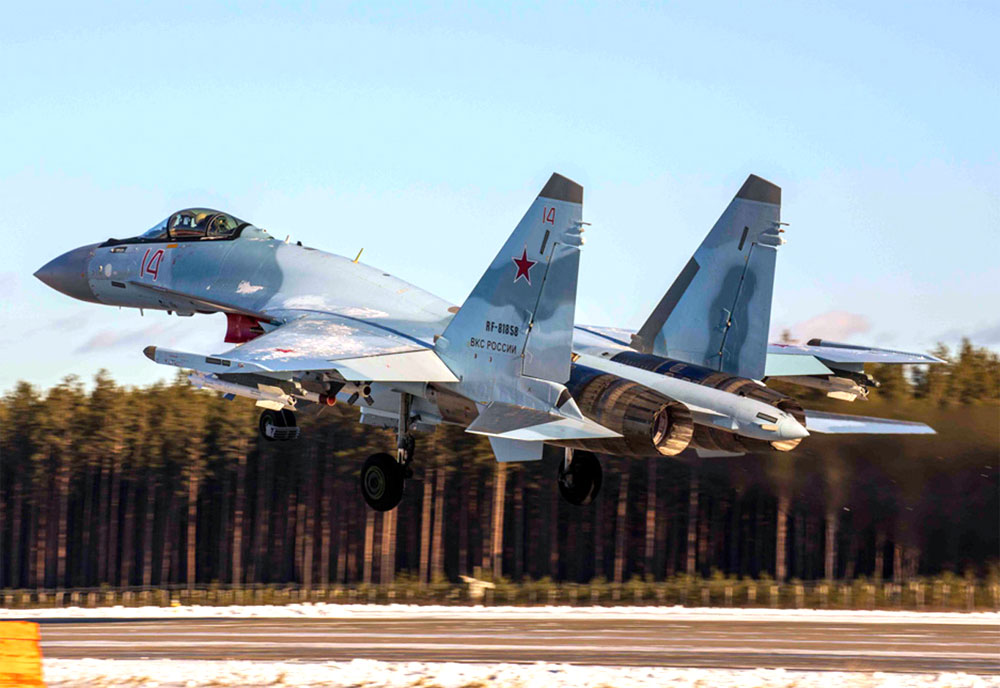
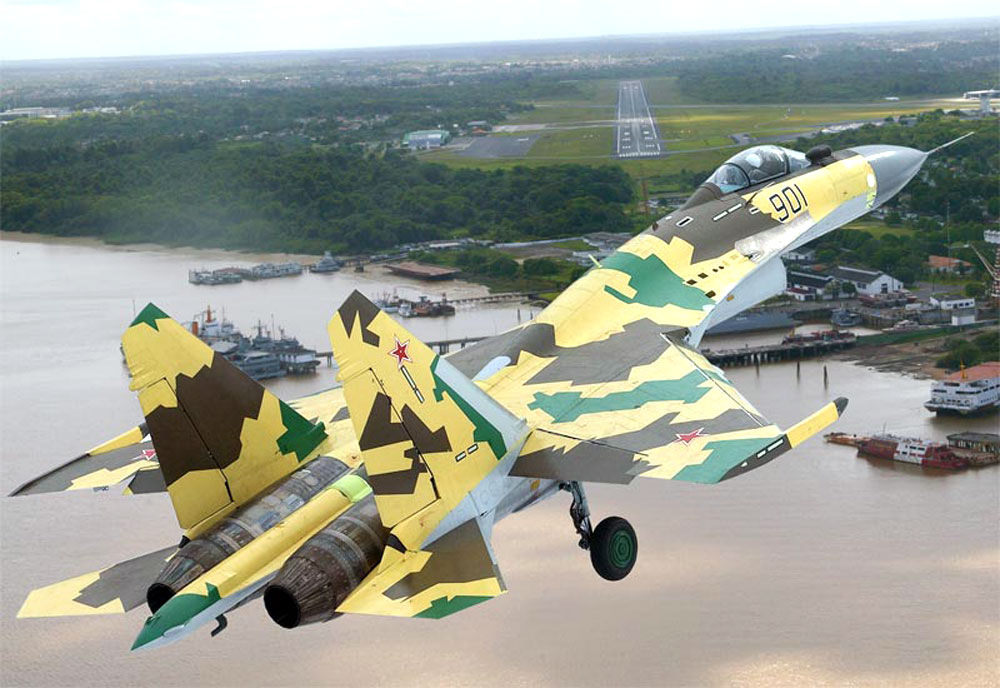
Sukhoi Su-35 (Flanker-E / Super Flanker) Multirole Fighter (2011)

Authored By Staff Writer | Last Updated: 9/4/2012

Development of a more advanced version of the Su-27 Flanker produced the impressive Su-35 Flanker-E - now beginning to enter service in noticeable numbers.

Find a School Near You
Follow Military Factory on Facebook:
Trending on Military Factory:
Recent Articles:
Little MF Logo
Little MF Logo
Little MF Logo
Little MF Logo
Little MF Logo
Little MF Logo
Little MF Logo
Little MF Logo
Little MF Logo
Little MF Logo

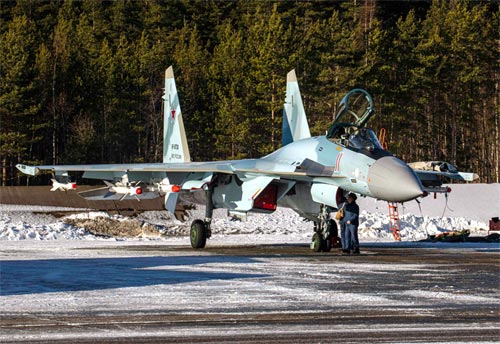
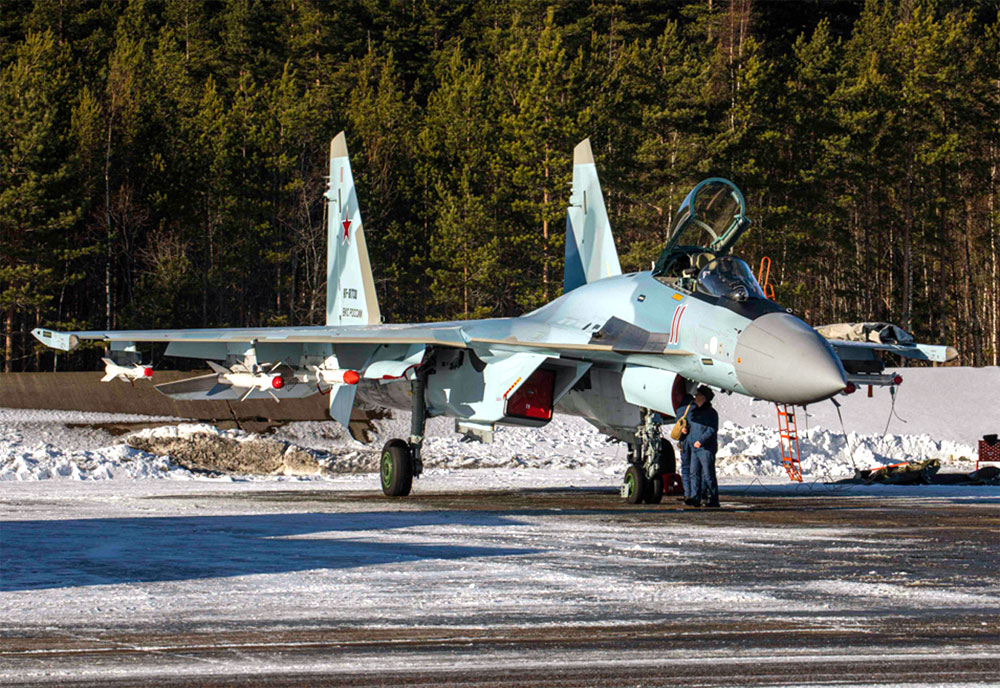
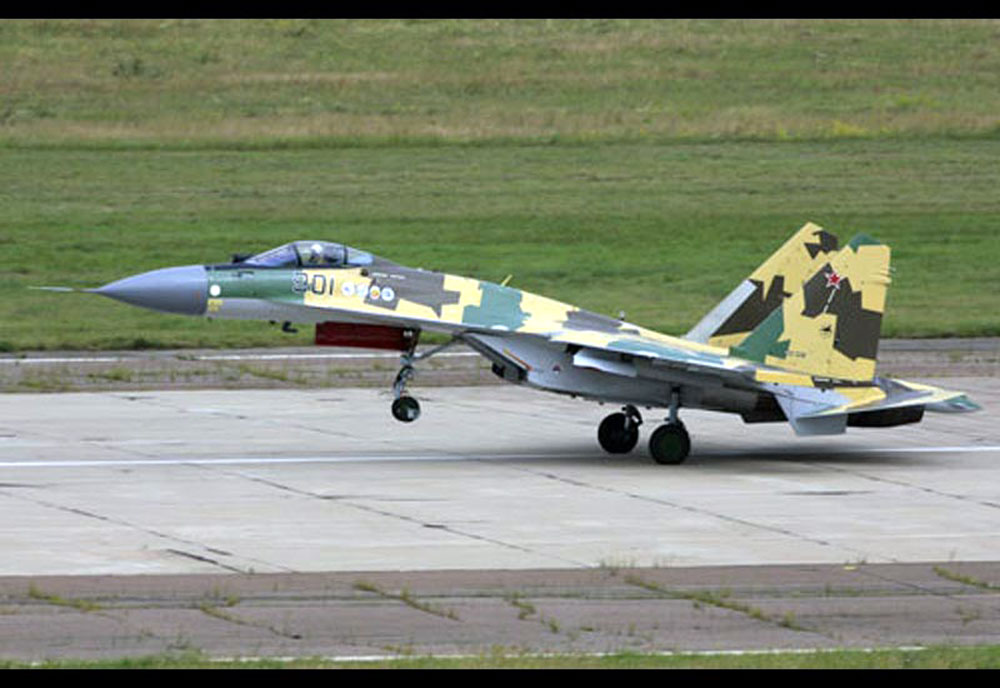
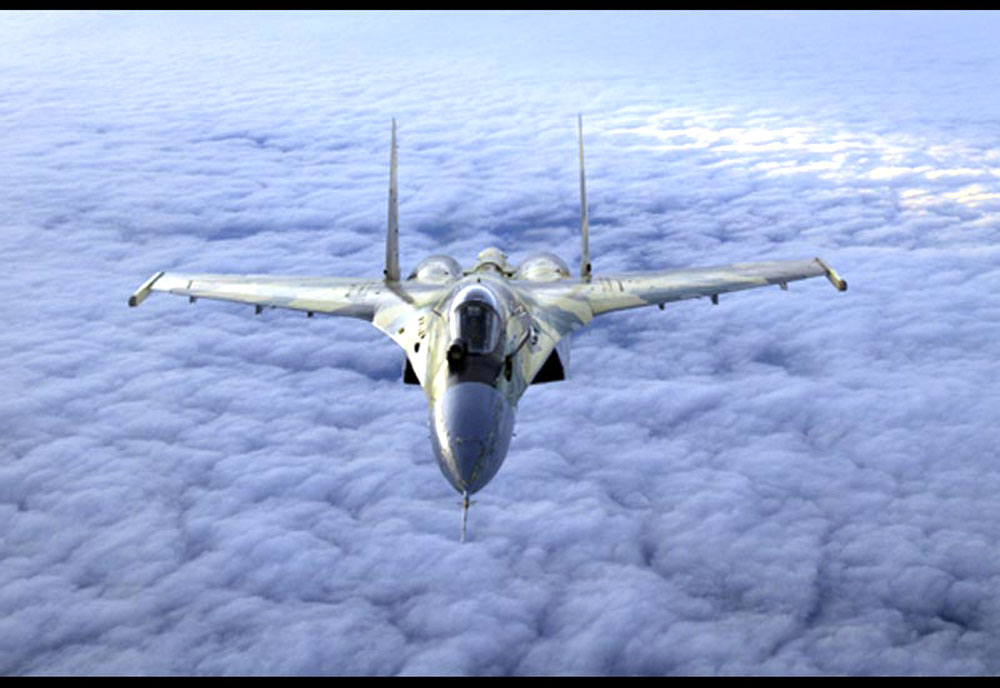
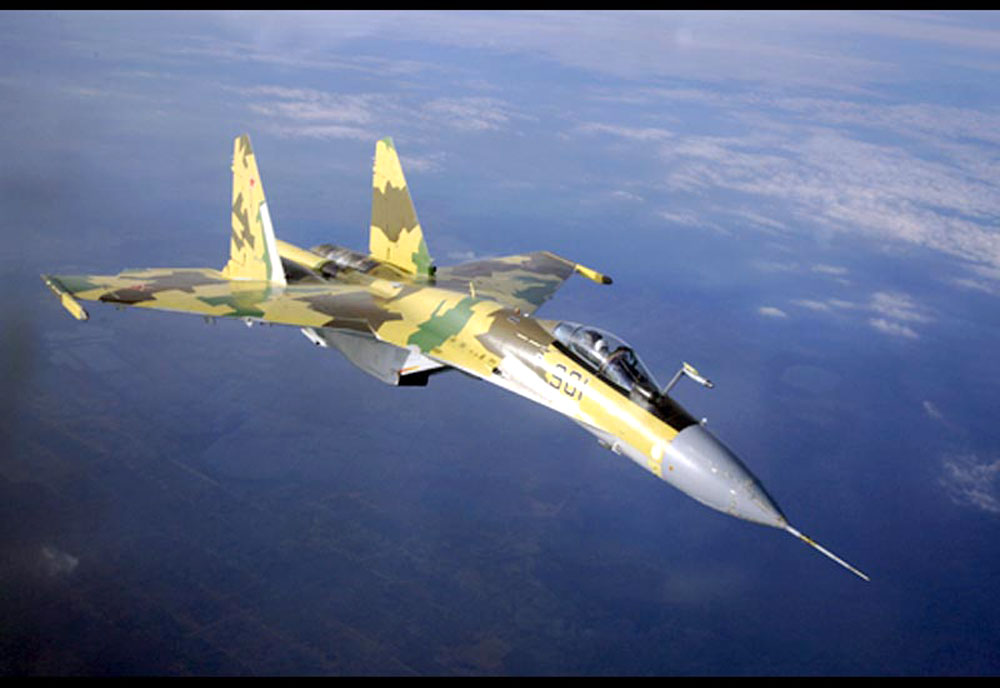
The Sukhoi Su-35 (NATO: "Flanker-E") is a variant of the successful Su-27 "Flanker" family of air superiority aircraft. The original Su-27 was born in a late 1970s Soviet Air Force initiative to counter the American McDonnell Douglas F-15 Eagle air superiority mount. Since then, the type's tactical value has broadened considerably in the ground attack role and the line has even spawned the navy-centric carrier-based Su-33. The Su-35 is marketed as a true 4th Generation multirole performer built upon the strong qualities of the Su-27 line - retaining its air-to-air prowess while incorporating advanced ground attack features. The Su-35 emerged from the modified Su-27M developmental series. The "Su-35" designation came about in 1993 though the aircraft was already publically displayed at the 1992 Farnborough Air Show. Ten total prototypes of the Su-35 were built, four being conversions from existing Su-27s while the rest were new-build aircraft while official Russian evaluation began in 1996. The Su-35 differs from the original Su-27 in its inherent multirole capabilities, modernized avionics, long range endurance and streamlines aerodynamic qualities. First flight was recorded in June of 1998 and, after an extended period of testing, formally entered production after adoption by the Russian Air Force as the "Su-35S in 2010".

The aircraft features an integrated in-flight refueling probe, provision for ECM (Electronic CounterMeasure) pods, upgraded and more powerful engines, larger wing surface areas and a forward and rear-facing Phazotron radar system capable of simultaneous tracking of 24 targets up to 62 miles (100km) away over uneven terrain. An additional auxiliary internal reserve fuel tank has been added as well. The cockpit sports an updated color CRT display as well as a HUD (Heads-Up Display) and digital fly-by-wire with quadruple redundancy capable of finding four different ways for the onboard computer system to achieve the desired flight control action. Avionics include an Irbis-E passive phased array radar system. The advanced nature of the Su-35 nets it the classification of 4th Generation Fighter - with capabilities beyond the original/current crop of 4th Generation mounts and below the standard of a true 5th Generation mount (such as the American Lockheed F-22 Raptor series).

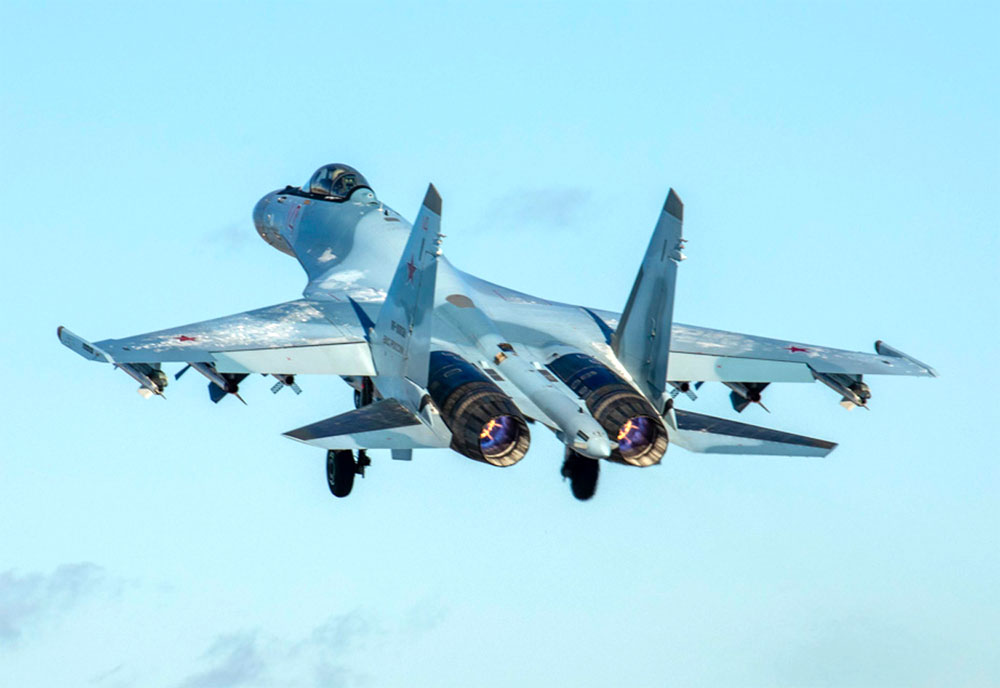
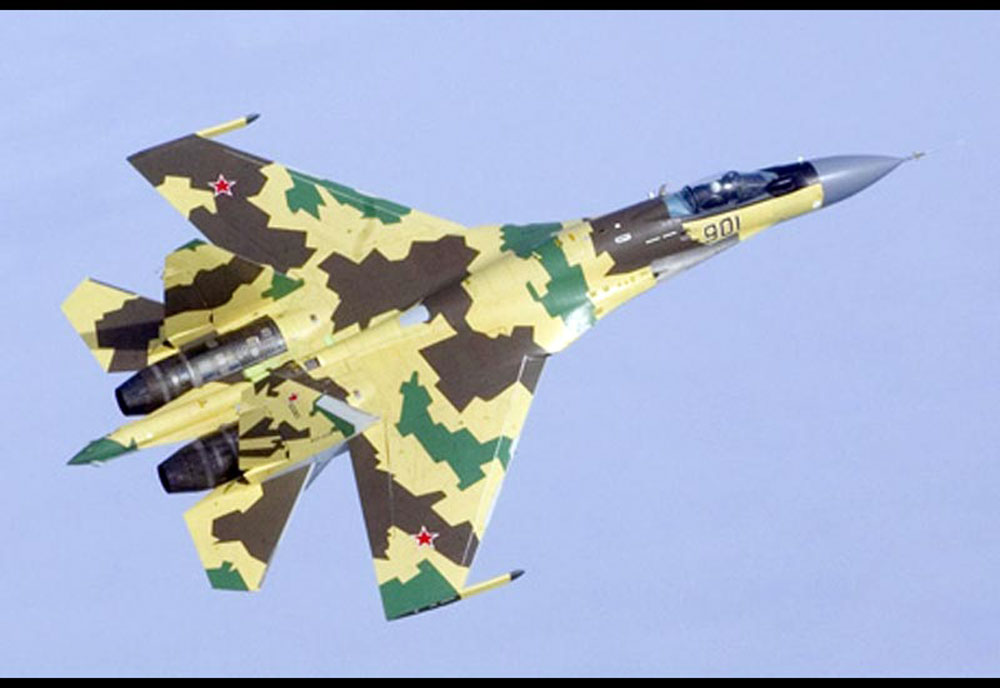
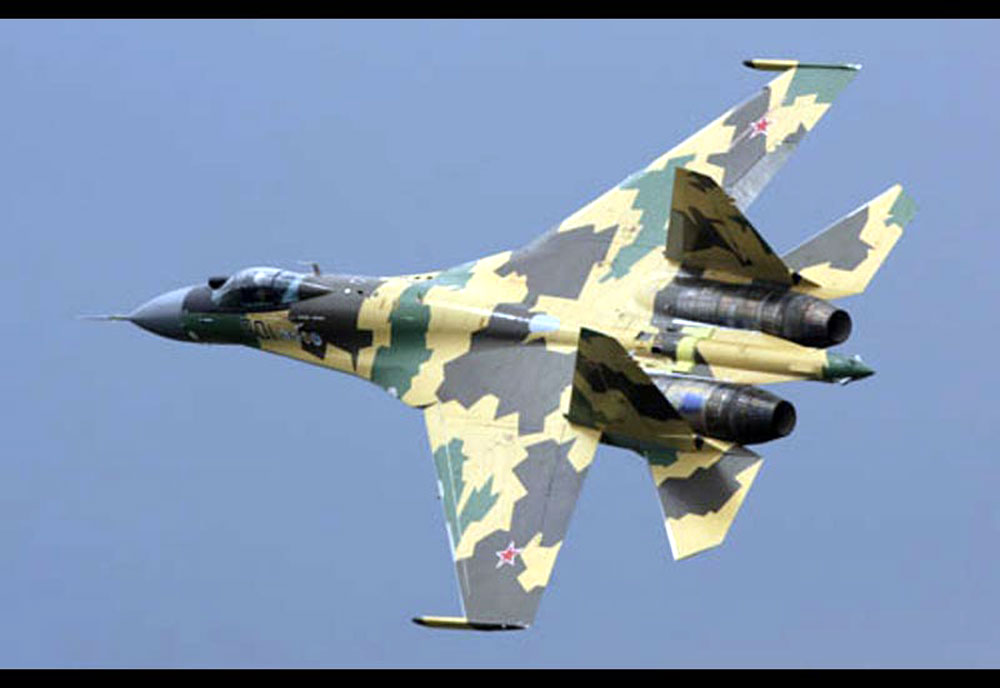
Outwardly, the Su-35 retains much of the clean sleek lines of the Su-27. It is a noticeably large aircraft with well-swept wings, a long running forward fuselage and side-by-side engine layout. The Su-35 makes use of a nose cone housing its powerful radar array and twin vertical tails, each sitting atop the engine installations. The engines exhaust through thrust vectoring rings at the extreme aft section of the fuselage. The Su-35 also features the Flanker-style stinger - an extended portion of fuselage housing a rear-looking radar facility.

Power is served through 2 x Saturn 1117S afterburning turbofan engines with thrust vector control. The engines output at 32,000lbs thrust each on full open throttle and roughly 19,400lbs each on dry thrust alone. The thrust vectoring system will allow for excellent agility when compared to the conventional Su-27 mount, able to make tighter turns for evasion in a dogfight or out maneuvering homing/guided missiles. The Su-35S lists a top speed of Mach 2.25 at altitude, roughly 1,500 miles per hour. Operational range on internal fuel is out to 1,900 nautical miles while the Su-35S can ferry out to 2,400 nautical miles. The Su-35S will have the capability to operate at service ceilings of 60,000 feet and sport a 55,100 feet per minute climb rate.

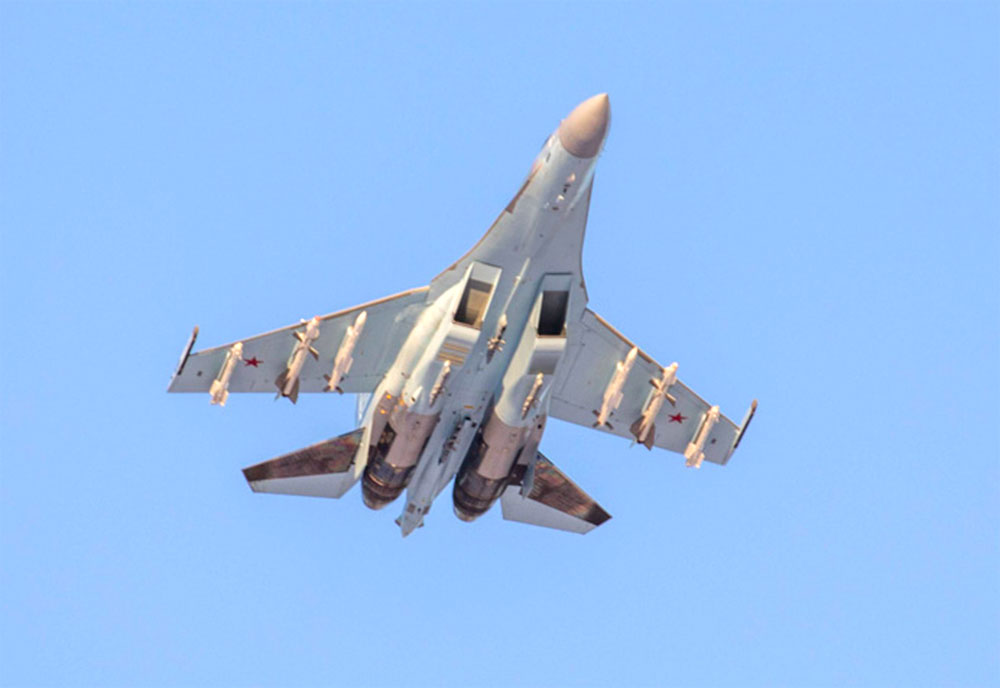
As a multirole fighter platform, the Su-35S will benefit from the full array of Russian-sponsored ordnance options across no fewer than 14 weapon hardpoints, 12 underwing and underfuselage. A 30mm GSh-30 internal cannon will be standard for close-in fighting (150 projectiles allocated) while the wingtips will be reserved for the R-73 (AA-11 "Archer") short-range air-to-air missile system. Additionally, the wingtip rails can be removed and replaced with specialized ECM pods. The remaining hardpoints will be home to various air-to-air missiles, air-to-ground missiles, anti-radiation missiles, anti-ship missiles, laser-guided bombs, guided rocket pods, unguided rocket pods, and precision weapons as needed.

Two Su-27M aircraft were utilized in another improvement program becoming the Su-37 "Flanker-F". Similar to the Su-35 model, these systems featured thrust vectoring nozzles for increased agility. Only the two examples were ever produced before the experimental program was shelved - the test aircraft being converted into full Su-35 variants. The two-seat trainer variant of the Su-35 will be the Su-35UB while retaining some of the inherent combat capabilities of the single-seat brethren. The Su-35BM represents an upgraded design from the original Su-35 offering while the Su-35S is the product of this endeavor.

In September of 2012, it was announced that the Russian Air Force was proceeding with its plans to procure the Su-35S in number after successful testing of the system began wrapping up. Deliveries of the first production-quality batch Su-35S is expected in October of 2012 and, in all, will number some 48 aircraft. The Russian Air Force expects to procure a total of 90 Su-35S aircraft to field as its primary multirole fighter for the short term.

The Indian-exported Su-30MKI variant is thought to utilize some of the reported Su-35 systems and ability mentioned above. Early-form Su-27Ms were known to have been used by the Russian Knights aerial acrobatic team.

While Russia remains the sole operator of the Su-35, it is no secret that the Sukhoi concern intends to convince foreign operators to purchase their product in time. To date, several nations have been entertained though no formal deal has been reached. A proposed deal for 12 examples with Libya fell through after the country fell into civil war in 2011.
Text ©2003-2013 www.MilitaryFactory.com • All Rights Reserved • No Reproduction Permitted
MilitaryFactory.com does NOT sell equipment/weaponry. Material presented throughout this website is for historical and entertainment value and should not to be construed as usable for hardware restoration, maintenance or general operation. Please consult manufacturers for such information. Our disclaimer. Email corrections / Comments to MilitaryFactory at Gmail dot com.
Picture of Sukhoi Su-35 (Flanker-E / Super Flanker)
View All Images (1)

Specifications for the
Sukhoi Su-35 (Flanker-E / Super Flanker)
Multirole Fighter


Country of Origin: Russia
Manufacturer: Sukhoi OKB - Soviet Union / Russia
Initial Year of Service: 2011
Production: 48


Focus Model: Sukhoi Su-35 (Flanker-E / Super Flanker)
Crew: 1


Length: 71.85ft (21.9m)
Width: 50.20ft (15.30m)
Height: 19.36ft (5.90m)
Weight (Empty): 40,565lbs (18,400kg)
Weight (MTOW): 77,162lbs (35,000kg)


Powerplant: 2 x Saturn 117S TVC-nozzled turbofan engines with afterburner delivering 31,900lbf each.


Maximum Speed: 1,491mph (2,400kmh; 1,296kts)
Maximum Range: 2,237miles (3,600km)
Service Ceiling: 59,055ft (18,000m; 11.2miles)
Rate-of-Climb: 55,100 feet per minute (16,794m/min)


Hardpoints: 14 (including wingtips)
Armament Suite:
STANDARD:
1 x 30mm GSh-30 internal cannon

Mission-specific weaponry across 12 underwing and underfuselage hardpoints to include any of the following (wingtip launchers reserved for R-73 missiles or ECM pods):

R-27 air-to-air missiles
R-40 air-to-air missiles
R-60 air-to-air missiles
R-73 air-to-air missiles
R-77 air-to-air missiles
Kh-25ML air-to-surface missiles
Kh-25MP air-to-surface missiles
Kh-29 air-to-surface missiles
Kh-31 air-to-surface missiles
Kh-59 air-to-surface missiles
S-25 IR rockets
GBU-500 laser-guided bombs
GBU-1000 laser-guided bombs
GBU-500T TV-guided bombs
GBU-1000T TV-guided bombs
Anti-Radiation Missiles
Guided Rockets
Unguiaded Rockets


Variants:
Su-27 (Flanker) - Base Single-Seat Air Superiority Model Designation.


Su-27M (T-10S-70) - Prototype Su-35 billed as "improved" Su-27 design.

Su-35 (Flanker-E) - 2 x Saturn 117S TVC-nozzled turbofans of 31,900lbf with afterburner; foreplane canards; Digital Fly-By-Wire systen; Phazotron N011 Zhuk 27 radar element; rearward facing N012 radar; In-flight refueling probe; Color HUD and three CRTs; provisions for ECM pods; single-seat.

Su-35UB - Two-Seat Fighter/Trainer; increased vertical fin height; forward portion similar to that of the Su-30 variant.

Su-35BM - Export Designation; single-seat fighter based on SU-27SM2 but with Su-35 system software; 2 x LCD screens; helmet-mounted displays; "Fly-by-Optics"; upgraded avionics; revised airframe for reduced radar cross-section; sans canards; satellite navigation system.

Su-37 (Flanker-F) - Experimental Multi-Role Fighter; single seat; thrust vector control; 2 examples produced but eventually converted to Su-35 form.


Operators:
Russia

ALL AIRCRAFT CATEGORIES

BY DECADE:


1900 to 1909
1910 to 1919
1920 to 1929
1930 to 1939
1940 to 1949
1950 to 1959
1960 to 1969
1970 to 1979
1980 to 1989
1990 to 1999
2000 to 2009
2010 to 2019
2020 to 2029
VIEW ALL


BY TYPE:


Anti-Submarine Warfare (ASW)
Attack Helicopters
Bomber Aircraft
Medium Bombers
Heavy Bombers
Close-Air Support (CAS)
Commercial Aircraft
Dive Bombers
Electronic Warfare Aircraft (EWA)
Experimental / X-Planes
Fighter Aircraft
Floatplane Aircraft
Flying Boat Aircraft
Aerial Refueling Tankers
Helicopters (ALL)
Interceptor Aircraft
Multi-Role Aircraft
Navy Carrier Aircraft
Night Fighters
Reconnaissance / Scout
Search & Rescue (SAR)
Scout Helicopters
Special Purpose
Torpedo Bombers
Trainer Aircraft
Transport Aircraft
Transport Helicopters
Unmanned Aerial Vehicles (UAVs)
Unmanned Combat Air Vehicles (UCAVs)


COLLECTIONS:


4th Generation Fighter Aircraft
5th Generation Fighter Aircraft
US X-Planes
Classic US Warbirds
French Military Helicopters
Grumman "Cats"
Howard Hughes Aircraft
Indian Air Force
Israeli Air Force
Libyan Aircraft
Modern Chinese Aircraft
Modern Chinese Fighters
Modern Military Aircraft
Modern North Korean Aircraft
Modern Trainer Aircraft
Modern US Aircraft
Mikoyan Aircraft
Sukhoi Aircraft
Syrian Aircraft
Top 10 Fighter Aircraft of All Time


AIRCRAFT BY CONFLICT:


Arab-Israeli War (1948)
Cuban Missile Crisis (1959-1962)
Falklands War (1982)
Indo-Pak War (1965, 1971)
Iran-Iraq War (1980-1988)
Lebanon War (1982)
Operation Allied Force (1999)
Operation Desert Storm (1991)
Six Day War (1967)
Spanish Civil War (1936)
Soviet-Afghan War (1979-1989)
Yom Kippur War (1973)


MISCELLANEOUS:


Aircraft Cockpit Pictures
Aircraft Comparison Tool
Aircraft Manufacturers
Aircraft Production Totals
Aircraft Timeline

WORLD WAR 2:


1939 Aircraft
1940 Aircraft
1941 Aircraft
1942 Aircraft
1943 Aircraft
1944 Aircraft
1945 Aircraft
1946 Aircraft
Australian Aircraft
Battle of Britain Aircraft
Bombers
Four-Engine Bombers
British Aircraft
British Bombers
British Transports
Dive Bombers
Canadian Aircraft
Fighters
Chinese Aircraft
French Aircraft
German Aircraft
German Fighters
German Flying Boats
German Jets
Secret Weapons of the Luftwaffe
Italian Aircraft
Imperial Japanese Aircraft
Imperial Japanese Fighters
Mitsubishi Bombers
Navy Aircraft
Pearl Harbor
Polish Aircraft
Romanian Aircraft
US Aircraft
US Bombers
US Navy Aircraft
Soviet Aircraft
Torpedo Bombers
Trainer Aircraft
Transport Aircraft
Tuskegee Airmen Aircraft
W.A.S.P. Aircraft
WW2 Aircraft Ranked by Speed
VIEW ALL


WORLD WAR 1:


1914 Aircraft
1915 Aircraft
1916 Aircraft
1917 Aircraft
1918 Aircraft
Aircraft Timeline
Austro-Hungarian Aircraft
Bomber Aircraft
British Aircraft
Fighters
Flying Boats
French Aircraft
Imperial German Aircraft
Italian Aircraft
Scout Aircraft
Russian Empire Aircraft
US Aircraft
WW1 Aircraft Ranked by Speed
VIEW ALL


KOREAN WAR:


Australian Aircraft
Korean War Aces
Korean War Jets
North Korean Aircraft
US Military Aircraft
VIEW ALL


VIETNAM WAR:


Helicopters (ALL)
Transport Helicopters
North Vietnam Air Force
US Airpower
VIEW ALL


COLD WAR:


1950s French Aircraft
British V-Bombers
Cold War Bombers
Soviet Aircraft
Soviet Bombers
Soviet Interceptors
Soviet Helicopters
Strategic Air Command
US Aircraft
US Bombers
US Interceptors
VIEW ALL

Site Disclaimer | Privacy Policy | Site Map | MF Origins


©2013 www.MilitaryFactory.com • Content ©2003-2013 MilitaryFactory.com • All Rights Reserved • Site Contact Email: militaryfactory at gmail dot com. The "Military Factory" name and MilitaryFactory.com logo are registered ® trademarks and protected by all applicable domestic and international intellectual property laws.


Top MF Stuff: 2013 Military Pay Scale | Military Ranks | WW2 Weapons | Sniper Rifles | Kts to Mph | WW1 Aircraft | Automatic Rifles | Aircraft Cockpits | Vietnam War Weapons | Main Battle Tanks | Submachine Guns | Shotguns | French Military Victories


Most photographic images appearing on this site are courtesy of the United States Department of Defense and are approved for public use. Other images acquired through the public domain. Digital art work courtesy of Dan Alex. Business Consulting by Kyle Williams. Material presented throughout this website is for historical and entertainment value and should not to be construed as usable for hardware restoration, maintenance or general operation. Please consult manufacturers for such information.


eXTReMe Tracker