Military Factory
Military Pay Chart
Global Firepower
Military Industrial Complex
Second World War
Home
Military Pay Scale
Military Ranks
Small Arms
Aircraft
Land Systems
Navy
Education
Military Factory Facebook Logo
flag of United Kingdom

Blackburn Ripon Torpedo Bomber (1929)

Authored By Staff Writer | Last Updated: 2/5/2013

The Blackburn Ripon proved her worth as a British Fleet Air Arm torpedo bomber during the inter-war years and saw combat service with the Finnish Air Force in World War 2.

Find a School Near You
Follow Military Factory on Facebook:
Trending on Military Factory:
Recent Articles:
The Blackburn concern was founded in 1914 by aviation engineer Robert Blackburn as the "Blackburn Aeroplane & Motor Company" and, with World War 1 gripping Europe, the company turned to design, development and construction of its own aircraft for the military sphere. Prior to the war, Blackburn had already built his first aircraft in 1909 and followed this single-engine monoplane with various others in the years leading up to the war. In 1918, the final year of the war, Blackburn revealed perhaps their most famous wartime contribution - the large, twin-engined Blackburn "Kangaroo" three-seat, biplane reconnaissance/torpedo biplane bomber. From this design, a steady stream of torpedo-minded platforms then followed including the post-war Blackburn "Swift" of 1920 and the Blackburn "Dart" of 1921.

The Blackburn Dart was a conventional biplane aircraft with a torpedo-delivery role as primary. The aircraft was accepted into the ranks of the Fleet Air Arm and the Royal Air Force and saw 118 examples produced across a few notable variants. The Dart also managed export to Japan, Spain and the United States in limited numbers. She was crewed by a single operator in an open-air cockpit, featured a fixed wheeled undercarriage and equal-span biplane wings with parallel struts. The platform was powered by the Napier Lion IIB series water-cooled, 12-cylinder inline piston engine of 450 horsepower. Maximum speed was 107 miles per hour with a range of 400 miles and service ceiling of 12,700 feet. Armament included a fixed, forward-firing 7.7mm Vickers machine gun to engage targets of opportunity. As a torpedo bomber, the Dart could be outfitted with 1 x Mk VIII or IX series 457mm torpedo under the fuselage centerline or 2 x 520lb bombs along hardpoints under the wing. Production of Darts spanned from 1922 to 1928.

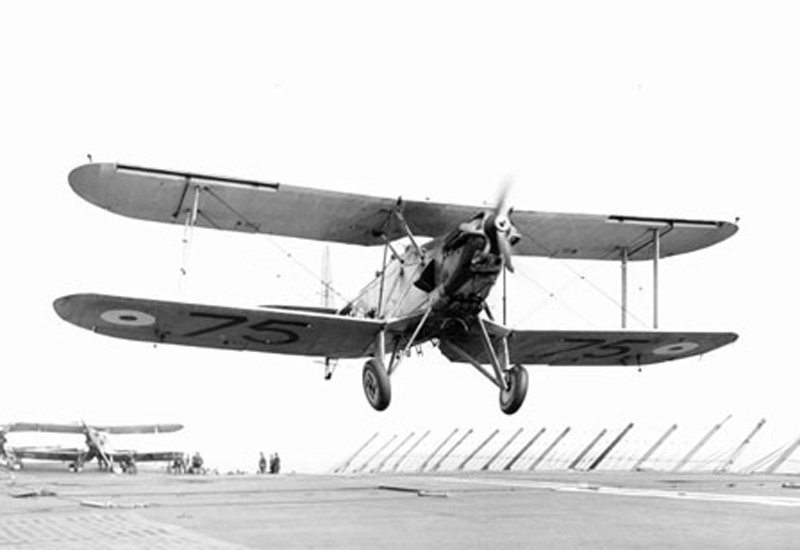
With several years of operational service from which to draw upon, Blackburn then took to refining the Dart design for the new British Air Ministry Specification 21/23 - this initiative producing the Blackburn "Ripon" biplane series which went airborne for the first time on April 17th, 1926 in prototype form. The specification called for a torpedo bomber with long endurance qualities and a secondary reconnaissance gathering role. One of the key changes in the Ripon design over the Dart was the inclusion of a second crewmember - a gunner/observer in a rear open-air cockpit. Two prototypes were originally considered - a conventional land-based form and a seaplane complete with floats for water operations. Despite failing in the initial formal evaluation phase even against lesser competitors, the Ripon was re-trialed with a new engine and revised wing surfaces and finally accepted into the inventory of the Fleet Air Arm. She was set to begin her operational service in 1929 with No. 462 Fleet Torpedo Bomber from the deck of the HMS Furious. Some 90 production-level aircraft were ordered.

Initial Ripon production models were designated as "Ripon II" as the two initial prototypes were recognized as "Ripon I". Ripon IIs were given modest defensive armament of 1 x 7.7mm Lewis machine gun on a trainable mount in the rear cockpit. The offensive bomb load was primarily 1 x 457mm torpedo along the fuselage centerline though this could be replaced by up to 3 x 530lb drop bombs under the fuselage and wings. For greater effect, 6 x 230lb bombs could be carried instead.

Some twenty Ripon II forms were produced before the arrival of the definitive "Ripon IIA" which introduced a fixed, forward-firing machine gun (7.7mm Vickers) for the pilot and incorporated metal ribbing into the wing structure for a more durable end-product. Forty Ripon IIA units were produced in all.

The "Ripon IIC" was then introduced and featured all-metal wings and some 30 aircraft of this mark were manufactured. Ripon IICs were powered by Napier Lion X, XI, or XIA series piston engines of 570 horsepower allowing for a top speed of 111 miles per hour with a range of 400 miles and service ceiling of 10,0000 feet. The Ripon IIC could reach an altitude of 6,500 feet in 15.5 minutes.

"Ripon III" designated a one-off prototype form that trialed an all-new tail unit coupled with an elongated forward fuselage. However, this mark was not to be selected for serial production and fell to the pages of aviation history. The "Ripon IIF" became a notable export model sold to Finland - the only other operator of the Ripon series biplanes. At least 26 examples appeared with the Finnish Air Force with the first being produced by Blackburn and the final twenty-five coming under local license production from Finnish Aircraft Factory. Finnish versions utilized a wide variety of powerplants during their years of service, a key differentiating feature of the foreign mark.

Blackburn Ripons in British service were kept as operational frontline torpedo bombers into early 1935 and, despite their over-water capabilities, were generally operated from land bases. By this time, the type was being superseded by the more modern Blackburn "Baffin" which proved essentially the Ripon itself though with a Bristol Pegasus I.MS radial piston engine of 545 horsepower instead of the original's broad-arrow piston fitting. Many existing Ripons (as many as sixty-eight examples) were even upgraded to the new Baffin standard. Baffins first flew in September of 1932 and were formally introduced into service in 1934, operating on into 1941 with 97 produced.

It was with the Finns that the Blackburn Ripon's legacy would truly endure, seeing extensive combat action in World War 2 (1939-1945) during the "Winter War" (1939-1940) and the "Continuation War" (1941-1944) against the Soviet Union. As all-metal, streamlined monoplane fighters with retractable undercarriages and enclosed cockpits were the next evolution of the military aircraft, mounts such as the Ripon eventually succumbed to the changing face of war. The final operational sorties of Finnish Ripons, therefore, took place in 1944, bringing an end to the storied existence of the Blackburn design.

The formal designation of the Ripon was "Blackburn T.5 Ripon".
Text ©2003-2013 www.MilitaryFactory.com • All Rights Reserved • No Reproduction Permitted
MilitaryFactory.com does NOT sell equipment/weaponry. Material presented throughout this website is for historical and entertainment value and should not to be construed as usable for hardware restoration, maintenance or general operation. Please consult manufacturers for such information. Our disclaimer. Email corrections / Comments to MilitaryFactory at Gmail dot com.
Picture of Blackburn Ripon
View All Images (1)

Specifications for the
Blackburn Ripon
Torpedo Bomber


Country of Origin: United Kingdom
Manufacturer: Blackburn Aircraft - UK
Initial Year of Service: 1929
Production: 92


Focus Model: Blackburn Ripon Mk .II
Crew: 2


Length: 35.99ft (10.97m)
Width: 44.82ft (13.66m)
Height: 13.32ft (4.06m)
Weight (Empty): 0lbs (0kg)
Weight (MTOW): 7,405lbs (3,359kg)


Powerplant: 1 x Napier Lion 12-cylinder liquid-cooled V-type radial piston engine developing 570 horsepower.


Maximum Speed: 126mph (203kmh; 110kts)
Maximum Range: 814miles (1,310km)
Service Ceiling: 10,007ft (3,050m; 1.9miles)
Rate-of-Climb: 0 feet per minute (0m/min)


Hardpoints: 6
Armament Suite:
STANDARD:
1 x 7.62mm Vickers machine gun in fixed, forward-firing mount (Ripon IIA).
1 x 7.7mm Lewis machine gun in trainable rear cockpit position.

OPTIONAL:
1 x Mk VIII OR Mk X torpedo

Up to 1,653lbs of external ordnance in lieu of torpedo.


Variants:
Ripon I - Prototype Designation; 2 examples completed.


Ripon II - Initial production models; 20 examples produced.

Ripon IIA - Introduction of fixed, forward-firing 7.7mm machine gun for pilot; metal ribbing incorporated into wing construction; forty examples produced.

Ripon IIC - Introduction of all-metal wings; 30 examples produced.

Ripon III - One-off Prototype; all-new tail unit with elongated nose assembly.

Ripon IIF - Finnish Air Force designation; 26 examples - initial example produced by Blackburn followed by 25 examples produced locally under license with varying powerplants.


Operators: Finland; United Kingdom

ALL AIRCRAFT CATEGORIES

BY DECADE:


1900 to 1909
1910 to 1919
1920 to 1929
1930 to 1939
1940 to 1949
1950 to 1959
1960 to 1969
1970 to 1979
1980 to 1989
1990 to 1999
2000 to 2009
2010 to 2019
2020 to 2029
VIEW ALL
Compare Aircraft


BY TYPE:


Anti-Submarine Warfare (ASW)
Attack Helicopters
Bomber Aircraft
Medium Bombers
Heavy Bombers
Close-Air Support (CAS)
Commercial Aircraft
Dive Bombers
Electronic Warfare Aircraft (EWA)
Experimental / X-Planes
Fighter Aircraft
Floatplane Aircraft
Flying Boat Aircraft
Aerial Refueling Tankers
Helicopters (ALL)
Interceptor Aircraft
Multi-Role Aircraft
Navy Carrier Aircraft
Night Fighters
Reconnaissance / Scout
Search & Rescue (SAR)
Scout Helicopters
Special Purpose
Torpedo Bombers
Trainer Aircraft
Transport Aircraft
Transport Helicopters
Unmanned Aerial Vehicles (UAVs)
Unmanned Combat Air Vehicles (UCAVs)


COLLECTIONS:


4th Generation Fighter Aircraft
5th Generation Fighter Aircraft
US X-Planes
Classic US Warbirds
French Military Helicopters
Grumman "Cats"
Howard Hughes Aircraft
Indian Air Force
Israeli Air Force
Libyan Aircraft
Modern Chinese Aircraft
Modern Chinese Fighters
Modern Military Aircraft
Modern North Korean Aircraft
Modern Trainer Aircraft
Modern US Aircraft
Mikoyan Aircraft
Sukhoi Aircraft
Syrian Aircraft
Top 10 Fighter Aircraft of All Time


AIRCRAFT BY CONFLICT:


Arab-Israeli War (1948)
Cuban Missile Crisis (1959-1962)
Falklands War (1982)
Indo-Pak War (1965, 1971)
Iran-Iraq War (1980-1988)
Lebanon War (1982)
Operation Allied Force (1999)
Operation Desert Storm (1991)
Six Day War (1967)
Spanish Civil War (1936)
Soviet-Afghan War (1979-1989)
Yom Kippur War (1973)


MISCELLANEOUS:


Aircraft Cockpits
Aircraft Manufacturers List
Aircraft Timeline

WORLD WAR 2:


1939 Aircraft
1940 Aircraft
1941 Aircraft
1942 Aircraft
1943 Aircraft
1944 Aircraft
1945 Aircraft
1946 Aircraft
Australian Aircraft
Battle of Britain Aircraft
Bombers
Four-Engine Bombers
British Aircraft
British Bombers
British Transports
Dive Bombers
Canadian Aircraft
Fighters
Chinese Aircraft
French Aircraft
German Aircraft
German Fighters
German Flying Boats
German Jets
Secret Weapons of the Luftwaffe
Italian Aircraft
Imperial Japanese Aircraft
Imperial Japanese Fighters
Mitsubishi Bombers
Navy Aircraft
Pearl Harbor
Polish Aircraft
Romanian Aircraft
US Aircraft
US Bombers
US Navy Aircraft
Soviet Aircraft
Torpedo Bombers
Transport Aircraft
Tuskegee Airmen Aircraft
W.A.S.P. Aircraft
WW2 Aircraft Ranked by Speed
VIEW ALL


WORLD WAR 1:


1914 Aircraft
1915 Aircraft
1916 Aircraft
1917 Aircraft
1918 Aircraft
Aircraft Timeline
Austro-Hungarian Aircraft
Bomber Aircraft
British Aircraft
Fighters
Flying Boats
French Aircraft
Imperial German Aircraft
Italian Aircraft
Scout Aircraft
Russian Empire Aircraft
US Aircraft
WW1 Aircraft Ranked by Speed
VIEW ALL


KOREAN WAR:


Australian Aircraft
Korean War Aces
Korean War Jets
North Korean Aircraft
US Military Aircraft
VIEW ALL


VIETNAM WAR:


Helicopters
North Vietnam Air Force
US Airpower
VIEW ALL


COLD WAR:


1950s French Aircraft
British V-Bombers
Cold War Bombers
Soviet Aircraft
Soviet Bombers
Soviet Interceptors
Soviet Helicopters
Strategic Air Command
US Aircraft
US Bombers
US Interceptors
VIEW ALL

Site Disclaimer | Privacy Policy | Site Map | MF Origins


©2013 www.MilitaryFactory.com • Content ©2003-2013 MilitaryFactory.com • All Rights Reserved • Site Contact Email: militaryfactory at gmail dot com. The "Military Factory" name and MilitaryFactory.com logo are registered ® trademarks and protected by all applicable domestic and international intellectual property laws.


Top MF Stuff: 2013 Military Pay Scale | Military Ranks | WW2 Weapons | Sniper Rifles | Kts to Mph | WW1 Aircraft | Automatic Rifles | Aircraft Cockpits | Vietnam War Weapons | Main Battle Tanks | Submachine Guns | Shotguns | French Military Victories


Most photographic images appearing on this site are courtesy of the United States Department of Defense and are approved for public use. Other images acquired through the public domain. Digital art work courtesy of Dan Alex. Business Consulting by Kyle Williams. Material presented throughout this website is for historical and entertainment value and should not to be construed as usable for hardware restoration, maintenance or general operation. Please consult manufacturers for such information.


eXTReMe Tracker