Military Factory
Military Pay Chart
Global Firepower
Military Industrial Complex
Second World War
Home
Military Pay Scale
Military Ranks
Small Arms
Aircraft
Land Systems
Navy
Education
Military Factory Facebook Logo
flag of Australia

CAC Wirraway Multirole Aircraft / Trainer (1939)

Authored By Staff Writer | Last Updated: 9/24/2010

The CAC Wirraway was an indigenous development of the North American NA-16 trainer platform.

Find a School Near You
Follow Military Factory on Facebook:
Trending on Military Factory:
Recent Articles:
The CAC Wirraway ("Challenge" in the Woiwurrung native tongue) became one of Australia's primary trainer aircraft from 1939 onwards until being replaced by the CAC Winjeel in 1955. The type proved versatile enough to fulfill a number of roles including that of emergency fighter, dive bomber, trainer and reconnaissance aircraft, making her a true multirole, multi-faceted airframe. By the time of the Japanese attack on Pearl Harbor in December of 1941, seven squadrons of the Royal Australian Air Force were fielding Wirraways in their inventories.

In 1936, Australia sent three of her air force officers out of the country to find a suitable modern aircraft for localized license production. Lacking a respectable war-production infrastructure by the time of World War 2 and an ever-increasing Japanese presence throughout the Pacific, the Australians quickly settled on a pair of North American Aviation NA-16 trainers for evaluation and subsequent production as multirole platforms to fulfill a variety of needs. The North American NA-16 was the company's first true trainer aircraft and one that would ultimately be produced in an eye opening 17,000 examples by the end of her tenure.

The two examples were purchased from North American Aviation and became NA-16-1A (with fixed undercarriage) and NA-16-2K (retractable undercarriage) serving as the Australian program's prototypes. The NA-16-2K was eventually selected as the principle production model with a few subtle changes in design, these including a reinforced sub-structure consistent with the rigors of the bombing role and improved offensive/defensive capabilities by the inclusion of 2 x 7.7mm machine guns as opposed to the NA-16's sole gun. Production of the initial aircraft, designated in the Australian inventory as the "CA-1 Wirraway", was handled out of the Commonwealth Aircraft Corporation (CAC) facility at Fisherman's Bend in Victoria. First flight of the Australian system was recorded on March 27th, 1939 and production followed. Like the airframe, the selected powerplant was also American in origin - essentially the license produced Australian version of the Pratt & Whitney R1340 Wasp radial piston engine. From 1939 to 1946, some 755 Wirraways were ultimately delivered from the CAC facility into service with the Royal Australian Air Force and Royal Australian Navy.

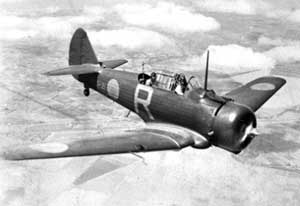
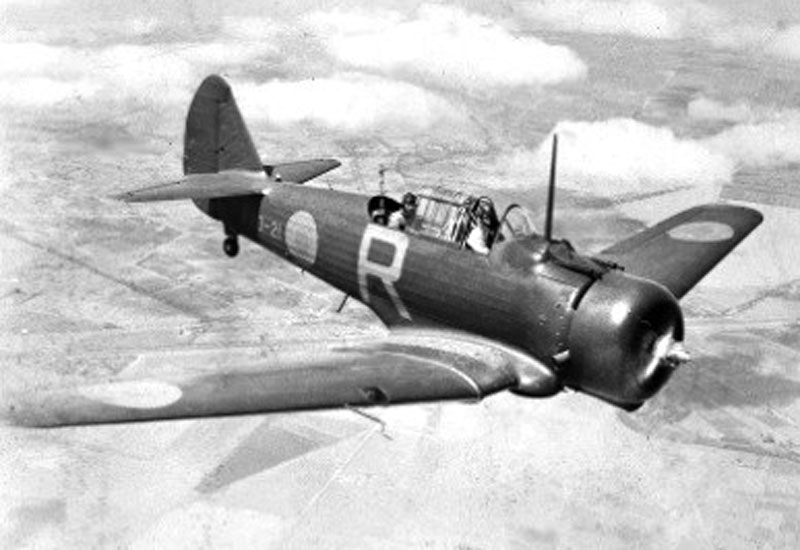
Externally, the Wirraway showcased an appearance not unlike her American sister. She sported low-wing monoplane assemblies with sweep back and curved wingtips, mounted well forward of amidships. Wings were attached to the oblong, rounded airframe. The engine was held in the forward most compartment and was of an air-fed radial type. The cockpit was held aft of the wings with adequate views from under the heavily framed "greenhouse-style canopy. The empennage was conventional and tapered off to form the base of the rounded vertical tail fin. Horizontal tailplanes were situated at the forward base of this single vertical fin. The undercarriage was of the "tail-dragging" arrangement dominated by the two single-wheeled main landing gear legs. While these twin assemblies retracted into the aircraft, the diminutive single-wheeled tail wheel did not and remained exposed whilst the aircraft was in flight. Crew accommodations amounted to two personnel made up of the pilot and an observer. Armament included a pair of 7.7mm Vickers GO machine guns while 2 x 250lb or 500lb bombs could be carried.

The Wirraway was fitted with the aforementioned Pratt & Whitney R-1340 series, 9-cylinder, supercharged, air-cooled radial piston engine producing 600 horsepower and mated to a three-blade Hamilton Standard Constant speed propeller. Top speed was roughly 220 miles per hour with a cruise speed of just 155 miles per hour. Fuel was limited to 116-US gallons in wing fuel tanks with a pair of 11-US gallon reserve fuel tanks. Dimensionally, the aircraft sported a wingspan of 43-feet even with a length of 27 feet, 10 inches. Her height was 8 feet, 8 3/4 inches. When empty, the Wirraway displaced at 3,992 lbs and 6,595lbs for a maximum take-off weight.

The Wirraway was produced in seven major marks beginning with the CA-1 of which 40 were produced. The CA-3 was wholly similar to the CA-1, just assigned a different designation due to the nature of the Australian government production contract. This mark numbered 60 examples in all. In fact, the CA-5, CA-7, CA-8 and CA-9 were all also similar in scope to the original CA-1. The CA-5 was produced in a further 32 examples. The CA-7, CA-8 and CA-9 marks were produced in totals numbering 100, 200 and 188 examples respectively. The CA-10A was an uncompleted bomber proposal, fitted with dive bomber wings but the CA-3, CA-5, CA-7 and CA-9 models were ultimately modified with such wings to become the CA-20 mark. CA-16, the last production Wirraway, was built to the tune of 135 examples before the last rolled off of the Commonwealth assembly lines and these represented the largest modification since the inception of the CA-1. The CA-16 fitted a pair of dive brakes and carried a larger bombload for dive bombing sorties, in many ways making her the "definitive" breed of the family line.

Naturally, Australia maintained the largest collection of Wirraways in the world and these served with the Australian Air Force squadrons of No.4, No.5, No.12, No.21, No.22, No.23, No.24 and No.25. The Australian Navy Fleet Air Arm utilized the type with squadrons No.723 and No.724. The United Kingdom's Royal Air Force fielded one squadron (Y Squadron) of Wirraways in Malaya from 1941 to 1942, this being formerly the No.21 Squadron of the RAAF. The United States operated the Wirraway in severely limited numbers and only for a brief time with its HQ Flight as part of the 5th Air Force.

The first direct combat action for the Wirraway of the RAAF against Japanese forces occurred on January 6th, 1942 when No.24 Squadron Wirraways were sent to intercept several Japanese floatplanes near New Britain. Of the entire flight, however, only one was able to engage enemy aircraft and this with no confirmed kills. A few weeks later, Wirraways from the same squadron were back in action against Japanese fighters in bombers during the defense of Rabaul, the Wirraways, however, suffering heavy losses. Only the downing of one Japanese aircraft was ever formally attributed to the guns of any Wirraway pilot, this - suprisingly - a Mitsubishi A6M Zero fighter. Additional actions placed Wirraways over the skies of New Guinea but these were primarily used as ground attack platforms in support of ground forces in the region. The Wirraway continued in this respect until Curtiss P-40 Warhawks could be delivered in sufficient numbers from America and CAC itself could bring online its more impressive "Boomerang" dedicated fighter platform.

Despite her early-war origins, the Wirraway continued on in the post-war world, primarily back in form with her dedicated trainer roots. The Royal Australian Navy would retire their Wirraways in 1957, trading in their mounts for the jet-powered de Havilland Vampires from Britain, while the Royal Australian Air Force continued Wirraway use up until 1958 - her last flight being formally recognized on April 27th, 1959.
Text ©2003-2013 www.MilitaryFactory.com • All Rights Reserved • No Reproduction Permitted
MilitaryFactory.com does NOT sell equipment/weaponry. Material presented throughout this website is for historical and entertainment value and should not to be construed as usable for hardware restoration, maintenance or general operation. Please consult manufacturers for such information. Our disclaimer. Email corrections / Comments to MilitaryFactory at Gmail dot com.
Picture of CAC Wirraway
View All Images (1)

Specifications for the
CAC Wirraway
Multirole Aircraft / Trainer


Country of Origin: Australia
Manufacturer: Commonwealth Aircraft Corporation (CAC) - Australia
Initial Year of Service: 1939
Production: 755


Focus Model: CAC Wirraway
Crew: 2


Length: 27.82ft (8.48m)
Width: 43.01ft (13.11m)
Height: 8.73ft (2.66m)
Weight (Empty): 3,990lbs (1,810kg)
Weight (MTOW): 6,594lbs (2,991kg)


Powerplant: 1 x Pratt & Whitney R-1340 radial piston engine delivering 600 horsepower.


Maximum Speed: 217mph (350kmh; 189kts)
Maximum Range: 746miles (1,200km)
Service Ceiling: 22,999ft (7,010m; 4.4miles)
Rate-of-Climb: 1,950 feet per minute (594m/min)


Hardpoints: 2
Armament Suite:
STANDARD:
2 x 7.7mm Vickers GO machine guns

OPTIONAL:
2 x 250lb OR 500lb bombs.


Variants:
CA-1 - Initial Production Model based on the North American NA-16-2K; 40 examples produced.


CA-3 - Second Production Model; 60 examples produced; subtle changes yet still largely similar to CA-1 model.

CA-5 - Based on the CA-3 production model; 32 examples produced.

CA-7 - Based on the CA-3 production model; 100 examples produced.

CA-8 - Based on the CA-3 production model; 200 examples produced.

CA-9 - Based on the CA-3 production model; 188 examples produced.

CA-10A - Proposed dive bomber variant; to be fitted with revised wing assemblies containing dive brakes; never completed.

CA-16 - Final Wirraway Production Model; fitted with revised wing assemblies for larger bombloads; dive brakes installed for dive bombing; 135 examples produced.

CA-20 - Modified CA-3, CA-5, CA-7 and CA-9 production models with dive bomber wings for the Royal Australian Navy.


Operators: Australia; New Zealand; United Kingdom; United States

ALL AIRCRAFT CATEGORIES

BY DECADE:


1900 to 1909
1910 to 1919
1920 to 1929
1930 to 1939
1940 to 1949
1950 to 1959
1960 to 1969
1970 to 1979
1980 to 1989
1990 to 1999
2000 to 2009
2010 to 2019
2020 to 2029
VIEW ALL
Compare Aircraft


BY TYPE:


Anti-Submarine Warfare (ASW)
Attack Helicopters
Bomber Aircraft
Medium Bombers
Heavy Bombers
Close-Air Support (CAS)
Commercial Aircraft
Dive Bombers
Electronic Warfare Aircraft (EWA)
Experimental / X-Planes
Fighter Aircraft
Floatplane Aircraft
Flying Boat Aircraft
Aerial Refueling Tankers
Helicopters (ALL)
Interceptor Aircraft
Multi-Role Aircraft
Navy Carrier Aircraft
Night Fighters
Reconnaissance / Scout
Search & Rescue (SAR)
Scout Helicopters
Special Purpose
Torpedo Bombers
Trainer Aircraft
Transport Aircraft
Transport Helicopters
Unmanned Aerial Vehicles (UAVs)
Unmanned Combat Air Vehicles (UCAVs)


COLLECTIONS:


4th Generation Fighter Aircraft
5th Generation Fighter Aircraft
US X-Planes
Classic US Warbirds
French Military Helicopters
Grumman "Cats"
Howard Hughes Aircraft
Indian Air Force
Israeli Air Force
Libyan Aircraft
Modern Chinese Aircraft
Modern Chinese Fighters
Modern Military Aircraft
Modern North Korean Aircraft
Modern Trainer Aircraft
Modern US Aircraft
Mikoyan Aircraft
Sukhoi Aircraft
Syrian Aircraft
Top 10 Fighter Aircraft of All Time


AIRCRAFT BY CONFLICT:


Arab-Israeli War (1948)
Cuban Missile Crisis (1959-1962)
Falklands War (1982)
Indo-Pak War (1965, 1971)
Iran-Iraq War (1980-1988)
Lebanon War (1982)
Operation Allied Force (1999)
Operation Desert Storm (1991)
Six Day War (1967)
Spanish Civil War (1936)
Soviet-Afghan War (1979-1989)
Yom Kippur War (1973)


MISCELLANEOUS:


Aircraft Cockpits
Aircraft Manufacturers List
Aircraft Timeline

WORLD WAR 2:


1939 Aircraft
1940 Aircraft
1941 Aircraft
1942 Aircraft
1943 Aircraft
1944 Aircraft
1945 Aircraft
1946 Aircraft
Australian Aircraft
Battle of Britain Aircraft
Bombers
Four-Engine Bombers
British Aircraft
British Bombers
British Transports
Dive Bombers
Canadian Aircraft
Fighters
Chinese Aircraft
French Aircraft
German Aircraft
German Fighters
German Flying Boats
German Jets
Secret Weapons of the Luftwaffe
Italian Aircraft
Imperial Japanese Aircraft
Imperial Japanese Fighters
Mitsubishi Bombers
Navy Aircraft
Pearl Harbor
Polish Aircraft
Romanian Aircraft
US Aircraft
US Bombers
US Navy Aircraft
Soviet Aircraft
Torpedo Bombers
Transport Aircraft
Tuskegee Airmen Aircraft
W.A.S.P. Aircraft
WW2 Aircraft Ranked by Speed
VIEW ALL


WORLD WAR 1:


1914 Aircraft
1915 Aircraft
1916 Aircraft
1917 Aircraft
1918 Aircraft
Aircraft Timeline
Austro-Hungarian Aircraft
Bomber Aircraft
British Aircraft
Fighters
Flying Boats
French Aircraft
Imperial German Aircraft
Italian Aircraft
Scout Aircraft
Russian Empire Aircraft
US Aircraft
WW1 Aircraft Ranked by Speed
VIEW ALL


KOREAN WAR:


Australian Aircraft
Korean War Aces
Korean War Jets
North Korean Aircraft
US Military Aircraft
VIEW ALL


VIETNAM WAR:


Helicopters
North Vietnam Air Force
US Airpower
VIEW ALL


COLD WAR:


1950s French Aircraft
British V-Bombers
Cold War Bombers
Soviet Aircraft
Soviet Bombers
Soviet Interceptors
Soviet Helicopters
Strategic Air Command
US Aircraft
US Bombers
US Interceptors
VIEW ALL

Site Disclaimer | Privacy Policy | Site Map | MF Origins


©2013 www.MilitaryFactory.com • Content ©2003-2013 MilitaryFactory.com • All Rights Reserved • Site Contact Email: militaryfactory at gmail dot com. The "Military Factory" name and MilitaryFactory.com logo are registered ® trademarks and protected by all applicable domestic and international intellectual property laws.


Top MF Stuff: 2013 Military Pay Scale | Military Ranks | WW2 Weapons | Sniper Rifles | Kts to Mph | WW1 Aircraft | Automatic Rifles | Aircraft Cockpits | Vietnam War Weapons | Main Battle Tanks | Submachine Guns | Shotguns | French Military Victories


Most photographic images appearing on this site are courtesy of the United States Department of Defense and are approved for public use. Other images acquired through the public domain. Digital art work courtesy of Dan Alex. Business Consulting by Kyle Williams. Material presented throughout this website is for historical and entertainment value and should not to be construed as usable for hardware restoration, maintenance or general operation. Please consult manufacturers for such information.


eXTReMe Tracker