Military Factory
Military Pay Chart
Global Firepower
Military Industrial Complex
Second World War
Home
Military Pay Scale
Military Ranks
Small Arms
Aircraft
Land Systems
Navy
Education
Military Factory Facebook Logo
flag of France

Dorand AR Observation Biplane (1917)

Authored By Staff Writer | Last Updated: 8/3/2011

The Dorand Ar series of observation biplanes served in some number during World War 1, with both the French and Americans.

Find a School Near You
Follow Military Factory on Facebook:
Trending on Military Factory:
Recent Articles:
The Dorand AR series was developed for the French air service to replace the outmoded, two-seat Farman F.40 observation aircraft, a "pusher" engined design that had appeared in 1915 and went on to staff numerous air services around the world. However, the technology had formally met its match within the ever-evolving nature of war that was World War 1 and operational service was limited to just over a year before thought was given to formulating a successor aircraft. Thus came the "Dorand AR" ("Avion de Reconnaissance 1"), developed by French Captain Georges Lepere, which first took flight in September of 1916 and, after a short period of evaluation, was formally accepted into service with the French Air Force in April of 1917. The AR maintained an origin dating back to the original Dorand DO.1 of 1914. The aircraft received its formal designation from the Lieutenant Colonel (Dorand) heading up the state-operated Section Technique de l'Aeronautique at the time.

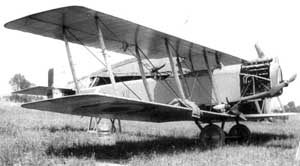
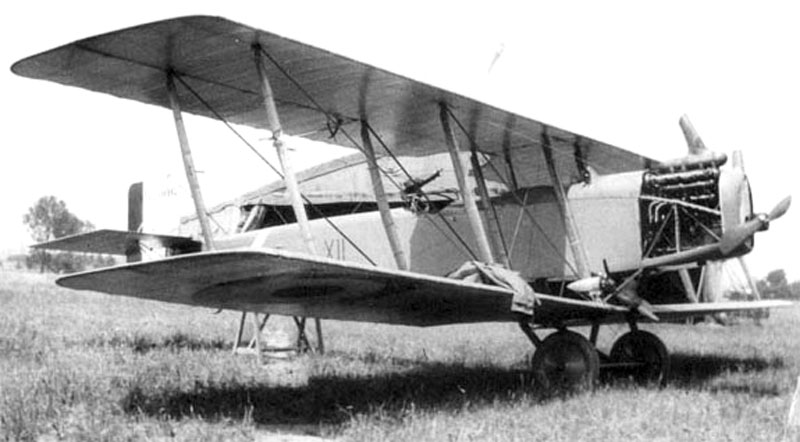
All told, the AR.1 was of a most basic design characterized by her wide-spanning biplane wing arrangement. The wings were dual-bay with parallel struts, were staggered to the rear in their placement, and operated via a network of cables. The lower wing assembly was connected to the fuselage indirectly by way of heavy duty struts. The fuselage sported slab siding and was general boxy in nature with the engine held in a compartment towards the front of the design and the empennage at the rear. The aircraft type was crewed by two personnel made up of the pilot and an observer with the former seated aft of the engine and the latter seated under and aft of the upper wing assembly in tandem, both cockpits being "open air" emplacements. The aircraft measured a wingspan of over 13 meters with a running length of 9 meters. Loaded weight was 1,250 kilograms. Power (for the base AR.1 production model - see variants) was supplied by a Renault 8 Bd V-type engine delivering 190 horsepower and provided a maximum speed of 153 kilometers per hour and a flying time of up to 3 hours. The listed service ceiling was in the vicinity of 5,500 meters. The engine powered a two-bladed wooden propeller system. The empennage sported a single vertical tail fin as well as two, all-surface moving horizontal tail planes. The undercarriage was fixed in place and consisted of two single-wheeled landing gear legs and a tail skid for basic ground support.

The pilot managed a single fixed, forward-firing .303 caliber Vickers type machine gun while the observer was afforded a trainable Lewis machine gun in either a single- or dual-gun mounting. The forward gun could be used to counter enemy aircraft or ground targets of opportunity while the rear gun was designed to protect the aircraft's vital rear quadrant from encroaching enemy aircraft. In addition to machine gun armament, the AR could be outfitted with up to 80 kilograms of ordnance, all held internally. The true nature of the AR was in its reconnaissance and observation role - not intended as a gunnery or dedicated bombing platform.

The Dorand design existed in several notable variants beginning with the initial production form designated simply as the AR.1. These were completed with the Renault 8 Bd series engines of 190 horsepower. The ARL.1 designation marked AR.1 production models revised to fit the Lorraine-Dietricj series engines of 185 horsepower. The second major production mark was the improved AR.2 which fielded a Renault 8 Gdy series engine of 200 horsepower, wing-mounted radiators (as opposed to front-mounted) and smaller-area wings. Similar to the ARL.1 conversion, the ARL.2 was nothing more than a revised AR.2 with a Lorraine-Dietrich engine of 240 horsepower.

The first Dorand AR production models reached the Western Front skies in early 1917 and would go on to form no fewer than thirteen French air service groups. The type was also fielded in number across five additional French squadrons along the Italian Front. In practice, the rather-limited Dorand AR design proved quite favorable for those called upon to fly her. She exhibited adequate qualities and proved reliable but generally suffered in overall performance due to the changing technology of war. By the end of her tenure, she was found to be much outclassed by more modern offerings from both sides of the conflict. The Dorand AR also staffed the inventory of the American Expeditionary Force by December of 1917, these fighting over the Western Front well into 1918 and purchased in over 100 examples to shore up the American's lack of available aircraft. The type was not very popular with the Yanks and ultimately developed the nickname of "Antique Rattletrap" to describe the type. American Dorand ARs were then relegated to the training of incoming American pilots when more suitable observation mounts became available.

Operators of the AR aside from France and the United States included Algeria, Greece and Serbia. The Kingdom of Serbia was able to stock four Dorand AR squadrons beginning in April of 1918.
Text ©2003-2013 www.MilitaryFactory.com • All Rights Reserved • No Reproduction Permitted
MilitaryFactory.com does NOT sell equipment/weaponry. Material presented throughout this website is for historical and entertainment value and should not to be construed as usable for hardware restoration, maintenance or general operation. Please consult manufacturers for such information. Our disclaimer. Email corrections / Comments to MilitaryFactory at Gmail dot com.
Picture of Dorand AR
View All Images (1)

Specifications for the
Dorand AR
Observation Biplane


Country of Origin: France
Manufacturer: Section Technique de l'Aeronautique - France
Initial Year of Service: 1917
Production: 142


Focus Model: Dorand AR.I
Crew: 2


Length: 29.99ft (9.14m)
Width: 43.60ft (13.29m)
Height: 10.83ft (3.30m)
Weight (Empty): 2,756lbs (1,250kg)
Weight (MTOW): 2,899lbs (1,315kg)


Powerplant: 1 x Renault 8Gdy inline piston engine delivering 190- or 200-horsepower.


Maximum Speed: 92mph (148kmh; 80kts)
Maximum Range: 171miles (276km)
Service Ceiling: 18,045ft (5,500m; 3.4miles)
Rate-of-Climb: 0 feet per minute (0m/min)


Hardpoints: 0
Armament Suite:
STANDARD:
1 x 7.7mm (0.303 caliber) Vickers machine gun in fixed, forward-firing position.
1 OR 2 x 7.7mm (0.303 caliber) Lewis machine gun(s) on trainable mount in rear cockpit.

OPTIONAL:
Up to 176lbs of bombs held internally.


Variants:
AR.1 - Initial Production Model


ARL.1

AR.2 - Improved Production Model

ARL.2


Operators: France; Greece; Serbia; United States

ALL AIRCRAFT CATEGORIES

BY DECADE:


1900 to 1909
1910 to 1919
1920 to 1929
1930 to 1939
1940 to 1949
1950 to 1959
1960 to 1969
1970 to 1979
1980 to 1989
1990 to 1999
2000 to 2009
2010 to 2019
2020 to 2029
VIEW ALL
Compare Aircraft


BY TYPE:


Anti-Submarine Warfare (ASW)
Attack Helicopters
Bomber Aircraft
Medium Bombers
Heavy Bombers
Close-Air Support (CAS)
Commercial Aircraft
Dive Bombers
Electronic Warfare Aircraft (EWA)
Experimental / X-Planes
Fighter Aircraft
Floatplane Aircraft
Flying Boat Aircraft
Aerial Refueling Tankers
Helicopters (ALL)
Interceptor Aircraft
Multi-Role Aircraft
Navy Carrier Aircraft
Night Fighters
Reconnaissance / Scout
Search & Rescue (SAR)
Scout Helicopters
Special Purpose
Torpedo Bombers
Trainer Aircraft
Transport Aircraft
Transport Helicopters
Unmanned Aerial Vehicles (UAVs)
Unmanned Combat Air Vehicles (UCAVs)


COLLECTIONS:


4th Generation Fighter Aircraft
5th Generation Fighter Aircraft
US X-Planes
Classic US Warbirds
French Military Helicopters
Grumman "Cats"
Howard Hughes Aircraft
Indian Air Force
Israeli Air Force
Libyan Aircraft
Modern Chinese Aircraft
Modern Chinese Fighters
Modern Military Aircraft
Modern North Korean Aircraft
Modern Trainer Aircraft
Modern US Aircraft
Mikoyan Aircraft
Sukhoi Aircraft
Syrian Aircraft
Top 10 Fighter Aircraft of All Time


AIRCRAFT BY CONFLICT:


Arab-Israeli War (1948)
Cuban Missile Crisis (1959-1962)
Falklands War (1982)
Indo-Pak War (1965, 1971)
Iran-Iraq War (1980-1988)
Lebanon War (1982)
Operation Allied Force (1999)
Operation Desert Storm (1991)
Six Day War (1967)
Spanish Civil War (1936)
Soviet-Afghan War (1979-1989)
Yom Kippur War (1973)


MISCELLANEOUS:


Aircraft Cockpits
Aircraft Manufacturers List
Aircraft Timeline

WORLD WAR 2:


1939 Aircraft
1940 Aircraft
1941 Aircraft
1942 Aircraft
1943 Aircraft
1944 Aircraft
1945 Aircraft
1946 Aircraft
Australian Aircraft
Battle of Britain Aircraft
Bombers
Four-Engine Bombers
British Aircraft
British Bombers
British Transports
Dive Bombers
Canadian Aircraft
Fighters
Chinese Aircraft
French Aircraft
German Aircraft
German Fighters
German Flying Boats
German Jets
Secret Weapons of the Luftwaffe
Italian Aircraft
Imperial Japanese Aircraft
Imperial Japanese Fighters
Mitsubishi Bombers
Navy Aircraft
Pearl Harbor
Polish Aircraft
Romanian Aircraft
US Aircraft
US Bombers
US Navy Aircraft
Soviet Aircraft
Torpedo Bombers
Transport Aircraft
Tuskegee Airmen Aircraft
W.A.S.P. Aircraft
WW2 Aircraft Ranked by Speed
VIEW ALL


WORLD WAR 1:


1914 Aircraft
1915 Aircraft
1916 Aircraft
1917 Aircraft
1918 Aircraft
Aircraft Timeline
Austro-Hungarian Aircraft
Bomber Aircraft
British Aircraft
Fighters
Flying Boats
French Aircraft
Imperial German Aircraft
Italian Aircraft
Scout Aircraft
Russian Empire Aircraft
US Aircraft
WW1 Aircraft Ranked by Speed
VIEW ALL


KOREAN WAR:


Australian Aircraft
Korean War Aces
Korean War Jets
North Korean Aircraft
US Military Aircraft
VIEW ALL


VIETNAM WAR:


Helicopters
North Vietnam Air Force
US Airpower
VIEW ALL


COLD WAR:


1950s French Aircraft
British V-Bombers
Cold War Bombers
Soviet Aircraft
Soviet Bombers
Soviet Interceptors
Soviet Helicopters
Strategic Air Command
US Aircraft
US Bombers
US Interceptors
VIEW ALL

Site Disclaimer | Privacy Policy | Site Map | MF Origins


©2013 www.MilitaryFactory.com • Content ©2003-2013 MilitaryFactory.com • All Rights Reserved • Site Contact Email: militaryfactory at gmail dot com. The "Military Factory" name and MilitaryFactory.com logo are registered ® trademarks and protected by all applicable domestic and international intellectual property laws.


Top MF Stuff: 2013 Military Pay Scale | Military Ranks | WW2 Weapons | Sniper Rifles | Kts to Mph | WW1 Aircraft | Automatic Rifles | Aircraft Cockpits | Vietnam War Weapons | Main Battle Tanks | Submachine Guns | Shotguns | French Military Victories


Most photographic images appearing on this site are courtesy of the United States Department of Defense and are approved for public use. Other images acquired through the public domain. Digital art work courtesy of Dan Alex. Business Consulting by Kyle Williams. Material presented throughout this website is for historical and entertainment value and should not to be construed as usable for hardware restoration, maintenance or general operation. Please consult manufacturers for such information.


eXTReMe Tracker