Military Factory
Military Pay Chart
Global Firepower
Military Industrial Complex
Second World War
Home
Military Pay Scale
Military Ranks
Small Arms
Aircraft
Land Systems
Navy
Education
Military Factory Facebook Logo
flag of United States

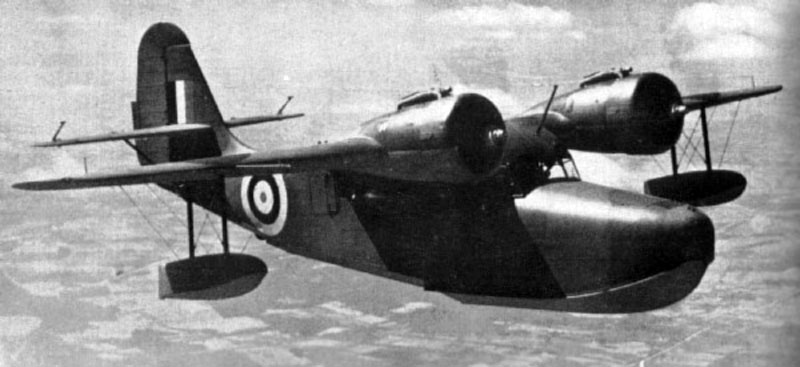
Grumman Goose (G-21) Multirole Flying Boat (1937)

Authored By Staff Writer | Last Updated: 4/2/2012

The Grumman Goose was a true unsung war hero in World War 2, involved in transport, training and at sea rescue operations.

Find a School Near You
Follow Military Factory on Facebook:
Trending on Military Factory:
Recent Articles:
While most every aircraft venture usually began with a military requirement or private venture undertaken by a manufacturer for the purpose of sales, the Grumman Goose actually was born out of a privately-funded requirement from wealthy Long Islanders for an amphibious civil-minded air transport to New York City and back. The group therefore commissioned Grumman to design and develop the aircraft to fit such specifications giving rise to the Grumman G-21 "Goose". The Grumman concern delivered a high-wing twin-engine design with a full hull fuselage, roomy exterior and amphibious capabilities to allow for landing on runways or water. The G-21 eventually found military use as an armed patrol craft before, during and after World War 2, sealing the type's legacy for us readers to enjoy today.

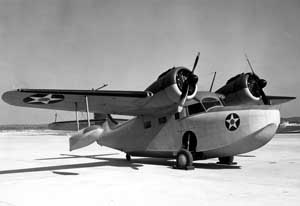
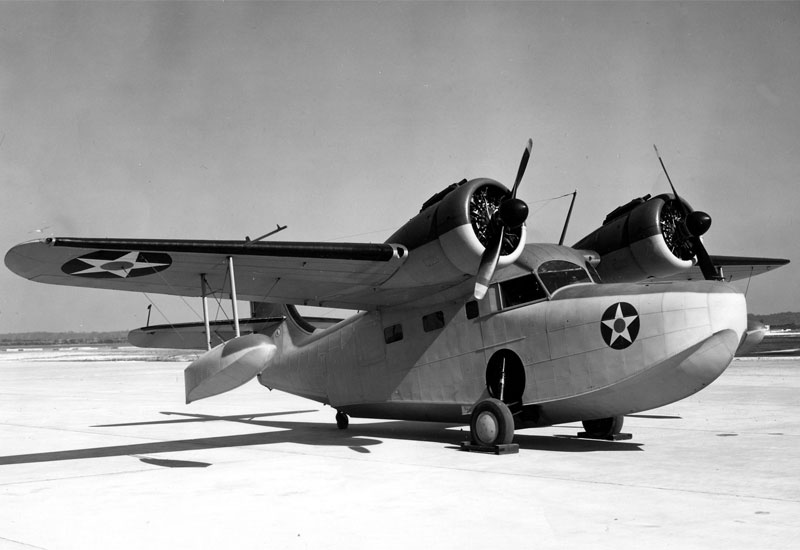
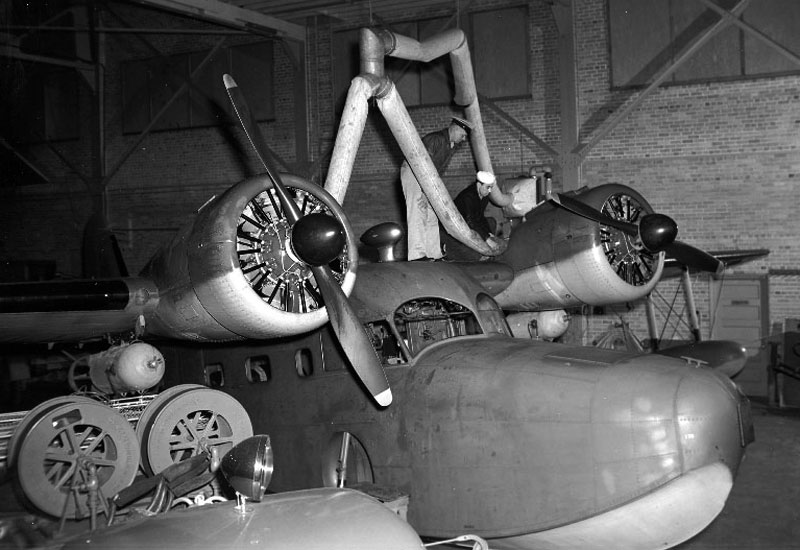
The Grumman G-21 utilized many conventional design avenues of the time and one key initiative was in its liberal use of metal skin - the American aviation industry now having moved away from the wood-and-canvas fabric approach so prevalent following the close of World War 1. Some fabric surfaces were still, however, in play save for some control surfaces but the new aircraft was a most modern endeavor for the era. The fuselage was narrow in the forward profile and very deep to make room for both the passenger cabin and the ship-like hull needed for water landings. The fuselage was capped at the front by a long-running nose assembly giving it the appearance of a speed boat. The fuselage also sported slab sides with windows for viewing and sported a traditional tail section with a short, rounded vertical tail fin and applicable horizontal tailplanes. The cockpit was forward of the passenger cabin with side-by-side seating for two and aft of the nose assembly. Perhaps the most notable element of the aircraft's design (aside from its boat hull) was it high, shoulder-mounted monoplane wing placement running over the roof of the passenger cabin. This allowed for clearance of the propellers utilized by the pair of air-cooled radial piston engines fitted to each wing leading edge. Pontoon floats were affixed at each wing's midway point (outboard of the engine nacelles) for side stability. While designed primarily for operations from water, the aircraft was also completed with a manually-powered and fully retractable three-point undercarriage stance made up of two main landing gear legs and a small tail wheel structure. The main legs retracted into the fuselage sides near the cockpit. With the design completed, the prototype airframe flew for the first time on May 29th, 1937. Upon clearance for civil use, the G-21 served its clients well for they rode in style with the amenities demanded of such a lifestyle. Interiors were of luxury quality and completed with comfortable seating and waste facilities. Little did Grumman - nor its early clients - know that the type would also serve the militaries of the world in very different roles during the world war to follow.

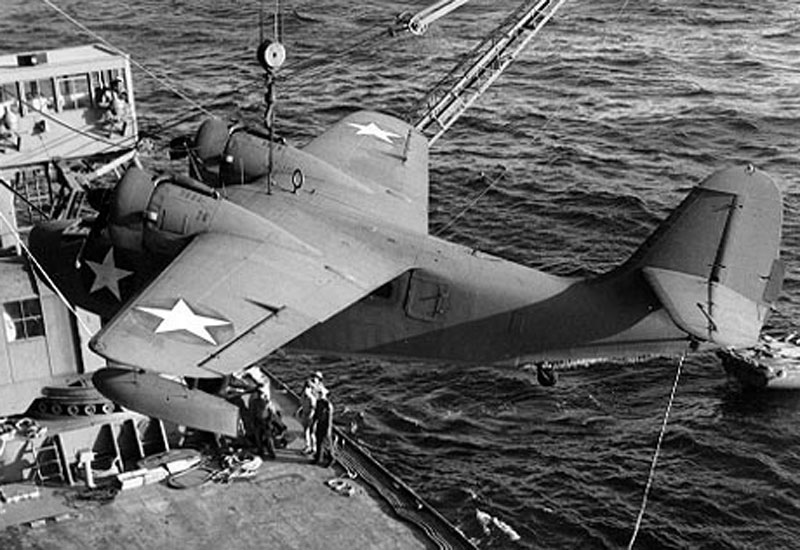
Seeing value in the rugged, multi-faceted G-21, the United States Army Air Force (USAAF) decided to procure the type beginning in 1938. These militarized versions were designated in typical Army fashion as "OA-9" mounts meant for aerial observation. The US Navy followed suit and designated their fleet of G-21s as "JRF" with applicable numbered marks following. Along with USN usage, the G-21 was also a mainstay of US Coast Guard operations for a time and these also followed the USN JRF designation marks. By the time of full-scale war, the US military commandeered civilian-minded G-21s into wartime service and designated these as "OA-13".

Overseas, the G-21 also saw extended use with its most notable operators being the British Royal Air Force and the Royal Canadian Air Force - both used in military roles. It was the British that assigned the nickname of "Goose" to the line and the name stuck to the series from then on (similar to the use of names given to the "Lee", "Grant" and "Sherman" US tanks used by the British Army under Lend-Lease). Other global operators eventually became Argentina, Australia, Bolivia, Brazil, Cuba, France, Honduras, Japan, Paraguay, Peru, Portugal and Sweden - all in military roles. The Imperial Japanese Navy actually evaluated the G-21 as the "Grumman LXG" but did not procure the aircraft prior to the war. In their civilian guise, the G-21 operated in Australia, British Guiana, Canada, the Dutch East Indies, Fiji, Iceland, New Zealand and Norway - wherever rugged qualities and lack of runway facilities was a concern, the G-21 just might be found.

The original production model of the Goose was designated simply as the "G-21" and these were powered by a pair of Pratt & Whitney Wasp Junior SB radial piston engines of 450 horsepower each. These had interior spacing for two pilots and up to six passengers though only twelve of the type were produced. The G-21A followed next and were built in thirty examples - becoming the standard to which the original G-21s were brought up to which included an increase to the gross weight from 7,500lbs to 8,000lbs. In its export form, the G-21 was marketed as the "G-21B", a lightly-armed version meant for coastal maritime patrolling. The first customer became the Portuguese Navy. As mentioned, the USAAF variant was the OA-9 and served as a general passenger transport while also called upon to undertake air-sea rescue operations as needed. Only three civilian G-21s became the "OA-13A" while two bomb-armed JRF-5s (detailed below) became the "OA-13B". It is noteworthy here that some wartime military versions of the Goose were pure sea-going aircraft, having their landing gear installations completely removed to save on weight.

When the United States Navy came calling, the G-21 was built into the "XJ3F-1" prototype - a single example appearing in 1938 for US Navy consideration and fitting eight seats in the cabin. This gave birth to the production-minded "JRF-1" of which five were produced. The JRF-1A followed suit but were completed with a hatch for camera facilities and a target towing mount. Five were produced in all. The JRF-2 was built in seven examples with interior room for medical litters meant for US Coast Guard use. The JRF-3 followed in line with the JRF-2 design and also delivered to the USCG though these introduced autopilot and deicers on the leading wing edges for cold weather operations. The JRF-4 was based on the JRF-1A for the USN and added provision for 2 x depth charges to be carried externally under each wing. Ten examples of this type were delivered. The JRF-5 proved the definitive USN/USCG variant with some 184 produced. These were delivered complete with the aforementioned camera facilities and target towing installation of the JRF-1A and the deicing boots of the JRF-3 but also added bomb racks for conventional drop bombs. The JRF-5 was known as the JRF-5G to the USCG of which it received at least 24 from the USN. A naval trainer version was developed for Lend-Lease sale and this was designated as the JRF-6B to which some 50 examples were produced.

In British and Commonwealth service, the G-21 was known simply as the "Goose". In typical British fashion, the aircraft was afforded a series of "marks" to differentiate various production types. This began with the "Goose Mk I" of which three were operated by the Fleet Air Arm. The Goose Mk IA became 44 JRF-6B models procured via Lend-Lease and operated as trainers for the British Navy in the Caribbean. The Goose Mk II were just a pair of JRF-5 models serving as military VIP transports between Canada and the United States.

In post-war America, the G-21 survived largely in operation with the US Department of the Interior of Alaska where its multi-role functionality in varying operating environments were fully put to the test. These were fitted with 2 x Garrett TPE331-2UA-203D series turboprop engines delivering 715 shaft horsepower each. Many others ended up in private ownership or functioning as civilian air taxis for tourists. Today, G-21s still operate mostly in private ownership - a testament to their great engineering and construction. In all, some 345 Grumman Goose aircraft were completed and delivered - an amazing amount (perhaps as many as 30) are still flyable today. Wartime surplus and foreign sales ensured that the Goose managed a healthy postwar life and many were modified by specialist house McKinnon Enterprises as the G-21C, G-21D, G-21E, G-21F and the final McKinnon G-21G "Turbo-Goose". A relatively new initiative by Antilles Seaplanes of North Carolina intends on bringing the Goose to full modern standards with the incorporation of all-digital cockpit facilities, updated flight systems and structural improvements.

For those who managed an existence in front of their television sets during the 1980s, the Grumman Goose could be seen in prominent roles through the Hollywood motion picture / Arnold Schwarzenegger vehicle "Commando" as well as the short-lived ABC television series "Tales of the Golden Monkey".
Text ©2003-2013 www.MilitaryFactory.com • All Rights Reserved • No Reproduction Permitted
MilitaryFactory.com does NOT sell equipment/weaponry. Material presented throughout this website is for historical and entertainment value and should not to be construed as usable for hardware restoration, maintenance or general operation. Please consult manufacturers for such information. Our disclaimer. Email corrections / Comments to MilitaryFactory at Gmail dot com.
Picture of Grumman Goose (G-21)
Pic of the Grumman Goose (G-21)
Image of the Grumman Goose (G-21)
View All Images (4)

Specifications for the
Grumman Goose (G-21)
Multirole Flying Boat


Country of Origin: United States
Manufacturer: Grumman - USA
Initial Year of Service: 1937
Production: 345


Focus Model: Grumman JRF-5 Goose
Crew: 2 + 8


Length: 38.52ft (11.74m)
Width: 49.02ft (14.94m)
Height: 16.17ft (4.93m)
Weight (Empty): 5,437lbs (2,466kg)
Weight (MTOW): 8,016lbs (3,636kg)


Powerplant: 2 x Pratt & Whitney R-985 Wasp Junior AN-6 9-cylinder air-cooled radial piston engines delivering 450 horsepower each.


Maximum Speed: 201mph (324kmh; 175kts)
Maximum Range: 640miles (1,030km)
Service Ceiling: 21,306ft (6,494m; 4.0miles)
Rate-of-Climb: 1,100 feet per minute (335m/min)


Hardpoints: 2
Armament Suite:
Usually none unless for armed military use.

G-21B:
1 x 0.30 caliber machine gun in bow position
1 x 0.30 caliber machine gun in dorsal position
2 x 100lb bombs underwing

JRF-4/JRF-5:
2 x 250lb depth charges or conventional drop bombs underwing.


Variants:
G-21 - Initial Production Model; seating for six passengers; 12 examples produced.


G21A - Improved version; increased weight; 30 examples produced.

G-21B - Export Armed Patrol Variant; fitted with 2 x 0.30 caliber machine guns and provision for 2 x bombs; Portuguese Navy service; 12 examples delivered.

G-21C - McKinnon Conversion Model; 4 x Lycoming GSO-480 supercharged engines of 340 horsepower; various modifications.

G-21D "Turboprop Goose" - McKinnon Conversion Model; lengthened bow; additional passenger windows and increased passenger seating; fitted with 2 x Pratt & Whitney Canada PT6A-20 turboprop engines of 550 horsepower.

G-21E - McKinnon Conversion Model; 2 x Pratt & Whitney Canada PT6A-20 engines of 550 horsepower; increased fuel stores; single example.

G-21F - McKinnon Conversion Model; Alaska Fish and Wildlife version based on McKinnon information; fitted with 2 x Garrett TPE331 series turboprop engines of 715 horsepower.

G-21G "Turbo-Goose" - McKinnon Conversion Model; final McKinnon offering; fitted with 2 x Pratt & Whitney Canada PT6A-27 series engines of 680 horsepower; 2 examples completed.

XJ3F-1 - US Navy prototype; single example

JRF-1 - Initial US Navy production model based on the XJ3F-1 prototype; 5 examples produced.

JRF-1A - Based on the JRF-1; completed with camera facilities and target tow installation; 5 examples produced.

JRF-2 - USCG variant of the JRF-1; room for medical litters; 7 examples completed.

JRF-3 - Based on JRF-2 model; USCG use; completed with autopilot and wing deicing feature; 3 examples.

JRF-4 - Based on JRF-1A; USN use; provision for depth charges to be held underwing; 10 examples produced.

JRF-5 - Definitive production mark; provision for bombs; installation of camera gear and target tow system; wing deicing system; 184 examples produced.

JRF-5G - USCG version of JRF-5 model borrowed from USN; 24 examples.

JRF-6B - Lend-Lease Export Trainer; 50 examples; used in navigational training by RAF in Caribbean.

OA-9 - USAAF transport or air-sea rescue platform; 26 examples later joined by 5 JRF-6B mounts sharing same designation.

OA-13A - G-21A civilian models commandeered by USAAF for wartime use; 3 examples.

OA-13B - JRF-5 in USAAF service; 2 examples transferred.

Goose Mk I - British Designation of JRF-5; 3 examples.

Goose Mk IA - British Designation of JRF-6B trainers; 44 examples.

Goose Mk II - British Designation of JRF-5 for VIP military transport; 2 examples.

Grumman LXG - One-off example evaluated by IJN; never procured.


Operators: Argentina; Australia; Bolivia; Brazil; British Guiana; Canada; Cuba; Dutch East Indies; Fiji; France; Honduras; Iceland; Japan; Norway; Paraguay; Peru; Portugal; Sweden; United Kingdom; United States

ALL AIRCRAFT CATEGORIES

BY DECADE:


1900 to 1909
1910 to 1919
1920 to 1929
1930 to 1939
1940 to 1949
1950 to 1959
1960 to 1969
1970 to 1979
1980 to 1989
1990 to 1999
2000 to 2009
2010 to 2019
2020 to 2029
VIEW ALL
Compare Aircraft


BY TYPE:


Anti-Submarine Warfare (ASW)
Attack Helicopters
Bomber Aircraft
Medium Bombers
Heavy Bombers
Close-Air Support (CAS)
Commercial Aircraft
Dive Bombers
Electronic Warfare Aircraft (EWA)
Experimental / X-Planes
Fighter Aircraft
Floatplane Aircraft
Flying Boat Aircraft
Aerial Refueling Tankers
Helicopters (ALL)
Interceptor Aircraft
Multi-Role Aircraft
Navy Carrier Aircraft
Night Fighters
Reconnaissance / Scout
Search & Rescue (SAR)
Scout Helicopters
Special Purpose
Torpedo Bombers
Trainer Aircraft
Transport Aircraft
Transport Helicopters
Unmanned Aerial Vehicles (UAVs)
Unmanned Combat Air Vehicles (UCAVs)


COLLECTIONS:


4th Generation Fighter Aircraft
5th Generation Fighter Aircraft
US X-Planes
Classic US Warbirds
French Military Helicopters
Grumman "Cats"
Howard Hughes Aircraft
Indian Air Force
Israeli Air Force
Libyan Aircraft
Modern Chinese Aircraft
Modern Chinese Fighters
Modern Military Aircraft
Modern North Korean Aircraft
Modern Trainer Aircraft
Modern US Aircraft
Mikoyan Aircraft
Sukhoi Aircraft
Syrian Aircraft
Top 10 Fighter Aircraft of All Time


AIRCRAFT BY CONFLICT:


Arab-Israeli War (1948)
Cuban Missile Crisis (1959-1962)
Falklands War (1982)
Indo-Pak War (1965, 1971)
Iran-Iraq War (1980-1988)
Lebanon War (1982)
Operation Allied Force (1999)
Operation Desert Storm (1991)
Six Day War (1967)
Spanish Civil War (1936)
Soviet-Afghan War (1979-1989)
Yom Kippur War (1973)


MISCELLANEOUS:


Aircraft Cockpits
Aircraft Manufacturers List
Aircraft Timeline

WORLD WAR 2:


1939 Aircraft
1940 Aircraft
1941 Aircraft
1942 Aircraft
1943 Aircraft
1944 Aircraft
1945 Aircraft
1946 Aircraft
Australian Aircraft
Battle of Britain Aircraft
Bombers
Four-Engine Bombers
British Aircraft
British Bombers
British Transports
Dive Bombers
Canadian Aircraft
Fighters
Chinese Aircraft
French Aircraft
German Aircraft
German Fighters
German Flying Boats
German Jets
Secret Weapons of the Luftwaffe
Italian Aircraft
Imperial Japanese Aircraft
Imperial Japanese Fighters
Mitsubishi Bombers
Navy Aircraft
Pearl Harbor
Polish Aircraft
Romanian Aircraft
US Aircraft
US Bombers
US Navy Aircraft
Soviet Aircraft
Torpedo Bombers
Transport Aircraft
Tuskegee Airmen Aircraft
W.A.S.P. Aircraft
WW2 Aircraft Ranked by Speed
VIEW ALL


WORLD WAR 1:


1914 Aircraft
1915 Aircraft
1916 Aircraft
1917 Aircraft
1918 Aircraft
Aircraft Timeline
Austro-Hungarian Aircraft
Bomber Aircraft
British Aircraft
Fighters
Flying Boats
French Aircraft
Imperial German Aircraft
Italian Aircraft
Scout Aircraft
Russian Empire Aircraft
US Aircraft
WW1 Aircraft Ranked by Speed
VIEW ALL


KOREAN WAR:


Australian Aircraft
Korean War Aces
Korean War Jets
North Korean Aircraft
US Military Aircraft
VIEW ALL


VIETNAM WAR:


Helicopters
North Vietnam Air Force
US Airpower
VIEW ALL


COLD WAR:


1950s French Aircraft
British V-Bombers
Cold War Bombers
Soviet Aircraft
Soviet Bombers
Soviet Interceptors
Soviet Helicopters
Strategic Air Command
US Aircraft
US Bombers
US Interceptors
VIEW ALL

Site Disclaimer | Privacy Policy | Site Map | MF Origins


©2013 www.MilitaryFactory.com • Content ©2003-2013 MilitaryFactory.com • All Rights Reserved • Site Contact Email: militaryfactory at gmail dot com. The "Military Factory" name and MilitaryFactory.com logo are registered ® trademarks and protected by all applicable domestic and international intellectual property laws.


Top MF Stuff: 2013 Military Pay Scale | Military Ranks | WW2 Weapons | Sniper Rifles | Kts to Mph | WW1 Aircraft | Automatic Rifles | Aircraft Cockpits | Vietnam War Weapons | Main Battle Tanks | Submachine Guns | Shotguns | French Military Victories


Most photographic images appearing on this site are courtesy of the United States Department of Defense and are approved for public use. Other images acquired through the public domain. Digital art work courtesy of Dan Alex. Business Consulting by Kyle Williams. Material presented throughout this website is for historical and entertainment value and should not to be construed as usable for hardware restoration, maintenance or general operation. Please consult manufacturers for such information.


eXTReMe Tracker