Military Factory
Military Pay Chart
Global Firepower
Military Industrial Complex
Second World War
Home
Military Pay Scale
Military Ranks
Small Arms
Aircraft
Land Systems
Navy
Education
Military Factory Facebook Logo
flag of United States

Boeing B-29 Superfortress Strategic Heavy Bomber (1943)

Authored By Staff Writer | Last Updated: 12/28/2012

The B-29 Superfortress was charged with dropping two atomic bombs on the Empire of Japan.

Find a School Near You
Follow Military Factory on Facebook:
Trending on Military Factory:
Recent Articles:
B-29 Superfortress status is often associated with the atomic bombs dropped on the Japanese cities of Hiroshima and Nagasaki during World War 2 ("Bock's Car" and the "Enola Gay"). However, before the B-29 signaled the beginning of the end of the conflict, it served as a nearly untouchable, high-altitude heavy bombing platform with revolutionary technologies incorporated throughout her impressive design. The Boeing B-29 Superfortress only served in the Pacific Theater of War against the Empire of Japan during the war and was never called to Europe as the war against Germany was winding down in May of 1945. However, the bomber series would go one to serve extensively throughout the upcoming Korean War (1950-1953), solidifying her place in military aviation history.

The B-29, like the Boeing B-17 Flying Fortress before it, was developed to a US Army Air Corps requirement for a high-level heavy bomber capable of extended operational ranges and increased payloads while operating at speeds nearing 400 miles per hour. The range requirement was of particular note for the vast distances of the Pacific required a long-range thoroughbred. The B-29 program began at a slow pace prior to America's entry into World War 2. After the Japanese attack on Pearl Harbor, the B-29 program was pushed into full gear. The first of three XB-29 prototypes took to the air in 1942 with government orders already secured for over 1,500 production units.

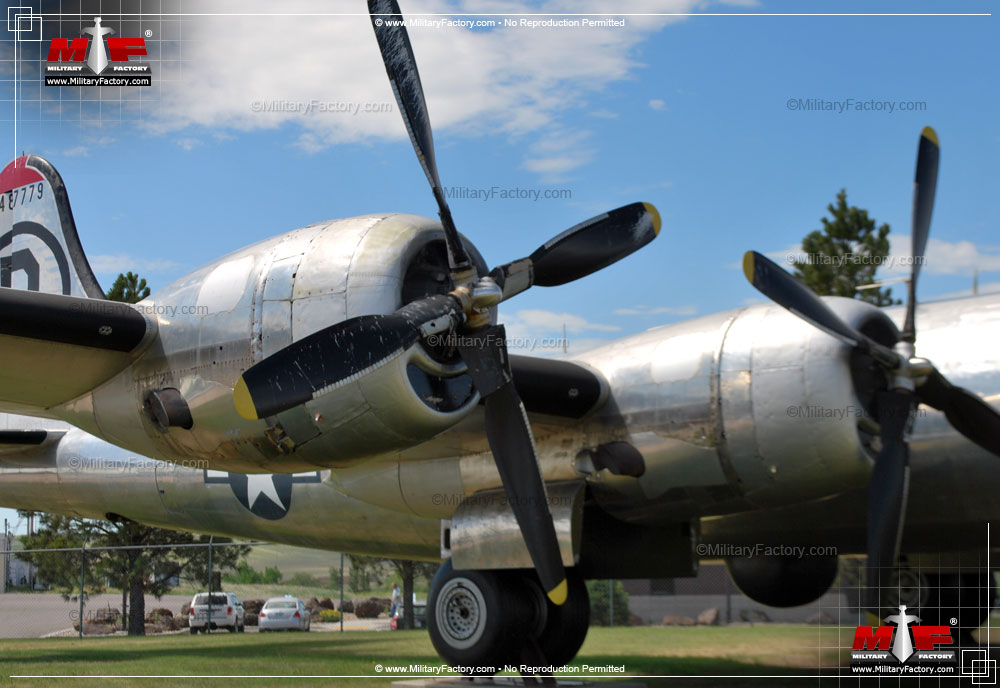
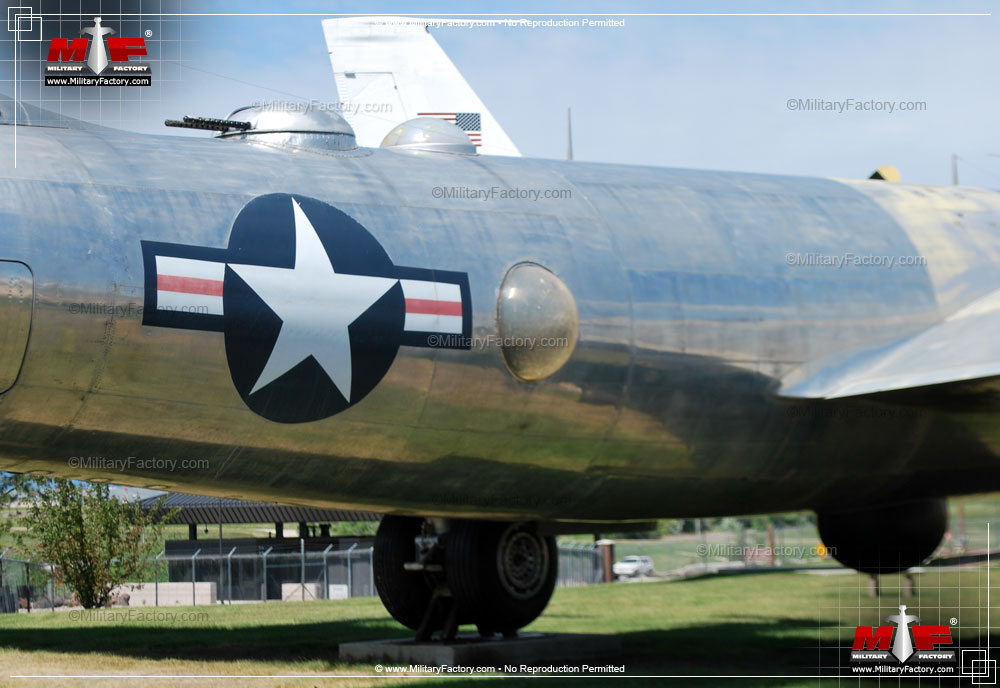
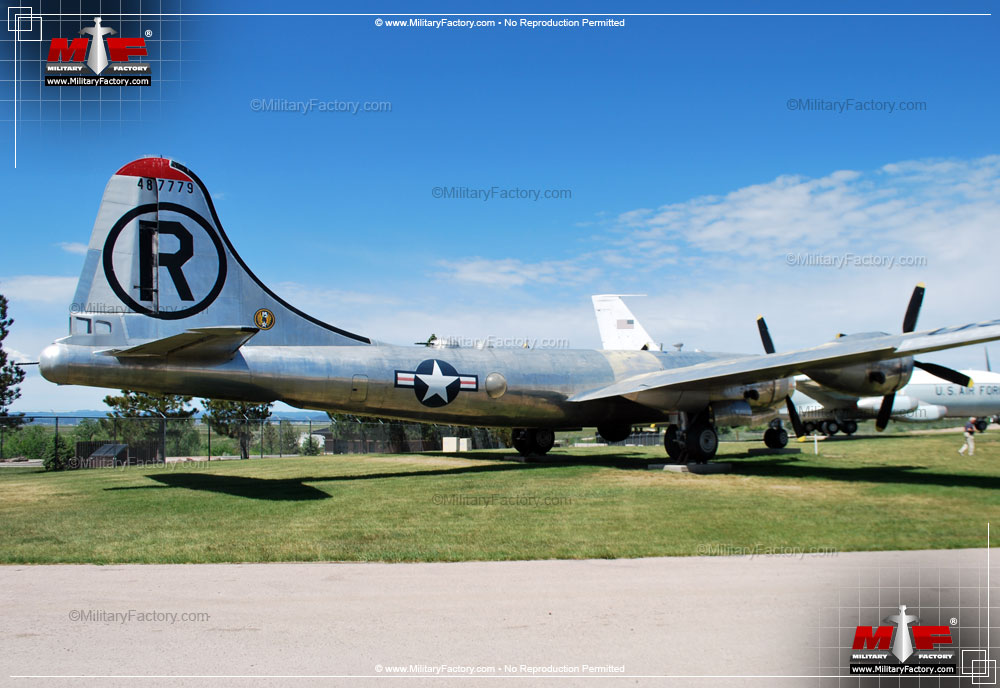
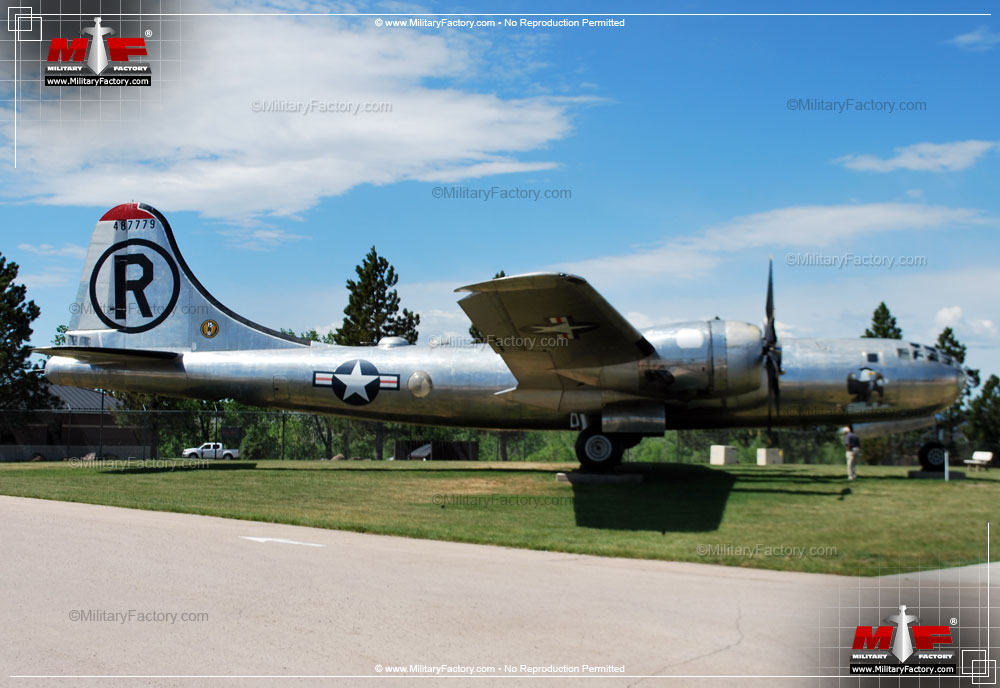
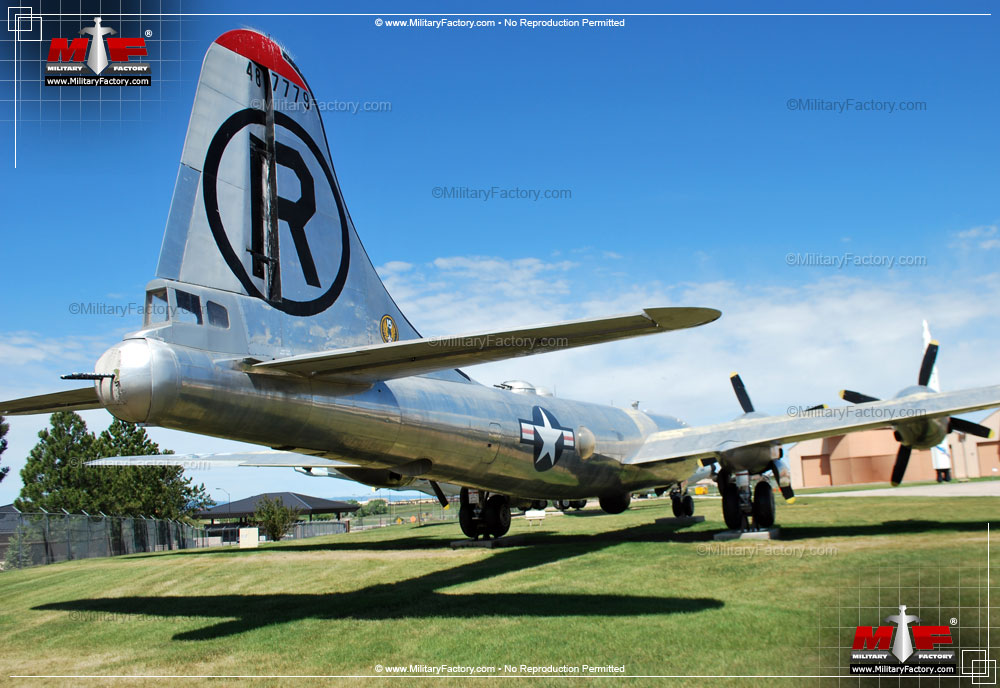
The B-29 Superfortress was a mid-wing monoplane design centered on a tubular fuselage powered by four large radial piston engines. The pencil-like fuselage was heavily-glazed at the nose and provided the identifiable appearance for the series. Crew accommodations included ten personnel made up of pilots, bombardiers, navigators, specialists and gunners. All weapon systems were held in electrically-powered turret "barbettes" operated by way of integrated periscopes and fitted in dorsal, ventral and tail gun positions. At any rate, this armament arrangement represented a vast departure from any bomber defenses fielded during the war, essentially necessitated by the B-29's high operating altitude (the B-17 still utilized open air machine gun ports, exposing the crew to the bitter cold temperatures of high-level flight). Several modified - or converted - models of the B-29 were used exclusively for crew training, as dedicated Search and Rescue (SAR) systems, dedicated reconnaissance platforms outfitted with camera and weather survey platforms before the end of the aircraft's production run. By the time of the Korean War, daylight bombing runs had become becoming increasingly costly to B-29 crews thanks to the arrival of the Soviet-built, single-seat, jet-powered Mikoyan-Gurevich MiG-15 "Fagot" fighters. As such, night time bombing campaigns grew in number as the B-29 continued serving under the new USAF Strategic Air Command (SAC).

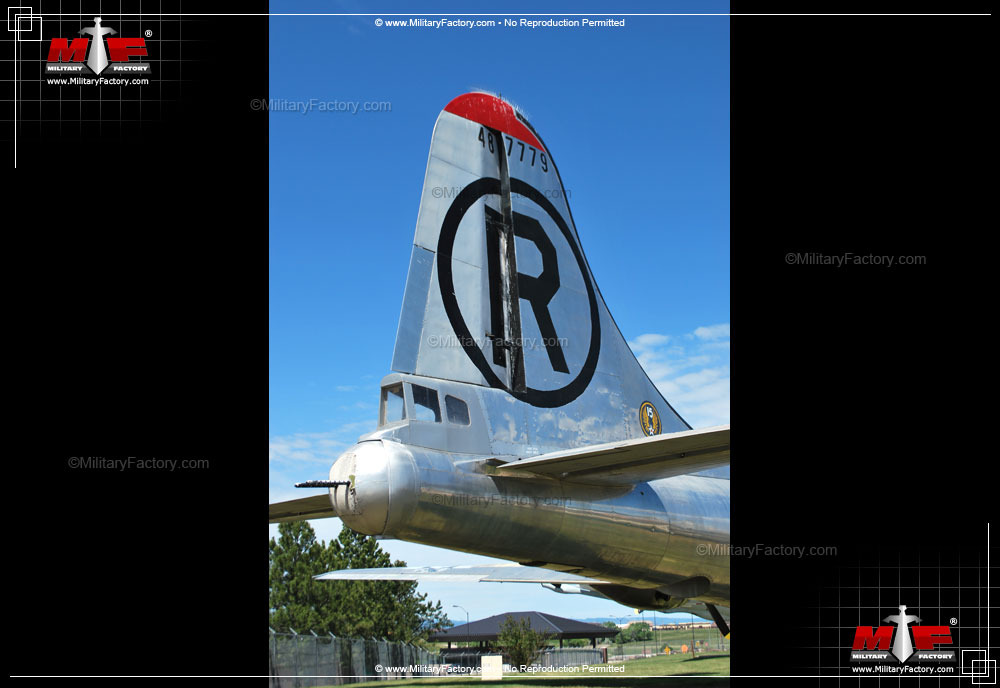
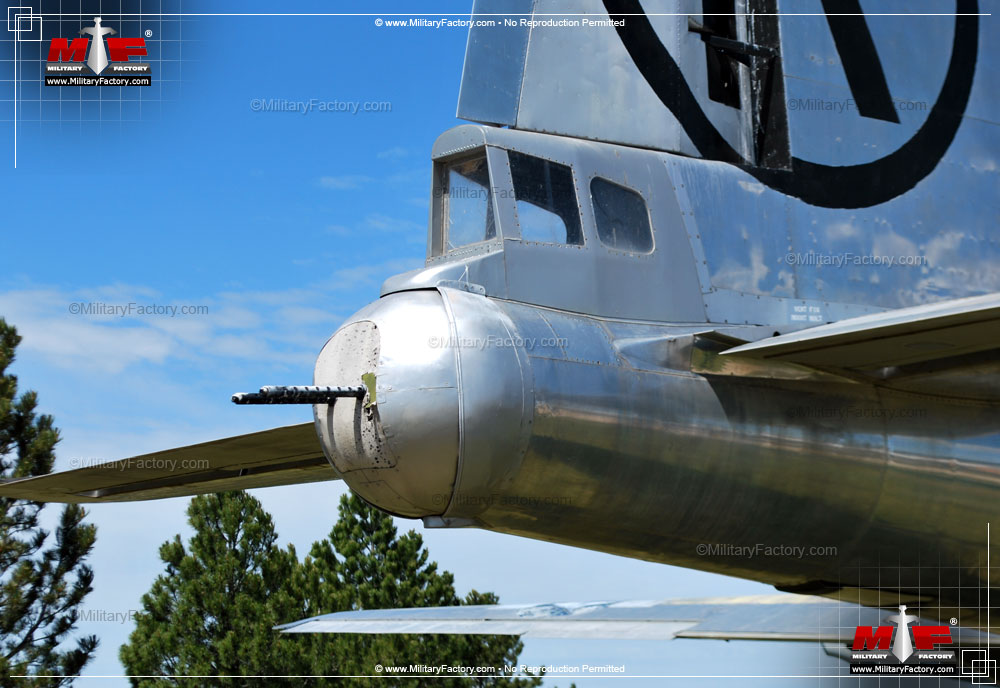
The B-29 fitted a bevy of 12.7mm Browning M2 heavy machine guns. Four were installed in an electrically-operated dorsal turret while a second dorsal turret fitted two more. A pair of 12.7mm machine guns were installed in a chin position with another two-gun system under the rear fuselage. A pair of machine guns was installed in the tail to counter any trailing enemy aircraft attempting to make the interception. Beyond her machine gun armament, the B-29's true value came in her ability to carry up to 20,000lbs of internal ordnance.

American authorities limited the B-29s combat action solely to the Pacific Theater during World War 2. Operational B-29s were being delivered to front lines as early as 1943 (these being largely service evaluation aircraft) and were utilized into 1944 as daylight, high-level bombers. These early attacks ranged from bases within British India against Japanese targets in Thailand and, later, against mainland Japan proper. Night time, low-level attacks were next on the B-29 agenda and destruction of Japanese cities and military production facilities were utterly lethal - one fire-bomb attack alone by some 279 Superfortresses killed upwards of 80,000 Japanese.

Production of B-29 Superfortress was split among several factory lines under different contractors to keep up with demand. This would ultimately include Boeing, Bell and Martin. Production totaled nearly 4,000 examples by war's end. An improved B-29 model appeared in the years following the end of the war and was designated as the "B-50". Outwardly similar to the original B-29, the B-50 was completed with some 75% of the airframe newly designed, hence her all-new designation. The B-50 was differentiated from her predecessor by a revised vertical tail fin as well as more powerful engines. Additionally, the B-50's structure was further strengthened. She appeared in 1948 and was produced in about 370 examples up until 1953.

Beyond the United States, the United Kingdom and Australia both utilized the B-29 Superfortress in their respective inventories. The Soviet Union, always willing to gain more ground in the technology field against her American adversaries, reverse-engineered B-29s from three captured examples that were forced to crash-land in Soviet territory after raids over Japan (among these was the "Ramp Tramp"). On Stalin's orders, the Tupolev firm took on the task and worked out the Boeing product right down to the last rivet, resulting in the Tupolev Tu-4 "Bull" which, itself, spawned the Tupolev Tu-70 dedicated transport platform. For all intents and purposes, the Tu-4 was nothing more than an inferior copy of the excellent American product.

The B-29 proved a critical design achievement for the American military, particularly concerning actions in World War 2 and Korea. It undoubtedly lay the ground work for future projects that would ultimately culminate in the world-renowned Boeing B-52 "Stratofortress" of Vietnam War fame. The B-52 essentially marked the end of the dedicated Boeing "heavy bomber" era, the mantel since taken up by the sleek swing-wing Rockwell B-1 "Lancer" and the technologically advanced Northrop B-2 "Spirit" stealth bomber and missile-launching warships and submarines.
Text ©2003-2013 www.MilitaryFactory.com • All Rights Reserved • No Reproduction Permitted
MilitaryFactory.com does NOT sell equipment/weaponry. Material presented throughout this website is for historical and entertainment value and should not to be construed as usable for hardware restoration, maintenance or general operation. Please consult manufacturers for such information. Our disclaimer. Email corrections / Comments to MilitaryFactory at Gmail dot com.
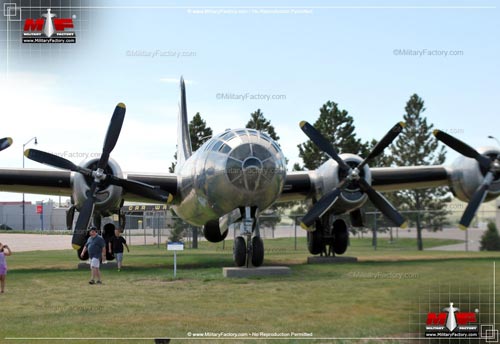
Picture of Boeing B-29 Superfortress
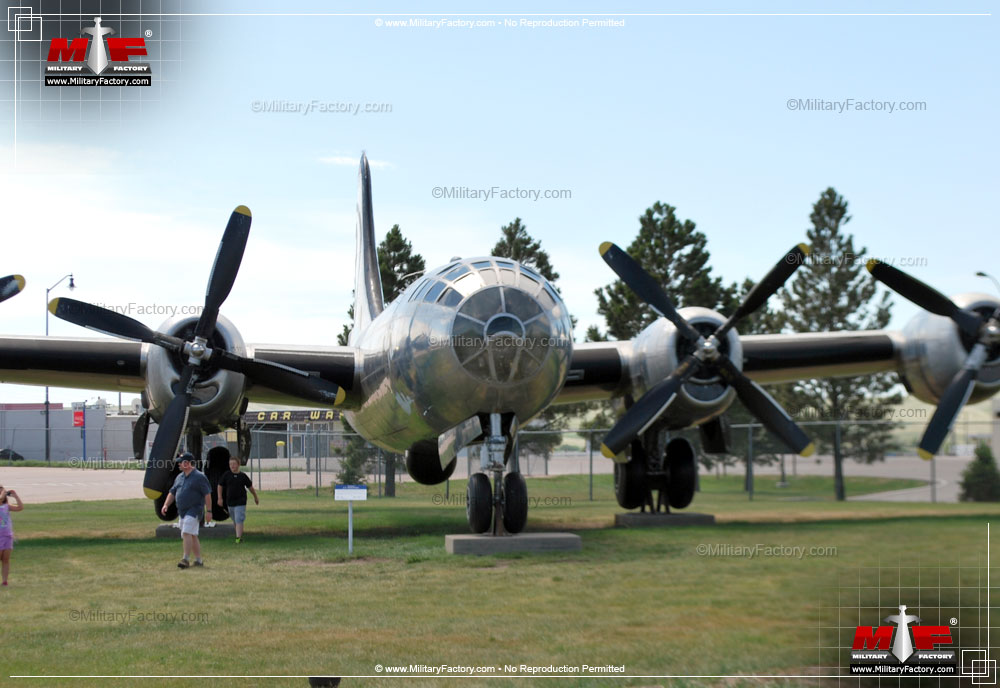
Pic of the Boeing B-29 Superfortress
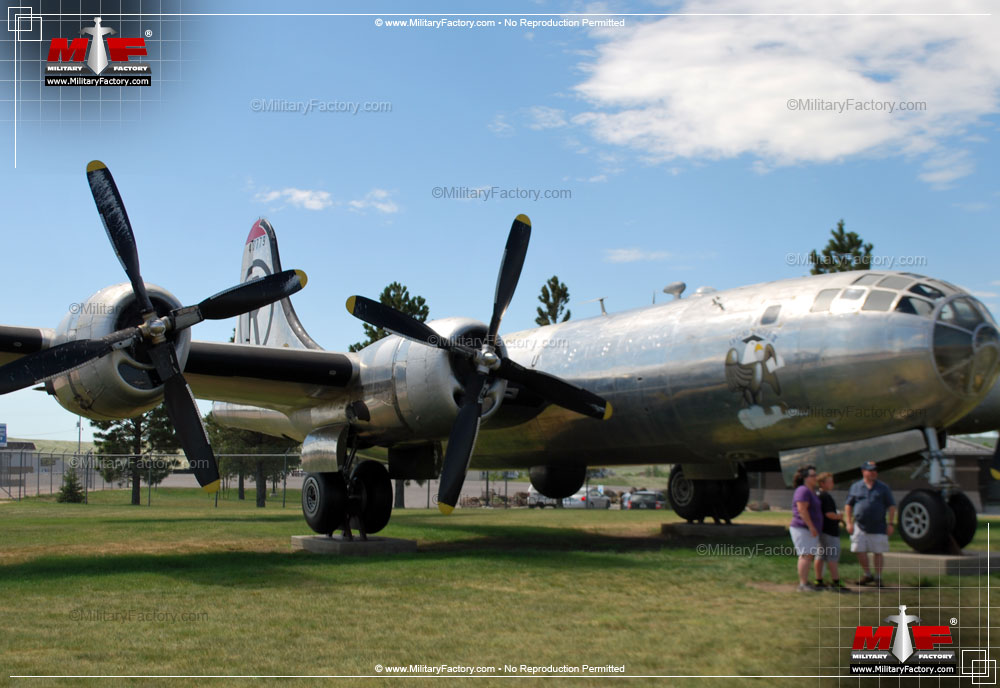
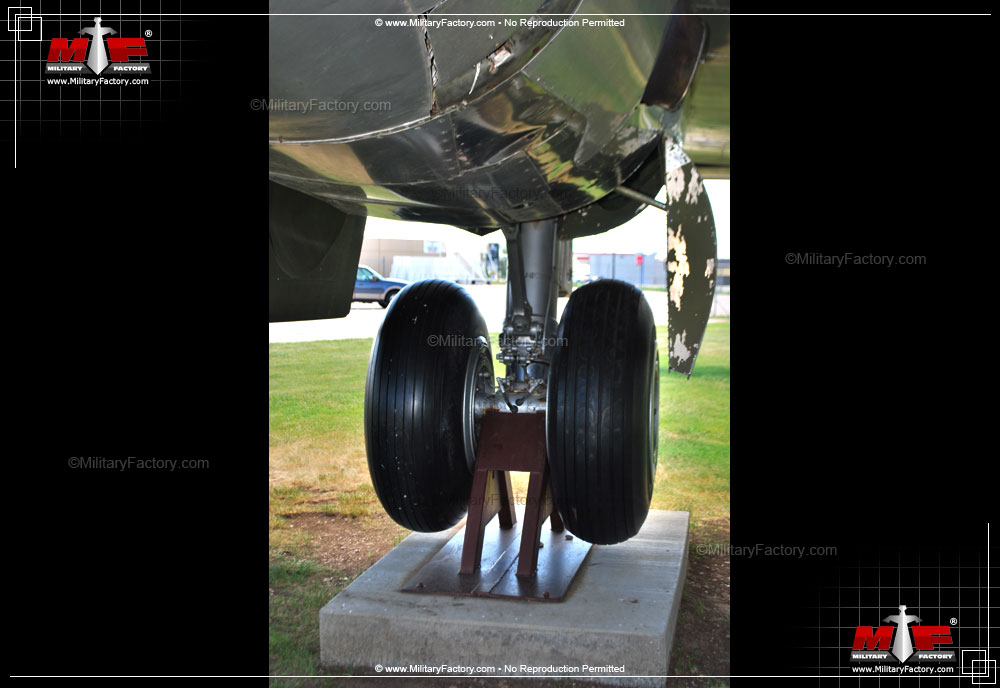
Image of the Boeing B-29 Superfortress
View All Images (30)

Specifications for the
Boeing B-29 Superfortress
Strategic Heavy Bomber


Country of Origin: United States
Manufacturer: The Boeing Company - USA
Initial Year of Service: 1943
Production: 3,970


Focus Model: Boeing B-29A Superfortress
Crew: 10


Length: 99.02ft (30.18m)
Width: 142.26ft (43.36m)
Height: 29.56ft (9.01m)
Weight (Empty): 71,361lbs (32,369kg)
Weight (MTOW): 141,102lbs (64,003kg)


Powerplant: 4 x Wright R-3350-23 Cyclone Eighteen air-cooled radial piston engines generating 2,200 horsepower each.


Maximum Speed: 358mph (576kmh; 311kts)
Maximum Range: 4,100miles (6,598km)
Service Ceiling: 31,808ft (9,695m; 6.0miles)
Rate-of-Climb: 526 feet per minute (160m/min)


Hardpoints: 0
Armament Suite:
STANDARD:
4 x 12.7mm Browning M2 machine guns in electrically-operated dorsal turret
2 x 12.7mm Browning M2 machine guns in electrically-operated under-nose turret
2 x 12.7mm Browning M2 machine guns electrically-operated dorsal turret at rear fuselage.
2 x 12.7mm Browning M2 machine guns electrically-operated turret under rear fuselage
2 x 12.7mm Browning M2 machine guns in tail turret emplacement.
1 x 20mm M2 cannon in tail turret emplacement.

OPTIONAL:
Up to 20,000lbs of internal ordnance.


Variants:
XB-29 - Prototype


YB-29 - Preproduction model evaluation aircraft

B-29A - Fitted with 4 x Wright R-3350-23 Cyclone Eighteen air-cooled radial piston engines of 2,200 horsepower each.

B-29A-BN - Increased wingspan; four gun upper forward turret.

B-29B - No defensive armament except for single remote controlled tail gun emplacement.

B-29B-BA - Increased bombload; reduced defensive gun armament.

B-29D - Revised engines.

B-29-45-MO

RB-29 - Reconnaissance Model (redesignated from previous RB-29 designation).

SB-29 - Search and Rescue Model

TB-29 - Crew Trainer Model

WB-29 - Weather Reconnaissance Model

KB-29 - Aerial Refueling Tank Model

F-13A - Reconnaissance Model (later redesignated to RB-29).

B-50A - Redesignated from B-29D; revised tail fin and improved engines; 4 Pratt & Whitney R-4360 radial piston engines; reinforced structure; introduced in 1948 with 370 examples produced.

Tu-4 "Bull" - Direct, illegal Soviet copy of captured B-29 systems.

Tu-70 - Soviet designation for Tu-4 dedicated transport variant.


Operators: Australia; United Kingdom; United States

ALL AIRCRAFT CATEGORIES

BY DECADE:


1900 to 1909
1910 to 1919
1920 to 1929
1930 to 1939
1940 to 1949
1950 to 1959
1960 to 1969
1970 to 1979
1980 to 1989
1990 to 1999
2000 to 2009
2010 to 2019
2020 to 2029
VIEW ALL
Compare Aircraft


BY TYPE:


Anti-Submarine Warfare (ASW)
Attack Helicopters
Bomber Aircraft
Medium Bombers
Heavy Bombers
Close-Air Support (CAS)
Commercial Aircraft
Dive Bombers
Electronic Warfare Aircraft (EWA)
Experimental / X-Planes
Fighter Aircraft
Floatplane Aircraft
Flying Boat Aircraft
Aerial Refueling Tankers
Helicopters (ALL)
Interceptor Aircraft
Multi-Role Aircraft
Navy Carrier Aircraft
Night Fighters
Reconnaissance / Scout
Search & Rescue (SAR)
Scout Helicopters
Special Purpose
Torpedo Bombers
Trainer Aircraft
Transport Aircraft
Transport Helicopters
Unmanned Aerial Vehicles (UAVs)
Unmanned Combat Air Vehicles (UCAVs)


COLLECTIONS:


4th Generation Fighter Aircraft
5th Generation Fighter Aircraft
US X-Planes
Classic US Warbirds
French Military Helicopters
Grumman "Cats"
Howard Hughes Aircraft
Indian Air Force
Israeli Air Force
Libyan Aircraft
Modern Chinese Aircraft
Modern Chinese Fighters
Modern Military Aircraft
Modern North Korean Aircraft
Modern Trainer Aircraft
Modern US Aircraft
Mikoyan Aircraft
Sukhoi Aircraft
Syrian Aircraft
Top 10 Fighter Aircraft of All Time


AIRCRAFT BY CONFLICT:


Arab-Israeli War (1948)
Cuban Missile Crisis (1959-1962)
Falklands War (1982)
Indo-Pak War (1965, 1971)
Iran-Iraq War (1980-1988)
Lebanon War (1982)
Operation Allied Force (1999)
Operation Desert Storm (1991)
Six Day War (1967)
Spanish Civil War (1936)
Soviet-Afghan War (1979-1989)
Yom Kippur War (1973)


MISCELLANEOUS:


Aircraft Cockpits
Aircraft Manufacturers List
Aircraft Timeline

WORLD WAR 2:


1939 Aircraft
1940 Aircraft
1941 Aircraft
1942 Aircraft
1943 Aircraft
1944 Aircraft
1945 Aircraft
1946 Aircraft
Australian Aircraft
Battle of Britain Aircraft
Bombers
Four-Engine Bombers
British Aircraft
British Bombers
British Transports
Dive Bombers
Canadian Aircraft
Fighters
Chinese Aircraft
French Aircraft
German Aircraft
German Fighters
German Flying Boats
German Jets
Secret Weapons of the Luftwaffe
Italian Aircraft
Imperial Japanese Aircraft
Imperial Japanese Fighters
Mitsubishi Bombers
Navy Aircraft
Pearl Harbor
Polish Aircraft
Romanian Aircraft
US Aircraft
US Bombers
US Navy Aircraft
Soviet Aircraft
Torpedo Bombers
Trainer Aircraft
Transport Aircraft
Tuskegee Airmen Aircraft
W.A.S.P. Aircraft
WW2 Aircraft Ranked by Speed
VIEW ALL


WORLD WAR 1:


1914 Aircraft
1915 Aircraft
1916 Aircraft
1917 Aircraft
1918 Aircraft
Aircraft Timeline
Austro-Hungarian Aircraft
Bomber Aircraft
British Aircraft
Fighters
Flying Boats
French Aircraft
Imperial German Aircraft
Italian Aircraft
Scout Aircraft
Russian Empire Aircraft
US Aircraft
WW1 Aircraft Ranked by Speed
VIEW ALL


KOREAN WAR:


Australian Aircraft
Korean War Aces
Korean War Jets
North Korean Aircraft
US Military Aircraft
VIEW ALL


VIETNAM WAR:


Helicopters
North Vietnam Air Force
US Airpower
VIEW ALL


COLD WAR:


1950s French Aircraft
British V-Bombers
Cold War Bombers
Soviet Aircraft
Soviet Bombers
Soviet Interceptors
Soviet Helicopters
Strategic Air Command
US Aircraft
US Bombers
US Interceptors
VIEW ALL

Site Disclaimer | Privacy Policy | Site Map | MF Origins


©2013 www.MilitaryFactory.com • Content ©2003-2013 MilitaryFactory.com • All Rights Reserved • Site Contact Email: militaryfactory at gmail dot com. The "Military Factory" name and MilitaryFactory.com logo are registered ® trademarks and protected by all applicable domestic and international intellectual property laws.


Top MF Stuff: 2013 Military Pay Scale | Military Ranks | WW2 Weapons | Sniper Rifles | Kts to Mph | WW1 Aircraft | Automatic Rifles | Aircraft Cockpits | Vietnam War Weapons | Main Battle Tanks | Submachine Guns | Shotguns | French Military Victories


Most photographic images appearing on this site are courtesy of the United States Department of Defense and are approved for public use. Other images acquired through the public domain. Digital art work courtesy of Dan Alex. Business Consulting by Kyle Williams. Material presented throughout this website is for historical and entertainment value and should not to be construed as usable for hardware restoration, maintenance or general operation. Please consult manufacturers for such information.


eXTReMe Tracker