Military Factory
Military Pay Chart
Global Firepower
Military Industrial Complex
Second World War
Home
Military Pay Scale
Military Ranks
Small Arms
Aircraft
Land Systems
Navy
Education
Military Factory Facebook Logo
flag of United States

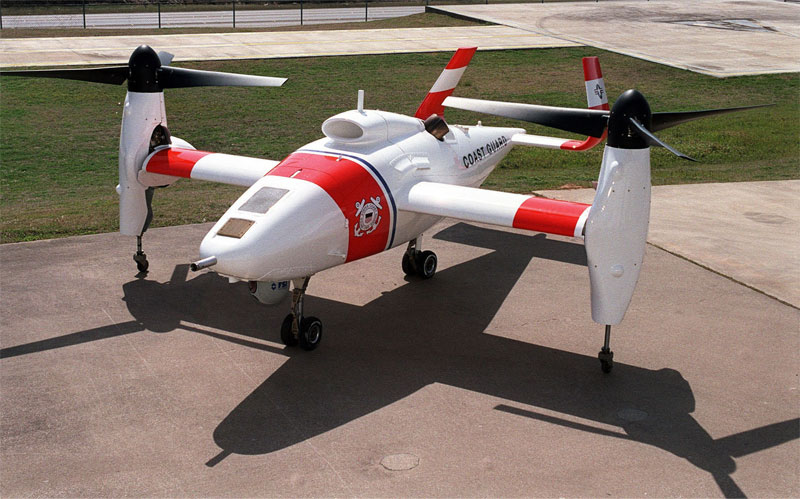
Bell Eagle Eye (Model 918) Unmanned Aerial Tiltrotor Helicopter (1998)

Authored By Staff Writer | Last Updated: 8/2/2012

The interesting Bell Helicopter Eagle Eye tilt-rotor UAV has, to this point, failed to generate much market interest as of yet.

Find a School Near You
Follow Military Factory on Facebook:
Trending on Military Factory:
Recent Articles:
The Bell Eagle Eye (company Model 918) is/was an Unmanned Aerial System (UAS) developed to compete in the US Navy's "Vertical Take-off - Unmanned Aerial Vehicle program" (VT-UAV). Like most other current-generation UAVs, the Eagle Eye is billed as a system that can work in adverse weather conditions and provide real-time battlefield assessment reporting for her operators. The program claims to promotes less in the way of the required manpower and maintenance hours than that of conventional manned aircraft currently in service. The use of UAV/UAS systems also deletes the possibility of a pilot being downed and killed or captured by the enemy as UAV/UAS operators can be stationed stateside without direct exposure to the enemy itself.

There is an inherent benefit to a rotary aircraft systems and their ability to land and take-off from solid surfaces. Such a platform does not require a runway or launch catapult/retrieval net system from which to operate with. A tilt-rotor system can take-off and land as would a conventional helicopter but can fly as a conventional fixed-wing aircraft thanks to its adjustable engine nacelles. Loitering for a rotary-type aircraft is an advantageous proposition when compared to the fixed-wing, straight-flight first and second generation UAVs like the Predator series - such "birds" needing to circle around a given target area. The Eagle Eye can utilize its twin-rotor capability to stand "on station" in a given airspace for the duration allowed by its internal fuel supply. Of course, this can expose the Eagle Eye to more accurate ground-based fire for its hovering nature and size may promote for a bigger, more stationary target. The Eagle Eye has also completed testing from both land- and sea-based origins proving further its capability. The latter environment is of note for it exposed the UAS to a variety of sea conditions including an unstable launching/retrieval platform and the expected corroding sea elements that generally take a toll on internal and external systems alike.

Bell began work on the Eagle Eye in 1993 and constructed its first scale model prototype under the designation of "TR911X". Two demonstrator examples were eventually produced under this mark with a first-flight recorded on March 6th, 1998. Each of these prototypes mounted a single Allison 250-C20 series turboshaft engine. Shortly thereafter, the Eagle Eye was entered into a requisite flight test program that would consist of two phases - one based on land and the other at sea. While the first prototype was lost to accident during the ensuing trials, the second prototype managed to complete its trials without notable incident. While the US Navy and the US Marine Corps both held early interest in the UAS, the Eagle Eye languished without suitors for a time and no further evaluation models were ordered by any parties.

In 2002, a full-size version was constructed under the designation of "TR918". This new version was fitted with a single Pratt & Whitney Canada PW207D turboshaft engine. The United States Coast Guard took interest in the tilt-rotor system and worked with Bell on a larger version of the original technology demonstrator. In theory, the Eagle Eye would have been a good match for the Search and Rescue (SAR) minded Coast Guard, able to utilize its excellent loitering times in search of at-sea survivors or tracking down corruptible elements attempting to smuggle "goods" onto US soil. The resulting Bell/USCG design became the "HV-911". However, once again the Eagle Eye would wait for its "day in the sun" for the Coast Guard ended up putting the earmarked production funds on indefinite hold.

Design of the Bell Eagle Eye is not unlike that of the larger manned Bell-Boeing V-22 Osprey tilt-rotor transport helicopter. The Eagle Eye features a centralized fuselage containing the major electronic and digital components that bring life to the system as well as manage the main powerplant. Straight wings are affixed to the fuselage and each maintain a single rotor system via drive shafts from the coupled transmission system. There is a noticeable air intake scoop mounted to the top of the fuselage and the fuselage itself tapers off into the empennage. The tail section features horizontal stabilizer planes to either side and each mounts an inclined vertical tail fin. The undercarriage is made up of two double-tired main landing gear legs, one fitted as a nose leg and the other as a fuselage leg. There is a pair of smallish outboard landing gear legs fitted to the rear of each rotor nacelle and come into play when the nacelles are in the fixed upward angle during landing/takeoff. The payload capacity of the Eagle Eye is a reported 200lbs and can be utilized for reconnaissance, surveillance, Electronic Warfare (EW) and armament loads as a given sortie requires.

If the developmental HV-911 is taken as the final production form, it could feature the aforementioned Pratt & Whitney Canada PW207D series turboshaft engine. This powerplant will deliver up to 641 horsepower to the pair of outboard tilt-rotor assemblies mounted to each wingtip. Each rotor assembly spins a three-bladed rotor system. Based on the evaluation test results, the Eagle Eye will feature a maximum speed of up to 225 miles per hour with a service ceiling of roughly 20,000 feet. Endurance from the single engine will be roughly six hours - an excellent advantage when considering the loitering nature of battlefield UAVs or Search and Rescue (SAR) airborne elements.

Though American procurement of the Eagle Eye has stymied, there has been more interest developed by foreign powers overseas. Bell has teamed up with the German firm of Rheinmetall Defense Electronics and the French firm of Sagem to possibly bring the Eagle Eye to operational service in European inventories. This arrangement is such that - assuming they blossom - the European bureaus will be able to assign whatever payload is needed for their particular Eagle Eye airframe. Bell will simply be responsible for construction and delivery of the machine airframes, engines and avionics systems themselves. Such is the flexibility inherent in the Eagle Eye design.

Per Bell, the Eagle Eye is "the most versatile UAS on the market".
Text ©2003-2013 www.MilitaryFactory.com • All Rights Reserved • No Reproduction Permitted
MilitaryFactory.com does NOT sell equipment/weaponry. Material presented throughout this website is for historical and entertainment value and should not to be construed as usable for hardware restoration, maintenance or general operation. Please consult manufacturers for such information. Our disclaimer. Email corrections / Comments to MilitaryFactory at Gmail dot com.
Picture of Bell Eagle Eye (Model 918)
View All Images (1)

Specifications for the
Bell Eagle Eye (Model 918)
Unmanned Aerial Tiltrotor Helicopter


Country of Origin: United States
Manufacturer: Bell Helicopter - USA
Initial Year of Service: 1998
Production: 2


Focus Model: Bell Eagle Eye (Model 918)
Crew: 0


Length: 18.24ft (5.56m)
Width: 24.18ft (7.37m)
Height: 6.17ft (1.88m)
Weight (Empty): 0lbs (0kg)
Weight (MTOW): 0lbs (0kg)


Powerplant: 1 x Pratt & Whitney Canada PW207D turboshaft engine delivering 641 horsepower each.


Maximum Speed: 224mph (360kmh; 194kts)
Maximum Range: 0miles (0km)
Service Ceiling: 20,000ft (6,096m; 3.8miles)
Rate-of-Climb: 0 feet per minute (0m/min)


Hardpoints: 0
Armament Suite:
Up to 200lbs of equipment / armament.


Variants:
Model 918 - Bell Company Designation


"Eagle Eye" - Base Series Designation

TR911X - 7/8th Scale Prototype; two examples constructed with one lost to accident; completed land- and sea-based trials; fitted with 1 x Allison 250-C20 series turboshaft engine.

HV-911 - Proposed USCG Variant; fitted 1 x Pratt & Whitney Canada PW207D turboshaft engine of 641 horsepower.


Operators: France (possible); Germany (possible); United States (possible)

ALL AIRCRAFT CATEGORIES

BY DECADE:


1900 to 1909
1910 to 1919
1920 to 1929
1930 to 1939
1940 to 1949
1950 to 1959
1960 to 1969
1970 to 1979
1980 to 1989
1990 to 1999
2000 to 2009
2010 to 2019
2020 to 2029
VIEW ALL
Compare Aircraft


BY TYPE:


Anti-Submarine Warfare (ASW)
Attack Helicopters
Bomber Aircraft
Medium Bombers
Heavy Bombers
Close-Air Support (CAS)
Commercial Aircraft
Dive Bombers
Electronic Warfare Aircraft (EWA)
Experimental / X-Planes
Fighter Aircraft
Floatplane Aircraft
Flying Boat Aircraft
Aerial Refueling Tankers
Helicopters (ALL)
Interceptor Aircraft
Multi-Role Aircraft
Navy Carrier Aircraft
Night Fighters
Reconnaissance / Scout
Search & Rescue (SAR)
Scout Helicopters
Special Purpose
Torpedo Bombers
Trainer Aircraft
Transport Aircraft
Transport Helicopters
Unmanned Aerial Vehicles (UAVs)
Unmanned Combat Air Vehicles (UCAVs)


COLLECTIONS:


4th Generation Fighter Aircraft
5th Generation Fighter Aircraft
US X-Planes
Classic US Warbirds
French Military Helicopters
Grumman "Cats"
Howard Hughes Aircraft
Indian Air Force
Israeli Air Force
Libyan Aircraft
Modern Chinese Aircraft
Modern Chinese Fighters
Modern Military Aircraft
Modern North Korean Aircraft
Modern Trainer Aircraft
Modern US Aircraft
Mikoyan Aircraft
Sukhoi Aircraft
Syrian Aircraft
Top 10 Fighter Aircraft of All Time


AIRCRAFT BY CONFLICT:


Arab-Israeli War (1948)
Cuban Missile Crisis (1959-1962)
Falklands War (1982)
Indo-Pak War (1965, 1971)
Iran-Iraq War (1980-1988)
Lebanon War (1982)
Operation Allied Force (1999)
Operation Desert Storm (1991)
Six Day War (1967)
Spanish Civil War (1936)
Soviet-Afghan War (1979-1989)
Yom Kippur War (1973)


MISCELLANEOUS:


Aircraft Cockpits
Aircraft Manufacturers List
Aircraft Timeline

WORLD WAR 2:


1939 Aircraft
1940 Aircraft
1941 Aircraft
1942 Aircraft
1943 Aircraft
1944 Aircraft
1945 Aircraft
1946 Aircraft
Australian Aircraft
Battle of Britain Aircraft
Bombers
Four-Engine Bombers
British Aircraft
British Bombers
British Transports
Dive Bombers
Canadian Aircraft
Fighters
Chinese Aircraft
French Aircraft
German Aircraft
German Fighters
German Flying Boats
German Jets
Secret Weapons of the Luftwaffe
Italian Aircraft
Imperial Japanese Aircraft
Imperial Japanese Fighters
Mitsubishi Bombers
Navy Aircraft
Pearl Harbor
Polish Aircraft
Romanian Aircraft
US Aircraft
US Bombers
US Navy Aircraft
Soviet Aircraft
Torpedo Bombers
Trainer Aircraft
Transport Aircraft
Tuskegee Airmen Aircraft
W.A.S.P. Aircraft
WW2 Aircraft Ranked by Speed
VIEW ALL


WORLD WAR 1:


1914 Aircraft
1915 Aircraft
1916 Aircraft
1917 Aircraft
1918 Aircraft
Aircraft Timeline
Austro-Hungarian Aircraft
Bomber Aircraft
British Aircraft
Fighters
Flying Boats
French Aircraft
Imperial German Aircraft
Italian Aircraft
Scout Aircraft
Russian Empire Aircraft
US Aircraft
WW1 Aircraft Ranked by Speed
VIEW ALL


KOREAN WAR:


Australian Aircraft
Korean War Aces
Korean War Jets
North Korean Aircraft
US Military Aircraft
VIEW ALL


VIETNAM WAR:


Helicopters
North Vietnam Air Force
US Airpower
VIEW ALL


COLD WAR:


1950s French Aircraft
British V-Bombers
Cold War Bombers
Soviet Aircraft
Soviet Bombers
Soviet Interceptors
Soviet Helicopters
Strategic Air Command
US Aircraft
US Bombers
US Interceptors
VIEW ALL

Site Disclaimer | Privacy Policy | Site Map | MF Origins


©2013 www.MilitaryFactory.com • Content ©2003-2013 MilitaryFactory.com • All Rights Reserved • Site Contact Email: militaryfactory at gmail dot com. The "Military Factory" name and MilitaryFactory.com logo are registered ® trademarks and protected by all applicable domestic and international intellectual property laws.


Top MF Stuff: 2013 Military Pay Scale | Military Ranks | WW2 Weapons | Sniper Rifles | Kts to Mph | WW1 Aircraft | Automatic Rifles | Aircraft Cockpits | Vietnam War Weapons | Main Battle Tanks | Submachine Guns | Shotguns | French Military Victories


Most photographic images appearing on this site are courtesy of the United States Department of Defense and are approved for public use. Other images acquired through the public domain. Digital art work courtesy of Dan Alex. Business Consulting by Kyle Williams. Material presented throughout this website is for historical and entertainment value and should not to be construed as usable for hardware restoration, maintenance or general operation. Please consult manufacturers for such information.


eXTReMe Tracker