Global Firepower | Military Industrial Complex | Second World War History
Home | Military Pay Scale Chart | Aircraft | Infantry Weapons | Military Vehicles | Navy Ships | Military Education | French Military Victories | Military Ranks | WW2 Weapons
Military Factory Latest from Military Factory
Thumbnail picture of the Dardo infantry fighting vehicle
Dardo IFV
Thumbnail picture of the Supermarine Scimitar fighter
Supermarine Scimitar
Thumbnail picture of the Centauro B1 8x8 tank killer
Centauro 8x8
Thumbnail picture of the Novi Avion fighter
Novi Avion
Thumbnail picture of the FR F2 bolt-action sniper rifle
FR F2
Thumbnail picture of the Lebel Model 1886 bolt-action rifle
Lebel Model 1886
2009 Military Pay Scale Chart - for Army, Navy, Air Force and Marines
  BY DECADE
    · 1900 to 1909
    · 1910 to 1919
    · 1920 to 1929
    · 1930 to 1939
    · 1940 to 1949
    · 1950 to 1959
    · 1960 to 1969
    · 1970 to 1979
    · 1980 to 1989
    · 1990 to 1999
    · 2000 to 2009
    · 2010 to 2019
    · View All Aircraft
  BY TYPE
    · Attack Helicopters
    · Bombers
    · Close-Support
    · Commercial
    · Dive Bombers
    · Experimental
    · Fighters
    · Floatplanes
    · Flying Boats
    · Fuel Tankers
    · Helicopters
    · Interceptors
    · Multi-Role
    · Navy Aircraft
    · Night-Fighters
    · Recon Aircraft
    · Recon Helos
    · Special Purpose
    · Torpedo Bombers
    · Trainer Aircraft
    · Transport Aircraft
    · Transport Helos
    · UAVs
  WORLD WAR 2
    · Full List
    · 1939
    · 1940
    · 1941
    · 1942
    · 1943
    · 1944
    · 1945
    · Australia
    · Battle of Britain
    · Bombers
    · Britain
    · Dive Bombers
    · Canada
    · Fighters
    · China
    · France
    · Germany
    · German Fighters
    · German Jets
    · Italy
    · Japan
    · Mitsubishi Bombers
    · Poland
    · USA Aircraft
    · USA Bombers
    · Soviet Union
    · Torpedo Bombers
  WORLD WAR 1
    · Full List
    · 1914
    · 1915
    · 1916
    · 1917
    · 1918
    · Aces
    · Austria-Hungary
    · Bombers
    · Britain
    · Fighters
    · France
    · Germany
    · Italy
    · Recon Aircraft
    · Russia
    · USA
  KOREAN WAR
    · Full List
    · Aces
    · Australia
    · USA
    · North Korea
  VIETNAM WAR
    · Full List
    · United States
    · North Vietnam

Military Factory > Military Aircraft > Boeing B-17 Flying Fortress
 
 
More Pictures Cockpit View 3 View Plan QuickGraphs StatsCentral

Boeing B-17 Flying Fortress

The Legendary B-17 Flying Fortress accounted for over 290,000 sorties with 640,000 tons of ordnance dropped during World War Two.
By Staff Writer

Bookmark and Share

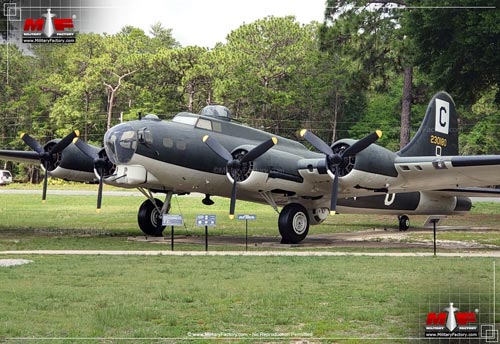
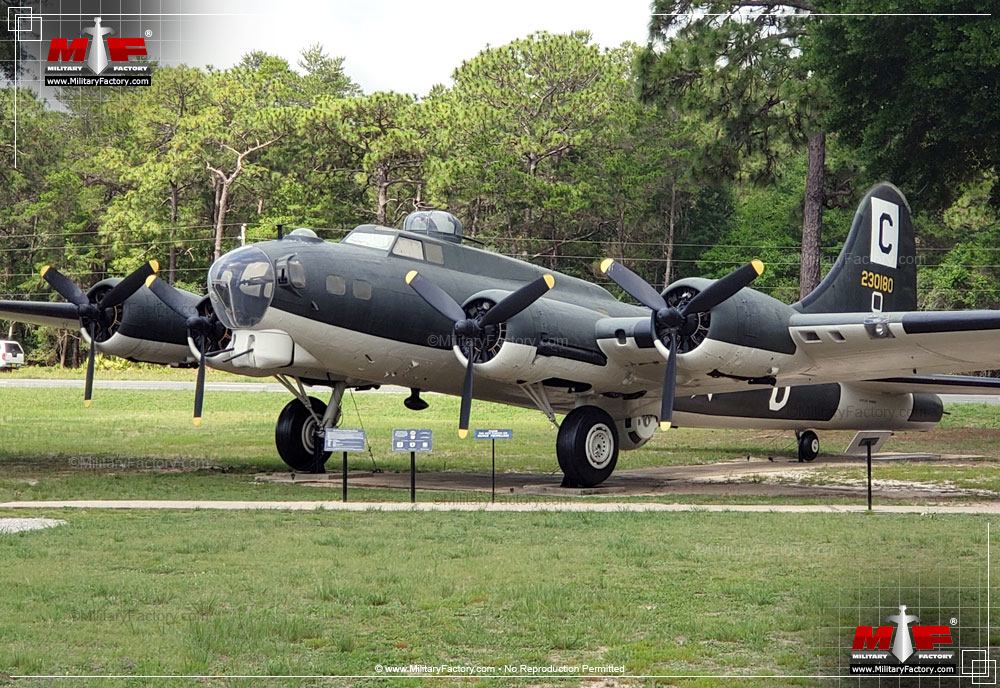
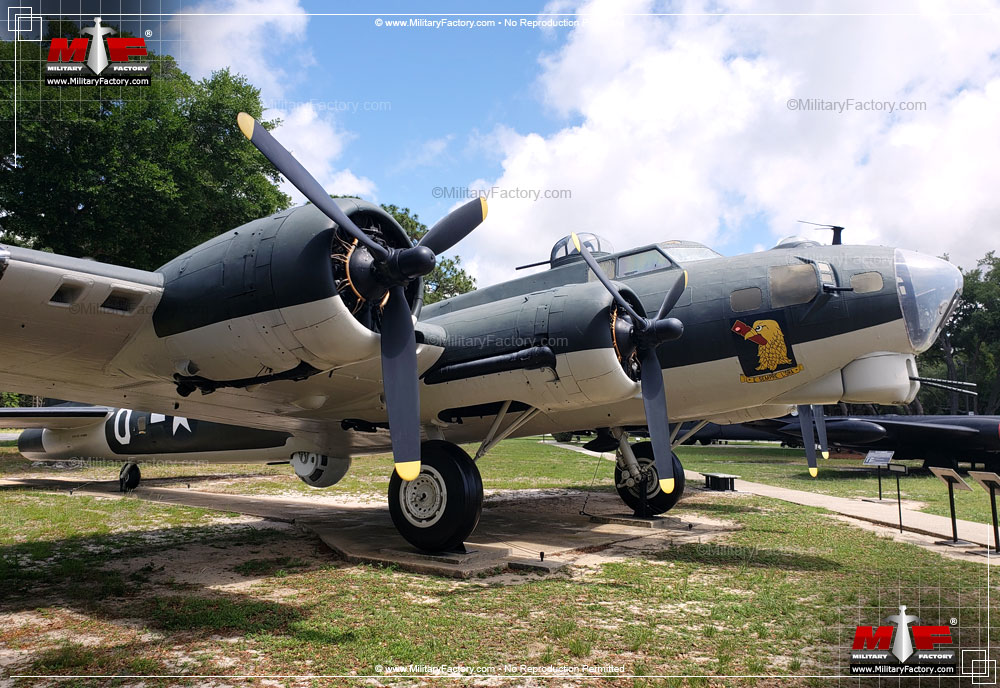
Though the Consolidated B-24 Liberator was built in greater numbers, the Boeing B-17 Flying Fortress is often regarded as the more important heavy bomber for the American Allies in the Second World War, accounting for over 290,000 sorties against ground installations and dropping over 640,000 tons of bombs. By war's end, the B-17 Flying Fortress was a mainstay in both the Pacific and European Theaters of War. The system became the symbol of American bomber might in the Second World War and continues with its legendary status even today. Incidentally, the name “Flying Fortress” is purported to have come from one of the reporters present during the unveiling of the machine at the Boeing plant, remarking as to how the aircraft looked like a 15-ton “flying fortress”.

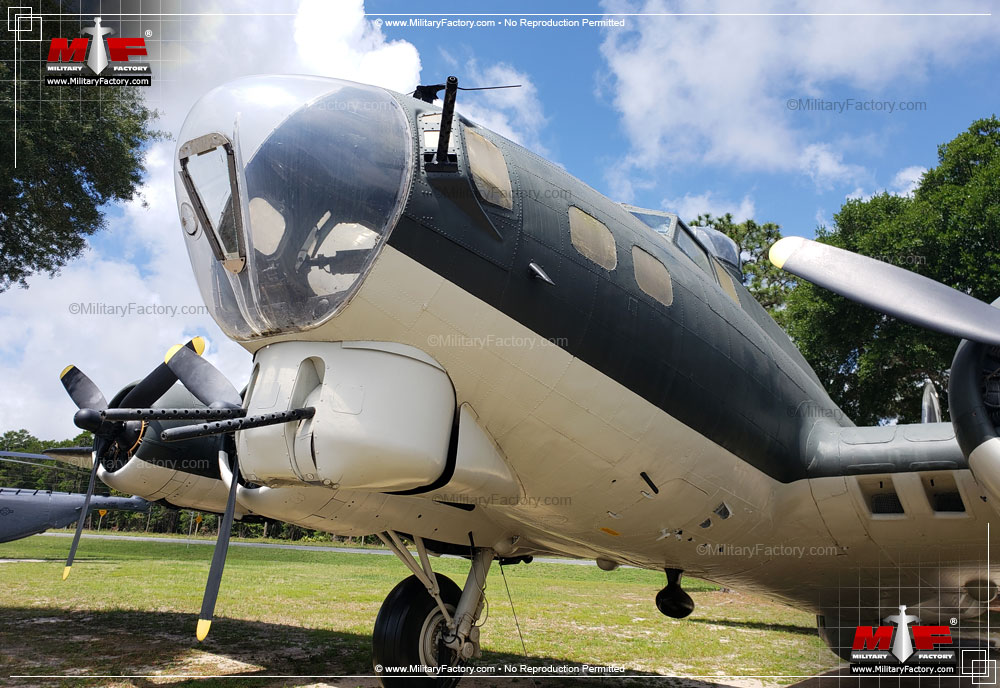
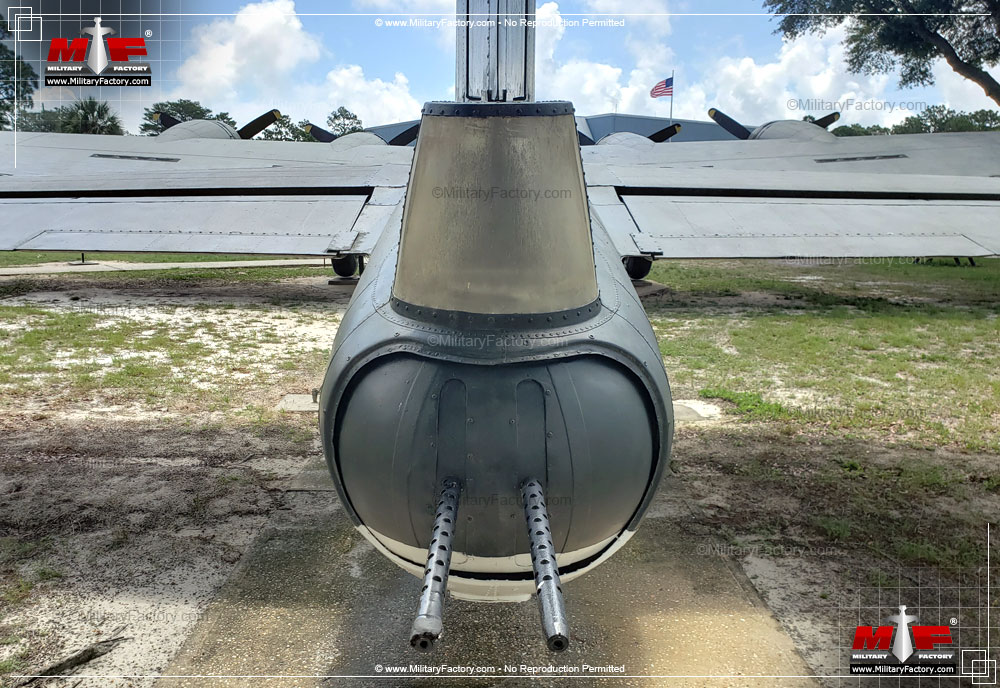
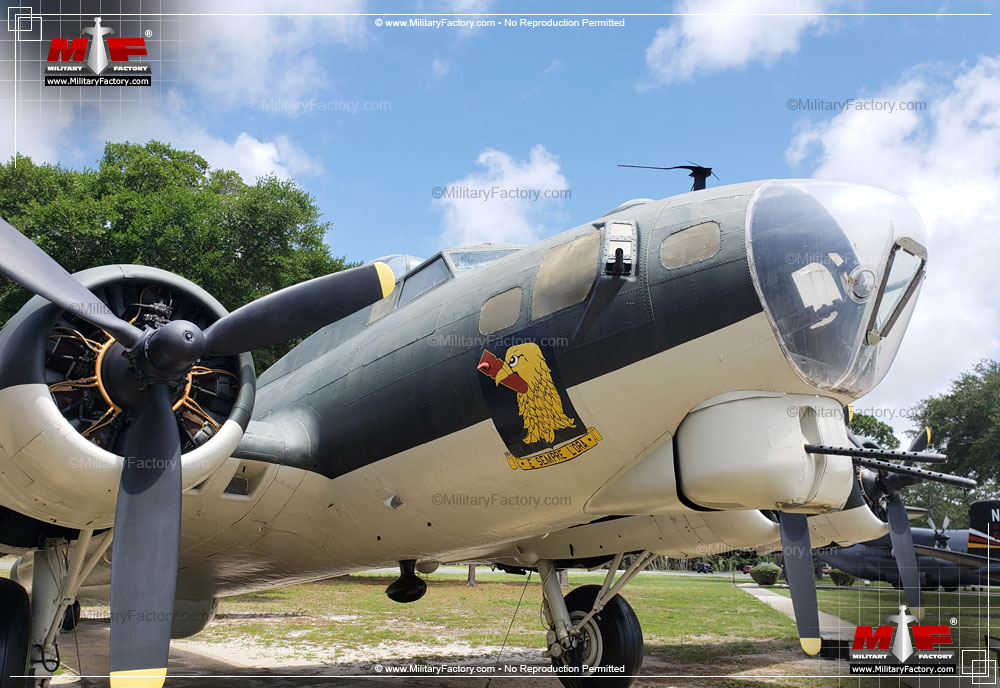
Designed to a US requirement for a four-engine bomber capable of long distance travel with a full 2,000lb bombload and reach speeds between 200 and 250 miles per hour. The result was the Boeing Model 229 which first flew in 1934, though was later lost to pilot error. Nevertheless, the US Army Air Corps pursued the design with an order for further developmental models fitted with differing powerplants. Early B-17 models were mostly developmental production variants that included the additions of seal-sealing fuel tanks, better armor protection and a redesigned tail. The initial definitive Flying Fortress model would arrive with 512 examples of the B-17E model which were the first to incorporated the twin .50 caliber tail armament for defense. This model was followed by the similar B-17F models of which 3,405 were produced. This latter model featured revised defensive armament positions. Often regarded as the ultimate B-17 production model, the B-17G featured the identifiable and effective Bendix powered chin turret fitted with 2 x 12.7mm machine guns under the nose. Revised turbochargers and an increase to 13 .50 caliber machine guns also arrived with this G model. In the end, the B-17G would account for over 8,600 units with production split between Boeing (4,035 samples), Douglas (2,395 samples) and Lockheed Vega (2,250 samples).

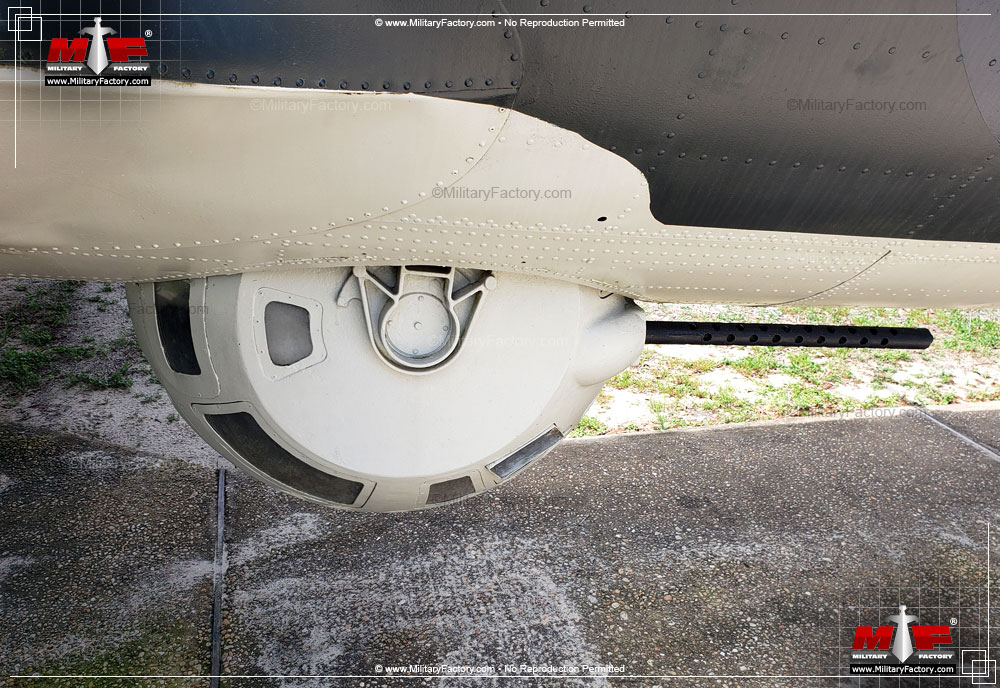
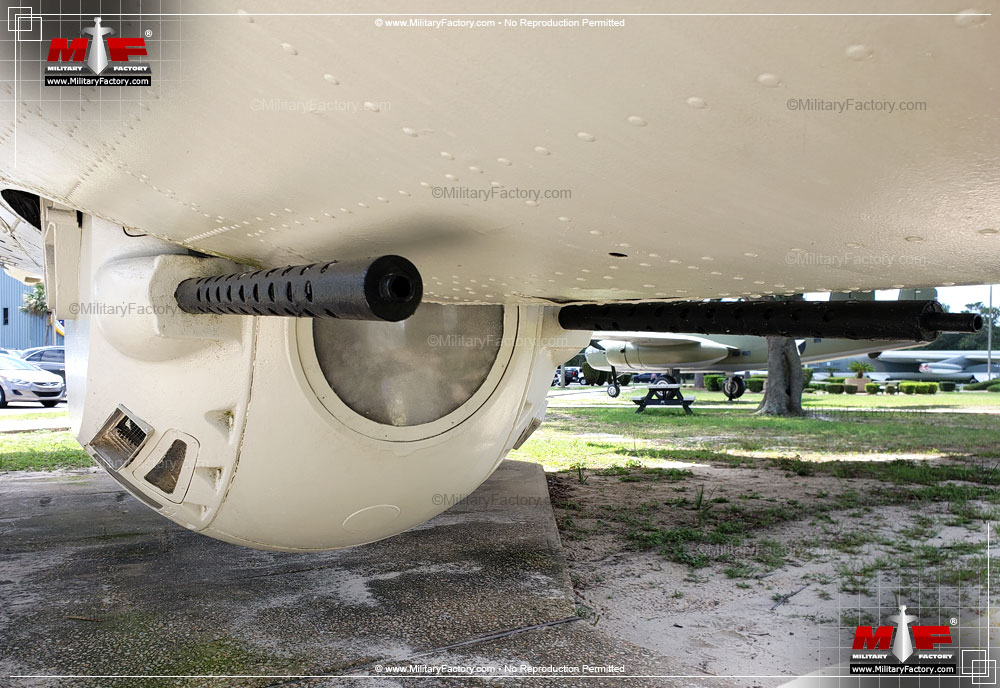
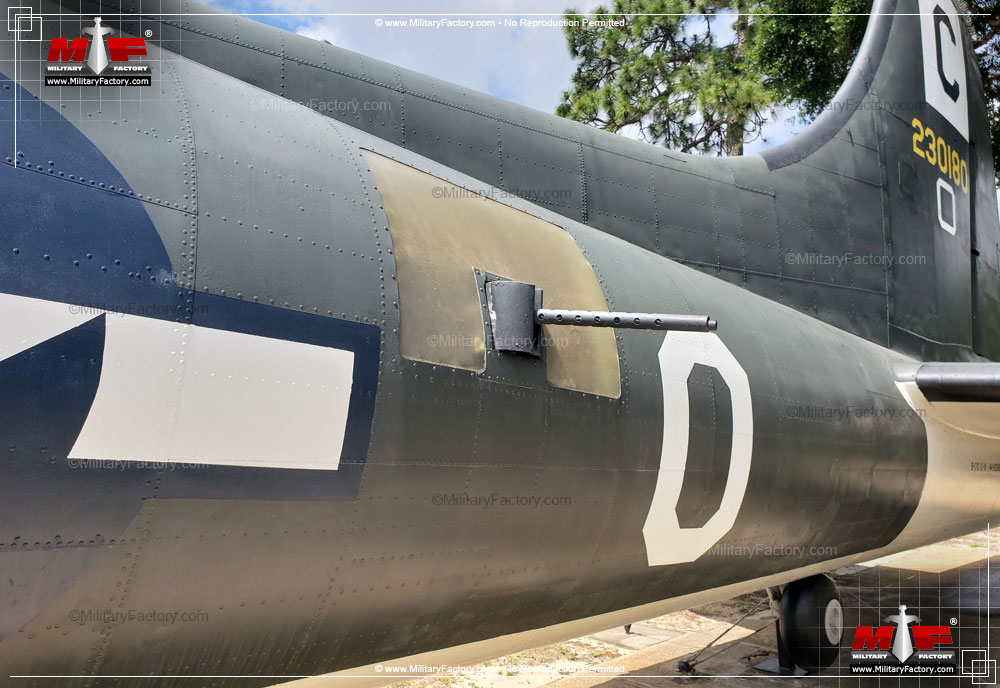
B-17 Flying Fortresses followed common practice in that they flew in what was known as the "box formation". This formation allowed every gunner on board the aircraft to bring their guns to bear to any position needed. Gunner positions on the B-17 included a top turret gunner manning 2 x 12.7mm machine guns, a tail gunner manning 2 x 12.7mm machine guns, a belly gunner manning 2 x 12.7mm machine guns, 2 x cheek gun emplacements, staggered waist gunner positions each manning a single 12.7mm machine gun and the Bendix chin turret. A limited-arc-of-fire, single 12.7mm machine gun position at the radio operators area was available in early models but later removed. The flight engineer doubled as the top turret gunner while the bombardier and navigator in the nose section doubled as front gunners. The belly turret gunner was generally of a small stature to be able to fit into the limited-space turret system. All positions were afforded some type of built-in armor protection but this varied extensively by position.

The bombardier and navigator were awarded the best views of the sky through the large plexiglas nose. The bombardier sat on a type of swiveling stool with the fabled Norden Bombsight before him. The navigator sat off-set to his rear at a small map-filled desk. Both were supplied with defensive .50 caliber machine guns with the Bendix chin turret under the bombardiers control in the G model and onwards. Access to the nose was accomplished through a smallish passage way underneath the main flight deck.

The pilot and co-pilot sat on the flight deck above and behind the navigator’s position with the pilot to the left and his copilot to the right with both offered equal control access and views of all four of the engines. To their rear was the top gunners position with a catwalk crossing between the payload in the bomb bay. Once past the bomb bay, the radio operators station and his equipment was apparent. The radio operator was also afforded a table and seating along with his communications equipment. Access to the belly turret was available following this area, which further opened up to the staggered waist gunner positions which might or might not have been covered by plexiglass depending on the model.

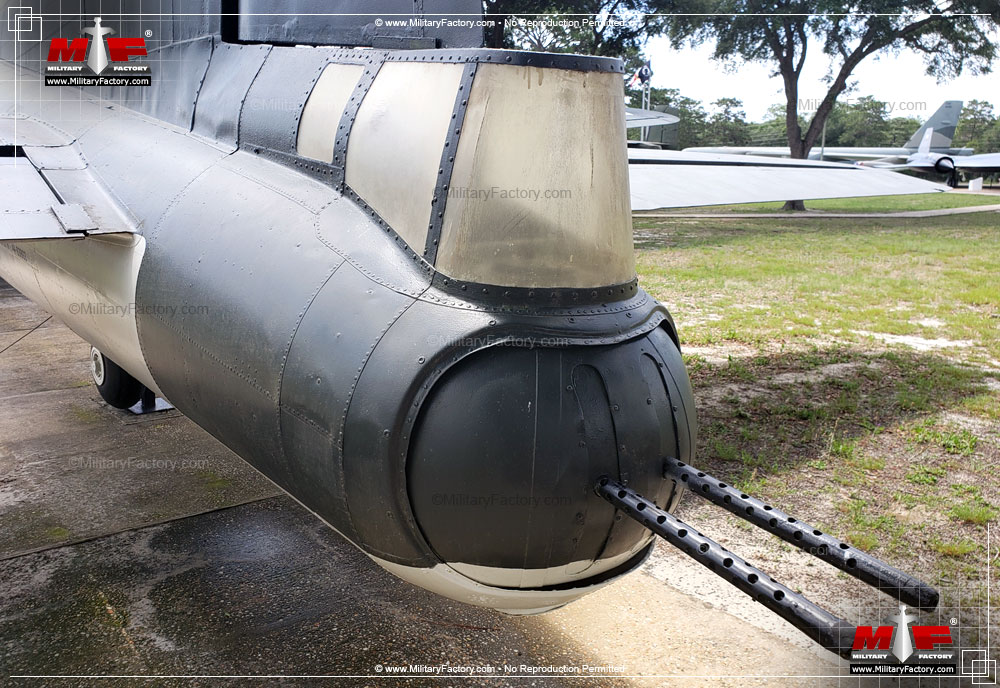
Though not added until the production E models, the tail gunner arguably served the single most important deterrent to enemy aircraft as enemy pilots tended to attack formations from the rear, starting with the last aircraft in the line known to American crews as "Tail End Charlie". Like the belly turret gunner, the tail turret operator made his way to his rearward position after the aircraft was in flight and connected to his oxygen supply and intercom system. He held a kneeling position (sitting on his legs) and manned a limited arc-of-fire twin machine gun system that was improved with the "Cheyenne" turret in G models. This new turret offered up a greater field of fire and improved gun sighting.

Overall, the B-17 Flying Fortress was a utilitarian vehicle that was – for the most part – cramped, gusty and produced the various smells inherent in a machine of this type, from burning rubber to spent shell casings. The Fortress was a noisy place to “work” yet crew after crew found a home in the aircraft that were to become their livelihoods through the duration of the war. The aircraft served a purpose and her crews made the most of it with what was provided to them.

RAF forces took several B-17 models with their applied "Fortress 1", "Fortress 2" and "Fortress 3" designations, utilizing some in the electronic countermeasures role. Reconnaissance variants appeared with the US Army Air Corps, US Navy and US Coast Guard as well, each with differing designations shown below. In any case, its heavy use showcased the versatility of the airframe and the importance of the aircraft to the Allied air cause.

The B-17 is often remembered for the myriad of colorful names and nose art identifiers that included the famous "Memphis Belle", which became one of the first B-17's to complete a full tour of duty before being sent back to the States with her crew for war bond drives. The aircraft became a favorite of aircrews for her ability to withstand a tremendous amount of damage and keep flying. In a bit of B-17 trivia, the massive flight formations of Imperial Navy Japanese fighters and torpedo planes discovered for the attack at Pearl Harbor on December 7th were mistaken as an incoming flight of scheduled B-17 Flying Fortresses from the mainland.

As quickly as the B-17 arrived it was gone in the after-war years. Some survived as developmental or specialized role models but many were scrapped by the arrival of the jet age. Some survived for museum use while others were refurbished and continue to fly today with dedicated aviators and traveling flight troupes. In any case, the system will long outlive her users and forever be carried on through history through astonishing tales of heroism, feats and ultimately success over the Third Reich and Imperial Japan.

Text ©2003-2009 www.MilitaryFactory.com • All Rights Reserved • No Reproduction Without Permission • Corrections / Comments to MilitaryFactory at Gmail dot com

Last Revision: 7/6/2009


  Specifications for the Boeing B-17G Flying Fortress
arrow downDimensions:
Length: 74.74ft (22.78m)
Width:103.74ft (31.62m)
Height: 19.09ft (5.82m)

arrow downPerformance: About MACH
Max Speed: 287mph (462kmh; 249kts)
Max Range: 2,001miles (3,220km)
Rate-of-Climb: 541ft/min (165m/min)
Service Ceiling: 35,597ft (10,850m; 6.7miles)

arrow downStructure:
Accommodation: 10
Hardpoints: 0
Empty Weight: 36,136lbs (16,391kg)
MTOW: 72,003lbs (32,660kg)

arrow downPowerplant:
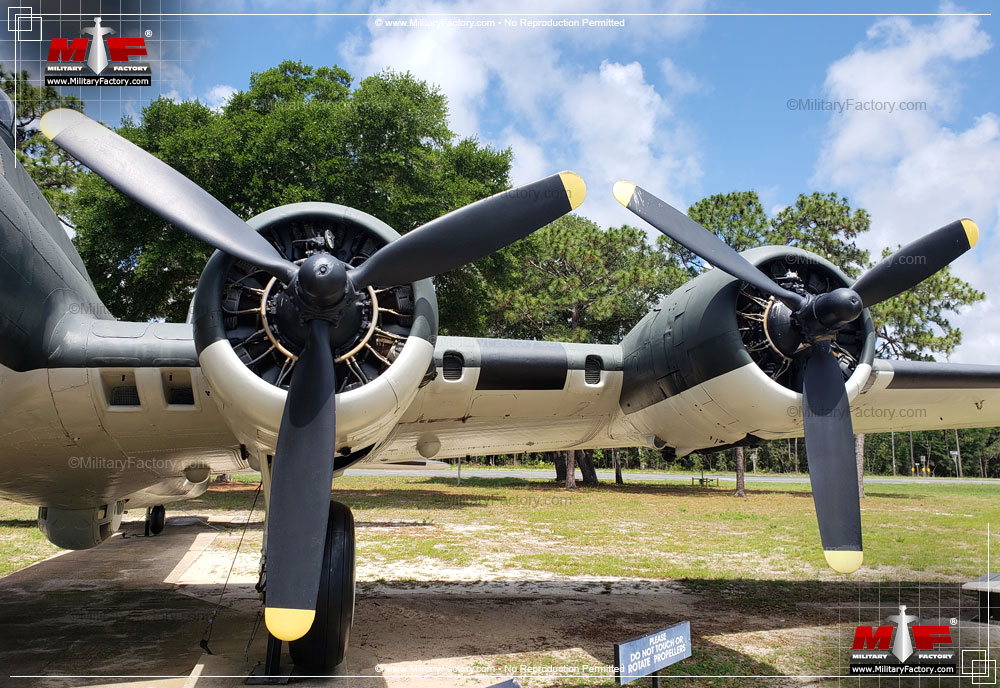
Engine(s): 4 x Wright Cyclone R-1820-97 radial piston engines generating 1,200 hp each.
arrow downArmament Suite:
2 x 12.7mm machine guns in powered dorsal turret
2 x 12.7mm machine guns in powered "belly" turret
2 x 12.7mm machine guns in tail gun position
1 x 12.7mm machine gun in left front "cheek" position
1 x 12.7mm machine gun in right front "cheek" position
1 x 12.7mm machine gun in left waist position
1 x 12.7mm machine gun in right waist position
1 x 12.7mm machine gun in radio operator's midship position (removed on later models)
2 x 12.7mm machine guns in powered chin turret (later models)

Maximum internal bombload of 7,983 kg (17,600 lbs).

  Pictures of the Boeing B-17 Flying Fortress
     
Picture of Boeing B-17 Flying Fortress
Picture of the Boeing B-17 Flying Fortress
Image of the Boeing B-17 Flying Fortress
     
arrow upView All 20 Images

CompareX2 CompareX4 Conversions Dictionary Acronyms

Compare and Contrast Military Aircraft Specifications

  Special Aircraft Collections
Aircraft by Conflict:
Falklands War
Indo-Pak War
Operation Allied Force
Operation Desert Storm
Six Day War
Yom Kippur War

Special Collections:
American X-Planes
Classic US Warbirds
Grumman "Cats"
Indian Air Force
Israeli Air Force
Mikoyan-Gurevich
V-Bombers


Korean Air War:
Korean War Aircraft
Aces
Australia
United States
North Korea

Vietnam Air War:
Vietnam War Aircraft

Cold War
Cold War Aircraft
United States
Soviet Union
Soviet Bombers of the Cold War

Modern Aircraft
Modern Military Aircraft
United States

Miscellaneous
MiG-15 Versus Sabre
Top 10 Fighters of All Time


  Recent Military Aircraft Additions
Thumbnail picture of the Supermarine Scimitar fighter
Supermarine Scimitar
Thumbnail picture of the Novi Avion fighter
Novi Avion
Thumbnail picture of the Arado Ar TEW 16/43-23 jet-powered fighter
Arado TEW 16/43

  Contacting MilitaryFactory.com
We can only get better if you tell us how. You can contact MilitaryFactory.com at MilitaryFactory at gmail dot com (replace "at" with "@" and "dot with ".") with any questions, comments or corrections. We also accept related military imagery that you approve for us to use on our website. Keep in mind, however, that due to volume, we may not directly respond to your inquiry. Please add us to your list of non-blocked recipients!
Flying Boats

  Aircraft Quick Profile


Picture of the Boeing B-17 Flying Fortress
Image courtesy of the United States Department of Defense.

flag of United States
1937

Designation: Boeing B-17 Flying Fortress
Classification Type: Medium / Heavy Bomber
Contractor: Boeing Company - USA

Country of Origin: United States
Production Total: 12,731

Operators: United Kingdom; United States


  Variants
Model 299 - Boeing Model Test Aircraft; fitted with 4 x Pratt & Whitney 750hp engines; later lost to an accident attributed to human error.

Y1B-17 - Thirteen ordered for further development; later redesignated to B-17.

Y1B-17A - Engine test aircraft (only one produced); later redesignated to B-17A model.

B-17B - First production model

B-17C - 38 such samples produced and fitted with 4 x Wright Cyclone engines generating 1,200hp each.

B-17D - Similar to C production model to which all existing C models were brought up to D model standard.

B-17E – Mass production model; Enlarged tail section.

B-17F - Improved defensive armament

B-17G - Improved variant; Bendix chin turret implemented.

B-17H - Modified air-sea rescue conversions; fitted with rescue equipment.

Fortress I - B-17C models as supplied to the RAF in 1941.

Fortress IIA - B-17E models as supplied to the RAF in 1942.

Fortress III - B-17G models as supplied to the RAF.

F-9C - B-17G models converted for reconnaissance; ten such models utilized.

PB-1W - US Navy / Coast Guard maritime surveillance models of which 24 were utilized.

PB-1G - US Navy / Coast Guard maritime surveillance models of which 16 were utilized.

TB-17H - Modified air-sea rescue conversions; fitted with rescue equipment.

  Collections
  • Sons of Empire - WW2 Aircraft of Japan
  • Aircraft of the Battle of Britain
  • X-Planes Throughout History
  • French Aircraft of the Great War
  • The German Luftwaffe in World War 2
  • Nightfighters - In a Class All Themselves
  • The Top Ten Fighters of All Time
  • Carrier "Born" Aircraft - Navy Mounts
  • If Boats Could Fly - Flying Boat Aircraft


Free GI Bill Guide

Top MF Stuff: Military Pay Scale Chart | Military Ranks | World War 2 Weapons | Sniper Rifles | Conversion Calculators


©2009 www.MilitaryFactory.com • Content ©2003-2009 MilitaryFactory.com • All Rights Reserved • Disclaimer Privacy Policy Site Map Origins
Most photographic images appearing on this site are courtesy of the United States Department of Defense and are approved for public use.
Other images acquired through the public domain. Digital art work courtesy of Dan Alex.
Business Consulting by Kyle Williams

Material presented throughout this website is for historical and entertainment value and should not to be construed as usable for
hardware restoration, maintenance or general operation. Please consult manufacturers for such information.

Site Contact: militaryfactory at gmail dot com (replace "at" with "@" and "dot" with ".") eXTReMe Tracker