Military Factory
Military Pay Chart
Global Firepower
Military Industrial Complex
Second World War
Home
Military Pay Scale
Military Ranks
Small Arms
Aircraft
Land Systems
Navy
Education
Military Factory Facebook Logo
flag of Italy

Caproni Ca.1 Heavy Day Bomber (1915)

Authored By Staff Writer | Last Updated: 8/7/2012

The Italians and Russians led the way in developing the first useful heavy bombers in the world - the Caproni Ca.1 was a testament to that.

Find a School Near You
Follow Military Factory on Facebook:
Trending on Military Factory:
Recent Articles:
Little MF Logo
Little MF Logo
Little MF Logo
Little MF Logo
Little MF Logo
Little MF Logo
Little MF Logo
Little MF Logo
Little MF Logo
Little MF Logo
While the British Handley Page and German Gotha bombers receive their fair share of notoriety in World War 1 text, both Italy and Russia were ahead of the development curve in terms of applying workable heavy daytime, long range bombers into modern military usage. These two nations had already developed serviceable heavy bombing platforms by the opening salvos of the war and the Ca.1 was at least one a testament to this fact. The "Societa de Aviazone Ing Caproni" bureau (better known simply as "Caproni") proved something of a pioneer in the field, resulting in their first impressive attempt sometime in 1913 as the "Caproni 260hp". This version sported a "pusher" engine and a pair of "pusher" engines - these Gnome rotary engines all being mounted in-line along a central fuselage nacelle. The two pusher systems drove propellers mounted at the tail booms via a tractor arrangement. A modified version was then later trialed in October of 1914. In the post-war years, these respective systems came to be designated as the Ca.30 and Ca.31.

The Heavy Bomber

Heavy bombers were a fine addition to any military arsenal, regardless of era. They supplied a world power with long-range attack capabilities and greater payloads than that of scouts or fighters, making good use of multiple engine layouts and requiring the use of multiple crew. As such, defensive measures were supplied in the way of trainable machine guns to cover the critical quadrants about the aircraft. Eventually, these day-only bombers graduated to become the massive monsters that complimented the 1940s, 1950s and 1960s. Today, the heavy bomber more-or-less exists in the new range of stealth-oriented implements and multi-role fighter systems.

Making a Better Product

After a period of evaluation, it was determined that these new larger bomber platforms were wholly underpowered. Caproni set to achieve better performance from his "giant" and moved the puller engines to the tips of each tail boom, keeping the pusher system in its centralized nacelle approach from earlier. This allowed each wing-mounted engine to directly drive its propeller in a more efficient manner. The French-based Gnome rotary engines were then replaced with Italian FIAT A.10 inline types and produced the new company designation of "Caproni 300hp". First flight occurred in late 1914. FIAT would eventually supply over 15,000 engines of all types during the First World War.

First Delivery

This revised development caught the eye and imagination of the Italian Army and the first Italian bomber force was conceived. The new bomber aircraft was designated officially as the Ca.1 by the Italian Army and production ramped up by the middle of August 1915. Some 162 to 166 aircraft were eventually delivered up to December 1916.

First Strike

Upon delivery, Ca.1s were quickly adopted into Italian Army service. Their first true sortie occurred on August 20th, 1915, in an attack on Austrian targets at an airfield in Aisovizza. Most Ca.1s were committed to such attacks, primarily against the Austro-Hungarian Empire and the new bomber eventually served in some fifteen total Italian air squadrons during the war effort. Three of these Italian squadrons were known to have operated out of France with another stationed for action overseas out of Libya.

Ca.1 Bomber Walk-Around

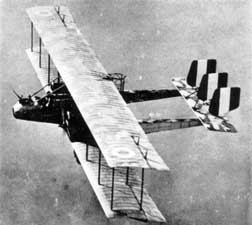
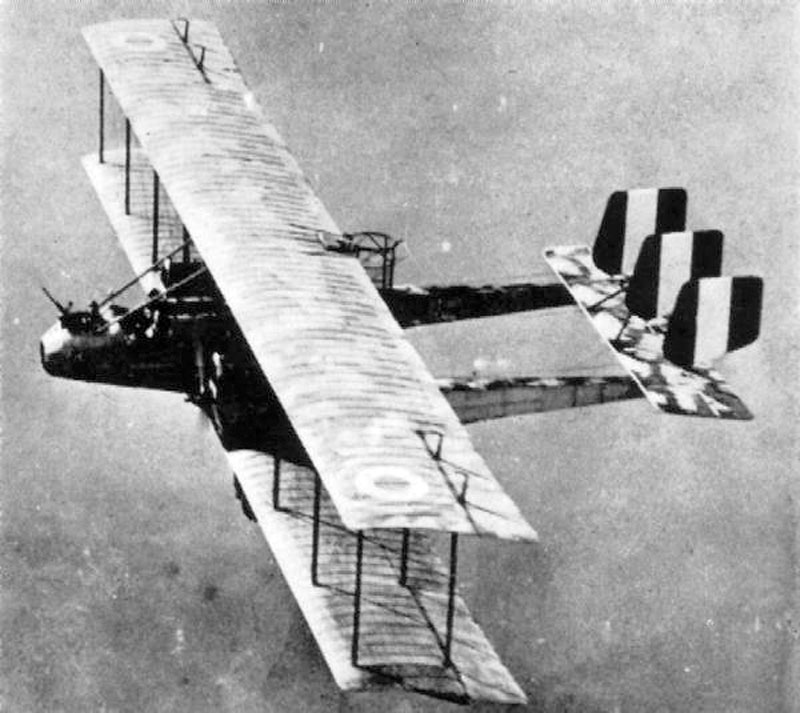
The Ca.1 featured a wide-span, four-bay, bi-plane wing assembly. At the center of the wings was fitted the crew nacelle containing accommodations for four personnel and the third engine. The primary engines were fitted ahead of the twin booms extending aft in a "puller" function arrangement. The third engine on the central nacelle operated in a "pusher" format. The crew consisted of two pilots, a forward gunner and a rear gunner - all fielded in tandem positions. The forward gunner sat in the forward-most compartment. Distinctly, the rear gunner stood in an open air, cage-like pulpit behind the upper wing assembly and ahead of the pusher engine at rear. The twin booms extended aft into a tailplane. Upon this tailplane was affixed three vertical tail fins. The undercarriage was a fixed structure and consisted of a tricycle arrangement featuring two single-wheeled main landing gear legs and a single-wheeled nose landing gear, all supported by struts. The rear of the empennage was supported by a simplistic tailskid fitted to the extreme end. Construction was mainly wood covered in fabric.

Performance, Dimensions and Armament

The 3 x Fiat A.10 6-cylinder, liquid-cooled in-line engines delivered up to 100 horsepower output each. This supplied the massive aircraft with speeds of up to 75 miles per hour as well as a range equal to 344 miles. Her service ceiling was listed at approximately 13,000 feet. Her empty weight ranged in at about 7,200lbs with a gross weight tipping the scales at 8,800lbs. Wingspan was nearly 23 feet with an overall running length of 36 feet plus. She stood at an impressive 12 feet high. Bombs were suspended under the central nacelle and there were 2 x 6.5mm FIAT-Revelli machine guns used for defense. These machine guns were fitted to the front gunner tub and the rear gunners pedestal cage.

Post-War Ca.1

In the post-war years, the Ca.1 was redesignated to as the "Ca.32". The Ca.1/Ca.32s that survived were logically refurbished to be used as passenger airliners. These systems could transport up to six passengers in relative comfort and fell under the Caproni designation of "Ca.56".

The Improved Ca.2 and the Definitive Ca.3

The Caproni Ca.2 ("Caproni 350hp") was a minor variation (improved engines) on the strengths of the Ca.1 platform. Development ultimately led to the definitive Ca.3 bomber platform.
Text ©2003-2013 www.MilitaryFactory.com • All Rights Reserved • No Reproduction Permitted
MilitaryFactory.com does NOT sell equipment/weaponry. Material presented throughout this website is for historical and entertainment value and should not to be construed as usable for hardware restoration, maintenance or general operation. Please consult manufacturers for such information. Our disclaimer. Email corrections / Comments to MilitaryFactory at Gmail dot com.
Picture of Caproni Ca.1
View All Images (1)

Specifications for the
Caproni Ca.1
Heavy Day Bomber


Country of Origin: Italy
Manufacturer: Caproni - Italy
Initial Year of Service: 1915
Production: 166


Focus Model: Caproni Ca.1 (Ca.32)
Crew: 4


Length: 36.25ft (11.05m)
Width: 74.61ft (22.74m)
Height: 12.14ft (3.70m)
Weight (Empty): 7,280lbs (3,302kg)
Weight (MTOW): 8,818lbs (4,000kg)


Powerplant: 3 x FIAT A.10 6-cylinder engines developing 100 horsepower each in a 2 x "puller" and 1 x "pusher" arrangement.


Maximum Speed: 75mph (120kmh; 65kts)
Maximum Range: 342miles (550km)
Service Ceiling: 13,123ft (4,000m; 2.5miles)
Rate-of-Climb: 0 feet per minute (0m/min)


Hardpoints: 4
Armament Suite:
STANDARD:
1 OR 2 x 6.5mm FIAT-Revelli machine guns in forward and rear gunner positions.

OPTIONAL:
Up to 1,874lbs of external ordnance suspended externally.


Variants:
Caproni 260hp - Internal Caproni designation of the Ca.30.


Caproni 300hp - Internal Caproni designation of the Ca.32.

Ca.1 - Base Production Model Designation

Ca.30 - Later designation of the Caproni 260hp.

Ca.32 - Later designation of the Ca.1.

Ca.31 - Later designation of the Ca.30 in a revised form.

Ca.56 - Passenger Conversion Model; seating for six passengers.


Operators:
Italy

ALL AIRCRAFT CATEGORIES

BY DECADE:


1900 to 1909
1910 to 1919
1920 to 1929
1930 to 1939
1940 to 1949
1950 to 1959
1960 to 1969
1970 to 1979
1980 to 1989
1990 to 1999
2000 to 2009
2010 to 2019
2020 to 2029
VIEW ALL


BY TYPE:


Anti-Submarine Warfare (ASW)
Attack Helicopters
Bomber Aircraft
Medium Bombers
Heavy Bombers
Close-Air Support (CAS)
Commercial Aircraft
Dive Bombers
Electronic Warfare Aircraft (EWA)
Experimental / X-Planes
Fighter Aircraft
Floatplane Aircraft
Flying Boat Aircraft
Aerial Refueling Tankers
Helicopters (ALL)
Interceptor Aircraft
Multi-Role Aircraft
Navy Carrier Aircraft
Night Fighters
Reconnaissance / Scout
Search & Rescue (SAR)
Scout Helicopters
Special Purpose
Torpedo Bombers
Trainer Aircraft
Transport Aircraft
Transport Helicopters
Unmanned Aerial Vehicles (UAVs)
Unmanned Combat Air Vehicles (UCAVs)


COLLECTIONS:


4th Generation Fighter Aircraft
5th Generation Fighter Aircraft
US X-Planes
Classic US Warbirds
French Military Helicopters
Grumman "Cats"
Howard Hughes Aircraft
Indian Air Force
Israeli Air Force
Libyan Aircraft
Modern Chinese Aircraft
Modern Chinese Fighters
Modern Military Aircraft
Modern North Korean Aircraft
Modern Trainer Aircraft
Modern US Aircraft
Mikoyan Aircraft
Sukhoi Aircraft
Syrian Aircraft
Top 10 Fighter Aircraft of All Time


AIRCRAFT BY CONFLICT:


Arab-Israeli War (1948)
Cuban Missile Crisis (1959-1962)
Falklands War (1982)
Indo-Pak War (1965, 1971)
Iran-Iraq War (1980-1988)
Lebanon War (1982)
Operation Allied Force (1999)
Operation Desert Storm (1991)
Six Day War (1967)
Spanish Civil War (1936)
Soviet-Afghan War (1979-1989)
Yom Kippur War (1973)


MISCELLANEOUS:


Aircraft Cockpit Pictures
Aircraft Comparison Tool
Aircraft Manufacturers
Aircraft Production Totals
Aircraft Timeline

WORLD WAR 2:


1939 Aircraft
1940 Aircraft
1941 Aircraft
1942 Aircraft
1943 Aircraft
1944 Aircraft
1945 Aircraft
1946 Aircraft
Australian Aircraft
Battle of Britain Aircraft
Bombers
Four-Engine Bombers
British Aircraft
British Bombers
British Transports
Dive Bombers
Canadian Aircraft
Fighters
Chinese Aircraft
French Aircraft
German Aircraft
German Fighters
German Flying Boats
German Jets
Secret Weapons of the Luftwaffe
Italian Aircraft
Imperial Japanese Aircraft
Imperial Japanese Fighters
Mitsubishi Bombers
Navy Aircraft
Pearl Harbor
Polish Aircraft
Romanian Aircraft
US Aircraft
US Bombers
US Navy Aircraft
Soviet Aircraft
Torpedo Bombers
Trainer Aircraft
Transport Aircraft
Tuskegee Airmen Aircraft
W.A.S.P. Aircraft
WW2 Aircraft Ranked by Speed
VIEW ALL


WORLD WAR 1:


1914 Aircraft
1915 Aircraft
1916 Aircraft
1917 Aircraft
1918 Aircraft
Aircraft Timeline
Austro-Hungarian Aircraft
Bomber Aircraft
British Aircraft
Fighters
Flying Boats
French Aircraft
Imperial German Aircraft
Italian Aircraft
Scout Aircraft
Russian Empire Aircraft
US Aircraft
WW1 Aircraft Ranked by Speed
VIEW ALL


KOREAN WAR:


Australian Aircraft
Korean War Aces
Korean War Jets
North Korean Aircraft
US Military Aircraft
VIEW ALL


VIETNAM WAR:


Helicopters (ALL)
Transport Helicopters
North Vietnam Air Force
US Airpower
VIEW ALL


COLD WAR:


1950s French Aircraft
British V-Bombers
Cold War Bombers
Soviet Aircraft
Soviet Bombers
Soviet Interceptors
Soviet Helicopters
Strategic Air Command
US Aircraft
US Bombers
US Interceptors
VIEW ALL

Site Disclaimer | Privacy Policy | Site Map | MF Origins


©2013 www.MilitaryFactory.com • Content ©2003-2013 MilitaryFactory.com • All Rights Reserved • Site Contact Email: militaryfactory at gmail dot com. The "Military Factory" name and MilitaryFactory.com logo are registered ® trademarks and protected by all applicable domestic and international intellectual property laws.


Top MF Stuff: 2013 Military Pay Scale | Military Ranks | WW2 Weapons | Sniper Rifles | Kts to Mph | WW1 Aircraft | Automatic Rifles | Aircraft Cockpits | Vietnam War Weapons | Main Battle Tanks | Submachine Guns | Shotguns | French Military Victories


Most photographic images appearing on this site are courtesy of the United States Department of Defense and are approved for public use. Other images acquired through the public domain. Digital art work courtesy of Dan Alex. Business Consulting by Kyle Williams. Material presented throughout this website is for historical and entertainment value and should not to be construed as usable for hardware restoration, maintenance or general operation. Please consult manufacturers for such information.


eXTReMe Tracker