Global Firepower | Military Industrial Complex | Second World War History
Home | Military Pay Scale Chart | Infantry Weapons | Military Aircraft | Vehicles | Navy Ships | Military Education | Military Ranks | WW2 Weapons | French Military Victories
Military Factory Latest from Military Factory
Thumbnail picture of the Arado Ar TEW 16/43-19
Arado TEW 16/43-19
Thumbnail picture of the Winchester Model 1866 Rifle
Winchester Model 1866
Thumbnail picture of the HMAS Brisbane destroyer
HMAS Brisbane
Thumbnail picture of the Henry Model 1860 Rifle
Henry Model 1860
Thumbnail picture of the USNS Henson survey ship
USNS Henson
Thumbnail picture of the FGS Schleswig-Holstein destroyer
Schleswig-Holstein
2010 Military Pay Scale Chart - for Army, Navy, Air Force and Marines
  BY DECADE
  · 1900 to 1909
  · 1910 to 1919
  · 1920 to 1929
  · 1930 to 1939
  · 1940 to 1949
  · 1950 to 1959
  · 1960 to 1969
  · 1970 to 1979
  · 1980 to 1989
  · 1990 to 1999
  · 2000 to 2009
  · 2010 to 2019
  · View All Aircraft
  BY TYPE
  · Attack Helicopters
  · Bombers
  · Close-Support
  · Commercial
  · Dive Bombers
  · Experimental
  · Fighters
  · Floatplanes
  · Flying Boats
  · Fuel Tankers
  · Helicopters
  · Interceptors
  · Multi-Role
  · Navy Aircraft
  · Night-Fighters
  · Recon Aircraft
  · Recon Helos
  · Special Purpose
  · Torpedo Bombers
  · Trainer Aircraft
  · Transport Aircraft
  · Transport Helos
  · UAVs
  WORLD WAR 2
  · Full List
  · 1939
  · 1940
  · 1941
  · 1942
  · 1943
  · 1944
  · 1945
  · Australia
  · Battle of Britain
  · Bombers
  · Britain
  · Dive Bombers
  · Canada
  · Fighters
  · China
  · France
  · Germany
  · German Fighters
  · German Flying Boats
  · German Jets
  · Italy
  · Japan
  · Mitsubishi Bombers
  · Poland
  · USA Aircraft
  · USA Bombers
  · Soviet Union
  · Torpedo Bombers
  WORLD WAR 1
  · Full List
  · 1914
  · 1915
  · 1916
  · 1917
  · 1918
  · Aces
  · Austria-Hungary
  · Bombers
  · Britain
  · Fighters
  · France
  · Germany
  · Italy
  · Recon Aircraft
  · Russia
  · USA
  KOREAN WAR
  · Full List
  · Aces
  · Australia
  · USA
  · North Korea
  VIETNAM WAR
  · Full List
  · United States
  · North Vietnam

Military Factory > Military Aircraft > Lockheed P-38 Lightning
 
 
More Pictures Cockpit View 3 View Plan QuickGraphs StatsCentral

Lockheed P-38 Lightning

The P-38 Lightning was nicknamed the Forked-Tailed Devil by the Germans.
By Staff Writer

Bookmark and Share

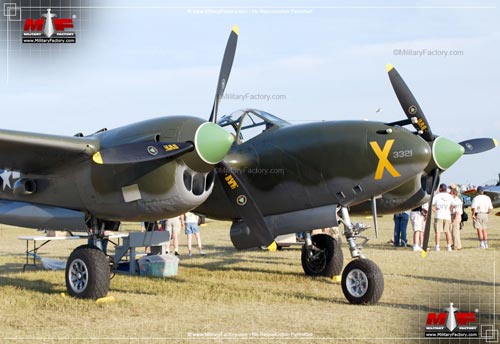
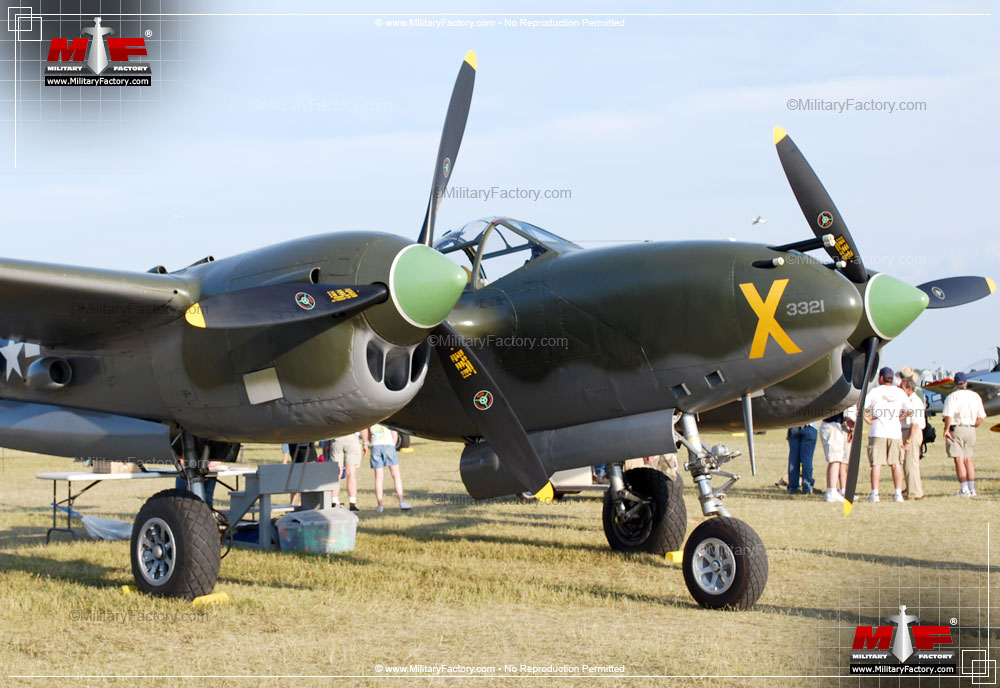
The Lockheed P-38 Lightning (often called the "Fork-Tailed Devil" from the German perspective) was the brainchild of aviation engineer Kelly Johnson. The name "Lightning" itself is believed to be derived from the designation the British had applied to the aircraft when they were interested in purchasing batch production models. The system would go on to serve the United States well, particularly in the battle over the Pacific and become one of America's classic and highly recognizeable warbirds.

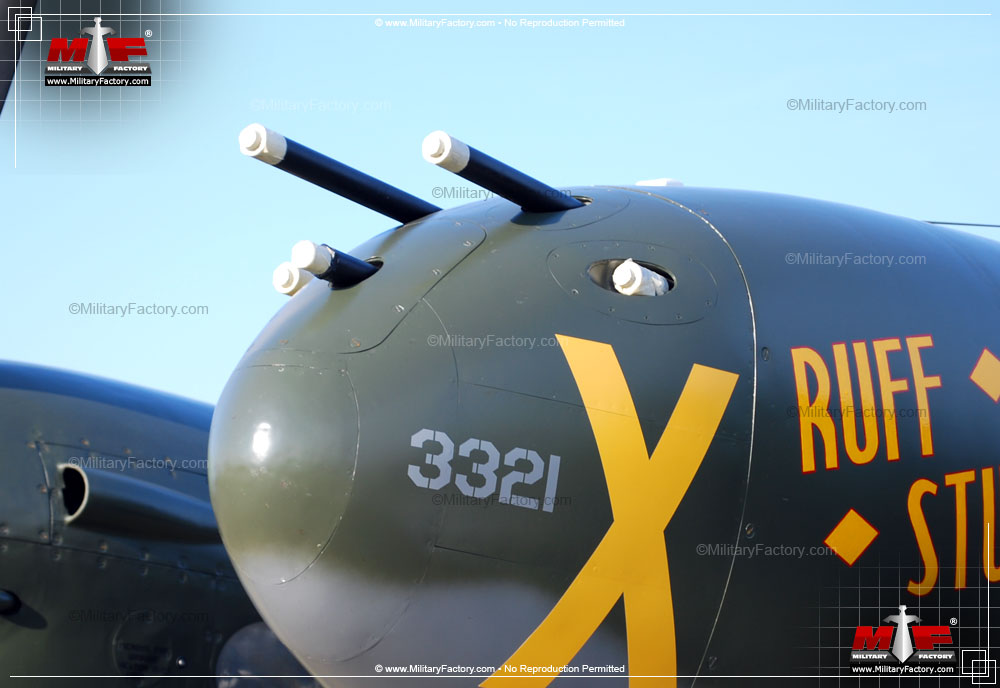
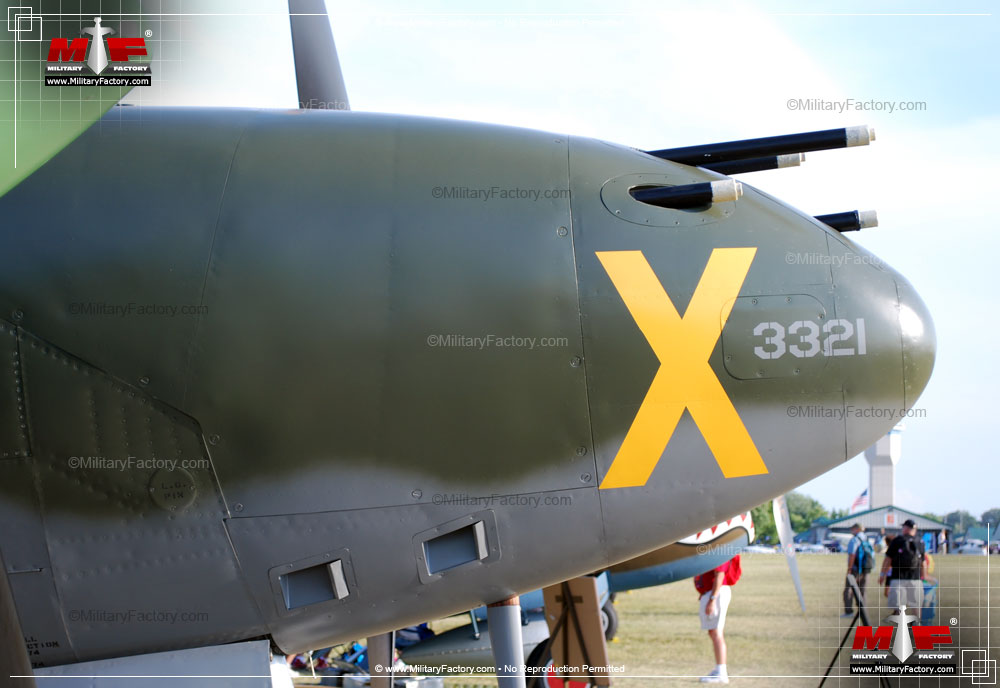
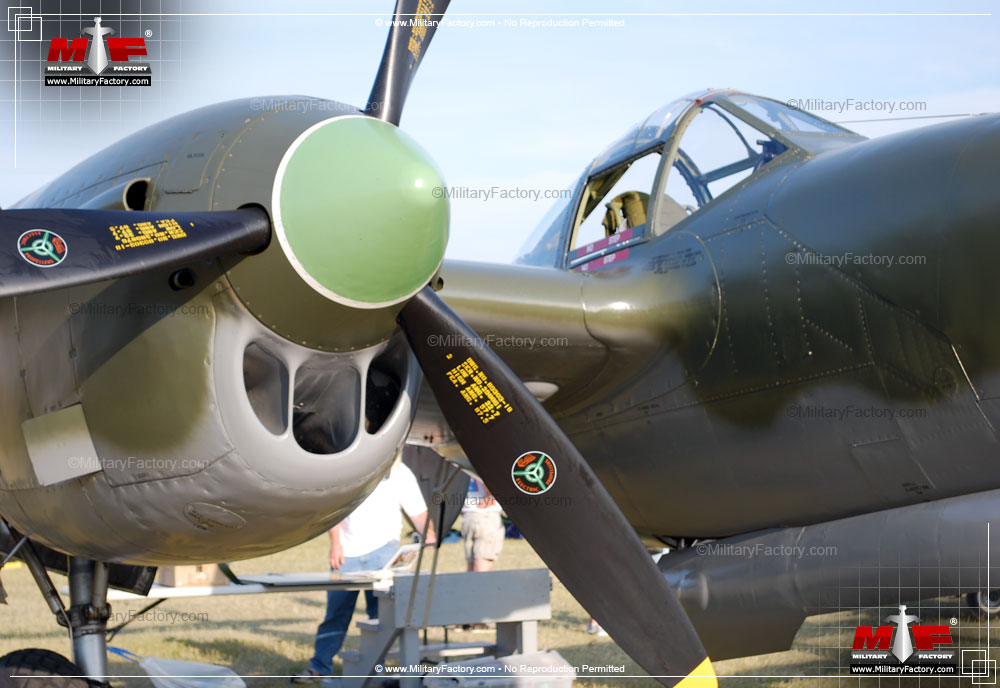
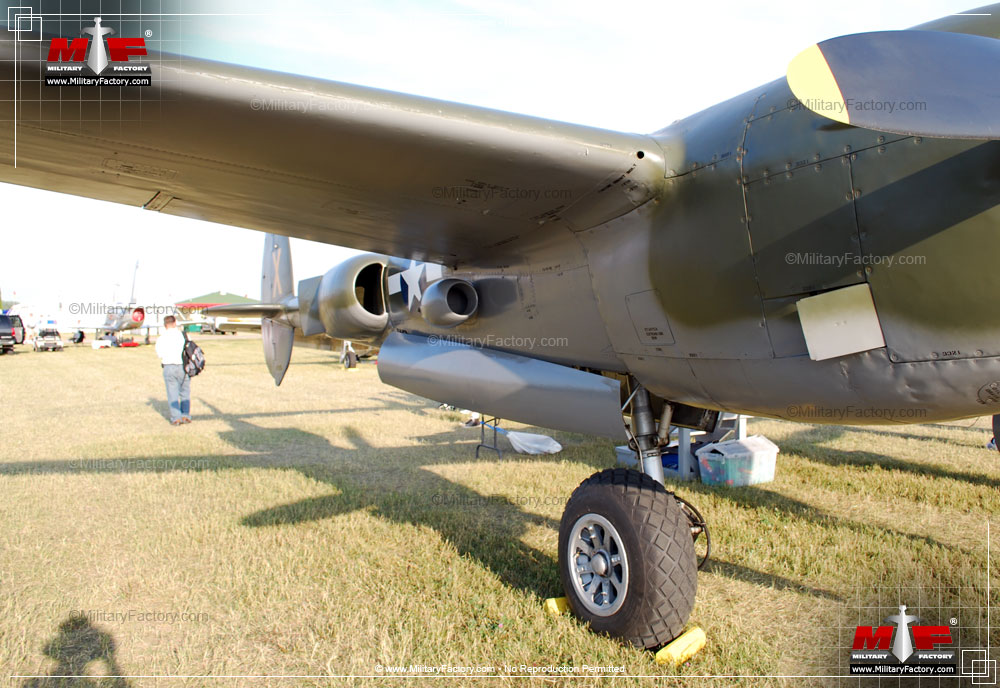
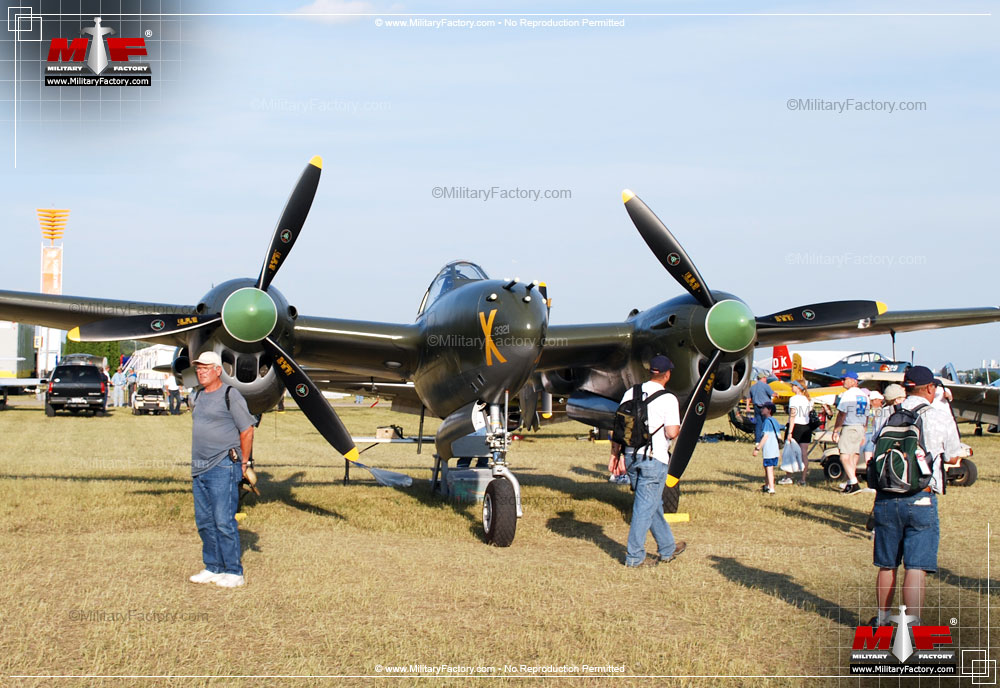
The twin-boom design was a major departure from most anything in the military skies at the time, with most aircraft deciding to go the more traditional fighter design route. A US Army Air Corps specification searched for an high-level, high-speed interceptor capable of maintaining said level and speed for upwards of 60 minutes or more. As such, the unique design was utilized to provide the power of, not one, but two operating engines, each in their own slender boom with turbocharger support. Engines were also counter-rotating, meaning that each engine counter effected one another's torque, negating the "pull" that was often apparent with single engine designs. The wing element connected the booms and pod-shaped cockpit forward and a broad elevator panel joined the booms at rear. Part of the specification also called for the fighter to be substantially armed and the P-38 in no way disappointed with a standard array of 1 x 20mm cannon and a battery of 4 x 12.7mm machine guns, all mounted in the nose.

Overall vision out of the cockpit was good though the twin-boom design necessitated a large wing element. The cockpit sat directly between either engine nacelle and made vision to the lower right or left difficult without banking the entire aircraft. The installation of all armament in the nose, however, provided the pilot with a more accurate attack cone when compared to wing-mounted armament common to traditional fighters of the time. The armament was also quite formidable against anything unfortunate to come within the range of the attack cone.

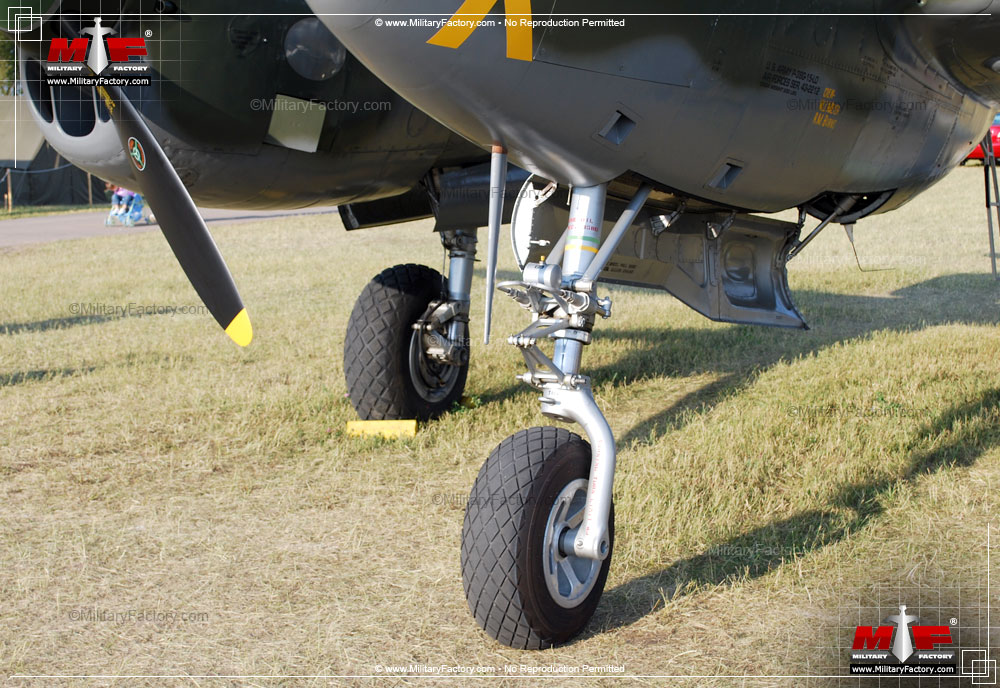
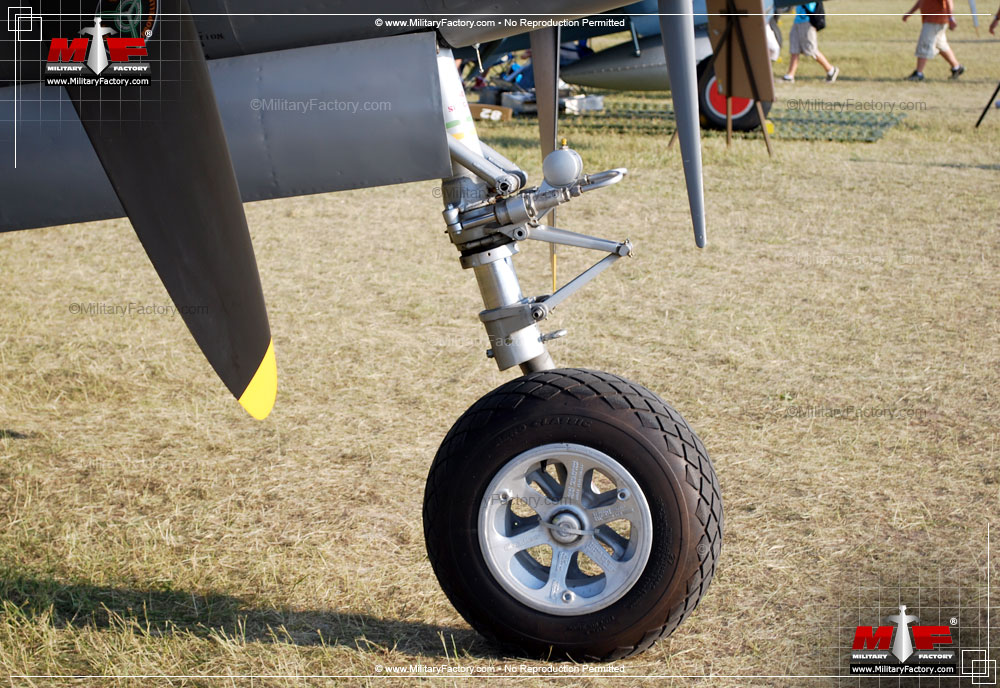
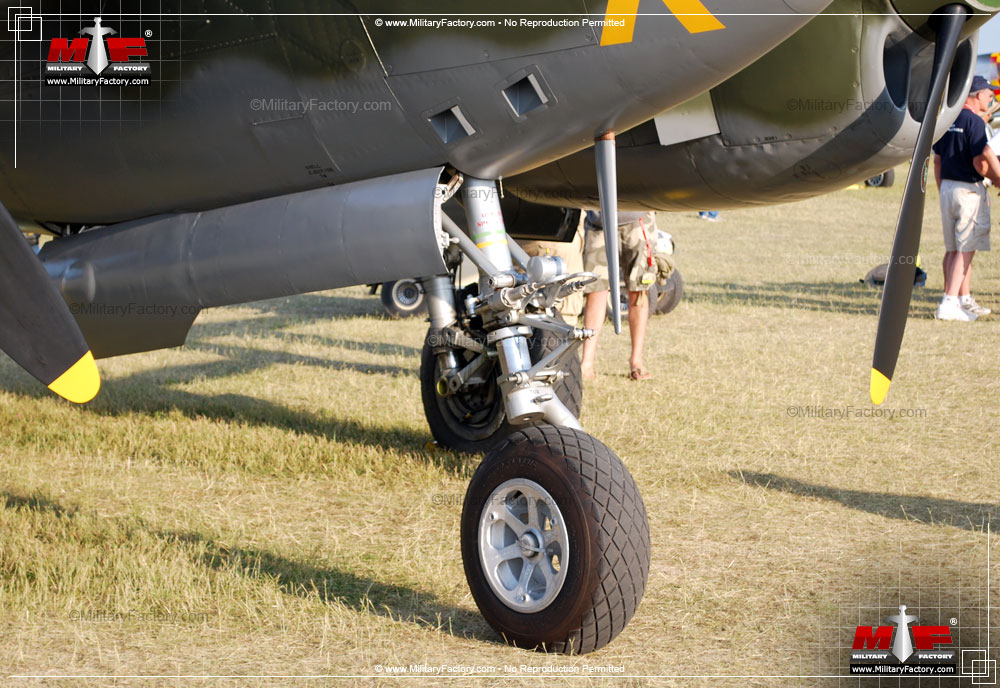
When British interest had peaked on the development of the P-38, several test variants were shipped across the Atlantic for testing, sans the superchargers though as there was a ban on exported superchargers at the time. Thusly the exported P-38 systems woefully under-performed for the British test pilots and interest there began to dissipate. Nevertheless, the United States military planners themselves liked what they saw in the P-38 and would soon be utilizing them in every theater of war across the globe. The forgiving airframe allowed for drop tanks to be issued for longer bombing or bomber escort runs and rail "trees" could be added for the carrying of up to 10 high explosive air-to-surface rockets (5 per side).

The P-38's distinct design worked for and against the pilot in a dogfight. Many a Japanese pilot in the post-war world recounted how the P-38 was difficult to spot from the front or behind, thanks to its slim appearance from those angles. On the flip side, however, the aircraft yeilded a much larger profile from above and below, making the system instantly recognizeable from great distances. Dogfighting at even the most fundamental level all about spotting your enemy first to gain the advantage. As such, spotting the P-38 twin boom design before it came upon oneself with guns and cannon blazing offered many advantages to Axis pilots.

P-38 Lightning’s would be credited with more enemy kills in the Pacific Theater than any other aircraft type, which is impressive considering the amount of carrier-based battles occurring throughout the war. Early combat action forced the intorduction of hydraulic control systems to aid pilots coming out of steep dives whereas before they were left to their own strength and knowledge of the systems to accomplish this feat. This addition became one of the first documented and production instances of assisted controlling in aircraft to be found anywhere in the world and in many ways mirrors the importance of advancements like "fly-by-fire" control most common in modern fighters.

In the end, the P-38 Lightning would become the symbolic trademark of Lockheed's first and hugely successful foray into the world of military aviation design (and production for that matter). The P-38 would also become a much beloved classic warfighter at air shows around the globe, showcasing its war-winning design with distinct performance and acrobatic capabilities. The success of the system developed a myriad of variants that included a high-speed, high-altitude reconnaissance model - to which the P-38 airframe was ideally suited for. Several other unique attempts designed at "benefitting" the existing system failed to advance beyond the prototype stage. Among those the XP-49 "Super Lightning" and the XP-58 "Chain Lightning" - both detailed elsewhere on this site.

The most notable mission involving a P-38 in World War 2 came about in April of 1943, which saw a P-38 take down a Japanese G4M "Betty" transport aircraft - and with it - Japanese Commander-in-Chief Admiral Isoroku Yamamoto, surely an irreplaceable blow against the Japanese war effort. On a more recent note regarding the Lightning, the Lockheed aviation firm recently bestowed their next generation F-35 fighter design with the official designation name of "Lightning II".

Text ©2003-2010 www.MilitaryFactory.com • All Rights Reserved • No Reproduction Without Permission • Corrections / Comments to MilitaryFactory at Gmail dot com

Last Revision: 7/31/2009


  Specifications for the Lockheed P-38J Lightning
arrow downDimensions:
Length: 37.83ft (11.53m)
Width:52.00ft (15.85m)
Height: 9.81ft (2.99m)

arrow downPerformance: About MACH
Max Speed: 414mph (666kmh; 360kts)
Max Range: 2,237miles (3,600km)
Rate-of-Climb: 2,500ft/min (762m/min)
Service Ceiling: 43,963ft (13,400m; 8.3miles)

arrow downStructure:
Accommodation: 1
Hardpoints: 2
Empty Weight: 12,800lbs (5,806kg)
MTOW: 21,601lbs (9,798kg)

arrow downPowerplant:
Engine(s): 2 x Allison V-1710-111 water-cooled inline piston engines generating 1,425hp.
arrow downArmament Suite:
1 x 20mm Cannon
4 x 12.7mm machine guns

10 x 5in high-explosive rockets (optional)
2 x Drop Tanks (optional)
2 x 500lb bombs (optional)

Up to 4,000lbs (908kg) of underwing ordnance.

  Pictures of the Lockheed P-38 Lightning
     
Picture of Lockheed P-38 Lightning
Picture of the Lockheed P-38 Lightning
Image of the Lockheed P-38 Lightning
     
arrow upView All 25 Images

CompareX2 CompareX4 Conversions Dictionary Acronyms

Compare and Contrast Military Aircraft Specifications

  Special Aircraft Collections
Aircraft by Conflict:
Falklands War
Indo-Pak War
Operation Allied Force
Operation Desert Storm
Six Day War
Yom Kippur War

Special Collections:
American X-Planes
Classic US Warbirds
Grumman "Cats"
Indian Air Force
Israeli Air Force
Mikoyan-Gurevich
British V-Bombers


Korean Air War:
Korean War Aircraft
Aces
Australia
United States
North Korea

Vietnam Air War:
Vietnam War Aircraft

Cold War
Cold War Aircraft
United States
Soviet Union
Soviet Bombers of the Cold War

Modern Aircraft
Modern Military Aircraft
United States

Miscellaneous
MiG-15 Versus Sabre
Top 10 Fighters of All Time
WW2 Aircraft Ranked by Speed
Aircraft Cockpits


  Recent Military Aircraft Additions
Thumbnail picture of the Arado Ar TEW 16/43-19
Arado TEW 16/43-19
Thumbnail picture of the Antonov An-2 Colt
Antonov An-2 Colt
Thumbnail picture of the Kyushu K11W Shiragiku bomber trainer
Kyushu Shiragiku

  Contacting MilitaryFactory.com
We can only get better if you tell us how. You can contact MilitaryFactory.com at MilitaryFactory at gmail dot com (replace "at" with "@" and "dot with ".") with any questions, comments or corrections. We also accept related military imagery that you approve for us to use on our website. Keep in mind, however, that due to volume, we may not directly respond to your inquiry. Please add us to your list of non-blocked recipients!

  Aircraft Quick Profile


Picture of the Lockheed P-38 Lightning
Image courtesy of the United States Department of Defense.

View More Images

flag of United States
1939

Designation: Lockheed P-38 Lightning
Classification Type: Twin-Engine Fighter-Bomber
Contractor: Lockheed Aircraft Corporation -USA

Country of Origin: United States
Production Total: 9,923

Operators: United States


  Variants
XP-38 - Prototype Model Designation

YP-38 - Evaluation Model Designation; 13 examples produced; V-1710 inline piston engines; 4 x 12.7mm machine guns and 1 x 37mm cannon.

P-38D - Revised tail unit; Self-sealing fuel tanks; 36 examples produced.

P-38E - Revised nose armament of 1 x 37mm cannon and 4 x .50 caliber machine guns to 1 x 20mm cannon and 4 x .50 caliber machine guns.

P-38F - Specifically designed for Pacific Theater of War service featuring V-1710 49/53 engines.

F-38G - V-1710-55/55 engines and provision for 2,000lbs of ordnance.

P-38G - V-1710-89/91 engines and greater bomb loadout; 2,970 examples produced.

P-38H - 601 examples produced.

P-38J - Improved engine installation and greater fuel capacity.

P-38L - Provision for underwing rockets; Nose radar is some variants or bomb-aimer; Featuring V-1710-111/113 engines; 3,923 examples produced.

P-38M - Two-seat nightfighter based on P-38L model; fitted with radar.

F-4-1-LO - Conversion model unarmed reconnaissance model with V-1710-21-29 engines; 4 x K-17 cameras.

RF-4-1-LO - Redesignated F-4-1-LO model.

F-5 - Unarmed "light" reconnaissance model.

Lightning MK.I - Export P-38E Evaluation Model Designation for British trials sans turbochargers.

Lightning Mk.II - Export P-38G models for British use; overtaken and consequently used by the USAAF.

  Collections
  • Sons of Empire - WW2 Aircraft of Japan
  • Aircraft of the Battle of Britain
  • X-Planes Throughout History
  • French Aircraft of World War 1
  • The German Luftwaffe in World War 2
  • Nightfighters - In a Class All Themselves
  • The Top Ten Fighters of All Time
  • Carrier "Born" Aircraft - Navy Mounts
  • If Boats Could Fly - Flying Boat Aircraft
  • World War 1 Aircraft Ranked by Speed
  • World War 2 Aircraft Ranked by Speed


Top MF Stuff: 2010 Military Pay Scale Chart | Military Ranks | World War 2 Weapons | Sniper Rifles | Conversion Calculators


Site Disclaimer | Privacy Policy | Site Map | MF Origins

©2010 www.MilitaryFactory.com • Content ©2003-2010 MilitaryFactory.com • All Rights Reserved • Site Contact Email: militaryfactory at gmail dot com (replace "at" with "@" and "dot" with ".")

eXTReMe Tracker

Most photographic images appearing on this site are courtesy of the United States Department of Defense and are approved for public use. Other images acquired through the public domain. Digital art work courtesy of Dan Alex. Business Consulting by Kyle Williams

Material presented throughout this website is for historical and entertainment value and should not to be construed as usable for hardware restoration, maintenance or general operation. Please consult manufacturers for such information.