Military Factory
Military Pay Chart
Global Firepower
Military Industrial Complex
Second World War
Home
Military Pay Scale
Military Ranks
Small Arms
Aircraft
Land Systems
Navy
Education
Military Factory Facebook Logo
flag of United States

General Dynamics F-111 Aardvark Long Range Strategic Medium Bomber / Tactical Strike Aircraft (1967)

Authored By Staff Writer | Last Updated: 8/7/2012

The F-111 Aardvark was retired in 1996 from active service with the United States Air Force followed shortly by its counterpart - the EF-111 Raven.

Find a School Near You
Follow Military Factory on Facebook:
Trending on Military Factory:
Recent Articles:
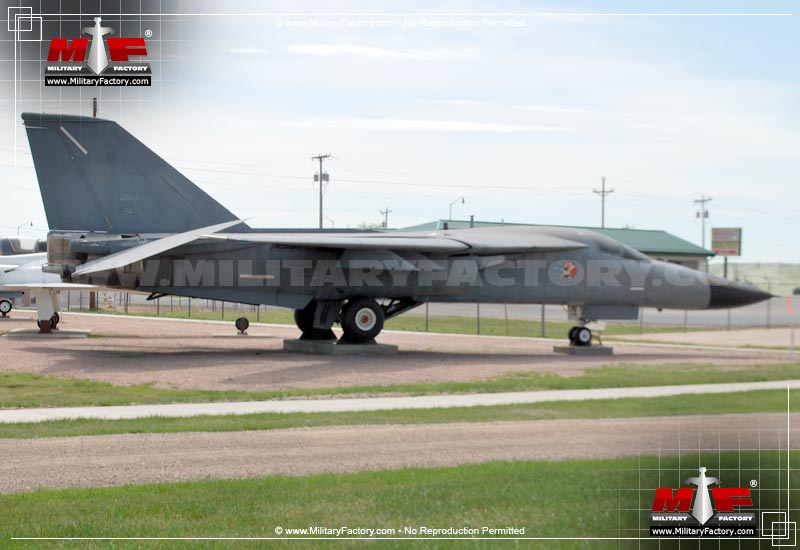
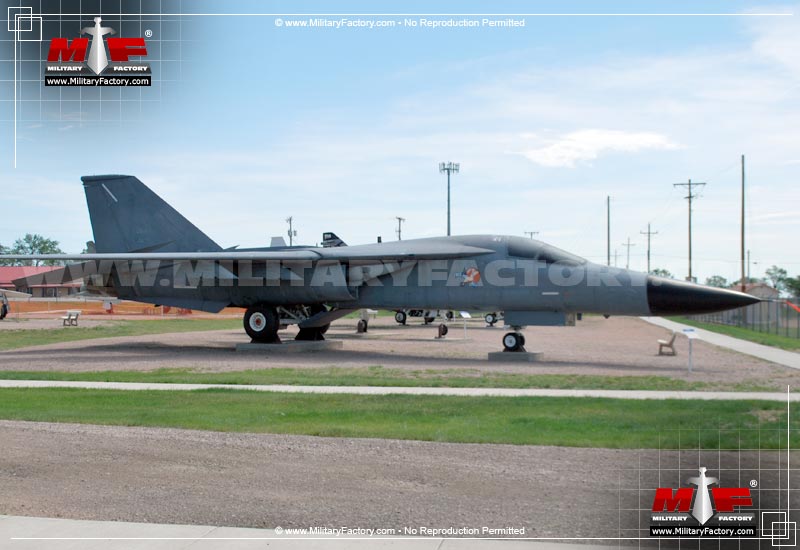
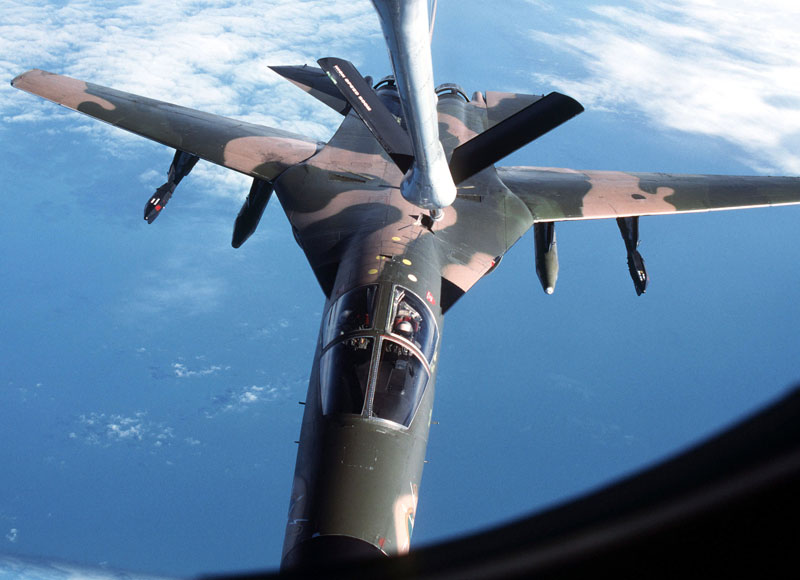
The General Dynamics F-111 "Aardvark" was purposely-designed as a variable geometry "swing wing" platform from the outset. The variable swing-wing philosophy would allow the aircraft to utilize three pre-determined geometric wing positions that could be called upon to change the flight characteristics of the aircraft "on the fly". The first position, with wings fully extended, was to be used when the increased weight of the aircraft - due to ordnance and/or fuel - could produce additional drag properties under the wing, assisting the aircraft on take-off. The secondary position could be utilized to attain stability and speed at high subsonic speeds. The third position, with wings completely swept back against the fuselage, could be utilized for maximum "fast-dash" performance at altitude.

The F-111 was based on this design principle, becoming the world's first operational variable geometry swing wing aircraft - leading the way for future global counterparts in the form of the Grumman F-14 Tomcat interceptor, the Panavia Tornado multirole aircraft, the Mikoyan-Gurevich MiG-23 and MiG-27 "Flogger" strike fighters and the Sukhoi Su-17 "Fitter" bombers. Additionally, larger (and more complex) forms of the swing-wing philosophy would also arise from the developments of the Rockwell B-1 "Lancer", the Tupolev Tu-22 "Backfire" and the Tupolev Tu-160 "Blackjack" bombers.

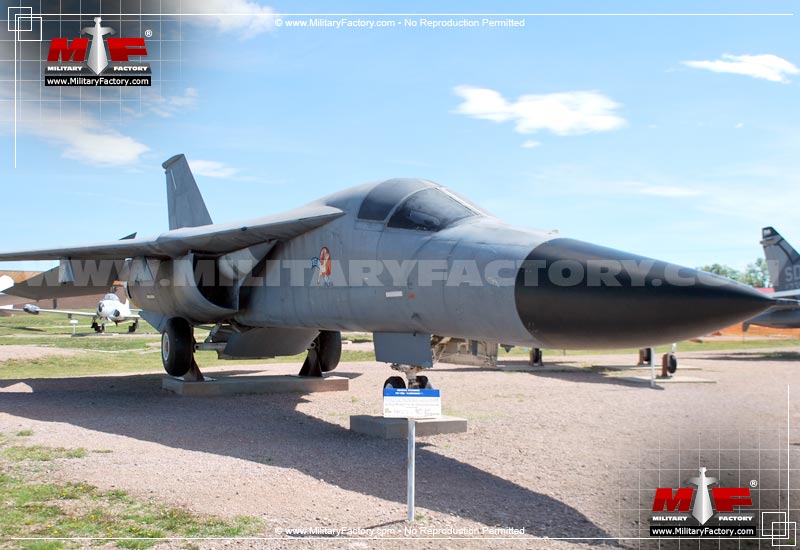
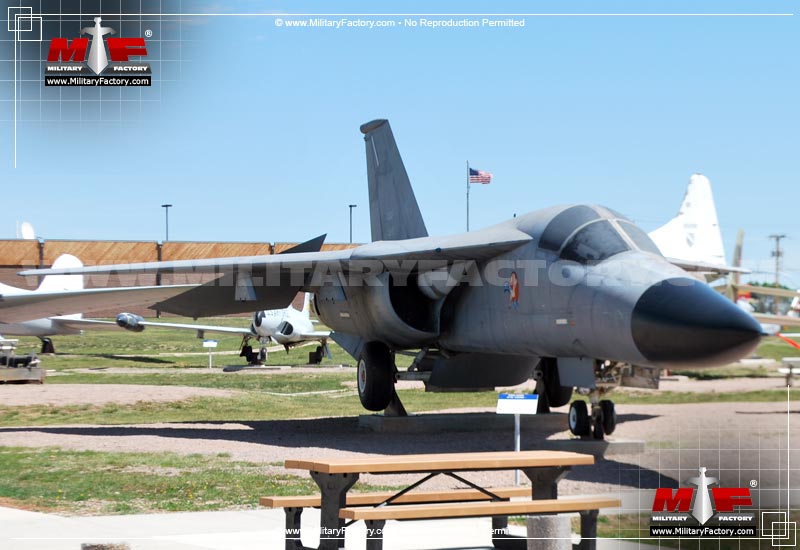
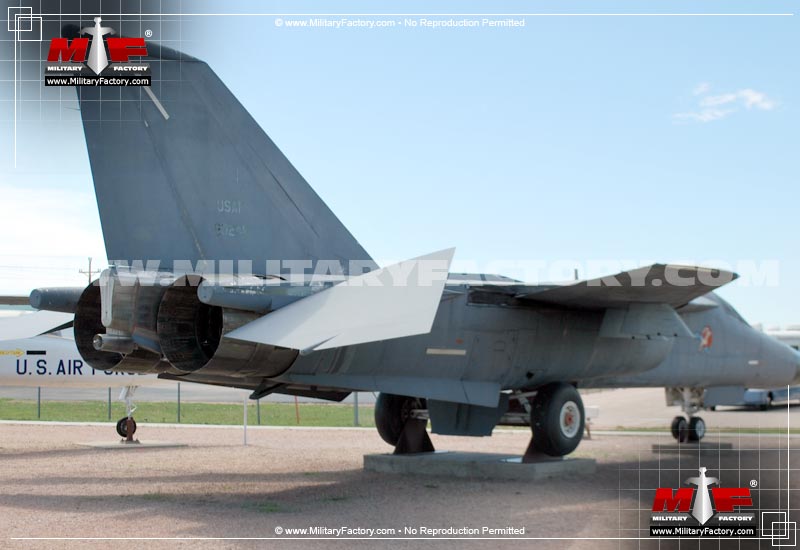
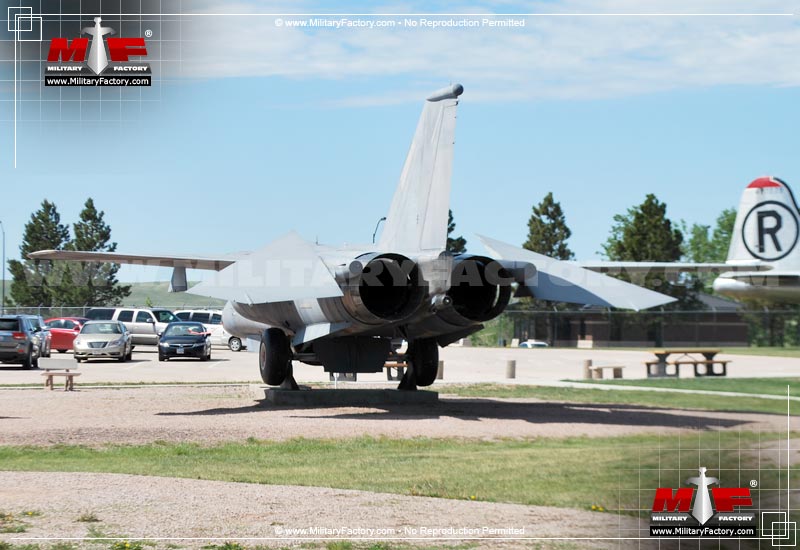
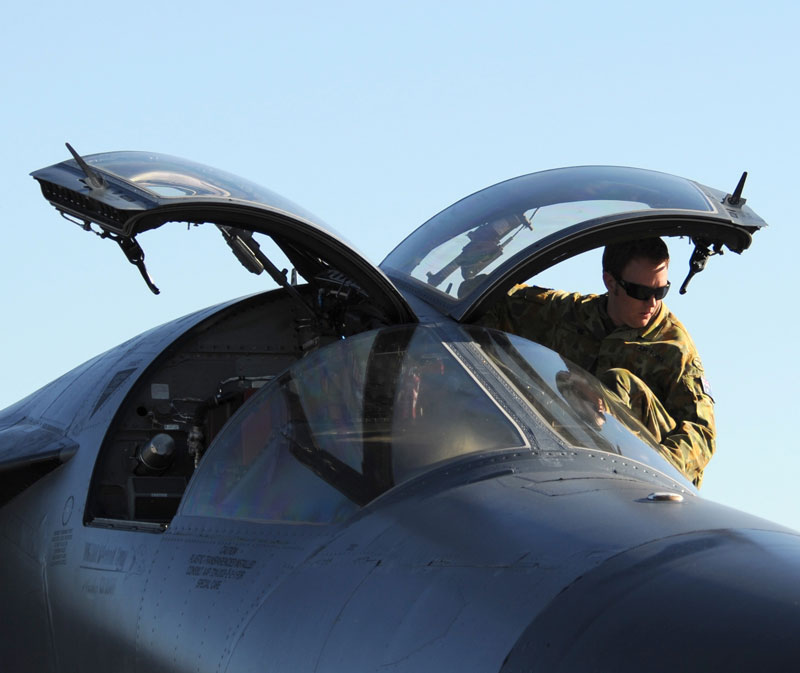
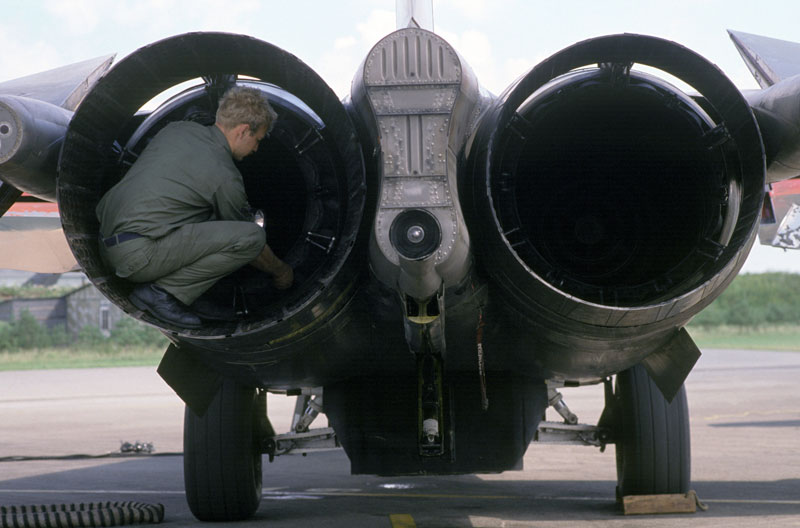
The F-111 (belatedly assigned the designator of "Aardvark") was a large two-seat multi-role aircraft that would be used to good effect in the upcoming Vietnam War. The two crewmembers sat in a side-by-side arrangement in a fully-jettisonable cockpit capsule, with each member having equal access to all controls on the main panel. The F-111 was powered by a series of ever-increasing Pratt & Whitney brand powerplants and could field a variety of laser-guided, seeking, and drop bombs from up to 8 underwing hardpoints (four to a wing - the area under the fuselage was reserved for an internal weapons bay though the area between the engines could fit an ECM or data link pod). The aircraft utilized a single vertical tail fin mounted between the twin engines running that ran aft of the cockpit and the remaining length of the fuselage.

Early development of the F-111 proved problematic and costly. The fleet defense derivative which was designated the F-111B for the US Navy was cancelled altogether due to performance and weight issues (the latter issue directly related to the former). Even when the system was already in operational status along the frontlines over Vietnam, the system was still exhibiting technological issues. Despite these initial shortcomings, the product evolved into an effective and multi-faceted combat platform that would see service up until the late 1990's.

The F-111C became an export model to the only other operator of the F-111, that being Australia. Delivery of these 24 aircraft were delayed until 1973 when they had been originally ordered as early as 1963. Four of these became hybrid reconnaissance/bomber models as RF-111Cs, fitted with cameras and reconnaissance equipment while still retaining their combat strike capabilities.

The F-111D was an "improved" Aardvark featuring uprated engines, new avionics, a revised canopy and a revised air intake. Ninety-Six were delivered with operational service attained in 1974. Delayed once again hampered these deliveries, for the D-models were ordered several years prior in 1967. The F-111E became an interim model following the "breaking-in" issues encountered with the D-models. Ninety-four of these E-models arrived even before the D-models were brought fully online.

F-111F was the final production variant of the Aardvark line. Improved avionics, simplified systems and improved capabilities stemmed from this new model. The FB-111A "Switchblade" (name is unofficial) was a strategic bomb variant used in place of Boeing B-52 Stratofortresses and Convair B-58 Hustlers in service with US Strategic Air Command. Production of this type amounted to 76 examples. The F-111K was a British order intended to fill the void of the cancelled BAC TSR-2 bomber program fro 1965, with the Aardvark order itself eventually canceled by the British in 1968. The F-111G were used as trainers.

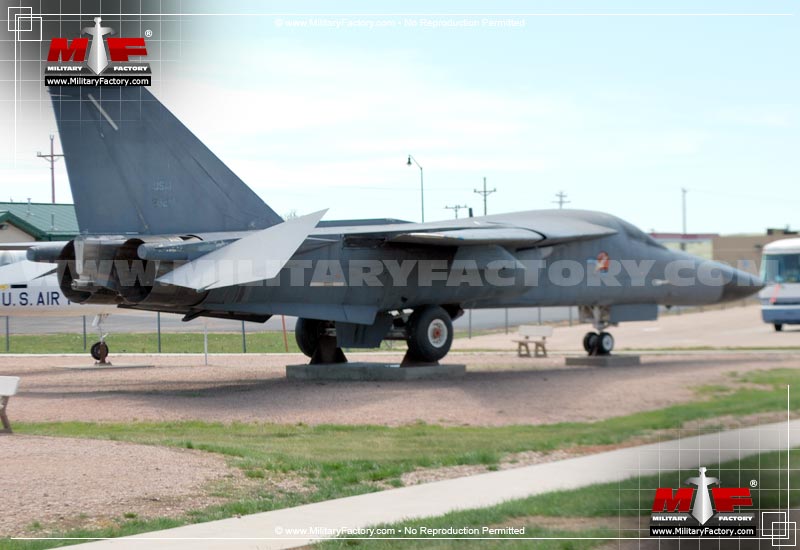
The evolution of the F-111 saw the aircraft pass through a series of first-run models that focused on increasing the performance of the Pratt & Whitney engines. Forty-two F-111A models were also converted to the famous EF-111 Raven series of electronic warfare aircraft (conversions completed by Grumman) and were utilized in the Persian Gulf War. These systems were originally designed to replace the aging Douglas EB-66 aircraft. The Raven models featured a noticeable bulb on the top of their vertical tail fins.

The US Strategic Air Command (SAC) operated their FB-111 models from 1969 through 1990 while the USAF usage covered 1967 through 1998 (the USAF batch consisting of Ravens).
Text ©2003-2013 www.MilitaryFactory.com • All Rights Reserved • No Reproduction Permitted
MilitaryFactory.com does NOT sell equipment/weaponry. Material presented throughout this website is for historical and entertainment value and should not to be construed as usable for hardware restoration, maintenance or general operation. Please consult manufacturers for such information. Our disclaimer. Email corrections / Comments to MilitaryFactory at Gmail dot com.
Picture of General Dynamics F-111 Aardvark
Pic of the General Dynamics F-111 Aardvark
Image of the General Dynamics F-111 Aardvark
View All Images (30)

Specifications for the
General Dynamics F-111 Aardvark
Long Range Strategic Medium Bomber / Tactical Strike Aircraft


Country of Origin: United States
Manufacturer: General Dynamics - USA
Initial Year of Service: 1967
Production: 554


Focus Model: General Dynamics F-111F Aardvark
Crew: 2


Length: 73.49ft (22.4m)
Width: 62.99ft (19.20m)
Height: 17.13ft (5.22m)
Weight (Empty): 47,179lbs (21,400kg)
Weight (MTOW): 100,002lbs (45,360kg)


Powerplant: 2 x Pratt & Whitney TF30-P-111 turbofan engines generating 25,100lbs of standard thrust each.


Maximum Speed: 1,650mph (2,655kmh; 1,434kts)
Maximum Range: 4,200miles (6,760km)
Service Ceiling: 65,945ft (20,100m; 12.5miles)
Rate-of-Climb: 25,890 feet per minute (7,891m/min)


Hardpoints: 5
Armament Suite:
OPTIONAL:
1 x 20mm M61 Vulcan cannon

Mission-specific ordnance can include any of the following:

GBU-12 laser-guided bomb
GBU-10 laser guided bomb
AGM-84 HARM anti-radar anti-radiation Missile
GBU-15
AGM-142 air-to-surface missile
AIM-9 Sidewinder air-to-air missile
Conventional Iron / Dumb / Drop Bombs


Variants:
F-111A - Initial Production Model Designation; 23 pre-production models produced; Total of 158 at production end fitted with 18,500lb TF30-P-3 powerplants; 42 converted to EF-111A Ravens.


F-111B - Cancelled Fleet Defense Variant of which 5 pre-production models were produced.

F-111C - Australian Export Models of which 24 were produced.

F-111D - 96 Production Models fitted with TF30-P-0 powerplants generating 19,600lbs of thrust each.

F-111E - 94 Production Models of this type; developed as an interim to the F-111D model.

F-111F - 106 Production Models of this type fitted with TF30-P-111 capable of 25,100lbs of thrust each.

F-111G - Converted FB-111A Models for European Theater use; RAAF usage of this model as well.

F-111K - Proposed British export model with British equipment; order eventually cancelled.

FB-111A - Strategic Bomber Model Designation; 76 examples produced; fitted with 2 x additional hardpoints, increased wingspan and TF30-P-7 powerplants generating 20,150lbs of thrust; improved electronics.

EF-111A "Raven" - Electronic Warfare Conversion Models of F-111A series; 42 converted in this way; last to be retired from USAF use in 1998.


Operators: Australia; United States

ALL AIRCRAFT CATEGORIES

BY DECADE:


1900 to 1909
1910 to 1919
1920 to 1929
1930 to 1939
1940 to 1949
1950 to 1959
1960 to 1969
1970 to 1979
1980 to 1989
1990 to 1999
2000 to 2009
2010 to 2019
2020 to 2029
VIEW ALL
Compare Aircraft


BY TYPE:


Anti-Submarine Warfare (ASW)
Attack Helicopters
Bomber Aircraft
Medium Bombers
Heavy Bombers
Close-Air Support (CAS)
Commercial Aircraft
Dive Bombers
Electronic Warfare Aircraft (EWA)
Experimental / X-Planes
Fighter Aircraft
Floatplane Aircraft
Flying Boat Aircraft
Aerial Refueling Tankers
Helicopters (ALL)
Interceptor Aircraft
Multi-Role Aircraft
Navy Carrier Aircraft
Night Fighters
Reconnaissance / Scout
Search & Rescue (SAR)
Scout Helicopters
Special Purpose
Torpedo Bombers
Trainer Aircraft
Transport Aircraft
Transport Helicopters
Unmanned Aerial Vehicles (UAVs)
Unmanned Combat Air Vehicles (UCAVs)


COLLECTIONS:


4th Generation Fighter Aircraft
5th Generation Fighter Aircraft
US X-Planes
Classic US Warbirds
French Military Helicopters
Grumman "Cats"
Howard Hughes Aircraft
Indian Air Force
Israeli Air Force
Libyan Aircraft
Modern Chinese Aircraft
Modern Chinese Fighters
Modern Military Aircraft
Modern North Korean Aircraft
Modern Trainer Aircraft
Modern US Aircraft
Mikoyan Aircraft
Sukhoi Aircraft
Syrian Aircraft
Top 10 Fighter Aircraft of All Time


AIRCRAFT BY CONFLICT:


Arab-Israeli War (1948)
Cuban Missile Crisis (1959-1962)
Falklands War (1982)
Indo-Pak War (1965, 1971)
Iran-Iraq War (1980-1988)
Lebanon War (1982)
Operation Allied Force (1999)
Operation Desert Storm (1991)
Six Day War (1967)
Spanish Civil War (1936)
Soviet-Afghan War (1979-1989)
Yom Kippur War (1973)


MISCELLANEOUS:


Aircraft Cockpits
Aircraft Manufacturers List
Aircraft Timeline

WORLD WAR 2:


1939 Aircraft
1940 Aircraft
1941 Aircraft
1942 Aircraft
1943 Aircraft
1944 Aircraft
1945 Aircraft
1946 Aircraft
Australian Aircraft
Battle of Britain Aircraft
Bombers
Four-Engine Bombers
British Aircraft
British Bombers
British Transports
Dive Bombers
Canadian Aircraft
Fighters
Chinese Aircraft
French Aircraft
German Aircraft
German Fighters
German Flying Boats
German Jets
Secret Weapons of the Luftwaffe
Italian Aircraft
Imperial Japanese Aircraft
Imperial Japanese Fighters
Mitsubishi Bombers
Navy Aircraft
Pearl Harbor
Polish Aircraft
Romanian Aircraft
US Aircraft
US Bombers
US Navy Aircraft
Soviet Aircraft
Torpedo Bombers
Trainer Aircraft
Transport Aircraft
Tuskegee Airmen Aircraft
W.A.S.P. Aircraft
WW2 Aircraft Ranked by Speed
VIEW ALL


WORLD WAR 1:


1914 Aircraft
1915 Aircraft
1916 Aircraft
1917 Aircraft
1918 Aircraft
Aircraft Timeline
Austro-Hungarian Aircraft
Bomber Aircraft
British Aircraft
Fighters
Flying Boats
French Aircraft
Imperial German Aircraft
Italian Aircraft
Scout Aircraft
Russian Empire Aircraft
US Aircraft
WW1 Aircraft Ranked by Speed
VIEW ALL


KOREAN WAR:


Australian Aircraft
Korean War Aces
Korean War Jets
North Korean Aircraft
US Military Aircraft
VIEW ALL


VIETNAM WAR:


Helicopters
North Vietnam Air Force
US Airpower
VIEW ALL


COLD WAR:


1950s French Aircraft
British V-Bombers
Cold War Bombers
Soviet Aircraft
Soviet Bombers
Soviet Interceptors
Soviet Helicopters
Strategic Air Command
US Aircraft
US Bombers
US Interceptors
VIEW ALL

Site Disclaimer | Privacy Policy | Site Map | MF Origins


©2013 www.MilitaryFactory.com • Content ©2003-2013 MilitaryFactory.com • All Rights Reserved • Site Contact Email: militaryfactory at gmail dot com. The "Military Factory" name and MilitaryFactory.com logo are registered ® trademarks and protected by all applicable domestic and international intellectual property laws.


Top MF Stuff: 2013 Military Pay Scale | Military Ranks | WW2 Weapons | Sniper Rifles | Kts to Mph | WW1 Aircraft | Automatic Rifles | Aircraft Cockpits | Vietnam War Weapons | Main Battle Tanks | Submachine Guns | Shotguns | French Military Victories


Most photographic images appearing on this site are courtesy of the United States Department of Defense and are approved for public use. Other images acquired through the public domain. Digital art work courtesy of Dan Alex. Business Consulting by Kyle Williams. Material presented throughout this website is for historical and entertainment value and should not to be construed as usable for hardware restoration, maintenance or general operation. Please consult manufacturers for such information.


eXTReMe Tracker