Global Firepower | Military Industrial Complex | Second World War History
Home | Military Pay Scale Chart | Aircraft | Infantry Weapons | Military Vehicles | Navy Ships | Military Education | French Military Victories | Military Ranks | WW2 Weapons
Military Factory Latest from Military Factory
Thumbnail picture of the Dardo infantry fighting vehicle
Dardo IFV
Thumbnail picture of the Supermarine Scimitar fighter
Supermarine Scimitar
Thumbnail picture of the Centauro B1 8x8 tank killer
Centauro 8x8
Thumbnail picture of the Novi Avion fighter
Novi Avion
Thumbnail picture of the FR F2 bolt-action sniper rifle
FR F2
Thumbnail picture of the Lebel Model 1886 bolt-action rifle
Lebel Model 1886
2009 Military Pay Scale Chart - for Army, Navy, Air Force and Marines
  BY DECADE
    · 1900 to 1909
    · 1910 to 1919
    · 1920 to 1929
    · 1930 to 1939
    · 1940 to 1949
    · 1950 to 1959
    · 1960 to 1969
    · 1970 to 1979
    · 1980 to 1989
    · 1990 to 1999
    · 2000 to 2009
    · 2010 to 2019
    · View All Aircraft
  BY TYPE
    · Attack Helicopters
    · Bombers
    · Close-Support
    · Commercial
    · Dive Bombers
    · Experimental
    · Fighters
    · Floatplanes
    · Flying Boats
    · Fuel Tankers
    · Helicopters
    · Interceptors
    · Multi-Role
    · Navy Aircraft
    · Night-Fighters
    · Recon Aircraft
    · Recon Helos
    · Special Purpose
    · Torpedo Bombers
    · Trainer Aircraft
    · Transport Aircraft
    · Transport Helos
    · UAVs
  WORLD WAR 2
    · Full List
    · 1939
    · 1940
    · 1941
    · 1942
    · 1943
    · 1944
    · 1945
    · Australia
    · Battle of Britain
    · Bombers
    · Britain
    · Dive Bombers
    · Canada
    · Fighters
    · China
    · France
    · Germany
    · German Fighters
    · German Jets
    · Italy
    · Japan
    · Mitsubishi Bombers
    · Poland
    · USA Aircraft
    · USA Bombers
    · Soviet Union
    · Torpedo Bombers
  WORLD WAR 1
    · Full List
    · 1914
    · 1915
    · 1916
    · 1917
    · 1918
    · Aces
    · Austria-Hungary
    · Bombers
    · Britain
    · Fighters
    · France
    · Germany
    · Italy
    · Recon Aircraft
    · Russia
    · USA
  KOREAN WAR
    · Full List
    · Aces
    · Australia
    · USA
    · North Korea
  VIETNAM WAR
    · Full List
    · United States
    · North Vietnam

Military Factory > Military Aircraft > Bell XFL Airabonita
 
 
More Pictures Cockpit View 3 View Plan QuickGraphs StatsCentral

Bell XFL Airabonita

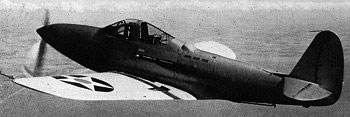
The Bell XFL-1 Airabonita was a failed attempt to convert the P-39 Airacobra into a viable US Navy interceptor.
By Staff Writer

Bookmark and Share

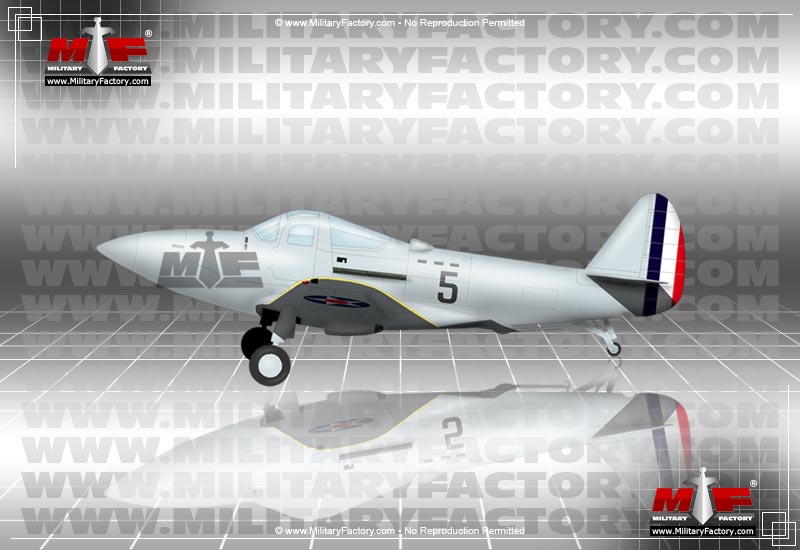
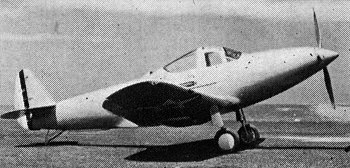
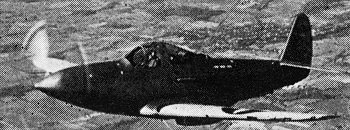
The XFL "Airabonita" was a Bell Aircraft Company product developed in parallel with the P-39 Airacobra, a land-based USAAF design that eventually achieved operational status. In essence, the Airabonita was a "navalized" version of the Airacobra with some navy-induced modifications for operations aboard carriers. Despite the attempt, the Airabonita was plagued by engine and undercarriage issues throughout its development and proved wholly underpowered to most other fighter aircraft of the time. The United States Navy eventually decided on other pursuits and the single $125,000 XFL prototype was inevitably laid to rest.

With its origins in the P-39 army design, the XFL model retained most of the same exterior shape. Intended for use by the United States Navy as an interceptor aircraft, the Airabonita was designed as such, with a conventional undercarriage system (with two main landing gears and a tail wheel) as opposed to the tricycle type offered in the P-39. The air frame was revised and reinforced for the rigors of carrier operations. An arrestor hook was added under the base of the empennage. The Airabonita still retained the automobile-style doors for entry and exit.

The aircraft was to be powered by a single Allison XV-1710-6 12-cylinder Vee liquid-cooled inline engine of 1,150 horsepower. The engine was, as in the P-39, mounted aft of the cockpit and powered a forward-mounted, three-blade propeller via a 10.38 foot shaft running under the cockpit floor. It should be noted that this particular engine lacked the turbo charger as found on the XP-39, already a detrimental fact that would do the system in. The coolant radiators were moved from the wing center section and placed in underwing fairings. Armament would have still revolved around the 37mm Oldsmobile T9 cannon firing through the propeller hub. This cannon could be replaced by a single 12.7mm Browning M2/AN heavy machine gun if desired, potentially saving on critical weight while providing a weapon with a higher rate of fire. Additionally, firepower was to be provided through 2 x 7.62mm (.303 caliber) machine guns mounted in the cowl. By any measure, this arrangement would have been a notch under most formidable armament arrays at the time for even the land-based P-39 utilized more heavy caliber machine guns alongside its cannon armament.

The Airabonita achieved first flight on May 13th, 1940 but faced an uphill battle from the start as deliveries of the Allison engines were delayed for a time. This delay compounded the Airabonita's difficulties when the engines did eventually arrive for the powerplants exhibited issues all their own. The use of the conventional undercarriage also worked against the XFL as problems began to develop during testing. As a result, the system had to be shipped back to Bell Aircraft for further revisions in late 1941. By this time, however, the United States Navy decided to pursue a different direction and cancelled development of the XFL in whole. The single XFL-1 prototype was then used in a series of armament tests until it was eventually scrapped.

Performance specifications listed a top speed of 307 miles per hour with a ceiling of 30,900 feet. A range of 1,072 miles was achievable with a rate-of-climb topping 2,630 feet per minute. By all accounts, the XFL would have been wholly outclassed when one considers the speedy F4U Corsair coming out of development. Even the standard naval F4F Wildcat operated better at altitude than the Airabonita seemingly would have. This particular Allison engine - with its single-speed supercharger - also had a tendency to underperform at altitude as it did in the P-40 Warhawk, P-39 Airacobra and even in the P-38 Lightning - the latter needing exhaust-driven superchargers to have acceptable altitude performance.

Text ©2003-2009 www.MilitaryFactory.com • All Rights Reserved • No Reproduction Without Permission • Corrections / Comments to MilitaryFactory at Gmail dot com

Last Revision: 9/9/2009


  Specifications for the Bell XFL-1 Airabonita
arrow downDimensions:
Length: 29.82ft (9.09m)
Width:35.04ft (10.68m)
Height: 12.83ft (3.91m)

arrow downPerformance: About MACH
Max Speed: 336mph (541kmh; 292kts)
Max Range: 1,072miles (1,725km)
Rate-of-Climb: 2,630ft/min (802m/min)
Service Ceiling: 30,922ft (9,425m; 5.9miles)

arrow downStructure:
Accommodation: 1
Hardpoints: 0
Empty Weight: 5,165lbs (2,343kg)
MTOW: 7,218lbs (3,274kg)

arrow downPowerplant:
Engine(s): 1 x Allison XV-1710-6 12-cylinder Vee liquid-cooled inline engine developing 1,150hp.
arrow downArmament Suite:
1 x 37mm cannon OR 1 x 12.7mm machine gun firing through the propeller hub.
2 x 7.62mm machine guns in nose cowl

  Pictures of the Bell XFL Airabonita
     
Picture of Bell XFL Airabonita
Picture of the Bell XFL Airabonita
Image of the Bell XFL Airabonita
     
arrow upView All 4 Images

CompareX2 CompareX4 Conversions Dictionary Acronyms

Compare and Contrast Military Aircraft Specifications

  Special Aircraft Collections
Aircraft by Conflict:
Falklands War
Indo-Pak War
Operation Allied Force
Operation Desert Storm
Six Day War
Yom Kippur War

Special Collections:
American X-Planes
Classic US Warbirds
Grumman "Cats"
Indian Air Force
Israeli Air Force
Mikoyan-Gurevich
V-Bombers


Korean Air War:
Korean War Aircraft
Aces
Australia
United States
North Korea

Vietnam Air War:
Vietnam War Aircraft

Cold War
Cold War Aircraft
United States
Soviet Union
Soviet Bombers of the Cold War

Modern Aircraft
Modern Military Aircraft
United States

Miscellaneous
MiG-15 Versus Sabre
Top 10 Fighters of All Time


  Recent Military Aircraft Additions
Thumbnail picture of the Supermarine Scimitar fighter
Supermarine Scimitar
Thumbnail picture of the Novi Avion fighter
Novi Avion
Thumbnail picture of the Arado Ar TEW 16/43-23 jet-powered fighter
Arado TEW 16/43

  Contacting MilitaryFactory.com
We can only get better if you tell us how. You can contact MilitaryFactory.com at MilitaryFactory at gmail dot com (replace "at" with "@" and "dot with ".") with any questions, comments or corrections. We also accept related military imagery that you approve for us to use on our website. Keep in mind, however, that due to volume, we may not directly respond to your inquiry. Please add us to your list of non-blocked recipients!
Flying Boats

  Aircraft Quick Profile


Picture of the Bell XFL Airabonita
Image courtesy of Dan Alex.

flag of United States
1940

Designation: Bell XFL Airabonita
Classification Type: Carrierborne Interceptor
Contractor: Bell Aircraft Company - USA

Country of Origin: United States
Production Total: 1

Operators: United States


  Variants
Model 12 - Bell Aircraft Designation of XP-39

XP-39 - Prototype Designation for P-39 Airacobra model for USAAC.

XFL-1 - Navalized single prototype example based on XP-39; traditional undercarriage with two main gears and tail wheel per USN requirements; 1 x 37mm cannon OR 1 x 12.7mm machine gun as main armament; 2 x 7.62mm machine guns; 1 x Allison XV-1710-6 12-cylinder liquid-cooled inline engine of 1,150 horsepower; underwing radiators; arrestor hook; enlarged vertical surfaces; reinforced airframe.

  Collections
  • Sons of Empire - WW2 Aircraft of Japan
  • Aircraft of the Battle of Britain
  • X-Planes Throughout History
  • French Aircraft of the Great War
  • The German Luftwaffe in World War 2
  • Nightfighters - In a Class All Themselves
  • The Top Ten Fighters of All Time
  • Carrier "Born" Aircraft - Navy Mounts
  • If Boats Could Fly - Flying Boat Aircraft


Free GI Bill Guide

Top MF Stuff: Military Pay Scale Chart | Military Ranks | World War 2 Weapons | Sniper Rifles | Conversion Calculators


©2009 www.MilitaryFactory.com • Content ©2003-2009 MilitaryFactory.com • All Rights Reserved • Disclaimer Privacy Policy Site Map Origins
Most photographic images appearing on this site are courtesy of the United States Department of Defense and are approved for public use.
Other images acquired through the public domain. Digital art work courtesy of Dan Alex.
Business Consulting by Kyle Williams

Material presented throughout this website is for historical and entertainment value and should not to be construed as usable for
hardware restoration, maintenance or general operation. Please consult manufacturers for such information.

Site Contact: militaryfactory at gmail dot com (replace "at" with "@" and "dot" with ".") eXTReMe Tracker