Global Firepower | Military Industrial Complex | Second World War History
Home | Military Pay Scale Chart | Aircraft | Infantry Weapons | Military Vehicles | Navy Ships | Military Education | French Military Victories | Military Ranks | WW2 Weapons
Military Factory Latest from Military Factory
Thumbnail picture of the Dardo infantry fighting vehicle
Dardo IFV
Thumbnail picture of the Supermarine Scimitar fighter
Supermarine Scimitar
Thumbnail picture of the Centauro B1 8x8 tank killer
Centauro 8x8
Thumbnail picture of the Novi Avion fighter
Novi Avion
Thumbnail picture of the FR F2 bolt-action sniper rifle
FR F2
Thumbnail picture of the Lebel Model 1886 bolt-action rifle
Lebel Model 1886
2009 Military Pay Scale Chart - for Army, Navy, Air Force and Marines
  BY DECADE
    · 1900 to 1909
    · 1910 to 1919
    · 1920 to 1929
    · 1930 to 1939
    · 1940 to 1949
    · 1950 to 1959
    · 1960 to 1969
    · 1970 to 1979
    · 1980 to 1989
    · 1990 to 1999
    · 2000 to 2009
    · 2010 to 2019
    · View All Aircraft
  BY TYPE
    · Attack Helicopters
    · Bombers
    · Close-Support
    · Commercial
    · Dive Bombers
    · Experimental
    · Fighters
    · Floatplanes
    · Flying Boats
    · Fuel Tankers
    · Helicopters
    · Interceptors
    · Multi-Role
    · Navy Aircraft
    · Night-Fighters
    · Recon Aircraft
    · Recon Helos
    · Special Purpose
    · Torpedo Bombers
    · Trainer Aircraft
    · Transport Aircraft
    · Transport Helos
    · UAVs
  WORLD WAR 2
    · Full List
    · 1939
    · 1940
    · 1941
    · 1942
    · 1943
    · 1944
    · 1945
    · Australia
    · Battle of Britain
    · Bombers
    · Britain
    · Dive Bombers
    · Canada
    · Fighters
    · China
    · France
    · Germany
    · German Fighters
    · German Jets
    · Italy
    · Japan
    · Mitsubishi Bombers
    · Poland
    · USA Aircraft
    · USA Bombers
    · Soviet Union
    · Torpedo Bombers
  WORLD WAR 1
    · Full List
    · 1914
    · 1915
    · 1916
    · 1917
    · 1918
    · Aces
    · Austria-Hungary
    · Bombers
    · Britain
    · Fighters
    · France
    · Germany
    · Italy
    · Recon Aircraft
    · Russia
    · USA
  KOREAN WAR
    · Full List
    · Aces
    · Australia
    · USA
    · North Korea
  VIETNAM WAR
    · Full List
    · United States
    · North Vietnam

Military Factory > Military Aircraft > Bell XFM-1 Airacuda
 
 
More Pictures Cockpit View 3 View Plan QuickGraphs StatsCentral

Bell XFM-1 Airacuda

The XFM-1 Airacuda was the Bell Aircraft firms first foray into aircraft design, proving it was a different sort of aircraft maker.
By Staff Writer

Bookmark and Share

In the same way that the XFM-1 Airacuda was a "different" sort of aircraft, the Bell company itself was "different sort" of aircraft maker. Know more for its unique elements in the P-39 Airacobra piston-engine fighter of World War 2 to the Bell helicopter designs afterwards, the company made a splash onto the aircraft engineering stage with the introduction of their ambitious bomber hunter known as the XFM-1 "Airacuda". The aircraft would mark the company's introduction onto the world stage and - despite the design being a general failure - prove to the world that Bell was revolutionary company putting dreams into practice.

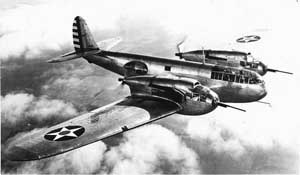
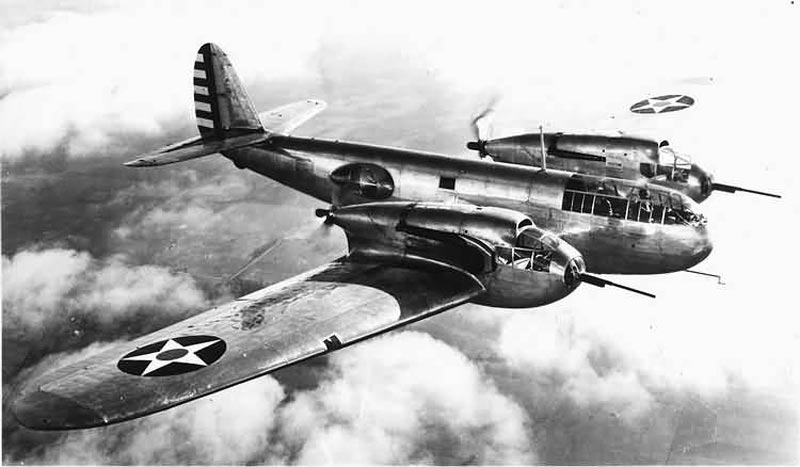
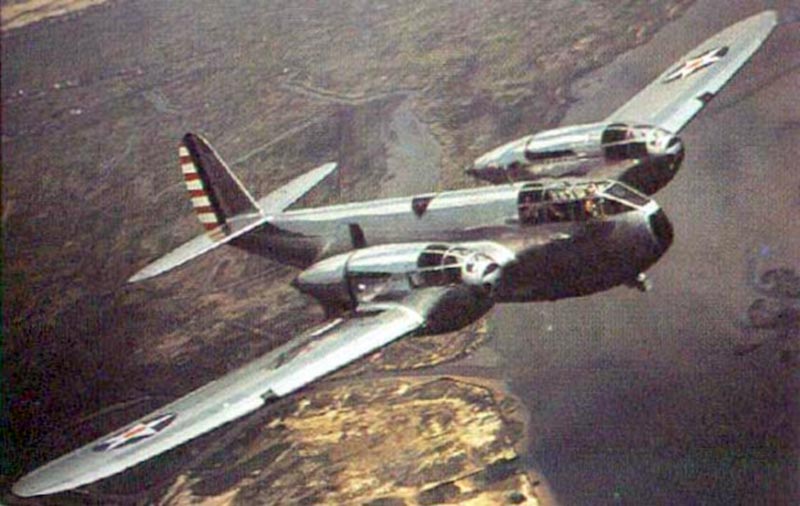
Externally, the XFM-1 featured a cutting-edge approach to design when compared to its contemporaries of the late 1930's. If Bell wanted attention with its first attempt, it definitely got it when unveiling the Airacuda. The aircraft was designed as a type of bomber interceptor or - perhaps more precisely - a bomber destroyer. The system would field a variety of heavy caliber weaponry, be able to carry bombs aloft and accommodate a crew of 5. The design was expected to provide considerable speed, range and firepower to fulfill its bomber-destroying purposes. Being a generally all-new design altogether - nothing in the skies at the time remotely attempted to accomplish what the Airacuda set out to do - the Airacuda became a victim of its own ambition.

Power was derived from a pair of Allison V-1710-41 liquid-cooled supercharged V12 engines delivering a lofty 1,150 horsepower each. Despite the adequate output for these engines, the system was designed as a "pusher" type meaning that the propellers were mounted to the rear of each nacelle and thus "pushed" the plane through the air instead of pushing it like traditional piston engines operated. Pusher type engines have been attempted a whole World War before but the performance was drastically lower than its puller counterparts. Pusher-type engine systems also had a nasty habit of overheating consistently, shortening their operational life and opening the system up to mechanical failures. Initially, Larry Bell envisioned his aircraft to fly 300 miles per hour at about 20,000 feet with turbosupercharged Allison engines. This was drastically cut when the Air Corps ordered a scaled-down Allison to be used instead with the reason being that the turbosupercharger proved quite volatile and explosive in the YFM-1 when tested. This effectively destroyed any performance the Airacuda could achieve, bring the ceiling down to a paltry 12,000 feet and a top speed barely reaching 270 miles per hour.

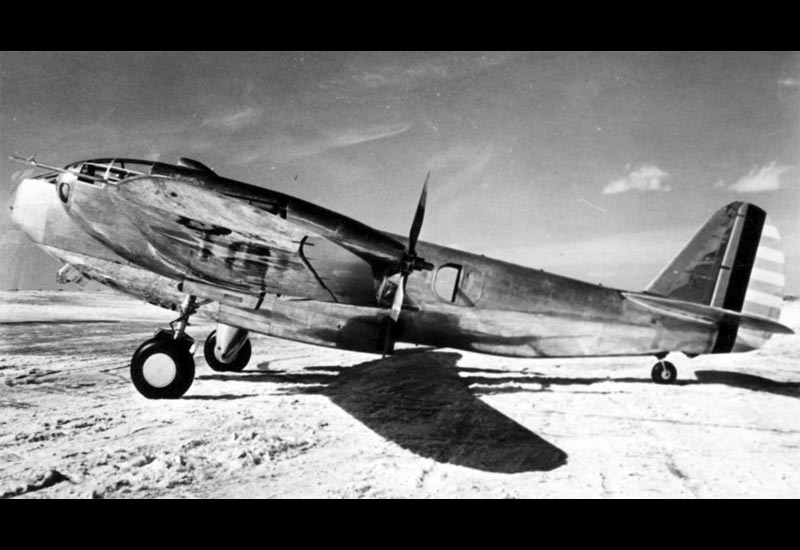
Design-wise, the Airacuda played every bit the part of revolutionary design. Beyond the crewed nacelles, at least three Airacuda's produced were operating the soon-to-be Bell trademark of tricycle landing gears (though these systems experienced their share of mechanical issues in the development). Wings were rounded at the edges and ran through each nacelle into the wing roots connecting the wing systems onto the forward portion of the fuselage. The nose section had a glazed canopy and the fuselage was streamlined, ending aft with a traditional T-style setup. In all, the Airacuda was most assuredly a different sort of aircraft.

The idea of providing the aircraft with rear-mounted propellers, however, lay in the ability for the forward portion of each nacelle to mount devastating weaponry. In this case, the Airacuda was built around the ability to field a powerful 37mm cannon in each nacelle position, manned by a crewmember. Effectively, the crewmembers assigned to each nacelle were cut off from interaction from their fuselage comrades. Additional weaponry consisted of 2 x 12.7mm heavy caliber air-cooled machine guns and 2 x 7.62mm general purpose machine guns. Armament-wise, the Airacuda had the firepower to contend with any bomber - current or future. The problem with this thinking was in the underperforming engines. Basically, the Airacuda lacked the speed and maneuverability to contend with other enemy fighters. This made the Airacuda a liability unto itself. The system would never have been able to be sent on its own to tackle enemy bombers. Should the need arise to combat the swift new breed of enemy fighters, the Airacuda was nothing more than a sitting duck to enemy fire. Additionally, the slow performing Airacuda could barely keep pace - if at all - with the crop of bombers in service with America. This no doubt sealed the fate of the Airacuda in terms of it becoming a long-term fixture in American military planning.

As formidable as the 37mm cannon armament sounded in theory, in practice it proved to be another matter altogether. It was found that a considerable amount of smoke filled the nacelle crewmembers position when the armament was fired. Additionally, these poor fellows were also at the mercy of the rest of the crew if (and when) it was time to evacuate the aircraft in an emergency as the propeller blades were seated directly behind each nacelle. A procedure was devised to have the pilot feather out each prop and small controlled explosives were provided to jettison the systems as well. The aircraft also proved dangerous to operate on a single engine - something the later (and more "traditional") designs seemed to overcome. The aircraft proved a handful to fly, though not terrible to the core. Pilots reported much work to keep the aircraft pleased and flying properly but landing was less of a chore and quite stable. The electrical internal components were highly complex and dangerous to the extent that a single outage would knock out more than one vital system.

Despite these major shortcomings - and at least two being lost to accidents - the Airacuda nevertheless fielded one entire operational squadron though only operating in 1938 through 1940 and were eventually removed from service in 1942 - used as nothing more than ground crew trainers. Beyond several photo opportunities across the country to drum up support, the Airacuda never fulfilled its purpose of bomber-interceptor and destroyer and never would see combat action in the Second World War. All systems were eventually scrapped with only 1 prototype and 12 production models ever existing.

In many ways a major setback, the Airacuda brought some well-deserved attention to the Bell Aircraft company. The firm would go on to design and produce the more well-known Airacobra and KingCobra - two designs that would serve the Soviets very well in their war with Germany. In the end, the Airacuda would become nothing more than trivia lore in the realm of US military aviation.

Text ©2003-2009 www.MilitaryFactory.com • All Rights Reserved • No Reproduction Without Permission • Corrections / Comments to MilitaryFactory at Gmail dot com

Last Revision: 9/9/2009 • Special Thanks to Bob L.


  Specifications for the Bell XFM-1 Airacuda
arrow downDimensions:
Length: 44.85ft (13.67m)
Width:69.85ft (21.29m)
Height: 13.58ft (4.14m)

arrow downPerformance: About MACH
Max Speed: 277mph (446kmh; 241kts)
Max Range: 2,600miles (4,184km)
Rate-of-Climb: 0ft/min (0m/min)
Service Ceiling: 30,512ft (9,300m; 5.8miles)

arrow downStructure:
Accommodation: 5
Hardpoints: 2
Empty Weight: 13,375lbs (6,067kg)
MTOW: 17,333lbs (7,862kg)

arrow downPowerplant:
Engine(s): 2 x Allison V-1710-41 liquid-cooled supercharged V12 "pusher" engines delivering 1,150hp each.
arrow downArmament Suite:
2 x 12.7mm machine guns
2 x 7.62mm machine guns
1 x 37mm cannon in left engine nacelle
1 x 37mm cannon in right engine nacelle

OPTIONAL:
2 x 300lb conventional drop bombs

  Pictures of the Bell XFM-1 Airacuda
     
Picture of Bell XFM-1 Airacuda
Picture of the Bell XFM-1 Airacuda
Image of the Bell XFM-1 Airacuda
     
arrow upView All 3 Images

CompareX2 CompareX4 Conversions Dictionary Acronyms

Compare and Contrast Military Aircraft Specifications

  Special Aircraft Collections
Aircraft by Conflict:
Falklands War
Indo-Pak War
Operation Allied Force
Operation Desert Storm
Six Day War
Yom Kippur War

Special Collections:
American X-Planes
Classic US Warbirds
Grumman "Cats"
Indian Air Force
Israeli Air Force
Mikoyan-Gurevich
V-Bombers


Korean Air War:
Korean War Aircraft
Aces
Australia
United States
North Korea

Vietnam Air War:
Vietnam War Aircraft

Cold War
Cold War Aircraft
United States
Soviet Union
Soviet Bombers of the Cold War

Modern Aircraft
Modern Military Aircraft
United States

Miscellaneous
MiG-15 Versus Sabre
Top 10 Fighters of All Time


  Recent Military Aircraft Additions
Thumbnail picture of the Supermarine Scimitar fighter
Supermarine Scimitar
Thumbnail picture of the Novi Avion fighter
Novi Avion
Thumbnail picture of the Arado Ar TEW 16/43-23 jet-powered fighter
Arado TEW 16/43

  Contacting MilitaryFactory.com
We can only get better if you tell us how. You can contact MilitaryFactory.com at MilitaryFactory at gmail dot com (replace "at" with "@" and "dot with ".") with any questions, comments or corrections. We also accept related military imagery that you approve for us to use on our website. Keep in mind, however, that due to volume, we may not directly respond to your inquiry. Please add us to your list of non-blocked recipients!
Flying Boats

  Aircraft Quick Profile


Picture of the Bell XFM-1 Airacuda


flag of United States
1940

Designation: Bell XFM-1 Airacuda
Classification Type: Bomber Interceptor / Bomber Destroyer
Contractor: Bell Aircraft - USA

Country of Origin: United States
Production Total: 13

Operators: the United States of America


  Variants
Bell Model 1 - Bell Project Model Designation

XFM-1 - Prototype Model Designation

YFM-1A - "Updated" XFM-1 sans side blister positions; external turbo-supercharges and radiators.

YFM-1B - Final Production Model; powered tricycle landing gear arrangement; redesign canopy; ventral rear-facing gun turret added; 3 examples produced.

  Collections
  • Sons of Empire - WW2 Aircraft of Japan
  • Aircraft of the Battle of Britain
  • X-Planes Throughout History
  • French Aircraft of the Great War
  • The German Luftwaffe in World War 2
  • Nightfighters - In a Class All Themselves
  • The Top Ten Fighters of All Time
  • Carrier "Born" Aircraft - Navy Mounts
  • If Boats Could Fly - Flying Boat Aircraft


Free GI Bill Guide

Top MF Stuff: Military Pay Scale Chart | Military Ranks | World War 2 Weapons | Sniper Rifles | Conversion Calculators


©2009 www.MilitaryFactory.com • Content ©2003-2009 MilitaryFactory.com • All Rights Reserved • Disclaimer Privacy Policy Site Map Origins
Most photographic images appearing on this site are courtesy of the United States Department of Defense and are approved for public use.
Other images acquired through the public domain. Digital art work courtesy of Dan Alex.
Business Consulting by Kyle Williams

Material presented throughout this website is for historical and entertainment value and should not to be construed as usable for
hardware restoration, maintenance or general operation. Please consult manufacturers for such information.

Site Contact: militaryfactory at gmail dot com (replace "at" with "@" and "dot" with ".") eXTReMe Tracker