Military Factory
Military Pay Chart
Global Firepower
Military Industrial Complex
Second World War
Home
Military Pay Scale
Military Ranks
Small Arms
Aircraft
Land Systems
Navy
Education
Military Factory Facebook Logo
flag of Soviet Union

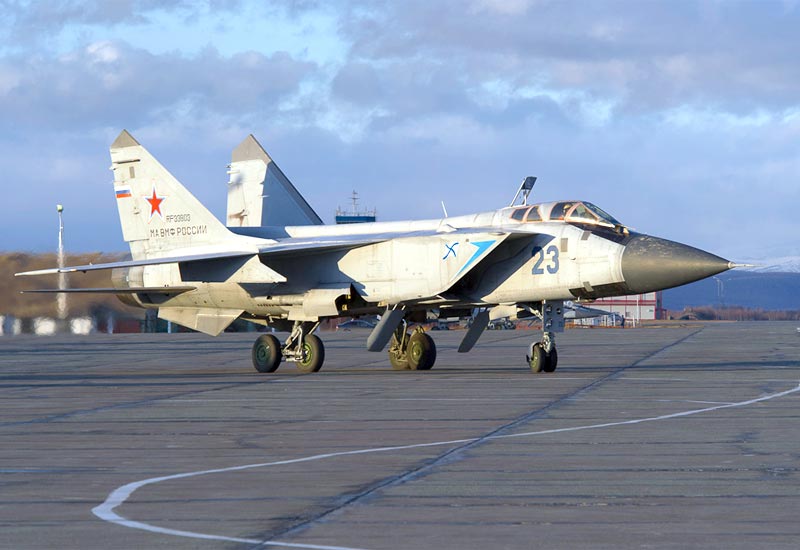
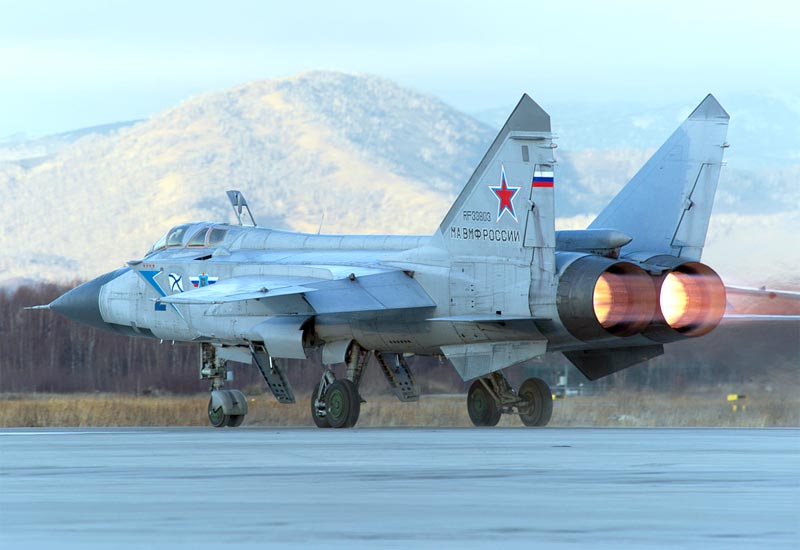
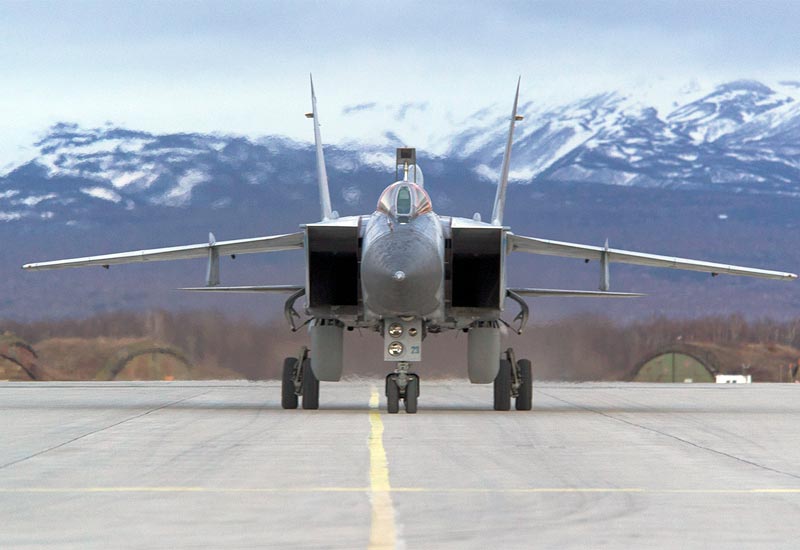
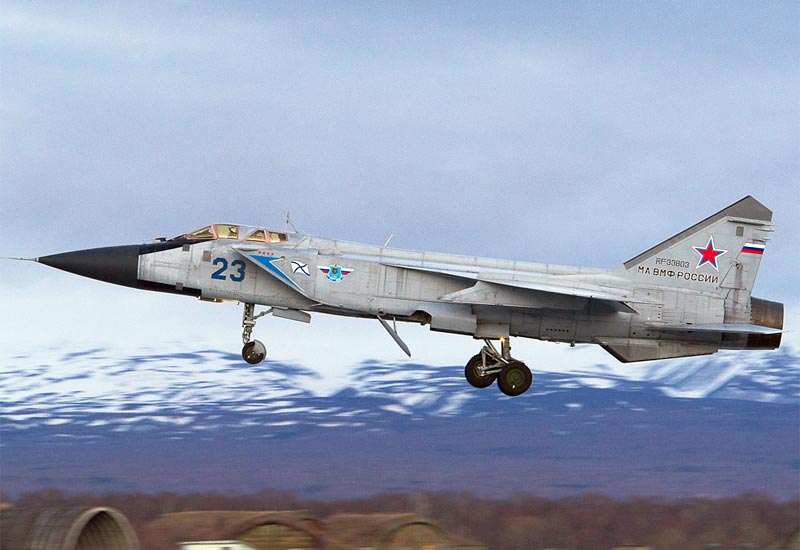
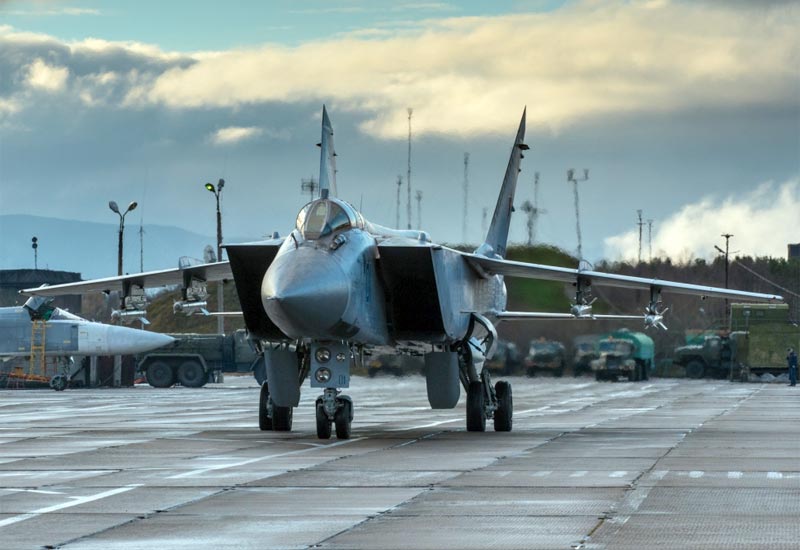
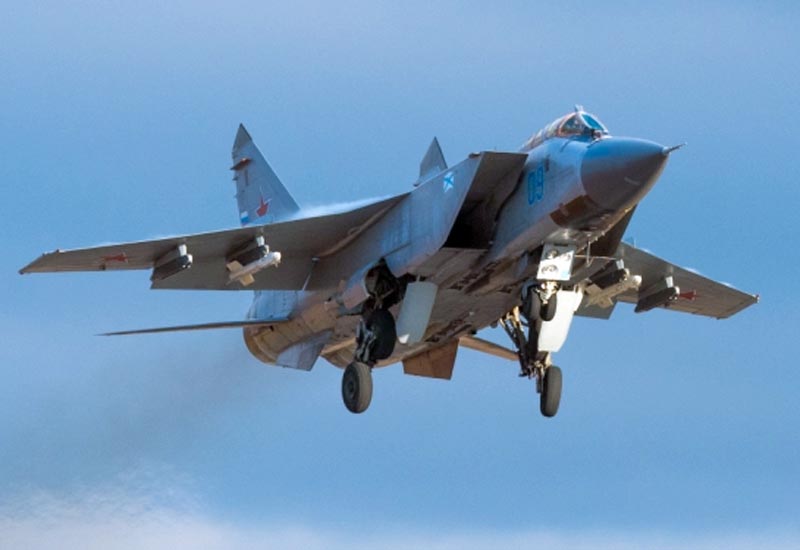
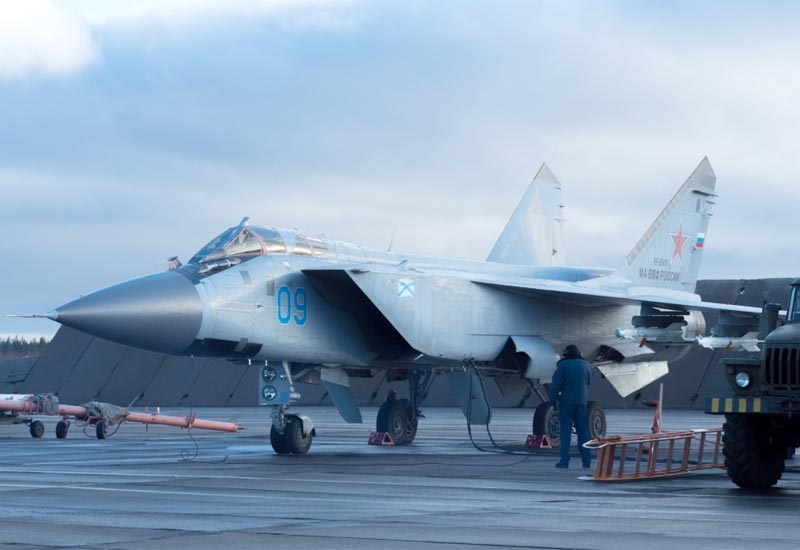
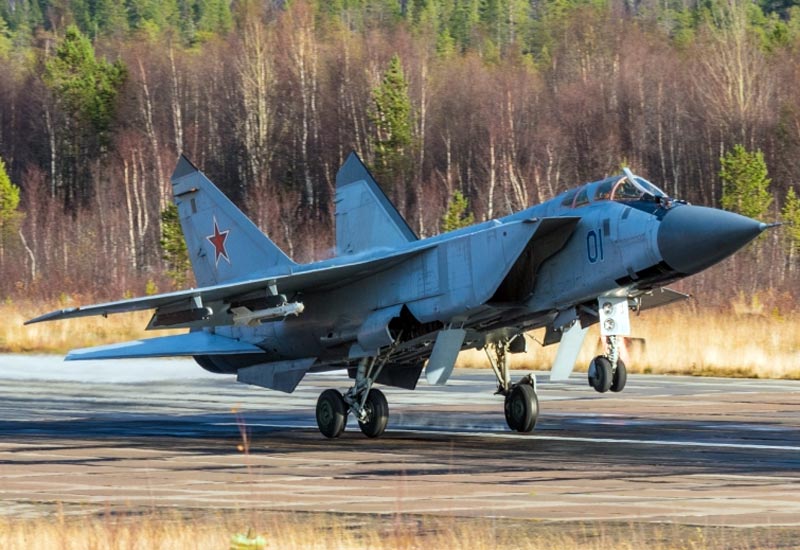
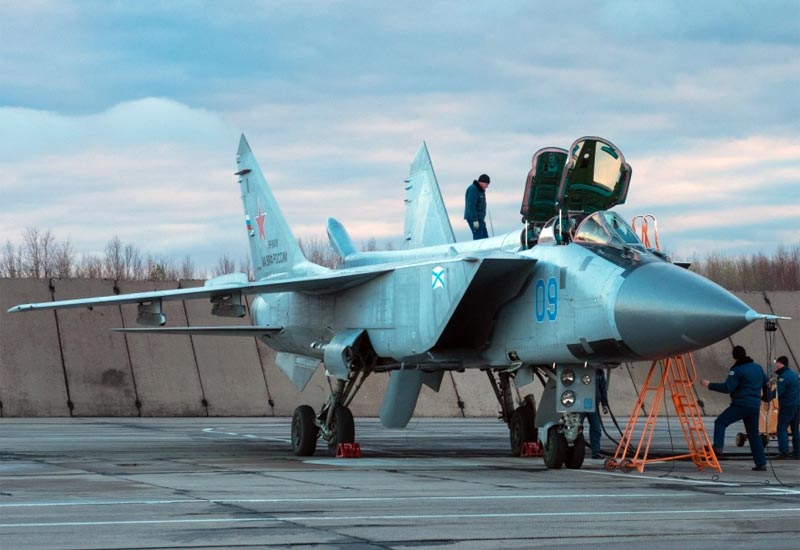
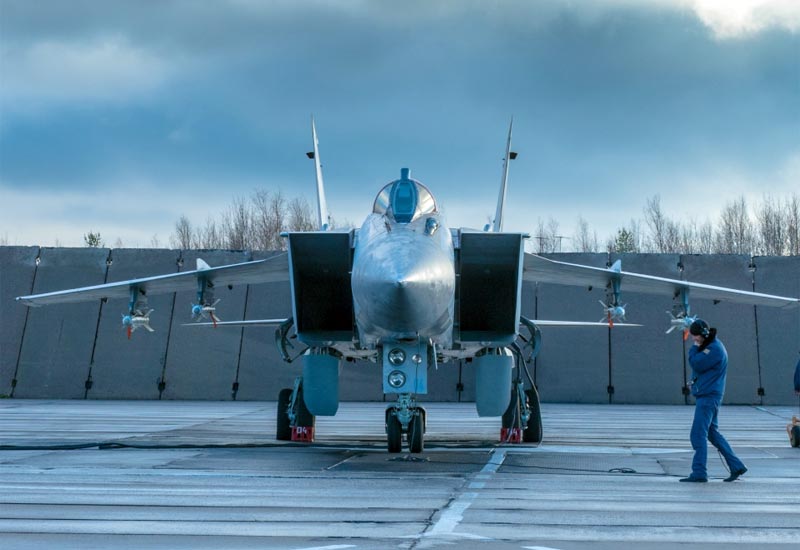
Mikoyan MiG-31 (Foxhound) Long-Range Interceptor (1979)

Authored By Staff Writer | Last Updated: 8/23/2012

The MiG-31 Foxhound was the pinnacle of Soviet long-range interceptor design during the Cold War.

Find a School Near You
Follow Military Factory on Facebook:
Trending on Military Factory:
Recent Articles:
The MiG-31 "Foxhound" was developed as an off-shoot of the record-setting MiG-25 "Foxbat". The Foxbat was of a fast breed of aircraft, but agile it was not. It was an airframe built simply to intercept incoming aerial threats utilizing its own powerful engines, an equally powerful radar system and long-range missiles to achieve altitude, head over distances at speed and unleash a potent payload against a target. However, the MiG-25 lacked adequate control at low-altitudes, was strictly a high-altitude weapon and relied on ground-based radar for intercepts. The MiG-31, though externally resembling the MiG-25, was essentially an all-new aircraft with more powerful engines, low-altitude lethality and a second crewman in a rear cockpit to specifically manage the expanded radar suite. Despite its 1980s lineage, the Colds War-era MiG-31 "Foxhound" remains in service today and still maintains the title for heaviest operational interceptor anywhere in the world, weighing in at some 61.7 tons.

The original MiG-25 "Foxbat" was developed in response to the North American XB-70 Valkyrie jet-powered, strategic bomber program ongoing in the United States. While the XB-70 was eventually cancelled amid ballooning project costs and the advent of intercontinental ballistic missile technology, MiG-25 development had proceeded to the point that production of the new interceptor was a certainty. By the time it joined active frontline Soviet forces, the "Foxbat" had already proven itself as a record-setting airframe, capable of Mach 3.0 speeds and fitting a capable radar coupled with the largest air-to-air missiles ever mounted on a military aircraft. This made the MiG-25 one complete and, ultimately, deadly interceptor worthy of note in the West. The MiG-25 appeared at a time in Soviet history when its air defense network had begun showing its age and the West was in development of far more technologically superior weaponry. The Foxbat helped to shore up several lacking elements in the umbrella of Soviet air defenses and, along with it, came a major move to upgrade all facets of protection across Soviet airspace. Key ensuing developments became the Beriev A-50 "Mainstay" and Antonov An-74 "Madcap" AWACS platforms to go along with the preliminary phases of programs that would eventually spawn the excellent Mikoyan MiG-29 "Fulcrum" and Sukhoi Su-27 "Flanker" multirole fighters.

However, the latter pair was not set to begin operational service until sometime in the mid-1980s. For the interim, existing platforms were fitted with evermore capable interception radar and even more potent weaponry. To increase the potency of the existing MiG-25 series, Mikoyan went to work on a newer, longer-range interceptor that could operate in the same vein without the need for ground-based radar. While the Foxbat pressed all of the mission workload on the single pilot, the new aircraft would split the workload between a pilot and a dedicated radar systems officer seated in an aft second cockpit.

Beginning with the Ye-155M research prototype, Mikoyan set out to address both the speed and range limitations of their MiG-25. While a Mach 3-capable airframe, the MiG-25 could only reach and sustain such speeds in short spurts with the engines being prone to "flame outs" during prolonged activity. Engine life was short - rated at about 150 hours each - and they proved as fuel-hungry as they were powerful, furthermore limiting operational ranges. As such, Foxbat pilots were instructed to operate their engines in the vicinity of Mach 2.8 and regular operation of Foxbats as a whole was generally curtailed. In fact, it was a two-seat Foxbat trainer that would see more flight time than any of her single-seat interceptor/reconnaissance sisters. Additionally, the Foxbat - built purely for performance - inherently exhibited poor handling at low altitudes and lacked much in the way of maneuverability - she was not a "true" fighter when compared to the agile offerings of the West and never designed as such.

A pair of Ye-155M prototypes were selected to undergo a "two-stage" process in an effort to achieve a viable end-product. Firstly, the airframes would be used to test the new R-15BF-2-300 series engines which promised increased output - up to 7,250 more pounds of thrust than that as fielded on the production MiG-25 - thusly increasing performance specifications for both speed and operating altitudes. Secondly, the airframe would be revised to compensate for the increases higher operating temperatures naturally found in high-speed, high-level flight envelopes. However, since engine testing went over the intended developmental timeline, this forced the second stage of development to be scrapped.

While never fully accomplishing the intended project goals, the two experimental Ye-155M airframes - now designated Ye-155MP - were reconstituted as test airframes and refitted to evaluate the new Soloviev D-30F6 turbojet engines of 34,170lb thrust. To help facilitate flight at high speed in all altitudes, the body construction of the Ye-155MP was revised in make-up to become 50% nickel steel, 33% aluminum light alloys and 16% titanium (the MiG-25s makeup was 80%, 11% and 9% respectively). In all actuality, the Ye-155MP was expected to enter service as another variant of the MiG-25 line (to become the MiG-25MP). First flight was recorded on September 16th, 1975. Its all-new radar facility was developed in parallel and provided the aircraft with "eyes" to look above, below and behind the aircraft's relative position while being able to track up to ten targets at 124 miles distance. The radar allowed for engagement of the top four threats simultaneously.

Trials of the prototype ensued and delivered several issues for the Mikoyan design team to overcome. Engine intakes were revised over that as found on the MiG-25 to aspirate the complex and fuel-hungry pairing of engines buried deep within the boxy fuselage. The airbrakes were relocated from their MiG-25 "shoulder" positions to under the fuselage intake ducts. Limited range was addressed with the inclusion of an in-flight refueling probe (the Soviets were not as keen to establish in-flight refueling practices as was the West). The fuel probe was installed along the portside of the fuselage and, though not a part of early-production MiG-31s, would become standard fixtures on later series models.

The MiG-31 began series production at the Soviet Gorky Plant in 1979. With the capabilities of the MiG-31 now fully realized by Soviet authorities, the system was quickly dispatched to critical operating areas as the ultimate aerial deterrent. Foxhound crews were now being trained for the intricacies of its two-person response methodology, interception handling and in the in-flight refueling process. The MiG-31 had officially arrived and some 500 production examples were ultimately delivered.

In the early 1970s, the original MiG-25 "Foxbat" was a largely unknown beast to the West - rarely photographed and much less known about its true capabilities. Early estimates by the intelligence community believed it to be a fast and agile fighter that eventually forced the development of the McDonnell Douglas F-15 Eagle air superiority platform in the United States. However, the Western assumptions of the MiG-25 - in retrospect - was largely incomplete. In September of 1976, all the notions of the MiG-25 finally came to light when Soviet pilot Viktor Belenko defected to the West by way of northern Japan. American authorities were eagerly waiting on the ground and quickly took ownership of the MiG-25 and set about rigorously testing the Mikoyan product. Evaluations delivered the system's true inherent strengths and weaknesses and leveled the psychological playing field to an extent.

However, it was the information that Belenko brought with him that was of particular note. The Soviet Air Force was soon to expect delivery of a new aircraft similar to the MiG-25 in scope and design, however, sporting a reinforced airframe and primed for supersonic flight at low altitudes. He detailed an aircraft with more powerful engines, an all-new avionics suite and multiple hardpoints in which to mount new long-range air-to-air missiles. Obviously, such an aircraft was cause for some concern in the West. Additionally, unlike the MiG-25, the new model would feature a 23mm GSh-6-23 series internal cannon for close-in work and a powerful new interception radar independent of ground control. The aircraft was also said to have counter-cruise missile capabilities which further worried Western members. Some were, however, quick to take note of the convenient source of the information and disregarded such specifications as pure exaggeration.

Nevertheless, the aircraft was identified as an offshoot of the MiG-25 "Foxbat" to be ultimately recognized as the "MiG-31". Spy satellites eventually caught a glimpse of the MiG-31 flying at 20,000 feet of altitude, engaging and destroying a target 200 feet below out at 12 miles. A later test showcased the MiG-31 at 55,000 feet of altitude engaging and destroying a remote aerial drone which itself was up at around 70,000 feet. The capabilities of the MiG-31 could be doubted no more and, in 1982, NATO assigned the codename of "Foxhound" to the MiG-31. By 1985, Norwegian Air Force personnel began regularly intercepting and photographing the new Soviet aircraft, further validating its existence as something more than a MiG-25 variant.

However, details of the MiG-31 were still few and far between in those early years. One source stated that at least a one MiG-31 variant was identified as a single-seat airframe - though no single-seat MiG-31s ever existed. The US Assistant Secretary of State Donald Latham was convinced that the MiG-31 had now outclassed the venerable F-15, or any other modern US warplane for that matter. Such was the sometimes-sorry state of "intelligence" in the West during the Cold War.

Despite its arrival, it was only a matter of time before limits of the MiG-31 had shown themselves. Work by a design team led by Edward Kostrubskii had already begun on an improved form as early as 1978 and given the designation of MiG-31M (in-house designation of "Product 5"). Again, there would be aerodynamic revisions about the airframe and the avionics package would be revamped. The fuselage spine was redrawn and contoured to accept presumably more fuel and new avionics components. Extensions were added to the wing leading edges to help address handling issues. An angle-of-attack (AoA) indicator was installed at the behest of test pilots, its probe identifiable along the side of the nose. Wingtip ECM pods were clearly visible. An autopilot was developed to assist with stability and handling of the hydraulically-boosted flight controls. The rear cockpit now accepted three color CRT multi-function displays and GPS functionality, the latter in the form of GLONASS - "GLObal'naya NAvigatsionnaya Sputnikovaya Sistema") to aid the crew in-flight. Out-of-the-cockpit visibility was increased with a revised windscreen. Payload potency was also increased to more of a "multi-role" capability with provisions added to accept the medium-range AA-12 "Adder" "fire-and-forget" air-to-air active radar homing missile as well as air-to-ground missiles of the Soviet inventory and the AS-17 "Krypton" anti-radiation missile. The R-37 (AA-13 "Arrow") was further developed as a replacement for the R-33 (AA-9 "Amos") long-range missile, increasing target engagement ranges from 62 miles out to an impressive 93 miles. The 23mm gun pod was removed, negating close-in fighting which would most likely never befall the MiG-31. With more powerful digital processors becoming available, onboard computers were upgraded and datalinks were installed for mission information sharing between two aircraft. The MiG-31M went through a lengthy development period and, on August 9th, 1991, a prototype was recorded as lost while in-flight - the two-man crew luckily taking advantage of ejection seats.

Word of a new MiG-31 variation appeared on Western reports as early as 1990 and photography brought the new mount to life in 1992 after a public display at Minsk-Maschulische. The aircraft was designated as the "MiG-31B". The MiG-31B was delivered with a new Phazotron radar after word had spread that one of the systems engineers had sold its critical operations data over to the Central Intelligence Agency (CIA). Soviet engineer Adolph Tolkachev was executed as a traitor in true Soviet style and a new Phazotron radar variant was quickly fielded to compensate for the lost technology. Early MiG-31 platforms were then upgraded as such under the new designation of "MiG-31BS".

Other known variants in the Foxhound line went on to include the MiG-31D "anti-satellite" missile carrier, the MiG-31A satellite-launching platform, the MiG-31E/FE low-grade export models and the MiG-31F multi-role strike platform. Another program yielded the MiG-31BM multi-role defense-suppression model while an upgrade program was enacted to further bring all existing MiG-31s then in service to a "MiG-31BM " model standard featuring new radar and cockpit displays.

Current MiG-31 operators are limited to the Russia Air Force and Naval Aviation elements as well as the Kazakhstan Air Force. The former is thought to maintain some 286 as active with a further 100 reserve examples while Kazakhstan operates some 33 examples of their own with 10 awaiting modernization as of this writing. At one point, Syria placed an order for eight MiG-31E model aircraft but these were never delivered, either due to Israeli involvement or lack of funding on the part of the Syrians.

As an aside, several early MiG-31 developmental airframes were eventually handed over to the Russian Air Museum at Monio outside of Moscow.

It is believed that Author Craig Thomas utilized the situation surrounding the mystique of the MiG-31 to pen his novel "Firefox" Cold War-era thriller. The novel, released in 1977, was later made into a motion picture of the same name starring legendary actor Clint Eastwood (as Mitchell Grant) in 1982. In both versions, the Firefox aircraft is undetectable to Western radar and flies at speeds of Mach 5, able to cover some 3,000 miles of distance while the weapons suite is controlled simply through pilot impulse for quick reaction. Of course these capabilities are all well above what the actual MiG-31 could offer but made for exciting reading/viewing at the time.
Text ©2003-2013 www.MilitaryFactory.com • All Rights Reserved • No Reproduction Permitted
MilitaryFactory.com does NOT sell equipment/weaponry. Material presented throughout this website is for historical and entertainment value and should not to be construed as usable for hardware restoration, maintenance or general operation. Please consult manufacturers for such information. Our disclaimer. Email corrections / Comments to MilitaryFactory at Gmail dot com.
Picture of Mikoyan MiG-31 (Foxhound)
Pic of the Mikoyan MiG-31 (Foxhound)
Image of the Mikoyan MiG-31 (Foxhound)
View All Images (5)

Specifications for the
Mikoyan MiG-31 (Foxhound)
Long-Range Interceptor


Country of Origin: Soviet Union
Manufacturer: Mikoyan OKB - Soviet Union
Initial Year of Service: 1979
Production: 500


Focus Model: Mikoyan MiG-31 (Foxhound)
Crew: 2


Length: 74.48ft (22.7m)
Width: 44.16ft (13.46m)
Height: 20.18ft (6.15m)
Weight (Empty): 48,116lbs (21,825kg)
Weight (MTOW): 101,854lbs (46,200kg)


Powerplant: 2 x Aviadvigatel D-30F6 turbofan engines generating 34,170lbs of thrust with afterburn.


Maximum Speed: 1,864mph (3,000kmh; 1,620kts)
Maximum Range: 447miles (720km)
Service Ceiling: 67,644ft (20,618m; 12.8miles)
Rate-of-Climb: 4,687 feet per minute (1,429m/min)


Hardpoints: 12
Armament Suite:
STANDARD:
1 x 23mm GSh-6-23 internal cannon (later removed)

Standard Interceptor Loadout of:

4 x R-33 (AA-9 "Amos") long-range air-to-air missiles.
4 x R-60 (AA-8 "Aphid") air-to-air missiles
2 x R-40T (AA-6 "Acrid") air-to-air missiles


Variants:
Ye-155MP - Prototype Model Designation


MiG-31 "Foxhound" - Base Production Series Designation.

MiG-31BM - Multirole Variant; upgraded avionics suite; improved multimode mission radar; HOTAS controls; LCD displays; provision for AA-12 "Adder" missiles, AGM missiles and AS-17 "Krypton" anti-radiation missiles; improved computer capacity; datalink functionality.

MiG-31B - Introduced in 1990; new Phazotron radar system.

MiG-31BS - Early MiG-31s upgraded to MiG-31B radar standard.

MiG-31M "Foxhound-B" - Upgrade with GPS; GLONASS receivers; three color CRT MFDs in rear cockpit.

MiG-31D - Anti-Satellite Missile Carrier Variant.

MiG-31A - Satellite-Launching Carrier Variant.

MiG-31F - Multi-Role Variant

MiG-31E - Downgraded Export Model

MiG-31FE - Downgraded Export Model


Operators: Kazakhstan; Russia; Soviet Union

ALL AIRCRAFT CATEGORIES

BY DECADE:


1900 to 1909
1910 to 1919
1920 to 1929
1930 to 1939
1940 to 1949
1950 to 1959
1960 to 1969
1970 to 1979
1980 to 1989
1990 to 1999
2000 to 2009
2010 to 2019
2020 to 2029
VIEW ALL
Compare Aircraft


BY TYPE:


Anti-Submarine Warfare (ASW)
Attack Helicopters
Bomber Aircraft
Medium Bombers
Heavy Bombers
Close-Air Support (CAS)
Commercial Aircraft
Dive Bombers
Electronic Warfare Aircraft (EWA)
Experimental / X-Planes
Fighter Aircraft
Floatplane Aircraft
Flying Boat Aircraft
Aerial Refueling Tankers
Helicopters (ALL)
Interceptor Aircraft
Multi-Role Aircraft
Navy Carrier Aircraft
Night Fighters
Reconnaissance / Scout
Search & Rescue (SAR)
Scout Helicopters
Special Purpose
Torpedo Bombers
Trainer Aircraft
Transport Aircraft
Transport Helicopters
Unmanned Aerial Vehicles (UAVs)
Unmanned Combat Air Vehicles (UCAVs)


COLLECTIONS:


4th Generation Fighter Aircraft
5th Generation Fighter Aircraft
US X-Planes
Classic US Warbirds
French Military Helicopters
Grumman "Cats"
Howard Hughes Aircraft
Indian Air Force
Israeli Air Force
Libyan Aircraft
Modern Chinese Aircraft
Modern Chinese Fighters
Modern Military Aircraft
Modern North Korean Aircraft
Modern Trainer Aircraft
Modern US Aircraft
Mikoyan Aircraft
Sukhoi Aircraft
Syrian Aircraft
Top 10 Fighter Aircraft of All Time


AIRCRAFT BY CONFLICT:


Arab-Israeli War (1948)
Cuban Missile Crisis (1959-1962)
Falklands War (1982)
Indo-Pak War (1965, 1971)
Iran-Iraq War (1980-1988)
Lebanon War (1982)
Operation Allied Force (1999)
Operation Desert Storm (1991)
Six Day War (1967)
Spanish Civil War (1936)
Soviet-Afghan War (1979-1989)
Yom Kippur War (1973)


MISCELLANEOUS:


Aircraft Cockpits
Aircraft Manufacturers List
Aircraft Timeline

WORLD WAR 2:


1939 Aircraft
1940 Aircraft
1941 Aircraft
1942 Aircraft
1943 Aircraft
1944 Aircraft
1945 Aircraft
1946 Aircraft
Australian Aircraft
Battle of Britain Aircraft
Bombers
Four-Engine Bombers
British Aircraft
British Bombers
British Transports
Dive Bombers
Canadian Aircraft
Fighters
Chinese Aircraft
French Aircraft
German Aircraft
German Fighters
German Flying Boats
German Jets
Secret Weapons of the Luftwaffe
Italian Aircraft
Imperial Japanese Aircraft
Imperial Japanese Fighters
Mitsubishi Bombers
Navy Aircraft
Pearl Harbor
Polish Aircraft
Romanian Aircraft
US Aircraft
US Bombers
US Navy Aircraft
Soviet Aircraft
Torpedo Bombers
Transport Aircraft
Tuskegee Airmen Aircraft
W.A.S.P. Aircraft
WW2 Aircraft Ranked by Speed
VIEW ALL


WORLD WAR 1:


1914 Aircraft
1915 Aircraft
1916 Aircraft
1917 Aircraft
1918 Aircraft
Aircraft Timeline
Austro-Hungarian Aircraft
Bomber Aircraft
British Aircraft
Fighters
Flying Boats
French Aircraft
Imperial German Aircraft
Italian Aircraft
Scout Aircraft
Russian Empire Aircraft
US Aircraft
WW1 Aircraft Ranked by Speed
VIEW ALL


KOREAN WAR:


Australian Aircraft
Korean War Aces
Korean War Jets
North Korean Aircraft
US Military Aircraft
VIEW ALL


VIETNAM WAR:


Helicopters
North Vietnam Air Force
US Airpower
VIEW ALL


COLD WAR:


1950s French Aircraft
British V-Bombers
Cold War Bombers
Soviet Aircraft
Soviet Bombers
Soviet Interceptors
Soviet Helicopters
Strategic Air Command
US Aircraft
US Bombers
US Interceptors
VIEW ALL

Site Disclaimer | Privacy Policy | Site Map | MF Origins


©2013 www.MilitaryFactory.com • Content ©2003-2013 MilitaryFactory.com • All Rights Reserved • Site Contact Email: militaryfactory at gmail dot com. The "Military Factory" name and MilitaryFactory.com logo are registered ® trademarks and protected by all applicable domestic and international intellectual property laws.


Top MF Stuff: 2013 Military Pay Scale | Military Ranks | WW2 Weapons | Sniper Rifles | Kts to Mph | WW1 Aircraft | Automatic Rifles | Aircraft Cockpits | Vietnam War Weapons | Main Battle Tanks | Submachine Guns | Shotguns | French Military Victories


Most photographic images appearing on this site are courtesy of the United States Department of Defense and are approved for public use. Other images acquired through the public domain. Digital art work courtesy of Dan Alex. Business Consulting by Kyle Williams. Material presented throughout this website is for historical and entertainment value and should not to be construed as usable for hardware restoration, maintenance or general operation. Please consult manufacturers for such information.


eXTReMe Tracker