Military Factory
Military Pay Chart
Global Firepower
Military Industrial Complex
Second World War
Home
Military Pay Scale
Military Ranks
Small Arms
Aircraft
Land Systems
Navy
Education
Military Factory Facebook Logo
flag of Soviet Union

Polikarpov I-15 (Chaika) Fighter / Fighter-Bomber Aircraft (1934)

Authored By Staff Writer | Last Updated: 7/5/2010

For her time, the Polikarpov I-15 proved an excellent fighter mount and served over Spain, Manchuria and the Eastern Front.

Find a School Near You
Follow Military Factory on Facebook:
Trending on Military Factory:
Recent Articles:
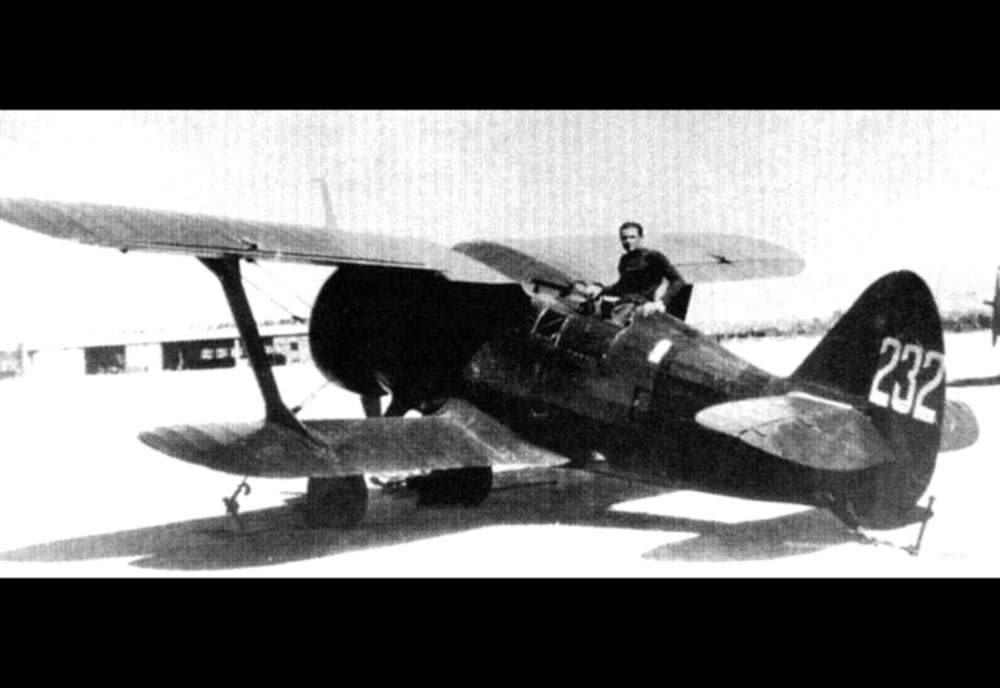
The Polikarpov I-15 was a biplane fighter aircraft designed and produced by the Soviet Union during the inter-war years. She saw extensive combat experience during the Spanish Civil War (1936-1939) and partook in the Second Sino-Japanese War (1937-1945) between China and Japan. The I-15 was still featured by the Soviet Air Force in the early 1940s and spent some time on the offensive as a ground attack aircraft during the Russo-Finnish Winter War. By the middle of World War 2, the I-15 had officially met her match against the modern monoplanes of the world and was on her way out. The I-15 series took on the nickname of "Chaika" which, when translated, became "Lapwing" or "Gull" in reference to her "gulled" upper wing assemblies.

I-15 Origins
Nikolai N. Polikarpov designed and produced a single-seat biplane fighter in 1927 known under the designation of "I-3". Its success was such that Polikarpov continued his design efforts in the field of aviation to ultimately deliver the similar, yet highly-improved, "DI-2" two-seat fighter of 1929. The DI-2 sported machine guns for an offensive and defensive sting - one mounted as a fixed, forward-firing emplacement for the pilot and a pair fitted to a flexible mounting for the rear gunner - very reminiscent of World War 1 scout aircraft design.

Polikarpov was then assigned with other engineers to the "I-6" fighter project, an ambitious program to deliver a modern - mostly wooden - fighter platform by the middle of 1930. In true Soviet fashion, when the group failed to deliver on the project's goals, some 450 engineers were arrested - among them Polikarpov. Polikarpov received a death sentence and languished in Soviet prisons for a duration. Two months before this scheduled execution, he was relocated and had his sentence "lightened" to ten years of hard labor. He was assigned to develop the I-5 fighter with "Design Bureau 39".

What followed next was the melding of two design minds. Polikarpov joined forces with Dmitri Grigorovitch and ultimately devised the I-5 single-seat biplane fighter. The new aircraft exhibited excellent handling and flight characteristics, giving her naturally excellent maneuverability. Four PV-1 series 7.7mm machine guns were affixed to the design for maximum potency (two in the upper fuselage and two in the lower fuselage sides). The prototype was made airborne in April of 1930 and some 800 examples were ultimately produced. Such was the success of the I-5 that Polikarpov's sentence was further lightened to be conditional in nature. Subsequently, he was granted complete amnesty from his previous sentences and, more-or-less, became a "free" man in August of 1932.

Soviet engineer Andrei Tupolev began developing a modern monoplane fighter - the I-14 - all his own to fulfill a direct Soviet Air Force need. Requiring insurance against his design (fearing it could be delayed), he contracted for the development and construction of two biplanes - the "I-14A" and the "I-14B" - as stopgap safety measures. As fate would have it, Polikarpov himself received the task to work on the I-14A, relying primarily on his experiences with the successful I-5 airframe as his guide.

The resulting I-14A design was an excellent, speedy fighter with great handling characteristics just as the I-5 before it. The I-14A prototype (also known as the TsKB-3bis) achieved first flight in October of 1933 was quickly one of the better fighter platforms around. Power was supplied from a Wright R-1820 Cyclone radial engine imported from America. In the end, both the I-14 and the I-14A were approved for quantitative production and Polikarpov's future in Soviet aviation lore was sealed.

Polikarpov's aircraft was designated as the "I-15" and full-scale production ramped up in 1934. The powerplant of choice for production models became the Shvetsov M-22, a license-produced version of the British Bristol Jupiter radial piston engine - an engine not as powerful as the imported Wright radial but suitable for the little fighter airframe nonetheless. Production, however, spanned just a short four years.

Polikarpov's firm was eventually dismantled and closed in 1940, this said to be the work of Soviet politics. Polikarpov himself went on to become a professor at the Moscow Aviation Institute in 1943 before succumbing to cancer on July 30th, 1944. To his name, he would leave behind the I-15 and I-16 fighter designs - both playing crucial roles in the survivability of several nations.

Polikarpov I-15 Production and Variants
The I-15 prototypes became the TsKB-3bis and the TsKB-3ter. The former utilized an imported Wright engine while the latter was fitted with a more powerful Shvetsov M-25V radial piston engine. Initial production examples were noted by the basic designation of I-15.

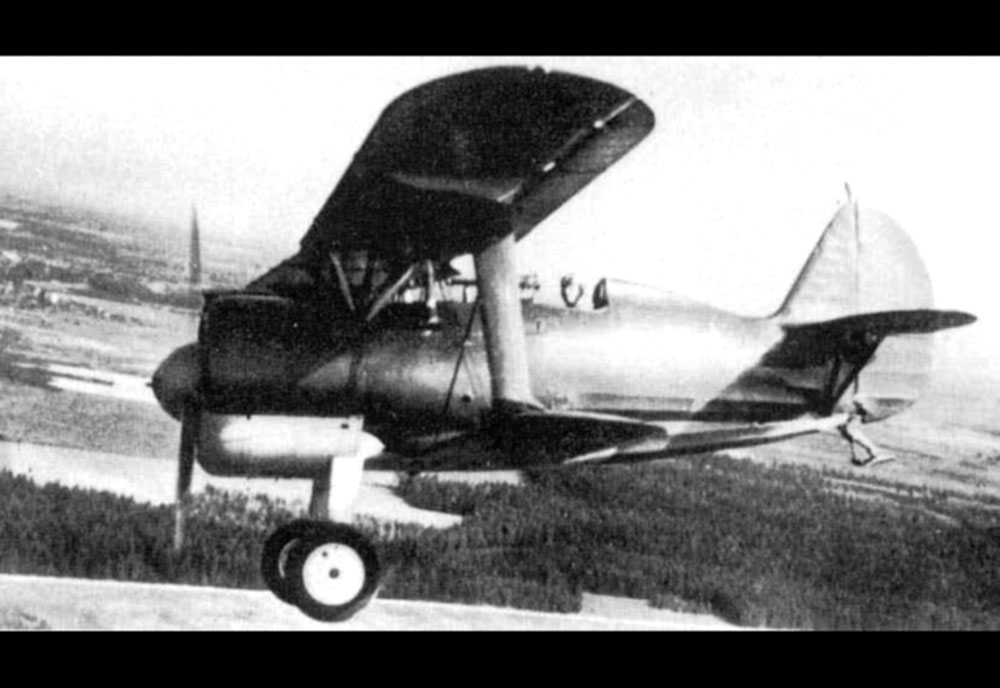
The improved I-15bis followed the base I-15 with testing in 1934. The type was delivered in production form in 1937 with a new more powerful Shvetsov M-25V engine that boosted the airframe's maximum speed. I-15bis was noted for her longer engine cowling and contoured spats on the main landing gear legs as well as a straight upper wing assembly (as opposed to the "gulled" appearance of the former production model). Armament was centered around 4 x 7.62mm PV-1 or ShKAS series machine guns and there was provision for up to 330lbs of external underwing ordnance when in the fighter-bomber role. Some 2,408 examples of this refined machine were produced in all.

The I-15 was modernized to an extent in the 1938 proposed "I-152". However, this model was not selected for quantitative production and existed in a single prototype form. The I-152GK was similar though fitted with an enclosed pressurized cabin for improved higher altitude sorties. Once again, only a single example was ever produced. Another "one-off" system became the I-152TK, this fitting two turbochargers for improved engine output. The I-15ter (also I-153) was a developmental model of the I-15 featuring a retractable undercarriage. The UTI-1 was a limit-quantity, two-seat trainer conversion model of which twenty aircraft were produced - each with redundant student/teacher controls in separate tandem cockpits. None of these were used by the Soviet Air Force.

Production of all I-15s ended in early 1939 to which some 3,313 examples were reportedly delivered, most made up of the I-15bis production models.

Polikarpov I-15 Walk-Around
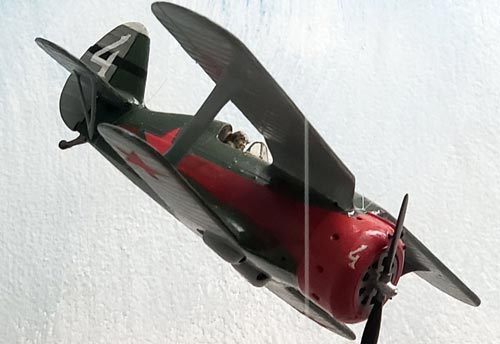
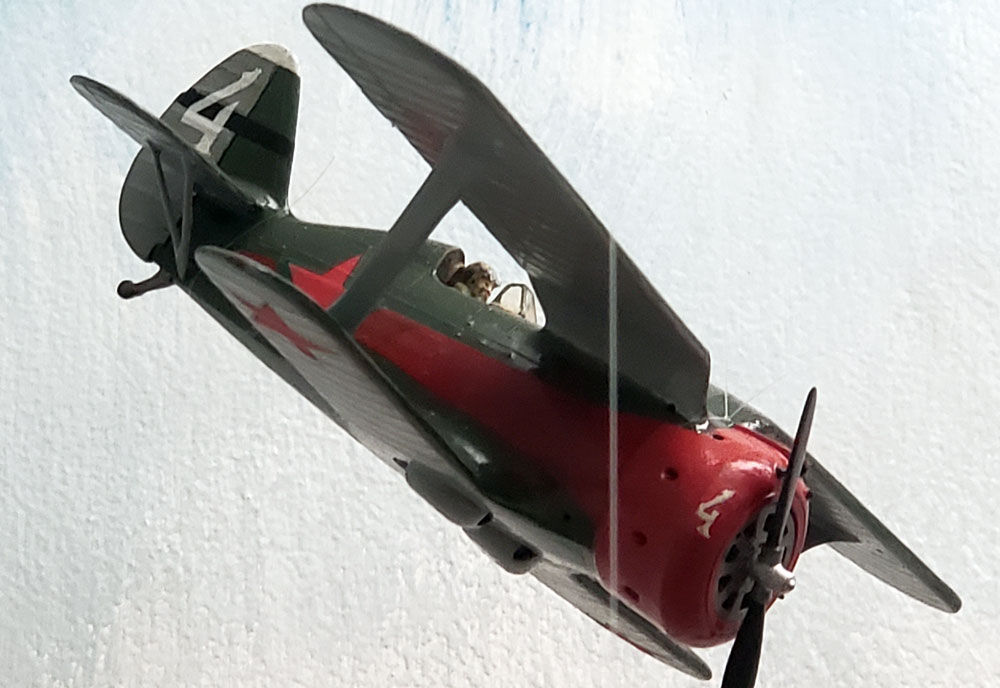
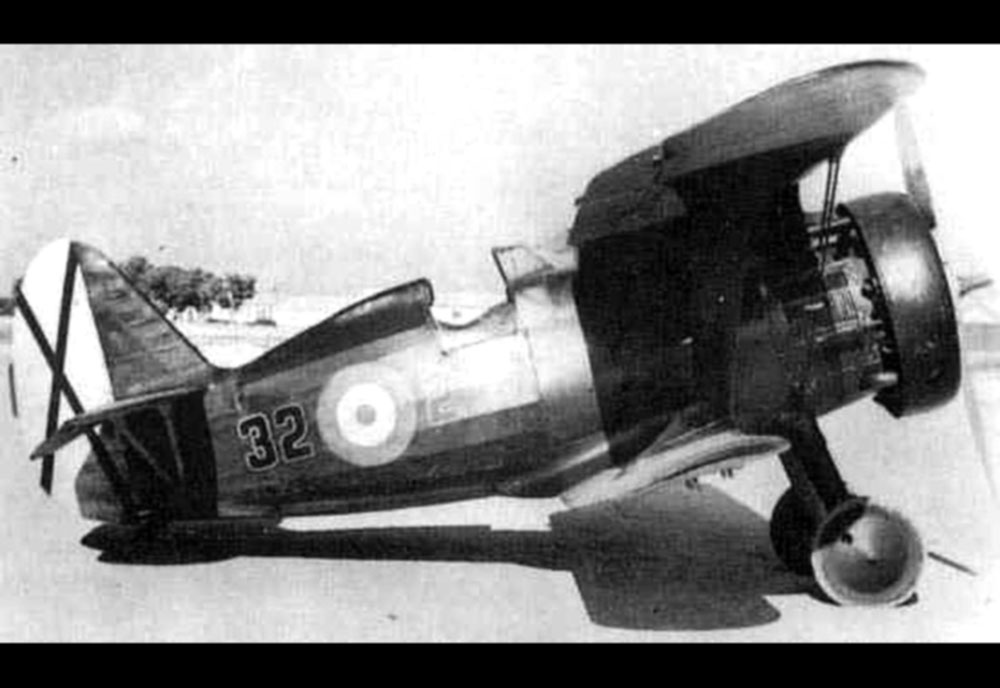
The Polikarpov I-15 took on the appearance of a fighter aircraft caught between two distinct periods of aviation. She sported a cylindrical, barrel-shaped body to which the large diameter radial engine was fitted in a forward compartment. The aircraft made use of a biplane wing assembly - a lower and an upper assembly - with the upper component fielding dihedral or a "gulled" up-angled look (this was straightened in later production models like the I-15bis). Each wing maintained single bays with one large vertical strut and strong cabling. The pilot sat in an open-air cockpit just aft of the wings, his head and neck protected from behind by the raised fuselage spine. Views were generally adequate, made worse y the rearward pilot placement, the forward engine placement and the biplane wings. The empennage was short and sported a rounded vertical tail fin and applicable horizontal planes. The undercarriage was fixed in place and made up of two single-wheeled main landing gear legs (spatted over in streamlined fairings on the I-15bis) and a diminutive tail wheel at the base of the empennage. The main fuselage body was constructed of steel and duralumin while the rear fuselage was covered over in fabric. Wings were of all wood. The I-15 exhibited a wing span of 33.6 feet with a running length of 20.7 feet. Height was listed at just over 7 feet.

Polikarpov I-15bis Engine and Performance
The I-15 received power from a single Shvetsov M-25V radial piston engine of 775 horsepower spinning a two-bladed propeller system. This arrangement provided for maximum speeds of up to 230 miles per hour with a service ceiling equal to 31,170 feet and a range of 329 miles. Climb rate was 2,500 feet per minute.

Polikarpov I-15 Armament
Owing to the I-5 fighter biplane before it, armament for the I-15bis was purely offensive in nature. This constituted a battery of 4 x fixed, forward-firing 7.62mm machine guns. Up to 330lbs of external stores could be fitted underwing and made the I-15 an effective fighter-bomber during her time aloft. Additionally, 6 x RS-82 unguided high-explosive rockets ultimately figured into the strike fighter role of the I-15, making for a more valuable battlefield system.

Polikarpov I-15 Operational History
The I-15 saw operation combat in the Spanish Civil War - to which the Soviet Union soon became involved in - and took on the nickname of "Chato" ("snub-nose"). The I-15 was fielded by the Republicans throughout the 1936-1939 conflict that also featured several key Nazi Germany war machines including the excellent Messerschmitt Bf 109 fighter. Initial I-15s deliveries began in October of 1936 and the type quickly established itself as a stout, reliable and heady performer. Combat garnered her a respectable reputation to the point that production facilities were set up on Spanish soil for license production of the nimble Soviet fighter - yielding a further 287 examples. Even after the Nationalist victory in March of 1939, I-15s were still kept in service, utilized primarily as trainer. The improved I-15bis eventually made it to Spanish inventories and were nicknamed "Super Chatos" by their recipients.

China received quantitative deliveries of the I-15 in their struggle against forces of the Empire of Japan in skies over Manchuria during the Second Sino-Japanese War (1937-1945). Reportedly, the Soviet Union also delivered pilots with these I-15s. The Chinese Nationalists became embroiled in a bitter conflict against forces of an invading Japanese Empire, the I-15 eventually proving to be outmoded by the more modern Japanese monoplanes.

The I-15bis model was also featured prominently by the Soviets in the Russo-Finnish 1939-1940 "Winter War" during their invasion of Finland. The invasion was to ultimately prove costly for the Soviets but territory was gained nonetheless, only to be lost once more in the years following.

Other operators ultimately included Mongolia, they utilizing some 40 or so aircraft from 1939 onwards.

Miscellaneous
Over 1,000 I-15s were still in the Soviet Air Force inventory by 1941. However, these had already passed their prime as direct-attack, frontline fighter platforms and were relegated to the ground attack role. By the middle of 1942, all were held in second-line roles and replaced by more modern and better-equipped combat platforms by the end of the year.

On December 31st, 1933 - just two months after the arrival of the I-15, Polikarpov unveiled his I-16 low-wing cantilever monoplane fighter during a first flight of the prototype. Upon its inception, the I-16 proved one of the world's best fighters of the time until, like the I-15, she was superseded by advanced types. But like the I-15, the I-16 still fought on into World War 2.
Text ©2003-2013 www.MilitaryFactory.com • All Rights Reserved • No Reproduction Permitted
MilitaryFactory.com does NOT sell equipment/weaponry. Material presented throughout this website is for historical and entertainment value and should not to be construed as usable for hardware restoration, maintenance or general operation. Please consult manufacturers for such information. Our disclaimer. Email corrections / Comments to MilitaryFactory at Gmail dot com.
Picture of Polikarpov I-15 (Chaika)
Pic of the Polikarpov I-15 (Chaika)
Image of the Polikarpov I-15 (Chaika)
View All Images (3)

Specifications for the
Polikarpov I-15 (Chaika)
Fighter / Fighter-Bomber Aircraft


Country of Origin: Soviet Union
Manufacturer: Polikarpov - Soviet Union
Initial Year of Service: 1934
Production: 3,313


Focus Model: Polikarpov I-15bis (Chaika)
Crew: 1


Length: 20.57ft (6.27m)
Width: 33.46ft (10.20m)
Height: 7.19ft (2.19m)
Weight (Empty): 2,910lbs (1,320kg)
Weight (MTOW): 4,189lbs (1,900kg)


Powerplant: 1 x M-25V radial piston engine developing 775hp.


Maximum Speed: 230mph (370kmh; 200kts)
Maximum Range: 329miles (530km)
Service Ceiling: 31,168ft (9,500m; 5.9miles)
Rate-of-Climb: 2,500 feet per minute (762m/min)


Hardpoints: 2
Armament Suite:
STANDARD (I-15bis):
4 x 7.62mm fixed, forward-firing machine guns

OPTIONAL (I-15bis):
Up to 330lbs of external ordnance held underwing.


Variants:
TsKB-3bis - Prototype Model Designation


TsKB-3ter - Prototype Model Designation; fitted with M-25V radial piston engine.

I-15 - Initial Production Model Designation

I-15bis (I-152) - Fitted with Shvetsov M-25V radial piston engine of 775 horsepower; 2,408 examples produced; provision for up to 330lbs of external ordnance.

I-152GK - Single Production Model; pressurized cockpit.

I-152TK - Single Production Model; fitted with turbocharger capability.

I-15ter (I-153) - Based on the I-15 but with retractable landing gear as opposed to static versions found in earlier models.


Operators: China; Finland; Nazi Germany; Soviet Union; Spain

ALL AIRCRAFT CATEGORIES

BY DECADE:


1900 to 1909
1910 to 1919
1920 to 1929
1930 to 1939
1940 to 1949
1950 to 1959
1960 to 1969
1970 to 1979
1980 to 1989
1990 to 1999
2000 to 2009
2010 to 2019
2020 to 2029
VIEW ALL
Compare Aircraft


BY TYPE:


Anti-Submarine Warfare (ASW)
Attack Helicopters
Bomber Aircraft
Medium Bombers
Heavy Bombers
Close-Air Support (CAS)
Commercial Aircraft
Dive Bombers
Electronic Warfare Aircraft (EWA)
Experimental / X-Planes
Fighter Aircraft
Floatplane Aircraft
Flying Boat Aircraft
Aerial Refueling Tankers
Helicopters (ALL)
Interceptor Aircraft
Multi-Role Aircraft
Navy Carrier Aircraft
Night Fighters
Reconnaissance / Scout
Search & Rescue (SAR)
Scout Helicopters
Special Purpose
Torpedo Bombers
Trainer Aircraft
Transport Aircraft
Transport Helicopters
Unmanned Aerial Vehicles (UAVs)
Unmanned Combat Air Vehicles (UCAVs)


COLLECTIONS:


4th Generation Fighter Aircraft
5th Generation Fighter Aircraft
US X-Planes
Classic US Warbirds
French Military Helicopters
Grumman "Cats"
Howard Hughes Aircraft
Indian Air Force
Israeli Air Force
Libyan Aircraft
Modern Chinese Aircraft
Modern Chinese Fighters
Modern Military Aircraft
Modern North Korean Aircraft
Modern Trainer Aircraft
Modern US Aircraft
Mikoyan Aircraft
Sukhoi Aircraft
Syrian Aircraft
Top 10 Fighter Aircraft of All Time


AIRCRAFT BY CONFLICT:


Arab-Israeli War (1948)
Cuban Missile Crisis (1959-1962)
Falklands War (1982)
Indo-Pak War (1965, 1971)
Iran-Iraq War (1980-1988)
Lebanon War (1982)
Operation Allied Force (1999)
Operation Desert Storm (1991)
Six Day War (1967)
Spanish Civil War (1936)
Soviet-Afghan War (1979-1989)
Yom Kippur War (1973)


MISCELLANEOUS:


Aircraft Cockpits
Aircraft Manufacturers List
Aircraft Timeline

WORLD WAR 2:


1939 Aircraft
1940 Aircraft
1941 Aircraft
1942 Aircraft
1943 Aircraft
1944 Aircraft
1945 Aircraft
1946 Aircraft
Australian Aircraft
Battle of Britain Aircraft
Bombers
Four-Engine Bombers
British Aircraft
British Bombers
British Transports
Dive Bombers
Canadian Aircraft
Fighters
Chinese Aircraft
French Aircraft
German Aircraft
German Fighters
German Flying Boats
German Jets
Secret Weapons of the Luftwaffe
Italian Aircraft
Imperial Japanese Aircraft
Imperial Japanese Fighters
Mitsubishi Bombers
Navy Aircraft
Pearl Harbor
Polish Aircraft
Romanian Aircraft
US Aircraft
US Bombers
US Navy Aircraft
Soviet Aircraft
Torpedo Bombers
Transport Aircraft
Tuskegee Airmen Aircraft
W.A.S.P. Aircraft
WW2 Aircraft Ranked by Speed
VIEW ALL


WORLD WAR 1:


1914 Aircraft
1915 Aircraft
1916 Aircraft
1917 Aircraft
1918 Aircraft
Aircraft Timeline
Austro-Hungarian Aircraft
Bomber Aircraft
British Aircraft
Fighters
Flying Boats
French Aircraft
Imperial German Aircraft
Italian Aircraft
Scout Aircraft
Russian Empire Aircraft
US Aircraft
WW1 Aircraft Ranked by Speed
VIEW ALL


KOREAN WAR:


Australian Aircraft
Korean War Aces
Korean War Jets
North Korean Aircraft
US Military Aircraft
VIEW ALL


VIETNAM WAR:


Helicopters
North Vietnam Air Force
US Airpower
VIEW ALL


COLD WAR:


1950s French Aircraft
British V-Bombers
Cold War Bombers
Soviet Aircraft
Soviet Bombers
Soviet Interceptors
Soviet Helicopters
Strategic Air Command
US Aircraft
US Bombers
US Interceptors
VIEW ALL

Site Disclaimer | Privacy Policy | Site Map | MF Origins


©2013 www.MilitaryFactory.com • Content ©2003-2013 MilitaryFactory.com • All Rights Reserved • Site Contact Email: militaryfactory at gmail dot com. The "Military Factory" name and MilitaryFactory.com logo are registered ® trademarks and protected by all applicable domestic and international intellectual property laws.


Top MF Stuff: 2013 Military Pay Scale | Military Ranks | WW2 Weapons | Sniper Rifles | Kts to Mph | WW1 Aircraft | Automatic Rifles | Aircraft Cockpits | Vietnam War Weapons | Main Battle Tanks | Submachine Guns | Shotguns | French Military Victories


Most photographic images appearing on this site are courtesy of the United States Department of Defense and are approved for public use. Other images acquired through the public domain. Digital art work courtesy of Dan Alex. Business Consulting by Kyle Williams. Material presented throughout this website is for historical and entertainment value and should not to be construed as usable for hardware restoration, maintenance or general operation. Please consult manufacturers for such information.


eXTReMe Tracker