Military Factory
Military Pay Chart
Global Firepower
Military Industrial Complex
Second World War
Home
Military Pay Scale
Military Ranks
Small Arms
Aircraft
Land Systems
Navy
Education
Military Factory Facebook Logo
flag of United Kingdom

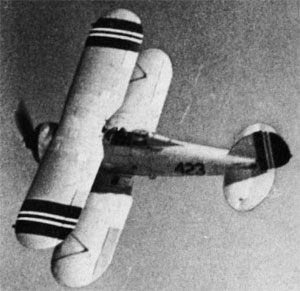
Gloster Gladiator Fighter Aircraft (1937)

Authored By Staff Writer | Last Updated: 2/17/2010

The Gloster Gladiator was already made obsolete by the time of its inception, yet the type soldiered on through 1944.

Find a School Near You
Follow Military Factory on Facebook:
Trending on Military Factory:
Recent Articles:
Little MF Logo
Little MF Logo
Little MF Logo
Little MF Logo
Little MF Logo
Little MF Logo
Little MF Logo
Little MF Logo
Little MF Logo
Little MF Logo
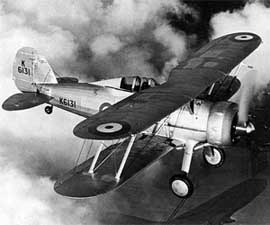
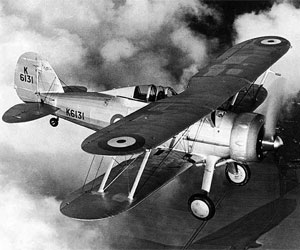
The Gloster Gladiator was a product of the Gloster Aircraft Company and a design of one Henry Phillip Folland. Achieving first flight on September 12th, 1934, the system was officially introduced into Royal Air Force service in February 1937, ultimately seeing service with over dozen different air forces worldwide. The Gladiator was developed from the earlier Gloster Gauntlet and still sported the preceding type's biplane wing appearance but situated the pilot in an enclosed cockpit. While the Gloster Gauntlet held the distinction of being the RAF's last open-air cockpit biplane, the Gloster Gladiator became the RAF's last biplane fighter design overall and, at the same time, the first RAF fighter to feature an enclosed cockpit. Despite its seemingly archaic appearance, the Gladiator still offered up some surprises for the Allies in the early campaigns of World War 2. A total of 747 examples were ultimately produced included 216 for export.

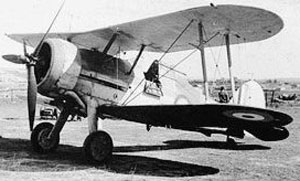
Folland worked on translating the existing Gauntlet for Specification F.7/30 and came up with the SS.37 prototype design as a Gloster Aircraft Company private venture. Exterior design of the new aircraft was a mish-mash of elements from two very different eras of aviation. The type still exhibited the biplane wing arrangement similar to that of the Gauntlet - these showcasing single bays, angled struts and wing assemblies staggered and fitted one over the other. The air-cooled radial piston engine was held at the extreme forward of the tubular fuselage, powering a two-bladed wooden propeller system. The undercarriage was fixed with two main single-wheeled landing gears and a single tail wheel unit. The major difference of the new design was that the pilot sat under a glazed canopy within an enclosed cockpit, offering up decent views all-around though the forward and side views remained somewhat limited by the forward engine placement and biplane wing assemblies. The cockpit featured a raised aerodynamic rear fuselage portion conforming nicely towards the empennage. The tail section itself was conventional for the most part, featuring a single vertical tail fin and applicable horizontal planes to either side. Armament consisted of 4 x .303 caliber Browning-type machine guns with two of these paired on the front fuselage and firing via synchronization through the spinning propeller blades. The remaining two machine guns in the set were fitted to underwing positions on the lower wing assembly. Construction consisted primarily of wood with a canvas covering and was remembered by many-a-Gladiator pilot for her propensity to burn rather quickly when struck by enemy fire.

After three months of evaluation, the RAF officially ordered the type into production in the summer of 1935. Deliveries of the initial Gladiator Mk I model began in July of 1936 leading up to the first operational units by early 1937.

With the SS.37 prototype, the Gladiator evolved into four major production forms. This began with the Gladiator Mk I powered its Bristol Mercury IX air-cooled radial piston engine to which some 378 total examples were produced. The Gladiator Mk II followed, this version being fitted with a Bristol Mercury VIIIA air-cooled radial piston engine powering a three-bladed metal propeller. A total of 270 Gladiator Mk II's were produced.

The Gladiator Mk I and its Bristol Mercury IX series engines developed an output of 850 horsepower. A maximum speed of 257 miles-per-hour was possible along with a range of 444 miles and a service ceiling of 33,500 feet. Rate-of-climb was listed at 2,220 feet-per-minute.

Navalized versions inevitably took shape, this coming initially in the Sea Gladiator Interim and, later, the Sea Gladiator proper. The Interim model saw 38 examples produced for the Royal Navy, complete with arrestor hook and reinforced airframes consistent with the rigors of carrier operations. The Sea Gladiator proper came in 60 examples, again for use by the Royal Navy. Arrestor hooks were once again fitted as well as onboard provisions for a dinghy. The Gladiator as a Navy component fared better than her land-based counterparts for her slower speeds proved excellent for landing and taking off from Royal Navy vessels. Additionally, the Sea Gladiator was much less likely to encounter the more potent land-based fighter aircraft of the Germans and Italians out over the open sea.

Operators of the Gladiator in whole included Australia, Belgium, China, Egypt, France, Finland, Nazi Germany, Greece, Iraq, Ireland, Latvia, Lithuania, Norway, Portugal, South Africa, Soviet Union, Sweden (as the J 8 and J 8A covering the Mk I and Mk II forms) and, of course, the United Kingdom.

Belgium-operated Gladiators were no match for German fighter aircraft, losing all 15 of their biplanes in the ensuing battles against the more-modern all-metal German monoplanes. China found modest success against lightly-armored Japanese aircraft in Asia, producing aces in their ranks while becoming very fond of the platform as a fighter. Iraq fielded the type with limited success against other Gladiators piloted by the British with these Iraqi mounts even seeing service after the war. RAF Gladiators fought well against Italian fighters and bombers in the defense of Greece, though Greece itself was eventually lost to the Axis. Gladiators - active at the time of the Battle of Britain - played a limited aggressive role in the campaign.

South Africa enjoyed success with the Gladiator against like-Italian aircraft in East Africa, producing the only 15-kill Gladiator ace in Marmaduke "Pat" Pattle. Pattle himself reached over 50 kills by the end of the conflict, making him the highest-scoring RAF biplane ace of the war. Gladiators saw extensive combat throughout North Africa, where it could spar against its Italian rival in the Fiat CR.42 biplane. The Fiat CR.42 was already a veteran of the Spanish Civil War and her pilots were well-versed in her strengths and limitations. Though the CR.42 was her superior in many ways, the Gladiator none-the-less held her own in multiple combat actions.

In 1940, a small group of British-operated Sea Gladiator Mk Is presented a mythical effort in the defense of the strategically-located island of Malta (then part of the British Empire) in the Mediterranean Sea. The island was under siege and repeatedly a bombing target for German and Italian air elements. The Axis had eventually drawn up plans for a land invasion of the island but the operation (Operation Herkules) was never put into action. Success at Malta eventually played a major Allied role in subsequent victories across North Africa, ultimately kicking the Axis out of the African continent for good, earning the small island nation the title of "unsinkable aircraft carrier" by British Prime Minister Winston Churchill. Gladiators at Malta operated from the RAF airfield known as Hal Far. Though 18 systems were originally based there by way of the Royal Navy's HMS Glorious in 1940, much less that count remained at the time of action.

Gladiators formed an active part of the Norwegian defense against the German Luftwaffe. These Gladiators were piloted by both British and Norwegian airmen. Though Norway eventually capitulated to the German aggressors, the Gladiator no doubt added to its legacy.

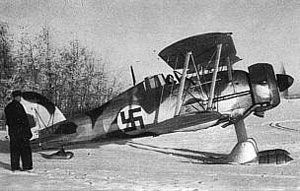
Finland received Gladiator Mk I models from Britain to which it utilized with limited success against the Soviet Union in the upcoming Winter War. At least 45 kills were recorded by no less than 22 Finnish pilots. The aircraft type was severely restricted when compared to the mounts being fielded by the Soviet Union. As a result, many Gladiators were utilized as reconnaissance platforms after 1941 and would see constant use through the end of the war in 1945.

As it stood, the Gladiator was a special aircraft in her own right. Though her combat legacy was dwarfed by the modern fighters of her time, she still none-the-less managed to secure a respectable wartime legacy. This was solidified by her use across many fronts and at the hands of many pilots from different nations. In the end, she proved a valuable mount to those pivotal early years of the war and made for herself a history that even today's modern warplanes long for.

The last Gladiator - this in Portuguese service - was retired in 1953.
Text ©2003-2013 www.MilitaryFactory.com • All Rights Reserved • No Reproduction Permitted
MilitaryFactory.com does NOT sell equipment/weaponry. Material presented throughout this website is for historical and entertainment value and should not to be construed as usable for hardware restoration, maintenance or general operation. Please consult manufacturers for such information. Our disclaimer. Email corrections / Comments to MilitaryFactory at Gmail dot com.
Picture of Gloster Gladiator
Pic of the Gloster Gladiator
Image of the Gloster Gladiator
View All Images (4)

Specifications for the
Gloster Gladiator
Fighter Aircraft


Country of Origin: United Kingdom
Manufacturer: Gloster Aircraft - UK
Initial Year of Service: 1937
Production: 747


Focus Model: Gloster Gladiator Mk I
Crew: 1


Length: 27.43ft (8.36m)
Width: 32.25ft (9.83m)
Height: 10.33ft (3.15m)
Weight (Empty): 3,450lbs (1,565kg)
Weight (MTOW): 4,751lbs (2,155kg)


Powerplant: 1 x Bristol Mercury IX air-cooled radial piston engine developing 840hp.


Maximum Speed: 253mph (407kmh; 220kts)
Maximum Range: 340miles (547km)
Service Ceiling: 33,005ft (10,060m; 6.3miles)
Rate-of-Climb: 2,220 feet per minute (677m/min)


Hardpoints: 0
Armament Suite:
2 x 7.7mm Browning machine guns synchronized and firing through propeller system
2 x 7.7mm Browning machine guns in lower wing (1 to a wing)


Variants:
SS.37 - Prototype Model Designation


Mk I - Fitted with Bristol Mercury IX air-cooled radial piston engine of 840 horsepower.

Mk II - Fitted with Bristol Mercury VIIIA air-cooled radial piston engine.

Sea Gladiator - Royal Navy Designation; fitted with arrestor gear for carrier-based operations; 38 are regarded as "interim" models whilst a further 60 were produced as base navy models; the latter showcasing internal storage for onboard dinghy.

J 8 - Swedish Air Force Designation for model Mk I.

J 8A - Swedish Air Force Designation for model Mk II.


Operators:
Australia; Belgium; China; Egypt; France; Finland; Nazi Germany; Greece; Iraq; Ireland; Latvia; Lithuania; Norway; Portugal; South Africa; Soviet Union; Sweden; United Kingdom

ALL AIRCRAFT CATEGORIES

BY DECADE:


1900 to 1909
1910 to 1919
1920 to 1929
1930 to 1939
1940 to 1949
1950 to 1959
1960 to 1969
1970 to 1979
1980 to 1989
1990 to 1999
2000 to 2009
2010 to 2019
2020 to 2029
VIEW ALL


BY TYPE:


Anti-Submarine Warfare (ASW)
Attack Helicopters
Bomber Aircraft
Medium Bombers
Heavy Bombers
Close-Air Support (CAS)
Commercial Aircraft
Dive Bombers
Electronic Warfare Aircraft (EWA)
Experimental / X-Planes
Fighter Aircraft
Floatplane Aircraft
Flying Boat Aircraft
Aerial Refueling Tankers
Helicopters (ALL)
Interceptor Aircraft
Multi-Role Aircraft
Navy Carrier Aircraft
Night Fighters
Reconnaissance / Scout
Search & Rescue (SAR)
Scout Helicopters
Special Purpose
Torpedo Bombers
Trainer Aircraft
Transport Aircraft
Transport Helicopters
Unmanned Aerial Vehicles (UAVs)
Unmanned Combat Air Vehicles (UCAVs)


COLLECTIONS:


4th Generation Fighter Aircraft
5th Generation Fighter Aircraft
US X-Planes
Classic US Warbirds
French Military Helicopters
Grumman "Cats"
Howard Hughes Aircraft
Indian Air Force
Israeli Air Force
Libyan Aircraft
Modern Chinese Aircraft
Modern Chinese Fighters
Modern Military Aircraft
Modern North Korean Aircraft
Modern Trainer Aircraft
Modern US Aircraft
Mikoyan Aircraft
Sukhoi Aircraft
Syrian Aircraft
Top 10 Fighter Aircraft of All Time


AIRCRAFT BY CONFLICT:


Arab-Israeli War (1948)
Cuban Missile Crisis (1959-1962)
Falklands War (1982)
Indo-Pak War (1965, 1971)
Iran-Iraq War (1980-1988)
Lebanon War (1982)
Operation Allied Force (1999)
Operation Desert Storm (1991)
Six Day War (1967)
Spanish Civil War (1936)
Soviet-Afghan War (1979-1989)
Yom Kippur War (1973)


MISCELLANEOUS:


Aircraft Cockpit Pictures
Aircraft Comparison Tool
Aircraft Manufacturers
Aircraft Production Totals
Aircraft Timeline

WORLD WAR 2:


1939 Aircraft
1940 Aircraft
1941 Aircraft
1942 Aircraft
1943 Aircraft
1944 Aircraft
1945 Aircraft
1946 Aircraft
Australian Aircraft
Battle of Britain Aircraft
Bombers
Four-Engine Bombers
British Aircraft
British Bombers
British Transports
Dive Bombers
Canadian Aircraft
Fighters
Chinese Aircraft
French Aircraft
German Aircraft
German Fighters
German Flying Boats
German Jets
Secret Weapons of the Luftwaffe
Italian Aircraft
Imperial Japanese Aircraft
Imperial Japanese Fighters
Mitsubishi Bombers
Navy Aircraft
Pearl Harbor
Polish Aircraft
Romanian Aircraft
US Aircraft
US Bombers
US Navy Aircraft
Soviet Aircraft
Torpedo Bombers
Trainer Aircraft
Transport Aircraft
Tuskegee Airmen Aircraft
W.A.S.P. Aircraft
WW2 Aircraft Ranked by Speed
VIEW ALL


WORLD WAR 1:


1914 Aircraft
1915 Aircraft
1916 Aircraft
1917 Aircraft
1918 Aircraft
Aircraft Timeline
Austro-Hungarian Aircraft
Bomber Aircraft
British Aircraft
Fighters
Flying Boats
French Aircraft
Imperial German Aircraft
Italian Aircraft
Scout Aircraft
Russian Empire Aircraft
US Aircraft
WW1 Aircraft Ranked by Speed
VIEW ALL


KOREAN WAR:


Australian Aircraft
Korean War Aces
Korean War Jets
North Korean Aircraft
US Military Aircraft
VIEW ALL


VIETNAM WAR:


Helicopters (ALL)
Transport Helicopters
North Vietnam Air Force
US Airpower
VIEW ALL


COLD WAR:


1950s French Aircraft
British V-Bombers
Cold War Bombers
Soviet Aircraft
Soviet Bombers
Soviet Interceptors
Soviet Helicopters
Strategic Air Command
US Aircraft
US Bombers
US Interceptors
VIEW ALL

Site Disclaimer | Privacy Policy | Site Map | MF Origins


©2013 www.MilitaryFactory.com • Content ©2003-2013 MilitaryFactory.com • All Rights Reserved • Site Contact Email: militaryfactory at gmail dot com. The "Military Factory" name and MilitaryFactory.com logo are registered ® trademarks and protected by all applicable domestic and international intellectual property laws.


Top MF Stuff: 2013 Military Pay Scale | Military Ranks | WW2 Weapons | Sniper Rifles | Kts to Mph | WW1 Aircraft | Automatic Rifles | Aircraft Cockpits | Vietnam War Weapons | Main Battle Tanks | Submachine Guns | Shotguns | French Military Victories


Most photographic images appearing on this site are courtesy of the United States Department of Defense and are approved for public use. Other images acquired through the public domain. Digital art work courtesy of Dan Alex. Business Consulting by Kyle Williams. Material presented throughout this website is for historical and entertainment value and should not to be construed as usable for hardware restoration, maintenance or general operation. Please consult manufacturers for such information.


eXTReMe Tracker