Military Factory
Military Pay Chart
Global Firepower
Military Industrial Complex
Second World War
Home
Military Pay Scale
Military Ranks
Small Arms
Aircraft
Land Systems
Navy
Education
Military Factory Facebook Logo
flag of United Kingdom

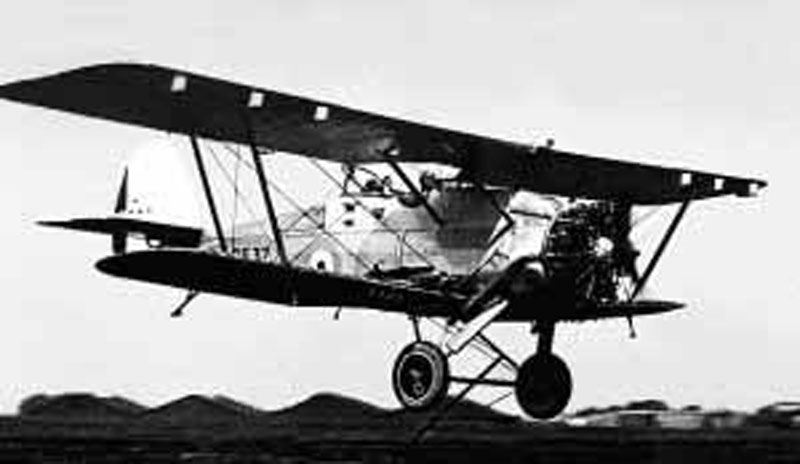
Armstrong Whitworth Atlas Army Liaison Biplane Aircraft (1927)

Authored By Staff Writer | Last Updated: 11/18/2010

The Armstrong Whitworth Atlas became the worlds first purpose-designed army cooperation aircraft.

Find a School Near You
Follow Military Factory on Facebook:
Trending on Military Factory:
Recent Articles:
The Armstrong Whitworth Atlas was designed to replace the aging de Havilland DH.9A biplane of 1918 as well as the Bristol Fighter of 1916 against the RAF requirements of Specification 20/25. In either case, these aircraft were serving in the reconnaissance role as part of their other inherent bomber/fighter (respectively) duties with the Royal Air Force (RAF). The Atlas design was intended to replace both airframes as the primary RAF "army co-operation" (mission liaison) mount. Liaison aircraft were utilized on the battlefield to conduct communications between various ground-based groups, relaying key real-time information to commanders and planners. While sometimes unarmed, such aircraft were often designed with high loitering times, good operation range and excellent landing and take-off qualities. The Atlas was attributed to an engineering team led by John Lloyd who headed up design at the Armstrong Whitworth Aircraft firm as its Chief Designer.

Armstrong Whitworth and Lloyd's design team initially undertook the Atlas project as a private venture with first flight completing on May 10th, 1925. The RAF then accepted the prototype for evaluation against other aircraft and the two-seat Atlas biplane proved a sound design save for some noticeable "sideslipping". Sideslipping was essentially just that - a sideways movement of the aircraft while also moving forward against the oncoming airflow. The issue was resolved with the fitting of new metal wings that featured sweepback. However, the new wings degraded the quality of the aircraft's in-flight handling - then deemed excellent - and now showcased poor stall characteristics as well. As such, automatic slats were added to the wings and sweep was increased to an extent. This rectified the less-than-stellar handling characteristics caused by the wing change but several take-off and landing accidents were no less reported during her first few months of operation by the RAF.

Production of the Atlas began soon after with the aircraft formally introduced for service with the British Royal Air Force in 1927, an initial production batch numbering 37 aircraft. The Atlas entered service with 13 Squadron and 26 Squadron immediately and was eventually fielded with the overseas 208 Squadron out of Heliopolis, Egypt in 1930. It served in the mission liaison role - as well as trainer and communications - up until she was retired in 1935. Production lasted from 1927 to 1933 to which some 478 systems were ultimately produced. Beyond British use, the Atlas was in the inventories of Canada, China, Egypt, Greece and Japan. The Atlas was eventually superseded by the Hawker Audax, based on the Hawker Hart biplane, and its trainer derivatives were themselves replaced by the Hawker Hart Trainer.

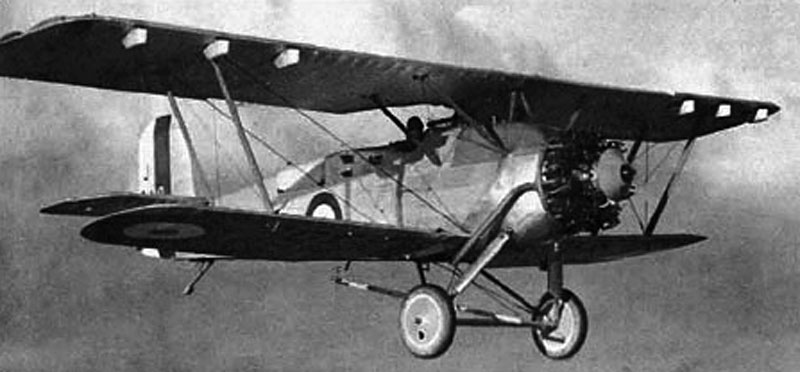
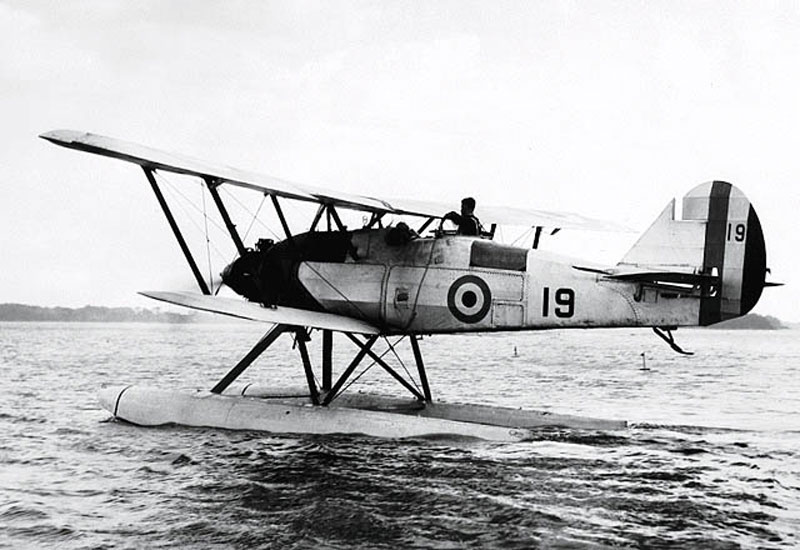
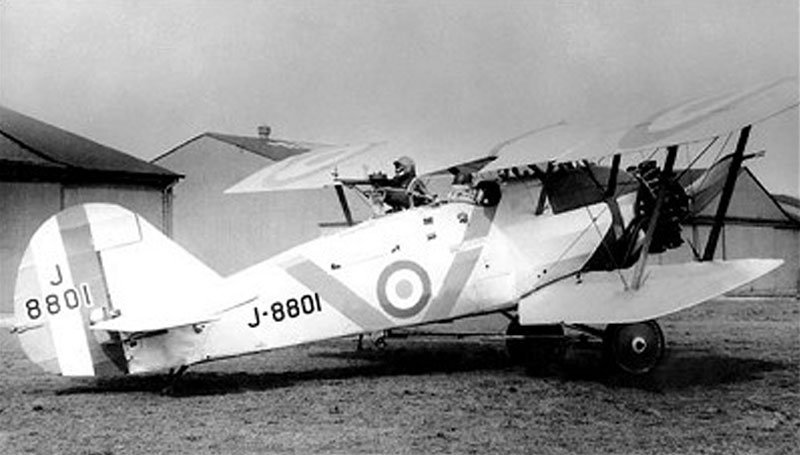
Design was highly conventional for the time. The aircraft mounted its engine in a forward compartment to power the propeller system. The steel tube fuselage (fabric covered) was rather rounded in shape, thicker forward and tapering off at the rear. The wings were of an unequal span, single-bay biplane assemblies made of metal sporting slight dihedral on each unit, moreso in the lower assembly. The pilot sat direct aft of the upper wing assembly in an open-air cockpit with his observer/gunner in an open-air cockpit aft of the pilot. The empennage was relatively conventional in design, featuring a rounded vertical tail fin with a pair of horizontal stabilizers. The undercarriage varied based on sortie need - either a pair of wheels were set in a fixed undercarriage for land-based assignment or a set of long-running pontoon floats could be installed for at-sea work. Either way, the empennage was supported by a simple tail skid made particularly suitable for the land-based model. A hook could be optionally fitted to the fuselage underside to make quick pick-ups of ground messages without having the aircraft be required to land.

The Atlas displayed a length of 28 feet, 6.6 inches with a wingspan of 39 feet, 6.6 inches. Her height was listed at 10 feet, 6 inches. Empty weight was a reported 2,550lbs with a loaded weight nearing 4,020lbs. Power was from a single Armstrong Siddeley Jaguar IVC 14-cylinder engine of 450 horsepower delivering a top speed of 142 miles per hour with a range of 400 miles and service ceiling nearing 16,800 feet. Endurance out of the Armstrong Siddeley powerplant was in the vicinity of 3.5 hours.

Standard armament for the series centered around a pairing of machine guns. A .303in (7.7mm) Vickers type machine gun was in a fixed position set to fire forward. A .303 (7.7mm) Lewis machine gun was mounted on a "Scarff ring" in the rear cockpit for trainable fire against emerging enemy threats from the rear. The flexible Scarff ring was developed in World War 1 by Britain Warrant Officer (Gunner) F.W. Scarff to address the armament needs of a rear gunner faced with the prospect of fighting the enemy from multiple angles from his open-air cockpit. In addition to the machine guns, the Atlas could be fitted with 112lb bombs under the wing elements.

A handful of Atlas variants existed in whole. The initial production model became the Atlas I and some 271 examples were delivered to the RAF. The Atlas Trainer served as a dual-control mount in the training of future Atlas pilots. Some 175 of this type was ultimately constructed. The Atlas II soon appeared as an improved Atlas model with more output from its Armstrong Siddeley Panther engine of 525 horsepower. However, the RAF elected to go with the competing Audax design and 15 of this model were delivered to the Chinese Air Force. Ajax represented Atlas I models with slight variations and only 4 were ever built for the RAF. Aries was a proposed and improved Atlas I model with slightly larger surfaces and overall dimensions while also being made easier to maintain in the field. However, only one was ever completed. The EAF Atlas was an export product for the Greek Air Force (Hellenic Air Force) that primarily differed in its selected engine, propeller and wing assemblies. At least 10 of this model were locally built by EAF (State Aircraft Factory) in Greece after 1931.

The last Armstrong Siddeley Atlas in RAF service was fielded by 208 Squadron, which replaced their systems with the newer Hawker Audax in 1935. Privately-held Atlas aircraft soldiered on until 1938 before falling to the scrapman's torch.
Text ©2003-2013 www.MilitaryFactory.com • All Rights Reserved • No Reproduction Permitted
MilitaryFactory.com does NOT sell equipment/weaponry. Material presented throughout this website is for historical and entertainment value and should not to be construed as usable for hardware restoration, maintenance or general operation. Please consult manufacturers for such information. Our disclaimer. Email corrections / Comments to MilitaryFactory at Gmail dot com.
Picture of Armstrong Whitworth Atlas
Pic of the Armstrong Whitworth Atlas
Image of the Armstrong Whitworth Atlas
View All Images (4)

Specifications for the
Armstrong Whitworth Atlas
Army Liaison Biplane Aircraft


Country of Origin: United Kingdom
Manufacturer: Armstrong Whitworth - UK
Initial Year of Service: 1927
Production: 449


Focus Model: Armstrong Whitworth Atlas I
Crew: 2


Length: 28.48ft (8.68m)
Width: 39.50ft (12.04m)
Height: 10.50ft (3.20m)
Weight (Empty): 2,557lbs (1,160kg)
Weight (MTOW): 4,028lbs (1,827kg)


Powerplant: 1 x Armstrong Siddeley Jaguar IVC 14-cylinder radial engine generating 450hp.


Maximum Speed: 142mph (229kmh; 124kts)
Maximum Range: 400miles (644km)
Service Ceiling: 16,798ft (5,120m; 3.2miles)
Rate-of-Climb: 0 feet per minute (0m/min)


Hardpoints: 4
Armament Suite:
STANDADRD:
1 x 7.62mm Vickers fixed forward-firing machine gun
1 x 7.62mm Lewis machine gun in rear cockpit position

OPTIONAL:
Up to 4 x 50kg bombs in underwing hardpoints.


Variants:
Atlas I - Army Cooperation Variant


Atlas Trainer - Dual Control Trainer Variant based on the Atlas I.

Atlas II - "Improved" Atlas I featuring Armstrong Siddeley Panther engine; built only for China in limited numbers.

Ajax - Limited Production Variant based on Atlas I.

Aries - Single Production Example based on the Atlas I.


Operators: Canada; China; Egypt; Greece; Japan; United Kingdom

ALL AIRCRAFT CATEGORIES

BY DECADE:


1900 to 1909
1910 to 1919
1920 to 1929
1930 to 1939
1940 to 1949
1950 to 1959
1960 to 1969
1970 to 1979
1980 to 1989
1990 to 1999
2000 to 2009
2010 to 2019
2020 to 2029
VIEW ALL
Compare Aircraft


BY TYPE:


Anti-Submarine Warfare (ASW)
Attack Helicopters
Bomber Aircraft
Medium Bombers
Heavy Bombers
Close-Air Support (CAS)
Commercial Aircraft
Dive Bombers
Electronic Warfare Aircraft (EWA)
Experimental / X-Planes
Fighter Aircraft
Floatplane Aircraft
Flying Boat Aircraft
Aerial Refueling Tankers
Helicopters (ALL)
Interceptor Aircraft
Multi-Role Aircraft
Navy Carrier Aircraft
Night Fighters
Reconnaissance / Scout
Search & Rescue (SAR)
Scout Helicopters
Special Purpose
Torpedo Bombers
Trainer Aircraft
Transport Aircraft
Transport Helicopters
Unmanned Aerial Vehicles (UAVs)
Unmanned Combat Air Vehicles (UCAVs)


COLLECTIONS:


4th Generation Fighter Aircraft
5th Generation Fighter Aircraft
US X-Planes
Classic US Warbirds
French Military Helicopters
Grumman "Cats"
Howard Hughes Aircraft
Indian Air Force
Israeli Air Force
Libyan Aircraft
Modern Chinese Aircraft
Modern Chinese Fighters
Modern Military Aircraft
Modern North Korean Aircraft
Modern Trainer Aircraft
Modern US Aircraft
Mikoyan Aircraft
Sukhoi Aircraft
Syrian Aircraft
Top 10 Fighter Aircraft of All Time


AIRCRAFT BY CONFLICT:


Arab-Israeli War (1948)
Cuban Missile Crisis (1959-1962)
Falklands War (1982)
Indo-Pak War (1965, 1971)
Iran-Iraq War (1980-1988)
Lebanon War (1982)
Operation Allied Force (1999)
Operation Desert Storm (1991)
Six Day War (1967)
Spanish Civil War (1936)
Soviet-Afghan War (1979-1989)
Yom Kippur War (1973)


MISCELLANEOUS:


Aircraft Cockpits
Aircraft Manufacturers List
Aircraft Timeline

WORLD WAR 2:


1939 Aircraft
1940 Aircraft
1941 Aircraft
1942 Aircraft
1943 Aircraft
1944 Aircraft
1945 Aircraft
1946 Aircraft
Australian Aircraft
Battle of Britain Aircraft
Bombers
Four-Engine Bombers
British Aircraft
British Bombers
British Transports
Dive Bombers
Canadian Aircraft
Fighters
Chinese Aircraft
French Aircraft
German Aircraft
German Fighters
German Flying Boats
German Jets
Secret Weapons of the Luftwaffe
Italian Aircraft
Imperial Japanese Aircraft
Imperial Japanese Fighters
Mitsubishi Bombers
Navy Aircraft
Pearl Harbor
Polish Aircraft
Romanian Aircraft
US Aircraft
US Bombers
US Navy Aircraft
Soviet Aircraft
Torpedo Bombers
Trainer Aircraft
Transport Aircraft
Tuskegee Airmen Aircraft
W.A.S.P. Aircraft
WW2 Aircraft Ranked by Speed
VIEW ALL


WORLD WAR 1:


1914 Aircraft
1915 Aircraft
1916 Aircraft
1917 Aircraft
1918 Aircraft
Aircraft Timeline
Austro-Hungarian Aircraft
Bomber Aircraft
British Aircraft
Fighters
Flying Boats
French Aircraft
Imperial German Aircraft
Italian Aircraft
Scout Aircraft
Russian Empire Aircraft
US Aircraft
WW1 Aircraft Ranked by Speed
VIEW ALL


KOREAN WAR:


Australian Aircraft
Korean War Aces
Korean War Jets
North Korean Aircraft
US Military Aircraft
VIEW ALL


VIETNAM WAR:


Helicopters
North Vietnam Air Force
US Airpower
VIEW ALL


COLD WAR:


1950s French Aircraft
British V-Bombers
Cold War Bombers
Soviet Aircraft
Soviet Bombers
Soviet Interceptors
Soviet Helicopters
Strategic Air Command
US Aircraft
US Bombers
US Interceptors
VIEW ALL

Site Disclaimer | Privacy Policy | Site Map | MF Origins


©2013 www.MilitaryFactory.com • Content ©2003-2013 MilitaryFactory.com • All Rights Reserved • Site Contact Email: militaryfactory at gmail dot com. The "Military Factory" name and MilitaryFactory.com logo are registered ® trademarks and protected by all applicable domestic and international intellectual property laws.


Top MF Stuff: 2013 Military Pay Scale | Military Ranks | WW2 Weapons | Sniper Rifles | Kts to Mph | WW1 Aircraft | Automatic Rifles | Aircraft Cockpits | Vietnam War Weapons | Main Battle Tanks | Submachine Guns | Shotguns | French Military Victories


Most photographic images appearing on this site are courtesy of the United States Department of Defense and are approved for public use. Other images acquired through the public domain. Digital art work courtesy of Dan Alex. Business Consulting by Kyle Williams. Material presented throughout this website is for historical and entertainment value and should not to be construed as usable for hardware restoration, maintenance or general operation. Please consult manufacturers for such information.


eXTReMe Tracker