Military Factory
Military Pay Chart
Global Firepower
Military Industrial Complex
Second World War
Home
Military Pay Scale
Military Ranks
Small Arms
Aircraft
Land Systems
Navy
Education
Military Factory Facebook Logo
flag of Imperial Japan

Yokosuka MXY7-K1 Ohka (Cherry Blossom) Single-Seat Pilot-Guided Suicide Aircraft (1945)

Authored By Dan Alex and JR Potts, AUS 173d AB | Last Updated: 5/9/2012

The macabre Yokosuka MXY7 Ohka system never materialized as a serious threat to Allied warships in the Pacific.

Find a School Near You
Follow Military Factory on Facebook:
Trending on Military Factory:
Recent Articles:
The Yokosuka MXY7 Ohka (translated to "Cherry Blossom") was a single-seat, pilot-guided suicide fighter proposed and produced by the desperate Empire of Japan for the Imperial Japanese Navy (IJN) in a macabre attempt to thwart the ever-increasing advances by Allied forces in the Pacific and hopefully force a favorable negotiation to end the war. By 1944, the Japanese military and government bodies were in agreement that the war could not be won outright, and certain measured need be enacted to thwart an Allied victory at the expense of the Empire. The Empire had already begun using much-publicized suicide attacks with IJN aircraft of all types - at the expense of material and experienced pilots - through their sometimes-lethal "kamikaze" strikes on Allied vessels in the Pacific Theater.

As such, other methods of kamikaze warfare were soon under reviewed by the Japanese High Command and a design of a manned, rocket-powered "flying bomb" by Imperial Japanese Navy (IJN) Ensign Mitsuo Ohta was accepted. The design was sent to the Yokosuka research facility located at the University of Tokyo for evaluation. After dissecting the simple diagram of the craft provided by Ohta, engineers at the First Naval Air Technical Bureau felt it had merit and developed formal blueprints under the designation of "MXY7". The first 10 prototypes failed during trials while prototype "11", this powered by 3 x Type 4 Mark 1 Model 20 engines, proved a success.

The system was designed to be launched from a Mitsubishi G4M series bomber "mother ship" and the suicidal pilot would journey with the bomber crew to a pre-designated location. The Ohka pilot then took his place within the small vehicle in the bomb bay and was locked into place from the outside. Once released from the bomber, he piloted his craft towards a target under rocket power and gravity to ensure top speed. The pilot, of course, would perish with his aircraft. The end result - as it was hoped - was to instill a deep psychological effect on the American sailor. The real end result, however, left much to be desired. As with most suicidal types of warfare, the Ohka program never materialized into a viable deterrent to Allied operations in the Pacific, not even slowing the impending conquest of the Japanese mainland. Production lasted a few short months and totaled over 855 examples.

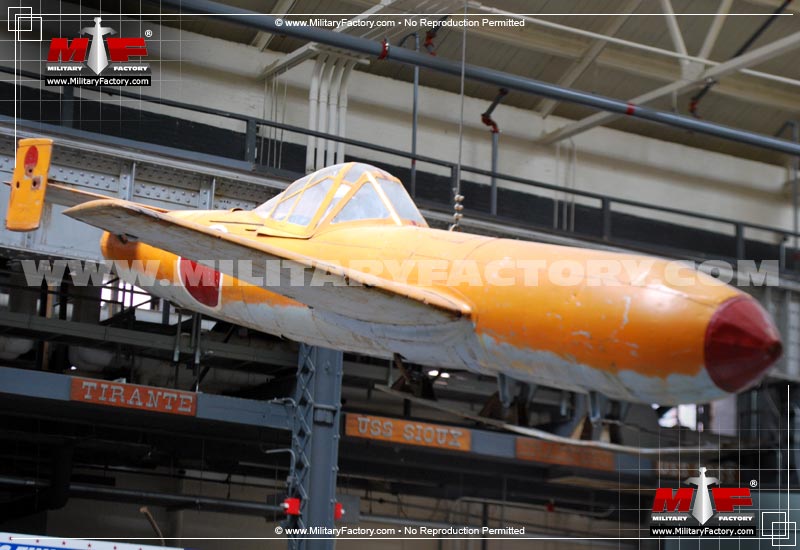
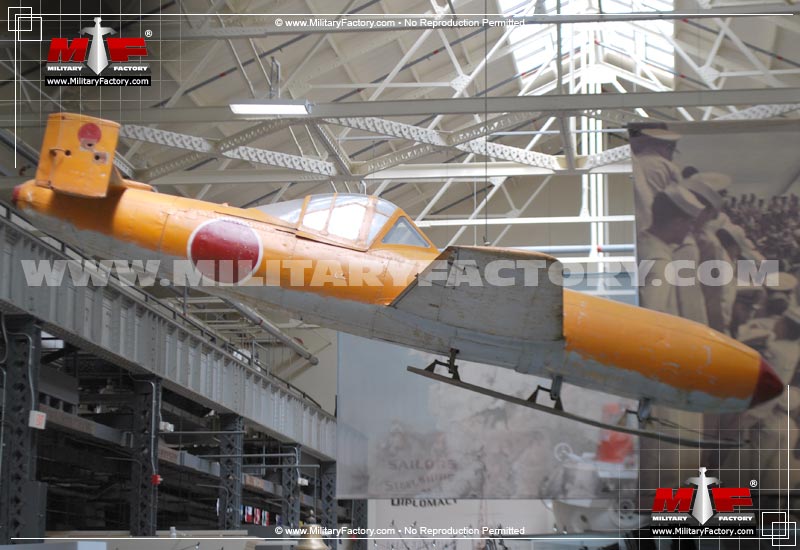
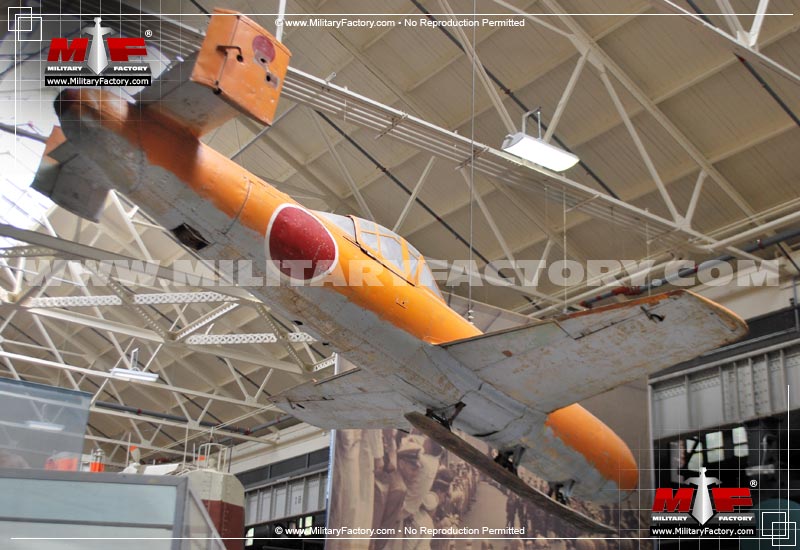
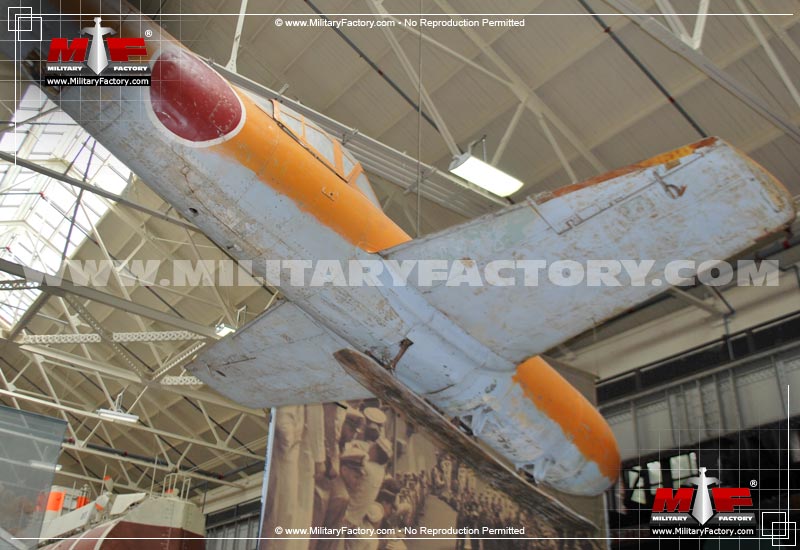
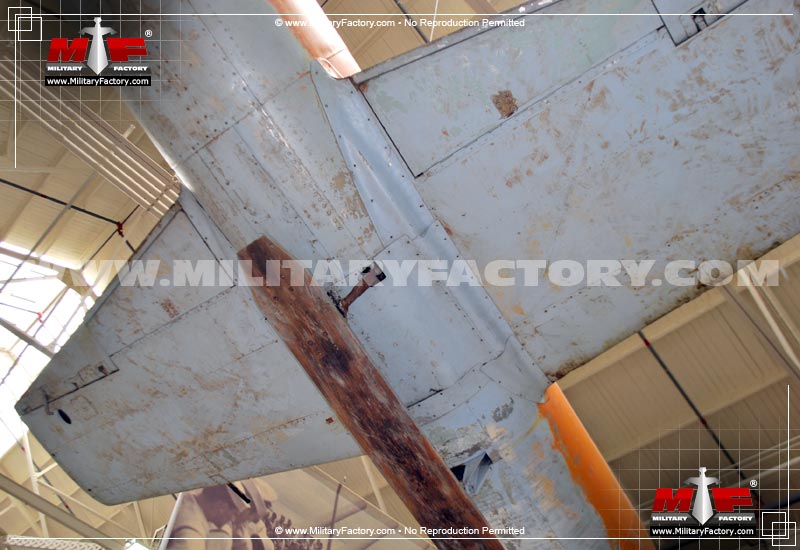
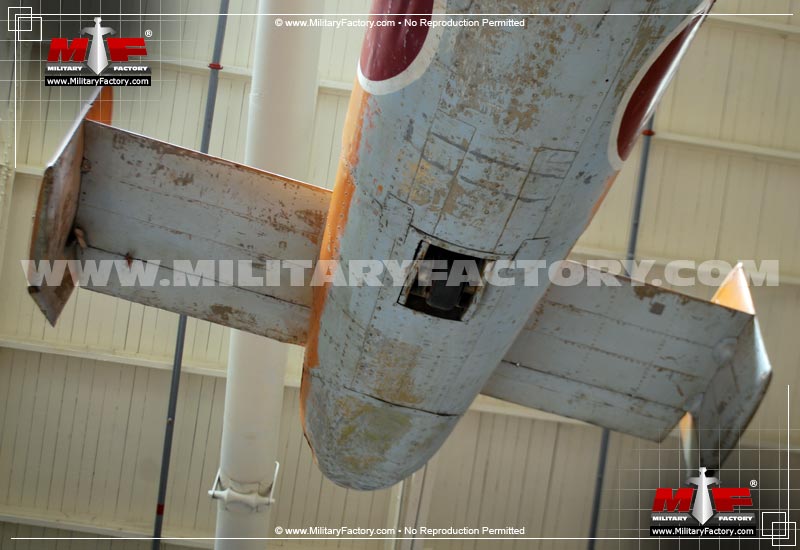
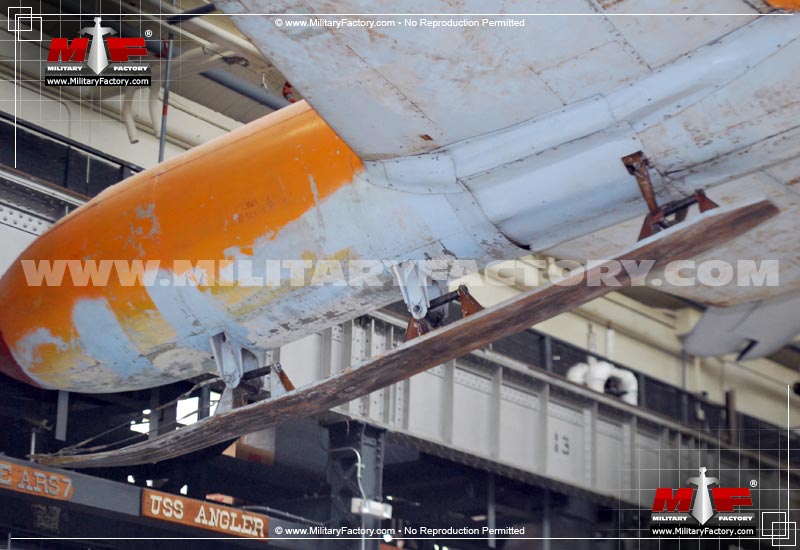
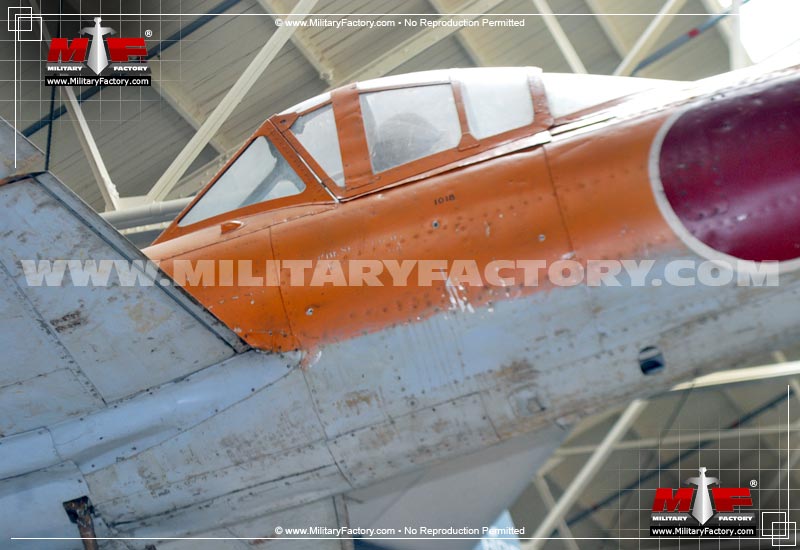
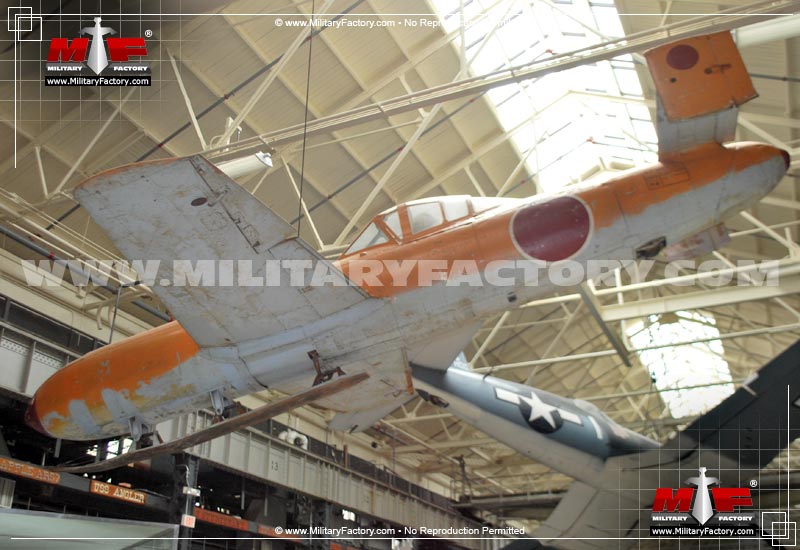
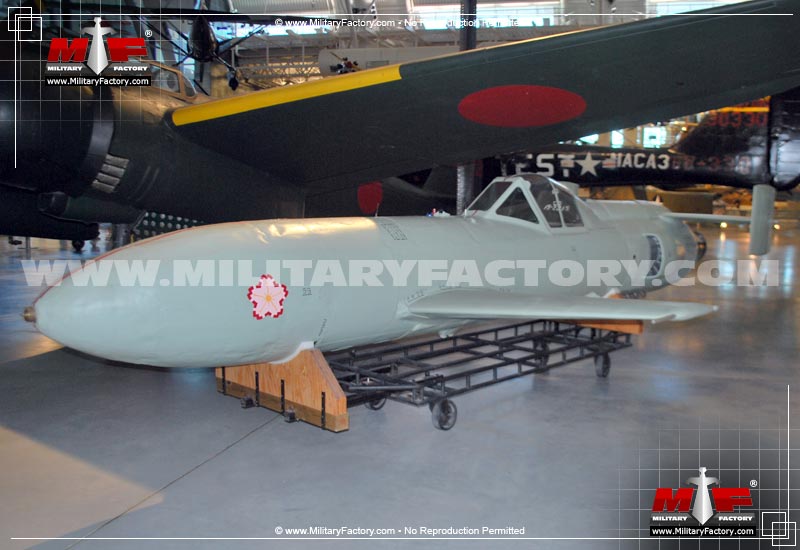
The MXY7 was a diminutive design concept constructed of wood over an aluminum frame to help reduce weight and need for war-critical materials. powered by three solid-fuel Type 4 Mark 1 Model 20 rocket booster systems producing a combined 1,764 pounds of thrust. This limited flight time is what made the mother ship a necessary part of the Ohka scheme. As such, it was not wholly uncommon for the mother ship to release the suicidal aircraft too early, fearing their own aircraft's safety from aggressive and accurate Allied fighters and air defenses. This left the Ohka pilot with little in the way of aborting his mission as pilots were sealed inside craft with no way out. Once inside his "flying coffin", the pilot was also given little to think about but the mission itself. Most of the slim and featureless fuselage contained the 2,646lb warhead in the nose for lethal destructive capabilities. A simplistic wing structure and "T" style tail assembly offered up some basic pilot control.

On March 21, 1945, the first mission involving an Ohka was launched but proved a failure when the G4M Betty's were intercepted by American fighters. The Ohka's on hand were released too far from the target and fell harmlessly into the sea. Again, attacks were flown towards the battleship USS West Virginia and a her screen - consisting of three ships - were hit along with the USS West Virginia, though inflicting only minor damage.

At Radar Picket Station 14 off of Okinawa on April 12, 1945, the destroyer USS Mannert L. Abele had been hit by a Mitsubishi A6M "Zero" kamikaze fighter. The resulting damage had broken both of her shafts and she now found herself on fire and dead in the water. Five minutes later, three G4M Betty bombers were spotted approaching the vessel at 20,000 feet up. Unknown to the crew of the Abele, the G4Ms carried the new single-seat, piloted flying bombs in their open bomb bays. The three Betty's approach the crippled destroyer and one Ohka was dropped from 20,000 feet, starting its run as an unpowered glider weapon and then picking up additional speed by the time the Ohka reached wave top level. One minute from impact, the pilot switched on the third rocket and headed for the Abele's starboard quarter at approximately 500 miles per hour. The crew onboard the Abele saw the object and recalled it looking mush like a flying torpedo. The Abele's guns opened fire. Due to damage from the previous action, her 5 inch gun mounts could not move and fire against the approaching danger. The 20mm and 40 mm guns opened fire as the Ohka pilot steered his aircraft using a simple large cross hair sight mounted to front of the canopy - at these speeds, a small aiming error could have the aircraft miss the target altogether. The Ohka hit the destroyer amidships and blew the ship apart. In less than three minutes, the Abele sank, taking seventy-nine American sailors down into the blue. Of course the pilot of the Ohka saw the same fate.

In practice, the Ohka did not deliver the intended psychological or logistical results as planned. The system was produced up until March of 1945 and, though several Allied vessels were hit directly by Ohkas, the weapon system never caused much in the way of overwhelming danger to the fleet. Considering the amount of defensive and offensive firepower available to even single US Navy vessels, this was not totally a surprise. If anything, the mother ships used in transportation of Ohkas proved the juicier target for the Allies and Ohka's were as deadly as their other kamikaze brethren only when accurate.

In all, the record of the entire Ohka program was judged as a failure with just one ship sunk, two damaged beyond repair and three others damaged - only seven ships total were damaged by war's end. Seven other variants were built and tested to be launched from caves or submarines or towed bombers instead of being attached to them. However, only the Type 11 went on to see serious combat action. The United States Navy gave the suicide aircraft the name "Baka" - a Japanese word for fool - obviously not sharing the Japanese sentiment of suicide as a part of warfare and honor.
Text ©2003-2013 www.MilitaryFactory.com • All Rights Reserved • No Reproduction Permitted
MilitaryFactory.com does NOT sell equipment/weaponry. Material presented throughout this website is for historical and entertainment value and should not to be construed as usable for hardware restoration, maintenance or general operation. Please consult manufacturers for such information. Our disclaimer. Email corrections / Comments to MilitaryFactory at Gmail dot com.
Picture of Yokosuka MXY7-K1 Ohka (Cherry Blossom)
Pic of the Yokosuka MXY7-K1 Ohka (Cherry Blossom)
Image of the Yokosuka MXY7-K1 Ohka (Cherry Blossom)
View All Images (3)

Specifications for the
Yokosuka MXY7-K1 Ohka (Cherry Blossom)
Single-Seat Pilot-Guided Suicide Aircraft


Country of Origin: Imperial Japan
Manufacturer: Yokosuka / Kasumigaura Naval Air Arsenal - Japan
Initial Year of Service: 1945
Production: 855


Focus Model: Yokosuka MXY7-K1 Ohka (Cherry Blossom) Model 11
Crew: 1


Length: 19.91ft (6.07m)
Width: 16.80ft (5.12m)
Height: 3.81ft (1.16m)
Weight (Empty): 970lbs (440kg)
Weight (MTOW): 4,718lbs (2,140kg)


Powerplant: 3 x Solid Fuel Type 4 Mark 1 Model 20 rockets generating 1,764lbs of total thrust.


Maximum Speed: 404mph (650kmh; 351kts)
Maximum Range: 23miles (37km)
Service Ceiling: 41,404ft (12,620m; 7.8miles)
Rate-of-Climb: 0 feet per minute (0m/min)


Hardpoints: 0
Armament Suite:
1 x 2,646lb warhead in nose


Variants:
MXY-7 "Ohka" Type 11 - Base Attack Series Designation; rocket-propelled; 852 examples produced.


Type 21 - Rocket-propelled; steel wings; single example produced.

Type 22 - Motorjet-propelled; 50 examples produced.

Type 33 - Turbojet-powered; Renzan drop-launched.

Type 43A "Ko" - Submarine-Launched, Turbojet Propelled.

Type 43B "Otsu" - Cave-Launched, Turbojet Propelled.

Type 53 - Tow-Launched, Turbojet Propelled

K-1 - Trainer

K-1 "Kai" - Trainer


Operators: Imperial Japan

ALL AIRCRAFT CATEGORIES

BY DECADE:


1900 to 1909
1910 to 1919
1920 to 1929
1930 to 1939
1940 to 1949
1950 to 1959
1960 to 1969
1970 to 1979
1980 to 1989
1990 to 1999
2000 to 2009
2010 to 2019
2020 to 2029
VIEW ALL
Compare Aircraft


BY TYPE:


Anti-Submarine Warfare (ASW)
Attack Helicopters
Bomber Aircraft
Medium Bombers
Heavy Bombers
Close-Air Support (CAS)
Commercial Aircraft
Dive Bombers
Electronic Warfare Aircraft (EWA)
Experimental / X-Planes
Fighter Aircraft
Floatplane Aircraft
Flying Boat Aircraft
Aerial Refueling Tankers
Helicopters (ALL)
Interceptor Aircraft
Multi-Role Aircraft
Navy Carrier Aircraft
Night Fighters
Reconnaissance / Scout
Search & Rescue (SAR)
Scout Helicopters
Special Purpose
Torpedo Bombers
Trainer Aircraft
Transport Aircraft
Transport Helicopters
Unmanned Aerial Vehicles (UAVs)
Unmanned Combat Air Vehicles (UCAVs)


COLLECTIONS:


4th Generation Fighter Aircraft
5th Generation Fighter Aircraft
US X-Planes
Classic US Warbirds
French Military Helicopters
Grumman "Cats"
Howard Hughes Aircraft
Indian Air Force
Israeli Air Force
Libyan Aircraft
Modern Chinese Aircraft
Modern Chinese Fighters
Modern Military Aircraft
Modern North Korean Aircraft
Modern Trainer Aircraft
Modern US Aircraft
Mikoyan Aircraft
Sukhoi Aircraft
Syrian Aircraft
Top 10 Fighter Aircraft of All Time


AIRCRAFT BY CONFLICT:


Arab-Israeli War (1948)
Cuban Missile Crisis (1959-1962)
Falklands War (1982)
Indo-Pak War (1965, 1971)
Iran-Iraq War (1980-1988)
Lebanon War (1982)
Operation Allied Force (1999)
Operation Desert Storm (1991)
Six Day War (1967)
Spanish Civil War (1936)
Soviet-Afghan War (1979-1989)
Yom Kippur War (1973)


MISCELLANEOUS:


Aircraft Cockpits
Aircraft Manufacturers List
Aircraft Timeline

WORLD WAR 2:


1939 Aircraft
1940 Aircraft
1941 Aircraft
1942 Aircraft
1943 Aircraft
1944 Aircraft
1945 Aircraft
1946 Aircraft
Australian Aircraft
Battle of Britain Aircraft
Bombers
Four-Engine Bombers
British Aircraft
British Bombers
British Transports
Dive Bombers
Canadian Aircraft
Fighters
Chinese Aircraft
French Aircraft
German Aircraft
German Fighters
German Flying Boats
German Jets
Secret Weapons of the Luftwaffe
Italian Aircraft
Imperial Japanese Aircraft
Imperial Japanese Fighters
Mitsubishi Bombers
Navy Aircraft
Pearl Harbor
Polish Aircraft
Romanian Aircraft
US Aircraft
US Bombers
US Navy Aircraft
Soviet Aircraft
Torpedo Bombers
Transport Aircraft
Tuskegee Airmen Aircraft
W.A.S.P. Aircraft
WW2 Aircraft Ranked by Speed
VIEW ALL


WORLD WAR 1:


1914 Aircraft
1915 Aircraft
1916 Aircraft
1917 Aircraft
1918 Aircraft
Aircraft Timeline
Austro-Hungarian Aircraft
Bomber Aircraft
British Aircraft
Fighters
Flying Boats
French Aircraft
Imperial German Aircraft
Italian Aircraft
Scout Aircraft
Russian Empire Aircraft
US Aircraft
WW1 Aircraft Ranked by Speed
VIEW ALL


KOREAN WAR:


Australian Aircraft
Korean War Aces
Korean War Jets
North Korean Aircraft
US Military Aircraft
VIEW ALL


VIETNAM WAR:


Helicopters
North Vietnam Air Force
US Airpower
VIEW ALL


COLD WAR:


1950s French Aircraft
British V-Bombers
Cold War Bombers
Soviet Aircraft
Soviet Bombers
Soviet Interceptors
Soviet Helicopters
Strategic Air Command
US Aircraft
US Bombers
US Interceptors
VIEW ALL

Site Disclaimer | Privacy Policy | Site Map | MF Origins


©2013 www.MilitaryFactory.com • Content ©2003-2013 MilitaryFactory.com • All Rights Reserved • Site Contact Email: militaryfactory at gmail dot com. The "Military Factory" name and MilitaryFactory.com logo are registered ® trademarks and protected by all applicable domestic and international intellectual property laws.


Top MF Stuff: 2013 Military Pay Scale | Military Ranks | WW2 Weapons | Sniper Rifles | Kts to Mph | WW1 Aircraft | Automatic Rifles | Aircraft Cockpits | Vietnam War Weapons | Main Battle Tanks | Submachine Guns | Shotguns | French Military Victories


Most photographic images appearing on this site are courtesy of the United States Department of Defense and are approved for public use. Other images acquired through the public domain. Digital art work courtesy of Dan Alex. Business Consulting by Kyle Williams. Material presented throughout this website is for historical and entertainment value and should not to be construed as usable for hardware restoration, maintenance or general operation. Please consult manufacturers for such information.


eXTReMe Tracker