Global Firepower | Military Industrial Complex | Second World War History
Home | Military Pay Scale Chart | Infantry Weapons | Military Aircraft | Vehicles | Navy Ships | Military Education | Military Ranks | WW2 Weapons | French Military Victories
Military Factory Latest from Military Factory
Thumbnail picture of the Arado Ar TEW 16/43-19
Arado TEW 16/43-19
Thumbnail picture of the Winchester Model 1866 Rifle
Winchester Model 1866
Thumbnail picture of the HMAS Brisbane destroyer
HMAS Brisbane
Thumbnail picture of the Henry Model 1860 Rifle
Henry Model 1860
Thumbnail picture of the USNS Henson survey ship
USNS Henson
Thumbnail picture of the FGS Schleswig-Holstein destroyer
Schleswig-Holstein
2010 Military Pay Scale Chart - for Army, Navy, Air Force and Marines
  BY DECADE
  · 1900 to 1909
  · 1910 to 1919
  · 1920 to 1929
  · 1930 to 1939
  · 1940 to 1949
  · 1950 to 1959
  · 1960 to 1969
  · 1970 to 1979
  · 1980 to 1989
  · 1990 to 1999
  · 2000 to 2009
  · 2010 to 2019
  · View All Aircraft
  BY TYPE
  · Attack Helicopters
  · Bombers
  · Close-Support
  · Commercial
  · Dive Bombers
  · Experimental
  · Fighters
  · Floatplanes
  · Flying Boats
  · Fuel Tankers
  · Helicopters
  · Interceptors
  · Multi-Role
  · Navy Aircraft
  · Night-Fighters
  · Recon Aircraft
  · Recon Helos
  · Special Purpose
  · Torpedo Bombers
  · Trainer Aircraft
  · Transport Aircraft
  · Transport Helos
  · UAVs
  WORLD WAR 2
  · Full List
  · 1939
  · 1940
  · 1941
  · 1942
  · 1943
  · 1944
  · 1945
  · Australia
  · Battle of Britain
  · Bombers
  · Britain
  · Dive Bombers
  · Canada
  · Fighters
  · China
  · France
  · Germany
  · German Fighters
  · German Flying Boats
  · German Jets
  · Italy
  · Japan
  · Mitsubishi Bombers
  · Poland
  · USA Aircraft
  · USA Bombers
  · Soviet Union
  · Torpedo Bombers
  WORLD WAR 1
  · Full List
  · 1914
  · 1915
  · 1916
  · 1917
  · 1918
  · Aces
  · Austria-Hungary
  · Bombers
  · Britain
  · Fighters
  · France
  · Germany
  · Italy
  · Recon Aircraft
  · Russia
  · USA
  KOREAN WAR
  · Full List
  · Aces
  · Australia
  · USA
  · North Korea
  VIETNAM WAR
  · Full List
  · United States
  · North Vietnam

Military Factory > Military Aircraft > Fokker E (Eindecker) Monoplane
 
 
More Pictures Cockpit View 3 View Plan QuickGraphs StatsCentral

Fokker E (Eindecker) Monoplane

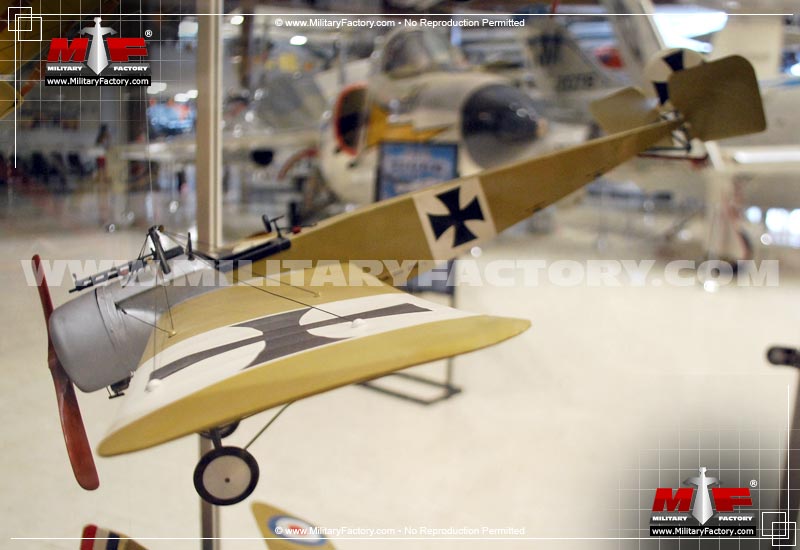
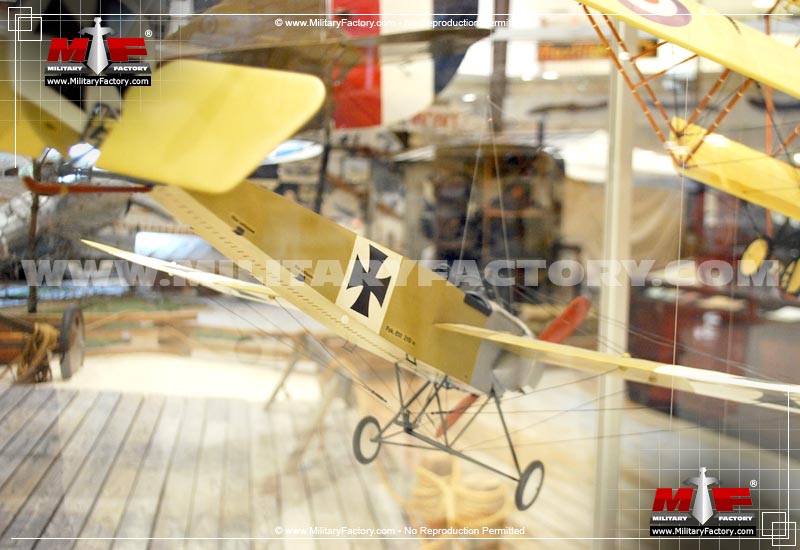
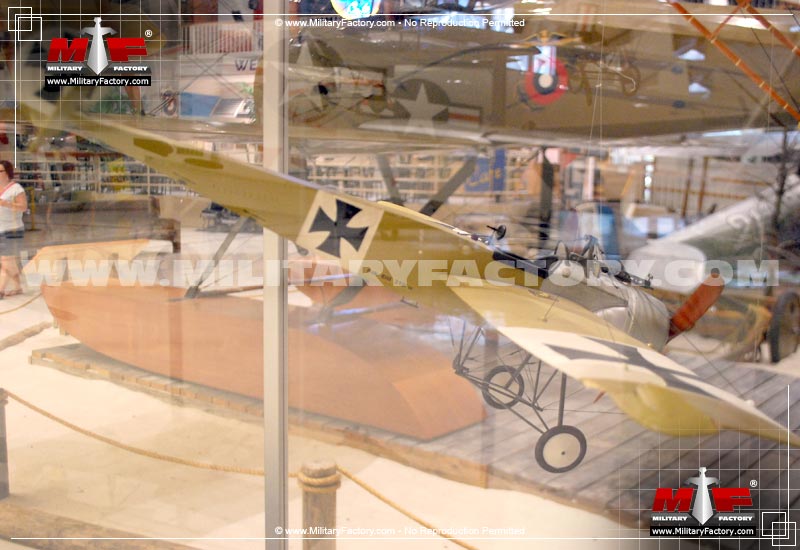
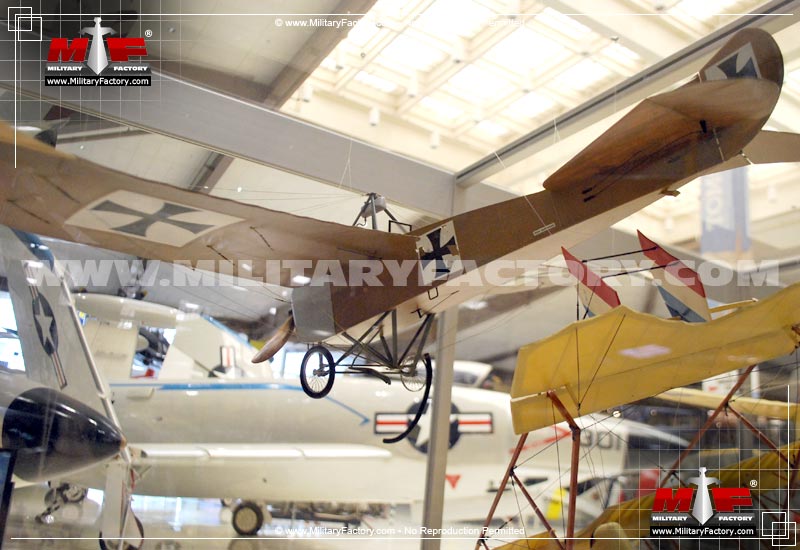
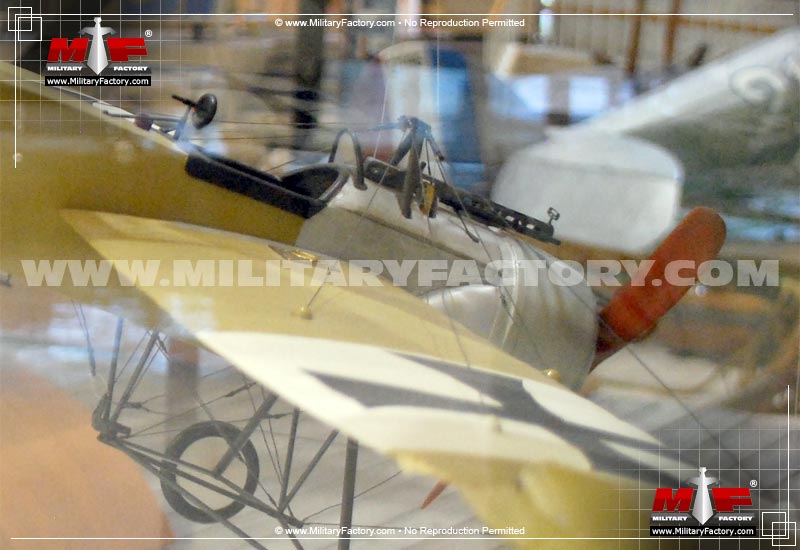
The Fokker Eindecker and its synchronized machine gun introduced armed aerial combat of lethal proportions in World War 1.
By Staff Writer

Bookmark and Share

As with most aircraft developed during the First World War, the Eindecker series enjoyed a relatively short period of time at the front lines. Aviation technology was ever changing to the point that aircraft designs could be made obsolete as soon as they were produced, leaving a slim window of opportunity for a single design to prove itself. This evolving face of the First World War directly influenced both aircraft design and outcomes of several campaigns fought in the skies. The Eindecker deserves particular mention as it was one of the first aircraft to bring about a taste of things to come in air warfare.

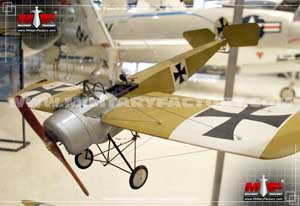
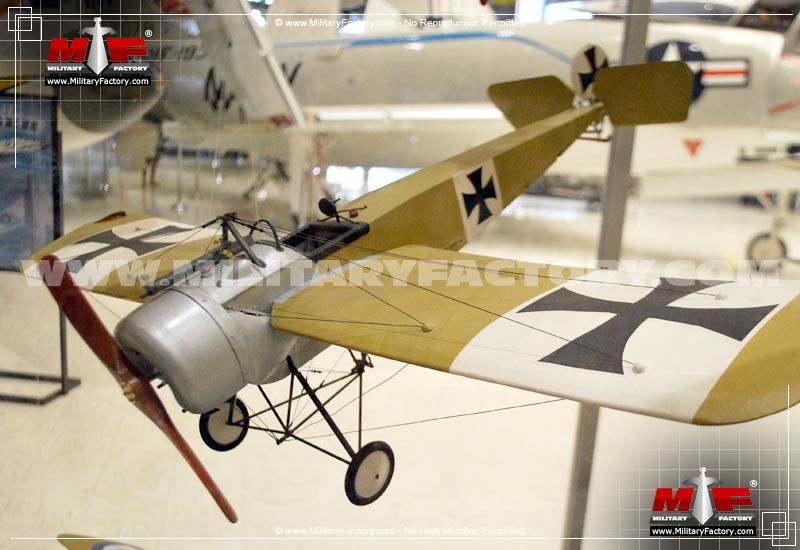
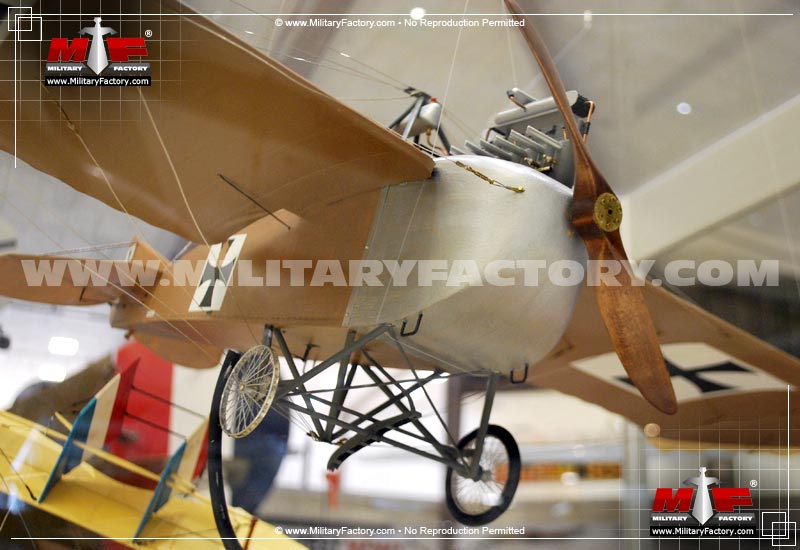
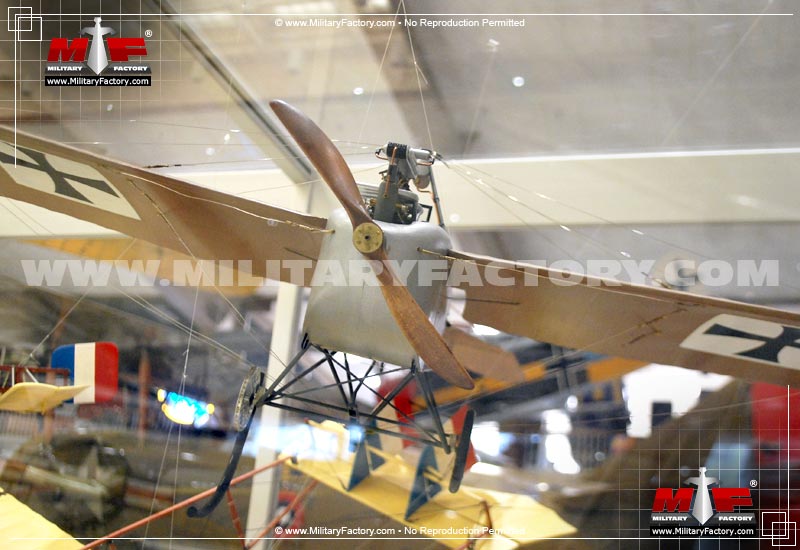
The Fokker E "Eindecker" ("Eindecker" meaning monoplane) was of a most basic monoplane design, incorporating known successful elements from previous aircraft design attempts such as a static a landing gear system, aerodynamic details and a enclosed engine. The Eindecker series had the distinction of being the first aircraft to be fitted with the deadly synchronized machine gun/ propeller system which allowed for operation of the machine gun through the spinning propeller, quite an accomplishment that led pilots to engage enemy aircraft in relative safety without the fear of stripping off the propeller blades. This single invention would lead to the period of German air dominance known simply as the "Fokker Scourge".

This new German technology was highly-touted and highly-prized when compared to that of what the Allies had to work with. The synchronized firing method was so guarded in fact that Axis planes were initially limited to fighting above or near German-held territories for fear that the technology would fall into enemy hands. In contrast, Allied pilots operated their machine guns from their cockpits often at uncomfortable lengths as these weapons were generally placed farther away from their seating position. In some cases, these weapon systems would have to operated by way of an extension arm with one hand while still maneuvering the aircraft into firing position with the other. The synchronized machine gun was an advantage that played all too well into Eindecker pilot hands and was very symbolic of the technological progression being made by both sides throughout the war.

The initial design of the Eindecker series stemmed from a pre-war design designated as the M.5. Though not a spectacular aircraft in most regards (the basic design was somewhat outdated and outclassed from the outset), the Eindecker enjoyed a good mission-to-kill ratio due to the single fact of the synchronized machine gun. The seemingly simple technological feat provided the German air force with the capability to take back the teeter-tottering skies from Allied planes. In terms of handling, however, recent wind tunnel testing revealed several challenges facing the pilot in just taking off and maintaining lift with the aircraft - a testament to the mettle that these pioneers faced from their own machines.

Due to the exclusivity of the synchronized machine gun and the limited reach placed on the Eindeckers, the E-series would languish as a bomber escort or as a defensive weapon system over German-held territories. Production issues at home also held the reach of the Eindecker series overall and the aircraft would never truly reach its intended defined potential during the course of the war. Legendary German Ace Max Immelmann would be credited with the Eindecker's first kill on August 1, 1915, and his prowess would eventually lead to a dogfighting move named in his honor. By war's end, the Eindecker would reportedly be credited with achieving the destruction of no fewer than 1,000 Allied aircraft.

Text ©2003-2010 www.MilitaryFactory.com • All Rights Reserved • No Reproduction Without Permission • Corrections / Comments to MilitaryFactory at Gmail dot com

Last Revision: 11/13/2008


  Specifications for the Fokker E.III (Eindecker) Monoplane
arrow downDimensions:
Length: 23.62ft (7.20m)
Width:31.23ft (9.52m)
Height: 7.87ft (2.40m)

arrow downPerformance: About MACH
Max Speed: 87mph (140kmh; 76kts)
Max Range: 123miles (198km)
Rate-of-Climb: 0ft/min (0m/min)
Service Ceiling: 11,811ft (3,600m; 2.2miles)

arrow downStructure:
Accommodation: 1
Hardpoints: 0
Empty Weight: 882lbs (400kg)
MTOW: 1,345lbs (610kg)

arrow downPowerplant:
Engine(s): 1 x Oberursel U.I 1 rotary engine generating 99hp.
arrow downArmament Suite:
1 OR 2 x 7.92mm Maschinengewehr MG08 / Parabellum MG14 / Spandau LMG 08 machine gun(s)

CompareX2 CompareX4 Conversions Dictionary Acronyms

Compare and Contrast Military Aircraft Specifications

  Special Aircraft Collections
Aircraft by Conflict:
Falklands War
Indo-Pak War
Operation Allied Force
Operation Desert Storm
Six Day War
Yom Kippur War

Special Collections:
American X-Planes
Classic US Warbirds
Grumman "Cats"
Indian Air Force
Israeli Air Force
Mikoyan-Gurevich
British V-Bombers


Korean Air War:
Korean War Aircraft
Aces
Australia
United States
North Korea

Vietnam Air War:
Vietnam War Aircraft

Cold War
Cold War Aircraft
United States
Soviet Union
Soviet Bombers of the Cold War

Modern Aircraft
Modern Military Aircraft
United States

Miscellaneous
MiG-15 Versus Sabre
Top 10 Fighters of All Time
WW2 Aircraft Ranked by Speed
Aircraft Cockpits


  Recent Military Aircraft Additions
Thumbnail picture of the Arado Ar TEW 16/43-19
Arado TEW 16/43-19
Thumbnail picture of the Antonov An-2 Colt
Antonov An-2 Colt
Thumbnail picture of the Kyushu K11W Shiragiku bomber trainer
Kyushu Shiragiku

  Contacting MilitaryFactory.com
We can only get better if you tell us how. You can contact MilitaryFactory.com at MilitaryFactory at gmail dot com (replace "at" with "@" and "dot with ".") with any questions, comments or corrections. We also accept related military imagery that you approve for us to use on our website. Keep in mind, however, that due to volume, we may not directly respond to your inquiry. Please add us to your list of non-blocked recipients!

  Aircraft Quick Profile


Picture of the Fokker E (Eindecker) Monoplane
Image courtesy of the Public Domain.

flag of Imperial Germany
1915

Designation: Fokker E (Eindecker) Monoplane
Classification Type: Fighter
Contractor: Fokker Flugzeug-Werke GmbH - Germany

Country of Origin: Imperial Germany
Production Total: 420

Operators: Imperial Germany, Austria-Hungary and the Ottoman Empire.


  Variants
M.5K/MG (A.III) - 5 examples produced.

E.I - 68 examples produced.

E.II - Improved engine; 49 examples produced.

E.III - Two machine guns as optional; 249 examples produced.

E.IV - Featured two machine guns standard; improved engine; 49 examples produced.

  Collections
  • Sons of Empire - WW2 Aircraft of Japan
  • Aircraft of the Battle of Britain
  • X-Planes Throughout History
  • French Aircraft of World War 1
  • The German Luftwaffe in World War 2
  • Nightfighters - In a Class All Themselves
  • The Top Ten Fighters of All Time
  • Carrier "Born" Aircraft - Navy Mounts
  • If Boats Could Fly - Flying Boat Aircraft
  • World War 1 Aircraft Ranked by Speed
  • World War 2 Aircraft Ranked by Speed


Top MF Stuff: 2010 Military Pay Scale Chart | Military Ranks | World War 2 Weapons | Sniper Rifles | Conversion Calculators


Site Disclaimer | Privacy Policy | Site Map | MF Origins

©2010 www.MilitaryFactory.com • Content ©2003-2010 MilitaryFactory.com • All Rights Reserved • Site Contact Email: militaryfactory at gmail dot com (replace "at" with "@" and "dot" with ".")

eXTReMe Tracker

Most photographic images appearing on this site are courtesy of the United States Department of Defense and are approved for public use. Other images acquired through the public domain. Digital art work courtesy of Dan Alex. Business Consulting by Kyle Williams

Material presented throughout this website is for historical and entertainment value and should not to be construed as usable for hardware restoration, maintenance or general operation. Please consult manufacturers for such information.