Military Factory
Military Pay Chart
Global Firepower
Military Industrial Complex
Second World War
Home
Military Pay Scale
Military Ranks
Small Arms
Aircraft
Land Systems
Navy
Education
Military Factory Facebook Logo
flag of Imperial Germany

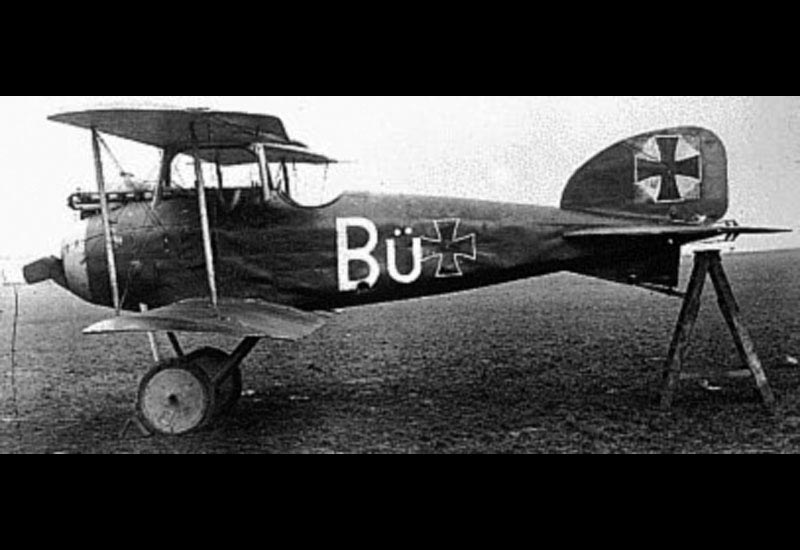
Albatros D.I Fighter (1916)

Authored By Staff Writer | Last Updated: 7/13/2012

The Albatros D.I helped Germany regain control of the skies from the Allies in early 1917.

The Albatros Flugzeugwerke firm certainly made a name for itself in World War 1. It was responsible for a series of well-respected airframes that helped to regain control of the skies from the air aces of the Triple Entente. The series began with the excellent D.I and evolved to include the improved forms of the D.II, D.III, D.V and D.Va before the end of the war in 1918. While only 50 of the D.I models were ever produced, it proved a significant addition to the inventory of the Imperial German Army Air Service which needed a counter against the ever-improving enemy scouts. Like other classic mounts debuted in World War 1, the D.I led only a short existence before being replaced by more capable fighters - such was the life of a military aircraft during a war when technology was changing on a seemingly daily basis.

The Albatros D.I model was ordered in June of 1916 and introduced into German air service in August of 1916 to counter the successes being made b the British Airco and de Havilland scouts as well as the French Nieuport series of fighters. All three of these firms would earn their own level of respect in their own right by the end of the war - on part with the developments of the German Albatros and Fokker firms. These Airco, de Havilland and Nieuport designs were largely responsible for putting an end to the bloody "Fokker Scourge" covering the early part of 1916 in which air superiority was clearly in the hands of the Germans thanks to the revolutionary Fokker Eindecker. However, with the changing technology forcing newer and better mounts into the air, ground that was captured one day could be lost the next. As such, the D.I was unveiled by Albatros to help stave off even more losses against Triple Entente pilots.

The D.I borrowed much of what it had learned in their preceding C-series of biplane aircraft. However, the D.I incorporated a much improved aerodynamically-friendly fuselage design which lent a rather modern appearance to the new fighter type. The design was notable for its rather streamlined forward section and elliptical plywood fuselage beginning with the propeller spinner contouring directly against the lines of the engine compartment. Power was supplied form either a Benz Bz.III (150hp) or Mercedes D.III (160hp) series six-cylinder liquid-cooled engine and represented some of the most powerful engines available to scout fighter types anywhere, allowing for speeds of approximately 110 miles per hour. Such an installation resulted in immediate performance improvement results that would make the D-series legendary throughout the remainder of the war. Armament centered around a pair of 7.92mm Spandau LMG 08/15 series machine guns coupled to the two-bladed propeller system that allowed for synchronization - the ability to fire the machine guns through the spinning propeller blades, a German technological achievement initially reached some time before the Triple Entente was to match.

The biplane wing arrangement was a standard design fixture of fighters throughout the war - a war that would see such mounts fit one (monoplane) and as many as three (triplane) wings at a time. The D.I sported these wings with parallel struts and applicable cabling. The undercarriage was fixed in position and consisted of two single-wheeled main landing gear legs and a base tail skid. This allowed for rugged landings wherever aerodromes were set up along the dynamic fronts of the war. The cockpit was fitted just ahead of amidships and behind/under the upper wing assembly.

Where the D.I outshone its enemies was in its excellent rate-of-climb. It could reach 3,280 feet in just six minutes which meant it would quickly react to incoming enemy aircraft or balloons and lift off to meet the match. However, the design had an Achilles heel of not being wholly maneuverable for a fighter scout, forcing the pilot to utilize the type's power and armament to gain the advantage. Visibility out of the open-air cockpit was good save for the wing assemblies. This was slightly improved in the upcoming D.II model which saw the upper wing assembly lowered. Regardless, the D.I was the best of its kind upon inception - unseated only by better enemy designs to come online within time.

The impressive performance and capabilities of the D-series as a whole eventually led to their use by some of the top German aces of the time including the mythical Manfred von Richthofen.
Text ©2003-2013 www.MilitaryFactory.com • All Rights Reserved • No Reproduction Permitted
MilitaryFactory.com does NOT sell equipment/weaponry. Material presented throughout this website is for historical and entertainment value and should not to be construed as usable for hardware restoration, maintenance or general operation. Please consult manufacturers for such information. Our disclaimer. Email corrections / Comments to MilitaryFactory at Gmail dot com.
Picture of Albatros D.I
View All Images (1)

Specifications for the
Albatros D.I
Fighter


Country of Origin: Imperial Germany
Manufacturer: Albatros Werke GmbH - Germany
Initial Year of Service: 1916
Production: 50


Focus Model: Albatros D.I
Crew: 1


Length: 23.95ft (7.3m)
Width: 28.22ft (8.60m)
Height: 9.51ft (2.90m)
Weight (Empty): 1,422lbs (645kg)
Weight (MTOW): 1,980lbs (898kg)


Powerplant: 1 x Mercedes D.III liquid-cooled, inline engine delivering 160hp.


Maximum Speed: 109mph (175kmh; 94kts)
Maximum Range: 180miles (289km)
Service Ceiling: 16,998ft (5,181m; 3.2miles)
Rate-of-Climb: 547 feet per minute (167m/min)


Hardpoints: 0
Armament Suite:
STANDARD:
2 x 7.92mm Spandau LMG 08/15 fixed, forward-firing synchronized machine guns.


Variants:
D.I - Base D-series


D.II - Lowered top wing; Fundamental and minor aerodynamic changes.

D.III - V-shaped struts introduced

D.V - Streamlined fuselage

D.Va - Slightly modified D.V model


Operators:
Imperial Germany

ALL AIRCRAFT CATEGORIES

BY DECADE:


1900 to 1909
1910 to 1919
1920 to 1929
1930 to 1939
1940 to 1949
1950 to 1959
1960 to 1969
1970 to 1979
1980 to 1989
1990 to 1999
2000 to 2009
2010 to 2019
2020 to 2029
VIEW ALL
Compare Aircraft


BY TYPE:


Anti-Submarine Warfare (ASW)
Attack Helicopters
Bomber Aircraft
Medium Bombers
Heavy Bombers
Close-Air Support (CAS)
Commercial Aircraft
Dive Bombers
Electronic Warfare Aircraft (EWA)
Experimental / X-Planes
Fighter Aircraft
Floatplane Aircraft
Flying Boat Aircraft
Aerial Refueling Tankers
Helicopters (ALL)
Interceptor Aircraft
Multi-Role Aircraft
Navy Carrier Aircraft
Night Fighters
Reconnaissance / Scout
Search & Rescue (SAR)
Scout Helicopters
Special Purpose
Torpedo Bombers
Trainer Aircraft
Transport Aircraft
Transport Helicopters
Unmanned Aerial Vehicles (UAVs)
Unmanned Combat Air Vehicles (UCAVs)


COLLECTIONS:


4th Generation Fighter Aircraft
5th Generation Fighter Aircraft
US X-Planes
Classic US Warbirds
French Military Helicopters
Grumman "Cats"
Howard Hughes Aircraft
Indian Air Force
Israeli Air Force
Libyan Aircraft
Modern Chinese Aircraft
Modern Chinese Fighters
Modern Military Aircraft
Modern North Korean Aircraft
Modern Trainer Aircraft
Modern US Aircraft
Mikoyan Aircraft
Sukhoi Aircraft
Syrian Aircraft
Top 10 Fighter Aircraft of All Time


AIRCRAFT BY CONFLICT:


Arab-Israeli War (1948)
Cuban Missile Crisis (1959-1962)
Falklands War (1982)
Indo-Pak War (1965, 1971)
Iran-Iraq War (1980-1988)
Lebanon War (1982)
Operation Allied Force (1999)
Operation Desert Storm (1991)
Six Day War (1967)
Spanish Civil War (1936)
Soviet-Afghan War (1979-1989)
Yom Kippur War (1973)


MISCELLANEOUS:


Aircraft Cockpits
Aircraft Manufacturers List
Aircraft Production
Aircraft Timeline

WORLD WAR 2:


1939 Aircraft
1940 Aircraft
1941 Aircraft
1942 Aircraft
1943 Aircraft
1944 Aircraft
1945 Aircraft
1946 Aircraft
Australian Aircraft
Battle of Britain Aircraft
Bombers
Four-Engine Bombers
British Aircraft
British Bombers
British Transports
Dive Bombers
Canadian Aircraft
Fighters
Chinese Aircraft
French Aircraft
German Aircraft
German Fighters
German Flying Boats
German Jets
Secret Weapons of the Luftwaffe
Italian Aircraft
Imperial Japanese Aircraft
Imperial Japanese Fighters
Mitsubishi Bombers
Navy Aircraft
Pearl Harbor
Polish Aircraft
Romanian Aircraft
US Aircraft
US Bombers
US Navy Aircraft
Soviet Aircraft
Torpedo Bombers
Trainer Aircraft
Transport Aircraft
Tuskegee Airmen Aircraft
W.A.S.P. Aircraft
WW2 Aircraft Ranked by Speed
VIEW ALL


WORLD WAR 1:


1914 Aircraft
1915 Aircraft
1916 Aircraft
1917 Aircraft
1918 Aircraft
Aircraft Timeline
Austro-Hungarian Aircraft
Bomber Aircraft
British Aircraft
Fighters
Flying Boats
French Aircraft
Imperial German Aircraft
Italian Aircraft
Scout Aircraft
Russian Empire Aircraft
US Aircraft
WW1 Aircraft Ranked by Speed
VIEW ALL


KOREAN WAR:


Australian Aircraft
Korean War Aces
Korean War Jets
North Korean Aircraft
US Military Aircraft
VIEW ALL


VIETNAM WAR:


Helicopters (ALL)
Transport Helicopters
North Vietnam Air Force
US Airpower
VIEW ALL


COLD WAR:


1950s French Aircraft
British V-Bombers
Cold War Bombers
Soviet Aircraft
Soviet Bombers
Soviet Interceptors
Soviet Helicopters
Strategic Air Command
US Aircraft
US Bombers
US Interceptors
VIEW ALL

Site Disclaimer | Privacy Policy | Site Map | MF Origins


©2013 www.MilitaryFactory.com • Content ©2003-2013 MilitaryFactory.com • All Rights Reserved • Site Contact Email: militaryfactory at gmail dot com. The "Military Factory" name and MilitaryFactory.com logo are registered ® trademarks and protected by all applicable domestic and international intellectual property laws.


Top MF Stuff: 2013 Military Pay Scale | Military Ranks | WW2 Weapons | Sniper Rifles | Kts to Mph | WW1 Aircraft | Automatic Rifles | Aircraft Cockpits | Vietnam War Weapons | Main Battle Tanks | Submachine Guns | Shotguns | French Military Victories


Most photographic images appearing on this site are courtesy of the United States Department of Defense and are approved for public use. Other images acquired through the public domain. Digital art work courtesy of Dan Alex. Business Consulting by Kyle Williams. Material presented throughout this website is for historical and entertainment value and should not to be construed as usable for hardware restoration, maintenance or general operation. Please consult manufacturers for such information.


eXTReMe Tracker