Military Factory
Military Pay Chart
Global Firepower
Military Industrial Complex
Second World War
Home
Military Pay Scale
Military Ranks
Small Arms
Aircraft
Land Systems
Navy
Education
Military Factory Facebook Logo
flag of United Kingdom

Avro Shackleton Long Range Maritime Patrol / Airborne Early Warning / Search and Rescue Aircraft (1951)

Authored By Staff Writer | Last Updated: 8/7/2012

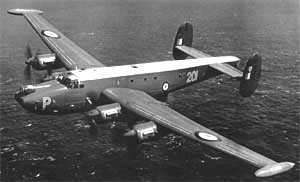
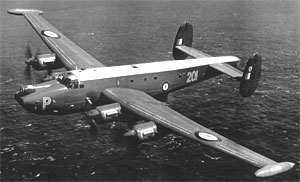
The Avro Shackleton became the first British bomber to feature contra-rotating propeller blades.

The Avro Shackleton was derived from the Avro Lincoln bomber (the Lincoln itself designed from the Avro Lancaster), a four-engine aircraft appearing too late to see action in World War 2. The Shackleton featured a similar (though all-new) fuselage design and became the primary RAF long-range maritime patrol platform in the early years of the Cold War. The aircraft went on to fulfill a variety of other roles until its eventual retirement in 1990.

The Shackleton was designed to a 1946 requirement for an all-new long-range maritime patrol aircraft for use by the Royal Air Force Coastal Command. The Avro offering was initially known as the Lincoln ASR.3 and would later become known simply as Type 696 Shackleton (named after English explorer Ernest Shackleton). First flight was achieved on March 9th, 1949.

The Avro Shackleton shared some design similarities with the Lincoln. Both aircraft featured a slender straight-sided fuselage with the aft end extended out past the tail plane. The tail plane also featured twin vertical fins in much the same way as that of Lincoln design. The Shackleton was also fitted with a low-wing monoplane with two engines to a wing and each engine was fitted with two three-blade propellers in a contra-rotating fashion - the first such British four-engine aircraft to do so. Power was delivered by 4 x Rolls-Royce Griffon liquid-cooled in-line engines. The Griffons were noted for requiring a great deal of attention during the aircraft's career. Armament in the Anti-Submarine Warfare (ASW) role consisted of 2 x 20mm cannons mounted in the nose while internal bombloads could consist of torpedoes, mines and bombs as needed.

The initial MR.1 Shackleton production models entered service in April of 1951 with No. 120 Squadron based in Scotland. The MR.2 appeared later (with changes brought about through operational feedback) and was noted for its ventral-placed radome as opposed to the chin-mounted placement of its forerunner. Additionally, the MR.2 featured a reinforced undercarriage, a lengthened nose and tail section and redesigned tail planes.

The MR.3 would later appear with a whole host of changes thanks again to operational feedback. These changes would include wingtip-mounted fuel tanks, a larger fuselage, sleeping galley for the crew on long flights, redesigned wings and a tricycle undercarriage. Future MR.3's would incorporate the Armstrong Siddeley Viper turbojet in the outboard engine nacelles for increased power on take-offs due to the increased weight, these being noted by their designation of MR.3 "Phase II".

Beyond RAF use, the Shackleton was delivered in a batch of eight to the South African Air Force (replacing their Short Sunderlands). Shackletons served the British as Airborne Early Warning (AEW) platforms (designated AEW.2) until its inevitable replacement by the nation's purchase of E-3 Sentry units in 1991 over the Nimrod AEW model vying for the role. Other roles undertaken by the Shackleton in that time included Search and Rescue (SAR) and Maritime Patrol Aircraft (MPA). South African models were in service up until 1984.

Shackletons saw their first real use in the Suez Crisis of 1956, the combined British, Israeli and French attack on Egypt after the Egyptian attempt to nationalize the Suez Canal. Production totals for each model type numbered 77 for the Mk 1 series, 70 for the Mk 2 series and 34 for the Mk 3 series with a further 8 of that batch for use in the South African Air Force.
Text ©2003-2013 www.MilitaryFactory.com • All Rights Reserved • No Reproduction Permitted
MilitaryFactory.com does NOT sell equipment/weaponry. Material presented throughout this website is for historical and entertainment value and should not to be construed as usable for hardware restoration, maintenance or general operation. Please consult manufacturers for such information. Our disclaimer. Email corrections / Comments to MilitaryFactory at Gmail dot com.
Picture of Avro Shackleton
View All Images (1)

Specifications for the
Avro Shackleton
Long Range Maritime Patrol / Airborne Early Warning / Search and Rescue Aircraft


Country of Origin: United Kingdom
Manufacturer: Avro / A.V. Roe - UK
Initial Year of Service: 1951
Production: 189


Focus Model: Avro Shackleton MR.Mk 3
Crew: 10


Length: 87.34ft (26.62m)
Width: 119.85ft (36.53m)
Height: 23.33ft (7.11m)
Weight (Empty): 56,401lbs (25,583kg)
Weight (MTOW): 100,002lbs (45,360kg)


Powerplant: 4 x 2,456hp Rolls Royce Griffon 57A V-12 liquid-cooled inline engines.


Maximum Speed: 302mph (486kmh; 262kts)
Maximum Range: 4,213miles (6,780km)
Service Ceiling: 20,013ft (6,100m; 3.8miles)
Rate-of-Climb: 0 feet per minute (0m/min)


Hardpoints: 0
Armament Suite:
2 x 20mm Hispano cannons in nose

Up to 10,000lbs of 3 x torpedoes, mines or 9 x bombs as needed.


Variants:
Lincoln ASR.3 - Initial Lincoln Production Model Designation on which the Shackleton is derived from.


Type 696 - Official Avro Shackleton Model Designation.

GR.Mk 1 - Initial Production Models of which 77 examples were produced; redesignated to MR.Mk 1; fitted with 2 x Griffon 57A and 2 x Griffon 57 engines.

MR.Mk 1 - Redesignation of GR.MK 1 models.

MR.Mk 1A - Fitted with 4 x Griffon 57 engines; chin radome.

MR.Mk 2 - Subtle modifications introduced including longer nose; featured ventral-placed ASV radome; 70 examples produced.

MR.Mk2C - MR.2 models with armament and navigation equipment of MR.Mk 3 models.

MR.Mk 3 -Anti-Shipping and Maritime Reconnaissance Model; redesigned wing shape; sans dorsal turret; underwing hardpoints introduced; wingtip fuel tanks for increased range; tricycle landing undercarriage; 34 examples produced.

MR.Mk 3 "Phase II" - MR.3 models fitted with Armstrong Siddeley Viper turbojet engines in outboard engine nacelles; 8 examples produced for South Africa.

MR.Mk 4 - Proposed improved maritime reconnaissance platform; never produced.

AEW Mk 2 - Airborne Early Warning Radar platform from converted MR.2 models; 12 such examples produced.

T.4 - Navigation Trainer Conversion Model


Operators:
the United Kingdom and South Africa.

ALL AIRCRAFT CATEGORIES

BY DECADE:


1900 to 1909
1910 to 1919
1920 to 1929
1930 to 1939
1940 to 1949
1950 to 1959
1960 to 1969
1970 to 1979
1980 to 1989
1990 to 1999
2000 to 2009
2010 to 2019
2020 to 2029
VIEW ALL
Compare Aircraft


BY TYPE:


Anti-Submarine Warfare (ASW)
Attack Helicopters
Bomber Aircraft
Medium Bombers
Heavy Bombers
Close-Air Support (CAS)
Commercial Aircraft
Dive Bombers
Electronic Warfare Aircraft (EWA)
Experimental / X-Planes
Fighter Aircraft
Floatplane Aircraft
Flying Boat Aircraft
Aerial Refueling Tankers
Helicopters (ALL)
Interceptor Aircraft
Multi-Role Aircraft
Navy Carrier Aircraft
Night Fighters
Reconnaissance / Scout
Search & Rescue (SAR)
Scout Helicopters
Special Purpose
Torpedo Bombers
Trainer Aircraft
Transport Aircraft
Transport Helicopters
Unmanned Aerial Vehicles (UAVs)
Unmanned Combat Air Vehicles (UCAVs)


COLLECTIONS:


4th Generation Fighter Aircraft
5th Generation Fighter Aircraft
US X-Planes
Classic US Warbirds
French Military Helicopters
Grumman "Cats"
Howard Hughes Aircraft
Indian Air Force
Israeli Air Force
Libyan Aircraft
Modern Chinese Aircraft
Modern Chinese Fighters
Modern Military Aircraft
Modern North Korean Aircraft
Modern Trainer Aircraft
Modern US Aircraft
Mikoyan Aircraft
Sukhoi Aircraft
Syrian Aircraft
Top 10 Fighter Aircraft of All Time


AIRCRAFT BY CONFLICT:


Arab-Israeli War (1948)
Cuban Missile Crisis (1959-1962)
Falklands War (1982)
Indo-Pak War (1965, 1971)
Iran-Iraq War (1980-1988)
Lebanon War (1982)
Operation Allied Force (1999)
Operation Desert Storm (1991)
Six Day War (1967)
Spanish Civil War (1936)
Soviet-Afghan War (1979-1989)
Yom Kippur War (1973)


MISCELLANEOUS:


Aircraft Cockpits
Aircraft Manufacturers List
Aircraft Production
Aircraft Timeline

WORLD WAR 2:


1939 Aircraft
1940 Aircraft
1941 Aircraft
1942 Aircraft
1943 Aircraft
1944 Aircraft
1945 Aircraft
1946 Aircraft
Australian Aircraft
Battle of Britain Aircraft
Bombers
Four-Engine Bombers
British Aircraft
British Bombers
British Transports
Dive Bombers
Canadian Aircraft
Fighters
Chinese Aircraft
French Aircraft
German Aircraft
German Fighters
German Flying Boats
German Jets
Secret Weapons of the Luftwaffe
Italian Aircraft
Imperial Japanese Aircraft
Imperial Japanese Fighters
Mitsubishi Bombers
Navy Aircraft
Pearl Harbor
Polish Aircraft
Romanian Aircraft
US Aircraft
US Bombers
US Navy Aircraft
Soviet Aircraft
Torpedo Bombers
Trainer Aircraft
Transport Aircraft
Tuskegee Airmen Aircraft
W.A.S.P. Aircraft
WW2 Aircraft Ranked by Speed
VIEW ALL


WORLD WAR 1:


1914 Aircraft
1915 Aircraft
1916 Aircraft
1917 Aircraft
1918 Aircraft
Aircraft Timeline
Austro-Hungarian Aircraft
Bomber Aircraft
British Aircraft
Fighters
Flying Boats
French Aircraft
Imperial German Aircraft
Italian Aircraft
Scout Aircraft
Russian Empire Aircraft
US Aircraft
WW1 Aircraft Ranked by Speed
VIEW ALL


KOREAN WAR:


Australian Aircraft
Korean War Aces
Korean War Jets
North Korean Aircraft
US Military Aircraft
VIEW ALL


VIETNAM WAR:


Helicopters (ALL)
Transport Helicopters
North Vietnam Air Force
US Airpower
VIEW ALL


COLD WAR:


1950s French Aircraft
British V-Bombers
Cold War Bombers
Soviet Aircraft
Soviet Bombers
Soviet Interceptors
Soviet Helicopters
Strategic Air Command
US Aircraft
US Bombers
US Interceptors
VIEW ALL

Site Disclaimer | Privacy Policy | Site Map | MF Origins


©2013 www.MilitaryFactory.com • Content ©2003-2013 MilitaryFactory.com • All Rights Reserved • Site Contact Email: militaryfactory at gmail dot com. The "Military Factory" name and MilitaryFactory.com logo are registered ® trademarks and protected by all applicable domestic and international intellectual property laws.


Top MF Stuff: 2013 Military Pay Scale | Military Ranks | WW2 Weapons | Sniper Rifles | Kts to Mph | WW1 Aircraft | Automatic Rifles | Aircraft Cockpits | Vietnam War Weapons | Main Battle Tanks | Submachine Guns | Shotguns | French Military Victories


Most photographic images appearing on this site are courtesy of the United States Department of Defense and are approved for public use. Other images acquired through the public domain. Digital art work courtesy of Dan Alex. Business Consulting by Kyle Williams. Material presented throughout this website is for historical and entertainment value and should not to be construed as usable for hardware restoration, maintenance or general operation. Please consult manufacturers for such information.


eXTReMe Tracker