Military Factory
Military Pay Chart
Global Firepower
Military Industrial Complex
Second World War
Home
Military Pay Scale
Military Ranks
Small Arms
Aircraft
Land Systems
Navy
Education
Military Factory Facebook Logo
flag of United States

Grumman F7F Tigercat Carrier-Borne Nightfighter / Fighter Aircraft (1944)

Authored By Staff Writer | Last Updated: 11/15/2010

Despite missing combat action in World War 2, the F7F Tigercat served with the USMC in the upcoming Korean War.

Find a School Near You
Follow Military Factory on Facebook:
Trending on Military Factory:
Recent Articles:
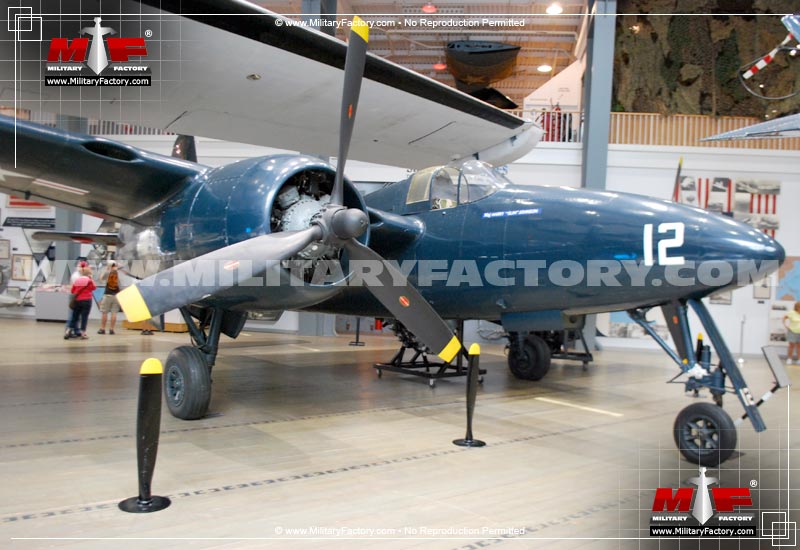
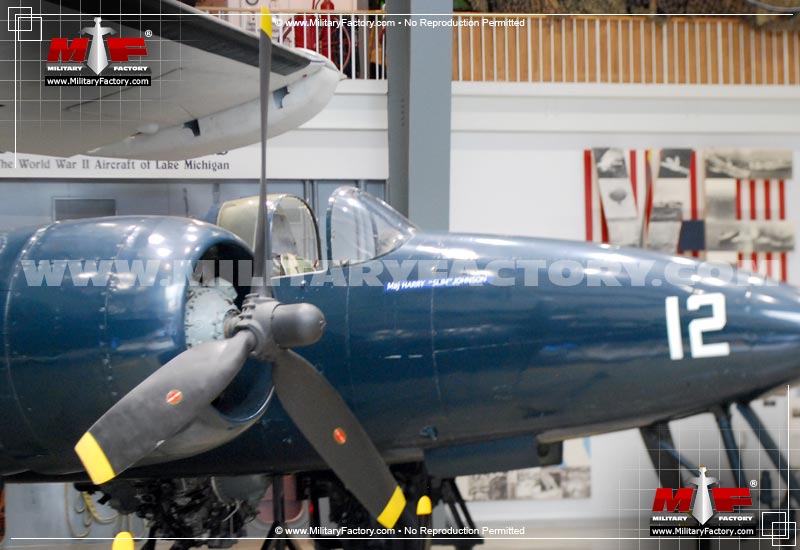
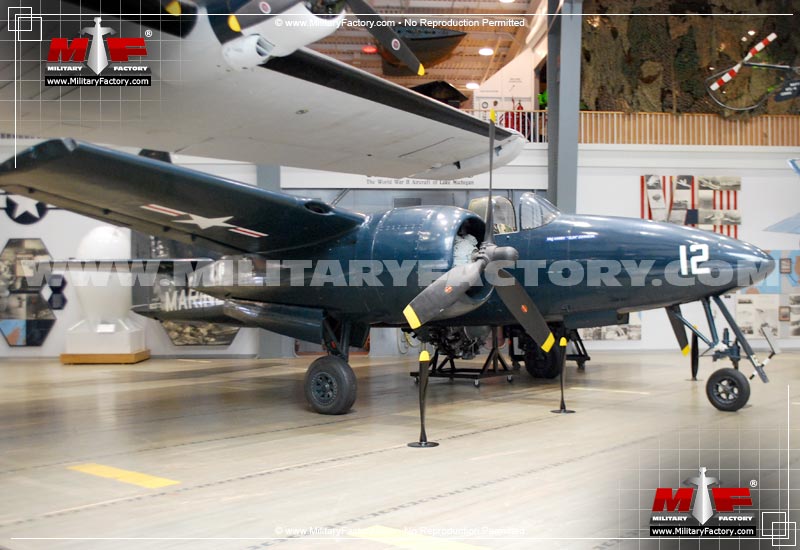
The F7F Tigercat was another carrier-borne aircraft development in Grumman's long line of "cat" named fighters. The system was originally designed as a twin-engine fighter for use off of the decks of US Navy Midway-class aircraft carriers. Unfortunately, the aircraft proved too fast and too large for these vessels (in both operation and storage) and therefore went on to be utilized as a land-based attack fighter by the United States Marine Corps instead. The Tigercat arrived too late to see operational use in World War 2 but saw combat service in the upcoming Korean War. The F7F's design earned some historical distinction in becoming the world's first purpose-designed twin-engine, carrier-based fighter produced in quantity with a tricycle landing gear arrangement. The Tigercat also became the US Navy's first accepted twin-engine fighter.

Grumman had already proven itself a capable aviation firm with carrier-based fighter products spanning as far back as the early 1930's. The F4F Wildcat proved a pivotal Allied stalwart in the early and middle stages of the Pacific Theater, in both defensive and offensive roles. The much improved F6F Hellcat - featuring the powerful Pratt & Whitney "Double Wasp" radial piston engine - ratcheted the bar up a few notches and helped to win back air superiority for the Allies for the remainder of the war. It becomes no surprise then that the same bureau that produced these two excellent aircraft would leave no stone unturned when creating a successor in the "cat" family line. With development beginning as early as 1941, Grumman engineers would set out to create the ultimate form of carrier-based fighter aircraft anywhere in the world. To make this ultimate vision a reality, Grumman engineers would stay with the proven Hellcat powerplant - the Pratt & Whitney brand R-2800 series Double Wasp engine - the same engine that would power what could be considered the pinnacle of American piston-powered flight in the upcoming Grumman F8F Bearcat navy fighter.

This resulting Grumman design emerged as a large, twin-engine, single-seat fighter. First flight of the first of two XF7F-1 prototype occurred in December 1943. Though an excellent and capable aircraft, it was already proving to be too large for the Midway-class of aircraft carriers and the power supplied by the twin Double Wasp engines made it simply too fast for general carrier operations where the Midway-class was concerned. Additionally, the Tigercat performed poorly when running on a single engine and issues arose with the arrestor hook during trials.

As such, the F7F Tigercat would initially have to be relegated to operations from land-bases despite its carrier pedigree. This ultimately led to its selection and primary use by the USMC who ordered 500 of the type even before the prototype's first flight. Production deliveries began in April of 1944. Though the war in Europe and the Pacific was still in full swing by this time, the Tigercat did not gain the usual required operational level of clearance to perform in a combat nature during these closing months of the war. By the time of cessation of hostilities by mid-1945, the Tigercat was all but too late for the big dance. As fate would have it, the aircraft designed and produced during the height of the Second World War would eventually miss the conflict in whole.

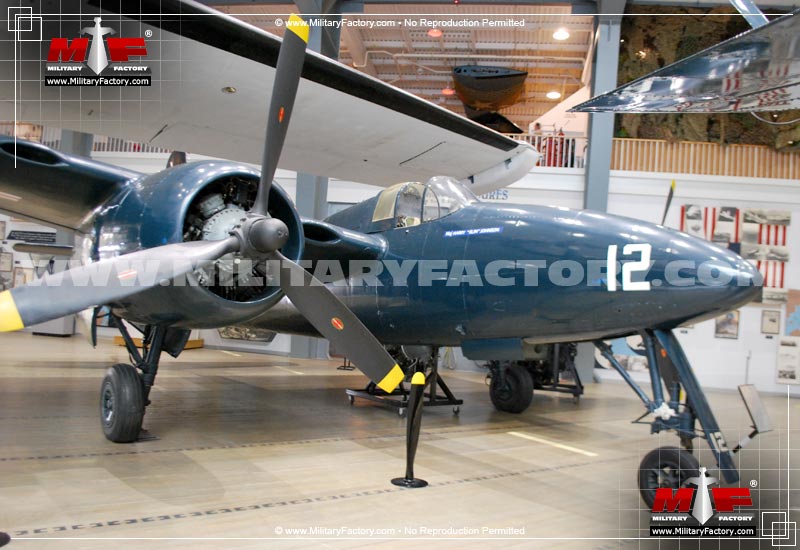
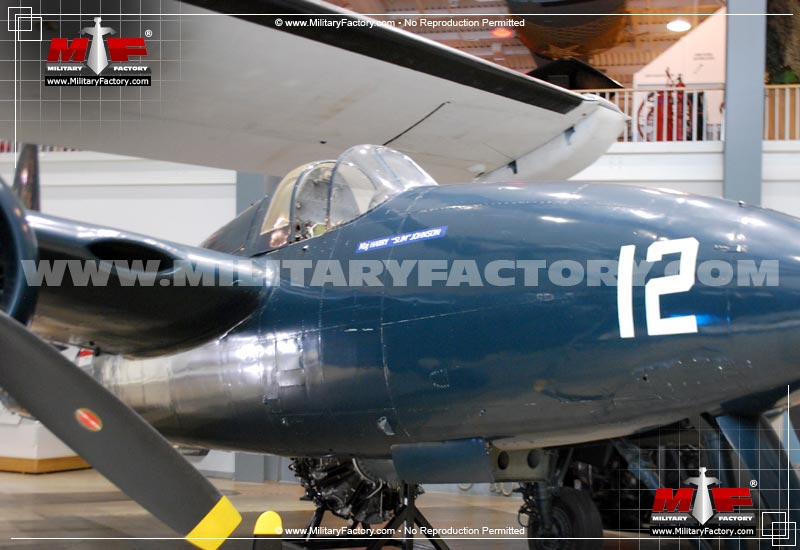
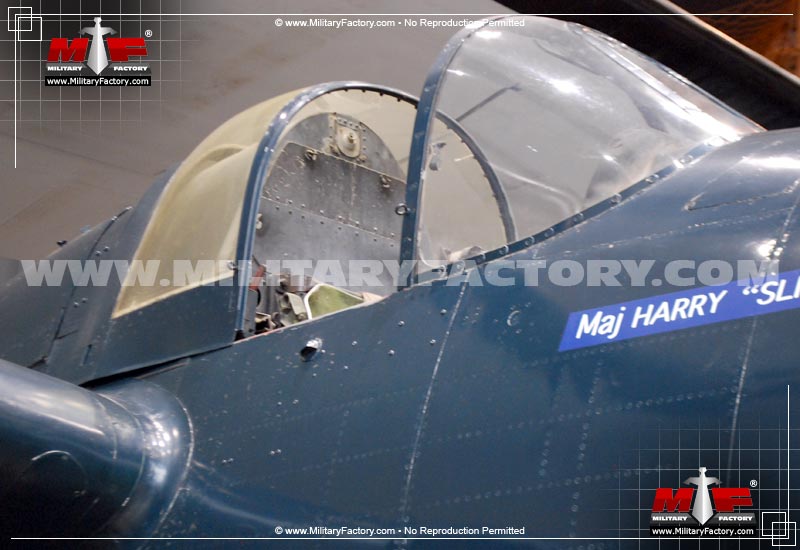
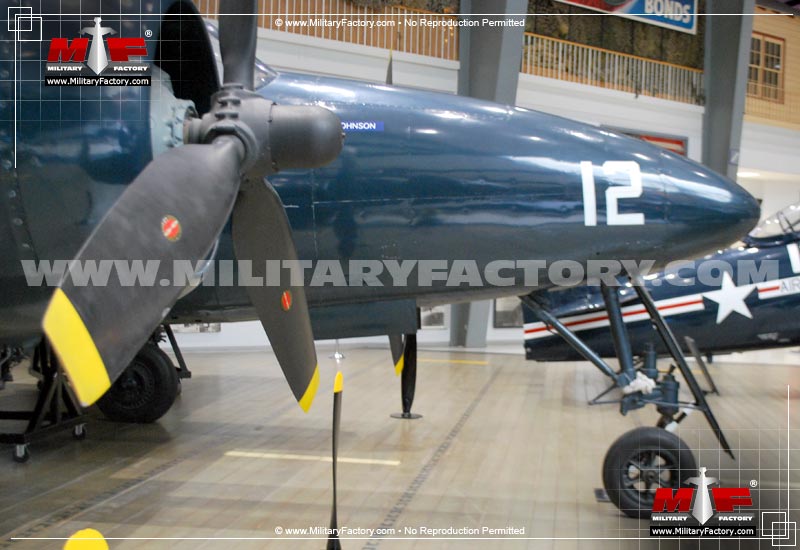
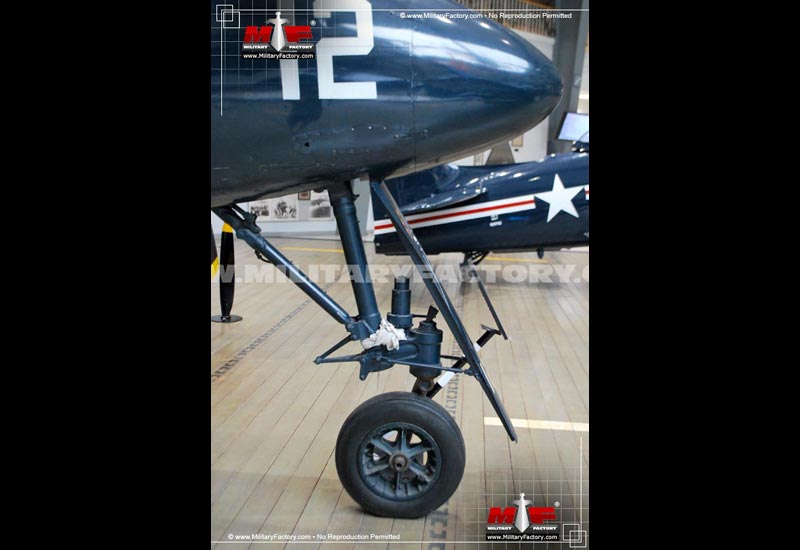
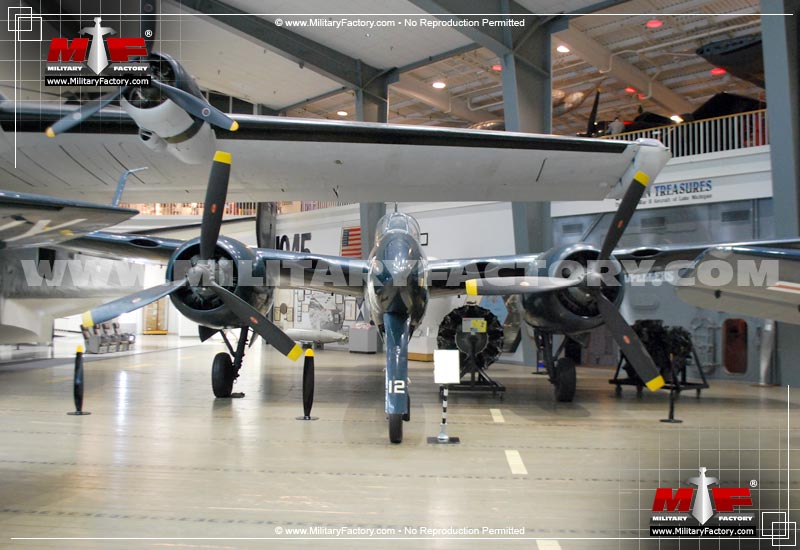
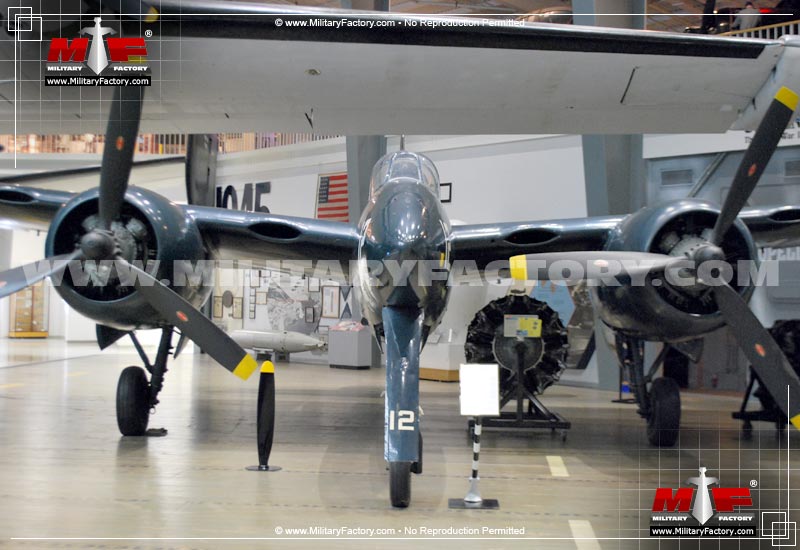
The Tigercat was designed as a sleek and fast performer with hard-hitting standard armament. The fuselage was of the smallest possible cross-section and featured a pointed nose assembly, single-seat cockpit and conventional empennage. The pilot was afforded good forward and above visibility though his views left, right and to the rear were limited to an extent. Views left and right were partially obstructed by the radial engine nacelles slung underneath each mid-mounted monoplane wing. The wings themselves were hinged outboard of the engines for ease of storage (hence its carrier-based origins). The tricycle landing gear arrangement was unique, particularly for this class of large fighter. Bell had gained notoriety for using the tricycle arrangement in its P-38 Airacobra series but for the most part, undercarriages were traditionally of the "tail dragging" variety. The F7F's undercarriage arrangement featured two main landing gear systems retracting rearwards into the underside of each engine nacelle. Likewise, the nose-mounted landing gear retracted in this same fashion. All landing struts were afforded a single wheel.

A large airframe made for some large possibilities in terms of armament. Conventional American wisdom throughout the war had been the use of multiple machine guns fitted to the wings. With a high rate of fire and the damage capabilities of such an armament, the choice was an easy one for aircraft manufacturers to make. The Tigercat, however, took this a step further. The Soviets and the Germans had already proven to themselves via real-world experience the value inherent in a cannon-laden fighter aircraft when combating enemy bombers. Though not offering the same high rate-of-fire as their heavy machine gun kin, cannons offered greater lethality per round as a single cannon projectile could pose an exponential threat to an enemy bomber's complex internal systems (particularly the engines) than could a flurry of machine gun fire. A such, the F7F received the best of both worlds, being armed with a battery of 4 x M2 series cannons (mounted in the wingroots, two to a side) and complimented by a collection of 4 x M2 Browning air-cooled, heavy machine guns as standard (fitted to the fuselage underside, two guns to a side - this armament was eventually removed in later versions of the aircraft). This choice of armament provided an already impressive airframe with the power to contend with just about anything available in the skies.

Not to be outdone in the armaments department, the lengthy and strong wingspan of the Tigercat came into value when considering the multi-role possibilities of this large fighter. The span stemming from each wing root to each engine nacelle provided just enough of an area for mounting external munitions. This would come in the form of 2 x 1,000lbs conventional drop bombs. Additionally, these munitions could be substituted for a single torpedo running along the centerline of the fuselage for anti-ship sorties. At any rate, the Tigercat was a system that could be valued for its inherent adaptability to what the operator and mission required.

Despite these obvious strengths, the World War 2-era fighter design appeared when there was no more war to fight. As such, the Tigercat was designed in only a handful of major variants, with total production of all types numbering just 365 examples. Thirty-four of the F7F-1 initial production fighter-bombers were constructed, these being fitted with the Pratt & Whitney R-2800-22W series radial piston engines. This fighter-bomber form was then spawned into a specialized single-seat nightfighter equipped with the APS-6 series radar system.

The series then evolved by way of the XF7F-2N nightfighter prototype, of which only one was constructed, becoming the F7F-2N two-seat nightfighter production aircraft built in 65 examples. These aircraft essentially stemmed from the original batch of F7F-1 production models but the changes to dual-cockpits (the rear housed the radar operator) occurring on the 35th aircraft and onwards. These were similar to the F7F-1 models but were easily differentiated by their loss of a fuel tank for the applicable radar equipment and a rear radar operator cockpit position.

The F7F-3 enjoyed the farthest reach of all Tigercat models beginning with the "improved" F7F-3 single-seat fighter-bomber produced to the tune of 189 aircraft. The F7F-3 was essentially an attempt on Grumman's part to rectify the issues that forced the Tigercat to fail its initial carrier acceptance trials. This new Tigercat saw its engines updated to the improved Pratt & Whitney R-2800-34W radials. These new engines allowed for better higher-altitude performance while the addition of fuel tanks improved range. The vertical tail fin was enlarged as well while armament was limited to 4 x 20mm cannons (the 12.7mm machine gun armament was dropped). Despite these changes, the F7F-3 flunked her carrier acceptance trials as well, this time due to a wing failure. Life went on for the production F7F-3's, however, as these Tigercats were spawned into at least 60 production F7F-3N two-seat night-fighters (with noses containing radar, sans machine gun armament) and 4 x 20mm cannons. The F7F-3 also appeared in small batches of F7F-3E electronic warfare aircraft and F7F-3P photo-reconnaissance platforms. The F7F-3's, as a whole, enjoyed top speeds of 435 miles per hour. Range was listed at 1,200 miles with a service ceiling of 40,700 feet. Fully-loaded, the Tigercat F7F-3 series weighed in at 25,775lbs.

The only Tigercat eventually cleared for carrier operations was the final production F7F-4N nightfighter model series. These aircraft were highly revised and afforded other "carrier-friendly" equipment and design elements while keeping the nose assemblies of the F7F-3 series intact. Airframe reinforcement were also given attention to prepare the bird for the rigors of carrier operations. However, only 12 (some sources state 13) of this type were produced and used by the United States Navy. The F7F-4 series offered up top speeds of 460 miles per hour with ranges approximately 1,200 miles. A reported service ceiling of 40,400 feet was complimented by a 4,530 feet-per-minute rate-of-climb.

As stated above, the Tigercat missed out on combat in World War 2, but the upcoming crisis on the Korean Peninsula made sure the new USMC aircraft would play a role. In fact, USMC elements of the VMF(N)-513 were already stationed in Japan when fighting broke out between the North and South Koreas. These Tigercat night-fighters were pressed into service, conducting night-intruder operations as needed. Beyond this type of action, the Tigercat lineage had reached its end by 1954, to which the aircraft was retired from USMC service. A renewed (albeit limited) lease on life occurred over the next two decades, however, as Tigercats were utilized to combat forest fires in the western United States for a time. Very few preserved Tigercats exist today with even fewer in flyable condition.

As an aside, the F7F Tigercat was originally named "Tomcat" but this naming convention - and its negative connotations - was eventually dropped in favor of "Tigercat". The Tomcat name was resurrected (and forever related) in the future turbofan-powered Grumman F-14 Tomcat swing-wing, carrier-based interceptor some decades later.
Text ©2003-2013 www.MilitaryFactory.com • All Rights Reserved • No Reproduction Permitted
MilitaryFactory.com does NOT sell equipment/weaponry. Material presented throughout this website is for historical and entertainment value and should not to be construed as usable for hardware restoration, maintenance or general operation. Please consult manufacturers for such information. Our disclaimer. Email corrections / Comments to MilitaryFactory at Gmail dot com.
Picture of Grumman F7F Tigercat
Pic of the Grumman F7F Tigercat
Image of the Grumman F7F Tigercat
View All Images (9)

Specifications for the
Grumman F7F Tigercat
Carrier-Borne Nightfighter / Fighter Aircraft


Country of Origin: United States
Manufacturer: Grumman - USA
Initial Year of Service: 1944
Production: 365


Focus Model: Grumman F7F-4N Tigercat
Crew: 1


Length: 45.28ft (13.8m)
Width: 51.51ft (15.70m)
Height: 16.73ft (5.10m)
Weight (Empty): 16,270lbs (7,380kg)
Weight (MTOW): 25,728lbs (11,670kg)


Powerplant: 2 x Pratt & Whitney R-2800-34W Double Wasp 18-cylinder radial piston engines of 2,100 horsepower each.


Maximum Speed: 460mph (740kmh; 400kts)
Maximum Range: 1,181miles (1,900km)
Service Ceiling: 40,354ft (12,300m; 7.6miles)
Rate-of-Climb: 4,530 feet per minute (1,381m/min)


Hardpoints: 2
Armament Suite:
STANDARD:
4 x 20mm M2 cannons in wingroots, two to a wing.
4 x 12.7mm M2 Browning machine guns in underfuselage position, two to a fuselage side (later removed).

OPTIONAL:
2 x 1,000lb bombs
1 x Torpedo


Variants:
XF7F-1 - Prototype Model Designation; 2 constructed.


F7F-1 - Initial Fighter-Bomber Production Model; fitted with 2 x Pratt & Whitney R-2800-22W radial piston engines; 34 examples produced.

F7F-1N - Dedicated Single-Seat Night-Fighter; fitted with APS-6 radar system.

XF7F-2N - Improved Prototype Night-Fighter Model; single example.

F7F-2N - Dedicated Two-Seat Night-Fighter Model based on XF7F-2N prototype; one fuel tank removed for radar space; 65 examples produced.

F7F-3 - "Improved" Fighter-Bomber Version; fitted with 2 x Pratt & Whitney R-2800-34W radial piston engines; improved higher-altitude performance; enlarged fuel tanks; lengthened tail fin; 189 examples produced.

F7F-3N - Dedicated Two-Seat Night-Fighter based on the F7F-3 production model; lengthened nose assembly for radar system; 60 examples produced.

F7F-3E - Electronic Warfare Aircraft converted from F7F-3 models.

F7F-3P - Photographic Reconnaissance Aircraft converted from F7F-3 models.

F7F-4N - Dedicated Two-Seat Night-Fighter; reinforced throughout with arrestor hook for carrier-based operations; lengthened nose assembly for radar system; 13 examples produced.


Operators: United States

ALL AIRCRAFT CATEGORIES

BY DECADE:


1900 to 1909
1910 to 1919
1920 to 1929
1930 to 1939
1940 to 1949
1950 to 1959
1960 to 1969
1970 to 1979
1980 to 1989
1990 to 1999
2000 to 2009
2010 to 2019
2020 to 2029
VIEW ALL
Compare Aircraft


BY TYPE:


Anti-Submarine Warfare (ASW)
Attack Helicopters
Bomber Aircraft
Medium Bombers
Heavy Bombers
Close-Air Support (CAS)
Commercial Aircraft
Dive Bombers
Electronic Warfare Aircraft (EWA)
Experimental / X-Planes
Fighter Aircraft
Floatplane Aircraft
Flying Boat Aircraft
Aerial Refueling Tankers
Helicopters (ALL)
Interceptor Aircraft
Multi-Role Aircraft
Navy Carrier Aircraft
Night Fighters
Reconnaissance / Scout
Search & Rescue (SAR)
Scout Helicopters
Special Purpose
Torpedo Bombers
Trainer Aircraft
Transport Aircraft
Transport Helicopters
Unmanned Aerial Vehicles (UAVs)
Unmanned Combat Air Vehicles (UCAVs)


COLLECTIONS:


4th Generation Fighter Aircraft
5th Generation Fighter Aircraft
US X-Planes
Classic US Warbirds
French Military Helicopters
Grumman "Cats"
Howard Hughes Aircraft
Indian Air Force
Israeli Air Force
Libyan Aircraft
Modern Chinese Aircraft
Modern Chinese Fighters
Modern Military Aircraft
Modern North Korean Aircraft
Modern Trainer Aircraft
Modern US Aircraft
Mikoyan Aircraft
Sukhoi Aircraft
Syrian Aircraft
Top 10 Fighter Aircraft of All Time


AIRCRAFT BY CONFLICT:


Arab-Israeli War (1948)
Cuban Missile Crisis (1959-1962)
Falklands War (1982)
Indo-Pak War (1965, 1971)
Iran-Iraq War (1980-1988)
Lebanon War (1982)
Operation Allied Force (1999)
Operation Desert Storm (1991)
Six Day War (1967)
Spanish Civil War (1936)
Soviet-Afghan War (1979-1989)
Yom Kippur War (1973)


MISCELLANEOUS:


Aircraft Cockpits
Aircraft Manufacturers List
Aircraft Timeline

WORLD WAR 2:


1939 Aircraft
1940 Aircraft
1941 Aircraft
1942 Aircraft
1943 Aircraft
1944 Aircraft
1945 Aircraft
1946 Aircraft
Australian Aircraft
Battle of Britain Aircraft
Bombers
Four-Engine Bombers
British Aircraft
British Bombers
British Transports
Dive Bombers
Canadian Aircraft
Fighters
Chinese Aircraft
French Aircraft
German Aircraft
German Fighters
German Flying Boats
German Jets
Secret Weapons of the Luftwaffe
Italian Aircraft
Imperial Japanese Aircraft
Imperial Japanese Fighters
Mitsubishi Bombers
Navy Aircraft
Pearl Harbor
Polish Aircraft
Romanian Aircraft
US Aircraft
US Bombers
US Navy Aircraft
Soviet Aircraft
Torpedo Bombers
Transport Aircraft
Tuskegee Airmen Aircraft
W.A.S.P. Aircraft
WW2 Aircraft Ranked by Speed
VIEW ALL


WORLD WAR 1:


1914 Aircraft
1915 Aircraft
1916 Aircraft
1917 Aircraft
1918 Aircraft
Aircraft Timeline
Austro-Hungarian Aircraft
Bomber Aircraft
British Aircraft
Fighters
Flying Boats
French Aircraft
Imperial German Aircraft
Italian Aircraft
Scout Aircraft
Russian Empire Aircraft
US Aircraft
WW1 Aircraft Ranked by Speed
VIEW ALL


KOREAN WAR:


Australian Aircraft
Korean War Aces
Korean War Jets
North Korean Aircraft
US Military Aircraft
VIEW ALL


VIETNAM WAR:


Helicopters
North Vietnam Air Force
US Airpower
VIEW ALL


COLD WAR:


1950s French Aircraft
British V-Bombers
Cold War Bombers
Soviet Aircraft
Soviet Bombers
Soviet Interceptors
Soviet Helicopters
Strategic Air Command
US Aircraft
US Bombers
US Interceptors
VIEW ALL

Site Disclaimer | Privacy Policy | Site Map | MF Origins


©2013 www.MilitaryFactory.com • Content ©2003-2013 MilitaryFactory.com • All Rights Reserved • Site Contact Email: militaryfactory at gmail dot com. The "Military Factory" name and MilitaryFactory.com logo are registered ® trademarks and protected by all applicable domestic and international intellectual property laws.


Top MF Stuff: 2013 Military Pay Scale | Military Ranks | WW2 Weapons | Sniper Rifles | Kts to Mph | WW1 Aircraft | Automatic Rifles | Aircraft Cockpits | Vietnam War Weapons | Main Battle Tanks | Submachine Guns | Shotguns | French Military Victories


Most photographic images appearing on this site are courtesy of the United States Department of Defense and are approved for public use. Other images acquired through the public domain. Digital art work courtesy of Dan Alex. Business Consulting by Kyle Williams. Material presented throughout this website is for historical and entertainment value and should not to be construed as usable for hardware restoration, maintenance or general operation. Please consult manufacturers for such information.


eXTReMe Tracker