Military Factory
Military Pay Chart
Global Firepower
Military Industrial Complex
Second World War
Home
Military Pay Scale
Military Ranks
Small Arms
Aircraft
Land Systems
Navy
Education
Military Factory Facebook Logo
flag of Nazi Germany

Messerschmitt Bf 108 Taifun (Typhoon) Competition / Liason / VIP Transport Aircraft (1934)

Authored By Staff Writer | Last Updated: 2/28/2013

The Messerschmitt Bf 109 owed much of its design to the record-setting Bf 108 model series.

Find a School Near You
Follow Military Factory on Facebook:
Trending on Military Factory:
Recent Articles:
The high performance, record-setting Messerschmitt Bf 108 "Taifun" ("Typhoon") was born as a racing aircraft under the prototype designation of "M37". The design was attributed to engineer Willy Messerschmitt who would later go on to design and develop the excellent Bf 109, the German Luftwaffe's primary fighter of World War 2. Manufacture of the type was handled by Bayerische Flugzeugwerke. The Bf 108 was developed exclusively for the prewar 4th Challenge de Tourisme Internationale of 1934 as part of the Federation Aeronautique Internationale to take place in late-August into September over Poland.

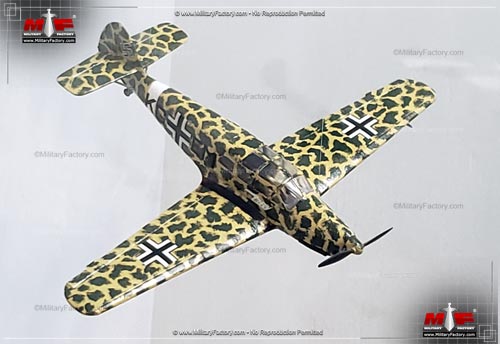
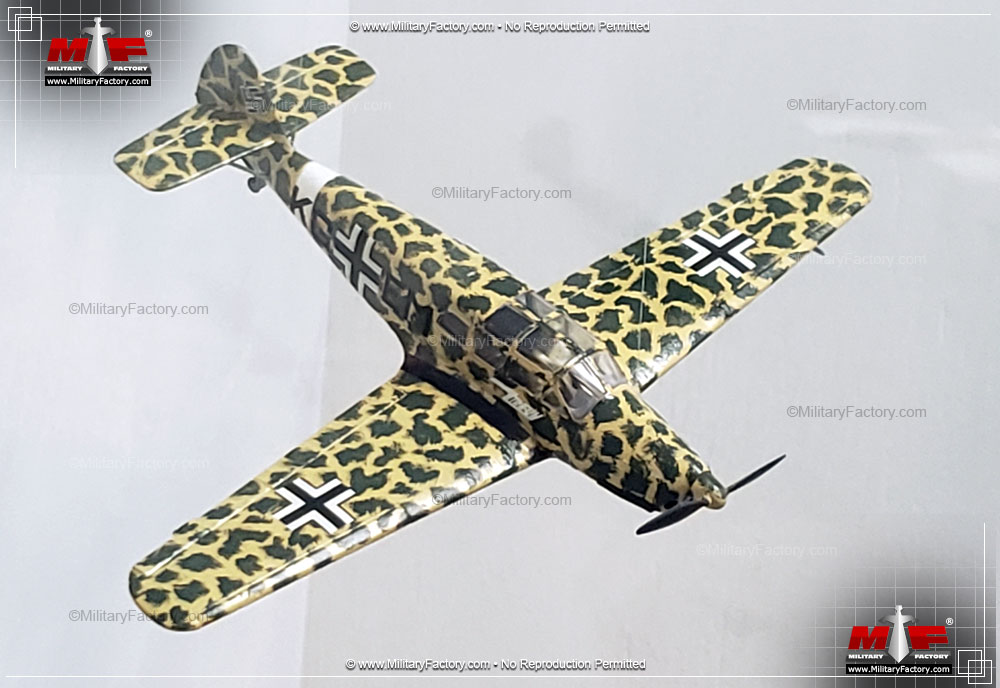
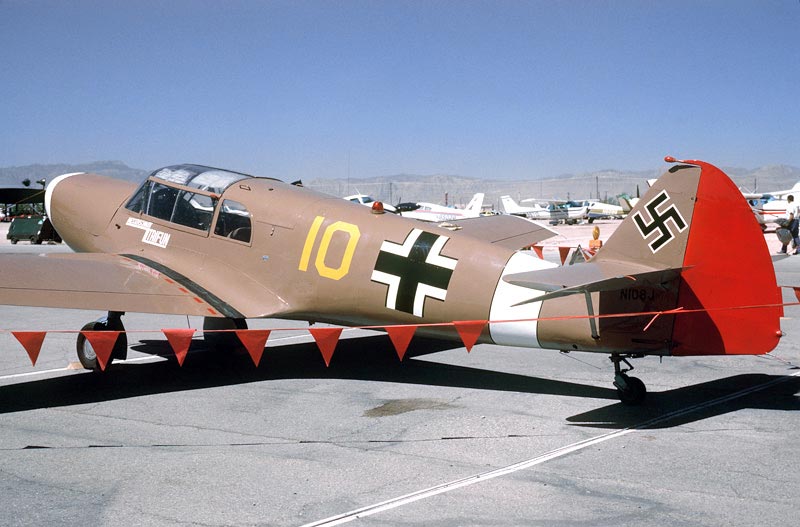
The aircraft was of a conventional design with a well-streamlined fuselage wide enough to seat the crew side-by-side. The engine was fitted to a forward compartment (powering a two-bladed propeller assembly) ahead of the cockpit while the fuselage tapered off into a raised empennage which was capped by a shallow, rounded vertical tail fin. Horizontal planes were added to the base of the rudder and reinforced in earlier models with struts. The main wing assemblies were low-mounted, straight monoplanes with rounded tips. The undercarriage was retractable with the main landing gear legs recessing under each wing root. The tail wheel remained lowered at all times though earlier versions featured a simple skid in its place. The cockpit was heavily glazed which allowed for better-than-average views from within.

Beyond the initial 1934 competition M37 prototype, a handful of other airframes were produced under the formal "Bf 108A" designation and a majority of these were by a Hirth HM 8U engine and, perhaps more notably, incorporated an enlarged internal cabin for an additional two passengers. The few Bf 108A models were followed by the slightly modified though definitive "Bf 108B" models of 1935 which were preceded by a prototype fitting a Siemens Sh14A radial piston engine. Production-quality versions then switched to the Argus 10C or 10E of 240 and 266 horsepower, respectively. B-models arrived with revised tail units and new window designs and proved the definitive offering of the entire Bf 108 line. Maximum speed was 190 miles per hour with a range out to 620 miles. The maximum operating service ceiling was listed at 20,300 feet.

While it lost out in the 1934 Challenge over Poland, the Bf 108 was still the subject of several aerial endurance records of the mid-to-late 1930s. It was only natural that such a showing would lead to its strong use in the upcoming World War. The selection of engine and the refined airframe made for an efficiently powered mount promoting good range values and, thusly, the type was pressed into wartime service during World War 2 as a high-performance liaison observation platform and VIP transport. In these roles, the aircraft gave exceptional service thanks to its rugged, all-metal construction and capable handling at low speeds. Most all locally-produced Bf 108s operated under the German Luftwaffe banner during the war. As wartime requirements proved the need for more fighter types from primary German factories, production of the less important Bf 108s was relocated to now-occupied France which would in effect, gave the French strong experience in the construction of the aircraft, ultimately leading to local post-war production of evolved Bf 108 forms. The Italian Air Force (Regia Aeronautica) was another major Axis player making use of the unarmed Bf 108 during the war as was the Imperial Japanese Army Air Service. Bulgaria procured six of the type and utilized these primarily for training new generations of airmen. Several captured specimens along the East Front were reconstituted into the inventory of the Soviet Air Force.

Beyond the A- and B-models, the Bf 108C became an proposed (though ultimately abandoned) higher-performance model fitting a Hirth HM 512 series engine of 395 horsepower. The "Me 208" was another evolved war-time Bf 108 development given a modern fully-retractable tricycle undercarriage and larger overall dimensions. Only two prototypes completed in occupied France before its liberation though the model was placed into serial production in the post-war years as the Nord Noralpha by SNCAN (Societe Nationale de Constructions Aeronatiques du Nord) to the tune of 200 units (SNCAN became Nord Aviation in 1954). Similarly, the Nord Pingouin (series 1000, 1001 and 1002, the latter two with French Renault engines) were additional French-built Bf 108 post-war variants which reached total production of 286 aircraft.

In total, the Bf 108 existed in 885 examples and was utilized around the globe. Operators included Brazil, China, Croatia, Czechoslovakia (postwar as the "K-70"), Hungary, Manchukuo, Norway (postwar), Poland (postwar, captured specimens), Romania, Spain, Switzerland, the United Kingdom and Yugoslavia.

The Bf 108 garnered the nickname of "Taifun" (translating to "Typhoon") through female German pilot Elly Beinhorn-Rosemeyer (1907-2007) who bestowed the appropriate title to her own mount. Once publicized, the Taifun name eventually stuck and came to symbolize the entire series from then on. The Bf 108 was also influential in the design and development of the upcoming Bf 109 fighter series of 1937.
Text ©2003-2013 www.MilitaryFactory.com • All Rights Reserved • No Reproduction Permitted
MilitaryFactory.com does NOT sell equipment/weaponry. Material presented throughout this website is for historical and entertainment value and should not to be construed as usable for hardware restoration, maintenance or general operation. Please consult manufacturers for such information. Our disclaimer. Email corrections / Comments to MilitaryFactory at Gmail dot com.
Picture of Messerschmitt  Bf 108 Taifun (Typhoon)
View All Images (1)

Specifications for the
Messerschmitt Bf 108 Taifun (Typhoon)
Competition / Liason / VIP Transport Aircraft


Country of Origin: Nazi Germany
Manufacturer: Messerschmitt - Nazi Germany / SNCAN (Nord Aviation) - France
Initial Year of Service: 1934
Production: 885


Focus Model: Messerschmitt Bf 108B Taifun
Crew: 1 + 3


Length: 27.23ft (8.3m)
Width: 34.45ft (10.50m)
Height: 7.55ft (2.30m)
Weight (Empty): 1,764lbs (800kg)
Weight (MTOW): 2,976lbs (1,350kg)


Powerplant: 1 x Argus As 10C V8 air-cooled piston engine developing 240 horsepower.


Maximum Speed: 190mph (305kmh; 165kts)
Maximum Range: 621miles (1,000km)
Service Ceiling: 20,341ft (6,200m; 3.9miles)
Rate-of-Climb: 1,200 feet per minute (366m/min)


Hardpoints: 0
Armament Suite:
None.


Variants:
M37 - Competition Airframe Designation


Bf 108A Taifun ("Typhoon") - Initial civilian production models featuring seating for four personnel.

Bf 108B - Improved production form with revised empennage and windows.

Bf 108C - Proposed improved high-speed variant; never produced.

Me 208 - Improved Bf 108B with retractable tricycle undercarriage; enlarged airframe.

Nord Noralpha - Post-war French production of Me 208 by SNCAN.

Nord Pingouin ("Penguin") - Post-War models produced in France; production by SNCAN in the 1000, 1001 and 1002 model marks.


Operators: Brazil; Bulgaria; China; Croatia; Czechoslovakia; France; Nazi Germany; Hungary; Italy; Imperial Japan; Manchukuo; Norway; Poland; Romania; Spain; Switzerland; Soviet Union; United Kingdom; United States; Yugoslavia

ALL AIRCRAFT CATEGORIES

BY DECADE:


1900 to 1909
1910 to 1919
1920 to 1929
1930 to 1939
1940 to 1949
1950 to 1959
1960 to 1969
1970 to 1979
1980 to 1989
1990 to 1999
2000 to 2009
2010 to 2019
2020 to 2029
VIEW ALL
Compare Aircraft


BY TYPE:


Anti-Submarine Warfare (ASW)
Attack Helicopters
Bomber Aircraft
Medium Bombers
Heavy Bombers
Close-Air Support (CAS)
Commercial Aircraft
Dive Bombers
Electronic Warfare Aircraft (EWA)
Experimental / X-Planes
Fighter Aircraft
Floatplane Aircraft
Flying Boat Aircraft
Aerial Refueling Tankers
Helicopters (ALL)
Interceptor Aircraft
Multi-Role Aircraft
Navy Carrier Aircraft
Night Fighters
Reconnaissance / Scout
Search & Rescue (SAR)
Scout Helicopters
Special Purpose
Torpedo Bombers
Trainer Aircraft
Transport Aircraft
Transport Helicopters
Unmanned Aerial Vehicles (UAVs)
Unmanned Combat Air Vehicles (UCAVs)


COLLECTIONS:


4th Generation Fighter Aircraft
5th Generation Fighter Aircraft
US X-Planes
Classic US Warbirds
French Military Helicopters
Grumman "Cats"
Howard Hughes Aircraft
Indian Air Force
Israeli Air Force
Libyan Aircraft
Modern Chinese Aircraft
Modern Chinese Fighters
Modern Military Aircraft
Modern North Korean Aircraft
Modern Trainer Aircraft
Modern US Aircraft
Mikoyan Aircraft
Sukhoi Aircraft
Syrian Aircraft
Top 10 Fighter Aircraft of All Time


AIRCRAFT BY CONFLICT:


Arab-Israeli War (1948)
Cuban Missile Crisis (1959-1962)
Falklands War (1982)
Indo-Pak War (1965, 1971)
Iran-Iraq War (1980-1988)
Lebanon War (1982)
Operation Allied Force (1999)
Operation Desert Storm (1991)
Six Day War (1967)
Spanish Civil War (1936)
Soviet-Afghan War (1979-1989)
Yom Kippur War (1973)


MISCELLANEOUS:


Aircraft Cockpits
Aircraft Manufacturers List
Aircraft Timeline

WORLD WAR 2:


1939 Aircraft
1940 Aircraft
1941 Aircraft
1942 Aircraft
1943 Aircraft
1944 Aircraft
1945 Aircraft
1946 Aircraft
Australian Aircraft
Battle of Britain Aircraft
Bombers
Four-Engine Bombers
British Aircraft
British Bombers
British Transports
Dive Bombers
Canadian Aircraft
Fighters
Chinese Aircraft
French Aircraft
German Aircraft
German Fighters
German Flying Boats
German Jets
Secret Weapons of the Luftwaffe
Italian Aircraft
Imperial Japanese Aircraft
Imperial Japanese Fighters
Mitsubishi Bombers
Navy Aircraft
Pearl Harbor
Polish Aircraft
Romanian Aircraft
US Aircraft
US Bombers
US Navy Aircraft
Soviet Aircraft
Torpedo Bombers
Transport Aircraft
Tuskegee Airmen Aircraft
W.A.S.P. Aircraft
WW2 Aircraft Ranked by Speed
VIEW ALL


WORLD WAR 1:


1914 Aircraft
1915 Aircraft
1916 Aircraft
1917 Aircraft
1918 Aircraft
Aircraft Timeline
Austro-Hungarian Aircraft
Bomber Aircraft
British Aircraft
Fighters
Flying Boats
French Aircraft
Imperial German Aircraft
Italian Aircraft
Scout Aircraft
Russian Empire Aircraft
US Aircraft
WW1 Aircraft Ranked by Speed
VIEW ALL


KOREAN WAR:


Australian Aircraft
Korean War Aces
Korean War Jets
North Korean Aircraft
US Military Aircraft
VIEW ALL


VIETNAM WAR:


Helicopters
North Vietnam Air Force
US Airpower
VIEW ALL


COLD WAR:


1950s French Aircraft
British V-Bombers
Cold War Bombers
Soviet Aircraft
Soviet Bombers
Soviet Interceptors
Soviet Helicopters
Strategic Air Command
US Aircraft
US Bombers
US Interceptors
VIEW ALL

Site Disclaimer | Privacy Policy | Site Map | MF Origins


©2013 www.MilitaryFactory.com • Content ©2003-2013 MilitaryFactory.com • All Rights Reserved • Site Contact Email: militaryfactory at gmail dot com. The "Military Factory" name and MilitaryFactory.com logo are registered ® trademarks and protected by all applicable domestic and international intellectual property laws.


Top MF Stuff: 2013 Military Pay Scale | Military Ranks | WW2 Weapons | Sniper Rifles | Kts to Mph | WW1 Aircraft | Automatic Rifles | Aircraft Cockpits | Vietnam War Weapons | Main Battle Tanks | Submachine Guns | Shotguns | French Military Victories


Most photographic images appearing on this site are courtesy of the United States Department of Defense and are approved for public use. Other images acquired through the public domain. Digital art work courtesy of Dan Alex. Business Consulting by Kyle Williams. Material presented throughout this website is for historical and entertainment value and should not to be construed as usable for hardware restoration, maintenance or general operation. Please consult manufacturers for such information.


eXTReMe Tracker